-
Mangalagiri Panakala Lakshmi Narasimha: Elephant-Hill Legend, Rituals, History & Guide

The Mangalagiri Panakala Lakshmi Narasimha Swamy Temple in Andhra Pradesh unites sacred geography, living ritual, and Dravidian architecture in a rare triadic complex. Centered on an elephant-shaped hill, its distinctive panakam offering to Ugra Narasimha symbolizes the cooling of fierceness into compassion. A monumental rajagopuram at the foothill and an intimate hillside sanctum together craft…
-
Beyond ‘I Am’: Tripura Rahasya’s Bold Guide to Pure Consciousness and Nondual Freedom

Tripura Rahasya advances a radical Advaita Vedanta insight: genuine Self-Realization dissolves identity so completely that even the thought “I am” no longer arises, without slipping into blankness. The teaching redirects attention from concepts to pure, self-luminous awareness (cit), illuminating all states—waking, dream, and deep sleep—while resting as the nondual ground (turīya). It details a rigorous…
-
Dhyan Badri Temple: Uttarakhand’s Sacred Sapta Badri Haven Where Urvarishi Saw Vishnu

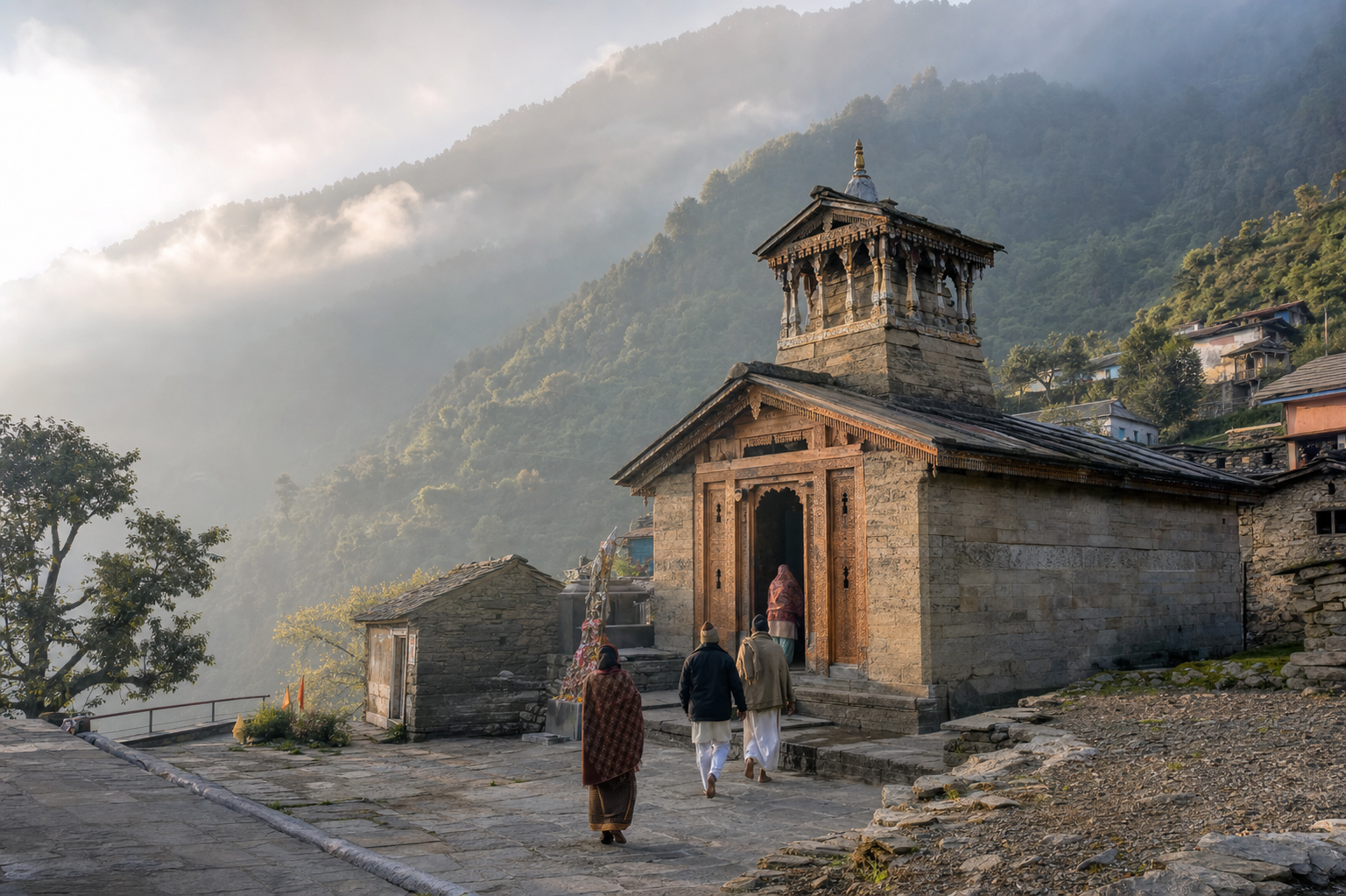
Dhyan Badri Temple in Uttarakhand’s Urgam Valley is a serene Vishnu shrine in the Sapta Badri circuit, renowned for its meditative ethos and village-based custodianship. Set at roughly 2,135 meters, it anchors a local tradition in which Urvarishi attained a divine vision of Lord Vishnu, aligning legend with the site’s contemplative character. The temple’s understated…
-
Empathy as the Mark of Divinity: Dharmic Teachings on Karuṇa, Dayā, and Universal Compassion

Empathy is presented as the defining mark of divinity across Hinduism and the broader dharmic family, where compassion (karuṇa/dayā) is both spiritual practice and social ethic. Grounded in scriptural foundations such as Bhagavad Gita 6.32 and 12.13, the article links inner realization with the welfare of all beings. It highlights convergences with Buddhism’s Brahmavihāras, Jainism’s…
-
April 4, 2026 Panchang: Krishna Paksha Dwitiya to Tritiya, Shubha Muhurat, Nakshatra & Rashi Guide

Saturday, April 4, 2026 begins with Krishna Paksha Dwitiya and transitions to Krishna Paksha Tritiya at about 8:26 AM, as per standard Panchang calculations. The day’s planning can be refined using the five limbs of the Hindu calendar—Tithi, Vāra, Nakshatra, Yoga, and Karana—with Saturday’s qualities favoring diligence and steady routines. Abhijit Muhurta near true local…
-
Bhagwan Parshvanatha: Life, Four Vows, and the Enduring Legacy of Jainism’s Compassionate Reformer

Bhagwan Parshvanatha, the 23rd Tirthankara, helped shape Jain ethics through a clear fourfold discipline—ahimsa, satya, asteya, and aparigraha—later integrated with Mahavira’s expanded code. Born in Varanasi and widely regarded as historical, Parshvanatha’s legacy is visible in sacred sites like Sammed Shikharji and in distinctive serpent-canopied iconography. Texts such as the Kalpa Sūtra and the Uttarādhyayana…
-
Rongali (Bohag) Bihu 2026: Vibrant Assamese New Year—Date, Seven-Day Cycle, Traditions

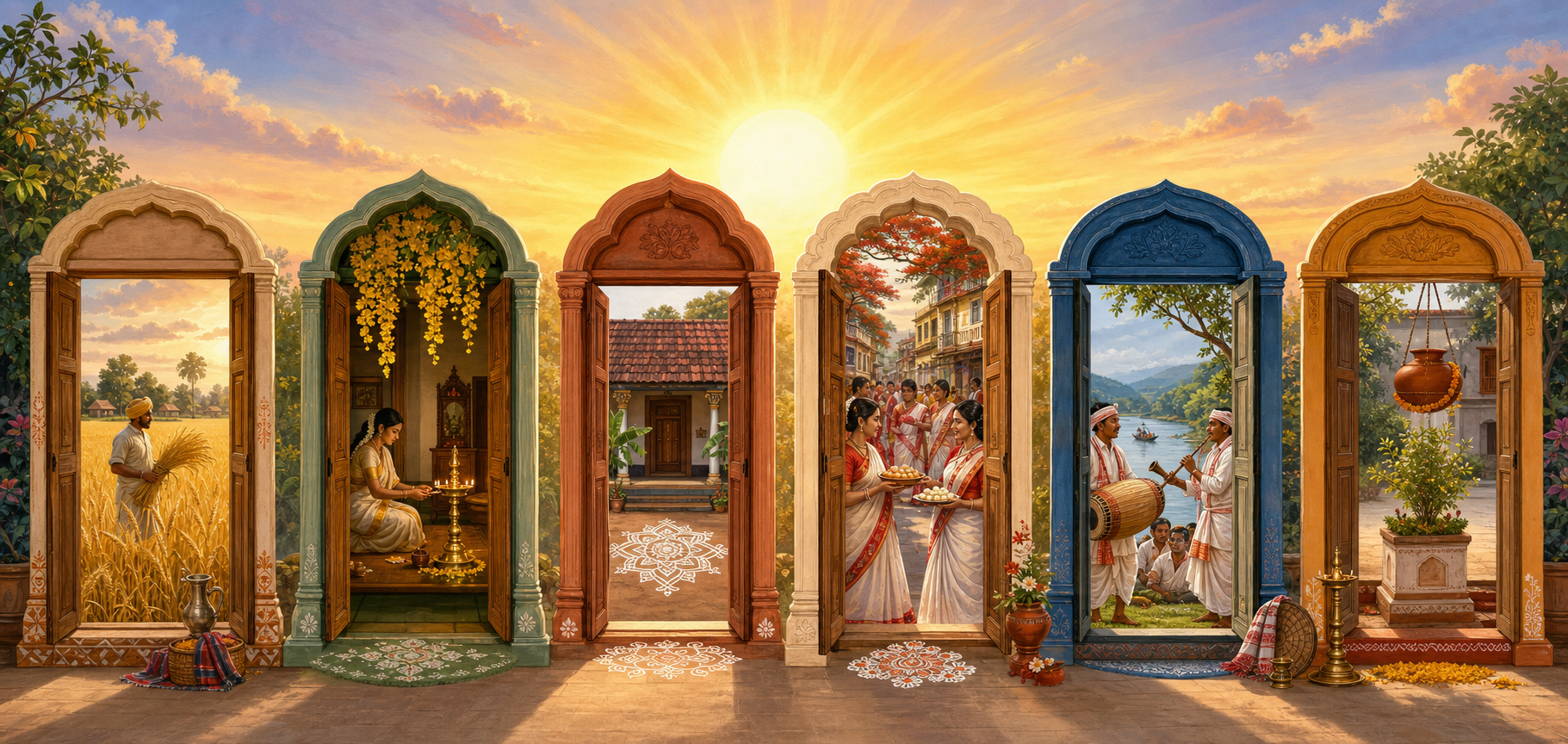
Rongali (Bohag) Bihu 2026 marks the Assamese New Year on 15 April, synchronizing with Mesha Sankranti and the first day of Bohag. The festival’s living heritage unfolds through a three-day core—Goru Bihu, Manuh Bihu, and Gosai Bihu—within a broader seven-day cycle still observed in many communities. Readers gain a clear understanding of the festival’s calendar…
-
Pohela Boishakh 2026 (Naba Barsha 1433): A Comprehensive Guide to Dates, Rituals, and Heritage

Pohela Boishakh (Poila Baisakh) marks Naba Barsha 1433 and will be observed on 15 April 2026 in West Bengal, while Bangladesh’s reformed calendar celebrates Pahela Baishakh on 14 April. Rooted in Mesha Sankranti—the Sun’s ingress into sidereal Aries—the New Year aligns astronomy with the Bengali Panjika’s sunrise rule, explaining occasional date differences. The guide details…
-
Evil Eye (Nazar) Demystified: Dharmic Perspectives, Science of Envy, and Safe Remedies

This analysis clarifies what people mean by the evil eye, or nazar and drishti dosha, and explains why belief can sometimes shape experience through expectancy and stress. It situates the topic within Hindu, Buddhist, Jain, and Sikh perspectives that emphasize intention, compassion, and ethical living over fear. Readers discover how protective customs function psychologically and…
-
Karna’s Final Charity: Unbreakable Dāna, Dharma, and Lessons from Kurukshetra

This long-form analysis examines the widely remembered motif of Karna’s final charity on the battlefield of Kurukshetra and situates it within the Mahabharata’s ethical universe. It distinguishes between the critical Sanskrit text and later regional and oral retellings that amplify Karna’s identity as Dāna-vīra. Through the lens of the Bhagavad Gita’s typology of dāna, the…
-
Chandidasa’s Sri Krishna Kirtana: A Luminous 15th-Century Bengali Masterpiece of Bhakti Rasa

Chandidasa, a seminal 15th-century Middle Bengali poet, helped crystallize the language and performance of Krishna Bhakti through Sri Krishna Kirtana. Set within medieval India’s vibrant vernacular renaissance, the poem fuses theology and rasa aesthetics, elevating Radha-Krishna love into a disciplined pathway of devotion. Its Middle Bengali diction, prosodic simplicity, and singable refrains enabled congregational kirtan…
-
Awe-Inspiring Rameswaram Pilgrimage: Sri Ramanathaswamy Temple, Rama Setu, Sacred Shores

Rameswaram on the Gulf of Mannar is a conch-shaped island central to the Char Dham yatra and home to the Jyotirlinga of Sri Ramanathaswamy. Scriptural accounts in Srimad-Bhagavatam and Caitanya Caritamrta attest to its enduring sanctity, while Ramayana memory links the shrine to Rama Setu. The temple’s nearly 4,000-foot pillared corridor exemplifies South Indian temple…
-
Avanaddha: The Sacred Science of Indian Drums from Vedic Pushkara to Pakhawaj

Avanaddha, the classical Indian family of drums defined in the Natyashastra, links Vedic references such as pushkara and dundubhi with today’s diverse performance, ritual, and communal traditions. This article explains how construction techniques—shell materials, membrane fastening, and the famed syahi loading—engineer near-harmonic overtones and pitch-centered strokes. It surveys major drum types (mridangam, pakhawaj, khol, chenda,…
-
Ram Navami 2026 Live Darshan: Profound Rituals and Memories at Sri Sri Krishna Balram Mandir

Observed on 27 March 2026 (Chaitra Shukla Navami), this Ram Navami Live Darshan feature explains the tithi-based timing, outlines key temple rituals, and preserves memories from the grand opening of Sri Sri Krishna Balram Mandir. Readers gain a clear, Panchang-grounded understanding of Madhyahna observances, abhishekam, aarti, and kirtan within Gaudiya Vaishnavism and the wider Bhakti…
-
Historic Canterbury Moment: First Woman on St Augustine’s Chair and a Call to Unity

On 25 March 2026, Canterbury Cathedral marked a first in 1,400 years as Dame Sarah Mullally was installed on the Chair of St Augustine before roughly 2,000 guests. The cathedra’s symbolism—rooted in Augustine’s 597 CE mission—made the moment a powerful intersection of continuity and change. This analysis explains why the event matters for the Anglican…
-
Rama Navami 2026: HH Chandramauli Swami’s Deep-Dive on Rama, Rajadharma, and Living Bhakti

Rama Navami 2026 features a special evening class on 26 March with HH Chandramauli Swami Maharaja, exploring Śrī Rāmacandra as Maryada Purushottama through scripture, ethics, and lived practice. The session situates Rama within avatāra-tattva, citing sources such as the Brahma-samhita and Śrīmad-Bhāgavatam, and translates festive devotion into sustainable sādhanā. Attendees gain a nuanced understanding of…
-
Nandprayag’s Sacred Confluence: Alaknanda–Nandakini, Panch Prayag Heritage and Travel Guide

Nandprayag, at 1,358 metres in Chamoli, is the sacred confluence where the Alaknanda meets the Nandakini, forming a pivotal node in the Panch Prayag tradition of Uttarakhand. This long-form guide situates Nandprayag within the hydrology of the Alaknanda basin and clarifies its place relative to Rudraprayag, where the Mandakini joins. It explains how ritual practice,…
-
From Survival Mode to Flourishing: Evidence‑Based Healing After Family Abandonment

This long-form analysis follows one person’s progression from childhood abandonment and emotional neglect to adult flourishing, detailing how survival mode forms and how it can be updated. It explains why disclosure felt unsafe, how chosen family efforts initially replicated trauma patterns, and why grief for the family that never existed must be named rather than…
-
How We Treat the Powerless: Dharma’s Uncompromising Measure—from Gita to Guru Granth Sahib

True character is revealed most clearly in how people treat those with little power. Drawing on Hinduism, Buddhism, Jainism, and Sikhism, this essay shows how Dharma, Ahimsa, Seva, and Karuna converge on a single ethical yardstick: dignity for the vulnerable. It synthesizes sources from the Bhagavad Gita, Mahabharata (Vidura-niti), Dharmasastra, and Arthasastra alongside Sikh langar…
-
Pingalamata Unveiled: The Bhairava Agama Guiding Linga Worship and Temple Consecration

Pingalamata is a Bhairava-oriented Shaiva Agama that codifies the ritual science and architectural norms of Linga worship and temple consecration. Closely allied with the Brahmayamalatantra, it aligns mantra, mudra, nyasa, yantra, and mandala to create a reliable pathway for manifesting Shiva’s presence. Readers gain a structured view of daily puja, abhishekam, prana-pratishtha, kumbhabhisheka, and the…