
-
Goat Horns in Hinduism: Fearless Strength, Agni’s Fire, and the Sacred Path of Inner Ascent
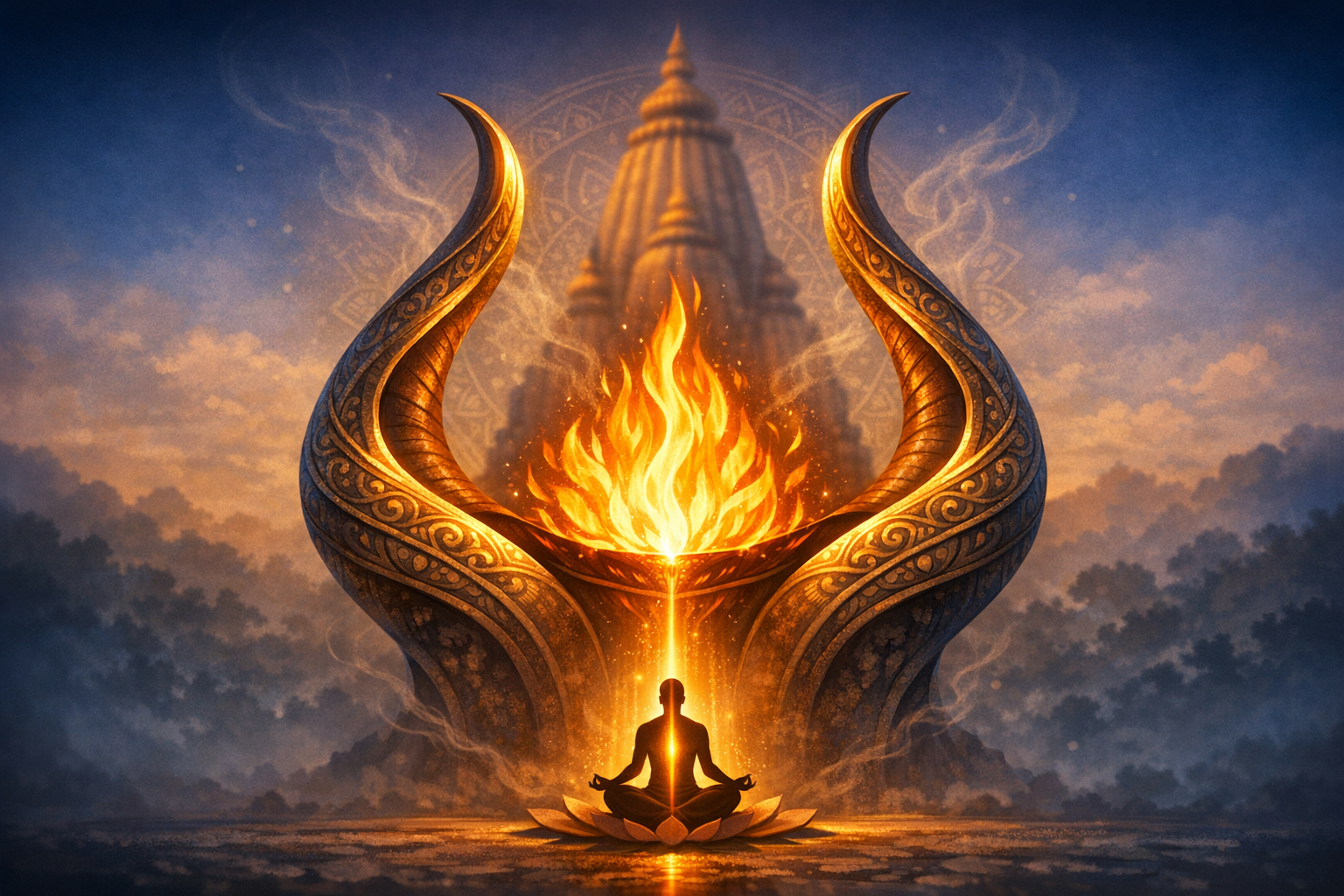
Goat horns serve as a compact teaching in Hindu symbolism, fusing Agni’s purifying fire, Kshatra-dharma’s disciplined courage, and yoga’s inner ascent. Philological nuances (ajā, chāga, meṣa, śṛṅga) and Vedic references frame the motif’s depth and legitimacy. Iconography, temple architecture, and ritual soundscapes reinforce an upward vector from density to clarity, akin to kundalinī rising along…
-
Char Dham 2026: BKTC Safeguards Sanctum, Reassures Access for All at 47 Uttarakhand Temples

BKTC has clarified that, ahead of Char Dham Yatra 2026, non-Hindu visitors are restricted only from the sanctum sanctorum at 47 Uttarakhand temples, while remaining fully welcome in outer halls, courtyards, and public service zones. The decision preserves Agama-defined ritual sanctity at the altar without imposing a blanket ban on temple access. Readers will find…
-
Unveiling Lingasthala: Shiva as Infinite Brahman in Virashaiva Philosophy and Lived Practice
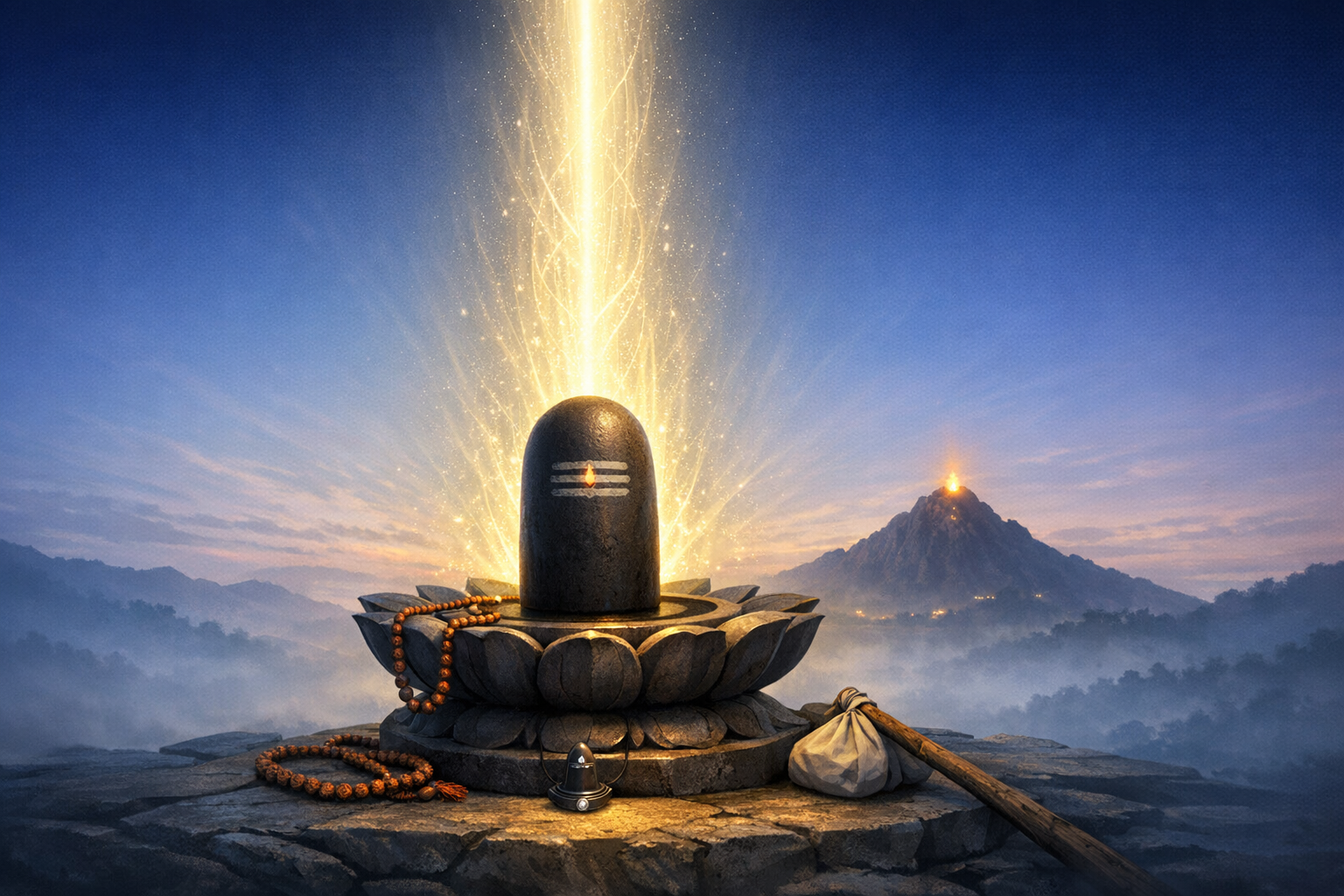
This essay explores how Virashaiva (Lingayat) philosophy recognizes Shiva as the infinite Brahman and makes that insight tangible through linga-centered practice. It clarifies Lingasthala as the field of realization anchored in the Shatsthala path, the Panchacharas, and the Ashtavaranas. It links Upanishadic non-duality with Shaiva devotion, explains the Lingodbhava narrative, and shows how saguna worship…
-
Kailash Giri Pradakshina: Definitive, Soul-Stirring Guide to Manasarovar Yatra and Parikrama

Mount Kailash, beside Lake Manasarovar and Lake Rakshastal, is revered across Hinduism, Buddhism, Jainism, and Bon, making the Kailash Manasarovar Yatra a living emblem of dharmic unity. This comprehensive guide explains the spiritual grammar of circumambulationpradakshina, parikrama, Girivalam, and korawhile detailing the three-day, ~52 km Outer Kora from Darchen over Drolma La Pass. Practical sections…
-
Annamaiah 523rd Vardhanthi in Tirupati: Sacred Sankeertana Week and Metlotsavam
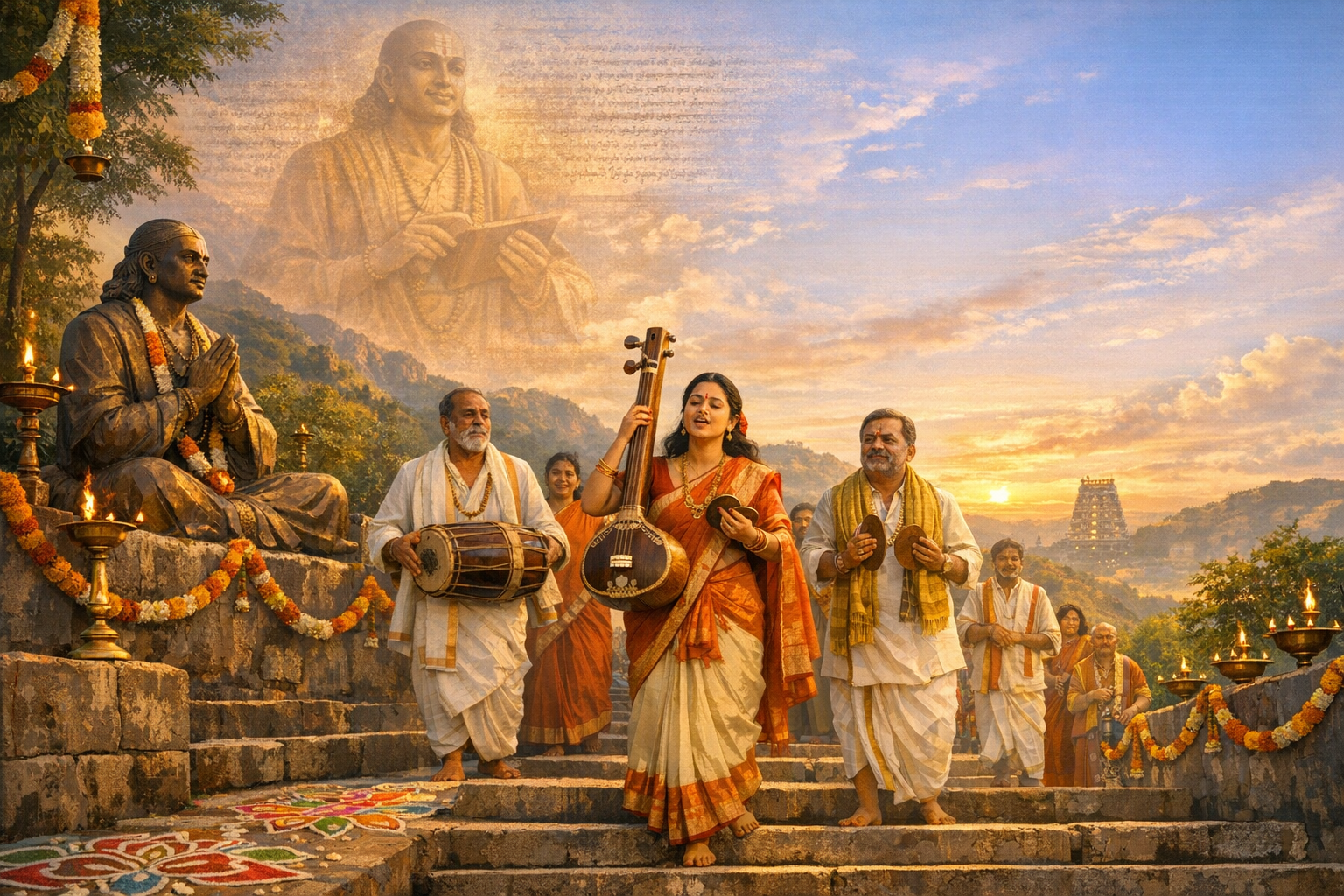
The 523rd Annamacharya Vardhanthi will be observed in Tirupati, Tirumala, and Tallapaka from 14 to 21 March 2026 under TTD, with programs at Tallapaka Dhyanamandiram, the 108-ft Annamacharya Statue at Tallapaka, Narayanagiri Gardens in Tirumala, Annamacharya Kalamandiram, and Mahati Kalakshetram. The week begins on 14 March at 6 a.m. with Metlotsavam, a congregational ascent marked…
-
Varusha Pirappu 2026 (Parabhava): Date, Rituals, Auspicious Practices, and Cultural Significance
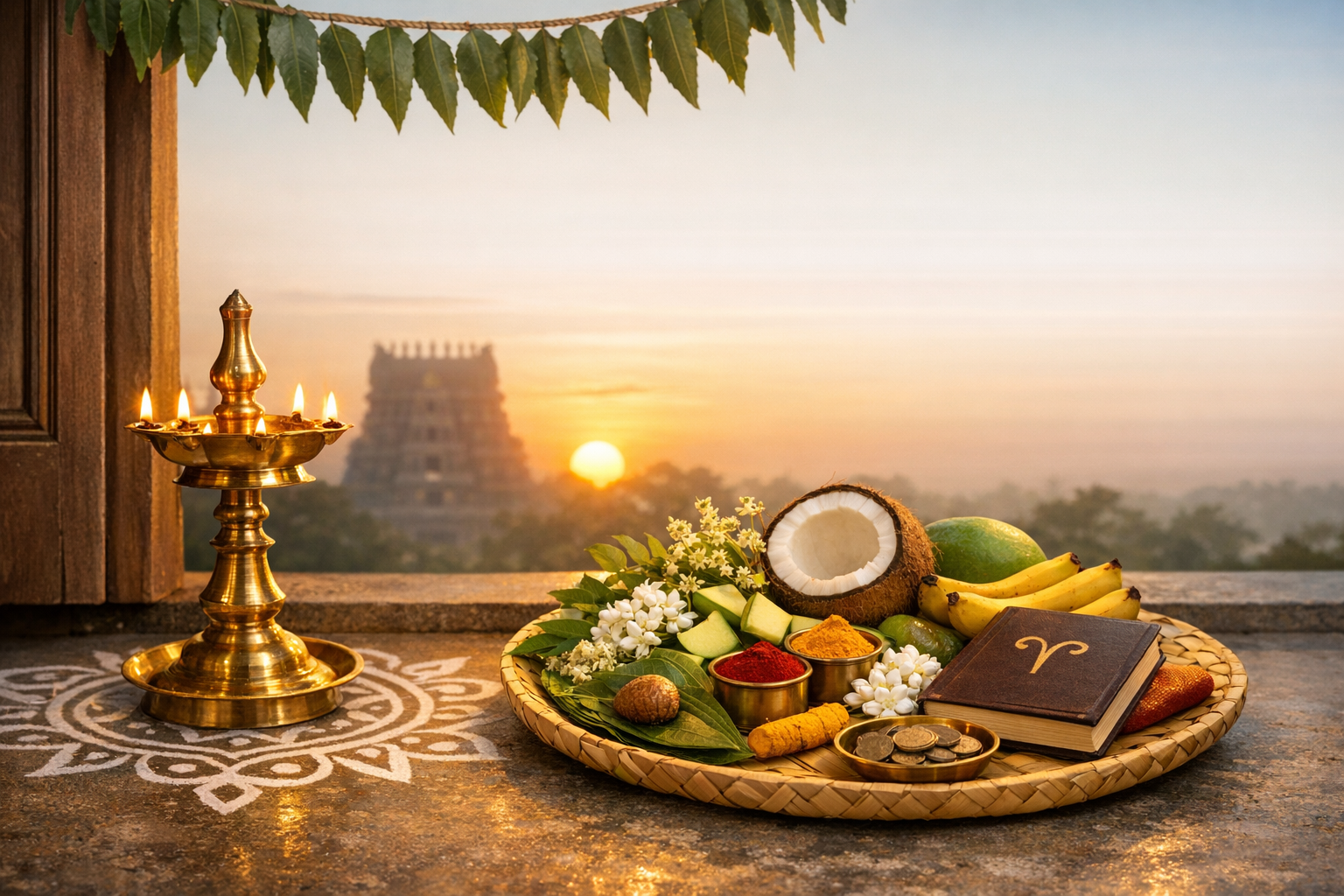
Varusha Pirappu 2026 (Puthandu/Chithirai Vishu) begins the Tamil year Parabhava Nama Varuda on April 14, 2026 (IST), anchored to the Sun’s sidereal ingress into Aries (Mesha Sankranti). The festival blends precise astronomical time-reckoning with rich cultural practice: kolam, mango‑leaf toranams, panchangam reading, and the symbolic maanga pachadi that honors life’s six tastes. Temple rituals in…
-
Choitro (Chaitra) 2026: Complete Guide to Dates, Gajan, Charak Puja, and Poila Baisakh
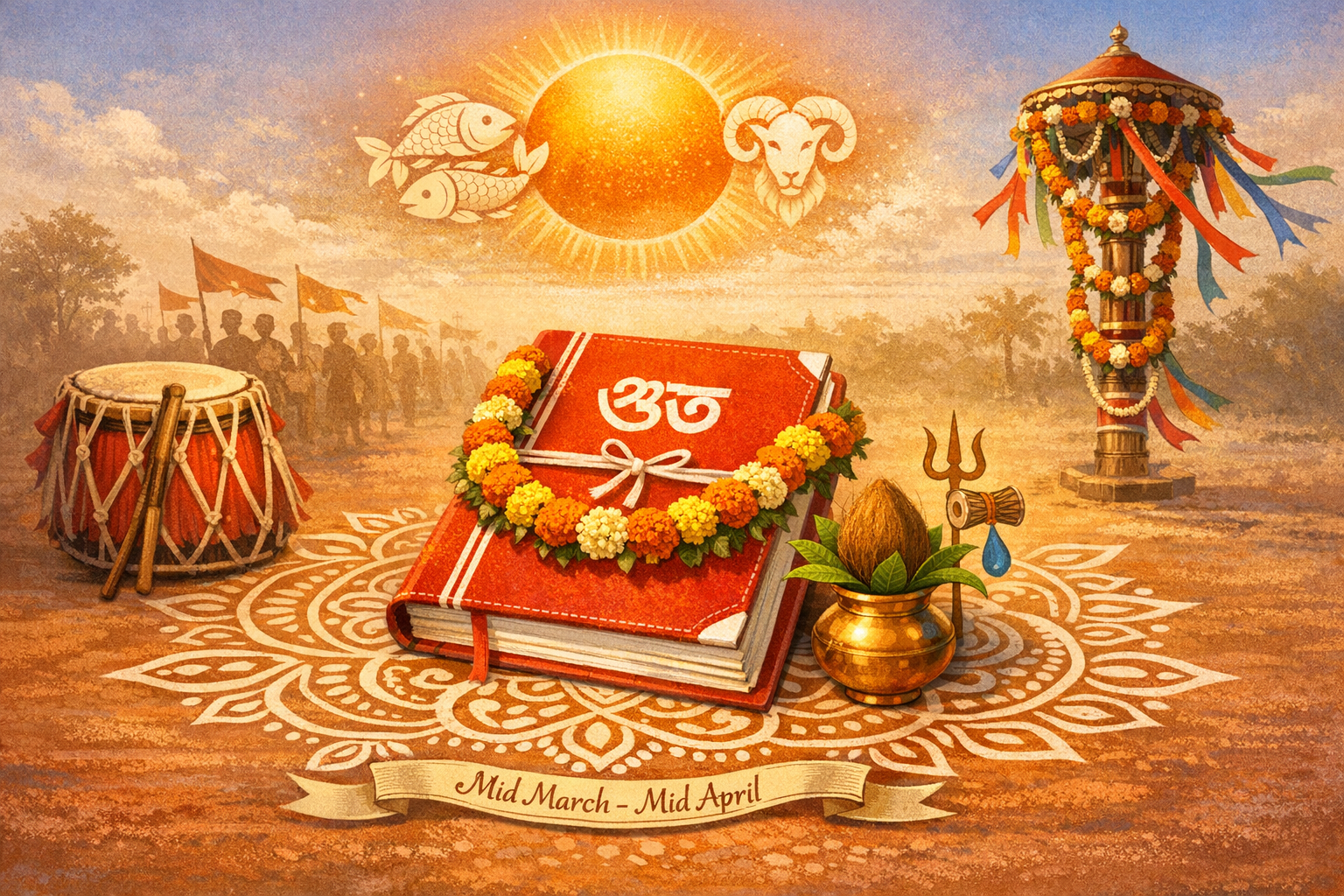
Choitro (Chaitra) 2026 spans 16 March to 14 April and completes Bangabda 1432 in the Bengali calendar, with Poila Baisakh launching Bangabda 1433 on 14 April. This guide explains the sidereal solar basis of Bengali months, the West Bengal panjika convention behind these dates, and how it differs from Bangladesh’s revised civil calendar. It covers…
-
Rajapujyam–Avamanam 2026–2027: Comprehensive Honor–Dishonor Guide for Every Rashi
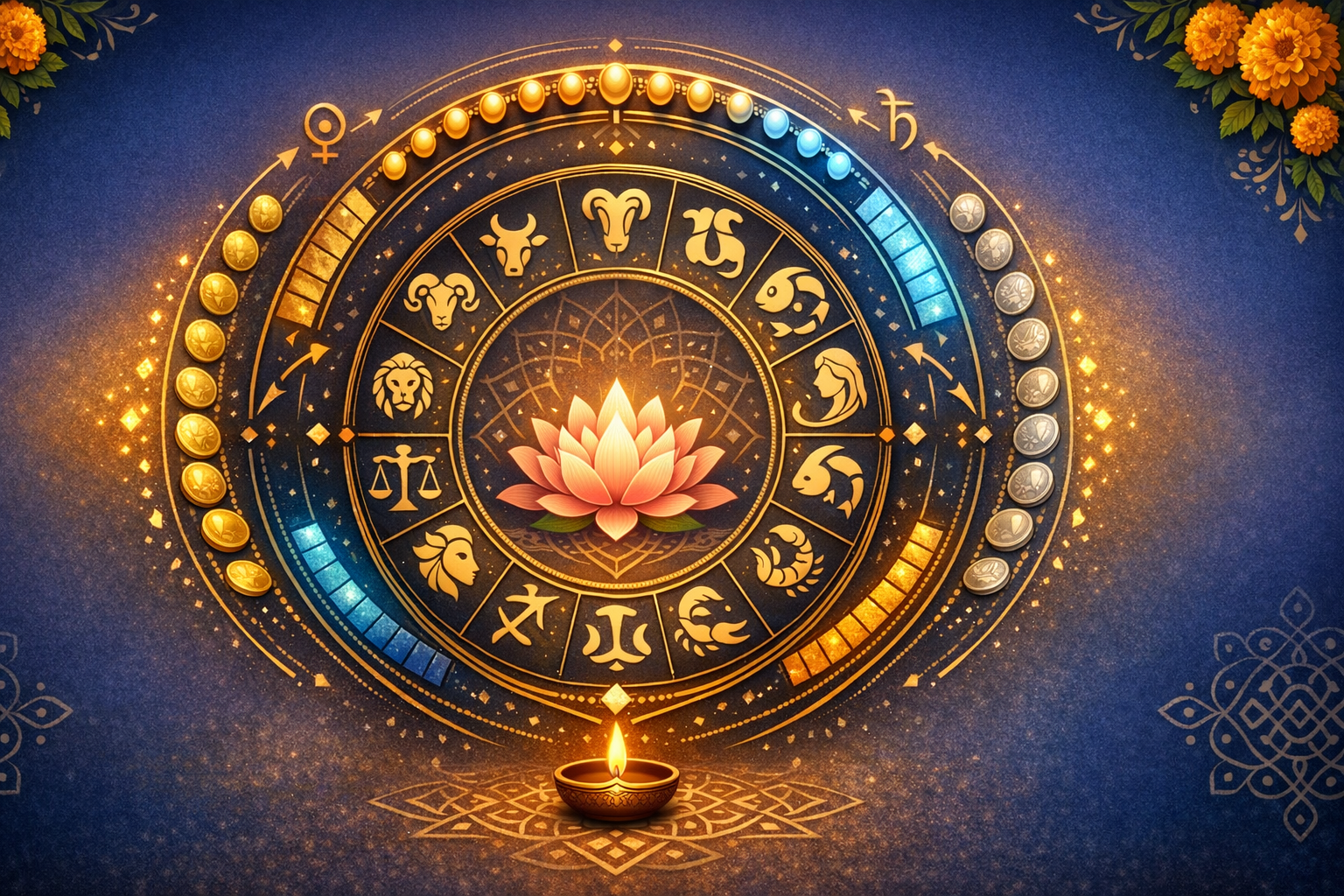
This in-depth guide explains Rajapujyam and Avamanamthe annual honor–dishonor ratio presented for each Janma Rashiwithin the 2026–2027 Parabhava Nama Samvatsaram context. It outlines how the 1–7 scale is interpreted, why figures vary by Panchangam tradition, and how to combine the ratio with Aaya–Vyaya 2026–2027, Tarabalam, and key transits for practical decisions. Jupiter’s shift into exalted…
-
Shiva–Shakti Raasa Leela: Unveiling the Cosmic Dance of Love, Consciousness, and Creation
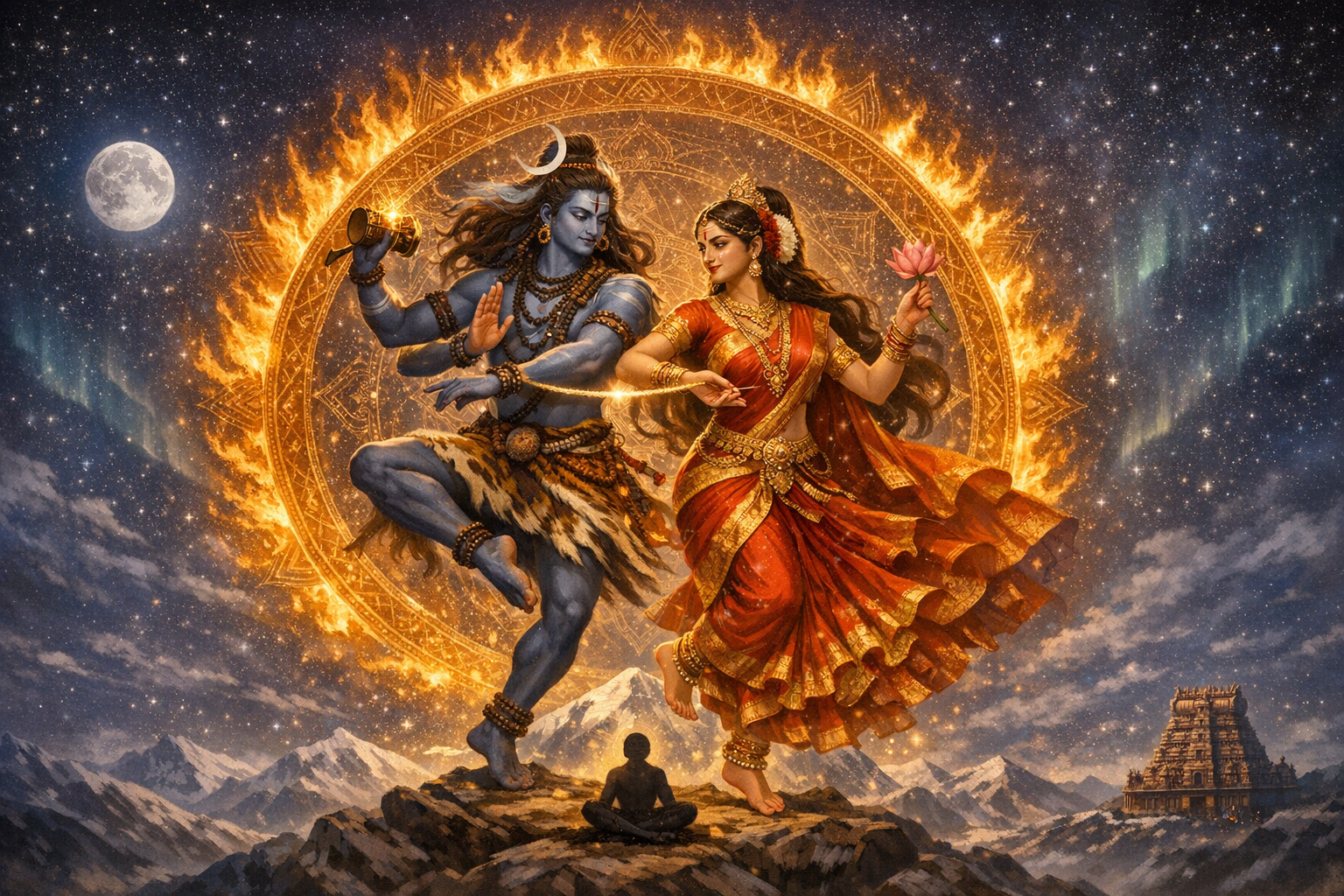
Shivashakti Raasa Leelaalso known as Sri ShivShakti Rasalilapresents the union of Śiva and Śakti as a continuous dance and embrace that render Shaiva metaphysics visible and livable. Anchored in Natyashastra aesthetics, Shaiva Āgamas, and Kashmir Shaivism’s rasa theory, it interprets creation as spanda (vibration) and devotion as aesthetic savoring (rasa). Iconography of Śiva Naṭarāja, Somāskanda,…
-
Sri Aurobindo’s Inner Yajna: How Heart-Centered Worship Outshines Outer Rituals

Sri Aurobindo distinguishes outer ritual from inner yajna and shows why inner worship transforms consciousness more reliably than external observance. Drawing on Vedic philosophy, the Bhagavad Gita, and integral methods from Karma Yoga, Bhakti, Jnana, and Raja Yoga, the discussion explains how sacrifice progresses from the gross to the subtle, purifying manas, buddhi, and chitta.…
-
Nature Is Pure: Sacred Dharmic Ecology, Waste Ethics, and Human Responsibility in Hindu Thought

This article presents a rigorous Dharmic ecology framework: nature is inherently pure and self-regulating, while stagnation and filth arise when human systems block ecological flows. Drawing on Hindu philosophy (ṛta, pañca-mahābhūtas, śauca, aparigraha, ahimsa) and allied insights from Buddhism, Jainism, and Sikhism, it maps timeless ethics to contemporary tools like life cycle assessment, material flow…
-
Friday, March 20, 2026 Panchang: Pratipada to Dwitiya Transition, Auspicious Timings, and Ritual Guidance

Friday, March 20, 2026 spans a tithi transition: Shukla Paksha Pratipada lasts until 5:24 AM, after which Shukla Paksha Dwitiya prevails in most regions. The Panchang day label follows the tithi at sunrise, so many localities will observe Dwitiya for the civil day. A technical overview explains how a tithi is defined by the Moon–Sun…
-
Sitakund and Monghyr Fort: Shah Shuja’s Turmoil and a Sacred City’s Resilience
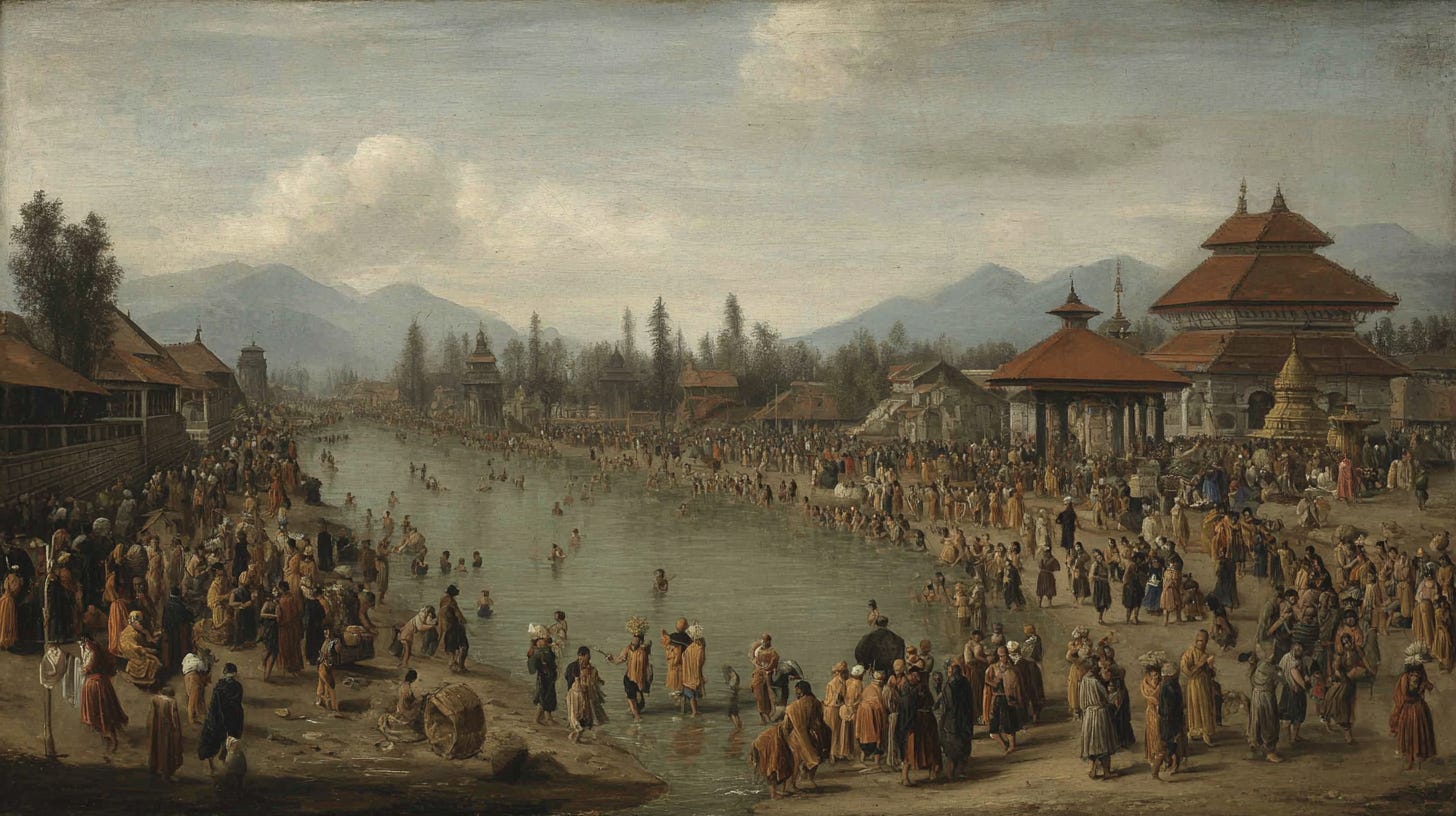
This long-form analysis reconstructs the layered history of Munger (Monghyr) from Gupta-era epigraphy and regional dynasties to Mughal turbulence and East India Company conquest. It clarifies Monghyr’s form as a classical Kaṭakafortified capital and garrisonwhile situating the city’s beauty on a bend of the Ganges documented by Viscount Valentia. It explains the ritual ecology of…
-
Mahabharata’s Fierce Reckoning: Jayadratha, Kichaka, and Dharma’s Unforgiving Verdict
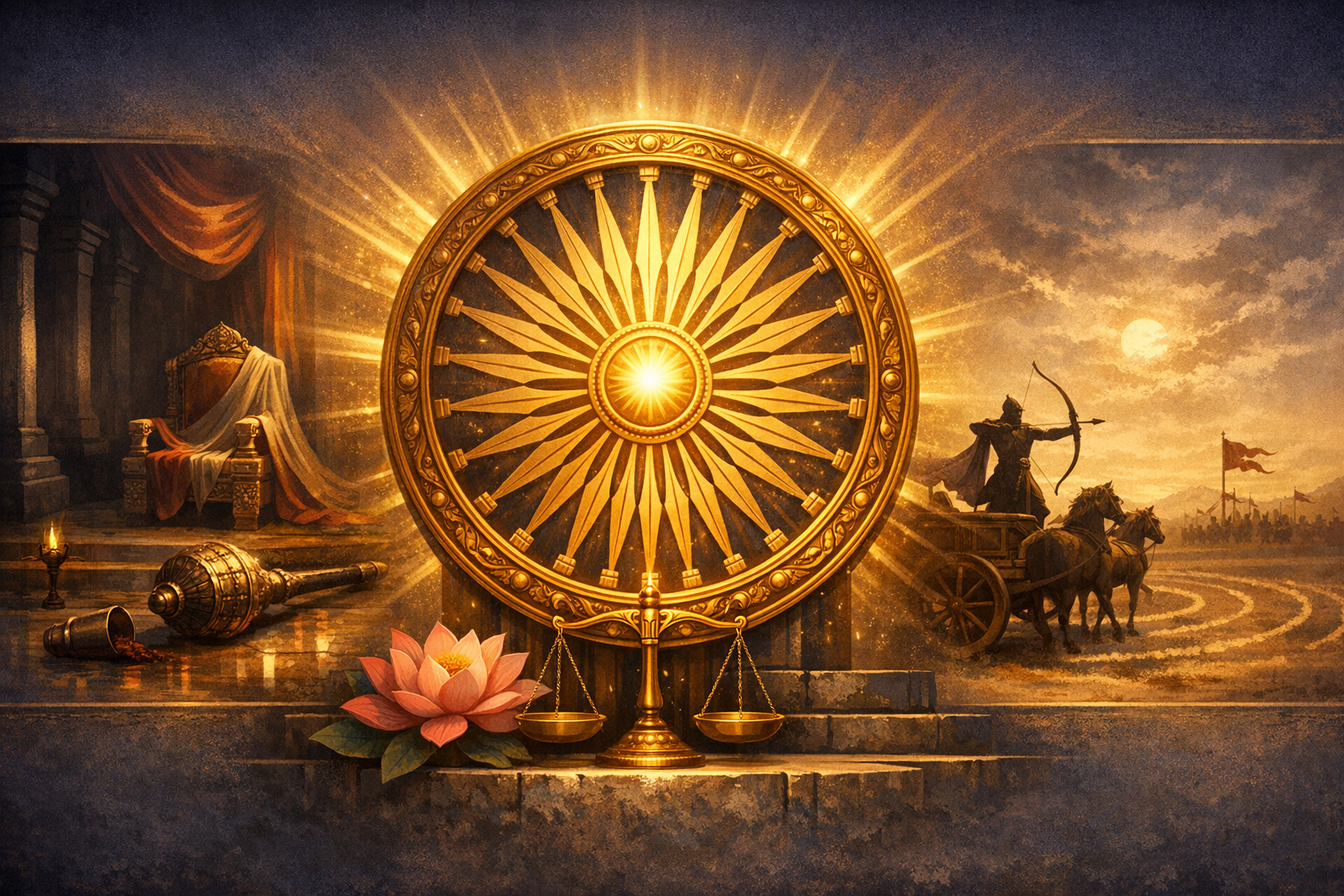
This analysis examines how the Mahabharata adjudicates unrestrained desire through the intertwined fates of Jayadratha and Kichaka. It shows how Dharma calibrates justicehumiliation when restraint advances stability, and decisive force when protection of the vulnerable demands it. Readers gain a clear view of Rajadharma, Dandaniti, Apaddharma, and the atatayin doctrine, applied to real narrative crises.…
-
Rising Jamaat influence on the India–B’desh border: security roadmap for West Bengal, Northeast

Border districts of West Bengal and the Northeast face renewed security risks as Jamaat-aligned networks and adjacent hardline actors in Bangladesh probe for influence along porous, riverine stretches. This analysis separates peaceful religious activism from violent facilitation, explaining how small, adaptive micro-networks exploit illicit finance, digital propaganda, and smuggling corridors. It identifies strategic vulnerabilitiesespecially in…
-
Outgrowing Longstanding Friendships with Grace: A Clear, Compassionate Guide to Change

Friendships forged through intense proximity can feel permanent, yet adult bonds depend more on reciprocity, values, and deliberate care than on shared corridors. This article offers a research-informed, dharmic-aligned framework for recognizing when a friendship has been outgrown and how to respond with clarity and compassion. Readers learn to assess post-interaction feelings as reliable data,…
-
Lingadharana in Virashaivism: The Sacred Wearable of Shiva-Bhakti Shaping Identity and Unity

Virashaivism distinguishes itself within Shaivism through Lingadharana, the uninterrupted wearing of the Ishtalinga as a living emblem of devotion and ethical accountability. Grounded in the Ashtavarana and Panchachara, this practice fuses Shaiva metaphysics with daily discipline, ensuring that remembrance of Shiva accompanies every action. Historically prominent in 12th-century Karnataka and associated with Basava and the…
-
Birth of Garuda: Indra’s Arrogance vs Balakhilya Resolve in Kashyapa’s Sacred Yajna
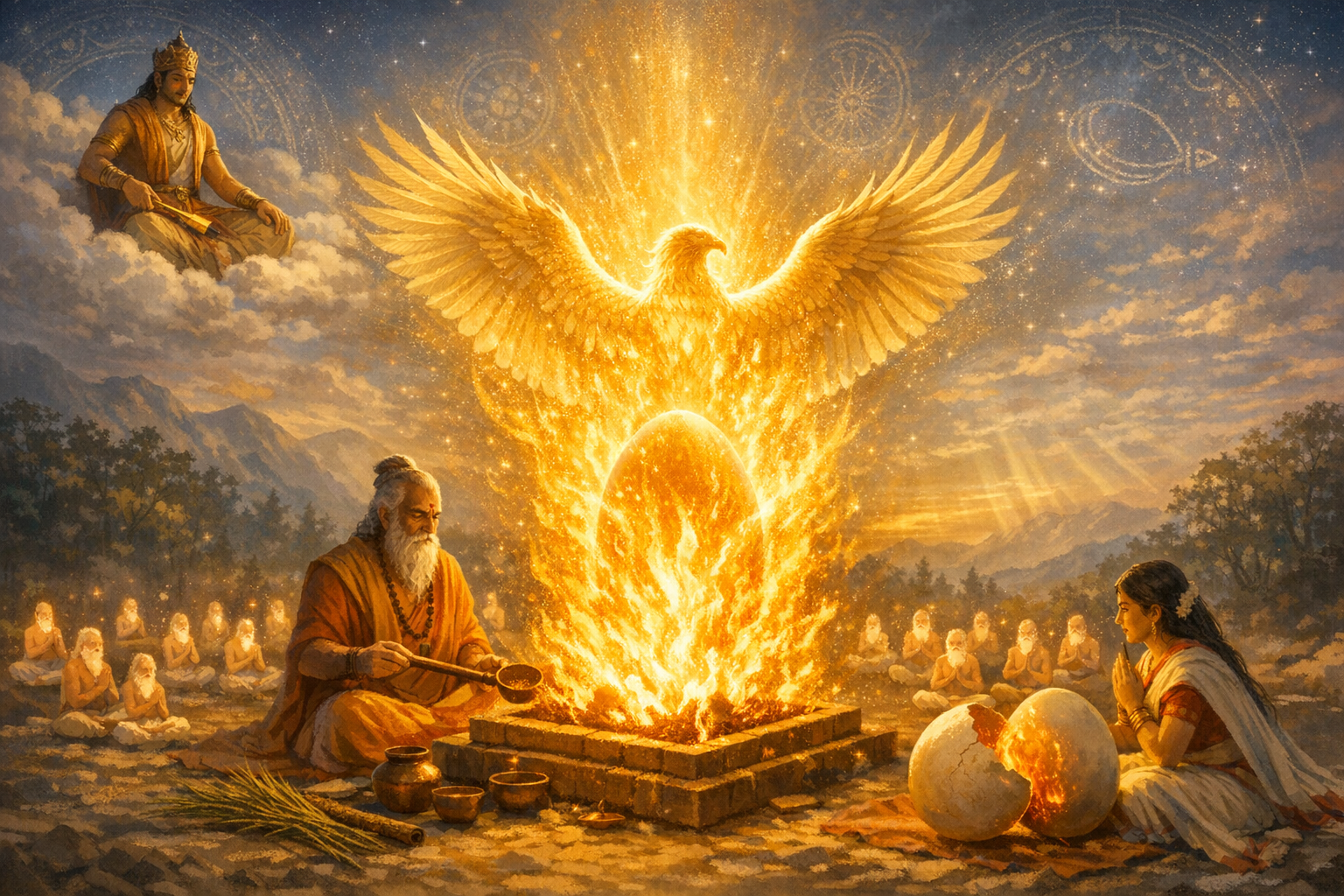
This long-form exploration examines the birth of Garuda as preserved in the Mahabharata (Adi Parva, Sambhava Parva), focusing on how Indra’s pride is counterbalanced by the Balakhilya rishis’ unshakeable tapas and Kashyapa’s wise redirection of yajna. Readers gain a clear, text-grounded account of how a potential cosmic rivalry is transformed into non-rivalrous sovereignty through the…
-
Bila-svarga’s Opulent Realms in the Puranas: Why Their Splendor Still Fails the Soul’s Quest
Puranic cosmology portrays the seven subterranean planetsAtala, Vitala, Sutala, Talātala, Mahātala, Rasātala and Pātāla (SB 5.24.7)as bila-svarga, exquisitely opulent realms that in some respects surpass even the Heavenly planets. Drawing on Srimad Bhagvatam (SB 5.24.8–10), this analysis explains why such wealth, refinement, and influence remain within the orbit of time and karma, and thus cannot…
-
Rethinking Death and Consciousness: Rigorous Evidence for Reincarnation and Dharmic Convergence

Modern neuroscience commonly assumes that consciousness ends at death, yet decades of rigorous field researchinitiated by Ian Stevenson at the University of Virginiahas documented hundreds of cross-cultural cases suggestive of reincarnation. The strongest reports involve young children who spontaneously recount verifiable details of a previous life, exhibit phobias or behaviors matching the prior death, and…