
-
From Disillusionment to Hare Krishna: A Rigorous Bhakti Path Back to the Eternal Friend

This piece traces a seeker’s movement from worldly disillusionment to a disciplined Bhakti practice in the Hare Krishna tradition. It distinguishes semi-spiritual stimulation from lineage-based transformation, showing how method, community, and scriptural guidance address the hunger for Absolute Truth. Readers learn what a first visit to an ISKCON temple looks like and how kirtan, japa,…
-
Growing Up With Shabad: The Transformative Science, Music, and Devotion Uniting Dharmic Paths

Growing up with Shabad forms attention, identity, and ethics through sacred sound anchored in Sikhism’s Shabad Guru. Musicological rigorraag, taal, and the interpretive role of rahausupports cognitive development, Gurmukhi literacy, and stable daily rhythms. Physiological pathways, including breath-synchronized prosody and vagal regulation, help reduce stress and build resilience. Comparative insights show deep kinship with Hindu…
-
Padma Nidhi of Kubera in South Indian Temples: Timeless Gate Guardians of Abundance
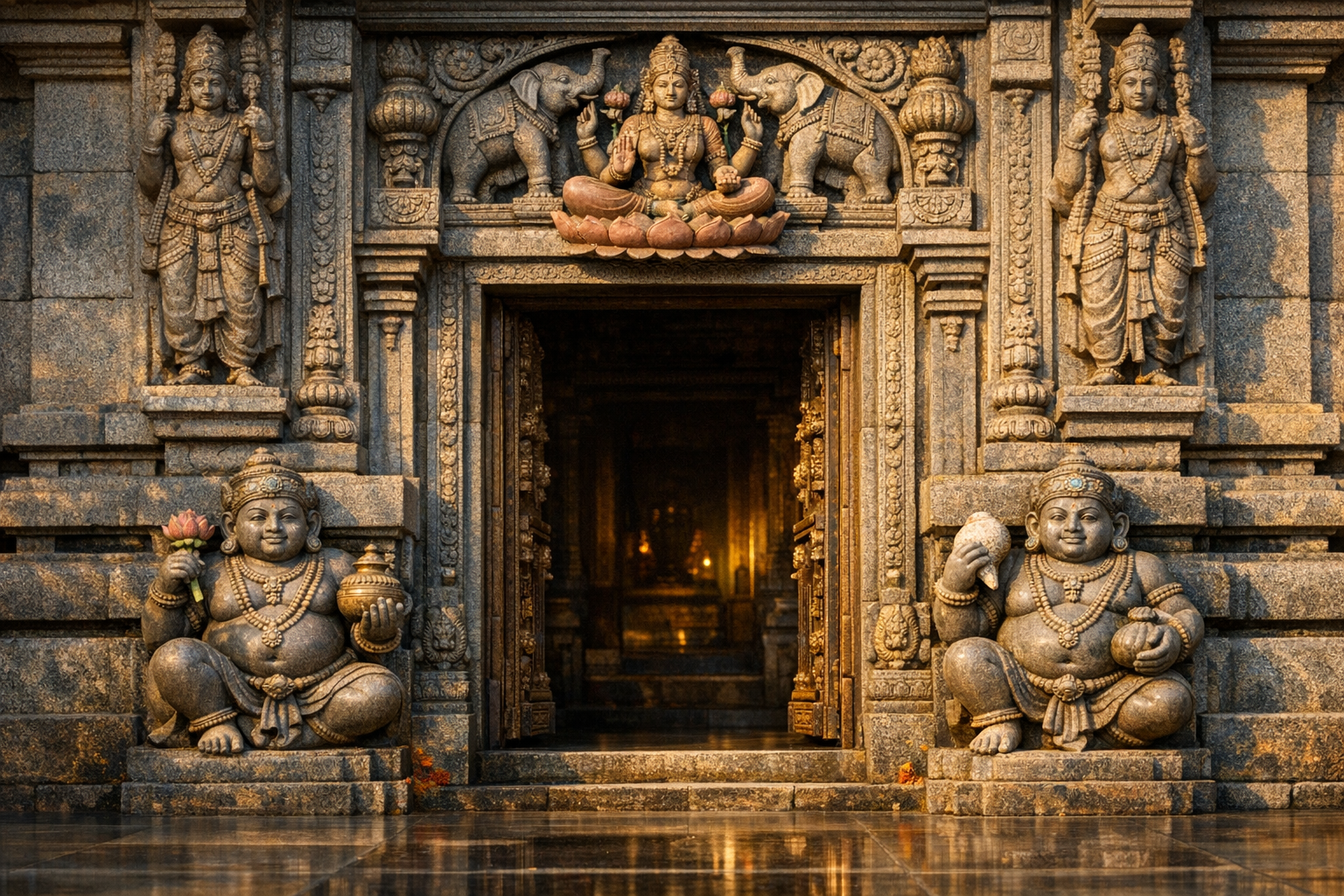
Padma Nidhipaired with Śaṅkha Nidhifunctions as a liminal, auspicious guardian at South Indian temple thresholds, especially in Tamil Nadu. Grounded in Agamic and Śilpa-śāstra prescriptions, the pair integrates with dvarapālas and Gaja-Lakṣmī to create a complete doorway program of protection, grace, and prosperity. As personifications of Kubera’s treasures, these compact, pot-bellied figures translate the metaphysics…
-
Ashtadasa Shakti Peethas: A Definitive, Heartfelt Guide to the 18 Sacred Seats of Shakti
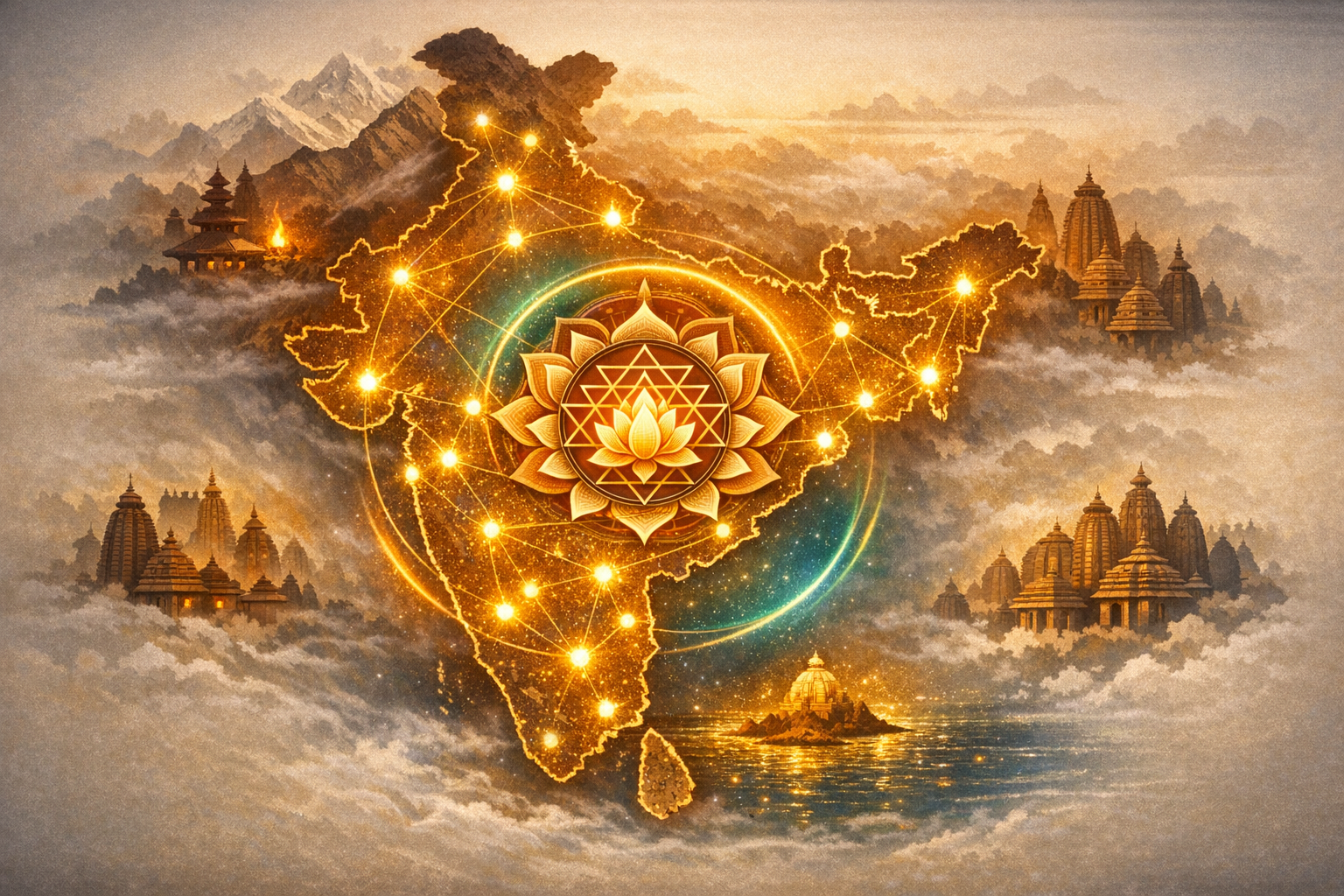
The Ashtadasa Shakti Peethaseighteen revered seats of the Divine Feminineform a pan–South Asian sacred geography integrating myth, ritual, and pilgrimage. This comprehensive guide explains their Purāṇic-Tantric origins in the story of Sati, clarifies why some traditions count 18 while others preserve 51/52/64, and outlines a widely cited working list with regional context. It details the…
-
Global Dharma Catalyst: Dharma Endowment Fund’s 2026 Grants for Hindu Unity and Education

HENB reported from New Delhi on March 12, 2026, that the Dharma Endowment Fund launched a 2026 Grants Programme to support Hindu initiatives worldwide. The programme addresses persistent funding gaps while promoting Hindu unity, education, and heritage within the broader Sanatan Dharma ethos. In line with dharmic pluralism, it encourages inter-dharmic collaboration with Buddhism, Jainism,…
-
Beyond Fear: Dharmic Pluralism in HinduismIshta, Gita, UpanishadsUniting Diverse Paths

This analysis explains how Hinduism replaces fear-based religious identity with a rigorous philosophy of unity-in-diversity grounded in the Upanishads and the Bhagavad Gita. It details the Ishta principle, panchayatana-puja, and the four yogas as practical engines of pluralism that honor individual temperament while aiming at a shared telos. It situates Hindu pluralism within the broader…
-
Decoding Garuda’s Sacred Footwork: Awe-Inspiring Iconography in Hindu Temple Sculpture
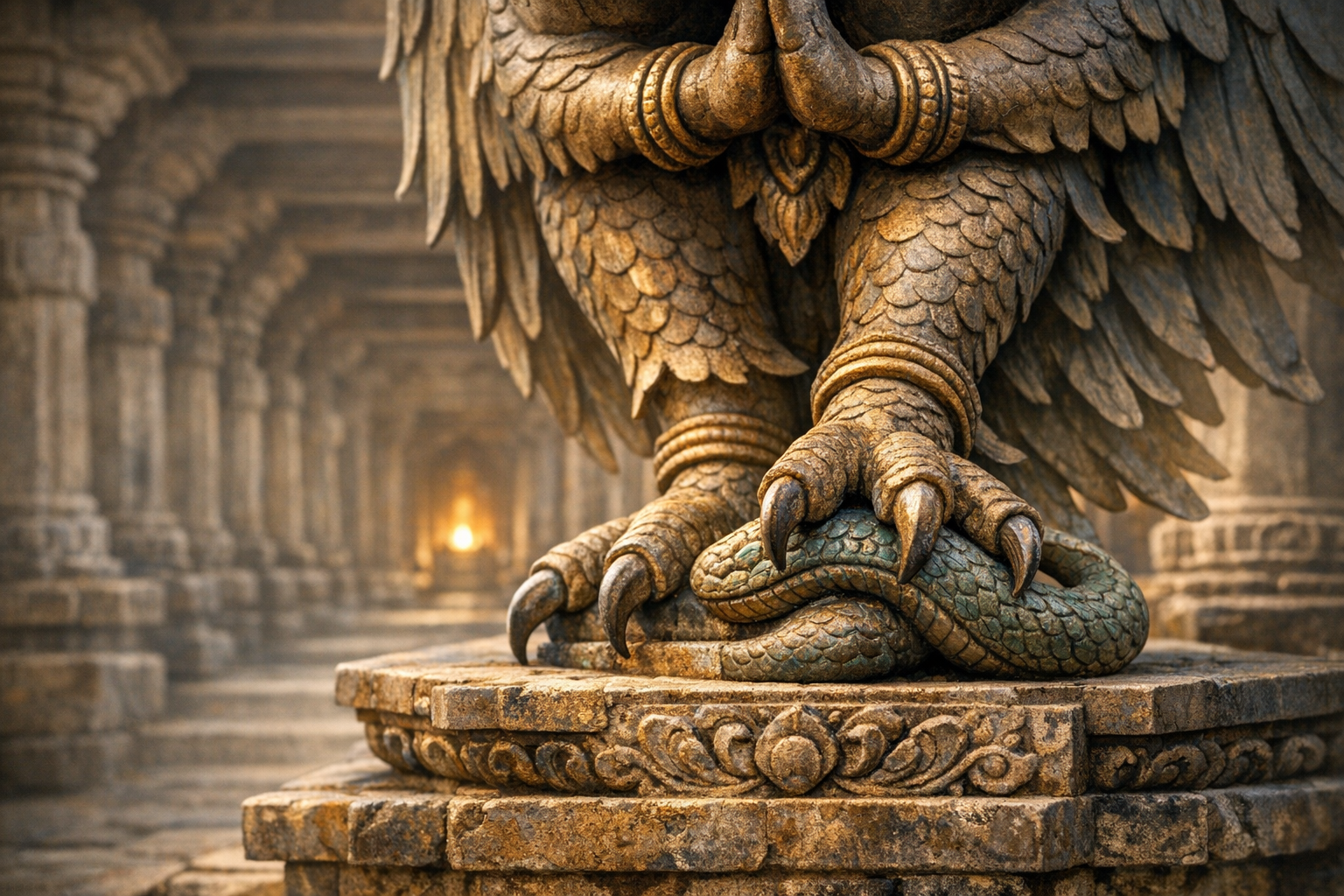
Garuḍa’s distinctive footwork in Hindu temple sculpture is a concentrated language of devotion, protection, and poised service. Guided by Śilpa-śāstra canons and Nāṭya-śāstra foot positions, sculptors use soles, arches, and talons to encode humility before Viṣṇu, readiness for action, and sovereignty over nāgas. Regional workshopsfrom Chola bronzes to Kalinga stone and Hoysala carvingstranslate these themes…
-
Shreyas vs Preyas: Katha Upanishad’s Timeless Guide to What Truly Lasts in Life

The Katha Upanishad presents a precise framework for choosing between what is permanent (śreyas) and what is fleeting (preyas), dramatized in the dialogue between Naciketas and Yama. It clarifies how prosperity and pleasure can be integrated under dharma and directed toward moksha, rather than rejected. The chariot allegory offers a technical model of inner governancesenses,…
-
Shani Sade Sati for Meena Rashi: Effects, Timelines, and Remedies for Viraya Shani

Shani Sade Sati for Meena Rashi begins when Saturn enters Aquarius, initiating the first 2½-year phase called Viraya Shani. Aquarius is Saturn’s moolatrikona, so the transit emphasizes discipline, accountability, and karmic closure more strongly than usual. This analysis outlines the 2023–2025 timeline (sidereal), the 12th-bhava themes of expenses, retreat, foreign travel, and spiritual inquiry, and…
-
Jagath Samhara Moorthy: How Shiva’s Cosmic Dissolution Fuels Renewal and Liberation

Jagath Samhara MoorthyShiva as the cosmic dissolverexpresses a lawlike rhythm in Hindu cosmology where endings prepare the ground for renewal. Drawing on the Puranas, Upanishads, and Shaiva philosophy, the article clarifies how samhara operates within the five divine acts: creation, maintenance, dissolution, concealment, and grace. It explains the four types of pralaya and situates them…
-
Gangaur 2026: Sacred Gauri–Shiva Vrat, Dates, Vidhi, and Rajasthan’s Grand Processions

Gangaur 2026, Rajasthan’s iconic celebration of Gauri and Shiva, culminates on Chaitra Shukla Tritiya21 March 2026 in most Indian Panchangsafter a sequence of springtime observances that often begins on Pratipada. This guide explains the festival’s meaning, the Ganagauri Vrat, and why Isar–Gaur worship symbolizes a balanced and auspicious household. Readers learn how Sinjara, khetri sprouting,…
-
Madhukrishna Trayodashi 2026: Auspicious Date, Calendar Mapping, and Complete Pradosh Puja Guide

Madhukrishna Trayodashi (Madhu Krishna Trayodasi) in 2026 falls on March 17, aligning as Falgun Krishna Trayodashi in the Amanta system (Marathi, Gujarati) and Chaitra Krishna Trayodashi in the Purnimanta system (North India). The observance highlights Trayodashi’s traditional sanctity for Lord Shiva, with Pradosh Vrat performed if Trayodashi prevails during the evening Pradosh Kaal. The article…
-
Daily Rashi Stotrams: Precise Moon‑Sign Prayers to Strengthen Mind, Karma, and Well‑Being

Rashi Stotrams are daily prayers aligned with the Moon sign (Janma Rashi) in Hindu astrology, designed to steady the mind and harmonize karmic tendencies through sacred sound. This guide explains how to select the appropriate hymn using classical sign-lordship, then details practical recitation advice for all twelve rashisfrom Mesham (Aries) through Meenam (Pisces). It clarifies…
-
Inside the Kapalikas: Fierce Tantric Shaivism, Bhairava Devotion, and Charnel-Ground Rites

This in-depth overview situates the Kapalikas within Tantric Shaivism and early medieval Indian history, explaining why the ‘skull-people’ carried kapala bowls and worshipped Shiva as Kala Bhairava. It clarifies how cremation-ground observances, bone ornaments, and fierce offerings served a disciplined non-dual soteriology rather than mere spectacle. Readers gain a careful separation of polemic and practice…
-
Varuni Yog 2026 Explained: Maha Varuni Parva Guide, Auspicious Timings and Rituals

Varuni Yog 2026, anchored in Śatabhishā Nakshatra and the guardianship of Varuṇa, is widely regarded as a powerful muhurat for beginning education and initiating well-planned ventures. Because nakshatra-based observances are assigned by local sunrise rules, the exact civil date and usable timings vary by location and must be taken from a reliable regional pañcāṅga. A…
-
March 19, 2026 Panchang: Amavasya to Shukla Pratipada, Essential Muhurta, Nakshatra & Rashi

Thursday, March 19, 2026 marks a powerful threshold in the Hindu calendar: Amavasya lasts until 6:40 AM, followed by Shukla Paksha Pratipada. Understanding this tithi shift helps time closure-oriented observances before 6:40 AM and fresh starts afterward. The guide explains key Panchang componentsTithi, Nakshatra, Rashi, Rahukalam, Yamaganda, Gulika, Choghadiya, and Abhijit Muhurtafor precise, location-aware planning.…
-
Ravana Grounded: Kamban’s Earthbound Abduction of Sita and the Curse That Altered Dharma

This analysis explores how Kamban’s Tamil Iramavataram reshapes the abduction of Sita into an earthbound ordeal governed by a curse that limits Ravana’s agency. In contrast to Valmiki’s aerial abduction, Kamban’s version compels Ravana to carry Sita upon a slab of earth, intensifying witness, pathos, and ethical indictment. The study situates Kamban historically and theologically,…
-
After Holi, Alarming Wembley Attacks on Indian Businesses: Evidence, Context, and Safety Steps

A series of post-Holi attacks on Indian-owned businesses in Wembley has unsettled London’s Indian diaspora and raised urgent questions about Hinduphobia, small-business safety, and evidence-led policing. This analysis separates verified facts from online speculation, outlines the UK’s hate crime framework, and explains how incidents move from social media clips to formal investigations. It details practical…
-
How Abhimanyu’s Unjust Death Became Kurukshetra’s Moral Pivot and the Kauravas’ Downfall

The thirteenth day of the Mahabharata’s Kurukshetra War became a moral and strategic turning point when Abhimanyu, isolated inside the Chakravyuha, was killed in manifest violation of Dharma-Yuddha. The Kauravas’ many-on-one assault, disarming of a youth, and final mace blow against an unarmed warrior gained a tactical kill but forfeited legitimacy. Arjuna’s vow to slay…
-
Laya in Hinduism: The Transformative Power of Dissolution, Rhythm, and Unitive Awareness

Laya, from the Sanskrit root lī, signifies dissolution, absorption, and reposean idea that unites Hindu cosmology, contemplative practice, yoga, and the aesthetics of Indian classical music. This long-form, technical exploration clarifies how laya differs from pralaya, why Advaita Vedānta treats laya as a potential pitfall without viveka, and how Yoga, Laya Yoga, and Nāda Yoga…