
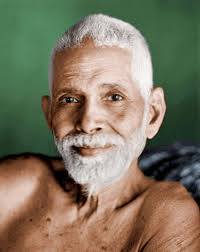
The question that often arises in conversations about Indian spirituality is whether a realized master in the mould of Sri Ramana Maharshi can still be encountered in contemporary life. The inquiry is not merely biographical or sentimental; it concerns the continuing vitality of the guru tradition, the possibility of Self-Realization, and the role of living presence in a world increasingly shaped by speed, spectacle, and intellectual restlessness. In Srikalahasti, the darshan of Sadguru Subrahmanyam offers a compelling response to that question.
This encounter took place during a pilgrimage connected with Tirupati, the celebrated sacred region in the Eastern Ghats. The stay in Tirupati was marked by the hospitality of Sri Vikram, a Chartered Accountant based there, who arranged accommodation at the Sri Aurobindo Guest House. Yet the journey gradually moved beyond Tirupati toward Srikalahasti, a town of deep religious significance, especially because of its association with the Panchabhuta temple representing Vayu, the element of air. In the wider map of Hindu pilgrimage, Srikalahasti is not only a temple town but also a landscape of breath, movement, surrender, and subtle inwardness.
The visit was prompted by Sri Mohana Krishna of Hyderabad, who spoke of a Jnani residing in Srikalahasti, a spiritual presence whose simplicity evoked memories of Bhagwan Sri Ramana Maharshi. Such comparisons require care. A realized being cannot be reduced to resemblance, nor can spiritual stature be measured through external markers. Yet the reference to Ramana Maharshi signaled something precise: silence as teaching, Self-inquiry as the center of spiritual life, and the absence of institutional grandeur as a sign of inner sufficiency.
The road from Tirupati to Srikalahasti became part of the preparation. Sri Vikram arranged the car, and the journey passed through dusty roads, small villages, roadside tea shops, bakeries, provision stores, and fruit sellers. Hills and patches of greenery appeared at intervals, lending the travel a quiet rhythm. Such landscapes often do what formal instruction cannot: they slow the mind, reduce the noise of expectation, and prepare the pilgrim for a subtler form of attention.
The destination was not a large ashram, a public institution, or an ornate spiritual center. It was a simple white-walled home. This detail is important because it frames the nature of the encounter. The setting had no visible apparatus of authority: no crowd-management systems, no formal discourse hall, no ceremonial architecture, and no public display of spiritual power. The courtyard and the room carried a quietness that seemed more significant than ornament.
For about an hour, Sadguru Subrahmanyam Garu sat with a small group of close disciples and visitors. The atmosphere was marked by silence rather than instruction. There were no elaborate introductions and no structured sermon. The darshan unfolded as presence rather than performance. In the language of Indian spiritual traditions, this distinction is essential: the guru is not merely a speaker of doctrine, but a living field of awareness in whose presence the seeker begins to recognize the limitations of habitual thought.
The silence in that room was not empty. It had the density of attention and the tenderness of inward repose. What emerged from Sadguru Subrahmanyam was not charisma in the worldly sense, but calmness. It was not persuasion, but serenity. The experience suggested that in authentic spirituality, authority need not announce itself. It may appear as stillness, as humility, as a gaze that does not demand response, and as a presence in which time appears to soften.
Srikalahasti is often described by devotees as the mancham of Sadguru Subrahmanyam’s life and teachings. The term conveys more than residence; it suggests a spiritual seat, a ground from which teaching and transmission have quietly spread. His life and work are associated with Telugu writings such as Sadguru Hrudhayam, Sadguru Dharshanam, Gnana Prasoonalu, Ippudu Ikkada Ila, and Paramapadam. These works are understood not merely as devotional literature but as tools for inner clarification, carrying reflections, dialogues, and aphoristic insights intended to awaken the truth already present within the seeker.
The central teaching associated with Sadguru Subrahmanyam is direct and uncompromising: lasting peace is possible only through the realization of the Self. This does not necessarily demand withdrawal from worldly life. Rather, it requires the loosening of false identity, particularly the assumption that the ego is the independent doer, owner, and controller of experience. In this respect, his message stands within the broad Advaita and Upanishadic framework while remaining practical and immediate.
One of his statements, “A path to eternal happiness was discovered by Sadguru Subrahmanyam. Eternal happiness can only be attained through realizing your true Self,” expresses the classic spiritual distinction between transient pleasure and abiding peace. The former depends on circumstance, possession, recognition, or success. The latter arises from knowledge of the Self, which is not produced by external conditions and therefore is not destroyed by their change.
Another concise teaching, “Everything, including myself, exists within me,” points toward the experiential core of Advaita. It is not presented as an abstract metaphysical claim meant only for philosophical debate. It functions as an invitation to examine the structure of experience itself. The world, the body, thoughts, memories, identities, relationships, and even the sense of individuality appear within awareness. To recognize this is to begin shifting attention from objects of experience to the luminous ground in which experience appears.
In Gnana Prasoonalu, Sadguru Subrahmanyam is said to echo the Upanishadic insight: “The soul itself chooses whom to reveal itself to. This is the core teaching of the Upanishads.” The statement should not be read fatalistically. It points to the mysterious relation between effort and grace. The seeker may engage in sadhana, devotion, inquiry, ethical refinement, and disciplined attention; yet Self-Revelation is not an egoic achievement. It is received when the conditions of receptivity become transparent enough for truth to disclose itself.
His interpretation of the Bhagavad Gita also reflects this inward orientation. He clarifies that the essence of the Gita does not lie simply in giving up action, known as karma sannyasa, or even in mechanically renouncing the fruits of action. As he states, “Karma renunciation and renouncing the fruits of action is not the essence of the Gita. Erasing the feeling ‘I am the doer’ — that is.” This teaching brings the Gita into daily life with precision. The problem is not action itself, but the egoic claim attached to action.
This insight is especially relevant to householders, professionals, students, and all those who cannot or need not renounce social responsibilities. The Gita’s path becomes a discipline of inner freedom within action. Work may continue, family life may continue, service may continue, and society may still be engaged. What gradually dissolves is the inner contraction that says, “I alone act, I alone control, I alone possess the outcome.”
The silent darshan in Srikalahasti made these teachings tangible. Sadguru Subrahmanyam was dressed simply, in shorts and a white banian, and the lack of ceremonial display intensified the sense of authenticity. The few devotees present did not appear to be attending a public event; they seemed to be sharing a space of stillness. The power of the moment lay not in formal blessing or doctrinal explanation but in a subtle reordering of attention. The mind became quieter because it was no longer being invited outward.
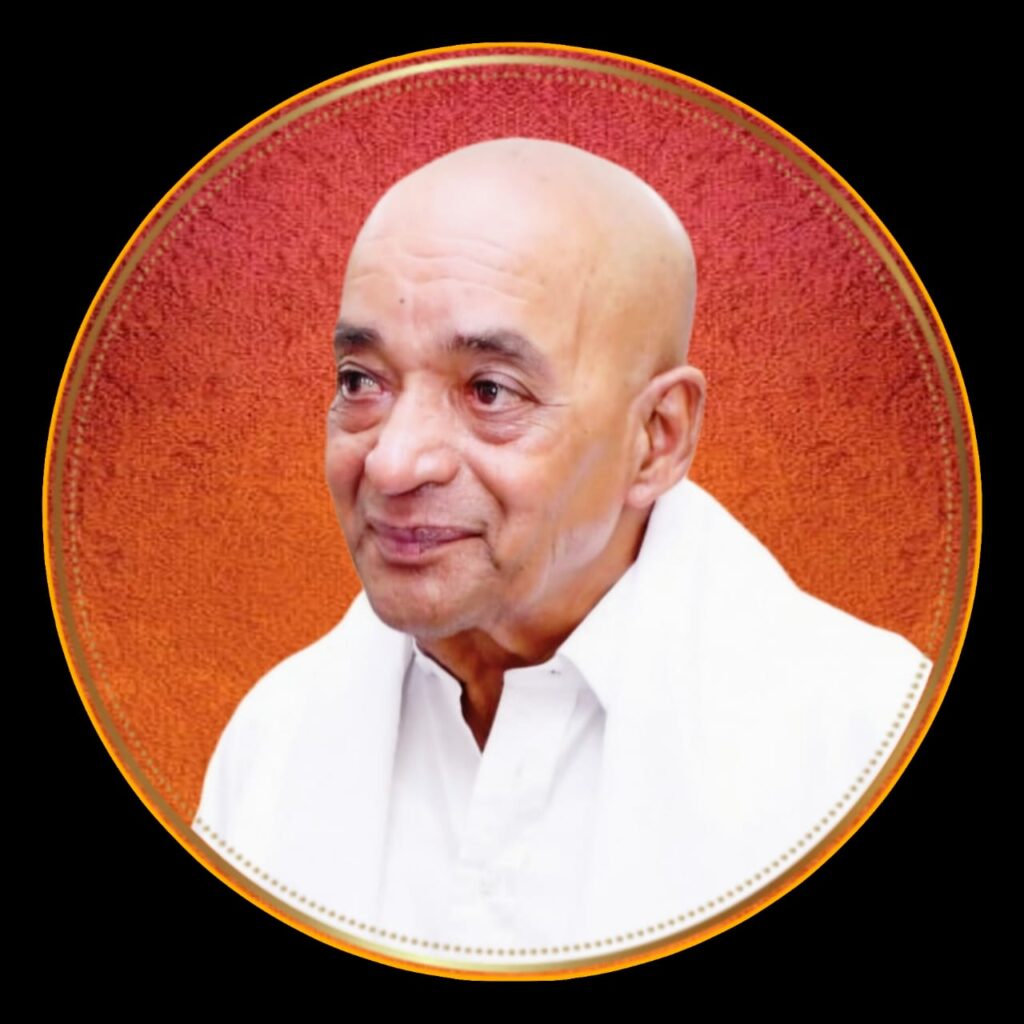
Tea and biscuits were later served. Some devotees conversed with Sadguru Subrahmanyam in Telugu, asking questions and receiving gentle replies. Those unable to follow Telugu were not excluded from the experience, because the deepest communication in such an atmosphere did not depend entirely on language. The calm gestures, the stillness, and the unforced dignity of the setting carried their own meaning. In many Indic traditions, this is understood as mauna-upadesha, instruction through silence.
As the stillness deepened, Sreelakshmi sought permission to sing a bhajan. She offered “Prabhuji Dayakaro Mana mein an baso,” a traditional Hindi bhajan associated in public memory with the musical legacy of Pandit Ravi Shankar ji. The song is a devotional plea for divine compassion and inward residence, asking the Lord to dwell in the heart. In that context, the bhajan was not a performance but a prayer. Sadguru Subrahmanyam listened with a radiant expression, nodded with gentle appreciation, smiled softly, and raised his hand in blessing.
The moment revealed the natural harmony between Jnana and Bhakti. Advaita is sometimes misunderstood as emotionally austere, while devotion is sometimes misread as separate from knowledge. In living Hindu spirituality, these divisions often dissolve. The inquiry into the Self, the surrender of the ego, the singing of a bhajan, the reverence offered to a guru, and the quiet recognition of divine presence can all belong to the same movement of awakening.
What occurred in Srikalahasti was not a display of miracles. There were no dramatic claims, no spectacle, and no attempt to impress the visitors. The rarer experience was the encounter with a living embodiment of stillness. Sadguru Subrahmanyam’s presence functioned like a mirror, reflecting the possibility of self-awareness without agitation. His teaching, “Everything including myself, exists within me,” therefore becomes not only a philosophical statement but a practical doorway into contemplation.
The farewell retained the same quiet grace that had marked the meeting. Sadguru Subrahmanyam agreed to photographs with warmth and simplicity. Sastanga namaskarams were offered, and he remained seated with a benevolent smile, gently waving his hand in blessing as the visitors left. The image of his gaze following them until they passed beyond the gate becomes spiritually significant because it suggests a form of care without possession, blessing without drama, and relationship without dependence.
Even after leaving the home, the stillness continued to linger. During the return journey, Sri Vikram spoke about personal struggles and how Sadguru Subrahmanyam’s intermittent guidance and benign presence had contributed to inner transformation. Such testimony is meaningful because it places the guru’s influence not in abstraction but in lived human difficulty. Spiritual guidance is tested not in moments of public reverence alone, but in how it helps individuals face sorrow, confusion, conflict, and moral uncertainty.
The encounter may be understood as both outer and inner pilgrimage. The outer movement was from Tirupati to Srikalahasti, from a known sacred geography to a quiet private home. The inner movement was from expectation to receptivity, from the search for verbal answers to the recognition that silence itself can instruct. This is one of the enduring features of the guru-shishya tradition: the teaching is not always delivered as explanation; sometimes it is transmitted as a quality of being.
The comparison with Bhagwan Sri Ramana Maharshi becomes most intelligible at this level. Ramana Maharshi’s legacy is inseparable from silence, Self-inquiry, simplicity, and the direct question of identity. To encounter a contemporary Sadguru whose presence evokes those qualities is to be reminded that the highest teachings of Sanatana Dharma do not depend on historical distance. They can still appear in living forms, in local languages, in modest homes, and in spaces unmarked by institutional grandeur.
The broader significance of such an encounter also extends to unity among Dharmic traditions. Hinduism, Buddhism, Jainism, and Sikhism all preserve, in different vocabularies, disciplines of ego-transcendence, compassion, self-mastery, inward awareness, and liberation from ignorance. A figure such as Sadguru Subrahmanyam belongs specifically to a Hindu spiritual context, yet the inner values highlighted by his presence–silence, humility, awareness, surrender, and freedom from egoic doership–speak to the wider Dharmic civilizational inheritance.
In this sense, Srikalahasti’s association with Vayu becomes symbolically rich. Air is invisible yet indispensable. It moves without demanding attention, sustains life without announcing itself, and touches all beings without discrimination. The spiritual presence encountered there appeared to share something of this elemental quality: subtle, pervasive, gentle, and life-giving. The Panchabhuta symbolism thus deepens the narrative, connecting temple, landscape, breath, and inner stillness.
The enduring impression of the visit was not emotional excitement but clarity. The world outside seemed softer and lighter after the meeting, not because external reality had changed, but because perception had been quieted. This is one of the practical fruits of authentic spiritual contact. It does not remove the complexity of life; rather, it changes the manner in which life is received. Anxiety loosens, speech becomes less urgent, and the heart begins to recognize peace as an inward possibility.
Over time, the memory of that silent hour continued to deepen. Its value lay in the absence of spiritual jargon, the absence of elaborate ritualism, and the absence of hierarchical spectacle. The teaching was simple, but not simplistic. It directed attention to the Self, to the dissolution of egoic doership, and to the recognition that the highest truth is not distant from ordinary life. Such simplicity requires maturity, because the mind often prefers complexity to directness.
The meeting with Sadguru Subrahmanyam in Srikalahasti therefore stands as a reminder that the spiritual path is not defined by noise, novelty, or public recognition. It is defined by inner transformation. A realized presence may not always speak at length, gather crowds, or offer visible signs of power. Sometimes the most powerful instruction is a quiet room, a gentle smile, a brief blessing, a bhajan offered with devotion, and the unmistakable sense that the Self alone is the source of lasting peace.
For seekers interested in Hindu spirituality, Advaita, the Bhagavad Gita, Upanishads, Self-Realization, and the living guru tradition, the Srikalahasti encounter offers a valuable case study in contemporary sacred experience. It shows how pilgrimage can move from temple to teacher, from geography to consciousness, and from reverence for the past to recognition of the timeless. Above all, it affirms that the silence associated with the great sages of India remains available wherever humility, receptivity, and truth meet.
Inspired by this post on Indica Today.
