
-
Nalakubera’s Curse on Ravana: The Fatal Restraint That Foretold Lanka’s Fall
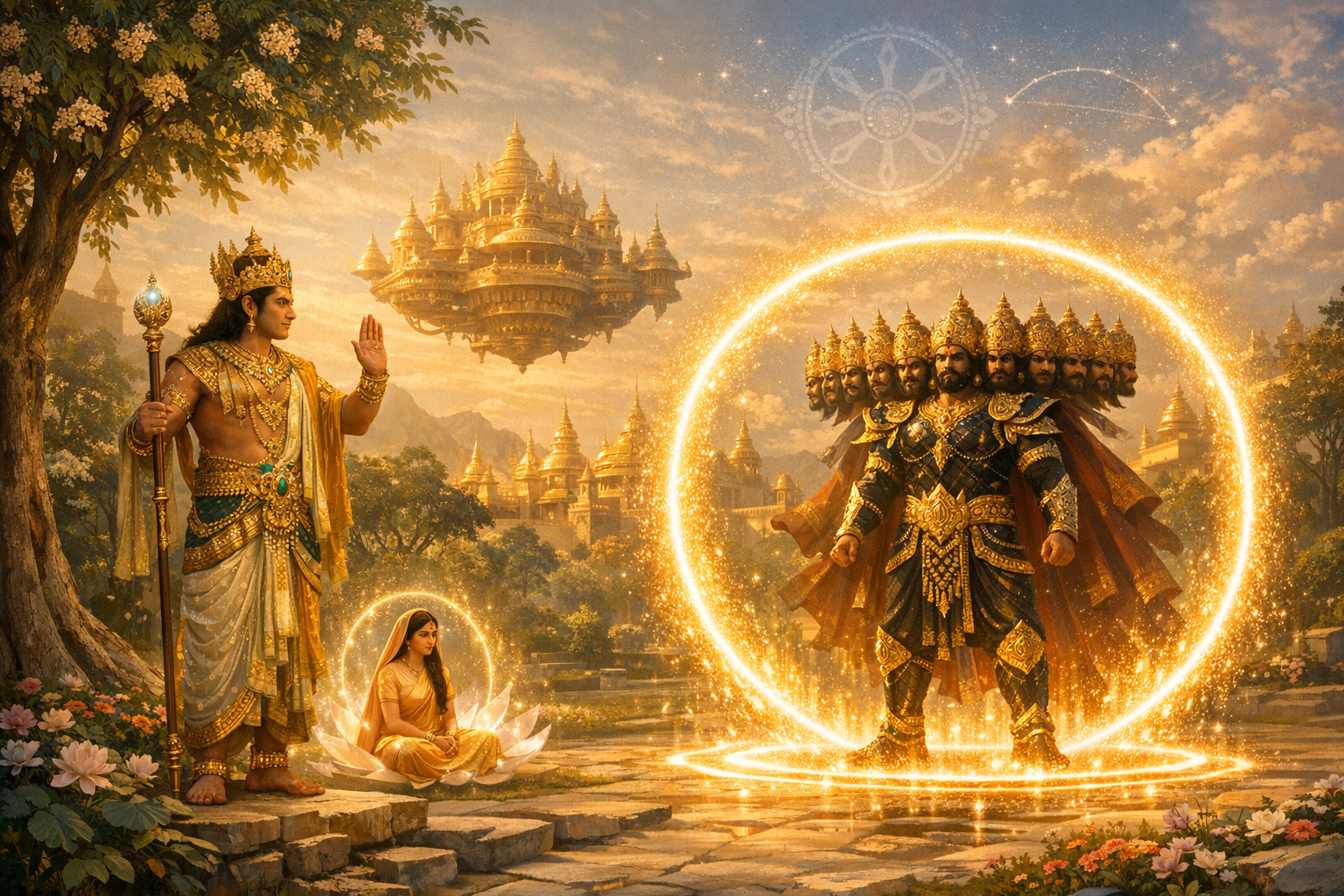
Nalakubera’s curse on Ravana is a decisive ethical and narrative pivot in the Ramayana. It prohibits sexual coercion, preserves Sita’s inviolability, and funnels Ravana’s unchecked desire into strategic hubris that precipitates Lanka’s fall. Grounded in late recensions of the Uttara Kanda and echoed across regional tellings, the episode articulates a consent-centered ethic that subordinates kama…
-
Karma Yoga and a Son’s Devotion: The Transformative Redemption of Jada through Gita 3

This article examines the redemptive tale of Jada through the lens of Bhagavad Gita Chapter 3 (Karma Yoga), showing how a son’s devoted recitation becomes a catalyst for ethical clarity and transformation. It explains why Chapter 3niyatam karma, nishkāma-karma, and loka-saṅgrahaprecisely addresses moral confusion and social responsibility. Readers gain a clear map of Gita 3’s…
-
Kolhasur’s Redemption, Ambabai’s Grace: The Legend Powering Kolhapur’s Mahalakshmi Temple
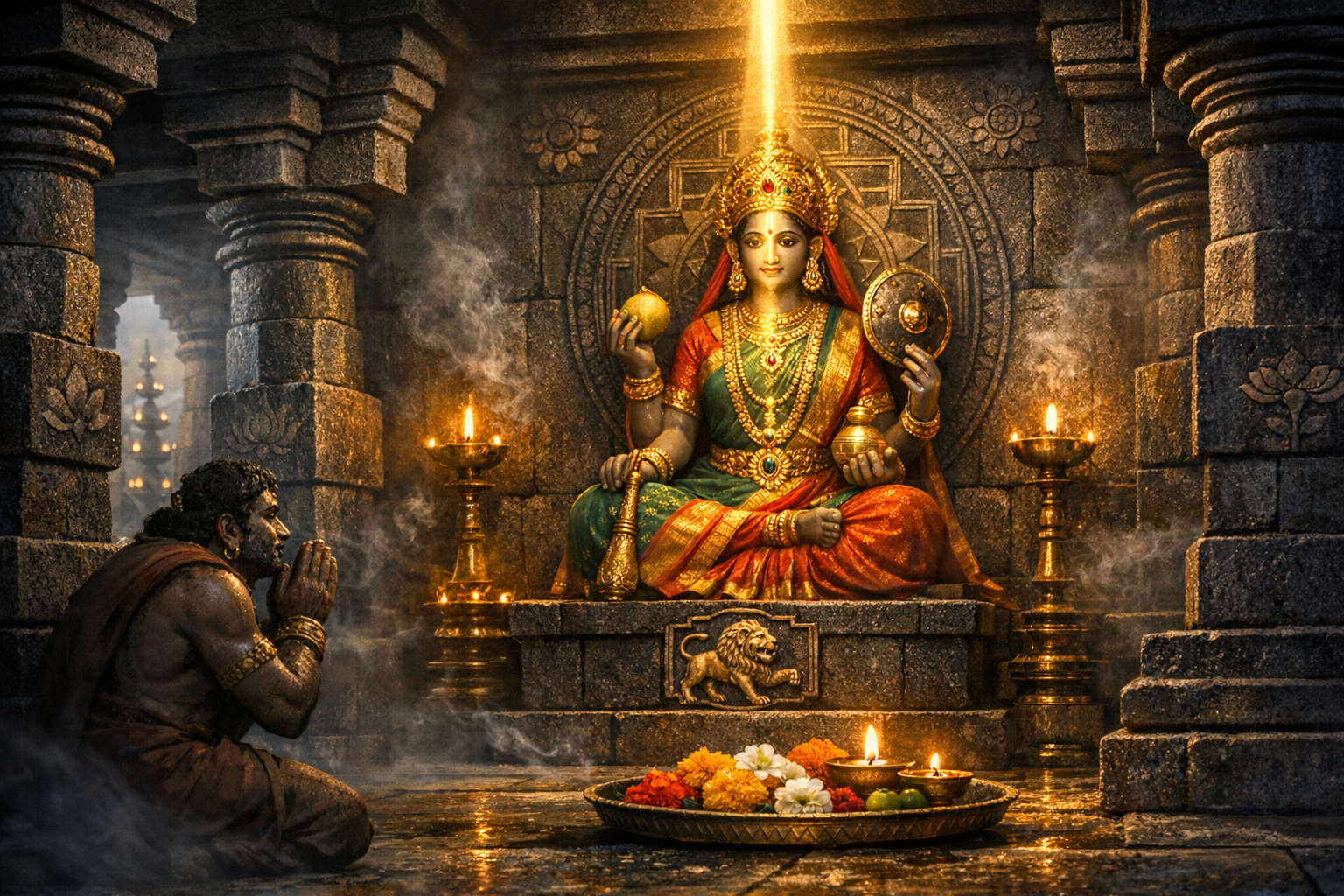
Kolhapur’s name and sanctity trace to a Skanda Purana narrative in the Karavira Mahatmya, where Mahalakshmi (Ambabai) defeats Kolhasur and vows to reside eternally in Karavira-kshetra. The legend culminates in redemption, as the vanquished asura’s boon bestows the city’s nameKolhapursignaling a theology of justice softened by grace. The temple’s layered architectureearly medieval cores, Hemadpanti stonework,…
-
Kaudi Mata of Kashi and Shabari’s Bhakti: Varanasi’s Living Tapestry of Devotion and Equality
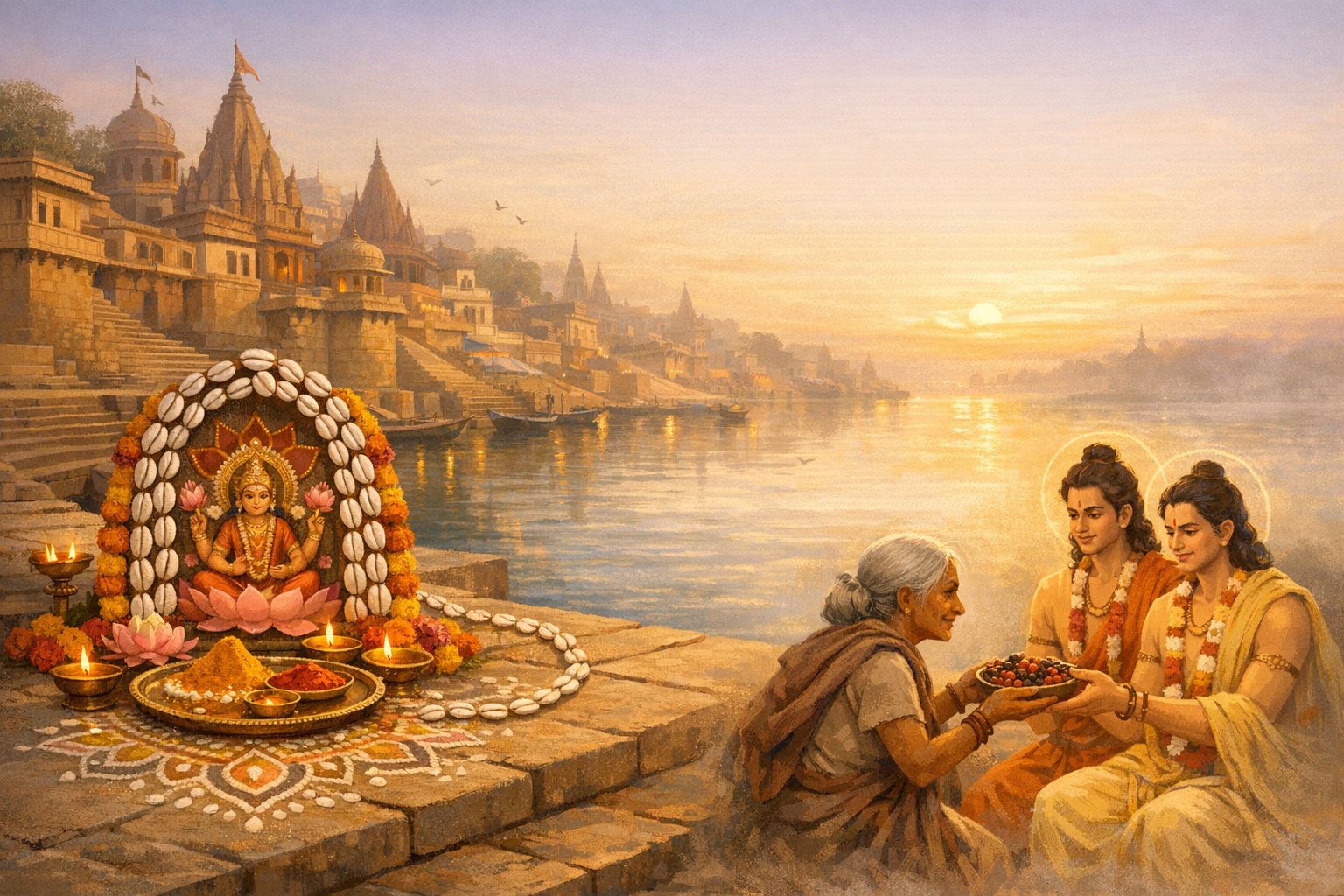
This comprehensive exploration pairs the Kaudi Mata Temple of Varanasirevered as a Lakshmi manifestationwith the timeless devotion of Shabari from the Ramayana to reveal a unified ethic of spiritual equality and compassion. Readers learn how cowrie symbolism and household Lakshmi rituals connect with Kashi’s sacred geography and South Indian pilgrimage culture. The Shabari episode is…
-
The Blessed Step of Pandharpur: Namdev Chi Payari and the Transformative Power of Bhakti

Pandharpur’s famed Namdev Chi Payari is more than a stone step; it is a living threshold where the Bhakti of Sant Namdev meets the grace of Lord Vitthal. This comprehensive account situates the payari within the Warkari Sampradaya, explains its ritual role before darshan, and explores its deep symbolic meaning in temple architecture and spiritual…
-
Durga Puja’s Spring Origins: King Suratha, Akal Bodhan, and the Purāṇic Timeline Explained
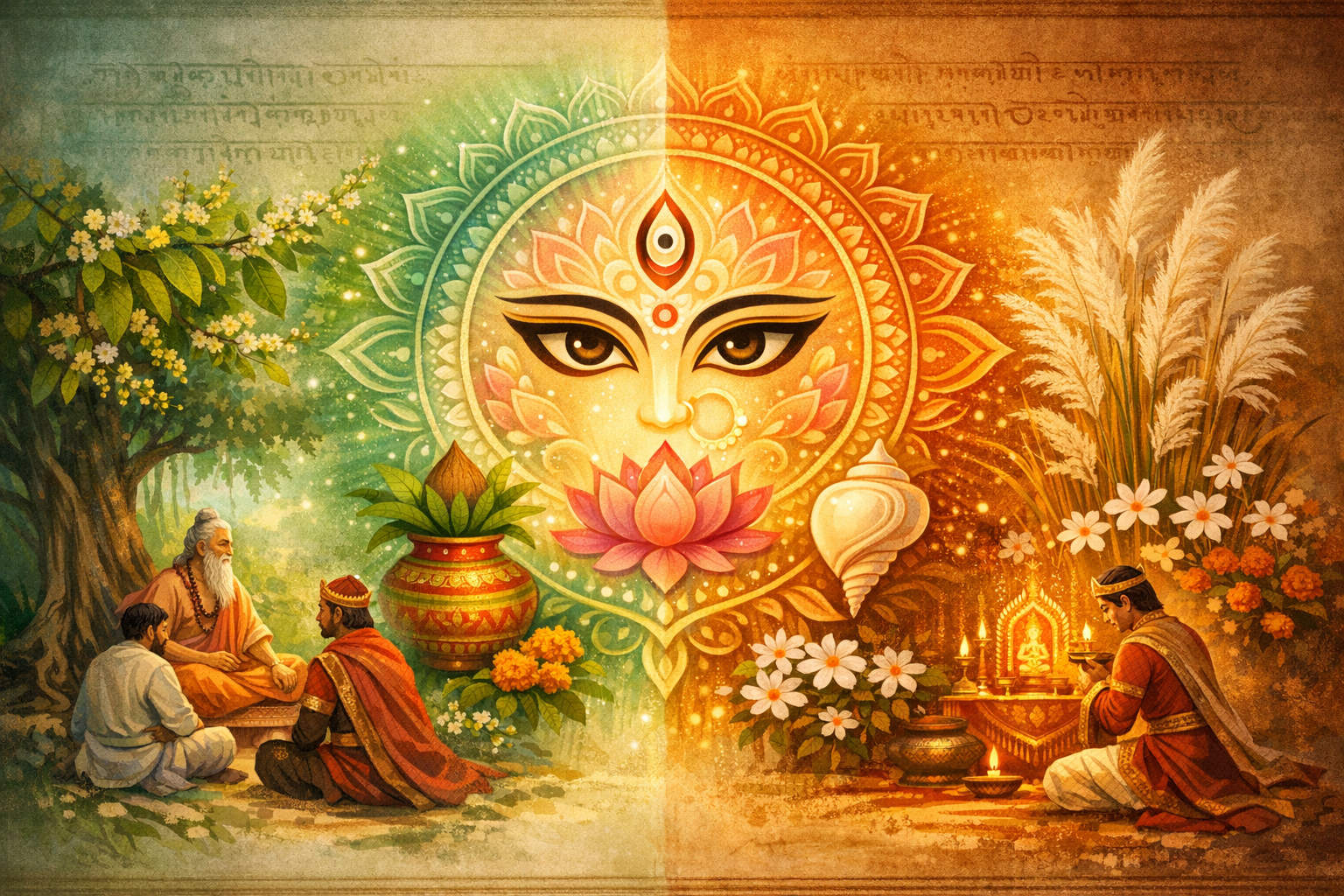
Durga Puja’s origin story is often anchored to the spring cycle (Basanti Puja) through the Purāṇic frame of King Suratha and a merchant in the Markandeya Purana’s Devi Mahatmya. The widely celebrated autumn festival (Sharad Navratri) is associated in regional retellings with Sri Rama’s Akal Bodhanan “untimely” awakening of Maa Durga before the war against…
-
Batu (Vatu) in the Padma Purana: The Transformative Power of Bhagavad GitaEven After Death
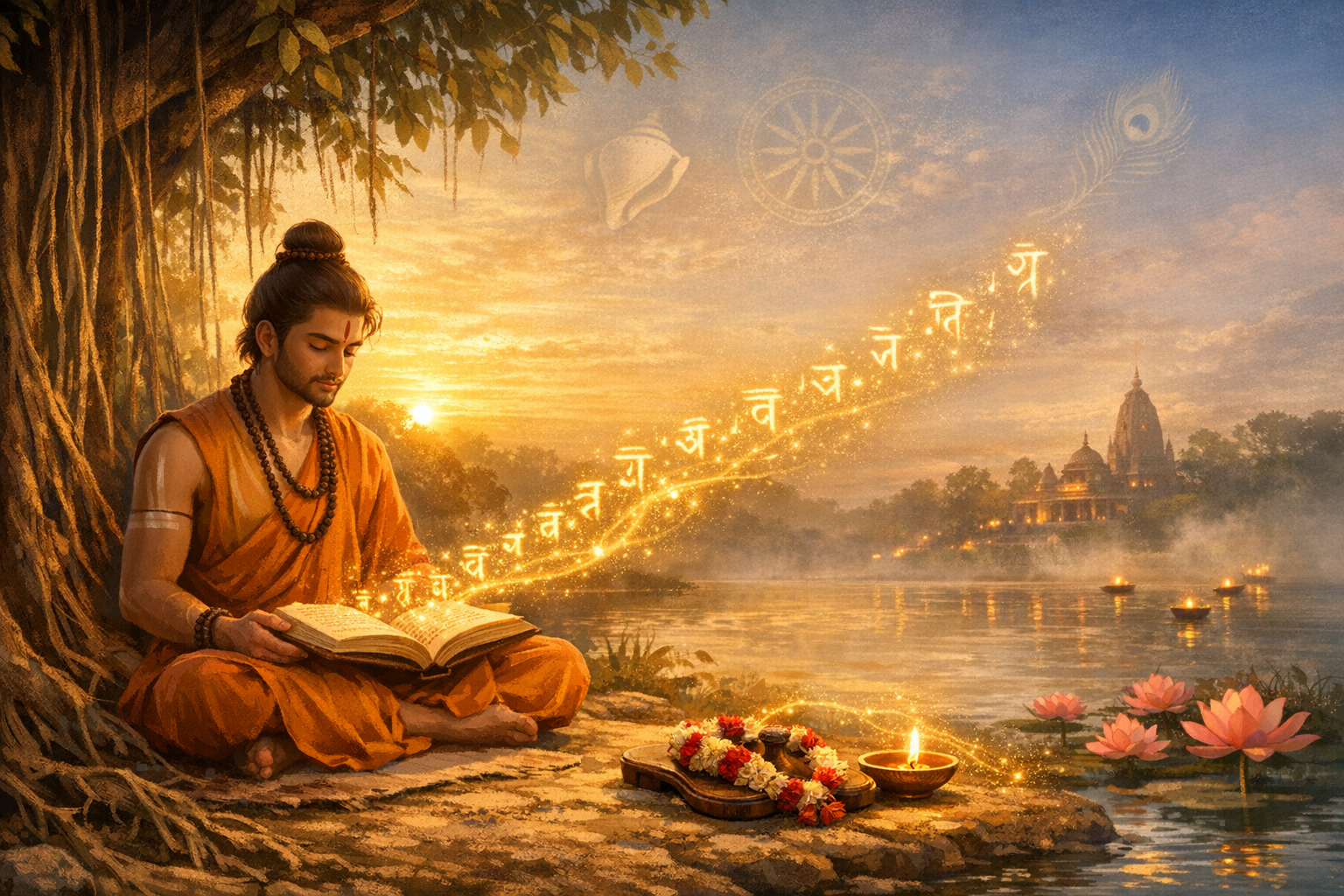
The Padma Purāṇa’s narrative of Batu (Vatu) presents a powerful meditation on the transformative potency of Bhagavad Gita recitation. Framed within the Gītā-māhātmya tradition, the story depicts devoted svādhyāya leading to liberation and radiating grace even beyond death. The article situates this account within Purāṇic theology, where sacred sound (śabda) and disciplined practice generate enduring…
-
Garuda’s Gigantic Ascent: The Epic Struggle with Indra for Amrit, the Nectar of Immortality
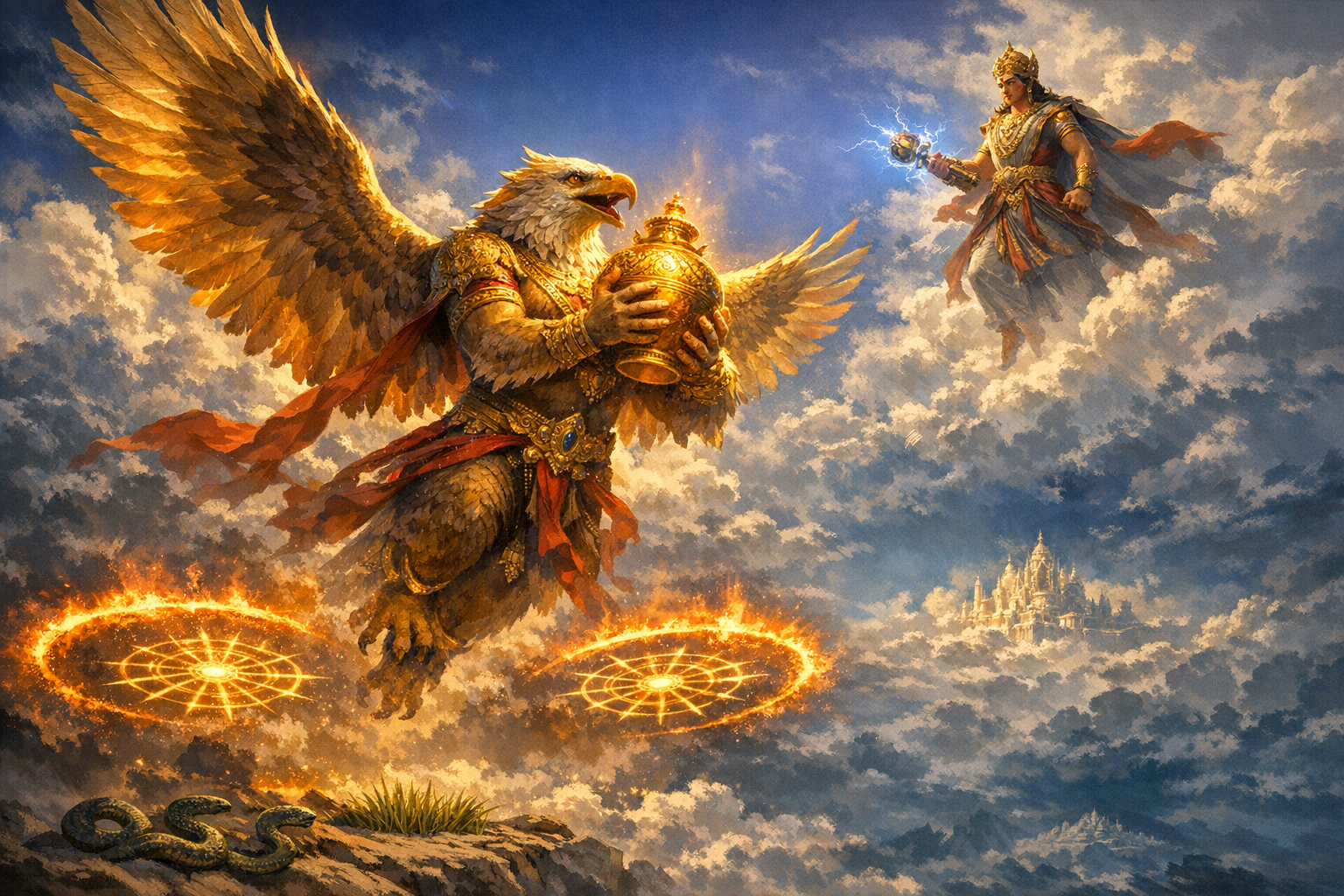
This in-depth exploration traces Garuda’s gigantic ascent to obtain amrit from the devas, centering the story’s ethical core in filial devotion, dharma-yuddha, and disciplined restraint. Readers gain a clear view of the Mahabharata (Ādi Parva) sources, with careful links to later Puranas such as the Garuda Purana and Padma Purana. The technical details of heaven’s…
-
Uparichara Vasu’s Celestial Vimana: Indra’s Radiant Gift and the Science of Sacred Flight

Hindu scriptures detail many aerial chariots (vimanas), yet the Mahabharata’s account of Uparichara Vasu’s crystal flying chariotbestowed by Indraoffers a uniquely technical and ethical model of sacred flight. This analysis situates the episode in Adi Parva, explains how “crystal” encodes clarity and accountability, and shows why mind-directed motion (manojava) expresses an indigenous science of cognition…
-
Brahma’s Warrior Deed: Defeating Vajranabha and Sanctifying Pushkar’s Sacred Lakes
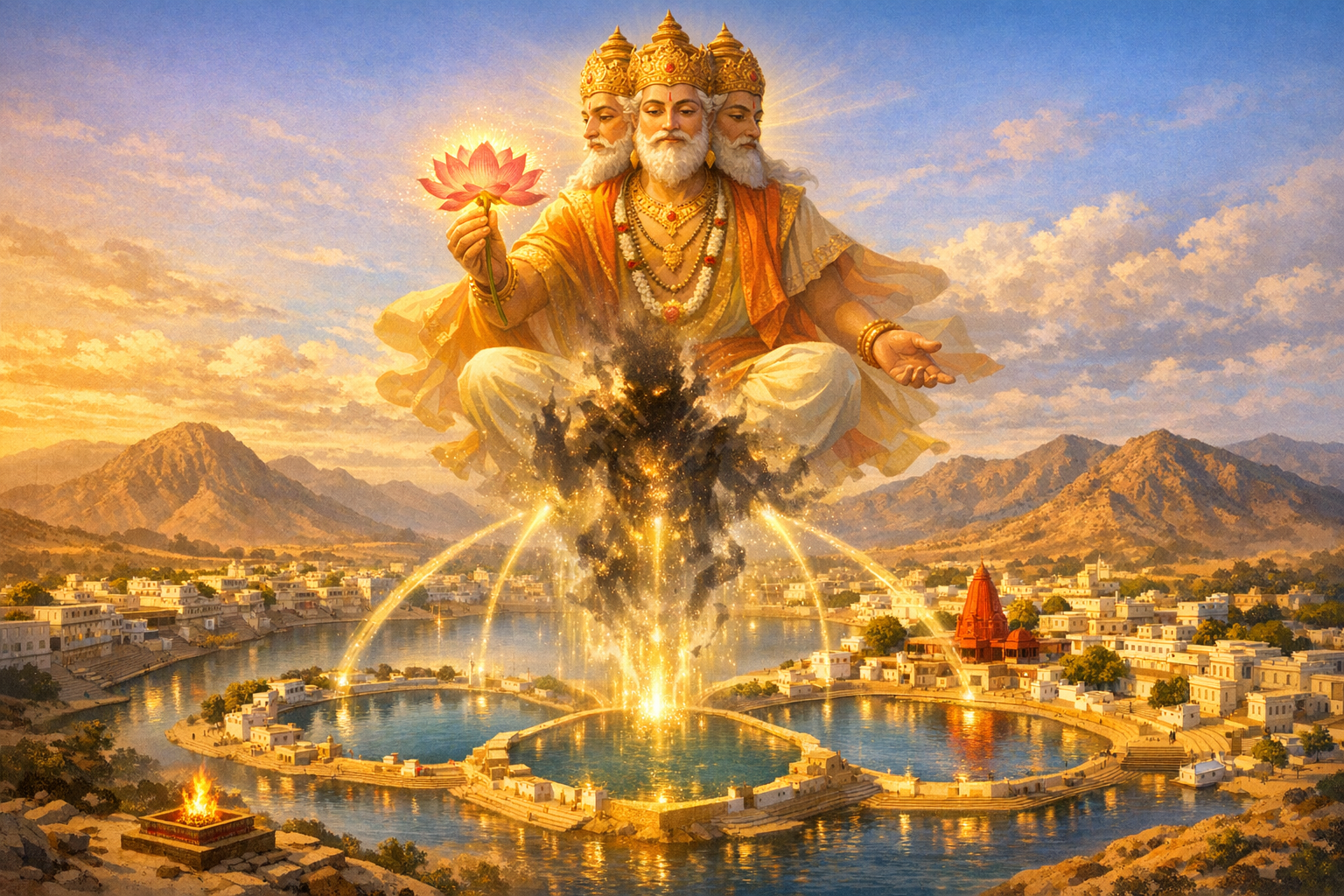
This long-form exploration examines the Pushkar cycle in which Brahma defeats the asura Vajranabha and consecrates three sacred lakes. Drawing on Padma Purana and Skanda Purana, it clarifies textual variants, names, and ritual protocols that frame the episode as a classic case of Dharma-Yuddha. The discussion links etymology, landscape, and liturgy to explain how Pushkar’s…
-
Narmada River’s Sacred Genesis: How Shiva’s Tapasya Shaped India’s Spiritual and Ecological Lifeline

This long-form exploration examines the Narmada River’s revered origin in Hindu stories, where it is believed to arise from the sweat of Shiva’s tapasya at Amarkantak. It situates the legend within the Skanda Purana’s Reva-khanda while tracing the river’s westward journey through India’s sacred geography, including Omkareshwar and Maheshwar. Readers gain a rigorous grasp of…
-
From Curse to Cosmic Steward: Brahma’s Transformative Boons to Kubera, Lord of Wealth

This study traces Kubera’s ascent from a troubled birth to his installation by Lord Brahma as Dhanada and guardian of the North, showing how austerity and grace transform adversity into stewardship. It clarifies Kubera’s genealogy from Brahma through Pulastya and Vishravas, anchoring his status in a sacred lineage. The analysis synthesizes Puranic and epic motifsPushpaka…
-
Birth of Garuda: Indra’s Arrogance vs Balakhilya Resolve in Kashyapa’s Sacred Yajna
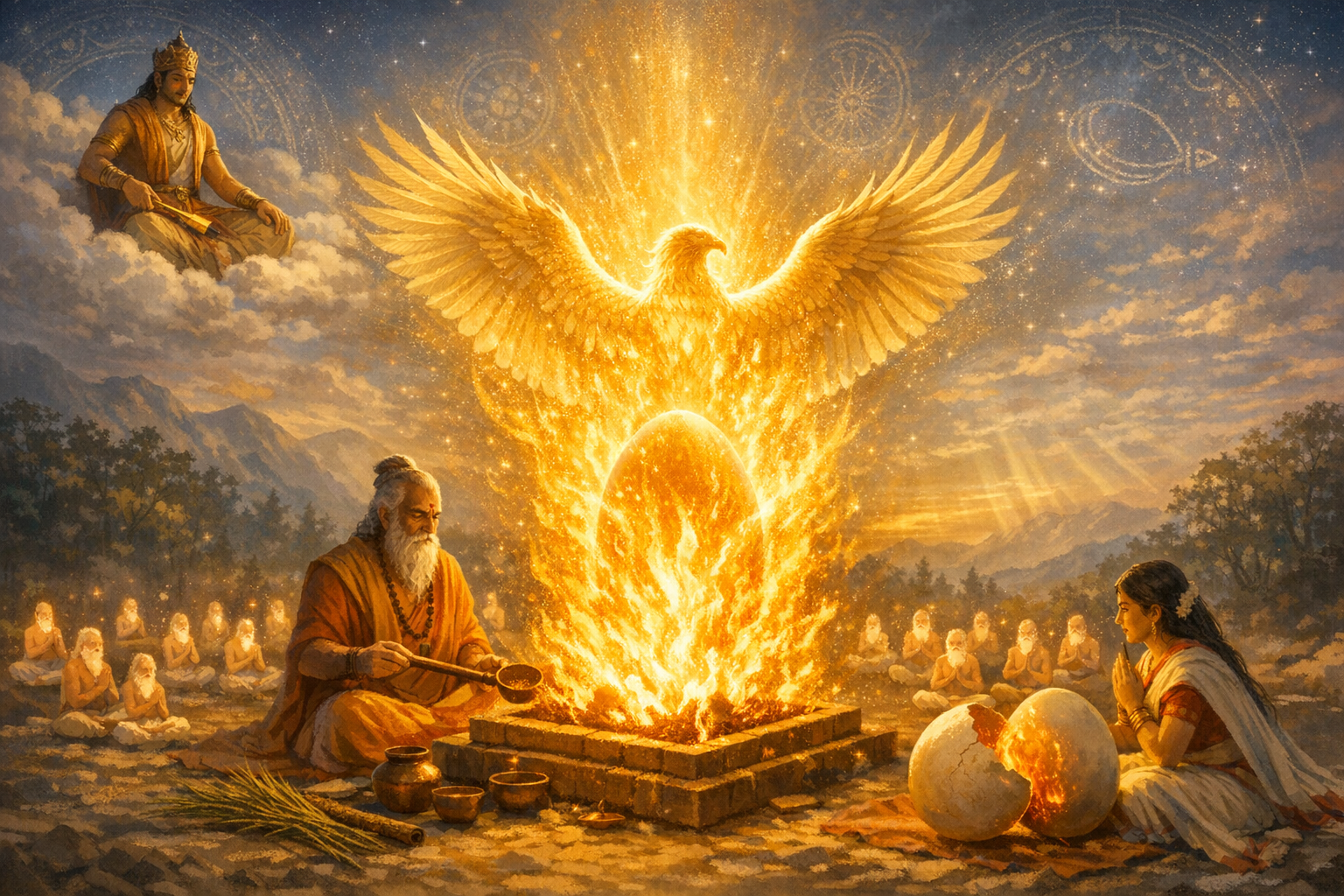
This long-form exploration examines the birth of Garuda as preserved in the Mahabharata (Adi Parva, Sambhava Parva), focusing on how Indra’s pride is counterbalanced by the Balakhilya rishis’ unshakeable tapas and Kashyapa’s wise redirection of yajna. Readers gain a clear, text-grounded account of how a potential cosmic rivalry is transformed into non-rivalrous sovereignty through the…
-
When Ancestors Hung by a Thread: Jaratkaru’s Vision and the Imperative of Lineage
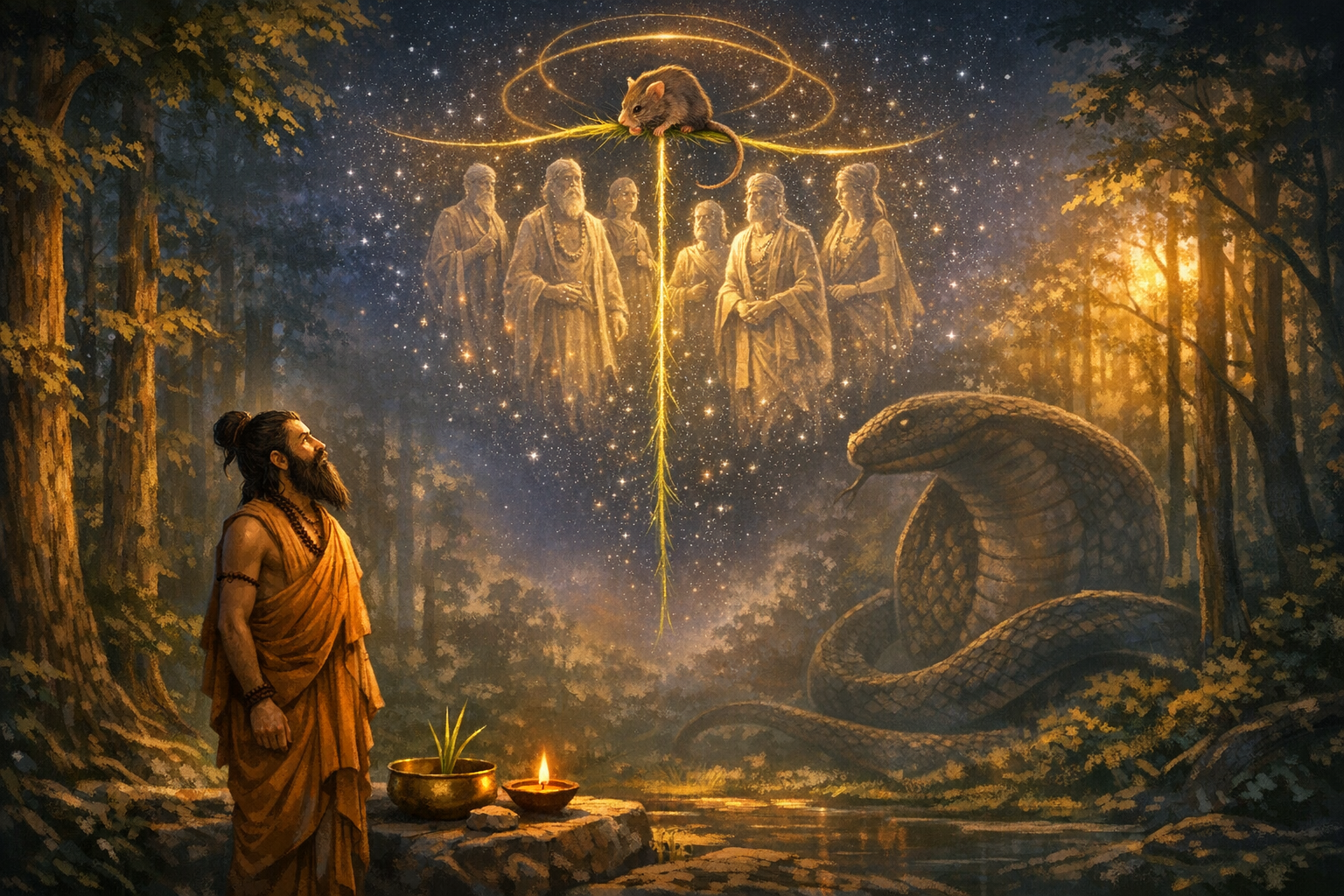
Sage Jaratkaru’s forest vision in the Mahabharataancestors hanging by a single kusa fiberembodies the urgency of pitri-rna, the debt to one’s lineage. The narrative shows how disciplined renunciation can align with householder responsibility to sustain family, memory, and community. Through the birth of Astika and the halting of Janamejaya’s Sarpa Satra, it reveals dharma as…
-
Kalidasa’s Kumārasambhava: Epic Elegance of Śiva–Pārvatī and Skanda’s Sacred Birth

Kumārasambhava by Kālidāsa is a classical Sanskrit mahākāvya that fuses exquisite poetics with profound spiritual philosophy. Through the sacred union of Śiva and Pārvatī and the birth of Skanda (Kārtikeya), the poem dramatizes how tapas, love, and dharma restore cosmic balance. Readers gain a structured overview of the cantos, an introduction to key aesthetic concepts…
-
Bhramari Devi’s Storm of Bees: The Goddess Who Shattered the Demon Aruna’s Boon
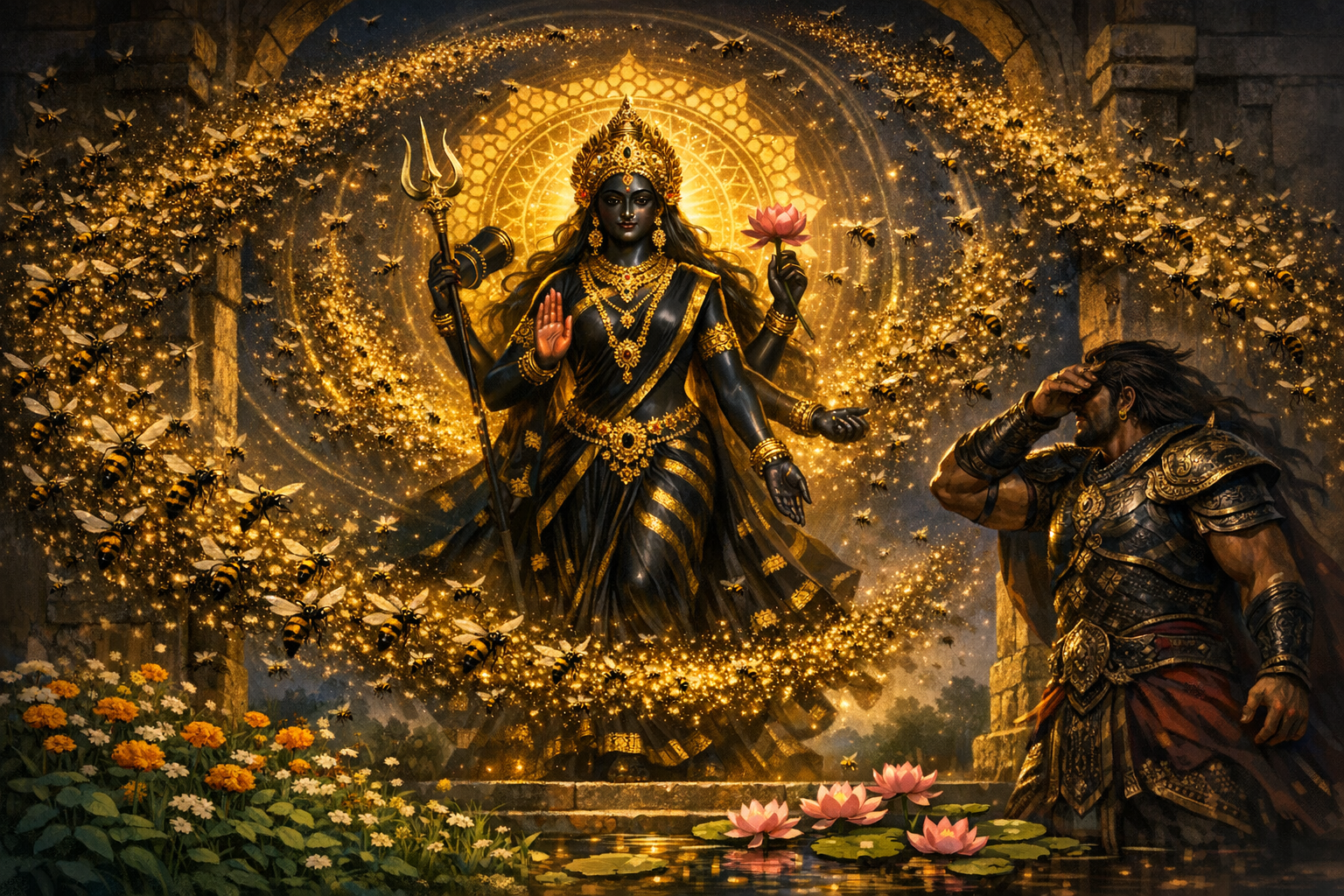
Bhramari Devihailed as the Bee Goddessembodies a dharmic strategy where collective intelligence overcomes seemingly invincible tyranny. Drawing on Shakta traditions and Purana-based retellings, the tale of Aruna (often Arunasura) shows how the Goddess honors the letter of a boon while revealing its limits through a six‑legged, many‑voiced response. The myth’s iconography and ritual practicesfragrant flowers,…
-
Nagarkot Mata Mandir of Kangra: Shakti Peeth legacy, Pandava vision, Mahabharata ties
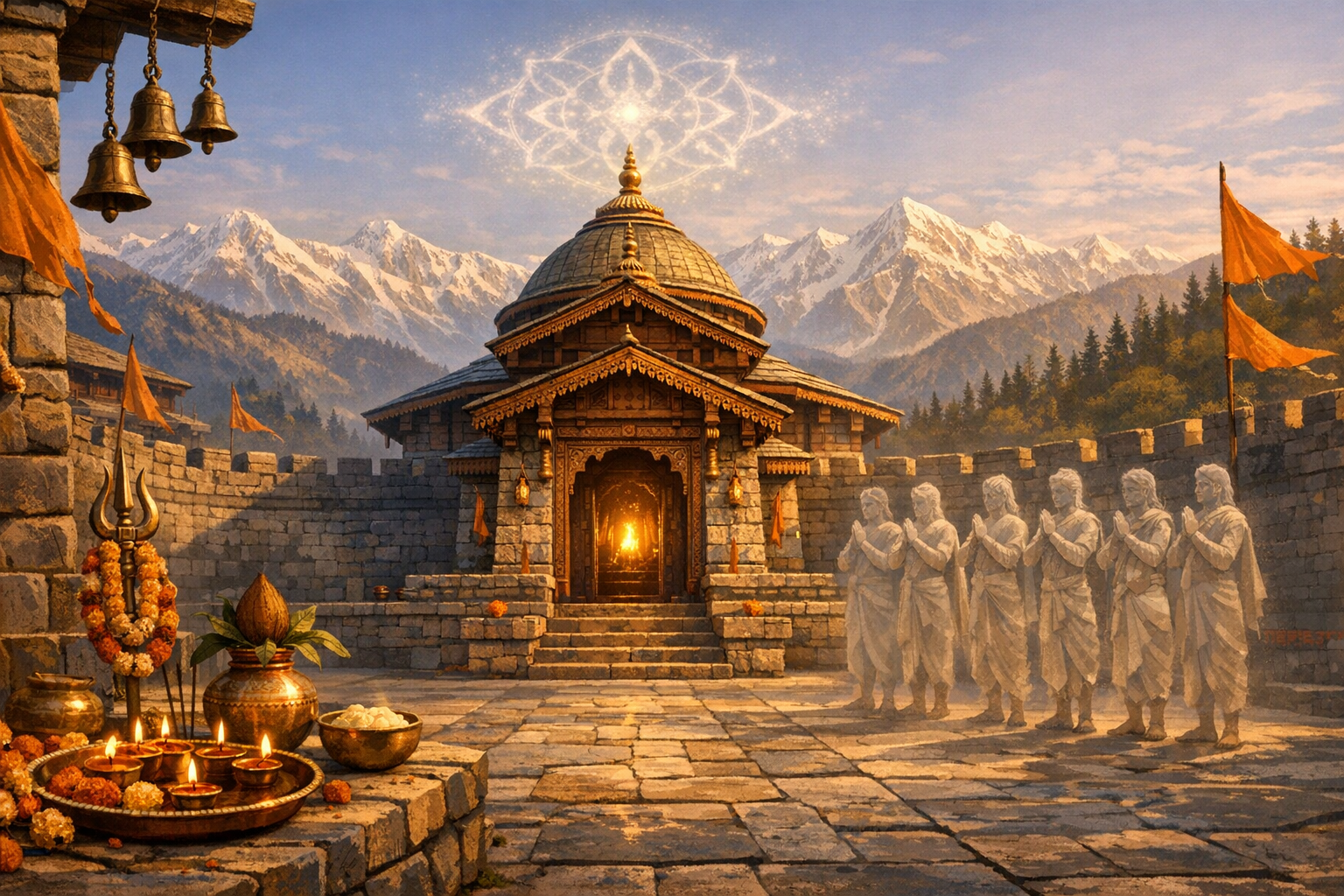
Nagarkot Mata Mandir (Brajeshwari/Vajreshwari) in Kangra, Himachal Pradesh, stands among the most revered Shakti Peeths, where Puranic cosmology and regional lore meet. Local tradition holds that the Pandavas established or restored the shrine at the Devi’s command, embedding Mahabharata memory within Himalayan sacred geography. The temple’s Nagara idiom, fortified precincts, and resilient reconstruction after the…
-
From Brahma’s Treasure to Ravana’s Gates: Lankini, Vijayalakshmi, and Dharma’s Fate
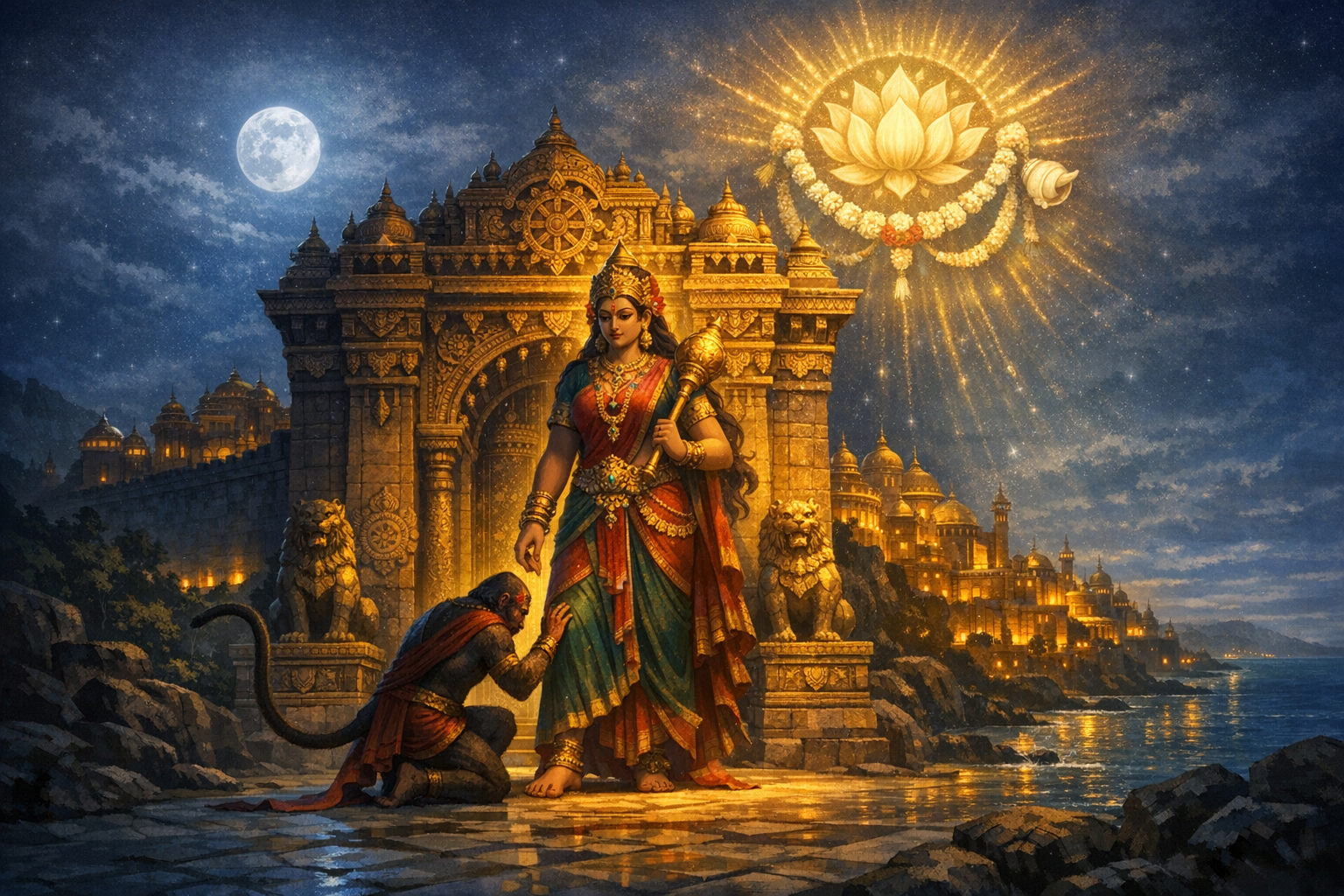
This article explores Lankini (Lankalakshmi) as Lanka’s guardian deity in the Ramayana and explains how her encounter with Hanuman marks the ethical turning point of the epic. It traces Lanka’s origins as a divine ‘treasure’ linked to Brahma, Kubera, and later Ravana, showing how prosperity (śrī) is ethically contingent. It clarifies Vijayalakshmi’s place among the…
-
Plantain-Born Kadaligarbha in Kathasaritsagara: Divine Origins, Relentless Karma, and Vairagya

The Kathasaritsagara’s tale of Kadaligarbha, the plantain-born maiden, fuses literary beauty with precise philosophical instruction. It stages the inevitability of karma while demonstrating how dharma and vairagya (detachment) reshape response without denying consequence. Readers gain a clear map of the classical classification of karmasancita, prarabdha, and agamiand see why only disciplined non-attachment can blunt compulsive…
-
Sunda–Upasunda Unmasked: Mahabharata’s Devastating Lesson on Desire, Unity, and Dharma

The Mahabharata’s tale of Sunda–Upasunda is a rigorous ethical study of desire, unity, and power. Two inseparable asura brothers gain near-invulnerability from Brahma, only to fall when possessive desire fractures their famed cohesion. The strategic creation of Tilottama illustrates beauty as moral intelligence rather than seduction, while Shiva’s multi-faced gaze symbolizes omnidirectional awareness. Read through…