
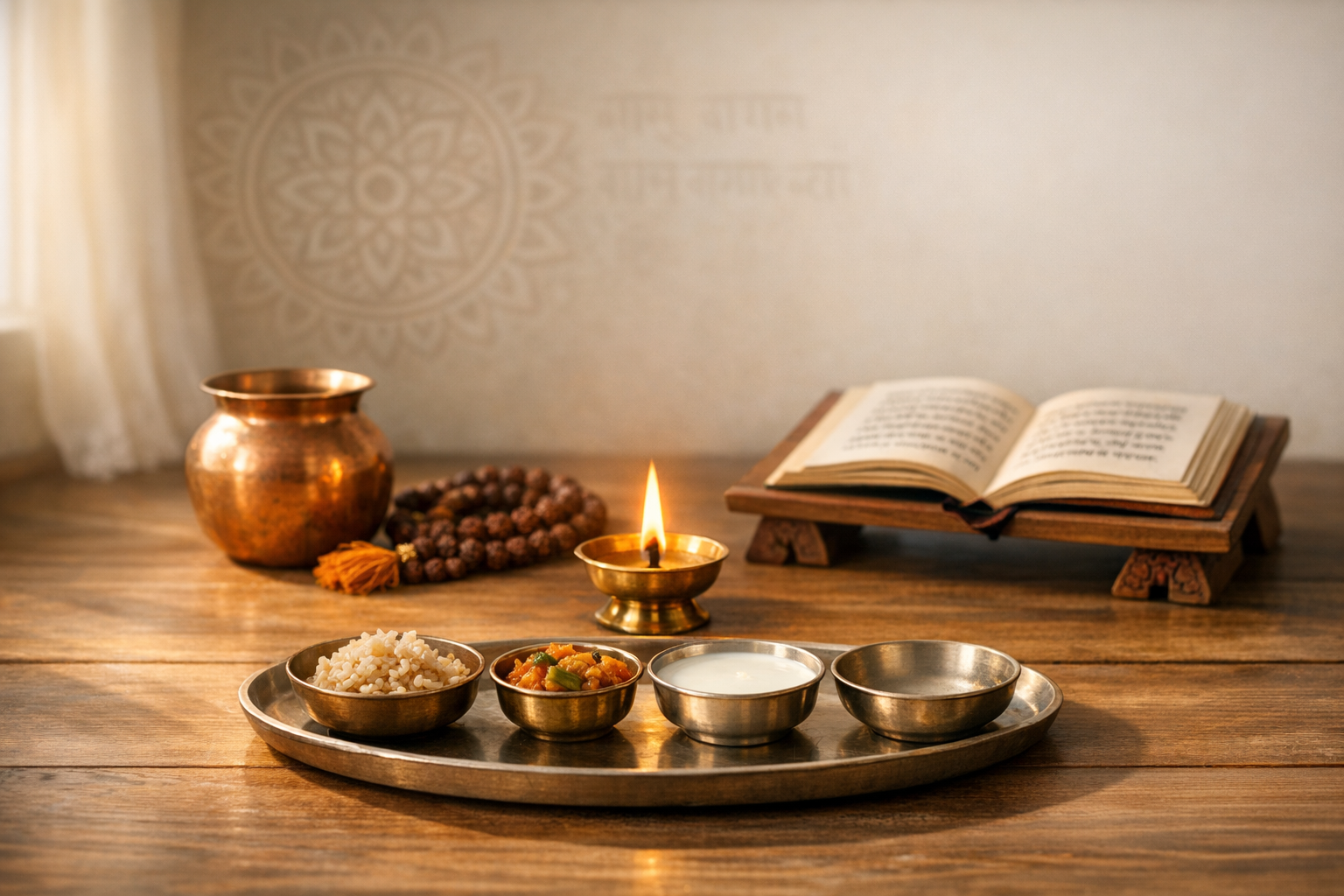
Krichchha Atikrichha Vrata (Kṛcchrātikṛcchra) is one of the most rigorous prāyaścitta (expiatory) vows in the Hindu tradition, prescribed in the Dharmashastras for deep purification and the atonement of serious transgressions. The term kṛcchra literally denotes hardship or austerity, while ati-kṛcchra signifies an intensified, exceptionally severe form of that austerity. Together they describe a structured discipline of fasting and self-restraint designed to restrain the senses, clarify intention, and reorient conduct toward dharma.
Classical sources including Manu Smṛti, Yājñavalkya Smṛti, and the Garuḍa Purāṇa present the vow within a wide taxonomy of expiations (prāyaścittas) calibrated to intention, gravity, recurrence, and restitution. These texts, read alongside other Dharma literature such as Devala-Smṛti and allied Smṛtis, frame kṛcchra-based fasts as therapeutic disciplines: they address the moral-psychological roots of harm, shape habits through tapas (austerity), and restore harmony in the practitioner’s relationships with self, society, and the sacred.
In normative Dharmashastra, Krichchha and Atikrichchha are recommended for grave lapsesdeeds that fracture trust or wellbeing, such as deliberate injury, theft, oath-breaking, serious sexual misconduct, or persistent intoxication and deceit. While the classical texts map specific sins (mahāpātakas and upapātakas) to specific expiations, the broader intent is clear: the vow must be proportionate, conscientiously undertaken, and inseparable from remorse, ethical repair, and a firm resolve not to repeat the offense.
Descriptions of the core Krichchha vary across texts and lineages, but a widely transmitted pattern spans twelve days with progressively stricter intake and heightened inner discipline. Many authorities preserve a four-stage progression in blocks of three days each, moving from limited solid intake to complete fasting. The sequence is not merely dietary; it is a pedagogical arc that cultivates sattva (clarity and steadiness), strengthens self-regulation, and makes space for svādhyāya (scriptural study), japa (mantra recitation), and contemplative silence.
In several recensions of Yājñavalkya Smṛti and commentarial traditions, the twelve-day Krichchha is summarized as follows in essence: for the first three days, strictly rationed food is taken once daily; for the next three days, the once-daily intake shifts to the night; during the next three days, many authorities restrict the diet to simple liquids, often milk or buttermilk; and for the final three days, a complete fast (nirāhāra) is observed. Other lineages preserve closely allied schedules that retain the same pedagogical gradientlimited solids, timed intake, liquid sustenance, then total abstention.
Atikrichchha, as the name implies, intensifies this structure while retaining the same twelve-day architecture. One influential description constrains the practitioner to a single mouthful (ekāgrāśa/eka-prāśana) once per day in the first three-day block, a single mouthful at night in the second, liquids only in the third, and full fasting in the fourth. Alternative readings limit the quantity further (for example, by anjali or morsel count) or specify the liquid regimen more tightly; the common aim remains an uncompromising economy of intake that compels vivid mindfulness and breaks patterns of excess.
The literature also records closely related kṛcchra-forms applied either as stand-alone expiations or as adjuncts to Krichchha–Atikrichchha, including Sāntāpana (austerities involving strict liquid regimens), Tapta-kṛcchra (hot-water, hot-milk, and hot-ghee sequences), Prājāpatya-kṛcchra (a canonical twelve-day format noted in Smṛtis), Parāka (sustained multi-day fasting), and Cāndrāyaṇa (a lunar-cycle fast with daily quantity modulation). While details differ across textual families and regional paramparās, all share the same grammar of graduated restraint, introspection, and ethical reset.
Beyond dietary rules, Krichchha–Atikrichchha Vrata prescribes a conduct code that shapes the whole person. Core injunctions include non-violence (ahiṁsā) in speech and action, truthfulness (satya), celibacy or strict chastity (brahmacarya) for the duration of the vow, sobriety (no intoxicants), and a sattvic diet where any intake is permitted. Daily practice typically includes sandhyā, japa of the Gāyatrī or one’s iṣṭa-mantra, svādhyāya of texts such as the Bhagavad Gītā or selected Upaniṣadic passages, contemplation (dhyāna), and, where suitable, quiet service (seva). Silence (mauna) for part of the day, restraint of the senses (pratyāhāra), and sleeping on a simple bed or the floor are often recommended to consolidate the inner discipline.
The vow is anchored in a clear sankalpa (solemn intention) taken before the chosen deity or one’s iṣṭa-devatā, ideally under guidance from a qualified ācārya. The sankalpa names the duration (twelve days), the specific form (Krichchha or Atikrichchha), and the ethical purpose: confession of harm, reparation where appropriate, purification, and a commitment to virtuous conduct. Many lineages conclude the vrata with udvāsa (formal completion), light worship, sharing of water (tīrtha), distribution of simple food to guests or the needy, and dāna. This completion phase emphasizes that expiation is inseparable from restitution and generosity.
Responsible observance is central. Classical texts enjoin proportionality, medical prudence, and the avoidance of self-harm. In contemporary settings, guidance is essential for those with health conditions, elders, pregnant or nursing women, and anyone on critical medications. For such practitioners, compassionate adaptations preserve the vow’s essence without risking wellbeing: a physician-guided regimen, a partial fast (e.g., fruit and milk), additional japa and svādhyāya in place of stringent abstention, and increased seva or dāna. The Dharmashastras consistently privilege life, discernment, and the primacy of intention over public display.
Psychologically, the Krichchha–Atikrichchha sequence works by interrupting compulsion, calming reactivity, and heightening ethical sensitivity. By reducing intake and simplifying daily rhythms, attention turns naturally to thought-patterns and speech. Many practitioners report a marked softening of anger and craving, greater clarity in acknowledging wrongs, and a renewed capacity for forgivenessof oneself and others. In this way, prāyaścitta becomes not only a settlement of karmic accounts but a training in sustainable virtue.
The vow also resonates with the wider dhārmic family. Jain traditions have a highly developed discipline of fasting and confession, with practices such as pratikraman that parallel the Hindu emphasis on truthful introspection and restitution. Buddhist uposatha observance trains restraint and mindfulness through additional precepts and periodic fasting. Sikh discipline foregrounds nām-simran, ardas, and seva as living expiations that purify through remembrance and service. Across Hinduism, Buddhism, Jainism, and Sikhism, what unites these paths is the transformative arc from remorse to clarity to compassionate action; Krichchha–Atikrichchha sits firmly within that shared horizon of renewal.
From a scriptural perspective, the authority for these vows is not a license for severity for its own sake; it is a roadmap for proportional, wise, and compassionate correction. Manu Smṛti, Yājñavalkya Smṛti, and the Garuḍa Purāṇa pair austerity with practical repairreturning what was taken, speaking truth where there was deceit, seeking reconciliation where there was injury, and orienting one’s conduct toward dharma. Without such restitution, fasting becomes empty; joined to it, fasting becomes an instrument of grace.
For contemporary seekers, Krichchha–Atikrichchha can serve as an occasional discipline to realign life with dharmic values. It is best begun on an auspicious tithioften the bright fortnight, Ekādaśī, or a day advised by one’s ācāryaand carried through with steady, quiet resolve rather than display. The fruit (phala) is not measured in endurance alone but in transformed speech, conduct, and choices once the vow concludes. Where physical fasting must be moderated, the vrata’s heart still beats vigorously through intensified prayer, scriptural study, restitution, and service.
In sum, Krichchha Atikrichha Vrata is a classical Hindu fasting discipline of extraordinary strictness, grounded in the Dharmashastras and sustained by a holistic ethic. Its genius lies in pairing outer austerity with inner candor, confession with restitution, and restraint with compassion. Observed with guidance, prudence, and sincerity, it becomes a powerful pathway of prāyaścittaone that heals relationships, renews intention, and aligns the practitioner with the dhārmic currents honored across Hinduism, Buddhism, Jainism, and Sikhism.
Inspired by this post on Hindu Pad.
