
-
Sacred Stillness, Lasting Clarity: A Dharmic Guide to Mindful Observation over Endless Seeking

Modern life rewards endless seeking, yet dharmic wisdom demonstrates that mindful observation offers deeper clarity and freedom. Drawing from Hindu philosophysakshi-bhava, pratyahara, dhyana, and aparigrahathis piece shows how observation refines attention and aligns action with dharma. Convergences with Buddhism’s vipassana, Jainism’s samayik, and Sikhism’s simran and sehaj reveal a shared contemplative core that nurtures unity…
-
Beyond Stone-Like Detachment: Embracing Compassionate Awareness Across Dharmic Paths

A thought experiment imagines a conscious stone to question whether freedom from feeling is truly freedom from suffering. The analysis rejects emotional numbness as a spiritual ideal and clarifies that Dharmic philosophies do not endorse stone-like detachment. Instead, Hinduism, Buddhism, Jainism, and Sikhism converge on compassionate awareness, mindful presence, and ethical action. The Bhagavad Gita’s…
-
The Sacred Ecology of Life: Hindu Wisdom to Ease Suffering through Interdependence
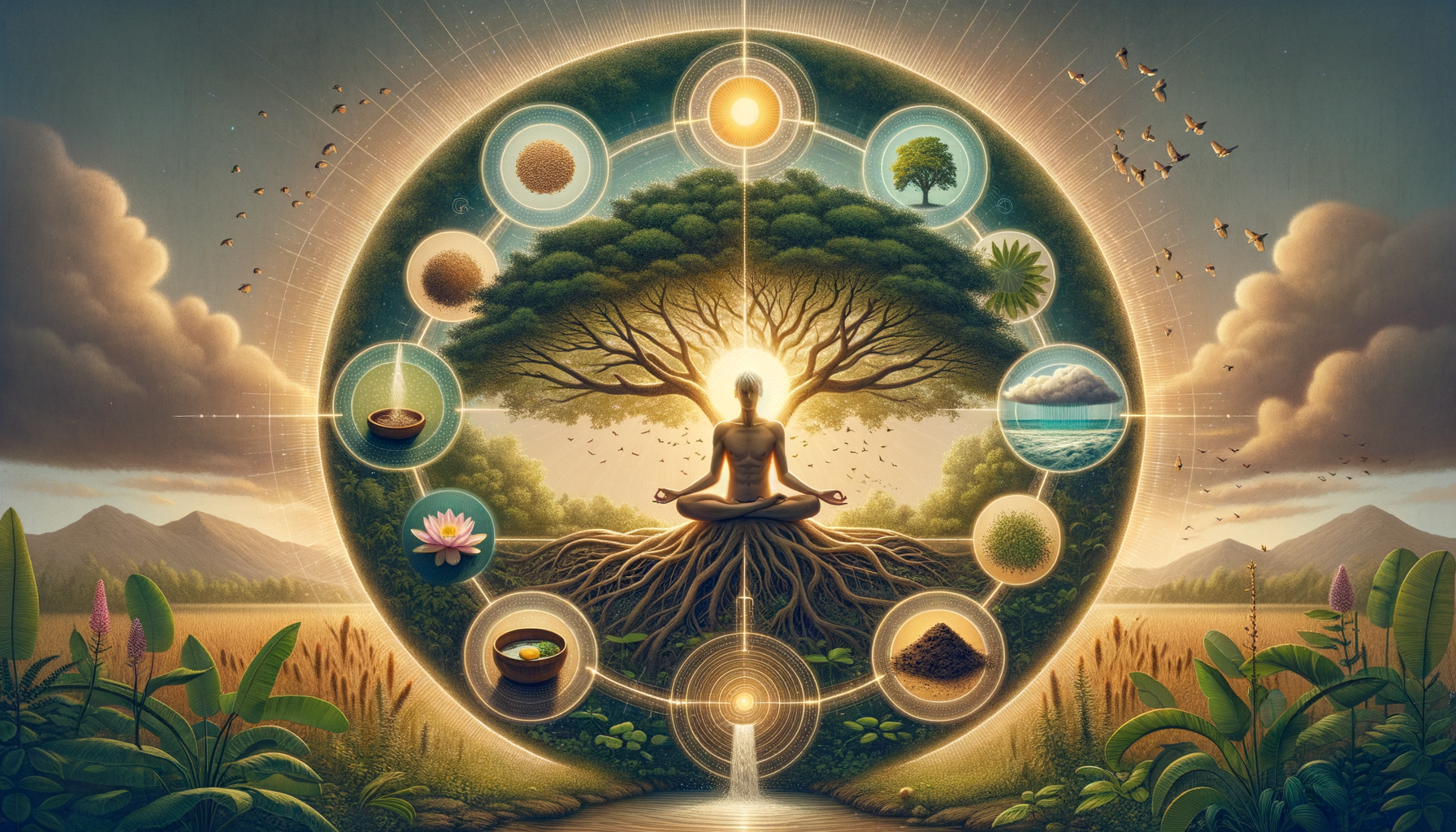
Hindu philosophy presents a transformative insight: everything is food for something else, revealing an intimate web of interdependence. Rooted in the Upanishads and the Bhagavad Gita, this sacred ecology reframes suffering and softens attachment by aligning life with reciprocity and flow. The principle encourages ahimsa, aparigraha, and gratitude, turning consumption into a practice of reverence.…
-
Hinduism’s Holistic Vision: Purusharthas and Ashramas for a Balanced, Ethical Life

Hinduism offers a holistic, pragmatic model for living through two complementary frameworks: the Purusharthas (dharma, artha, kama, moksha) and the Ashramas (Brahmacharya, Grihastha, Vanaprastha, Sannyasa). These principles balance ethical clarity, material stability, meaningful enjoyment, and spiritual liberation. They also map a realistic life rhythm in which responsibilities evolve with time. Applied to modern challenges, this…
-
You Are Already That: Effortless Realization of Infinite Pure ConsciousnessA Dharmic Perspective

This article clarifies a core Vedantic insight: infinite pure consciousness is not something to attain but to recognize. It explains how Hindu philosophy, especially Advaita Vedanta and the Upanishads, frames self-realization as effortless recognition rather than forced achievement. It highlights convergences with Buddhism, Jainism, and Sikhism, reinforcing unity in spiritual diversity. Practical guidance shows how…
-
Kala Rudra: Shiva’s Awe-Inspiring Face of Time, Destruction, and Renewal Explained

Kala Rudra, Shiva’s awe-inspiring form of time and transformation, reveals the compassionate purpose behind cosmic dissolution. Readers will learn how “Kala” (time) and “Rudra” (purifying force) together symbolize the end of stagnation and the beginning of renewal. The article clarifies iconography across Shaiva traditions while emphasizing the inner meaning: fearlessness, detachment, and clarity. Practical insights…
-
Why Judging Living Sadhus Fails: Humility, Neti Neti, and Dharmic Unity

Jaiva Dharma notes a common human pattern: people easily revere departed mahajanas yet hesitate to trust living sadhus. This reflection explains why sense-bound judgment is unreliable and why applying neti neti to appraise persons misuses a contemplative method meant for inner realization. A dharmic frameworkanchored in scripture, community validation, and observable transformationoffers a balanced path…
-
Is Consciousness Within? Sri Sri Ravishankar’s Transformative Insight for Daily Awareness

A disciple once asked Sri Sri Ravishankar, “Is there consciousness within me?” The reply pointed to immediate experience: awareness is what allows one to ask, hear, and see. This simple recognition invites a rigorous, experiential understanding central to Hindu philosophy and in harmony with Buddhism, Jainism, and Sikhism. The insight is practical: by noticing breath…
-
Let Curiosity Guide the Heart: Timeless Hindu Wisdom for a Unified Dharmic Journey

Curiosity in ancient Hindu wisdom is not idle questioning but sacred inquiry that guides ethical living and Self-Realization. Across the dharmic traditions of Hinduism, Buddhism, Jainism, and Sikhism, disciplined curiosity unites intellectual rigor with compassion. Drawing on the Upanishads, the Bhagavad Gita, Yoga, anekantavada, and reflective practices, this piece shows how curiosity can deepen devotion,…
-
Vīra Swarga Explained: The Uplifting Hindu Ideal of Dharma, Courage, and Sacred Sacrifice

Vīra Swarga, the “Heaven of Heroes,” illuminates a central Hindu philosophical ideal: selfless courage in service of dharma. It affirms valor only within strict ethical boundsprotection of innocents, restraint, and last resortechoing the Bhagavad Gita and Kshatra Dharma. Distinguished from moksha, it represents a meritorious heavenly state that honors noble sacrifice while encouraging continued spiritual…
-
Life’s Long Journey: Harness Daily Opportunities for Transformative Change through Dharmic Wisdom

This essay frames a classic Hindu teachingeach day offers a chance to changewithin a dharmic, academically grounded perspective. It explains how small, consistent actions reshape samskara, aligning daily life with Dharma and karma-yoga. Drawing on the Bhagavad Gita and the Upanishads, it shows how Mindfulness, Meditation, and Yoga convert insight into routine resilience. Parallels with…
-
Gunatita Explained: Rise Beyond Sattva, Rajas, and Tamas for Unshakable Inner Freedom

Gunatita, a core concept in Hindu philosophy, describes freedom from the three gunasSattva, Rajas, and Tamasthat bind the jiva to samsara. The Bhagavad Gita portrays the gunatita individual as steady in equanimity, acting from dharma without compulsion. Practical disciplinesmeditation, mantra japa, mindful action, and reflective studystrengthen Sattva and tame reactivity. This state enhances emotional resilience,…
-
Anger Distracts from Solutions: Dharmic Wisdom for Clear Thinking and Inner Peace

Hindu philosophyand related dharmic traditionsteach that anger clouds intellect, drains attention, and diverts energy from the real problem. The Bhagavad Gita maps this precisely: anger breeds confusion, weakens memory, and undermines judgment. Across Buddhism, Jainism, and Sikhism, practices of mindfulness, forgiveness, and living without enmity offer practical antidotes. In everyday contextsat work, at home, and…
-
Sankhya Philosophy Explained: A Timeless, Rational Roadmap to Absolute Reality

Sankhya offers a clear, rational pathway for understanding absolute reality within Hindu philosophy. By distinguishing Purusha (consciousness) from Prakriti (nature), it explains both experience and liberation. Its ordered model of tattvas and emphasis on valid knowledge make it a rigorous system rather than speculation. The philosophy directly supports Yoga’s practical methods for inner transformation and…
-
No Soul Is Ever Lost: Hinduism’s Compassionate Path to Liberation Beyond Fear

Hinduism affirms that no soul is eternally doomed; every jiva progresses through samsara toward moksha through karma, dharma, and disciplined practice. This non-eternalist vision frames suffering as corrective and finite, not permanent punishment. Upanishadic and Bhagavad Gita teachings support moral agency over fatalism, inviting steady self-cultivation. Parallel perspectives in Buddhism, Jainism, and Sikhism further strengthen…
-
If Something Changes Your Life, Let It: Dharmic Wisdom to Cultivate Resilience and Grace

The reflection “If something changes your life, let it” expresses a core dharmic insight shared by Hinduism, Buddhism, Jainism, and Sikhism: change, met with discernment and non-attachment, catalyzes spiritual growth. Drawing from the Bhagavad Gita, Patanjali’s Yoga Sutra, anicca, Anekantavada, Hukam, and Chardi Kala, the post outlines a practical pathpause, breathe, discern, act ethically, reflectto…
-
Love Those Who Lift You, Forgive Those Who Hurt: Dharmic Wisdom for Resilient Living

This article explores the dharmic wisdom behind the maxim “Love the people who treat you right, forgive the ones who don’t.” It clarifies how loving support builds sattva, while forgiveness safeguards inner peace without excusing harm. The analysis balances compassion with justice, showing how Dharma requires both accountability and kṣamā. Cross-tradition parallels in Buddhism, Jainism,…
-
Unveiling the True Source of Energy: Matter, Consciousness, and Dharmic Unity

Energy in daily life invites a deeper question: what truly animates matter? Dharmic traditions suggest that matter is latent potential, activated by living energy and ultimately grounded in consciousness. Hindu philosophy and Vedanta speak of Brahman and Shakti; Buddhism emphasizes dependent origination and clarity of awareness; Jainism distinguishes jiva’s inherent energy from material accretions; Sikh…
-
Unshakeable Resilience in Hindu Dharma: How True Warriors Turn Setbacks into Inner Strength

The statement “True warriors don’t let setbacks define them. They overcome them” resonates with Hindu philosophy as a call to cultivate resilience, courage, and inner strength. Rather than treating adversity as a verdict, dharmic teachings reframe it as an opportunity for growth and self-mastery. The Bhagavad Gita’s emphasis on equanimity, disciplined practice, and ethical action…
-
Empathy Over Control: Dharmic Wisdom for Advice that Respects Autonomy and Dignity

This reflection explores a core dharmic principle: advice should empower, not control. Drawing on the Bhagavad Gita and parallel insights from Buddhism, Jainism, and Sikhism, it shows how empathy, autonomy, and compassion guide ethical counsel. The discussion connects ancient Hindu teachings to modern contextsfamily, workplace, and communitywhere respectful guidance builds trust and accountability. It outlines…