
-
Ego and the Vast Cosmos: A Dharmic Reflection on Humility, Unity, and Inner Freedom

This reflection explores how Hindu philosophy situates ahankara (ego) within the vast Brahmanda, revealing the fragility of pride and the wisdom of non-attachment. It connects Vedantic insights with parallel teachings in Buddhism, Jainism, and Sikhism, emphasizing a shared dharmic commitment to humility, compassion, and Aparigraha. Readers gain practical pathwaysjapa, pranayama, dāna, mettā, Naam Simran, and…
-
Breaking the Chains of Maya: Hindu Wisdom on Attachment, Ego, and Inner Freedom

Hindu philosophy explains attachment as a product of avidyaignorance of the true Selfprojected through maya and consolidated by habit patterns and the gunas. The Bhagavad Gita and the Upanishads show how identification with body-mind-ego fosters craving and suffering, while disciplines like viveka-vairagya, karma yoga, and dhyana dissolve clinging. Advaita Vedanta, Sankhya-Yoga, and Bhakti offer complementary…
-
Why Shiva Rejected Ravana After Sita’s Abduction: Dharma, Bhakti, and Divine Justice

This analysis explores why Shiva is portrayed as withdrawing protective grace from Ravana after the abduction of Sita, drawing on the Valmiki Ramayana and regional traditions like Kamba and Krittivasi Ramayanas. It shows that divine boons operate within the moral framework of dharma and cannot shield adharma. The piece highlights how Ravana’s sacred deceptionmisusing the…
-
When Silence Speaks: Hindu, Buddhist, Jain, and Sikh Wisdom for Social Media Calm

Social media rewards speed and outrage, yet dharmic traditions teach that silence is disciplined strength. Hindu philosophy frames silence (mauna), meditation (dhyana), and sensory restraint (pratyahara) as ethical practices that refine speech and preserve clarity. Parallel insights in Buddhism, Jainism, and Sikhism elevate non-reactivity, compassionate truth, and inner equipoise. Applied today, choosing “no response” can…
-
Experience the Divine Everywhere: Bhagavad Gita’s Practical Path from Bodha to Vyavahara

The post explores how the Bhagavad Gita’s insight the Divine is everywhere becomes transformative when knowledge (Bodha) is practiced as daily conduct (Vyavahara). Using the wood-and-furniture analogy, it clarifies how one essence appears through many forms, guiding a balanced response to life’s roles. Practical methods mindful pauses, breath awareness, japa or simran, gratitude before meals,…
-
Unmasking the Golden Deer: The Ramayana’s Allegory of Desire, Maya, and Dharma

The golden deer episode in the Ramayana functions as a refined allegory of human desire, maya (cosmic illusion), and ethical vigilance. By tracing Sita’s captivation, Rama’s pursuit, and Ravana’s exploitation, the narrative shows how alluring appearances disperse attention and compromise dharma. Read symbolically, the deer represents desire’s shimmerradiant yet elusivewhile the episode models the need…
-
Letting Go Like the Sacred Tree: Dharmic Wisdom on Release, Renewal, and Inner Freedom

A tree’s effortless shedding of leaves models the dharmic discipline of letting go. By aligning with Aparigraha and acting without rigid attachment to outcomes, practitioners cultivate inner freedom and clarity. Parallel teachings in Buddhism, Jainism, and Sikhism reinforce a shared ethic of balance, compassion, and resilient optimism. Practical stepssuch as breathwork, meditation, and sevatranslate symbolism…
-
Beyond Male and Female: The Profound Non-Dual Insight Needed to Realize Brahman

The teaching that “Knowledge of Brahman is impossible with the idea of male and female” emphasizes that ultimate reality in the Upanishads and Advaita Vedanta lies beyond all dualities. Read in harmony with Buddhism’s śūnyatā, Jainism’s Anekāntavāda, and Sikhism’s Ek Onkar, it supports unity across dharmic traditions while honoring diversity of paths. Recognizing gender as…
-
Why Indiscriminate Advice Backfires: Viveka, Anekantavada, and Dharmic Wisdom

The maxim “Indiscriminate advice often backfires” is clarified through Hindu philosophy’s viveka (discernment) and adhikāri-bheda (readiness). Foundational texts such as the Bhagavad Gita, the Upanishads, Vidura-niti, Panchatantra, and Hitopadesha affirm that counsel should be tailored to the person, time, and circumstance. A cross-dharmic viewdrawing on Buddhism’s upaya, Jainism’s Anekantavada, and Sikh traditionspromotes plural-sensitive guidance rather…
-
Divine Economics Unveiled: Why Lakshmi Chooses VishnuEternal Wealth, Preservation, Dharma

The union of Lakshmi and Vishnu is a precise ethical model in Hindu philosophy: prosperity endures only when guided by preservation. Scriptural narratives like Samudra Manthan show wealth choosing the preserver, while the Bhagavad Gita illuminates how stewardship sustains social balance. The insight translates into daily lifefamilies, businesses, and communities flourish when accountability, restraint, and…
-
Ishvara Krishna and the Sankhya Karika: A Timeless Beacon of Dharmic Wisdom

Ishvara Krishna’s Sāṅkhya Karika is among the earliest and most influential works in classical Indian philosophy, presenting Sāṅkhya with brevity and rigor. Through seventy-two kārikās, it clarifies Purusha–Prakriti, the twenty-five tattvas, and pramāṇa, guiding readers toward kaivalya. Its commentary tradition, including the Yuktidīpikā and Tattvakaumudī, shows its lasting scholarly impact. The Karika’s analytic method resonates…
-
Beyond Religious Rigidity: Dharmic Paths Realize the Divine Through Personal Freedom

This article examines how Hinduism, Buddhism, Jainism, and Sikhism converge on a core principle: authentic divine realization emerges through personal freedom rather than religious rigidity. Drawing on the Upanishads, the Bhagavad Gita, Ishta philosophy, Anekantavada, and Sikh devotion to Naam, it shows how discipline functions as a tool for liberation, not coercion. The discussion clarifies…
-
Dashavatara Decoded: Ancient India’s Hidden Scientific Genius and Dharmic Unity
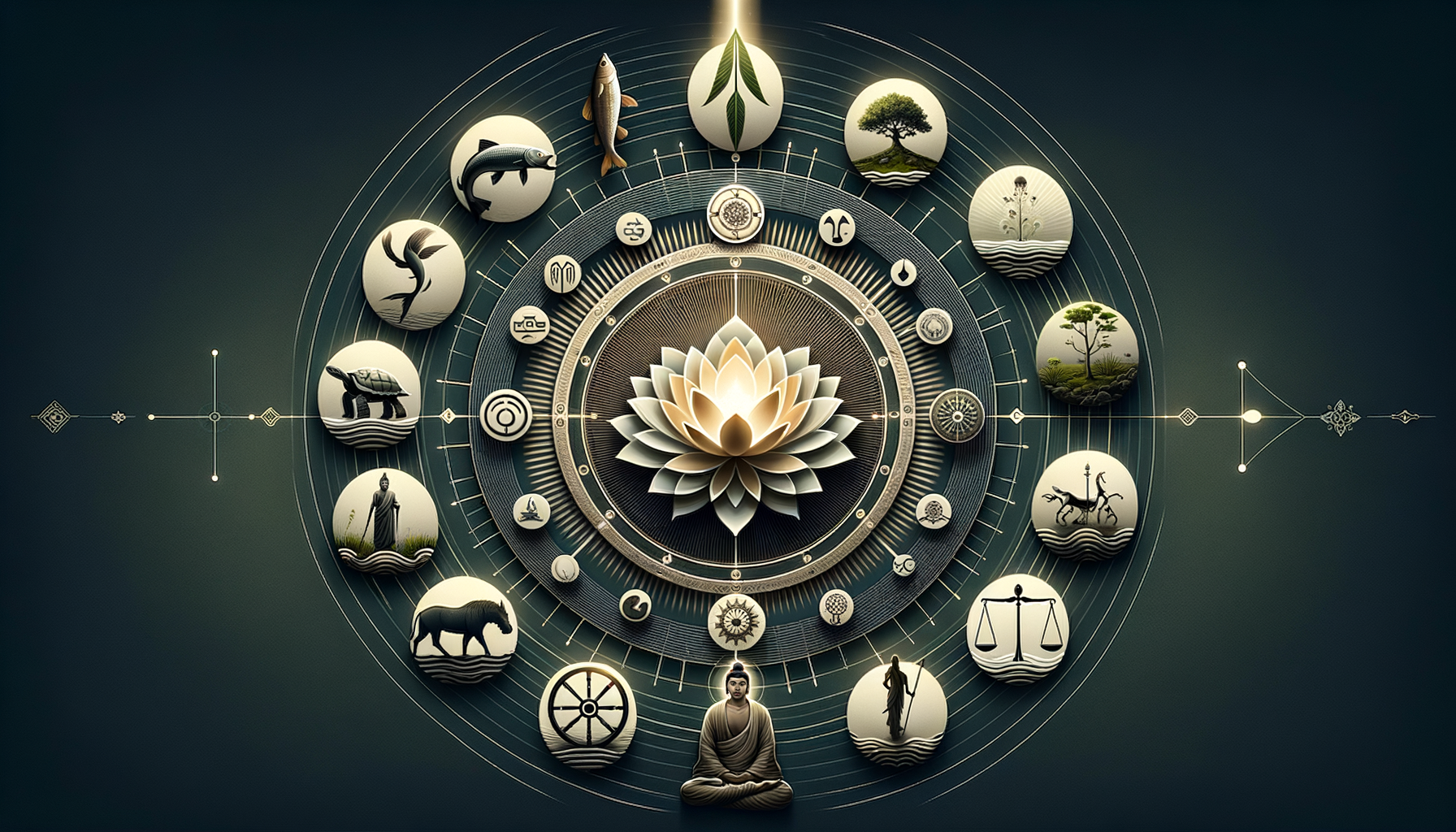
The Dashavatara offers a sophisticated, non-sectarian framework for thinking about evolution, consciousness, and cosmic order in a way that resonates across Hinduism, Buddhism, Jainism, and Sikhism. Interpreted academically, the avatars serve as pedagogical metaphors for ecological insight, ethical formation, and inner refinement. This approach avoids anachronism while honoring ancient India’s scientific wisdom expressed through symbols.…
-
Beyond Name and Form: Advaita Vedanta’s Transformative Path to the Infinite and Unity

This essay explores a core insight of Hindu philosophy: that ignorance confines the infinite through name and form. Advaita Vedanta explains how naming obscures Brahman’s boundless nature, while still valuing forms as compassionate gateways. Relatable exampleslike the sky in a pot and the ocean’s wavesillustrate why labels are helpful yet limited. The discussion connects this…
-
Resilience in Hinduism: Timeless Dharmic Practices to Rise Strong from Adversity

This article examines resilience in Hinduism as a cultivated capacity grounded in abhyāsa (practice) and vairāgya (wise non-attachment). Drawing on the Bhagavad Gita, the Upanishads, and the Yoga Sutra, it outlines how equanimity, witnessing awareness, and disciplined routines foster emotional balance. Practical methodsdhyāna, prāṇāyāma, and mantra japaare presented as accessible tools for stress management and…
-
Beyond Death: Hinduism’s Powerful Answer on Consciousness, Atman, and Rebirth

Hinduism maintains that consciousness (atman) is eternal and survives bodily death, a view grounded in the Upanishads, the Bhagavad Gita, and Vedic philosophy. Karma and reincarnation explain moral continuity across lives, with moksha as the final goal. Lived practicesdhyana, japa, and rites such as antyesti and shraddhaoffer emotional resilience during grief and affirm the journey…
-
Ramanujacharya’s Bold Vision: How a “Changing” Brahman Enriches Bhakti and Reality

Can the Supreme truly relate and respond without losing perfection? Advaita emphasizes the changeless Absolute, while Viśiṣṭādvaita affirms a relational oneness in which Brahman’s essence remains immutable but the inseparable modes (cit and acit) undergo real change. This nuance, central to Ramanujacharya’s Śrī-bhāṣya, reconciles creation passages in the Upaniṣads, safeguards the reality of ethics and…
-
Satyaloka Unveiled: The Awe-Inspiring Symbolism of Brahma’s Highest Realm of Truth

Satyalokaalso known as Brahmalokastands at the summit of Hindu cosmology as the realm where truth shines unobscured by illusion. This article explains why it is called the “abode of truth,” linking its symbolism to sattva, Vedic wisdom, and the integrative path of knowledge, devotion, and duty. It clarifies how Brahmaloka functions as a gateway to…
-
Parinama Explained: Three Profound Transformations Shaping Hindu Wisdom and Daily Life

Parinamasacred changeclarifies how reality unfolds in Hindu philosophy through three core transformations: change of form (svarūpa), change of state (avasthā), and change marked by time (lakṣaṇa). Grounded in sources such as the Yoga Sutras, this framework aligns philosophical depth with everyday observation. It also connects meaningfully with dharmic perspectives in Buddhism, Jainism, and Sikhism, fostering…
-
Detached Engagement in Dharma: Harness Emotions Without Attachment for Inner Freedom

Detached engagement offers a dharmic way to live fully while remaining inwardly free. The approach honors emotions and even strong impulses, yet channels them through discernment and ethical restraint. Rooted in the Bhagavad Gita’s nishkama karma and supported by Upanishadic witness-awareness, it unites action with non-attachment. Parallel insights from Buddhism, Jainism, and Sikhismupekkhā, Aparigraha, sehaj,…