
-
Karma and Innocent Suffering: A Compassionate Dharmic Guide to Miscarriage and Child Loss

This reflection explores how karma is understood when young children die painfully or a baby passes in the womb, emphasizing humility before the mystery of cause and effect. It unifies perspectives across Hinduism, Buddhism, Jainism, and Sikhism, highlighting compassion rather than blame. Readers learn how dharmic traditions approach grief with practices such as prārthanā, dāna,…
-
Who Orchestrates Creation and Destruction? Dharmic Wisdom That Empowers Young Minds

Young seekers often ask who is responsible for creation and destruction. Dharmic wisdom responds with clarity: these are complementary movements within a moral cosmos, governed by Brahman, Dharma, or hukam. Hindu scriptures such as the Upanishads and the Bhagavad Gita frame this as a purposeful cycle, while Buddhism, Jainism, and Sikhism add insights on impermanence,…
-
Unshakable Calm: Hindu Wisdom for Emotional Resilience and Inner Peace Under Pressure
Hindu philosophy teaches that true success rests on composure, especially in moments of emotional turmoil. The Bhagavad Gita urges steadiness amid joy and sorrow, aligning inner balance with ethical, effective action. The Upanishads guide attention to the witnessing self, recommending practices like prāṇāyāma, dhyāna, and svādhyāya to cultivate inner peace. Parallel insights in Buddhism (upekkhā),…
-
Bhuktivada and Rasa: Bhatta Nayaka’s Revolutionary Insight into Indian Aesthetics
Bhuktivada, articulated by Bhatta Nayaka, explains rasa as an alaukika enjoyment (bhukti) rather than a product to be caused or a conclusion to be inferred. It reframes earlier debates by introducing bhāvakatva (art’s power to universalize emotion), bhojakatva (the audience’s receptivity), and sādhāraṇīkaraṇa (shared, de-individualized feeling). Placed between Anandavardhana and Abhinavagupta, this theory anchors the…
-
Beyond the Body: Hindu Philosophy on Consciousness, Out-of-Body States, and Inner Freedom
Hindu philosophy addresses out-of-body experiences through a disciplined framework that distinguishes inner phenomenology from metaphysical claims. Drawing on the Upanishads, Vedanta, and Yoga, it explains how the subtle body (sukshma sharira) and the Pancha Kosha model contextualize non-ordinary states. Yogic methodspratyahara, dharana, dhyana, pranayama, and mantraserve as structured tools for exploration, with ethics and guidance…
-
Master Illusion to Transform Sorrow: The Complete Hindu Guide to Grief, Maya, and Clarity

This article explains the Hindu teaching that “Grief and dejection are the price that delusion demands from man,” grounding it in the Bhagavad Gita, the Upanishads, and Vedic Teachings. It clarifies maya as misperception that amplifies suffering by binding identity to changing circumstances. Readers discover how discernment (viveka), mindfulness (dhyana), and karma yoga reduce emotional…
-
Discover Bhartru Prapancha’s Essential Bhedabheda Vedanta: A Proven Breakthrough Beyond Advaita

Bhartru Prapancha emerges as an early Vedanta thinker linked to Bhedabheda-vada, the doctrine of identity-in-difference. Despite the loss of his original texts, preserved fragments reveal a balanced vision that honors both unity and real-world plurality. This outlook complements Advaita Vedanta while highlighting the wider diversity of Vedantic schools. It also offers a shared philosophical ground…
-
Discover the One-in-a-Million Journey: Essential Hindu Insights to Transform Devotion

This exploration clarifies why Hindu philosophy describes true Godward turning as rare and spiritually demanding. Grounded in Bhagavad Gita 7.3, it shows how depth, not exclusion, explains the “one in a million” motif. Readers gain an academically sound view of how bhakti, karma, jñāna, and rāja yogas integrate to support Self-Realization. The discussion connects Hindu…
-
Savikalpaka vs. Nirvikalpaka Samadhi: The Complete Guide to Mastering Meditative Union
This comparative guide clarifies savikalpaka and nirvikalpaka samadhi as complementary stages of realization in Hindu philosophy. Readers discover how disciplined, object-based absorption matures into objectless, non-dual awareness. Practical stepsethical foundations, focused dhyana, mantra japa, and gentle inquiryare presented for steady progress. Cross-tradition parallels in Buddhism, Jainism, and Sikhism highlight unity within the dharmic family. Common…
-
Discover the Essential Wisdom: Master Shānti and Humility as the Proven Path to Jñāna

Ancient Hindu wisdom teaches that shānti (peace) and nirmāna (absence of pride) are defining signs of true knowledge (jñāna). Grounded in the Bhagavad Gita and supported by the Upanishads, these virtues align thought, action, and inner life with universal truths. Their practical value appears in everyday relationships, professional ethics, and community well-being. Mindfulness, prāṇāyāma, mantra…
-
Ekayana Unveiled: The Complete Path to Brahman and DharmaDiscover a Unifying Vision

Ekayana, a Sanskrit term meaning “the only path,” “one support,” or “the only refuge,” clarifies how Hindu philosophy unifies diverse practices around Brahman and Dharma. It integrates metaphysics and ethics, showing that jñana, bhakti, karma, and dhyana can form one coherent journey. Rooted in the Vedic and Upanishadic tradition and elaborated in Vedanta, Ekayana promotes…
-
Mastering Desire for Inner Peace: The Proven Dharmic Breakthrough to End Discontent

This post examines a core dharmic insight: discontent grows as desires multiply. It synthesizes perspectives from the Bhagavad Gita, the Upanishads, Patanjali’s Raja Yoga, Buddhism’s analysis of tanha, Jainism’s Aparigraha, and Sikh santokh to show a shared pathway to contentment. Readers learn why hedonic adaptation fuels restlessness in modern life and how mindful discipline can…
-
Fate, Effort, and Time: The Complete, Proven Dharmic Framework to Master Life’s Outcomes

This article presents a clear, dharmic framework for understanding the classic dilemma of fate versus free will. Drawing on Hindu scriptures and Lord Matsya’s teaching to Satyavrata Muni, it explains how fate (daiva), effort (puruṣārtha), and time (kāla) operate together to shape outcomes. Readers discover a practical metaphorthe farmer’s fieldthat makes complex philosophy immediately usable.…
-
Born Bad or Made Bad? Discover a Complete, Evidence‑Based Guide to Evil in Dharmic Thought

The everyday debateborn bad or made badfinds a nuanced resolution in Dharmic thought. Hindu philosophy integrates guṇas, karma, and saṁskāras with the formative power of culture and community. Buddhism explains harmful actions through dependent origination, making transformation possible via ethics, meditation, and wisdom. Jain Anekantavada reframes blame by recognizing many-sided causes while prioritizing ahimsa and…
-
Essential Vedantic Insight: Discover the Shift from ‘I am’ to ‘God is’ for Inner Freedom
This reflection explores a core dharmic insight: the practical and philosophical shift from ‘I am’ to ‘God is’or, more broadly, from ego-centered assertion to alignment with a higher truth. Drawing on Vedanta and SB 2.2.35, it highlights intelligence as a directing principle beyond ordinary control, sustained by a super self, a portion of God. The…
-
Master Anxiety with a Dharmic Breakthrough: Krishna’s Essential Lesson on Fear and Focus
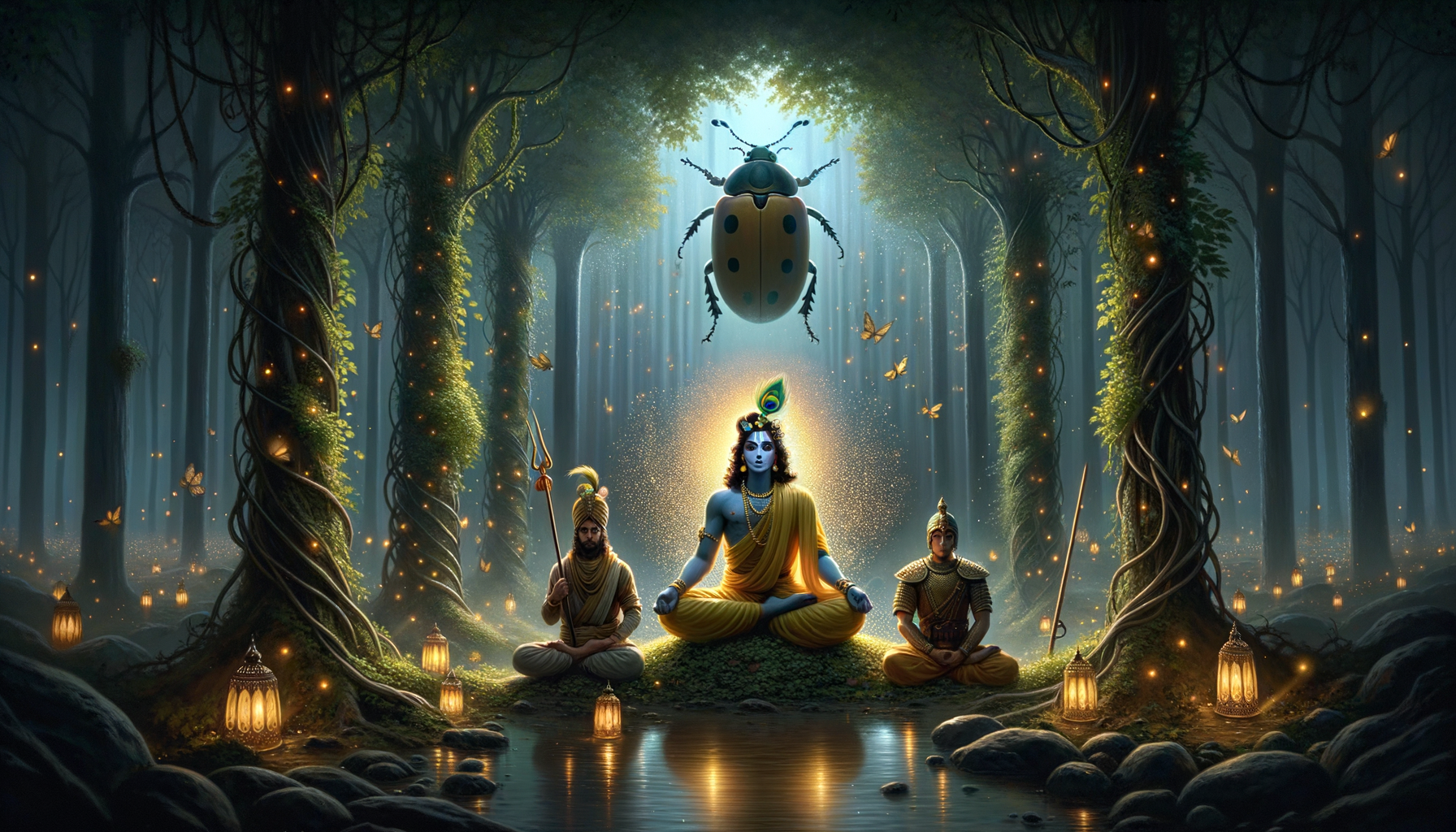
This Mahabharata-inspired teaching presents Sri Krishna guiding Arjuna and Satyaki through an encounter that reveals how attention fuels anxiety and how disciplined focus dissolves it. The narrative shows a trivial stimulus expanding into a monstrous apparition when fed by fear, then vanishing when attention is steadied and withdrawn. Readers gain a clear, actionable understanding of…
-
Master Time’s Treasure: Essential Ancient Hindu Wisdom to Transform Life and Destiny

This reflection explores kala (काल) as a core principle in Hindu philosophy, presenting time as a sacred and transformative force. Readers will discover how the Bhagavad Gita’s “kālo’smi” clarifies the ethical urgency of each moment. The discussion weaves unity across dharmic traditionsBuddhism, Jainism, and Sikhismshowing shared respect for time through impermanence, disciplined conduct, and harmony…
-
Discover the Complete Purpose of Creation in Dharmic Thought: Master Karma, Dharma, Moksha

This article explains the purpose of creation in Hinduism through the interconnected ideas of karma, dharma, moksha, and samsara. It situates Hindu insights within the wider dharmic familyBuddhism, Jainism, and Sikhismhighlighting shared goals of liberation and ethical living. Readers discover why Prakriti is seen as a divine arena for growth and how jivas learn through…
-
Discover the Rig Veda’s Complete Creation Wisdom: Upanishadic Insights to Transform Understanding
Hinduism’s creation vision, grounded in the Rig Veda and clarified by the Upanishads, presents a cyclical, ever-unfolding cosmos sustained by Brahman. Rig Vedic humility, especially in the Nasadiya Sukta, invites inquiry rather than dogma. Upanishadic insights like “tat tvam asi” and “satyam jnanam anantam brahma” align the inner Self with the Absolute, framing multiplicity as…
-
Discover Bali Mahārāja’s Ultimate Lesson: The Proven, Essential Power of Humble Devotion to Kṛṣṇa
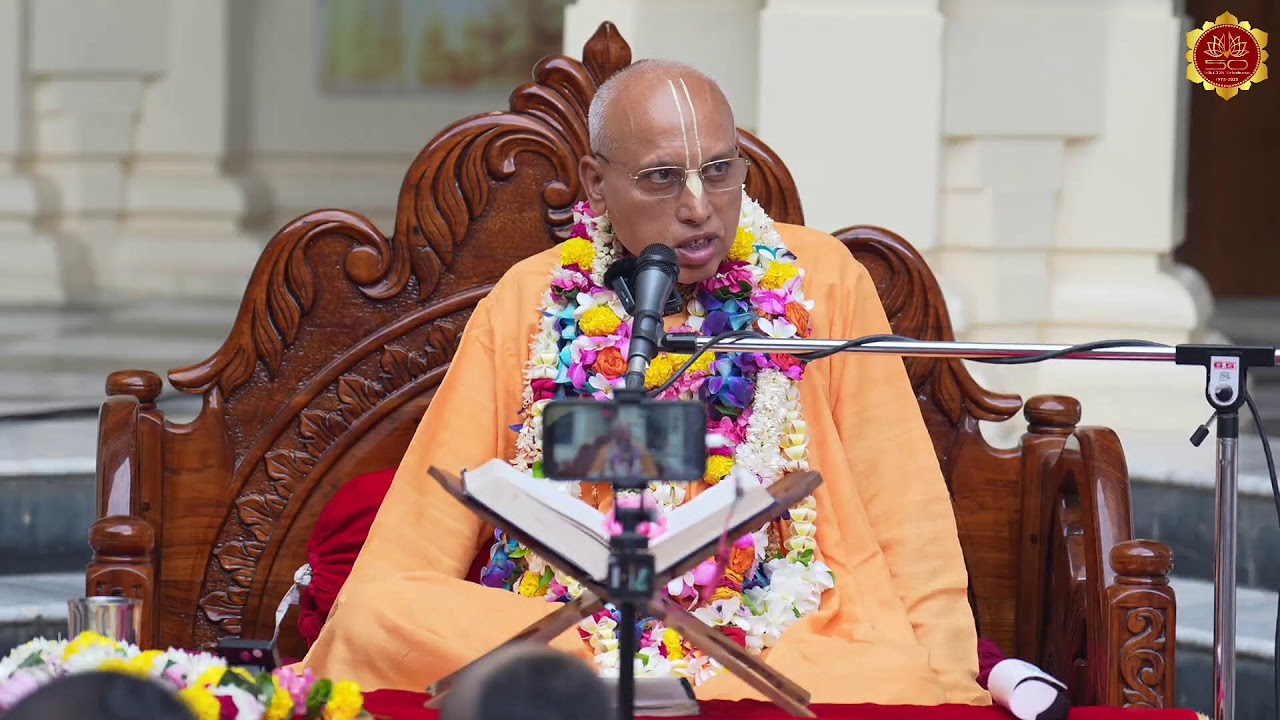
This post examines Bali Mahārāja’s profound humility before Kṛṣṇa and Balarāma as a complete lesson in egoless devotion. It clarifies how bhakti flourishes when pride is relinquished, aligning with insights shared across jñāna and yoga. Readers gain a clear, practical framework for integrating humility into daily practice without diminishing intellectual rigor or disciplined effort. The…