
-
Maa Durga’s Shankha: Sacred Sound of Liberation, Dharma, and Victory Over Evil

The Shankh (Shankha) in Maa Durga’s hand symbolizes the sacred sound that restores dharma and proclaims victory over adharma. Gifted by Lord Varuna, it links purity, water, and cosmic order to Durga’s restorative power in the Devi Mahatmyam. As a manifestation of nāda and the primordial Om, the conch dispels fear, clarifies intent, and anchors…
-
Shanta Durga’s Grace: Ending the Shiva–Vishnu Conflict and Restoring Cosmic Harmony
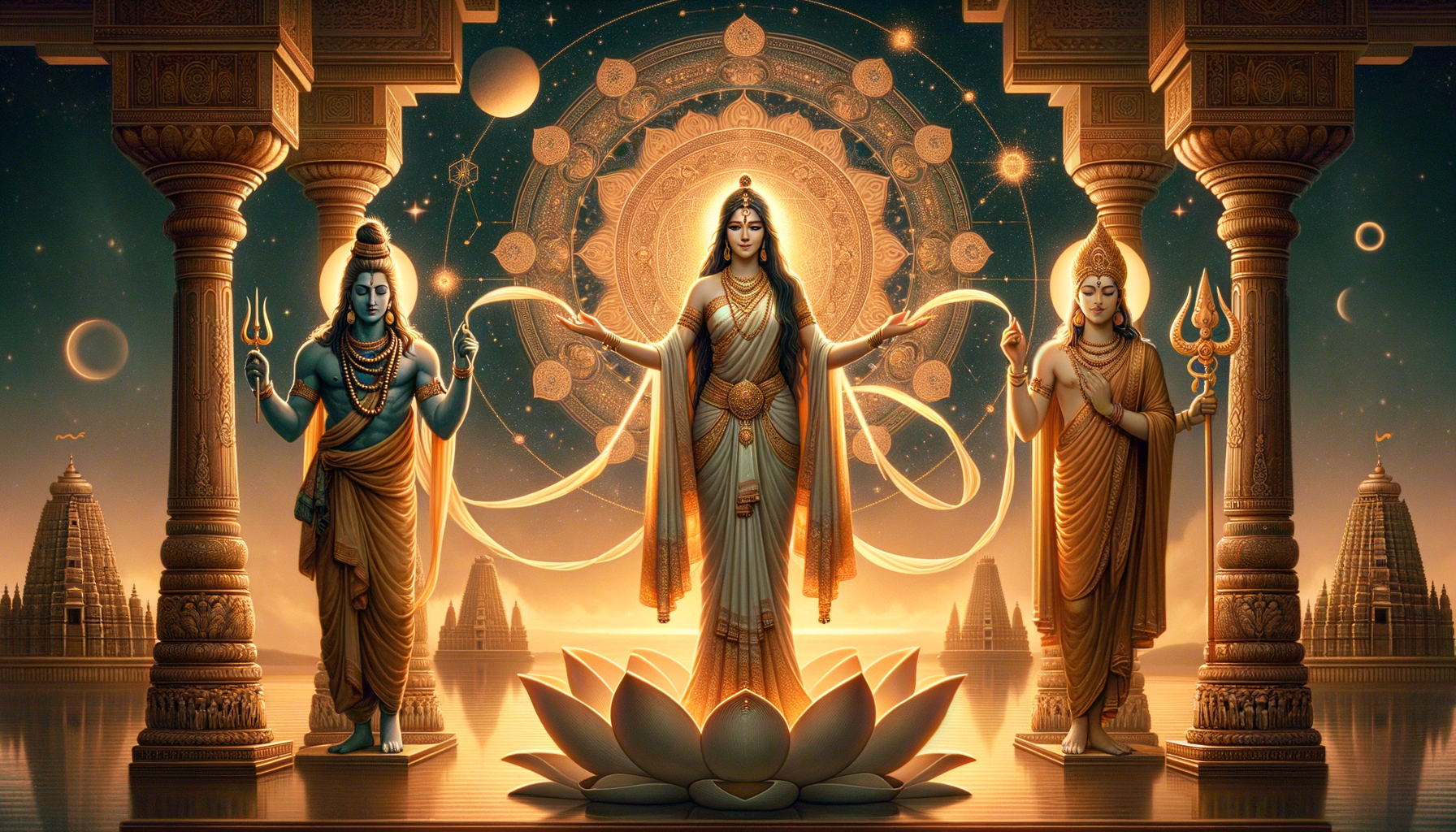
This post explores the legend of Shanta Durga, the Goddess of Universal Peace, who mediates the famed conflict between Vishnu and Shiva. It interprets the Hari–Hara episode as a philosophical teaching on balancing preservation and transformation through compassionate intelligence. Readers gain insight into the Shantadurga Temple traditions in Goa and the iconography that memorializes divine…
-
Goddess Durga’s Triumph over Durgamasura: A Sacred Tale of Dharma, Grace, and Renewal

This article presents an academically grounded retelling of Goddess Durga’s triumph over Durgamasura, highlighting how Shakti restores balance first through compassion as Śatakṣī–Śākambarī and then through righteous courage as Durga. Readers gain clear insight into the Puranic sources, the symbolism of eclipsed knowledge and restored Vedas, and the ecological and ethical dimensions of the legend.…
-
Nabapatrika and Shakambhari: How Durga Puja Honors Earth’s Harvest and Sacred Ecology
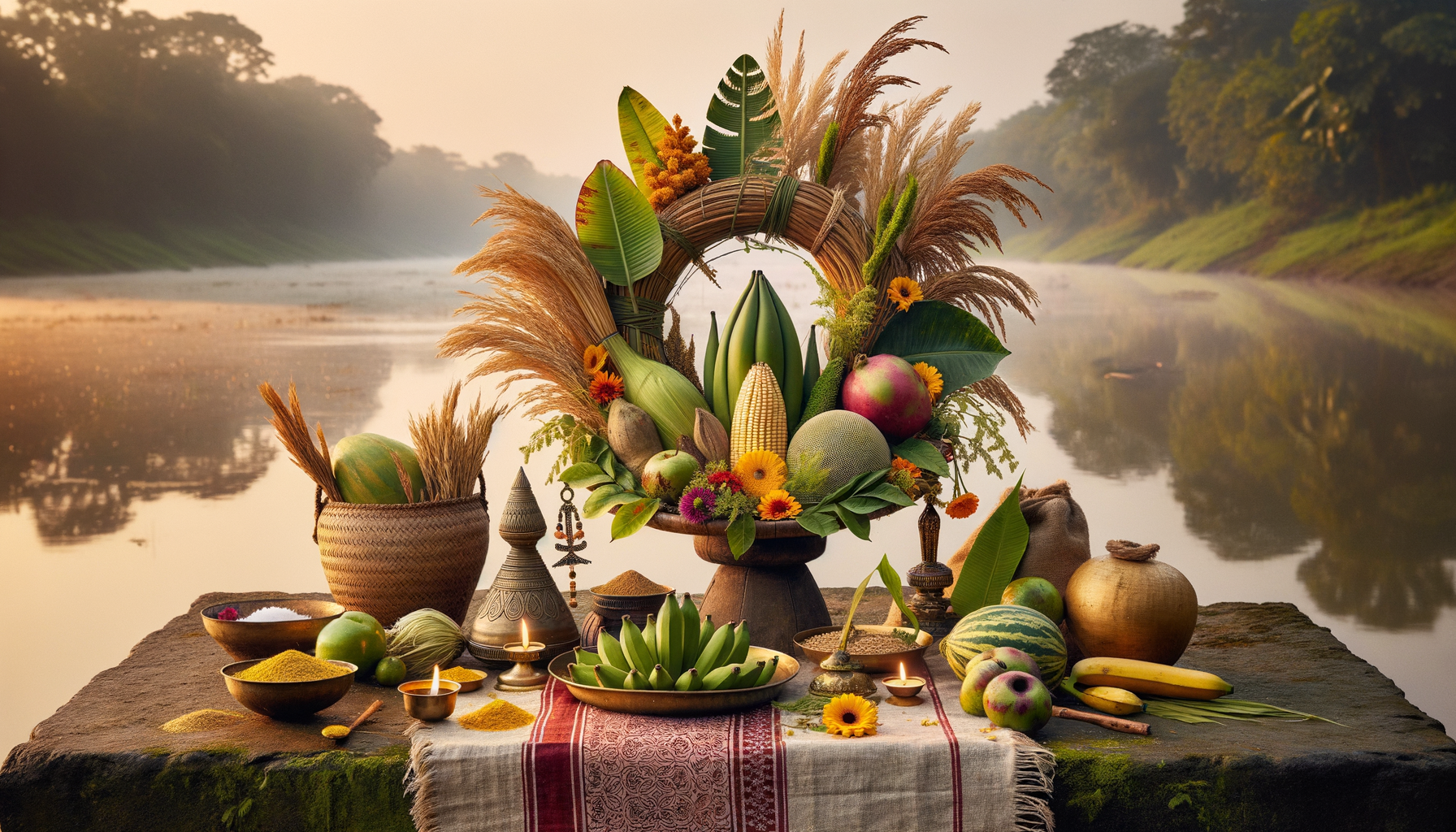
Nabapatrika and Shakambhari reveal Durga Puja’s living dialogue with agriculture and ecology. Through nine sacred plants bathed at dawn, households ritualize gratitude for soil, seed, and monsoon rhythms in the Ganga-Brahmaputra delta. Shakambhari Devi’s nourishment of the world through vegetation broadens this vision into an ethic of biodiversity and care. The rites resonate across dharmic…
-
Durga’s Sacred Mace (Gada): A Powerful Emblem of Strength, Justice, and Living Dharma

The gada (mace) in Goddess Durga’s hands signifies ethical strength guided by justice and compassion. Rooted in the Devi Mahatmya, it recalls how Yama endowed Durga with the power to restore order against adharma. The mace symbolizes grounded resolve, impartial accountability, and the stabilizing force of dharma in public and personal life. Beyond martial imagery,…
-
Kamala Kamini Durga: Compassionate Two-Armed Mother—Iconography, Symbolism, Story

Kamala Kamini Durga presents a compassionate, two-armed manifestation of Goddess Durga that emphasizes rescue, reassurance, and inner restoration over outward conquest. The lotus symbolism of Kamala conveys purity and auspicious resilience, while the two hands often reflect abhaya and varada mudras. This form aligns naturally with shared dharmic values of daya, ahimsa, karuna, and seva,…
-
Symbolism of Durga’s Axe and Armor: Timeless Emblems of Courage, Protection, and Dharma
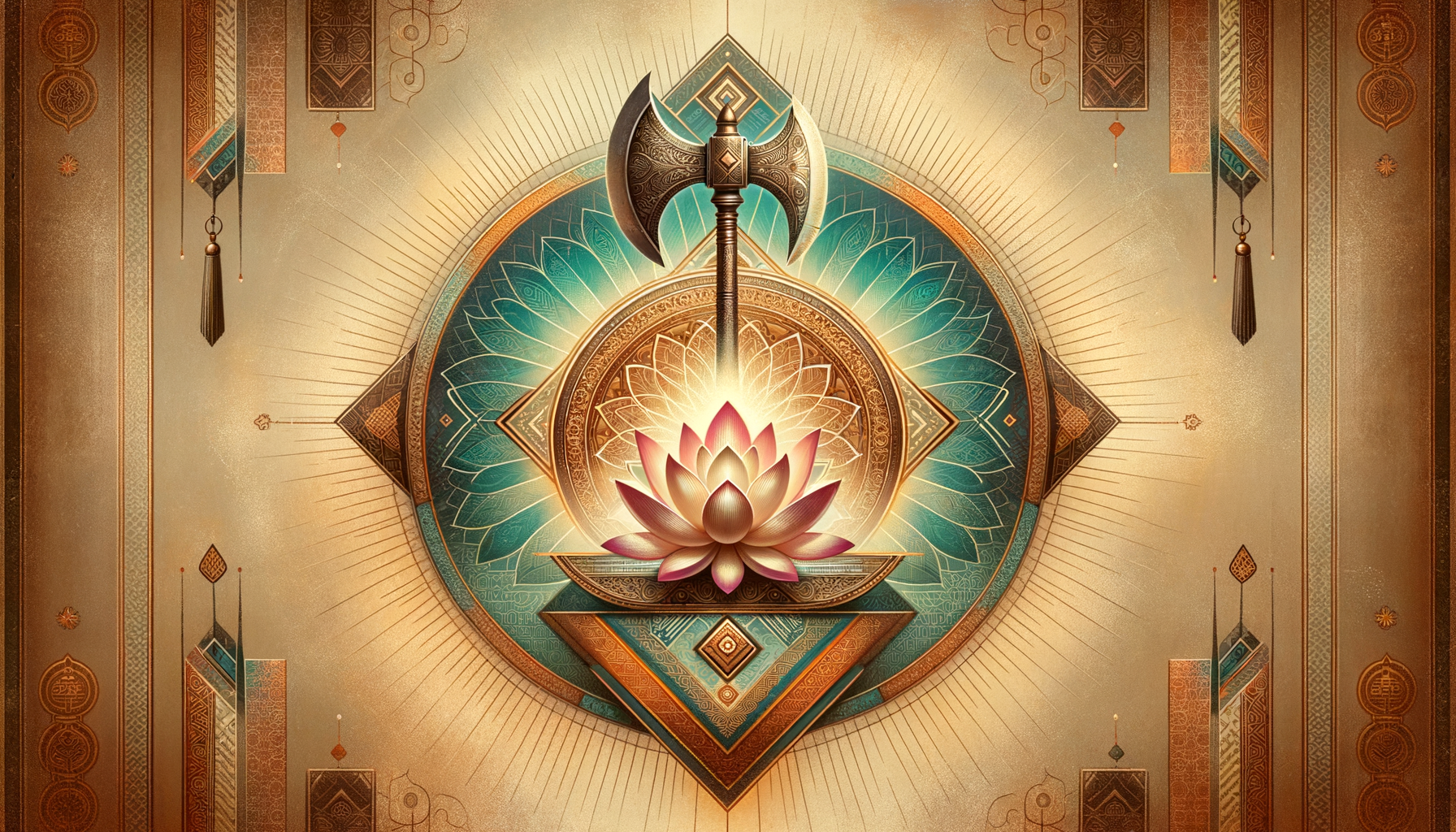
Goddess Durga’s axe (Kuthar or Parashu) and armor (Barm or Kavach) are profound symbols of ethical strength in Hinduism. The axe represents decisive wisdom that cuts through ignorance and adharma, while the armor reflects protective grace sustained by discipline and devotion. Referenced in texts like the Devi Mahatmyam (Durga Saptashati) and the Devi Kavacham, these…
-
Nagapasha in Durga’s Hand: Unleashing Conscious Power and the Serpent’s Victory Over Evil

The serpent—Sarpa—in Goddess Durga’s hand is not mere ornament but Nagapasha, the symbol of conscious power and ethical control. It signifies the binding of ego and disorder through lucid awareness rather than brute force. A yogic reading links the serpent to Kundalini rising from the muladhara through the sushumna nadi, illustrating disciplined Shakti in service…
-
Agni’s Gift to Durga: The Sacred Spear of Shakti and the Transformative Fire of Wisdom

Agni’s gift of the spear (Borsha) to Goddess Durga, as narrated in the Devi Mahatmya, signifies the union of righteous strength with purifying wisdom. The spear’s straight shaft symbolizes disciplined focus, and its tip stands for discriminative insight that pierces ignorance. Ritual experiences—from āratī to Navaratri celebrations—invite practitioners to internalize this clarity in ethical action.…
-
Vajra in Durga’s Hands: Indestructible Power, Sacred Courage, and Dharmic Unity
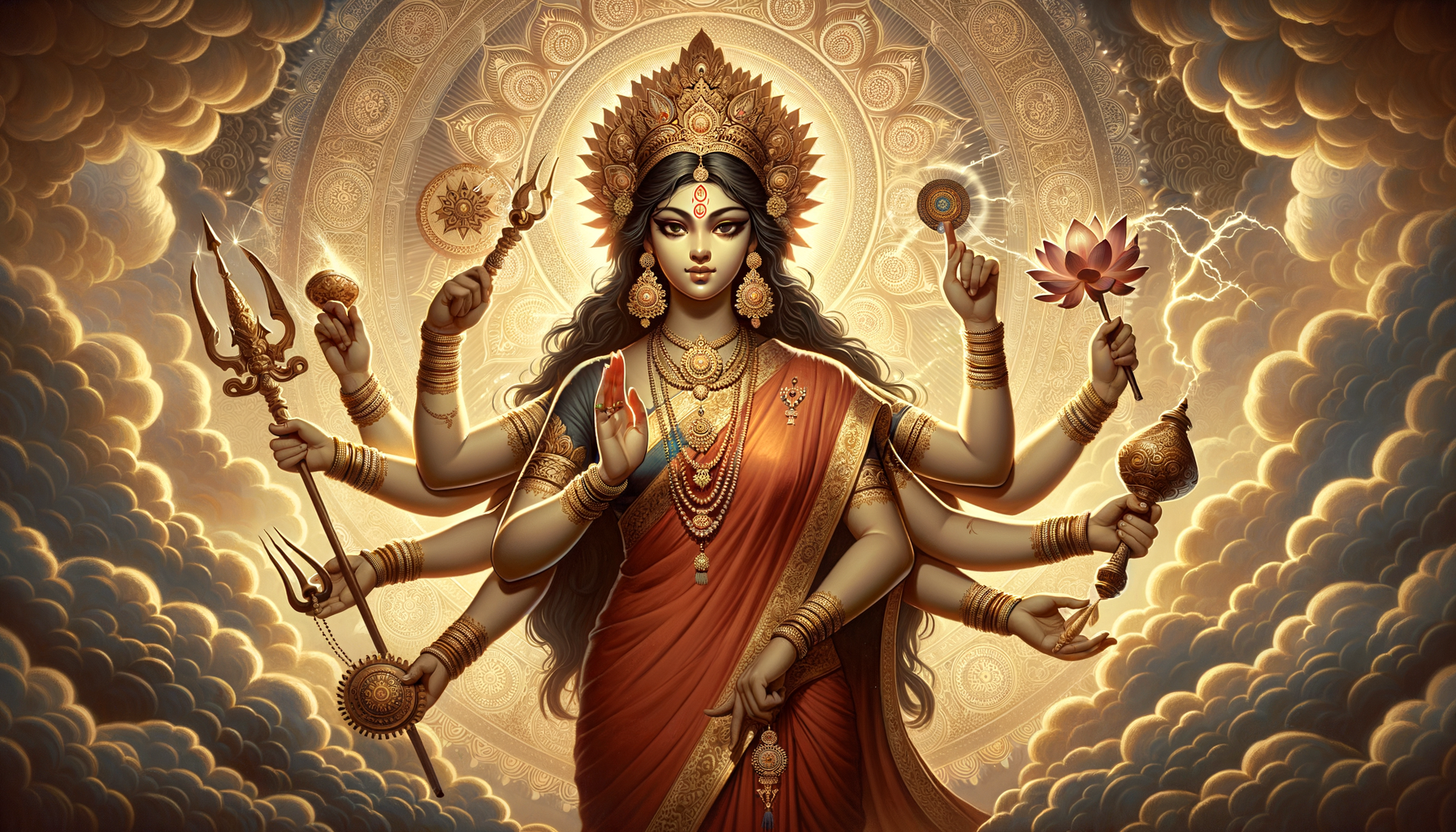
The Vajra in Goddess Durga’s hands symbolizes indestructible power guided by wisdom, as narrated in the Devi Mahatmyam of the Markandeya Purana. Indra’s gift of the thunderbolt links Durga’s protective mission with earlier Vedic and puranic themes of sacrifice, courage, and cosmic balance. Readers gain a clear understanding of how the Vajra denotes sudden illumination,…
-
Durga’s Bow and Arrow: Unveiling the Power of Universal Will and Spiritual Discipline
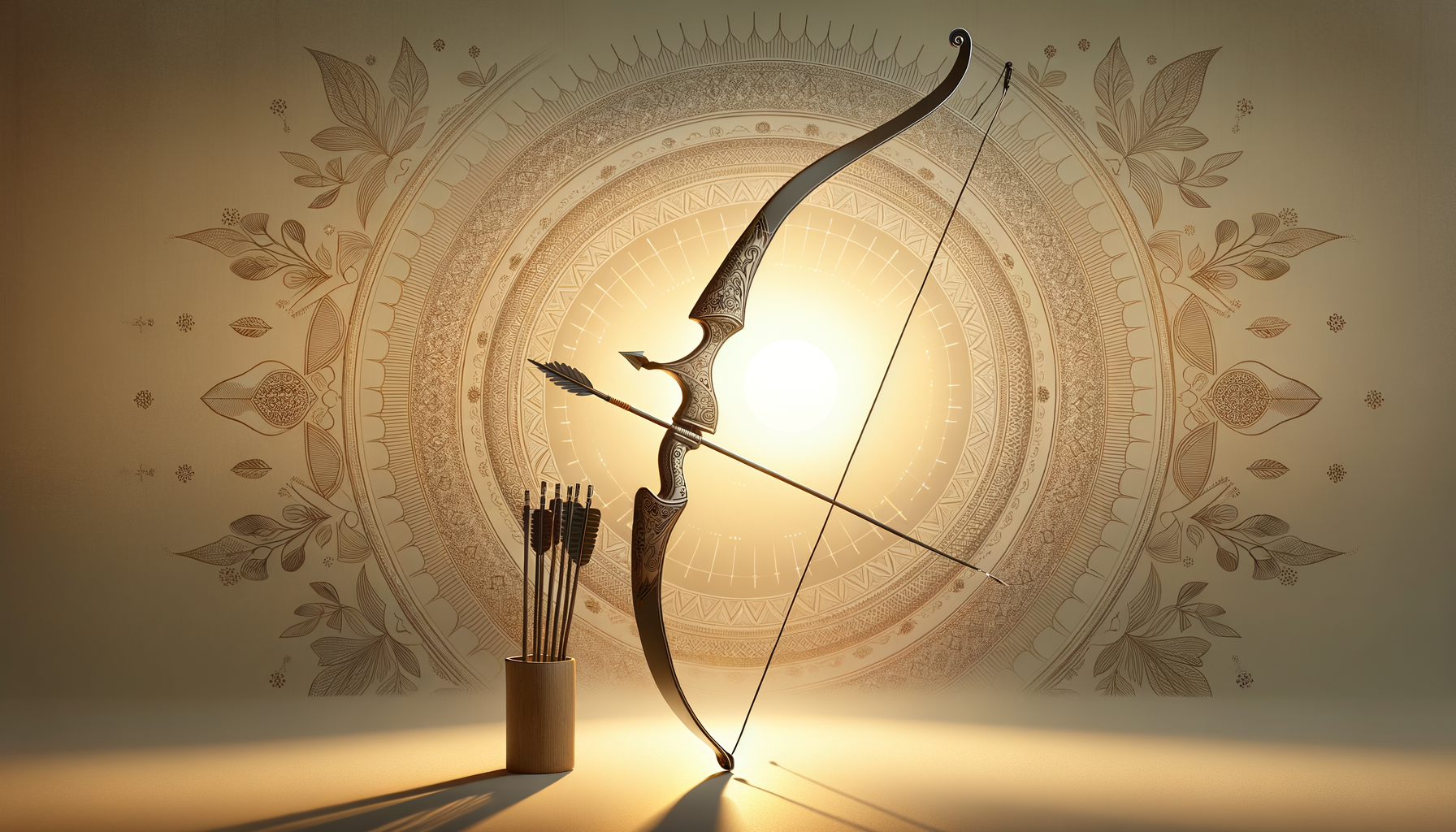
Goddess Durga’s bow and arrow symbolize the union of universal will and disciplined focus. The bow represents restrained power aligned to dharma, while the arrow embodies one-pointed concentration and purposeful action. Read through yoga, they mirror pratyāhāra, dhāraṇā, and dhyāna culminating in right action. During Navaratri and Durga Puja, this iconography becomes a practical guide…
-
Lotus of Wisdom in Durga’s Hand: Padma, Shakti, and the Defeat of Mahishasura
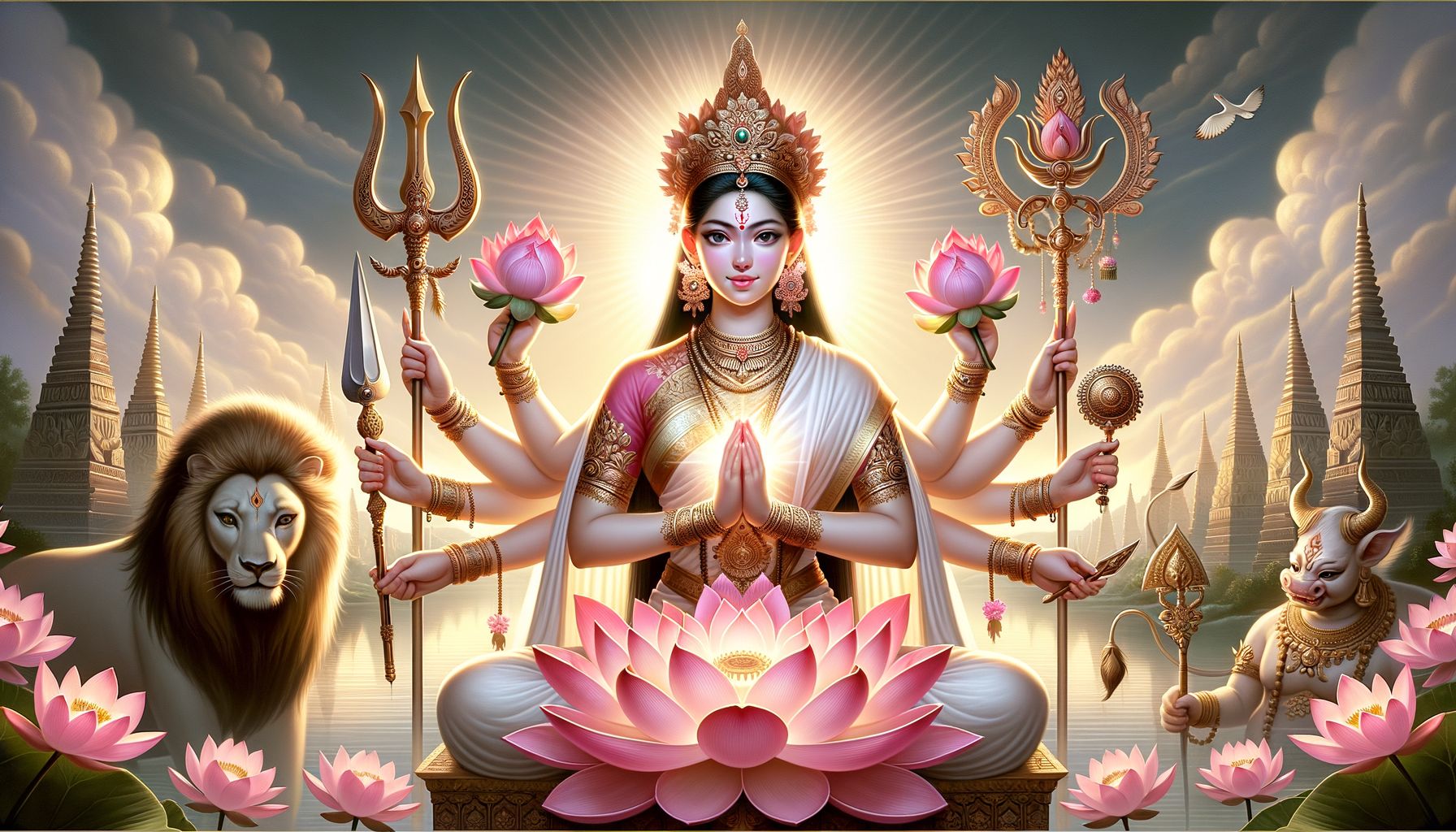
Goddess Durga’s Padma (lotus) in the Devi Mahatmya is more than ornament—it is a compass of consciousness guiding Shakti’s righteous action against Mahishasura. The lotus’s rise from mud to light illustrates clarity amidst chaos and courage tempered by wisdom. Across Hinduism, Buddhism, Jainism, and Sikhism, the shared lotus motif promotes unity, detachment, and compassionate awareness.…
-
Unveiling Molten Gold Radiance: The Symbolic Power of Goddess Durga’s Golden Skin
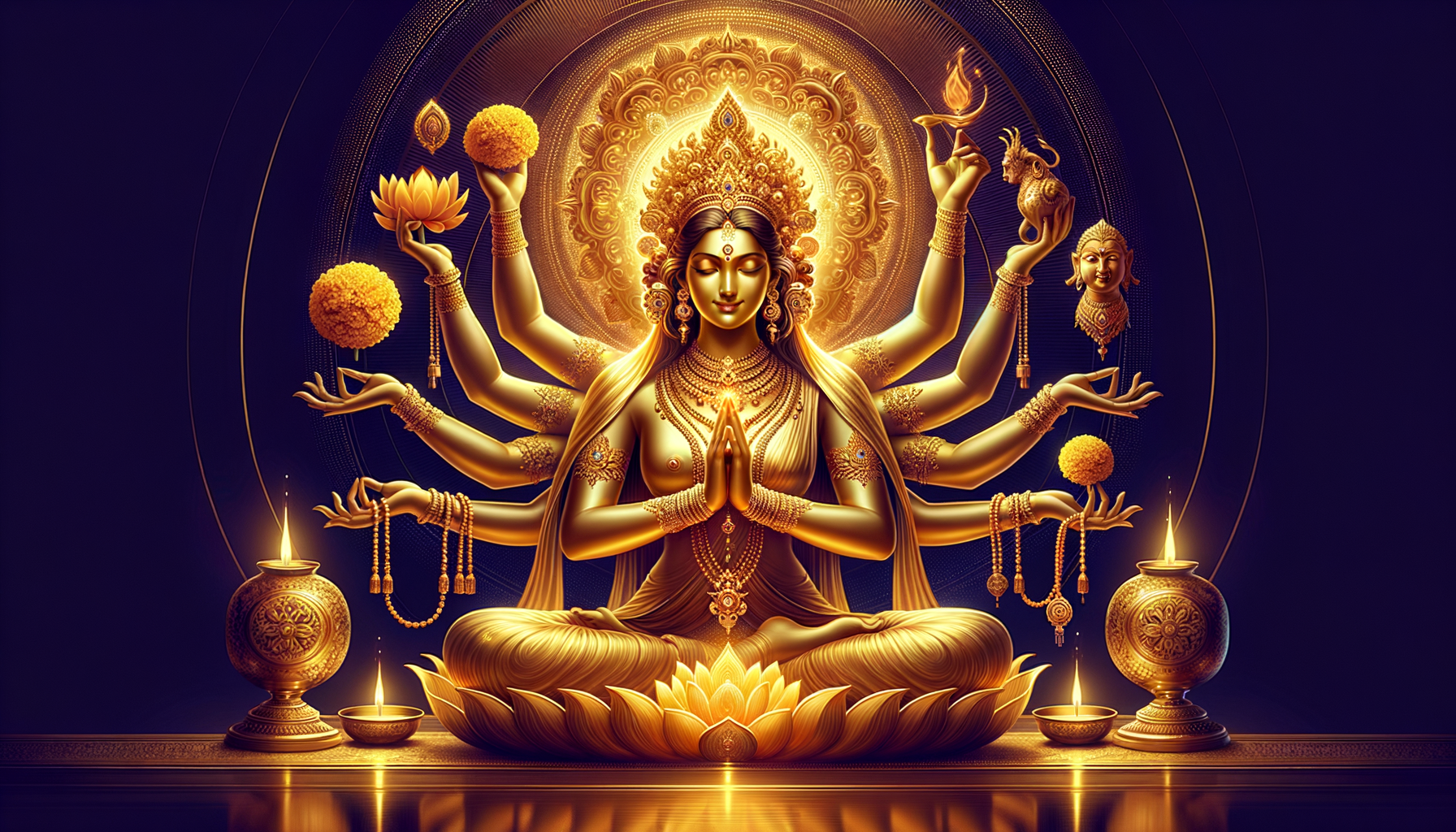
Hindu scriptures portray Goddess Durga with a golden, molten radiance that signifies purity, tejas, and protective power. This essay decodes that symbolism, showing how gold connotes incorruptibility and transformative wisdom aligned with dharma. It connects scriptural insight to living traditions—especially Navaratri and Durga Puja—where light, alankara, and community devotion make theology tangible. The discussion integrates…
-
Why 108 Lotus Flowers for Goddess Durga? Powerful Bengali Legends of Sandhi Puja

During Durga Puja’s Sandhi Puja, the offering of 108 lotus flowers to Goddess Durga carries both ritual precision and profound symbolism. Two renowned Bengali legends explain this practice: one commemorates 108 wounds sustained by the Goddess in her battle with asuras, and the other narrates Śrī Rāma’s Akal Bodhan, where his resolve to offer his…
-
Nistrimsa, the Sacred Curved Blade: Icon of Shakti, Justice, and Protection in Hindu Art

The nistrimsa (nistrimsha) is a sacred curved sword in Hindu iconography, distinct from the straight khadga and the heavier scimitar. Its measured arc symbolizes compassionate justice, aligning with Shakti’s protective and restorative power. Seen in temple sculpture and bronzes across regions, the nistrimsa represents ethical strength—power exercised to defend the vulnerable and uphold dharma. During…
-
Hindu Gods and Their Vahanas: Timeless Symbolism, Deeper Meaning, and Dharma in Daily Life
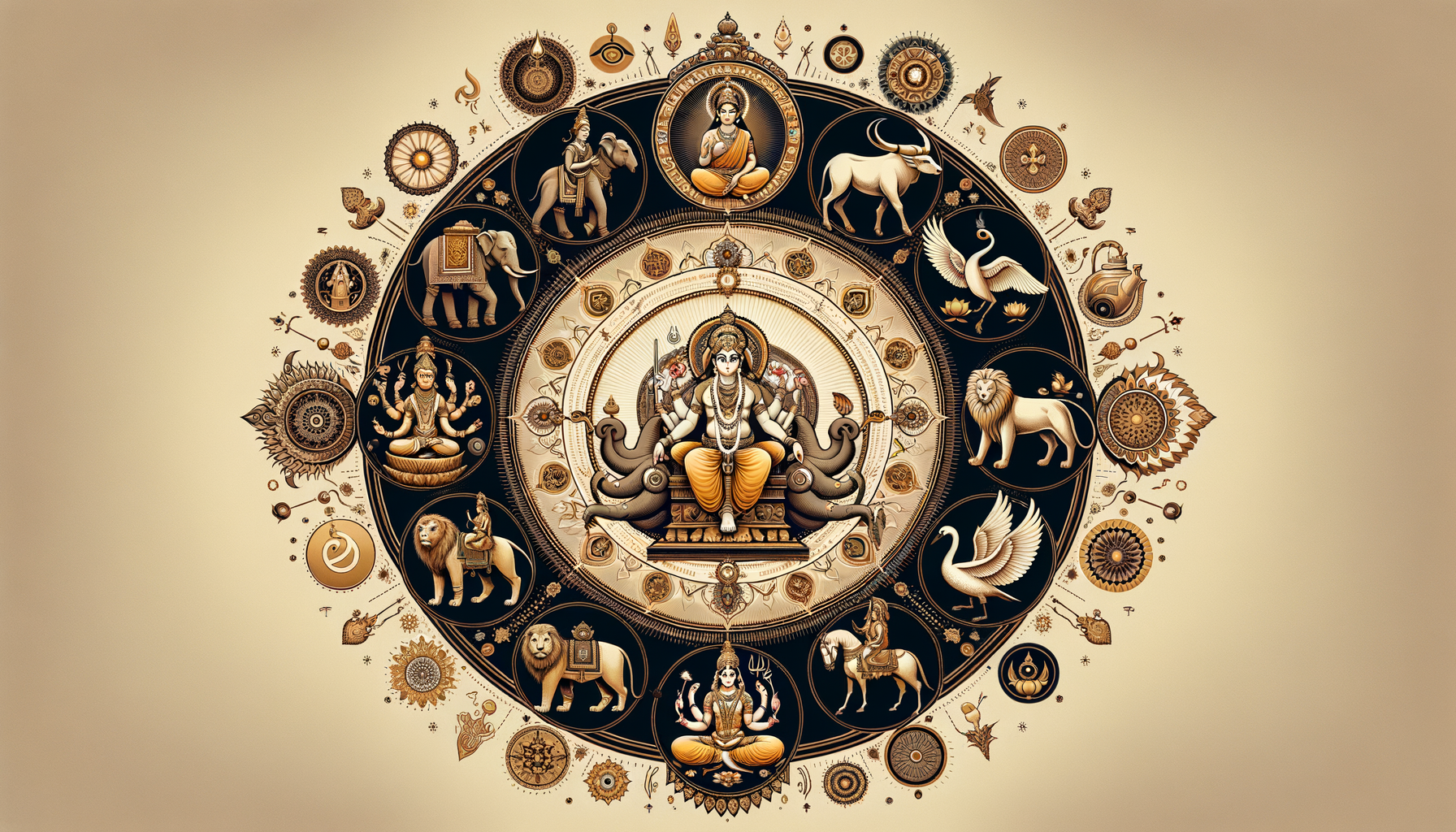
The vahanas (vehicles) of Hindu gods are not literal transport but layered symbols that teach ethics, ecology, and inner balance. Each deity–vahana pairing encodes a virtue to cultivate and an impulse to master, turning metaphysical insight into daily practice. Ganesha’s mouse models focused intellect; Shiva’s Nandi, disciplined strength; Vishnu’s Garuda, protective clarity; Durga’s lion or…
-
How Kali Kalkattewali Became Kolkata’s Soul: History, Symbolism, and Sacred Identity
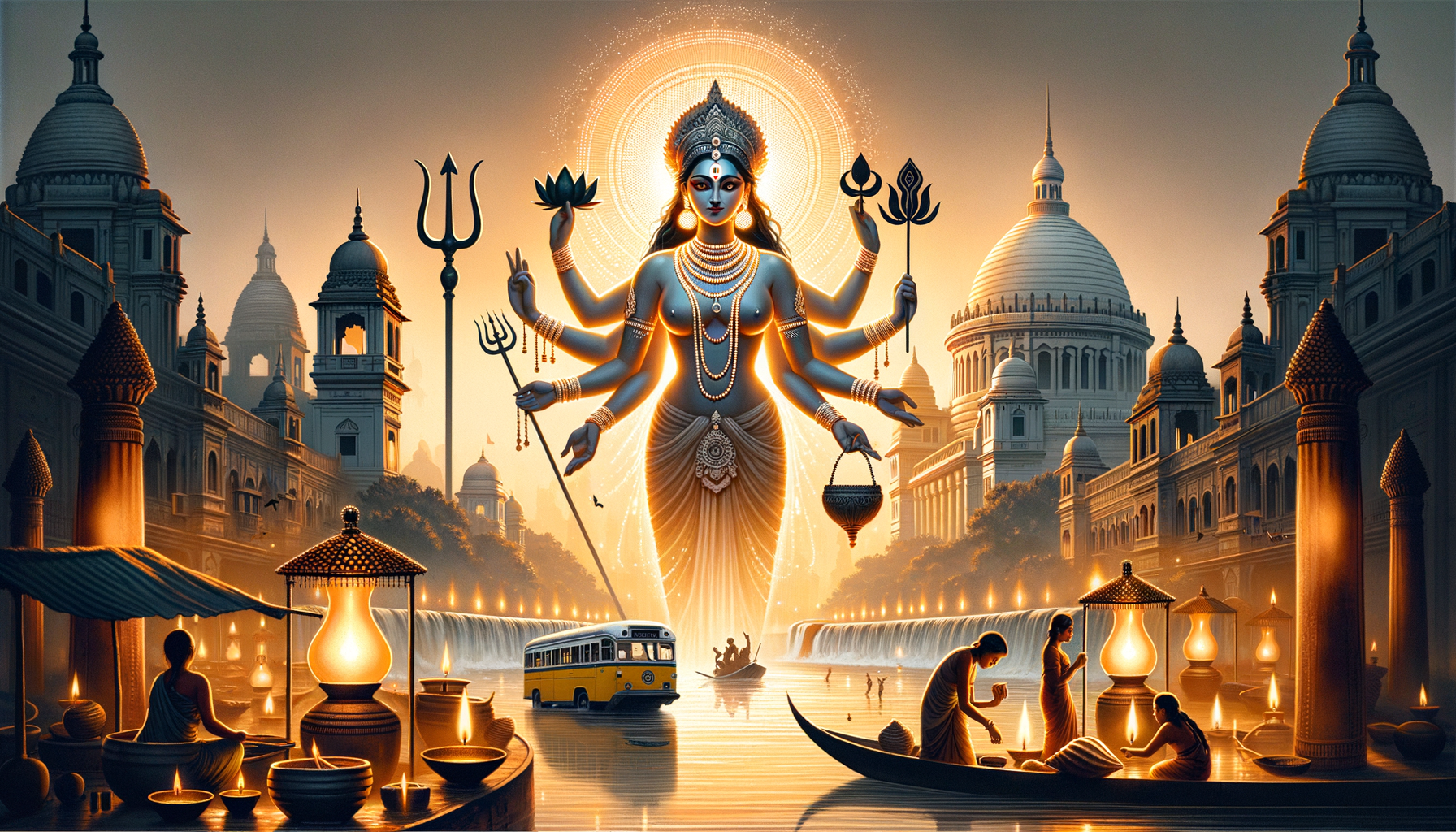
“Jai Kali Kalkattewali!” captures Kolkata’s enduring bond with Goddess Kali, uniting history, symbolism, and civic life. This article traces how Kalighat and Dakshineswar shaped the city’s sacred geography and how Ramakrishna and Vivekananda deepened its Shakti-centered identity. Readers learn the meaning of Kali’s iconography, the social significance of Kali Puja and Durga Puja, and the…
-
Goddess Karindrasuranisudini: Awe-Inspiring Slayer of the Elephant Demon and its Symbolism
Karindrasuranisudini, an epithet from the Devi Mahatmya, captures Durga’s subjugation of the elephant-form assumed by Mahishasura. The image fuses narrative drama with theological depth, presenting Shakti as the force that transforms power into protection and insight. Readers learn the name’s meaning, the key scene in the Markandeya Purana, and the layered symbolism of the severed…
-
Navratri 2026 Dates & Schedule: Definitive Guide to Shardiya Navratri, Kalash Puja, Rituals

Navratri 2026—also known as Maha Navratri, Durga Navratri, Devi Sharan Navratri, and Sharadiya Navratri—falls in Ashwin Month (Ashwayuja Masam) and begins with Kalash Puja (Ghatasthapana). Exact Navratri 2026 dates and muhurat depend on regional panchangs, so confirming local timings ensures accurate observance. The nine nights honor the Goddess in nine forms, culminating in Vijayadashami (Dussehra),…
-
Kushmanda: Unveiling the Cosmic Creative Power of Durga and Its Life-Shaping Symbolism
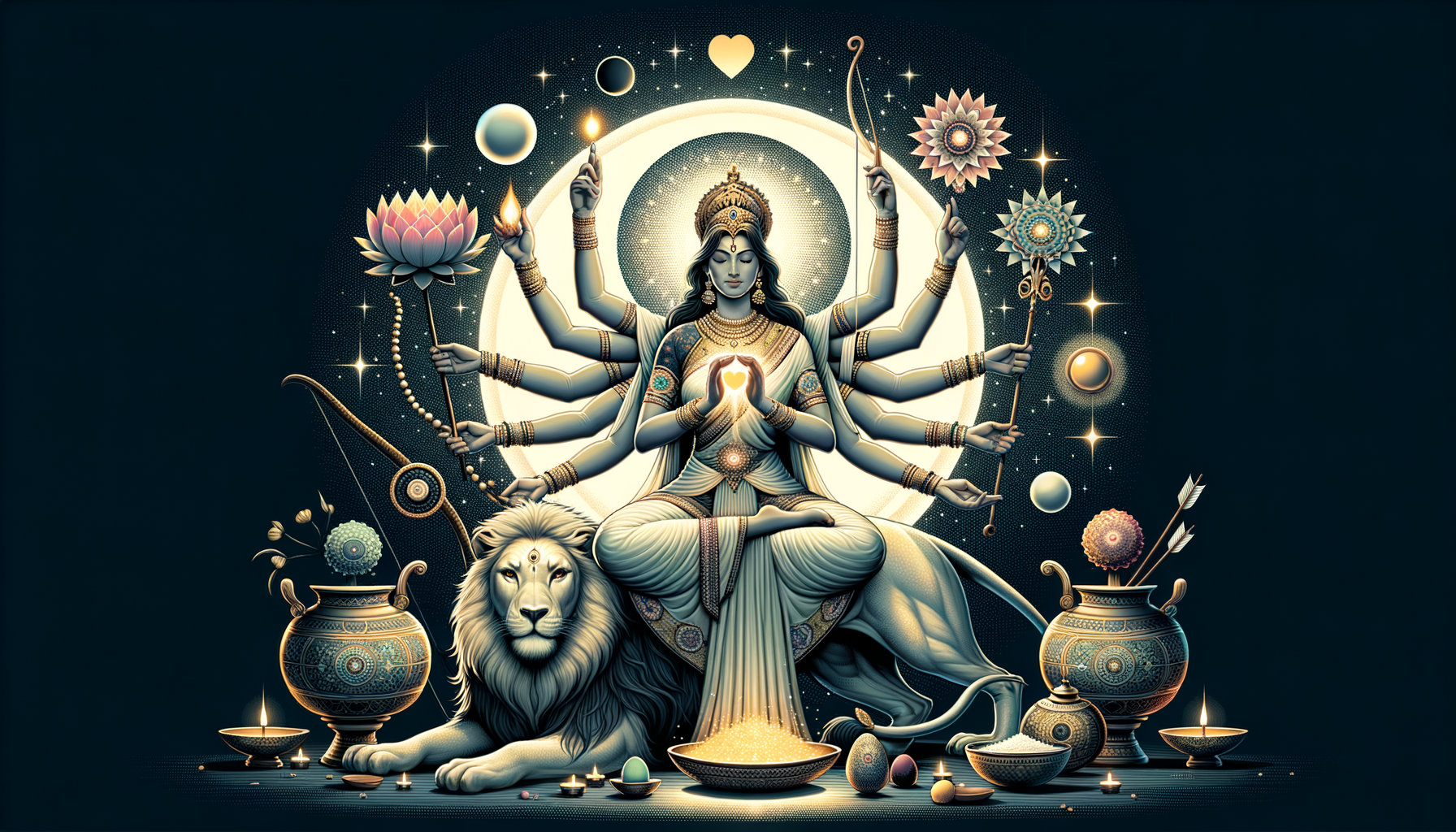
Kushmanda, the fourth manifestation of Goddess Durga, is honored as the creative force that brings the universe into being. Her name evokes the primordial warmth that animates the cosmic egg (Brahmanda), linking metaphysical insight with practical devotion. In Navaratri worship, Kushmanda symbolizes new beginnings, inner vitality, and disciplined compassion. Iconography portrays her as Ashtabhuja, radiating…