
-
Decoding Chamunda’s Unfillable Hunger: Why the Fierce Goddess Appears Skeletal and Gaunt
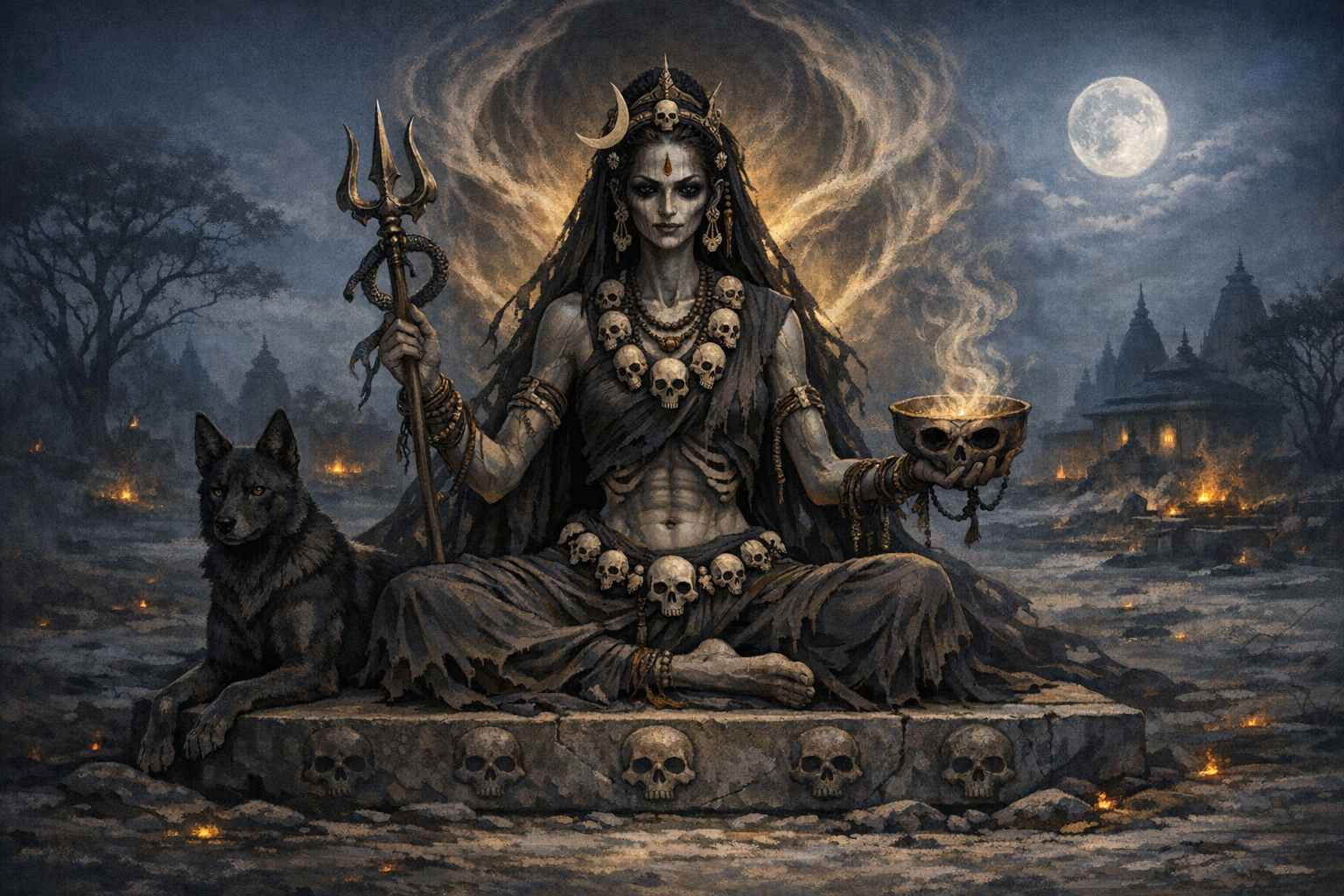
Chamunda’s skeletal iconography is not grotesque but a precise Tantric and Shakta code that teaches fearlessness, non-attachment, and clarity. Grounded in the Devi Mahatmya of the Markandeya Purana, the goddess appears as an ugra devata whose gaunt body signifies the withdrawal of worldly rasa and the conquest of insatiable appetite. Each attributethe skull garland, kapala,…
-
Sri Chamunda Stotra: Unveiling Shakti, the Primordial Force Animating All Gods and Cosmos
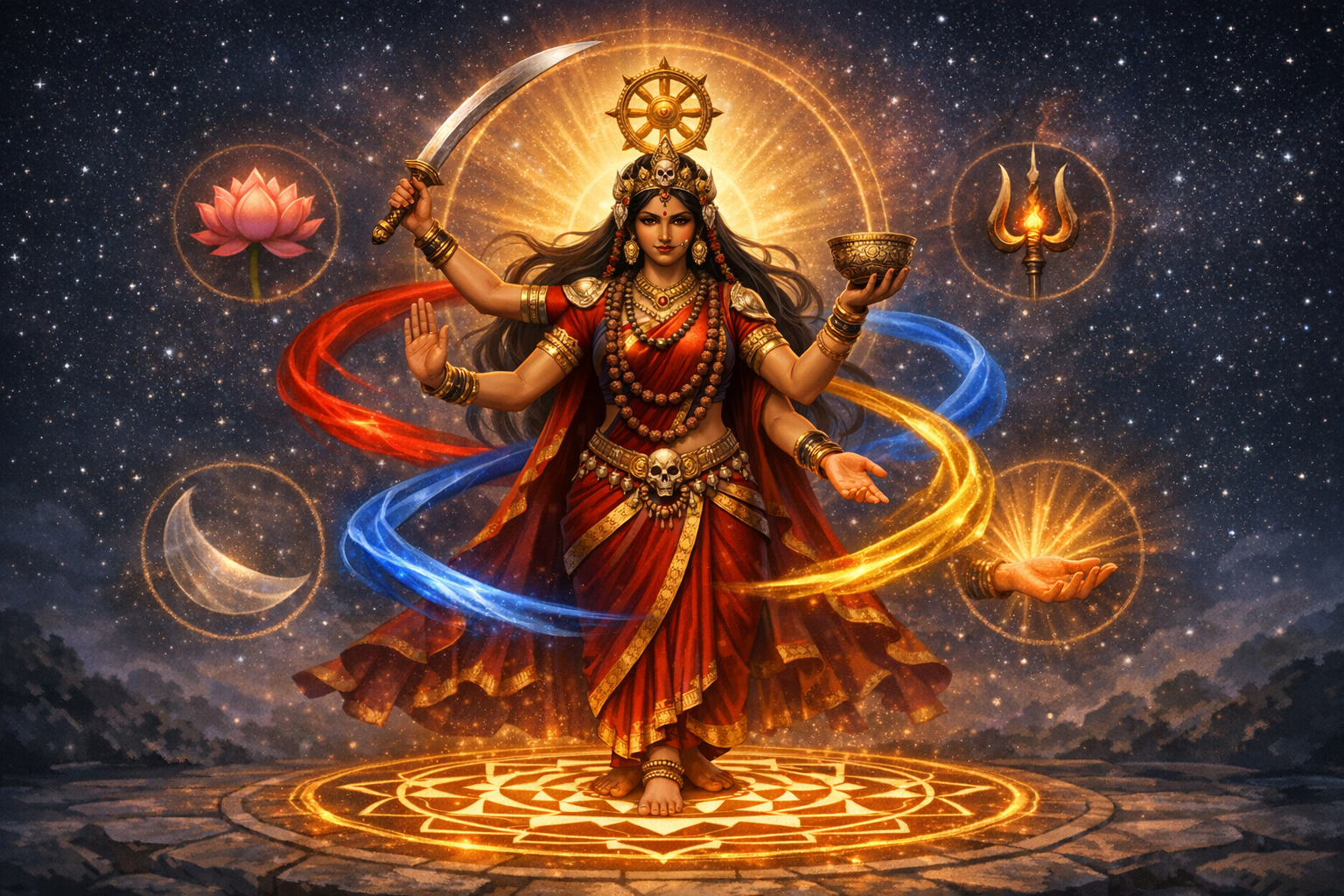
This in-depth exploration of Śrī Cāmuṇḍā Stotra presents Shakti as the primordial power animating every divine and cosmic function. Grounded in Shakta and Tantric philosophy, it explains why, without Shakti, even the gods remain inert, and how this insight coheres with Advaita, Kashmir Śaivism’s spanda theory, and Śrīvidyā practice. Iconographic elementscremation grounds, skull-garland, and jackalsare…
-
Decoding the Khatvanga: Skull Staff of Chamunda & KaliFearlessness, Tantra, and Transcendence
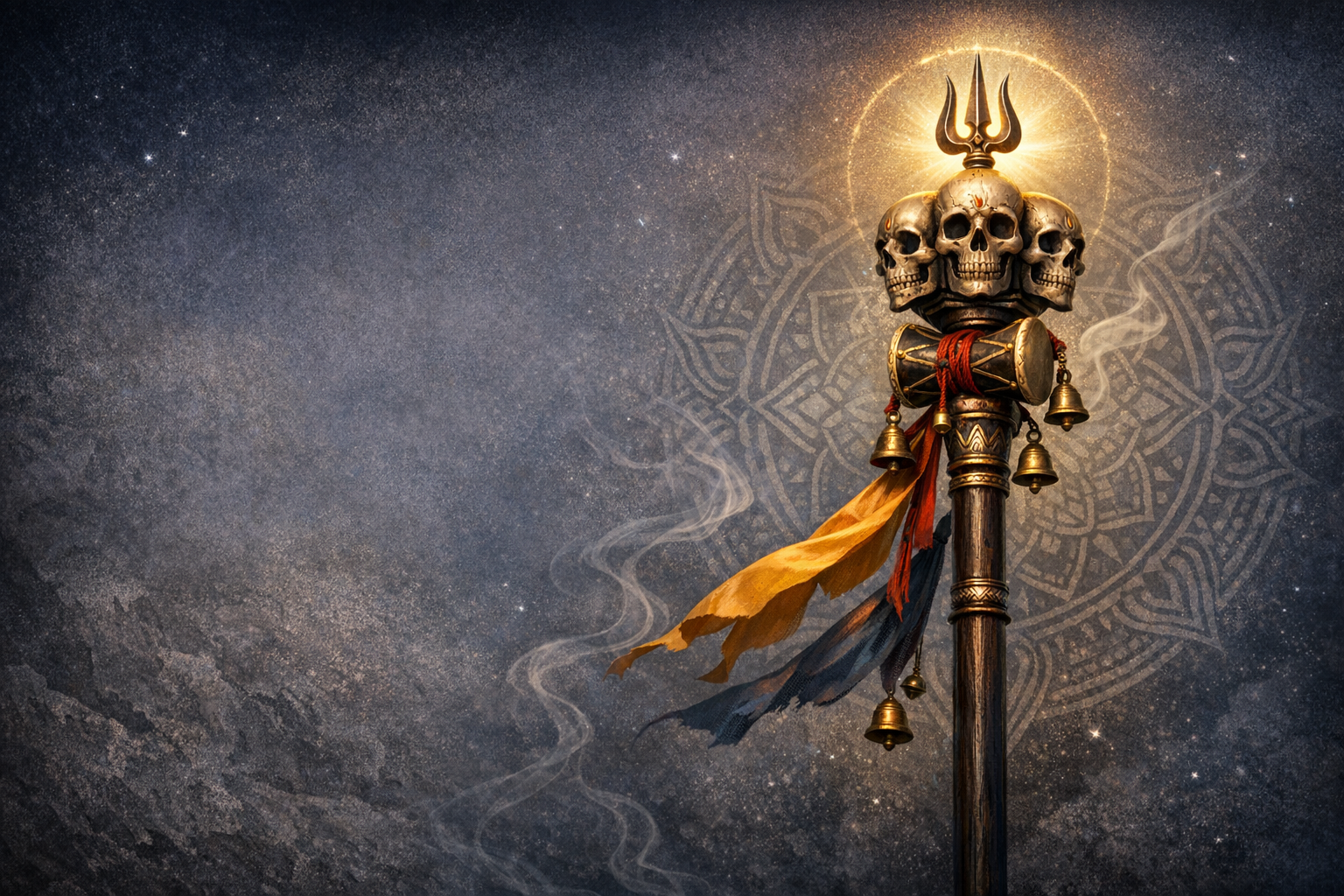
The khatvangaskull-staff of Chamunda, Kali, and other fierce goddessesemerges as a precise, multilayered symbol in Hindu iconography and tantric philosophy. This long-form analysis decodes its form (skull, bone staff, damaru, banner), its cremation-ground origins, and its ethical evolution from literal bone to wood or metal in mainstream ritual spaces. It clarifies how the staff encodes…
-
Shiva-bhog in Kali Temples: Feeding Jackals with Prasada and the Wisdom of Shakta Tantra
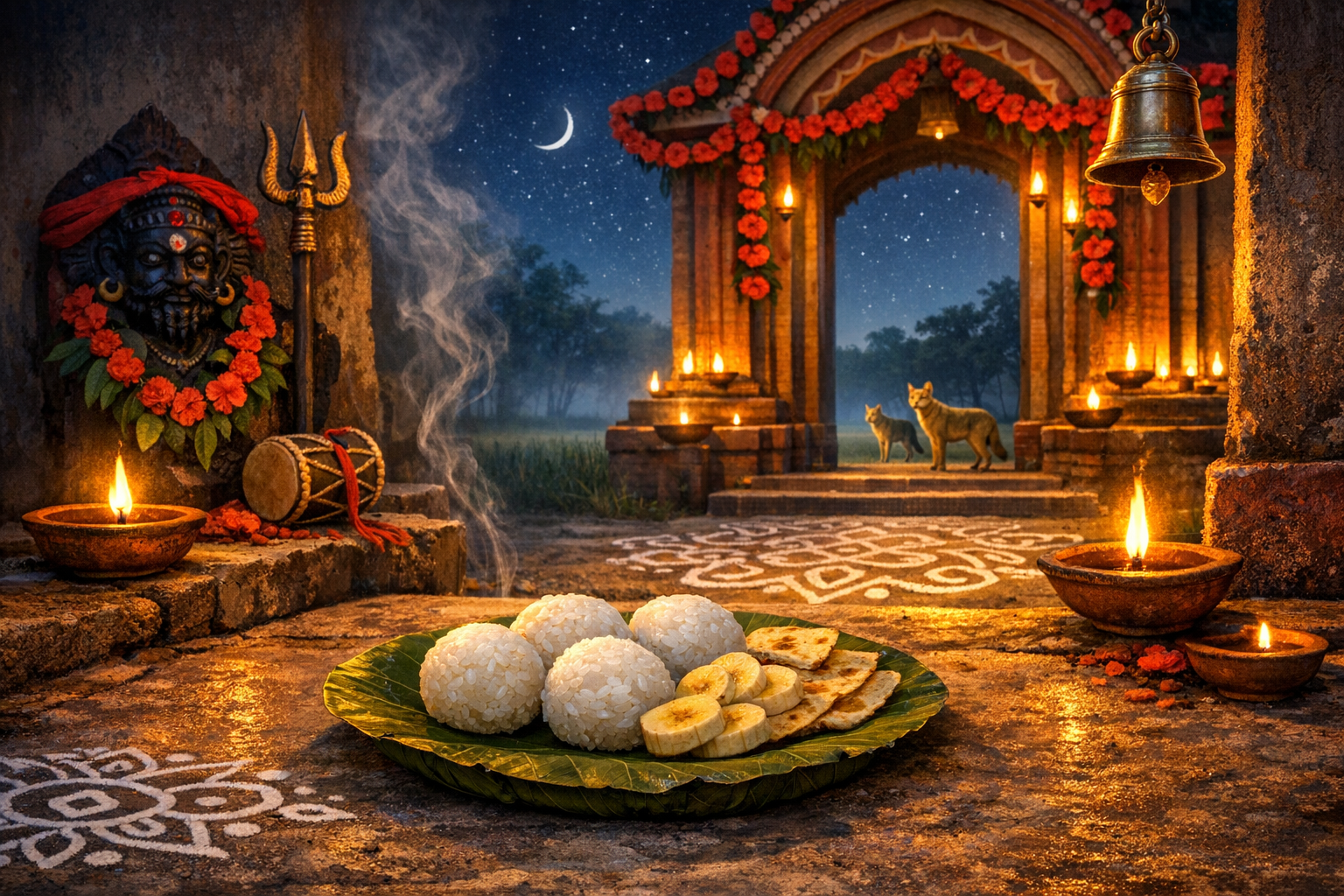
Shiva-bhog in Kali temples is a Shakta Tantra rite in which a consecrated share of prasada is respectfully offered to jackals, seen as attendants of the Mother and guardians under Bhairava. Rooted in classical iconography that pairs Kali and Chamunda with the smashana and its liminal beings, the practice integrates Shaiva–Shakta theology with ecological awareness.…
-
Shiyali Kali (Kokmukha Devi): Unveiling the Enigmatic Jackal-Faced Shakti of India
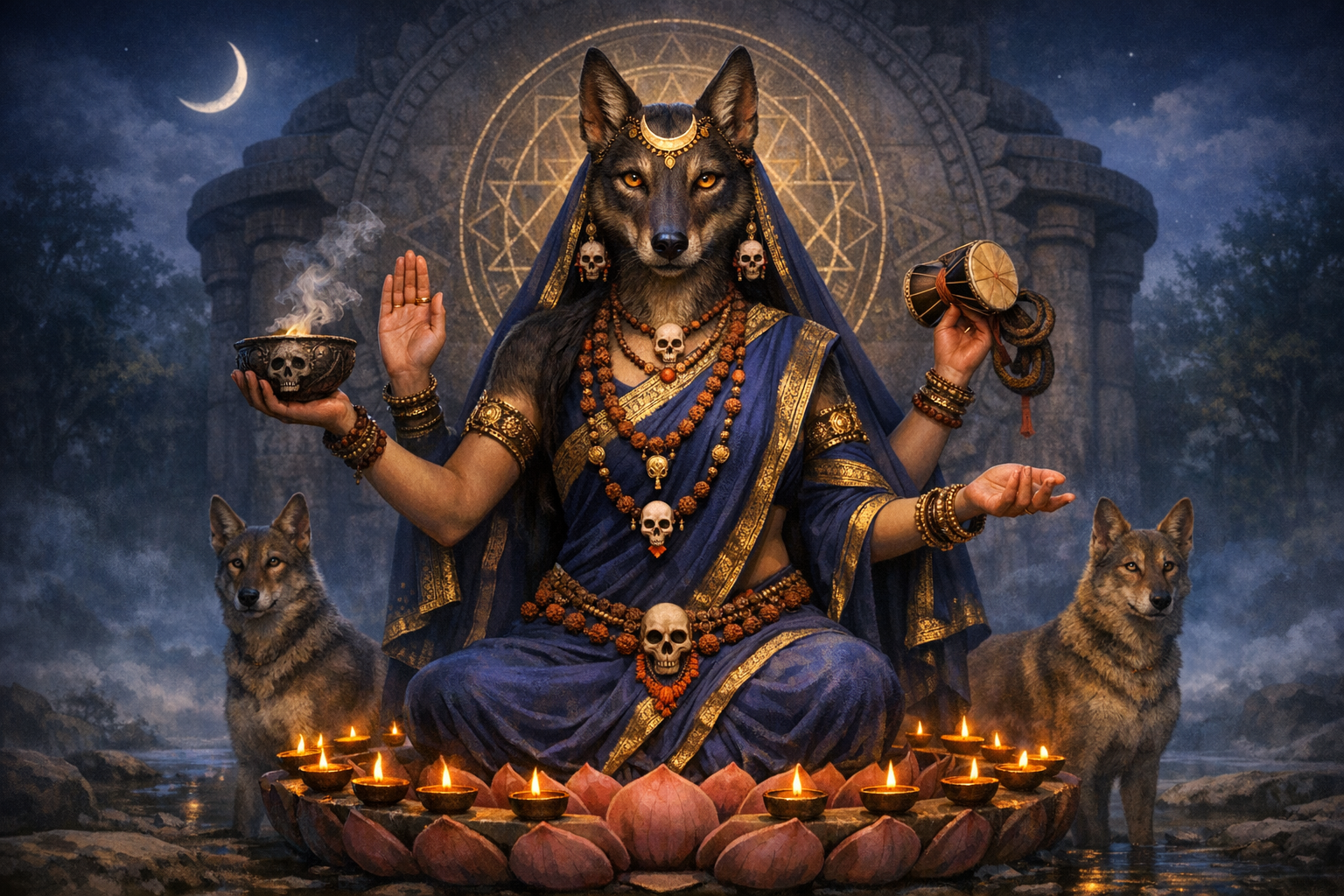
Shiyali Kali (Kokmukha Devi) is a rare, jackal-faced manifestation of the Hindu Goddess that embodies the sacred power of liminalitynight, the cremation ground, and the frontier between life and death. Although largely forgotten today, this form remains legible through Ancient Texts, Archaeology, regional memory, and the broader Śākta iconographic grammar linking the Goddess with jackals.…
-
Rakta Chamundi: Blood-Red Shakti of Wrathful Compassion, Liberation, and Cosmic Balance
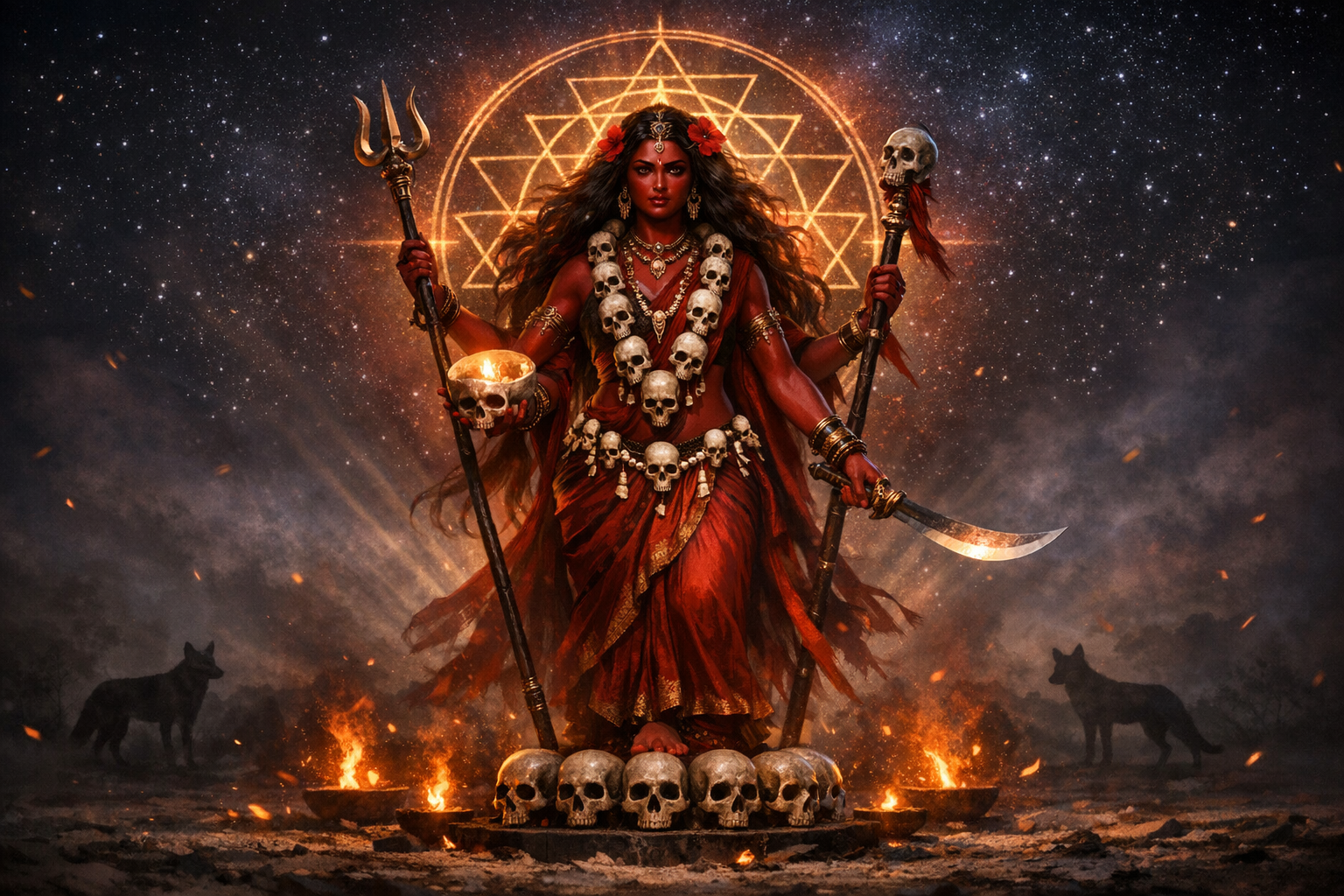
Rakta Chamundi, or Raktha Chamundi, embodies the Hindu Goddess as blood-red Shakti: fierce in aspect, compassionate in purpose, and liberative in effect. Grounded in the Devi Mahatmya’s episodes of Chanda, Munda, and Raktabija, she symbolizes a precise ethical force that ends the repetition of harm. Iconographyskull-garland, cremation-ground setting, and Panchamundi Asanateaches impermanence, vigilance, and mastery…
-
Kokamukha Unveiled: The Jackal-Faced Mahakali in Texts, Temple Inscriptions, and Tantra
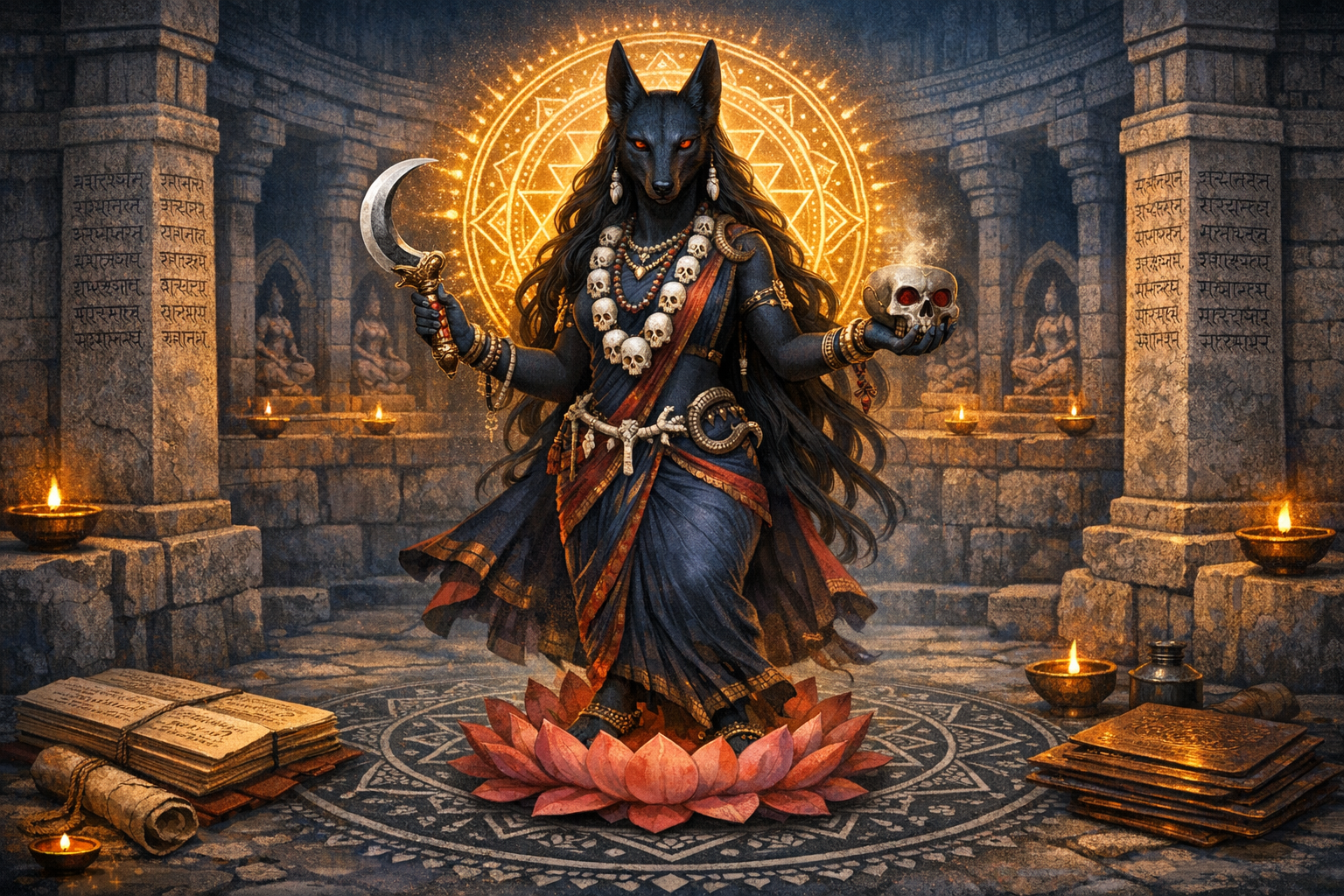
Kokamukha, remembered as the jackal-faced manifestation of Mahakali, emerges in the Shakta landscape at the intersection of Hindu scriptures, temple traditions, and Tantric iconography. The article clarifies the name’s philological roots and situates the form within cremation-ground theology, where fierce imagery communicates protection, fearlessness, and ethical clarity. It connects Kokamukha with Yogini traditions and early-medieval…
-
Chamunda’s Mysterious ‘Anteater’: Tantric Power, Cosmic Cycles, and Sacred Ecology Explained
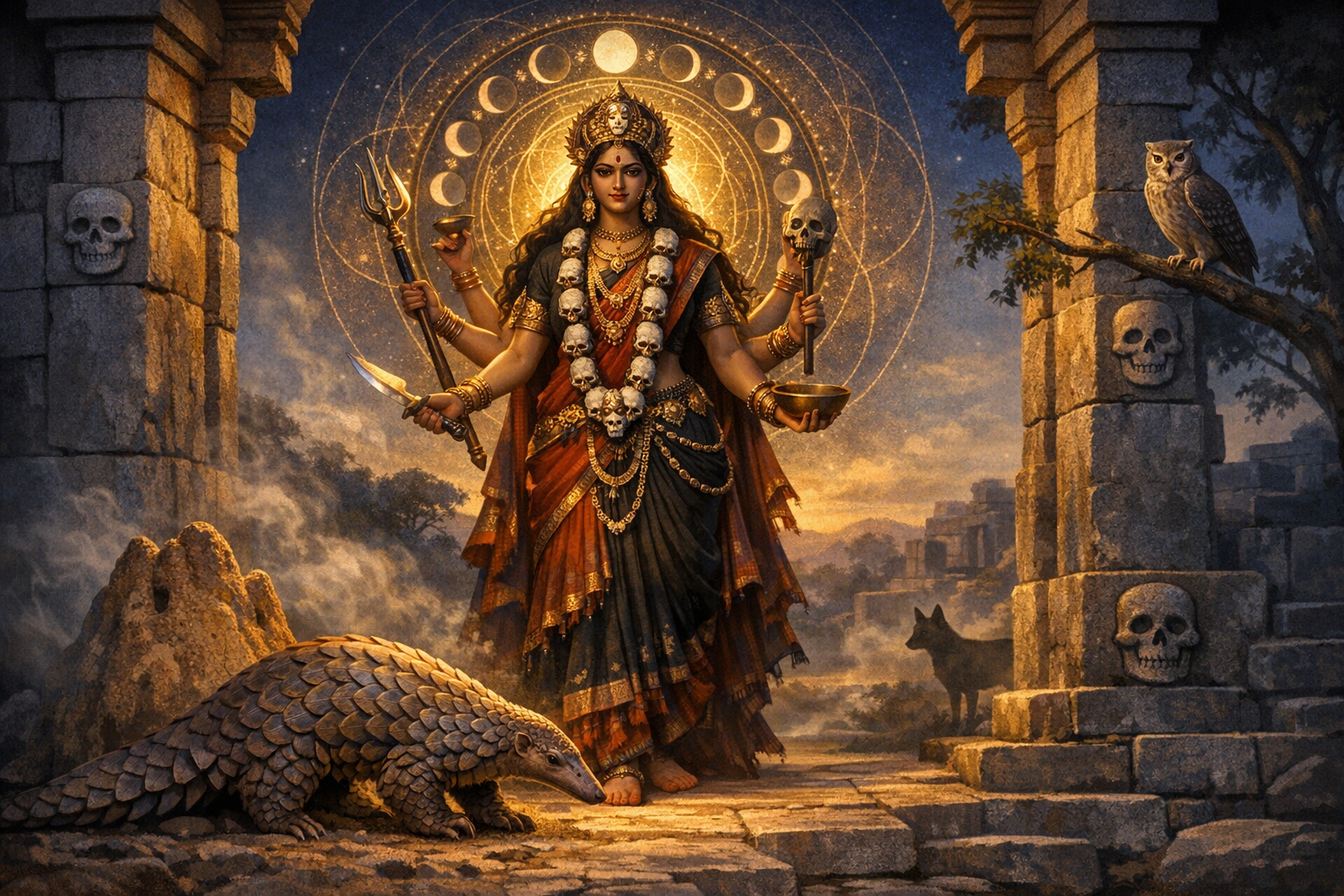
Chamunda’s enigmatic ‘anteater’ is not a New World mammal but, in most Indian contexts, a carefully carved Indian pangolinan attendant that encodes Śākta ideas of dissolution, protection, and renewal. By tracing zoological details (scales, tail, snout) and correlating them with śilpa-śāstra traditions, the essay corrects common cataloguing errors and restores ecological specificity to Hindu temple…
-
Why Chamunda’s Severed, Smiling Head Signifies Bliss: Decoding Ego-Death and Moksha
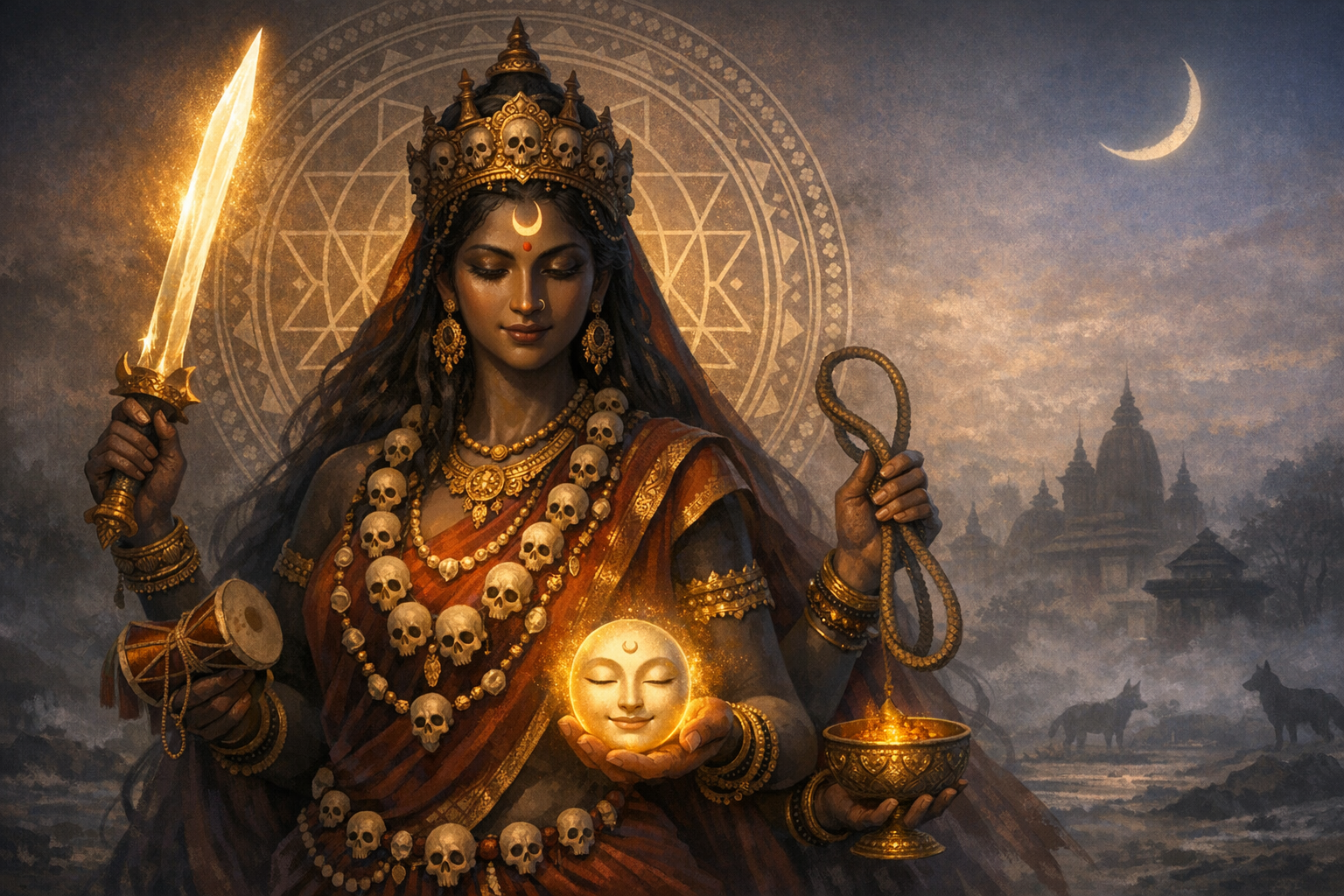
Chamunda’s severed head is not an emblem of violence but a precise symbol of liberation: the serene face represents ego-death and the bliss of moksha. By situating the image within Shakta tantra, cremation-ground sadhana, and the mundamala/kapala vocabulary, the analysis shows how fear is transmuted into insight. Panchamundi Asana symbolism and comparisons with Kali and…
-
Chamunda’s Fiery Crown: Transformative Agni, Shakta Iconography, and Inner Alchemy
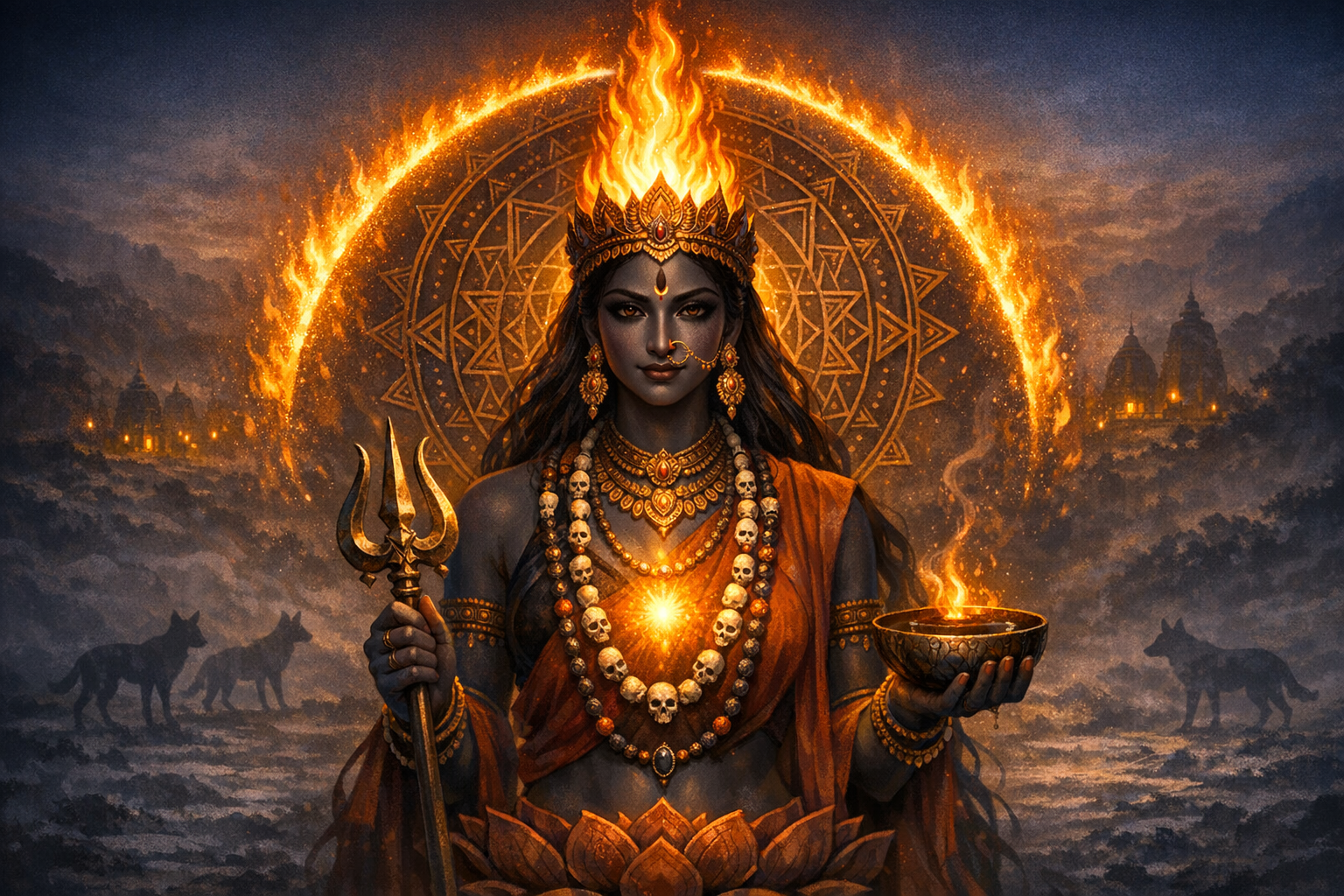
Chamunda’s crown of flamejvālāmukuṭapresents a precise theological statement: power governed by wisdom. Rooted in the Devi Mahatmya, this Shakta iconography aligns with Vedic and Yogic accounts of purificatory fire (Agni, jñānāgni), showing how disciplined luminosity transforms fear and anger into moral clarity. The cremation-ground setting, skull garland, and pañchamuṇḍi āsana frame the flame as sovereignty…
-
Rakta Chamunda Unveiled: Iconography of the Red Warrior Goddess, Tantric Power, and Ritual Meaning
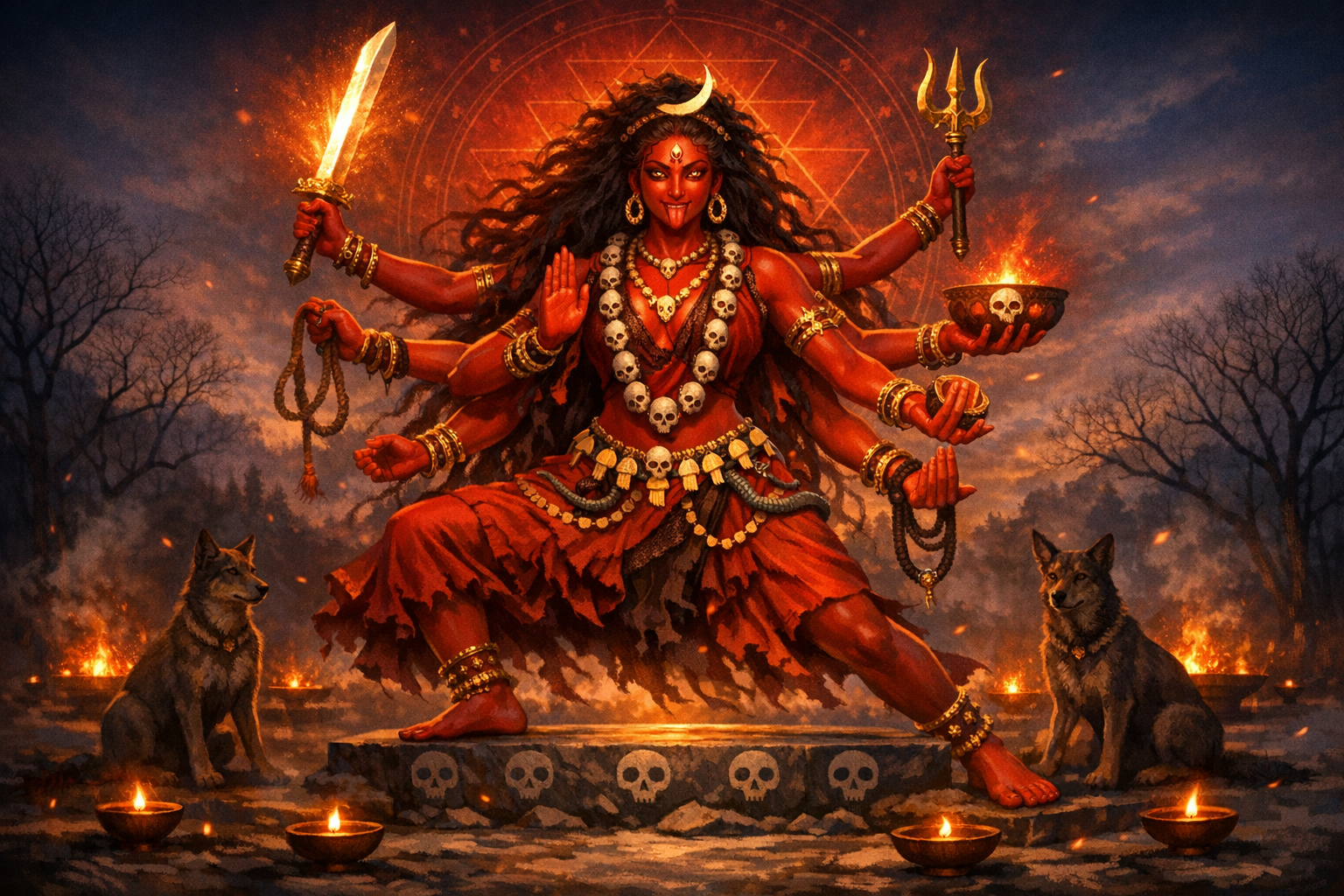
Rakta ChamundaThe Red Warrior Goddessembodies a rigorous tantric grammar of protection and transformation rooted in the Devi Mahatmya. This long-form guide decodes her iconography: the red complexion, skull-garlands, cremation-ground setting, jackals, and martial postures that together announce the subjugation of ego and fear. Readers will learn how to identify Rakta Chamunda in temple and museum…
-
Decoding the Charchika Mudra: Chamunda’s Fearless Iconography and the Science of Inner Purification
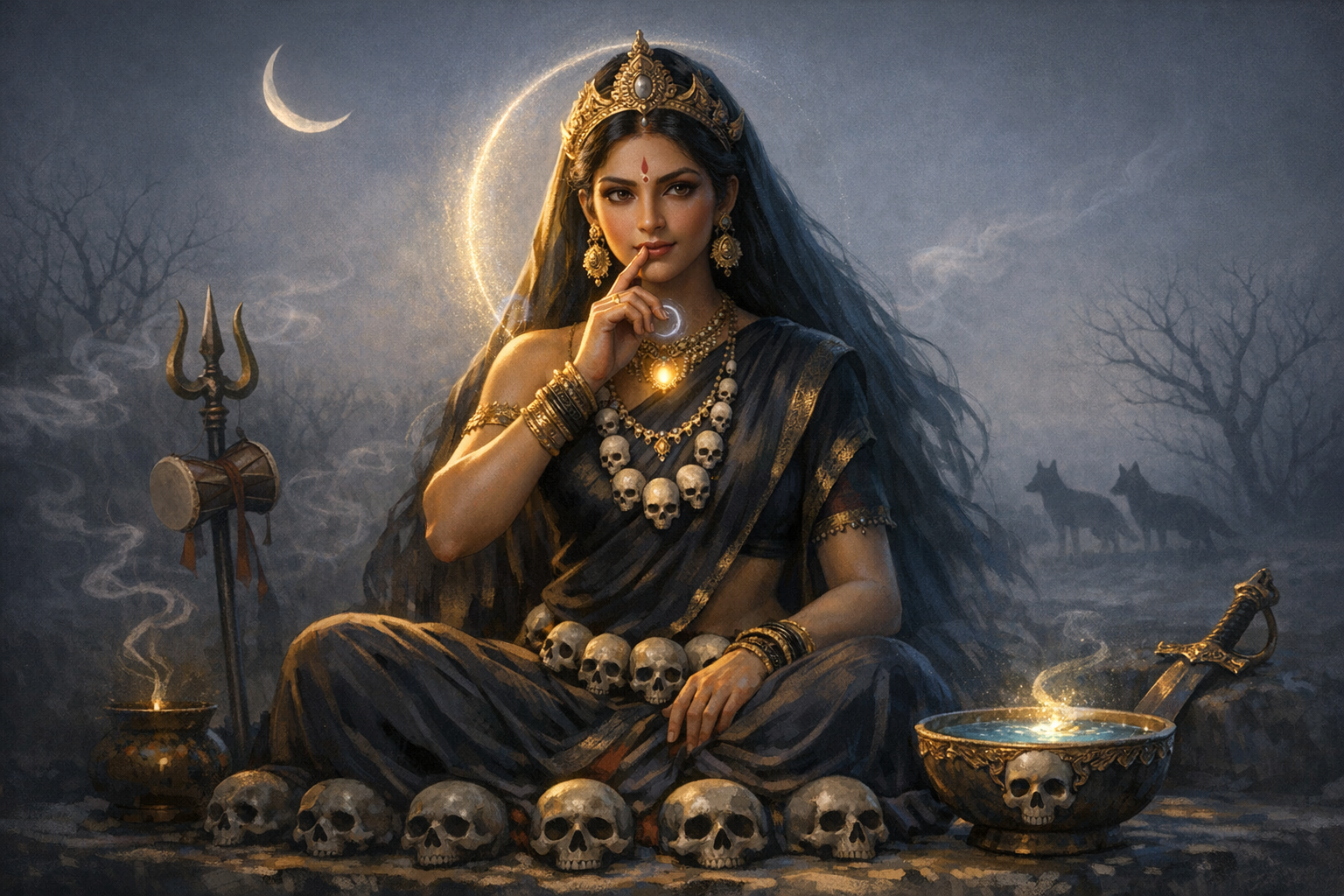
The Charchika MudraChamunda cleaning her teeth with the left little fingercondenses a complete Shakta theology of protection and purification into one subtle gesture. Read against the Devi Mahatmyam and Shakta iconography, it signifies post-conflict cleansing, non-attachment to the taste of violence, and disciplined speech and appetite. Jackals, cremation ground, and skull garlands frame a fearless…
-
Hindu Gods and Their Vahanas: Timeless Symbolism, Deeper Meaning, and Dharma in Daily Life
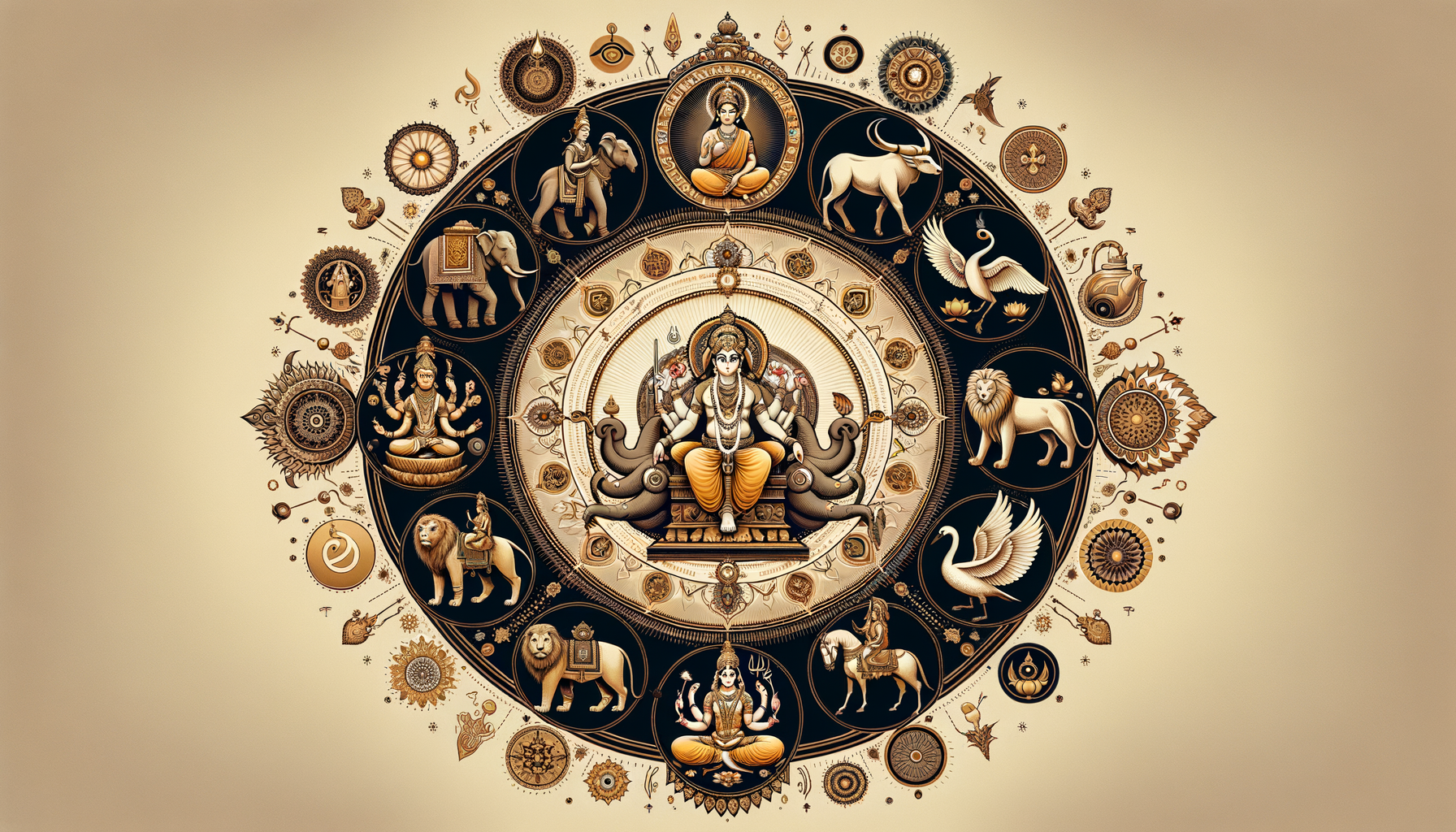
The vahanas (vehicles) of Hindu gods are not literal transport but layered symbols that teach ethics, ecology, and inner balance. Each deity–vahana pairing encodes a virtue to cultivate and an impulse to master, turning metaphysical insight into daily practice. Ganesha’s mouse models focused intellect; Shiva’s Nandi, disciplined strength; Vishnu’s Garuda, protective clarity; Durga’s lion or…
-
Kokamukhi Devi: Unmasking the Jackal-Faced Shakti of Time, Death, and Sacred Renewal

Kokamukhi Devi, the jackal-faced manifestation of Adi Shakti, illuminates how fierce iconography can teach compassion, courage, and clarity. This analysis situates her cremation-ground symbolism within Shakta Tantra while drawing bridges to Buddhist charnel-ground meditations, Jain vairāgya, and Sikh remembrance of hukam. Readers gain a grounded understanding of how time and impermanence catalyze ethical living, not…
-
Goddess Chinnamasta and the Jackals: Tantric Symbolism, Fierce Grace, and Inner Transformation

Goddess Chinnamasta’s self-decapitated form and the presence of jackals create a profound Tantric teaching on ego-transcendence, impermanence, and compassionate energy. The three blood streams symbolize iḍā, piṅgalā, and suṣumṇā, suggesting redistribution of prāṇa rather than loss. Jackals, as cremation-ground denizens, represent threshold spaces and the recycling of form, turning fear and instinct into wisdom. Psychological…
-
Goddess Chamunda and Her Jackals: Unmasking Cremation-Ground Power, Fearlessness, and Grace
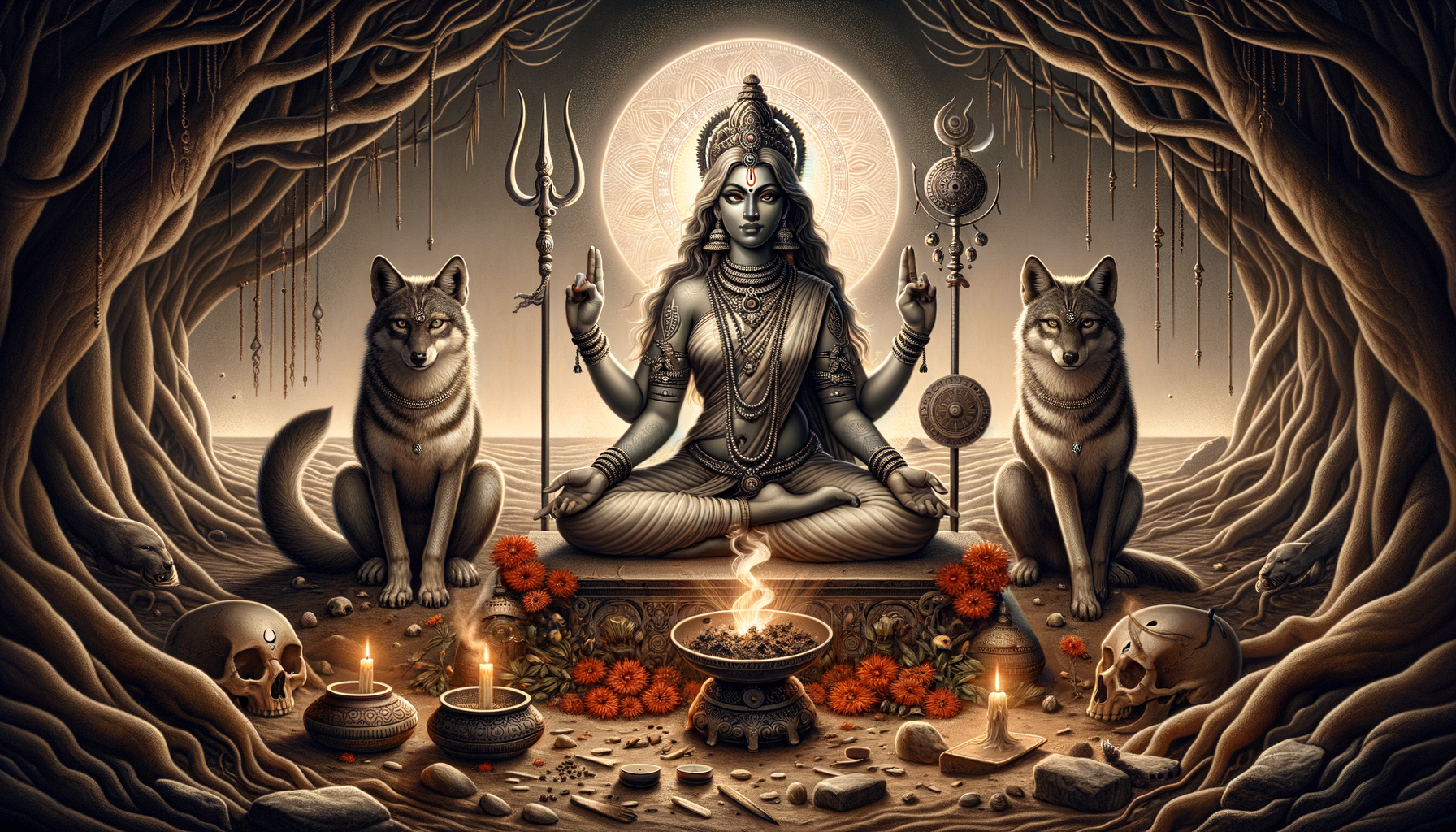
Goddess Chamunda’s fierce iconographycremation grounds, skull garlands, and jackalsconveys a precise spiritual message: transformation through fearlessness. The jackals signify liminality and guardianship at life’s thresholds, while the śmaśāna setting urges a direct encounter with impermanence. Read alongside Vajrayana charnel-ground practice, Jain anitya contemplation, and Sikh ideals of nirbhau, the symbolism affirms a shared dharmic insight…