
-
Rakhi Israni’s Congressional Bid: Dharmic Values to Heal American Politics and Renew Civility

American politics faces deep polarization, prompting renewed interest in Dharma as a framework for truth, responsibility, and harmony. In California, a state with a robust Dharmic heritagefrom Paramahansa Yogananda’s Lake Shrine to Vedanta Square honoring Swami Vivekananda, and Sathya Sai Baba-inspired sevaRakhi Israni’s congressional bid highlights how civic life can be guided by ethical principles.…
-
Kubera’s Golden Eye (Eka Pingala): A Timeless Hindu Tale on Desire and Dharma

This academic retelling of Kubera’s epithet “Eka Pingala – The One With Golden Eye” explains how Hindu scriptures and Puranas use symbolic language to teach discernment and self-restraint. Readers learn why desire narrows perception and how dharma restores clarity in personal and social life. The narrative connects Kubera’s role in the Ramayana with a broader…
-
Conquering avidyā with ekāgra chitta: dharmic wisdom to end spiritual blindness

Spiritual blindness, or “avidyā,” obscures the “ātman” and fuels suffering; dharmic wisdom teaches that only sustained steadiness“ekāgra chitta”can dissolve this ignorance. Hinduism, Buddhism, Jainism, and Sikhism converge on this principle while honoring diverse methods such as dhyāna, remembrance, ethical restraint, and self-inquiry. Practical stepsdaily meditation, mindful breathwork, japa, and reflective study of the Upanishads and…
-
Ohio Honors Hindu Heritage Month: Nearly 20 City Proclamations and a State Proclamation

Ohio marked a standout October 2025 for Hindu Heritage Month, with nearly 20 city proclamations and a formal state proclamation from Governor Mike DeWine. The recognitions highlight the contributions of Hindu Americans across education, healthcare, engineering, business, and the arts. They also affirm core dharmic valuesdharma, compassion, inclusivity, and universal respectshared across Hinduism, Buddhism, Jainism,…
-
Bhishma Tharpanam Vidhi on Bhishma Ashtami: Sacred Step-by-Step Procedure, Mantras, Slokas & Meaning

Bhishma Tharpanam on Bhishma Ashtami honors Bhishma Pitamahaguardian of Dharma and revealer of the Vishnu Sahasranama Stotramthrough a mindful sequence of preparation, sankalpa, recitation, and offerings. The Vidhi encourages beginning with Sandhya Vandana nitya karmas, followed by simple, sattvic preparations and focused devotion. Reciting “Om Namo Narayanaya” or “Om Namo Bhagavate Vasudevaya” and reading the…
-
From Flow to Stagnation: Hindu Wisdom on Renewal, Dharma, and Spiritual Pluralism

Hindu and broader dharmic teachings warn that movements stagnate when they harden into inflexible forms; vitality depends on flow. This piece explains how Dharma functions as a living, adaptive guide rather than a fixed code. It highlights pluralism in Hindu philosophythrough multiple mārgas and the Ishta conceptas a safeguard against decay. Parallels from Buddhism, Jainism,…
-
Vikarna, the Lone Kaurava of Conscience: A Stirring Lesson in Dharma and Courage

Vikarna stands out in the Mahabharata as a Kaurava who chose conscience over convenience, challenging the humiliation of Draupadi with clear, dharmic reasoning. His solitary dissent in the dice hall reveals how ethical courage can persist amid overwhelming pressure. Yet his later decision to fight for the Kauravas highlights the epic’s deeper paradox of duty…
-
When Hatred and Jealousy Backfire: Dharmic Wisdom on Karma, Healing, and Freedom

Hatred and jealousy act like venomous darts that ultimately return to the archer, a truth echoed across Hindu, Buddhist, Jain, and Sikh teachings. Drawing on the Bhagavad Gita, Upanishads, Srimad Bhagavata Purana, Ramayana, and Mahabharata, this piece explains how karma and dharma frame these emotions as forces that corrode clarity and freedom. It highlights iconic…
-
Sundara Kanda Unveiled: Hanuman’s Epic Journey to Lanka and the Hope it Inspires

Sundara Kanda, the fifth book of the Ramayana by Valmiki, chronicles Hanuman’s mission to find Sita and transform uncertainty into hope. The narrative highlights the ocean leap, encounters with Mainaka, Surasa, and Simhika, the discovery of Sita in Ashoka Vatika, and the powerful audience with Ravana. Hanuman’s burning of Lanka is framed as disciplined, ethical…
-
Ramayana’s Defining Episodes: Dharma, Devotion, and the Journey Uniting Dharmic Traditions

This structured overview of the Valmiki Ramayana highlights the epic’s defining episodesfrom Ahalya’s redemption and Sita’s swayamvara to the exile, Sundara Kanda, and the battle of Lankaexplaining how each advances dharma, devotion, and ethical leadership. Readers gain a clear framework for understanding the narrative arc and its moral significance. The account emphasizes unity across dharmic…
-
Ayodhya Kanda’s Defining Moments: Duty, Exile, and Timeless Dharma in the Ramayana
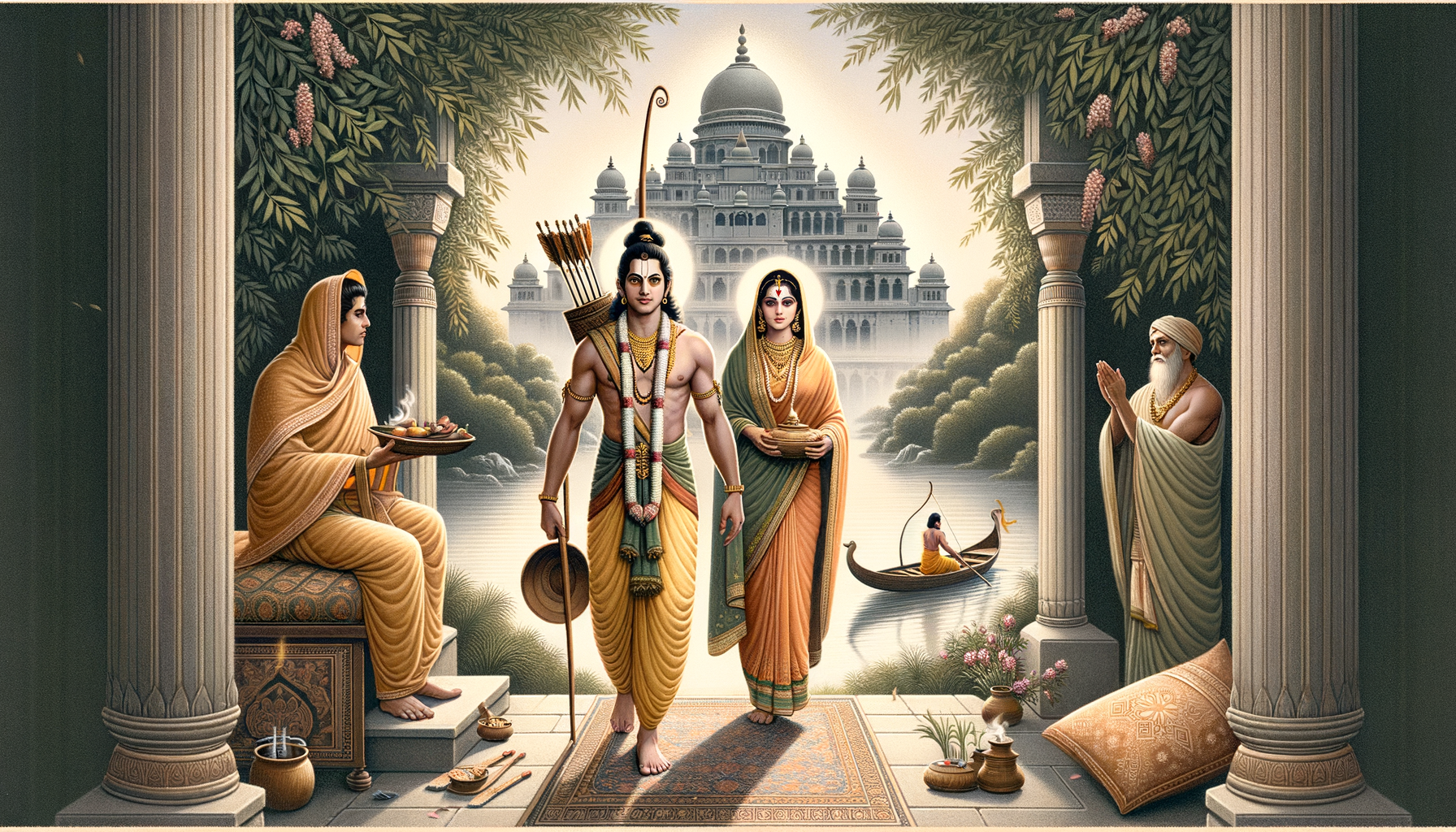
Ayodhya Kanda, the second book of Valmiki’s Ramayana, presents a rigorous exploration of duty, vows, and righteous leadership centered in Ayodhya. It follows King Dasharatha’s plan to crown Rama, Kaikeyi’s boons, and Rama’s voluntary exile (vanvas), with Sita and Lakshmana choosing to accompany him. The grief of Ayodhya, the sanctity of Chitrakoot, and Bharata’s principled…
-
4 Timeless Disciplines to Sustain Bhakti: Humility, Offense-Awareness, Strong Sanga, Clear Path
Long-term perseverance in the Bhakti Tradition flourishes when four stabilizing disciplines are cultivated: humility, freedom from offenses (aparadha), elevating sanga, and a clear path of sādhana. Humility softens ego and increases receptivity to guidance, making chanting and meditation more attentive. Guarding against offenses protects sacred relationships and aligns with universal dharmic values like right speech…
-
योग साधना द्वारा जीवन विकास: Transform Daily Life with Practical Yoga, Calm, and Clarity

Yoga is often misunderstood as an ascetic pursuit, yet it serves as a practical method for everyday life development. Rooted in shared dharmic values, it unites Hindu, Buddhist, Jain, and Sikh perspectives through ethics, breath awareness, and meditation. A simple, consistent routinebrief asana, breathing techniques, and reflective practicebuilds emotional resilience and steady focus. Ethical principles…
-
Destiny vs. Free Will: How Karma and Choices Shape Our Future Across Dharmic Traditions

Is the future predetermined, or do choices genuinely shape outcomes? Drawing on Hinduism, Buddhism, Jainism, and Sikhism, this piece clarifies how karma names conditions from the past while puruṣārtha preserves present agency. The Bhagavad Gita’s Karma Yoga, Buddhism’s emphasis on intention, Jainism’s ethical discipline, and Sikhism’s balance of Hukam and effort converge on responsible freedom.…
-
When Harm Returns Home: Dharmic Wisdom on Ahimsa, Karma, and Inner Well-Being

The maxim “In injuring others you really injure yourself” expresses a shared dharmic truth: harm rebounds upon the doer through the natural interplay of karma and dharma. Across Hinduism, Buddhism, Jainism, and Sikhism, ahimsa, compassion, and seva sustain both inner calm and social trust. Practical experience confirms this lawhurtful conduct unsettles the mind, while ethical…
-
Master Your Inner World: Hindu Spirituality for Resilience, Clarity, and Courage

Hindu spirituality offers a practical, life-affirming framework for mastering the inner world to meet daily challenges with clarity and courage. Grounded in Dharma and Karma Yoga, it strengthens focus, emotional balance, and ethical action without retreating from responsibility. Across dharmic traditionsHinduism, Buddhism, Jainism, and Sikhismshared practices like mindfulness, ahimsa, and seva build resilience and compassion.…
-
The Inner Inferno: How Hindu Wisdom Transforms Uncontrollable Anger into Clarity and Peace

Hindu philosophy reframes hell as an inner stateuncontrollable anger (krodha)that distorts judgment and harms relationships. Drawing on the Bhagavad Gita and yogic disciplines, this article explains how anger escalates and how breath, meditation, and self-study interrupt the cycle. Practical stepssuch as short pranayama sets, mindful naming of emotions, and satttvic routinesbuild emotional resilience and self-control.…
-
Sri Dharma Sastha Gita: Timeless Lessons of Unity, Courage, and Compassion from Ayyappa

Sri Dharma Sastha Gita presents a clear, dharma-centered guide inspired by Ayyappa’s living tradition in Kerala and the Pandalam royal chronicles. It highlights the unity of Shaiva and Vaishnava streams through the figure of Harihara putra, offering a powerful symbol of harmony within Hindu Dharma. The narrative and its practices emphasize self-discipline, truthfulness, compassion, and…
-
Ganapathi’s Brilliant World Tour: A Heartwarming Lesson in Devotion and Timeless Wisdom

This beloved Hindu folk story recounts how Ganapathi (Ganesha) won a celestial mango by circling Lord Shiva and Pārvatī, revealing that devotion and discernment can surpass speed. Subrahmanya’s swift journey across the three worlds showcases valor, while Ganapathi’s pradakṣiṇā illuminates a deeper metaphysical truth. The narrative teaches that honoring parents and teachersour first gurusembodies reverence…
-
Beyond VIP Lines: Restoring True Bhakti and Sacred Calm in Popular Hindu Temples

Many popular Hindu temples now resemble busy theaters, with VIP lines and special passes risking a shift from devotion to display. This analysis explores how to restore simplicity and sacred calm without compromising safety or heritage conservation. It presents equity-centered steps for devotees and administratorssingle-queue time slots, transparent policies, and priority access only for vulnerable…