
-
Conquer the Kleshas: Patanjali’s Yoga Sutras on Ending Suffering and Reclaiming Clarity

This in-depth guide explains Patanjali’s doctrine of kleshasthe inner afflictions that fuel sufferingand shows how the Yoga Sutras translate diagnosis into a practical path of freedom. Readers learn the five kleshas (avidya, asmita, raga, dvesha, abhinivesha), their activation states, and how they perpetuate karma and samskaras. The article details Kriya Yoga and Ashtanga Yoga as…
-
Break the Grip of Envy: Dharmic Wisdom on Desire, Aparigraha, and True Wealth

A timeless dharmic principle“Do not covet what is not yours”is examined through Hindu, Buddhist, Jain, and Sikh frameworks to show how freedom from envy safeguards inner clarity and social trust. The analysis grounds the ethic in the Isha Upanishad, the Bhagavad Gita’s psychology of desire, and Patanjali’s yamas of Asteya and Aparigraha. It then aligns…
-
From Mortal Hero to Sacred Ideal: Rama’s Journey from Valmiki to the Bhakti Age

Rama’s image evolves from Valmiki’s ethically tested human king to the Bhakti movement’s compassionate divine, illuminating how dharma and devotion converge rather than compete. Valmiki Ramayana presents Maryada Purushottama as a ruler who chooses justice amid painful dilemmas; Bhakti-era RamayanasKamba Ramayanam, Adhyatma Ramayana, and Tulsidas’s Ramcharitmanasreframe those dilemmas through grace, interior devotion, and inclusive accessibility.…
-
Ashta Sastha Revealed: Eight Transformative Forms of Lord Ayyappa and Their Spiritual Power
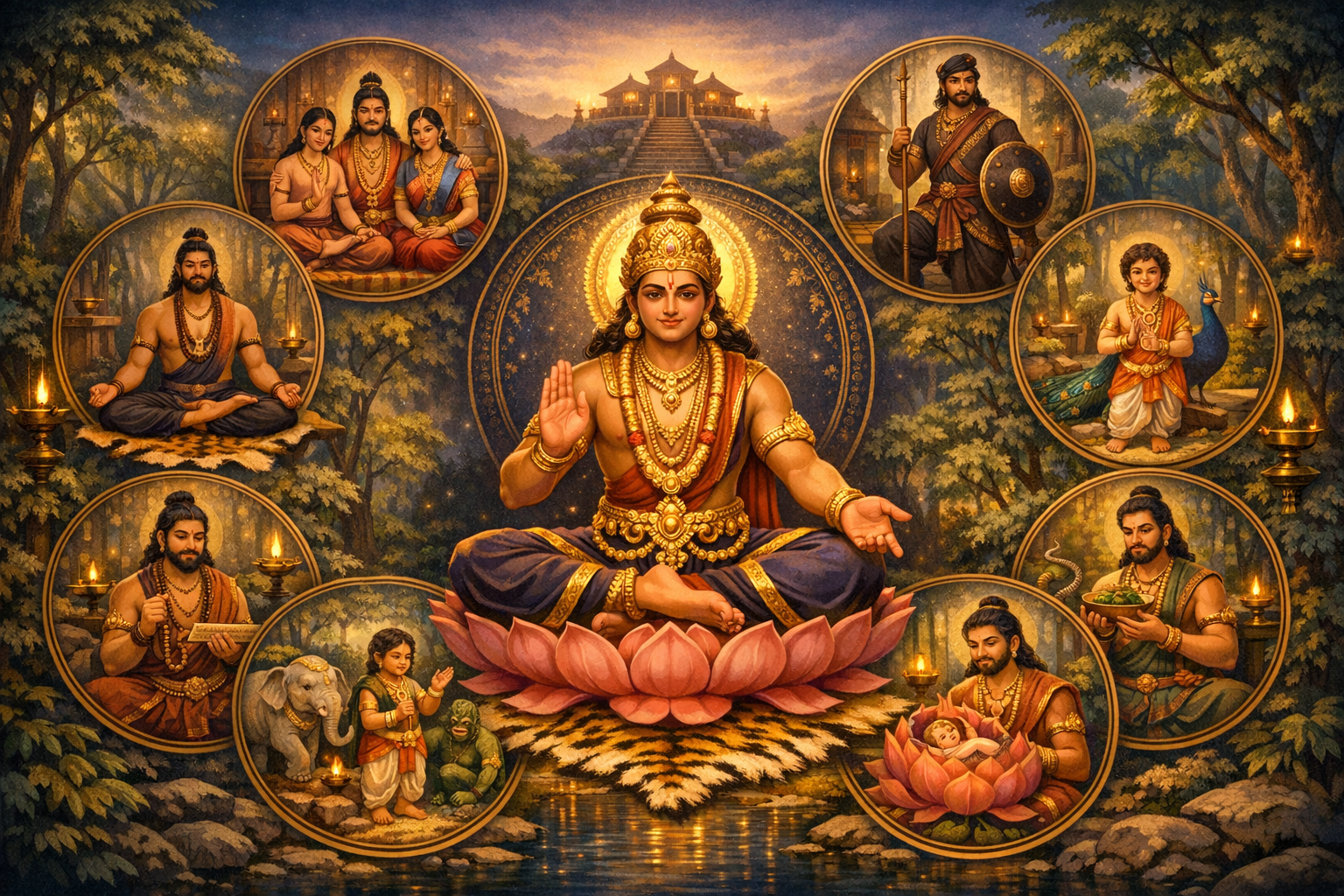
Ashta Sastha presents eight sacred modes of Lord Ayyappa (Dharma Śāstā) that together form a complete pedagogy of spiritual growth. Drawing on Puranic memory, regional sthala-purāṇas, and agamic iconography, the eight forms range from Yoga Śāstā’s meditative stillness to Gṛhastha Śāstā’s family ethics and Vīra Śāstā’s righteous guardianship. The account highlights living practices at Sabarimala,…
-
Wrath to Wisdom: Parashurama and Rama’s Timeless Ethics for Power, Justice, and Dharma

This long-form analysis interprets Parashurama and Rama as complementary modalities of Dharma: emergency correction and constitutional restraint. Drawing on the Ramayana, Puranas, and classical ideas of Dharma-Yuddha, it shows how the “axe” symbolizes decisive action against entrenched injustice while the “arrow” symbolizes calibrated governance under maryada. Readers gain a practical framework for leadershipwhen to act…
-
Karma and Karmaphala in the Ramayana and Mahabharata: Dharma, Consequence, and Liberation

This essay reads the Ramayana and Mahabharata as precise ethical maps of karma (action) and karmaphala (consequence), showing how intention, duty, and context shape outcomes. It explains sañchita, prārabdha, and āgāmi karma, and situates them within dharma and the puruṣārthas. Through case studiesDaśaratha’s unintended harm, Rāvaṇa’s hubris, the dice hall’s complicity, Karna’s complexity, and Bhīṣma’s…
-
Protecting Energy Without Guilt: Science-Backed Boundaries for Dharmic Compassion

Protecting energy is not selfish; it is a compassionate response to finite human capacity. Drawing on burnout science, allostatic load, and polyvagal-informed insights, this article explains why social withdrawal often reflects physiological triage rather than indifference. It reframes boundaries as conditions for sustainable compassion, aligning evidence with dharmic principles such as prana, ahimsa, metta, aparigraha,…
-
The World as a Roadside Inn: A Dharmic Guide to Impermanence, Detachment, and Freedom

This essay explores the classic dharmic metaphor of the world as a roadside inn to clarify impermanence, detachment, and ethical action. A teaching story of a mendicant and a king introduces the theme, which is then examined through the Bhagavad Gita, Upanishads, Patanjali’s Yoga Sutra, and Jain, Buddhist, and Sikh perspectives. Readers learn how anitya…
-
Stop Chasing Happiness: Dharmic Science to Light the Inner Cave of Joy and Resilience

The dharmic saying “Seeking happiness outside is like waiting for sunshine inside a deep cave” captures a precise psychology of well-being common to Hinduism, Buddhism, Jainism, and Sikhism. Rather than promising joy through acquisition, these traditions direct attention to the hṛdaya-guhathe cave of the heartwhere clarity and resilience abide. Vedanta, the Yoga Sutra, Buddhist insight,…
-
2,300 Miles of Mindfulness: The Transformative 108-Day Walk for Peace Across America
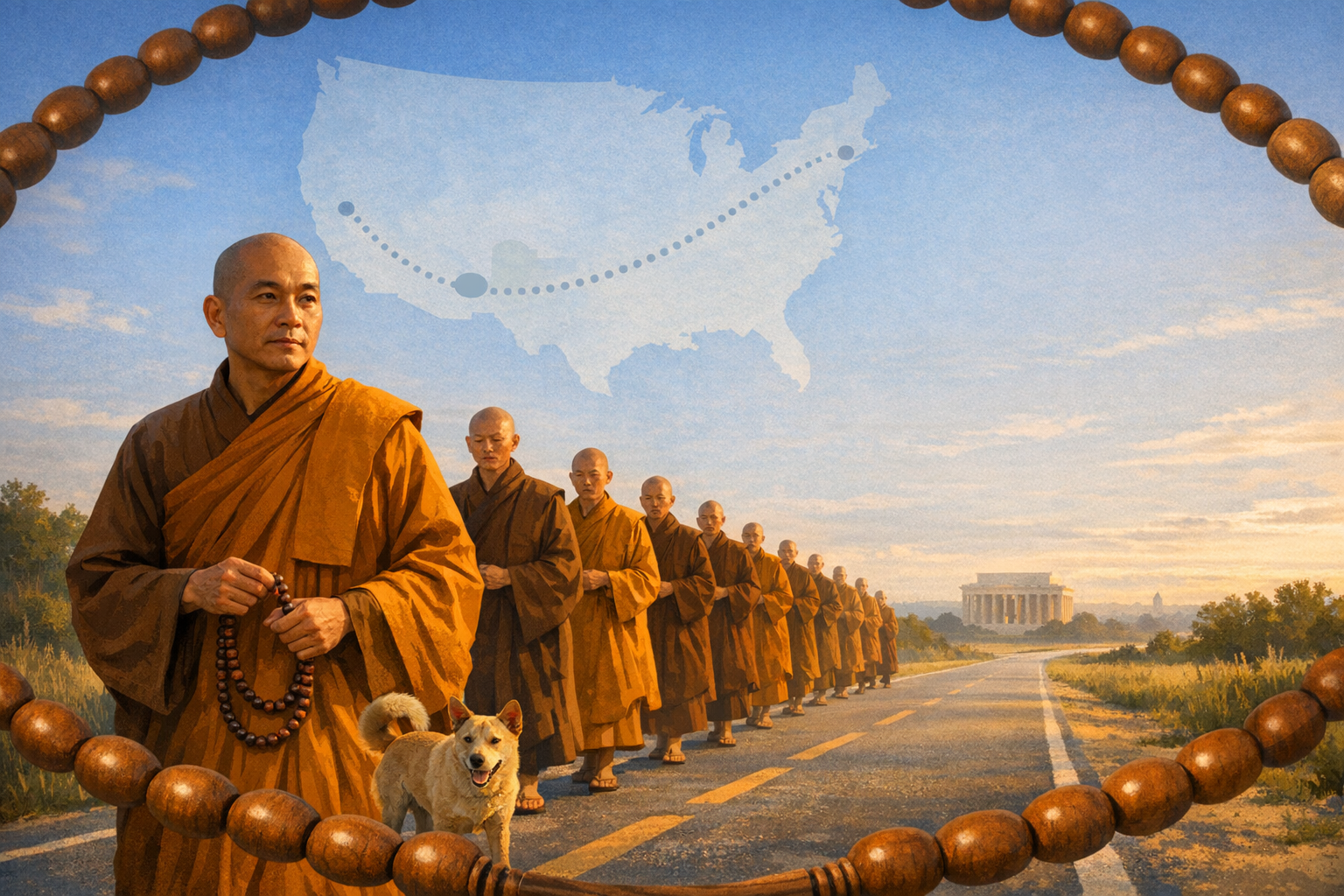
Nineteen Vietnamese Buddhist monks from Fort Worth completed a 108-day, 2,300-mile Walk for Peace to Washington, D.C., modeling compassion, nonviolence, and mindful presence across nine states. The journey’s 108-day design drew on a shared dharmic symbol of completeness, uniting Buddhist metta with Hindu ahimsa, Jain vows of non-harm, and Sikh seva. Public response centered on…
-
Ravana as Rama’s Priest: Akalbodhan in Krittibas’s Bengali Ramayana and Dharmic Unity
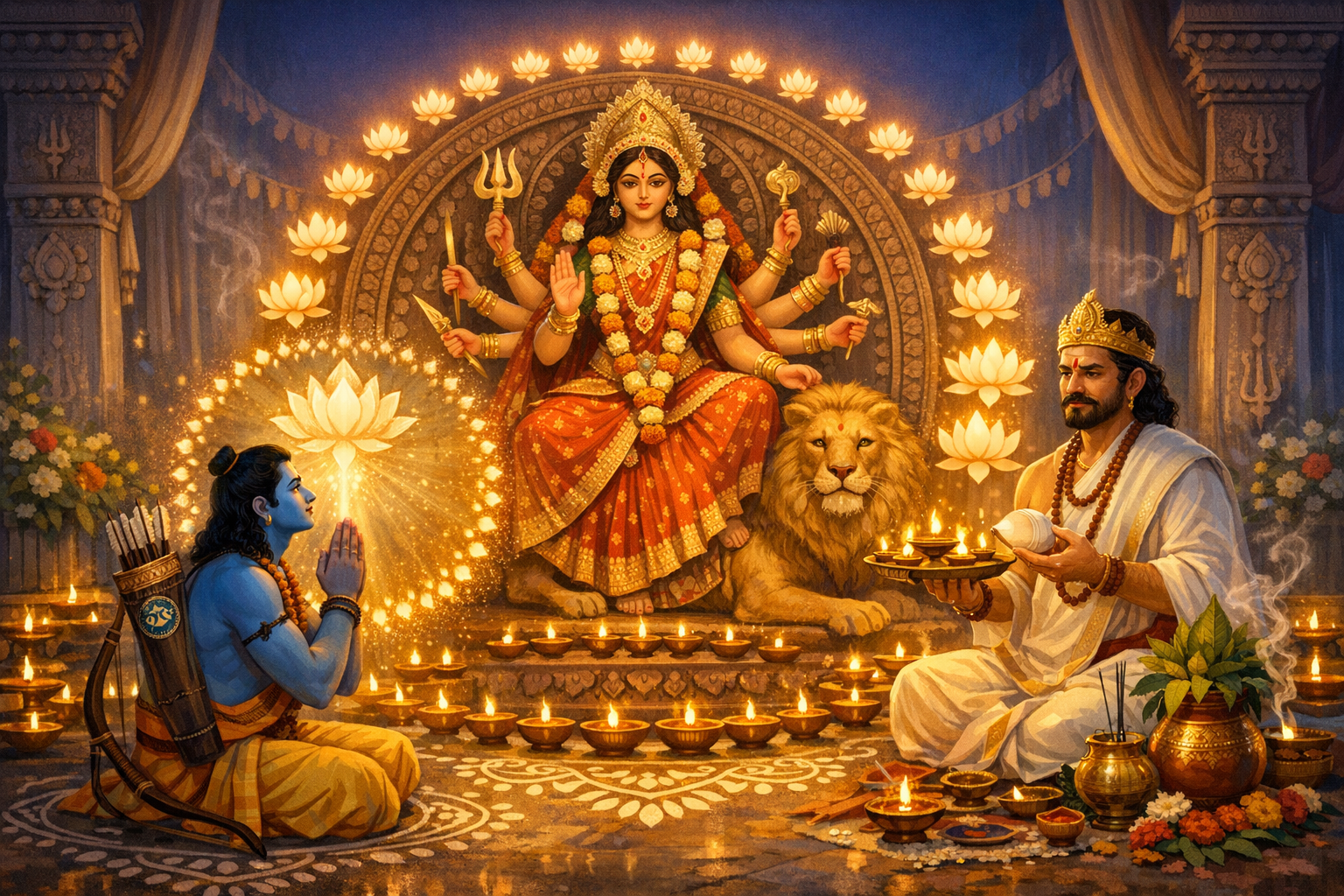
This essay examines the Krittibas Ojha Bengali Ramayana episode in which Ravana, despite being Rama’s adversary, officiates as priest for Rama’s Durga Puja. It contextualizes the scene within Akalbodhan, the autumnal invocation of Durga that anchors Bengal’s Sharadiya Durga Puja. Contrasting Krittibas with Valmiki’s Aditya Hridayam, it shows how regional retellings adapt epic theology without…
-
Vṛtrāsura, Indra, and Ṛta: Timeless Dharmic Lessons on Leadership, Anarchy, and Renewal

This rigorous reading of the Vṛtrāsura cyclespanning the Ṛg Veda, the Mahabharata and Ramayana, and the Purāṇasunpacks how the myth encodes a timeless governance and ethics playbook. It clarifies Indra’s moral complexity (Brahmahatyā-dōṣa and Tapas), the leadership caution of Nahusha’s ascent and fall, and the systemic anatomy of anarchy when Ṛta is disturbed. Readers gain…
-
Knowing Truth, Living Dharma: Why Insight Fails Without Practice in Hindu Philosophy

Hindu philosophy names a timeless challenge: many recognize truth yet struggle to live it. Drawing on the Bhagavad Gita and Yoga philosophy, this piece explains how abhyāsa and vairāgya bridge the gap between knowledge and action. It highlights practical stepsdaily routine, Karma Yoga, svādhyāya, and ethical commitments (yama–niyama)that turn insight into steady conduct. Parallels from…
-
Awaken Dharma Shakti for National Renewal: Ramesh Shinde urges an inclusive Ramrajya

A guidance session in Saharanpur by Ramesh Shinde (HJS) spotlighted the need to awaken Dharma Shakti as a unifying force for national harmony. The address framed ‘Ramrajya’ as ethical, inclusive governance rooted in justice, compassion, and the rule of law. Emphasizing unity in diversity, it highlighted the shared dharmic values of Hinduism, Buddhism, Jainism, and…
-
Judge by Their Ideals: Swami Vivekananda’s Transformative Call to Empathy and Dharmic Unity

Swami Vivekananda’s teaching urges a shift from judging others by personal standards to understanding them by their own ideals, fostering empathy and fairness. Rooted in dharmic pluralism, this principle resonates with Ishta in Hinduism, compassion in Buddhism, Anekantavada in Jainism, and seva in Sikhism. Applied to work, family, and public discourse, it reduces polarization and…
-
Ravana Anugrahamurti: Shiva’s Compassionate Power and the Transformative Lesson of Humility

Ravana Anugrahamurti reveals Lord Shiva’s grace transforming Ravana’s pride into devotion, offering a clear ethical lesson for modern life. The narrative emphasizes humility, restraint, and responsibilitycore values in Hindu philosophy and resonant across Buddhism, Jainism, and Sikhism. Readers gain practical insights for daily practice, from reflective chanting to mindful leadership. The iconography highlights compassion over…
-
Resounding Call for Dharmic Unity: VHP’s Hindu Sangam in Karnataka Spurs Weekly Satsang

VHP’s ‘Hindu Sangam’ events across Karnataka issued a strong, practical call for weekly community gatherings to strengthen unity and social resilience. Guided by HJS State Coordinator Shri. Guruprasad Gowda, the emphasis on Dharmacharan framed Dharma as lived practice in daily ethics, seva, and intergenerational learning. Attendees observed that regular satsangs and study circles improve community…
-
Durga’s Sacred Mace (Gada): A Powerful Emblem of Strength, Justice, and Living Dharma

The gada (mace) in Goddess Durga’s hands signifies ethical strength guided by justice and compassion. Rooted in the Devi Mahatmya, it recalls how Yama endowed Durga with the power to restore order against adharma. The mace symbolizes grounded resolve, impartial accountability, and the stabilizing force of dharma in public and personal life. Beyond martial imagery,…
-
Mahabahu in Hinduism: Unveiling the Mighty-Armed Ideal of Strength, Dharma, and Service

Mahabahu, from the Sanskrit roots “maha” (great) and “bahu” (arms), is a profound ideal in Hindu scriptures that unites power with ethical responsibility. Found in the Ramayana, Mahabharata, and Bhagavad Gita, it signifies strength guided by self-mastery and compassion. The term illuminates how epic narrative encodes philosophical principles: arms symbolize disciplined action in the service…
-
Kaliyuga Ramayana: Timeless Dharma, Courage, and Compassion for Today’s World

Kaliyuga Ramayana offers a contemporary, ethical reading of the Ramayanaset in the Treta Yugaapplied to modern challenges. It distills lessons from Lord Rama, Mata Sita, Lakshmana, Bharata, and Shatrughna into practical guidance for leadership, family duty, and social harmony. The text’s symbolsRavana as ego, the vanara sena as collective service, and the bridge to Lanka…