
-
Pranavopasana: Mastering Om for Self‑Realization, Inner Calm, and Dharmic Unity
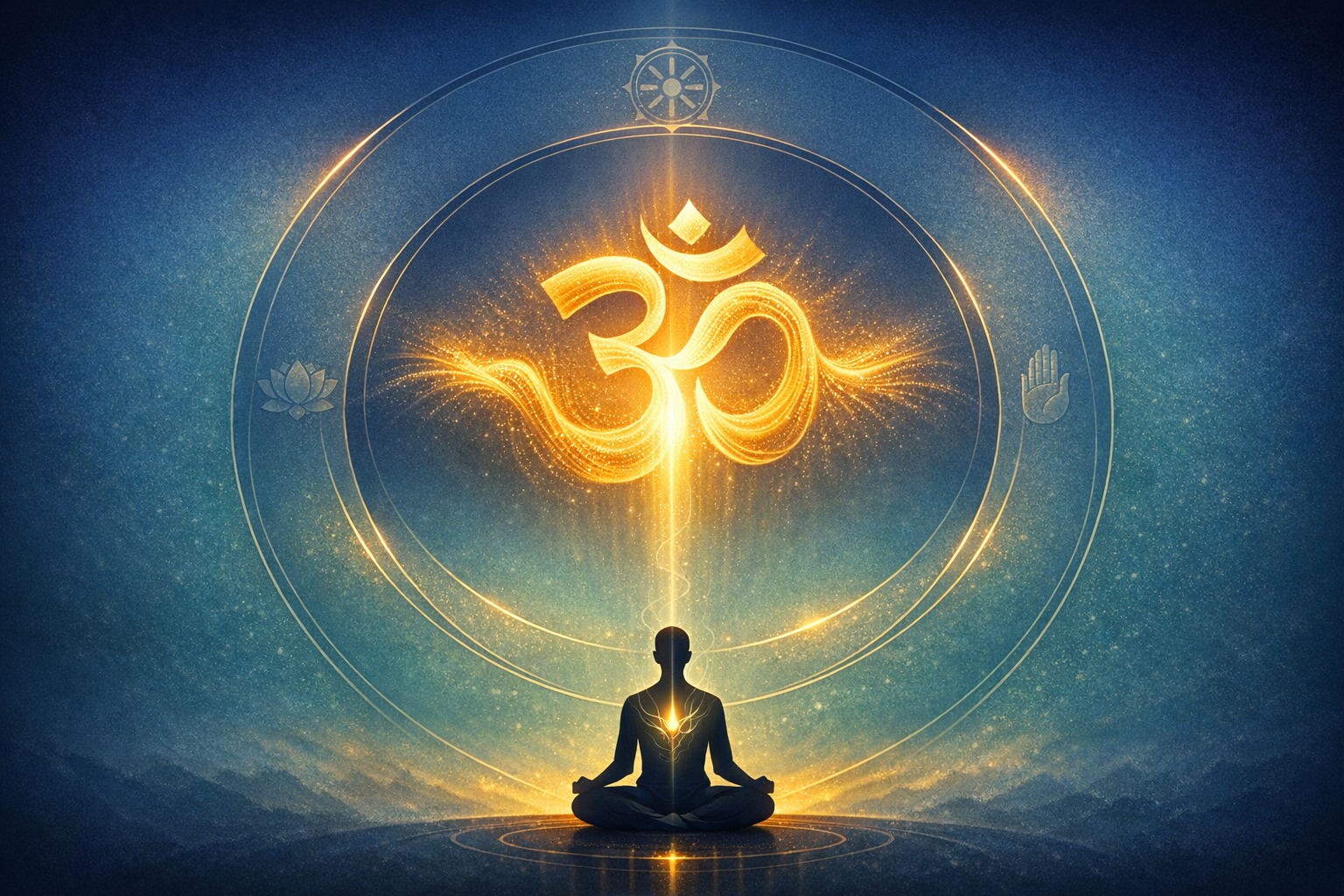
Pranavopasanameditation on the Pranava (ॐ)is a disciplined path in Hinduism and Advaita Vedanta that moves attention from sound to silence and from symbol to the Ultimate Reality. Drawing on the Upanishads, Bhagavad Gita, and Patanjali, it unites devotion, meditation, and inquiry into a coherent practice for Self-realization. The article explains the A–U–M arc, the turiya…
-
Eternal Paradox of Being: Nothing Is Lost, Yet Everything Changes in Hindu-Dharmic Thought

This essay decodes the paradox “Nothing can be wiped out; but nothing remains same” through the lens of Hindu philosophy and the wider dharmic traditions. It shows how the Upanishads, the Bhagavad Gita, Advaita, Samkhya, Nyaya-Vaisheshika, Buddhism, Jainism, and Sikhism converge on a coherent view: being persists while forms transform. Readers gain clear definitions (sat,…
-
A Triplicane Teacher’s Encounter with Ramana Maharshi: Silence, Self-Inquiry, and Grace
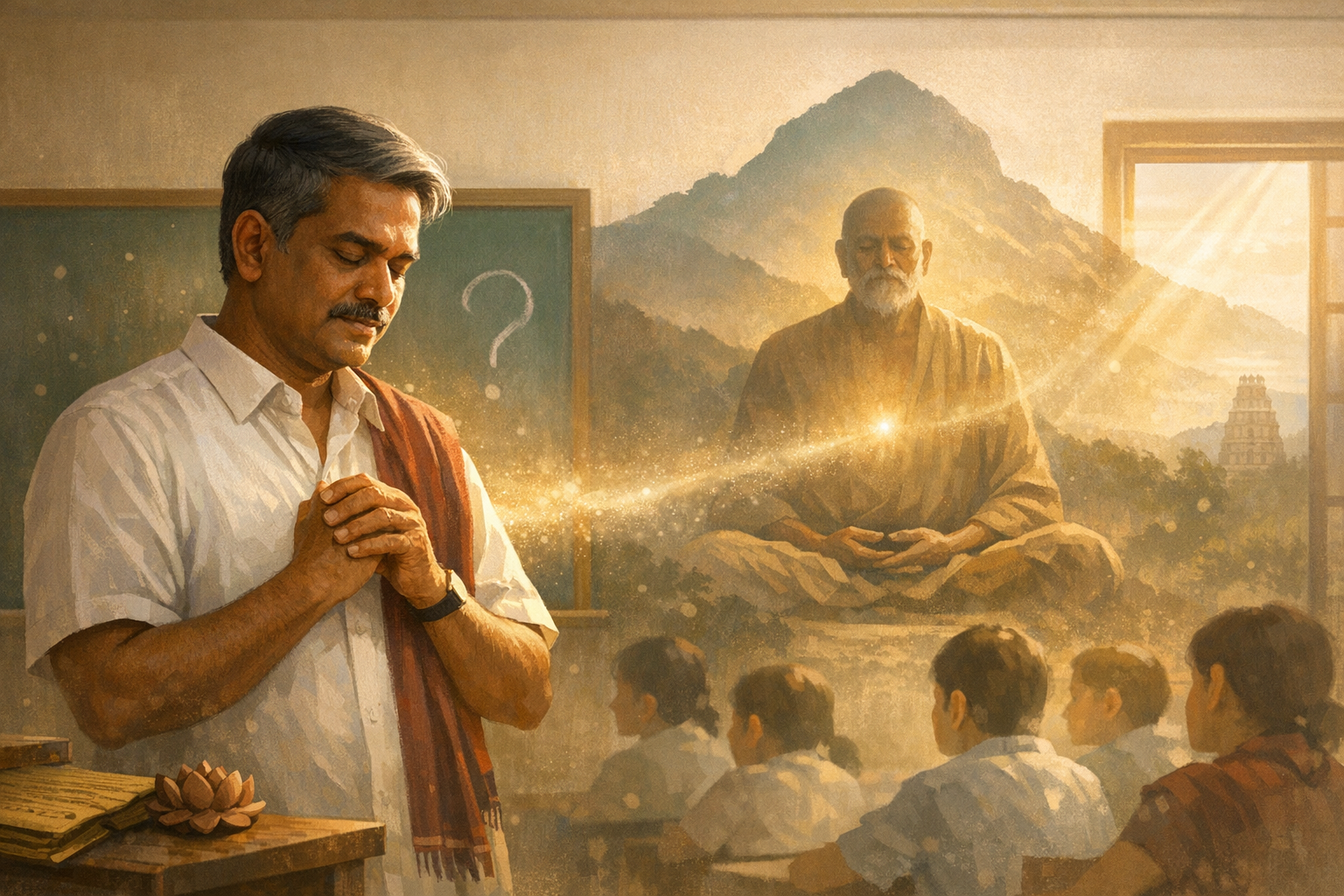
Set in the 1980s at Hindu Higher Secondary School, Triplicane, this reflective account presents a teacher’s encounter with Ramana Maharshi and situates it within Advaita Vedanta. It clarifies the core of self-inquiry (“Who am I?”), explains how silence functions as a rigorous pedagogical medium, and shows how contemplative insight can enrich classroom ethics and student…
-
Gaudapada’s Asparshayoga Explained: The Fearless Non-Contact Path to Advaita Bliss

This essay unpacks AsparshayogaGaudapada’s “non-contact yoga” in Advaita Vedantaas a knowledge-centered recognition that dissolves the subject–object split. It explains why the bliss of the Self is intrinsic rather than a peak produced by sensory contact, grounding the discussion in the Mandukya Upanishad’s map of Turiya. It clarifies how Asparshayoga differs from Patanjali’s technique-driven approach while…
-
Ajati in Advaita Vedanta: Radical Non-Birth, Mandukya Karika, and Deep Clarity

AjatiAdvaita Vedanta’s doctrine of non-birthasserts that ultimate reality never truly originates or changes, while preserving everyday causality and ethics at the empirical level. Rooted in the Mandukya Upanishad and Mandukya Karika, it culminates in the recognition of turīya, the ever-present awareness. By distinguishing absolute from empirical standpoints, Ajati avoids nihilism and affirms a positive, non-dual…
-
Nirupadhika in Advaita Vedanta: Adjunct-Free Brahman, Practice Insights, and Dharmic Parallels

Nirupadhika“without the upadhis”names Advaita Vedanta’s insight that Brahman is never altered by limiting adjuncts such as body, mind, maya, or avidya. The article maps how nirupadhika contrasts with sopadhika, clarifies tri-level reality, and shows how Upanishadic hermeneutics (neti neti, tat tvam asi via bhaga-tyaga-lakshana) reveal the adjunct-free Self. It unpacks core methodsadhyaropa-apavada, Drig-Drishya Viveka, and…
-
Advaita Unveiled: Realizing Oneness with the Supreme for Freedom from Fear and Sorrow

This article examines the Advaita Vedanta insight that true wisdom is to see the Self (Atman) as not different from the Supreme Being (Brahman), and shows how that vision resonates across Hinduism, Buddhism, Jainism, and Sikhism. It outlines Advaita’s precise metaphysics (maya, avidya, adhyasa) and its methods (sravana–manana–nididhyasana, neti neti, drg-drishya-viveka, panchakosha-viveka). Readers gain a…
-
Ultimate Reality Cannot Be Taught: Profound, Experiential Wisdom in Hinduism and Dharmic Paths
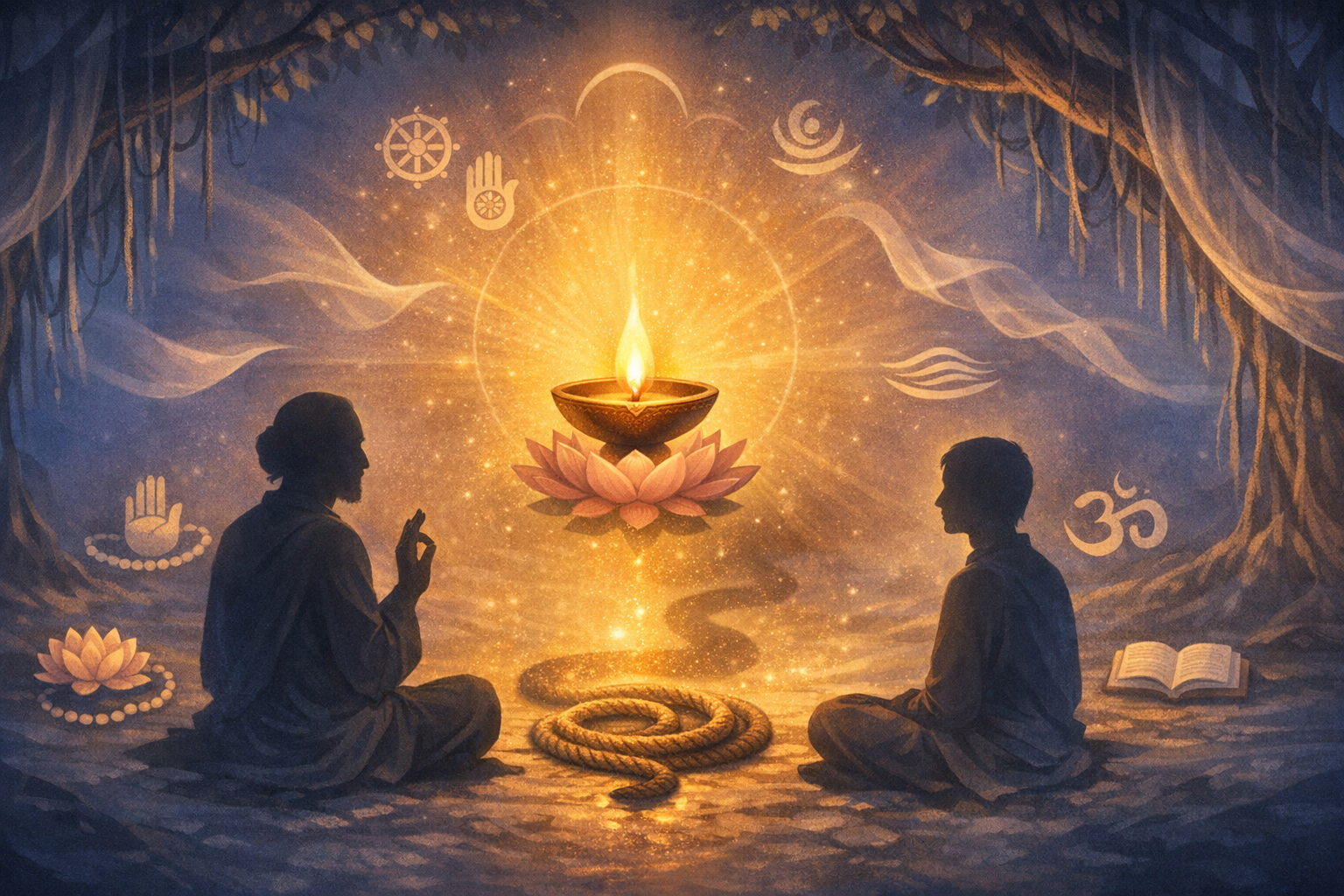
This long-form exploration clarifies why Ultimate Reality in Hindu philosophy cannot be taught as a mere concept and must be realized through direct experience. It maps the classical triad of śravaṇa–manana–nididhyāsana and the role of Guru–Shishya Tradition, highlighting how scripture and guidance remove ignorance rather than transfer realization. Readers gain a technically sound overview of…
-
Queen Leela and King Padma in Yoga Vasistha: The Eternal Dance of Desire, Time, and Liberation
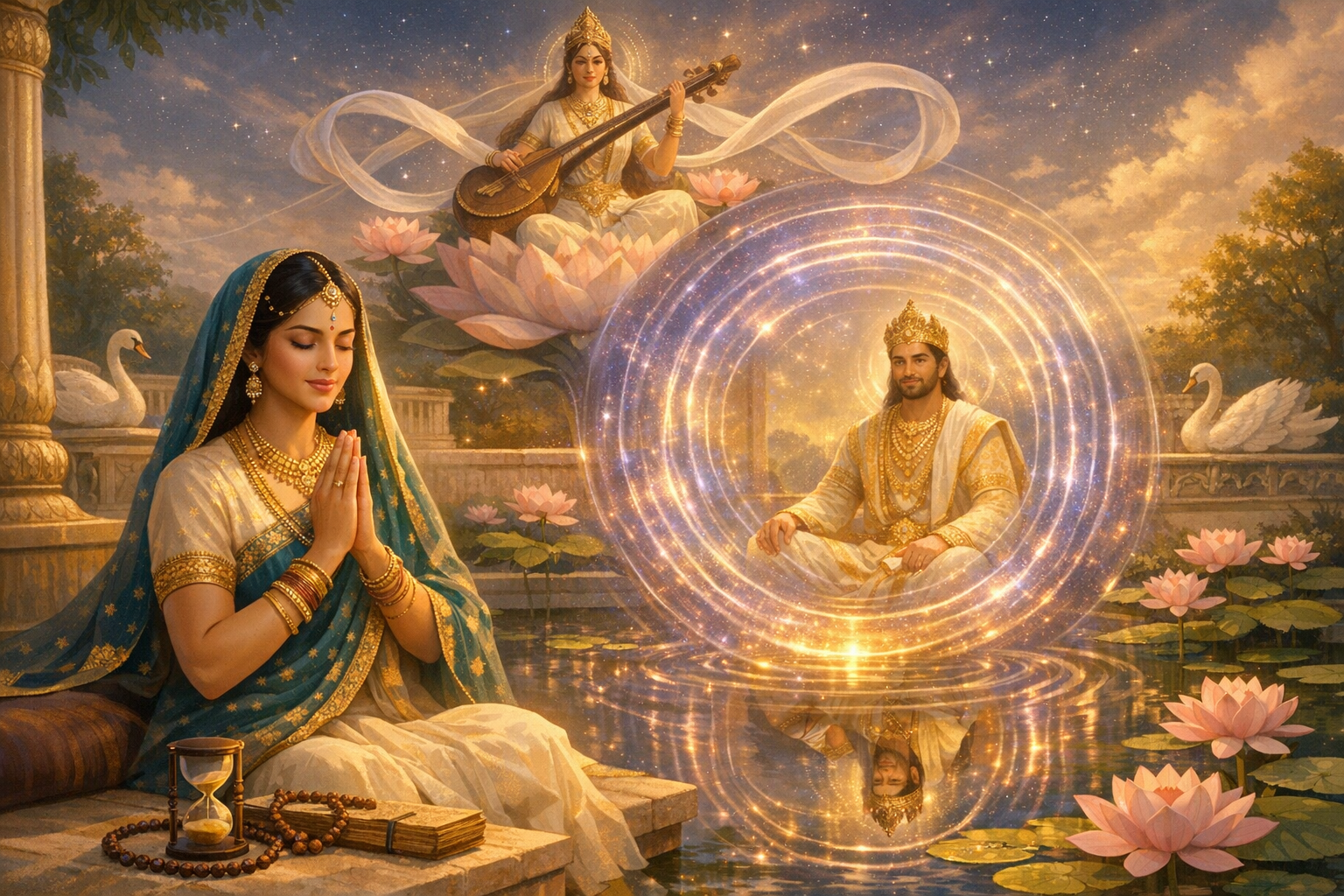
This long-form exploration of Queen Leela and King Padma in the Yoga Vasistha unpacks how consciousness, desire, and time interweave to produce the felt world. Readers learn why the text situates death and rebirth within the triad of gross, subtle, and causal bodies, clarifying continuity without clinging. The analysis translates core methodsshravana, manana, nididhyāsana, and…
-
Shattering the Illusion of Chains: Advaita Vedanta’s Guide to the Ever‑Free Self
Advaita Vedanta proposes a radical clarity: in ultimate truth there is neither bondage nor liberation; the Self (Atman) is ever-free, and only ignorance creates the sense of captivity. This article explains the logic of avidya and adhyasa, distinguishes empirical from absolute perspectives, and shows how moksha functions as recognition rather than attainment. Drawing on the…
-
The Upanishads’ Radical Vision: Beyond Worship to Realize Atman–Brahman Within
This essay clarifies the Upanishads’ radical claim that ultimate reality is not an external deity to be appeased but the Self (Atman), recognized as non-different from Brahman. It explains how ritual and devotion (upāsanā) are honored as preparatory means, while liberating knowledge (jñāna) is the goal. Readers gain a technical overview of key methodsśravaṇa, manana,…
-
Two Yet One: Advaita Vedanta’s Science of Oneness and a Dharmic Bridge across Traditions

The teaching ‘you and I are two persons; yet we are one’ expresses Advaita Vedanta’s core insight: empirical plurality and ultimate unity coexist without contradiction. This long-form exploration clarifies Brahman, Atman, and the roles of maya and avidya, situating ethics and devotion within a rigorous non-dual framework. Drawing on the Upanishads and the Bhagavad Gita,…
-
Khandana Khanda Khadya: Shriharsha’s Razor and a Masterclass in Defending Advaita Vedanta

Khandana Khanda Khadya stands as a luminous 12th-century masterpiece of Advaita Vedanta, using elegant refutation to unsettle rigid categories and clear a contemplative path to nondual insight. Shriharsha’s method exposes circularities in definitions and limits in pramana theory, challenging naive realism while honoring the self-luminous nature of consciousness. The analysis reveals deep resonances with Buddhist…
-
Transcending Duality in Srimad Bhagavatam 7.13: Saintly Python and Perfect Krishna Consciousness

Srimad Bhagavatam 7.13.41–42 presents a disciplined ideal of conduct through the emblem of a saintly python, emphasizing acceptance, equanimity, and focused remembrance of Sri Krishna. The teaching reframes obsession with good-versus-bad as a distraction born of duality, urging a return to love and steady devotion. This focus on inner poise aligns with Advaita’s discernment beyond…
-
Nadi Samudra Nyaya: A Powerful River–Ocean Metaphor of Jiva, Brahman, and Liberation

Nadi Samudra Nyaya, the “Maxim of the River and the Ocean,” clarifies how Advaita Vedanta explains the relation between the individual self (jiva) and the ultimate reality (Brahman). The metaphor shows how apparent separateness dissolves at the point of realization, aligning with Upanishadic insights such as “Tat Tvam Asi.” Readers gain a clear, experience-near understanding…
-
Spiritual Oneness in Hinduism: Vedic Wisdom to Heal Division, Injustice, and Ecological Harm

Spiritual oneness in Hinduism, rooted in the Vedas and Upanishads, offers a practical ethic for resolving modern crises. By recognizing a shared ground of being, communities can move beyond polarization toward empathy, dialogue, and responsible action. Dharmic traditions converge on this vision: Buddhism highlights interdependence, Jainism advances anekantavada and ahimsa, and Sikhism affirms Ik Onkar…
-
Sri Shankara Gita: Timeless Advaita Wisdom on Shiva’s Grace to Elevate Daily Practice

Sri Shankara Gita, traditionally associated with Adi Shankaracharya, distills Advaita Vedanta through the devotional lens of Lord Shiva’s grace. The text presents Shiva as the symbol of the Supreme Reality, guiding seekers from multiplicity to oneness. Its balanced integration of jnana, bhakti, and dharma makes the teachings both elevating and practical for daily practice. Readers…
-
Beyond Ego: Unmasking Supreme Truth in Dharmic Wisdom for Inner Freedom and Clarity

This article explores a core paradox in Hindu philosophy: the Supreme Truth exists prior to the ego, and practices driven by self-importance obscure rather than reveal it. Drawing on the Upanishads, Bhagavad Gita, and Advaita Vedanta, it shows how sadhana matures from acquisition to attunement. It connects Hindu insights with Buddhism’s anatma, Jainism’s Anekantavada, and…
-
Beyond the Witness: How True Meditation Dissolves the Experiencer into Non-Dual Awareness

True meditation in Hindu philosophy reaches its culmination when the experiencer, the act of observing, and the observed no longer stand apart. This non-dual insight, often described as moving “beyond the witness,” dissolves the subtle identity of a separate meditator without denying the vividness of life. The Upanishads, Advaita Vedanta, and Yoga philosophy converge on…
-
Panchayatana Puja and the Five Elements: A Profound Path to Harmony and Unity

Panchayatana Puja unites devotion and philosophy by aligning multi-deity worship with the Panchabhutasthe five elements of nature. Through panchopachara offerings and a mandala arrangement, practitioners engage earth, water, fire, air, and space in a mindful, integrative ritual. This Smarta tradition, associated with Adi Sankara, honors an ishta-devata while equally revering other forms, modeling unity within…