
-
From Curiosity to Courage: Swami Vivekananda’s Living Legacy for Confident Hindu American Youth
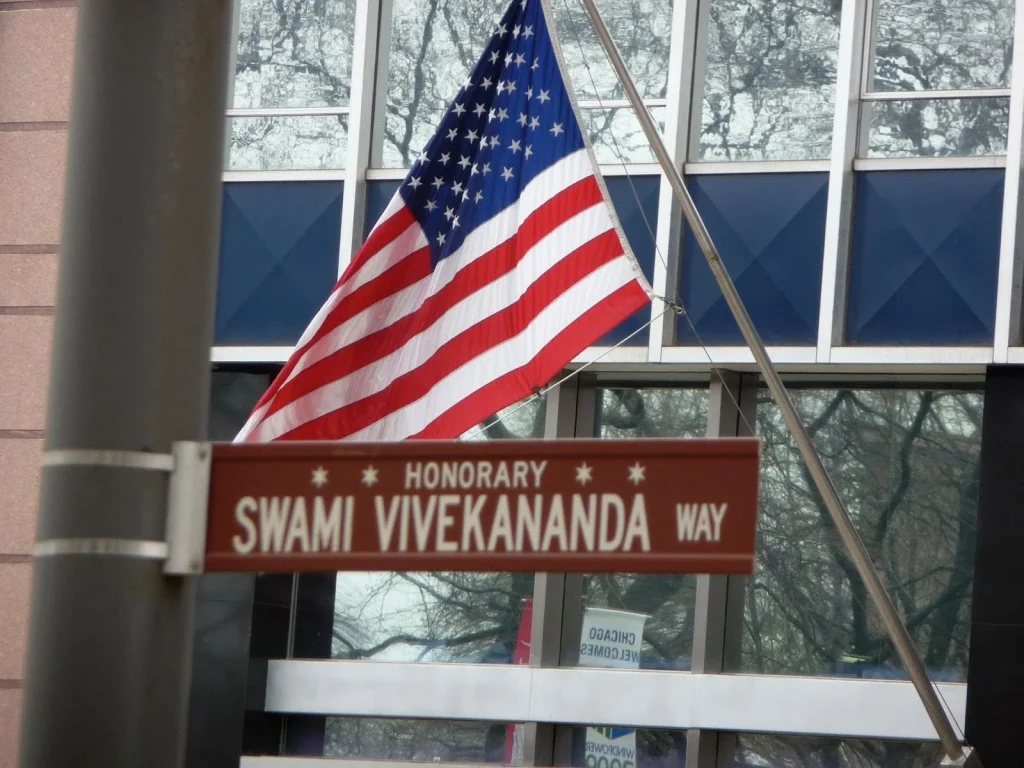
Swami Vivekananda’s legacy offers a rigorous, modern roadmap for Hindu American youth: transform curiosity into disciplined learning, and learning into compassionate seva. His 1893 Chicago address reframed Hinduism as rational and pluralistic, a vision now activated through advocacy and education in groups such as CoHNA. This approach strengthens unity in diversity and aligns with the…
-
Advaita Siddhi vs. Nyayamrita: A Powerful, Unifying Inquiry into Truth in Vedanta

Advaita Siddhi, authored by Madhusudana Saraswati, engages Vyasa Tirtha’s Nyayamrita as a rigorous, constructive dialogue within Advaita Vedanta. The exchange centers on satya and pramana, clarifying how truth is discerned and communicated. Rather than fueling rivalry, it models how philosophical critique can refine understanding for all schools. Readers gain habits of patience, careful listening, and…
-
Drik and Drishya in Advaita Vedanta: Master the Seer–Seen Insight for Inner Clarity

Advaita Vedanta’s Drik–Drishya teaching clarifies the difference between the seer (subject) and the seen (object) to guide seekers toward Atman, the unchanging witness. By observing that body, senses, thoughts, and emotions are all Drishya, attention naturally returns to the stable Drik. This contemplative method, echoed in the Upanishads through neti neti, strengthens meditation, emotional balance,…
-
Beyond Labels: Dharmic Wisdom on Simply Being, Free from Success, Failure, and Fear

This essay distills a unifying Dharmic insight: being precedes every label of success, failure, adventure, and disappointment. Drawing on Hindu philosophy, Advaita Vedanta, Buddhism, Jain Anekantavada, and Sikh remembrance of the One, it explains Maya and Avidya without denying lived experience. The approach reduces anxiety, strengthens resilience, and encourages ethical action aligned with dharma. Practical…
-
Upanishadic Wisdom and the Profound Oneness of Life: A Call to Spiritual Solidarity

The Upanishads present a clear and compelling teaching: all life is fundamentally one. By illuminating the non-dual relationship between ātman and Brahman, these scriptures ground ethics in spiritual unity and inspire compassion in action. Their inclusive approach honors multiple pathsjñāna, bhakti, karma, and dhyanasupporting religious pluralism and interfaith harmony. Resonating with Buddhism, Jainism, and Sikhism,…
-
Becoming an Empty Vessel: Surrendering Doership for Peace and Clarity in Dharmic Paths

This reflection explores the Dharmic insight that ego-driven doership is an illusion and that becoming an “empty vessel” restores clarity, peace, and ethical strength. It explains how the Bhagavad Gita’s Karma Yoga reframes action as service, releasing attachment to outcome without weakening responsibility. The discussion highlights convergences across Hinduism, Buddhism, Jainism, and Sikhismanatta, aparigraha, samayik,…
-
Panchapreta Unveiled: Tantric Symbolism of Five Corpses and the Living Power of Shakti

Panchapreta“the Five Corpses”is a Tantric teaching that uses paradox to convey a clear metaphysical insight: without Shakti, even exalted divine functions are inert. Framing the Pancha Brahma of creation, preservation, dissolution, concealment, and grace, the image portrays the Goddess as the living Power that animates all forms. Rather than morbid, the “corpse” metaphor is a…
-
Nothing to Lose or Gain: Advaita’s Liberating Insight and Unity of Dharmic Paths

This post explores the Advaita insight that there is nothing to lose or gain because a single, supreme truth pervades all. It shows how this view aligns with the Upanishads and the Bhagavad Gita’s ideal of equanimity. It highlights convergences across Buddhism, Jainism, and Sikhism, emphasizing unity in spiritual diversity. Readers gain practical ways to…
-
Ashtavakra’s Quiet Revolt Against Hustle Culture: Timeless Dharmic Wisdom for Inner Freedom

This essay explores how Ashtavakra’s Advaita teaching offers a precise, compassionate alternative to hustle culture. Rather than glorifying strain, the Ashtavakra Gita centers the unchanging witness (atman), enabling action without anxiety and excellence without exhaustion. The discussion connects this orientation to shared principles across Buddhism, Jainism, and Sikhismmindful awareness, aparigraha, anekāntavāda, Naam Simran, and sevahighlighting…
-
Quieting the Overthinking Mind: Ashtavakra’s Advaita Wisdom for Modern Mental Clarity

Information overload and constant notifications have intensified overthinking and anxiety. Ashtavakra’s Advaita insightone is not the mindoffers a clear, practical antidote by shifting identity from mental turbulence to steady awareness. The article explains sakshi (witness) consciousness, links it to Pancha Kosha discernment, and shows how breath awareness, pratyahara, dhyana, and inquiry (vichara) reduce reactivity. It…
-
Ishvara in Advaita Vedanta: Unveiling the Compassionate Face of Non-Dual Reality

Advaita Vedanta explains Ishvara as Brahman perceived through Maya, reconciling devotion to a personal deity with the non-dual insight of Nirguna Brahman. This two-level approachultimate and empiricalanchors ethical life, ritual, and meditation without sacrificing philosophical rigor. Many practitioners find that devotion to Ishvara offers emotional solace and moral orientation, while inquiry reveals the one Reality.…
-
Ishtasiddhi by Vimuktatman: A Timeless Advaita Masterwork Illuminating Non-Dual Wisdom

Ishtasiddhi by Vimuktatman (9th–10th century CE) is a landmark Sanskrit treatise in Advaita Vedanta that unites rigorous reasoning with Upanishadic insight. It clarifies core non-dual themesBrahman, Atman, māyā, and the role of knowledge in liberationthrough a fair-minded purvapaksha–siddhanta method. Readers gain a dependable map of Advaita epistemology while experiencing a gradual movement from conceptual complexity…
-
You Are Already That: Effortless Realization of Infinite Pure ConsciousnessA Dharmic Perspective

This article clarifies a core Vedantic insight: infinite pure consciousness is not something to attain but to recognize. It explains how Hindu philosophy, especially Advaita Vedanta and the Upanishads, frames self-realization as effortless recognition rather than forced achievement. It highlights convergences with Buddhism, Jainism, and Sikhism, reinforcing unity in spiritual diversity. Practical guidance shows how…
-
Soham Hamsah Explained: The Transformative Mantra of Oneness, Breath, and Inner Peace

“Soham Hamsah” embodies an Advaita Vedanta insight: the unity of jivatma and paramatma realized through breath-aware mantra meditation. By aligning the natural rhythm of inhalation and exhalation with an inner mantra, practitioners cultivate calm, clarity, and discernment. The practice remains gentle and accessible while deepening mindfulness and ethical responsiveness. Cross-dharmic resonanceswith Buddhist ānāpānasati, Jain samayik,…
-
Jivanmukta Unveiled: The Silent Dance of Living Liberation in Hindu Philosophy

This article explores the jivanmuktaliving liberation in Hindu philosophyas an inner “silence” paired with an outer “dance” of unattached, compassionate action. It clarifies key traits such as equanimity, non-attachment, and dharma-guided service through the lens of the Upanishads, the Bhagavad Gita, and Advaita Vedanta. Readers gain practical markers of maturity: fewer reactive habits, steadier decision-making,…
-
Brahmavada in the Srimad Bhagavata Purana: Unveiling Non-Dual Wisdom that Unites Dharmic Paths
This essay explores Brahmavada in the Srimad Bhagavata Purana as a non-dual (Advaita) teaching that recognizes Brahman as the Absolute while seeing the world as Brahman’s expression. It clarifies how the Purana harmonizes devotion (bhakti) and knowledge (jnāna), showing them as complementary paths to the same Truth. Readers gain an accessible understanding of Advaita Vedanta…
-
Discover the Proven Secret of Bliss in the Senses: Panchadasi’s Fifteenth Chapter, Vishayananda

Panchadasi’s fifteenth chapter, Vishayananda, explains how everyday pleasures reflect the same ananda that shines as Brahman. By analyzing the role of the senses and the mind, it shows that pleasure arises when agitation pauses and awareness becomes momentarily still. This insight reframes ordinary enjoyment as a contemplative cue rather than an invitation to craving. The…
-
Complete Guide to Advaitananda: Discover the Bliss of Non-Dual Realization in Panchadasi 13

Advaitananda Prakarana, the thirteenth chapter of Panchadasi by Vidyaranya, explains how the bliss of non-dual realization is not produced by the mind but recognized as the true nature of self. It distinguishes fleeting sense-pleasure from brahmananda, the unconditioned bliss revealed through knowledge. Rooted in the Upanishads, the chapter maps a practical progressionsravana, manana, and nididhyasanatoward…
-
Complete Guide to Panchadasi’s Twelfth Chapter: Discover and Master Atmananda

Panchadasi’s twelfth chapter, attributed to Vidyaranya of the Sringeri Sharada Peetham, guides readers to distinguish the bliss of the Self (Atmananda) from changing mental states. It explains how sat–chit–ananda is recognized through shravana, manana, and nididhyasana, not acquired from external objects. The chapter clarifies the difference between pure consciousness and reflected consciousness, enabling a stable…
-
Discover Chit Shakti: The Essential, Complete Guide to Sentient Power in Dharmic Wisdom

Chit Shakti (Chicchakti) is the sentient, conscious power at the heart of Vedanta’s vision of reality. It highlights Brahman’s luminous knowing and explains how multiplicity appears within non-duality. The concept resonates across dharmic traditionsBuddhism, Jainism, and Sikhismencouraging unity in spiritual diversity. Readers gain a clear definition, careful metaphysical context, and practical pathways for meditation, mantra,…