

You can know the language of dharma and still feel uncertain when a real decision arrives. Should you preserve an inherited practice, adapt it, or question it? Is your strong conviction a clear moral judgment, or is anger speaking with the voice of certainty? Does a teaching deserve trust because it is traditional, because it feels true, or because it survives careful examination?
You do not have to choose between reverence and reason. A more demanding path is available: examine the teaching while also refining the person doing the examination. Reasoned inquiry tests your beliefs. Self-cultivation tests your motives, attention, and conduct. Used together, they help you move from opinion to discernment and from discernment to dharmic action.
Inquiry and cultivation correct different failures
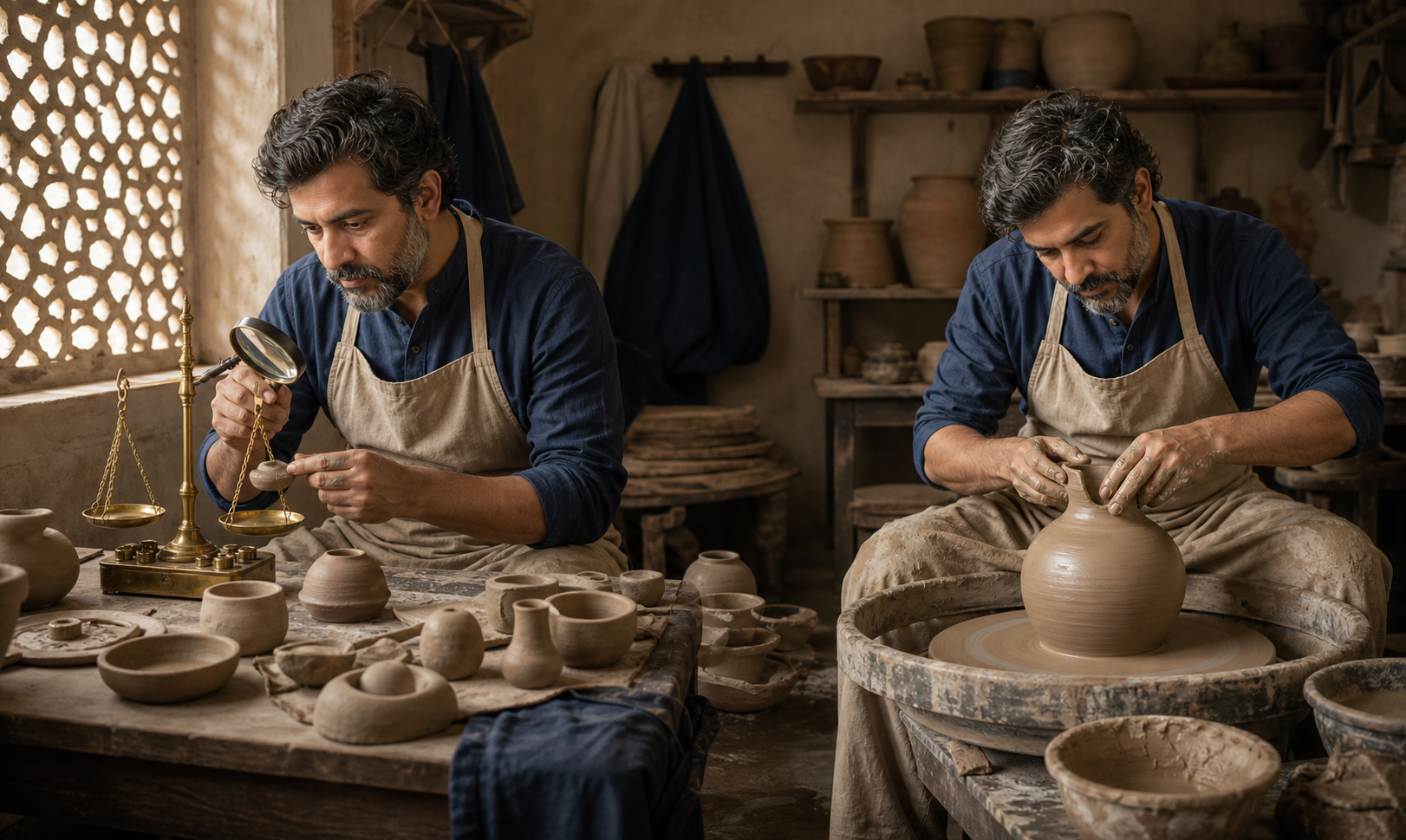
Anvikshiki offers a disciplined way to examine what has been received through agama alongside what is encountered through pratyaksha. In Nyaya-Bhashya I.1.1, Vatsyayana connects this inquiry with reflection on authoritative knowledge and sense experience. The task is neither automatic acceptance nor reflexive disbelief. It is to ask what a claim means, what supports it, how far that support reaches, and whether the parts remain coherent.
Those categories need care. Agama is not every assertion repeated in the name of tradition. You still need to identify the text, teacher, lineage, or established practice being invoked. Pratyaksha is not whatever you happen to prefer. It concerns what is actually perceived, while your interpretation of that perception remains open to error. A peaceful feeling during a practice may tell you something about its immediate effect on your mind; by itself, it does not settle every metaphysical claim associated with the practice.
Reason alone does not remove the danger of self-deception. A clever mind can construct an argument for the conclusion it already wants. This is why self-cultivation belongs inside the work of inquiry. Ahimsa constrains the urge to win at another person’s expense. Satya requires you to state contrary evidence honestly. Tapas keeps you with a difficult question after novelty disappears. Svadhyaya supplies sustained engagement with teachings, while dhyana helps you notice the agitation, pride, fear, or attachment entering your judgment.
Atmarina gives this inward responsibility a useful name, but precision matters. Classical treatments commonly foreground the rinatraya, the threefold debt, while ritual and ethical life extends into wider obligations. Atmarina is best understood as a reflective synthesis centered on self-knowledge and the cultivation of the inner instrument, not casually presented as an identically standardized fourth debt in every classical account. Its practical force is clear: if your perception is clouded and your will is unstable, your service to deities, ancestors, sages, family, and living beings will carry that disorder into the world.
The two disciplines therefore prevent opposite mistakes. Inquiry without cultivation becomes rationalization, performance, or debate for its own sake. Cultivation without inquiry can become conformity, sentiment, or disciplined pursuit of a mistaken conclusion. The useful question is not whether you are rational or spiritual. It is whether your reasoning clarifies your practice and whether your practice makes your reasoning more truthful.
Use a five-pass test before accepting or rejecting a teaching

When a teaching affects a real decision, do not begin with a general discussion of the entire tradition. Put the exact claim in front of you and pass it through five tests. You can do this in a notebook, in a notes app, or in the margin of your svadhyaya journal.
- State one claim without embellishment. Separate a prescription from a description. The statement that a practice steadies your attention is different from the claim that everyone must perform it, and both are different from a claim about ultimate reality. If you cannot express the claim in one clear sentence, you are not ready to judge it.
- Name its grounds. Is the claim grounded in agama, direct perception, an interpretation, or some combination? If you invoke tradition, identify which text, school, teacher, or practice you mean. If you invoke experience, record what you actually observed rather than the conclusion you attached to it.
- Test its scope. Ask whether the claim concerns one person, a particular stage of life, a specific lineage, or all seekers. A discipline appropriate to brahmacharya need not take the same form in grihastha life. A sound principle can be misapplied when its conditions are omitted.
- Form the strongest objection. Do not choose the easiest critic to defeat. Ask what a well-informed Hindu from another darshana, a Jain committed to many-sided examination, a Buddhist attentive to dependent conditions, or a Sikh joining remembrance with service might notice that you have missed. The purpose is not to manufacture agreement. It is to expose the limits of your first perspective.
- Examine the fruit in conduct. Ask what happens if you live by the claim. Does it make you more truthful, less needlessly harmful, steadier in duty, and more capable of seva? Does it protect a legitimate discipline, or merely protect your comfort? Ethical fruit cannot prove every metaphysical proposition, but it can reveal when your interpretation is producing vanity, negligence, cruelty, or evasion.
End the exercise with a decision label: accept provisionally, practise and observe, suspend judgment, or reject. Provisional acceptance is not weak faith; it is a refusal to claim more certainty than you possess. Suspending judgment is also a real conclusion. It keeps an unresolved question open without letting it paralyse the duties already clear to you.
This method is especially useful when an online dispute pressures you to take a side immediately. Before replying, reduce the dispute to one claim and identify its evidence. If the argument shifts between history, theology, personal experience, and group loyalty, separate those claims. Much apparent disagreement survives only because several questions have been compressed into one slogan.
Build a daily cycle that changes the inquirer

A notebook full of refined arguments is not yet self-cultivation. The inner instrument changes through abhyasa: repeated practice under ordinary conditions. The relevant disciplines can be organized around four connected strands: jnana and svadhyaya, yama and niyama, care of body and mind, and dhyana. Each corrects a weakness in the others.
- Before your first stream of digital input, establish attention. Sit for a brief period of dhyana or quiet breathing. Name one live question, duty, or likely point of reactivity. The aim is not to predict the day but to meet it deliberately.
- During svadhyaya, study one manageable passage closely. Write down its central claim, the meaning of its key term, and one honest question. A page read with attention can do more for inquiry than a large quantity consumed for completion or display.
- At the moment of friction, observe before defending. When criticism, delay, or disagreement produces an immediate reaction, use a conscious breath to notice it. Ask whether you are protecting truth, status, comfort, or an identity. You may still need to speak firmly; the pause helps you choose the reason.
- At the end of the day, audit one action. Record what you believed, what you did, and what followed. Check the action against satya, ahimsa, your situated duty, and its effect on others. Do not turn the audit into self-condemnation. Its purpose is to identify the next correction.
Food, rest, and breathwork belong here because attention is embodied. Exhaustion and agitation can make a weak argument feel conclusive or an ordinary disagreement feel like a threat. Caring for the body and mind supports discernment; it is not evidence that a spiritual conclusion is true, and it is not an achievement to display.
Use yama and niyama to make each correction specific. If you repeatedly exaggerate an opponent’s position, work on satya. If your words are accurate but needlessly humiliating, bring in ahimsa. If distraction keeps breaking study, apply tapas and saucha by clearing the study period of avoidable clutter. If you keep borrowing other people’s conclusions, return to svadhyaya and articulate what you understand in your own words.
Compassionate boundaries can also serve this discipline. Protecting time for prayer, study, rest, or contemplation is not automatically selfish. Test the boundary by its fruit: does it help you return to your responsibilities with greater steadiness, or has spiritual practice become a respectable name for avoiding them? Atmarina is fulfilled through a self made more capable of dharma, not a self insulated from obligation.
Preserve Dharmic plurality without making truth vague

Reasoned inquiry can create genuine common ground across Dharmic traditions, but common ground is not sameness. Hindu inquiries into atman and the Buddhist teaching of anatma or anatta should not be translated into one another as though the difference were merely verbal. Jain anekantavada does not mean that every claim is equally correct. Sikh simran and seva cannot be reduced to private contemplation. Respect begins when you let each tradition state its own terms before looking for convergence.
The convergence lies more securely in the responsibility to cultivate the path. Hindu disciplines join self-knowledge, ethical restraint, contemplation, svadharma, and loka-sangraha. Jain practice emphasizes purification through ahimsa and aparigraha while training attention toward many-sided understanding. Buddhist practice joins sila, samadhi, and prajna in relation to dukkha, while maintaining a metaphysical distinction from atman-centered accounts. Sikh practice joins disciplined remembrance with seva. Careful examination can support dialogue among these paths without requiring them to surrender their distinct teachings.
Before making a cross-tradition claim, apply four safeguards:
- Name the tradition and, where it matters, the school or context rather than speaking for all Dharmic thought.
- Define a technical term within its own framework before offering an approximate parallel.
- Distinguish agreement about a discipline from agreement about the reality that discipline is said to disclose.
- State the shared ethical consequence without erasing the unresolved philosophical difference.
This approach also improves disagreement within Hindu traditions. You can defend a position strongly while acknowledging its premises and limits. Intellectual humility does not require you to treat contradiction as harmony. It requires you to understand a position well enough to disagree with the position itself rather than with a caricature.
FAQ: Questions that keep the practice honest
What should you do when agama and experience appear to conflict?
First verify the conflict. Check whether you have understood the teaching in its intended context, performed the practice as prescribed, and distinguished direct observation from expectation. Then state the tension without forcing a quick resolution. Limited experience may not settle a universal or metaphysical question, but neither should inconvenient experience be hidden. Mark the conclusion as unresolved and continue only with practices that remain ethically sound.
Is Atmarina a classical debt in exactly the same sense as the threefold debt?
That formulation would be too simple. The standard classical emphasis is the rinatraya, with wider duties expressed through related ritual and ethical frameworks. Atmarina is more carefully used as an inward-facing synthesis: a responsibility to cultivate clarity, virtue, wisdom, and steadiness so that other obligations can be fulfilled with integrity. That distinction preserves both historical precision and practical value.
When does self-cultivation become self-absorption?
It crosses that line when your practice repeatedly excuses neglected duties, indifference to harm, or withdrawal from necessary service. A quiet mind is not the sole measure. Ask whether worship has become more sincere, inherited responsibilities more discerning, learning more embodied, and compassion more dependable. The inward discipline should enlarge your capacity for loka-sangraha, not shrink your world to personal serenity.
How can you tell whether the combined practice is working?
Look for correction in conduct rather than a new spiritual identity. You should become more able to revise a claim, represent another view fairly, pause before a reactive act, keep a necessary commitment, and serve without making every act about yourself. Do not demand perfection. Look for whether the same examined mistake is becoming less automatic and whether insight is reaching the next decision.
Begin with one question that is already affecting your conduct. Write the claim plainly, identify its grounds, test the strongest objection, and choose one ethical action through which to examine it. Then review what the action reveals. That cycle of inquiry, discipline, action, and correction is how reason becomes part of sadhana and self-cultivation becomes service to dharma.
References
- DharmaRenaissance Blog — Atmarina in Hinduism: Honoring the Self to Unlock Dharma, Clarity, and Liberation
- DharmaRenaissance Blog — Anvikshiki and Nyaya: Timeless Reasoned Inquiry to Clarify Truth and Unite Dharmic Wisdom
