Category: Spiritual Insight

  • The Peril of Vaishnava Aparādha: SB 11.1.13–15 and the Yadu Dynasty’s Devastating Fall

    The Peril of Vaishnava Aparādha: SB 11.1.13–15 and the Yadu Dynasty’s Devastating Fall

    Srimad Bhagavatam 11.1.13–15 warns that mocking saintly persons—illustrated by the Yadu youths disguising Samba as a pregnant woman—carries devastating karmic and social consequences. Drawing on HH Guru Prasad Swami Maharaj’s insights, this analysis clarifies the doctrine of Vaishnava aparādha and shows how even technical fixes cannot undo moral causes. Readers gain precise context for the…

  • Conquering the Disease of Envy: SB 3.29’s Remedy for Respect, Ahimsa, and Dharmic Unity

    Conquering the Disease of Envy: SB 3.29’s Remedy for Respect, Ahimsa, and Dharmic Unity

    This deep-dive, inspired by a Brambleton, VA discourse on May 21, 2026, examines why envy (īrṣyā, asūyā, mātsarya) is the principal obstacle to authentic respect and spiritual growth. Drawing on Srimad Bhagavatam 3.29, it maps how envy aligns with rajas and tamas and why non-envious devotion in sattva is essential. The analysis integrates parallel remedies…

  • The Quiet Architecture of Grief: Evidence-Based Ways Small Rituals and Memories Sustain Love

    The Quiet Architecture of Grief: Evidence-Based Ways Small Rituals and Memories Sustain Love

    Grief seldom ends; it changes form. Using a clear case of companion‑animal loss, this piece explains how routine, memory, and community support help sustain love after bereavement without minimizing sorrow. Readers will learn key frameworks from contemporary bereavement science—Continuing Bonds Theory, the Dual Process Model, disenfranchised grief, and post‑traumatic growth—and how these map onto everyday…

  • Beyond the Chase: Hinduism’s Radical Blueprint for Lasting Happiness and Inner Freedom

    Beyond the Chase: Hinduism’s Radical Blueprint for Lasting Happiness and Inner Freedom

    This long-form analysis explains a core Hindu teaching: lasting happiness is revealed when the compulsive pursuit of happiness ends. It clarifies the difference between sukha (pleasure) and ananda (bliss), grounding the argument in the Upanishads, Bhagavad Gita, and Patanjali’s Yoga Sutra. Readers gain a rigorous framework for understanding moksha, along with a practical blueprint that…

  • Timeless Welcoming Grace: Ahuya–Varada Mudra in Hindu Iconography and Sculpture

    Ahuya–Varada Mudra crystallizes a powerful promise in Hindu iconography: an invitation to approach, followed by the boon of grace. The analysis clarifies etymology and form—Ahuya as a welcoming inclination, Varada as the classic downward, open palm—while distinguishing them from Abhaya. Drawing on Shilpa Śāstra canons, regional styles (Chola, Odishan, Pāla–Sena, Hoysala), and ritual practice, it…

  • What Is the Purpose of Creation? A Dharmic, Scholarly Guide to Līlā and Liberation

    What Is the Purpose of Creation? A Dharmic, Scholarly Guide to Līlā and Liberation

    The question “What is the purpose of creation?” can be read most fruitfully through the dharmic idea of līlā—cosmic play—where manifestation is a free, blissful self-expression rather than a utility-driven project. Hindu philosophy frames this across Advaita, Vişiṣṭādvaita, Dvaita, Śaiva thought, and Sāṁkhya–Yoga, uniting expressive freedom with ethical purpose and liberation (mokṣa). Purāṇic aesthetics and…

  • Easy vs Difficult in Krishna Consciousness: A Practical Guide to Compassion and Inner Discipline

    Easy vs Difficult in Krishna Consciousness: A Practical Guide to Compassion and Inner Discipline

    Krishna Consciousness reframes everyday choices as a movement from easy reactions to difficult but transformative disciplines. Drawing on the Bhagavad Gita, Gaudiya Vaishnava texts, and the sadhana-bhakti tradition, it explains why judging others, impulsive speech, and harming are effortless habits, while introspection, restraint, and healing require cultivated virtue. Upadeshamrita and the Gita’s tapas of speech…

  • What Happens After Death? Garuda Purana’s Vivid Journey of the Soul, Karma, and Liberation

    What Happens After Death? Garuda Purana’s Vivid Journey of the Soul, Karma, and Liberation

    The Garuda Purana’s teachings on what happens after death combine vivid narrative with careful ethics and ritual guidance. Rather than inducing fear, these descriptions function as moral instruction, emphasizing accountability (karma), communal care (śrāddha and piṇḍa-dāna), and the ultimate aim of liberation (moksha). Read alongside Upaniṣadic psychology, death can be seen as akin to deep…

  • Dolai Kannan Unveiled: The Sacred Swing of Krishna and the Transformative Joy of Bhakti

    Dolai Kannan Unveiled: The Sacred Swing of Krishna and the Transformative Joy of Bhakti

    Dolai Kannan—Krishna enthroned on a flower-decked swing—embodies the tenderness of vatsalya-bhava and the theological richness of Sri Vaishnava liturgy in South Indian temples and homes. Rooted in the Bhagavata Purana and guided by Vaikhanasa and Pancharatra Agamas, the rite integrates abhishekam, alankara, Divya Prabandham, and gentle oonjal seva into a unified contemplative experience. The swing’s…

  • Sankirtana as Sound Medicine: How Hare Krishna Chanting Nurtures Inner Calm and Social Harmony

    Sankirtana as Sound Medicine: How Hare Krishna Chanting Nurtures Inner Calm and Social Harmony

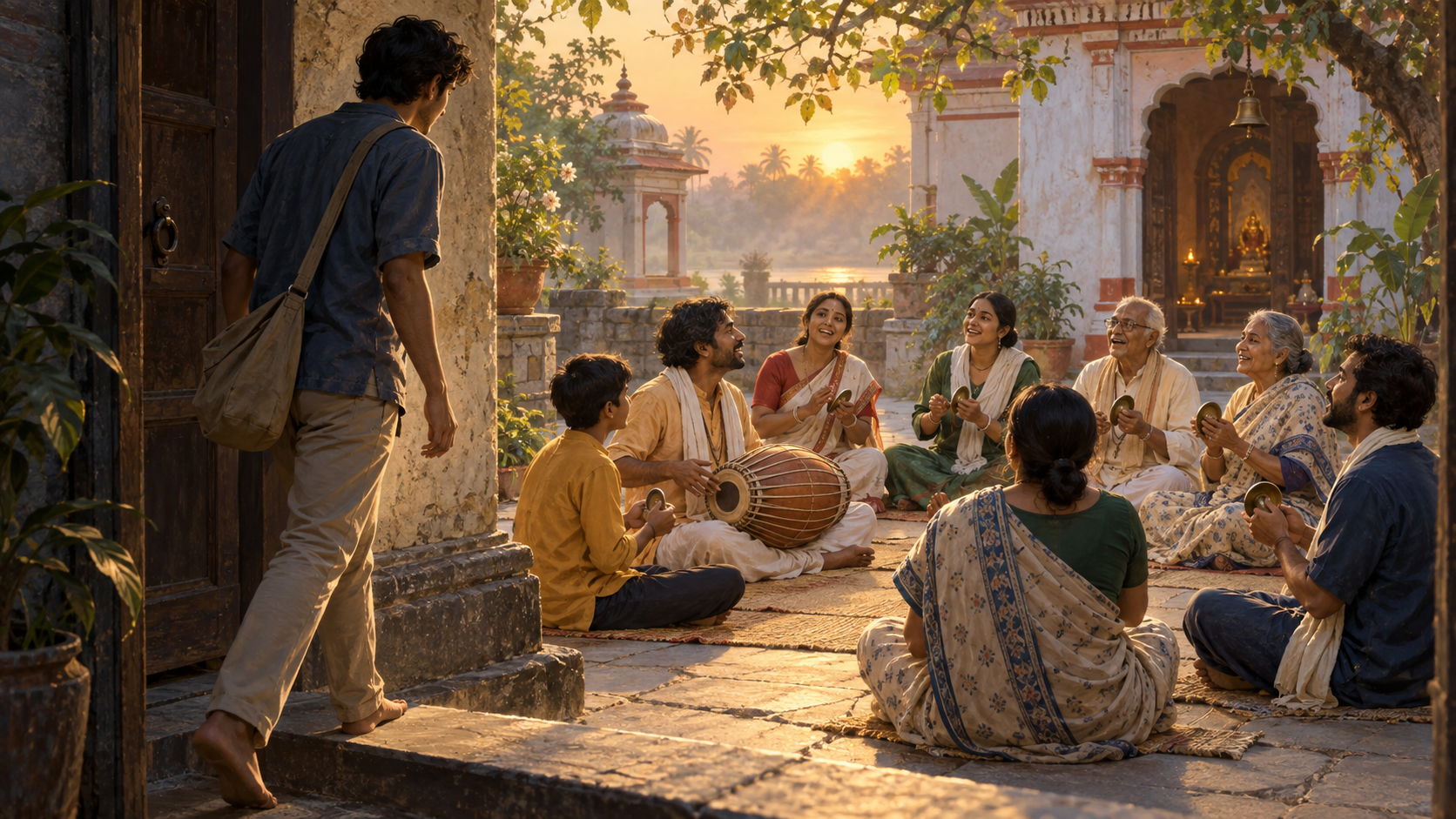
    A common objection to public Hare Krishna chanting asks: how is it welfare if bystanders do not understand the words? Sankirtana addresses this by working through sound’s direct effects on breath, attention, and emotion, much like a medicine that heals without requiring knowledge of pharmacology. Classical bhakti sources emphasize kirtan’s potency in the present age,…

  • “I Feel No Fear”: How the Hare Krishna Maha-mantra Builds Abhaya Across Dharmic Paths

    “I Feel No Fear”: How the Hare Krishna Maha-mantra Builds Abhaya Across Dharmic Paths

    A memorable exchange crystallizes a core promise of mantra meditation: asked what chanting the Hare Krishna maha-mantra feels like, Srila Prabhupada replied, “I feel no fear.” This article unpacks that claim in an academic yet accessible way, explaining how abhaya (fearlessness) emerges at the intersection of Bhakti theology, rhythmic sound, and breath regulation. It clarifies…

  • Decoding the Pitha of the Shivling: Divine Architecture, Agamic Science, and Living Ritual

    Decoding the Pitha of the Shivling: Divine Architecture, Agamic Science, and Living Ritual

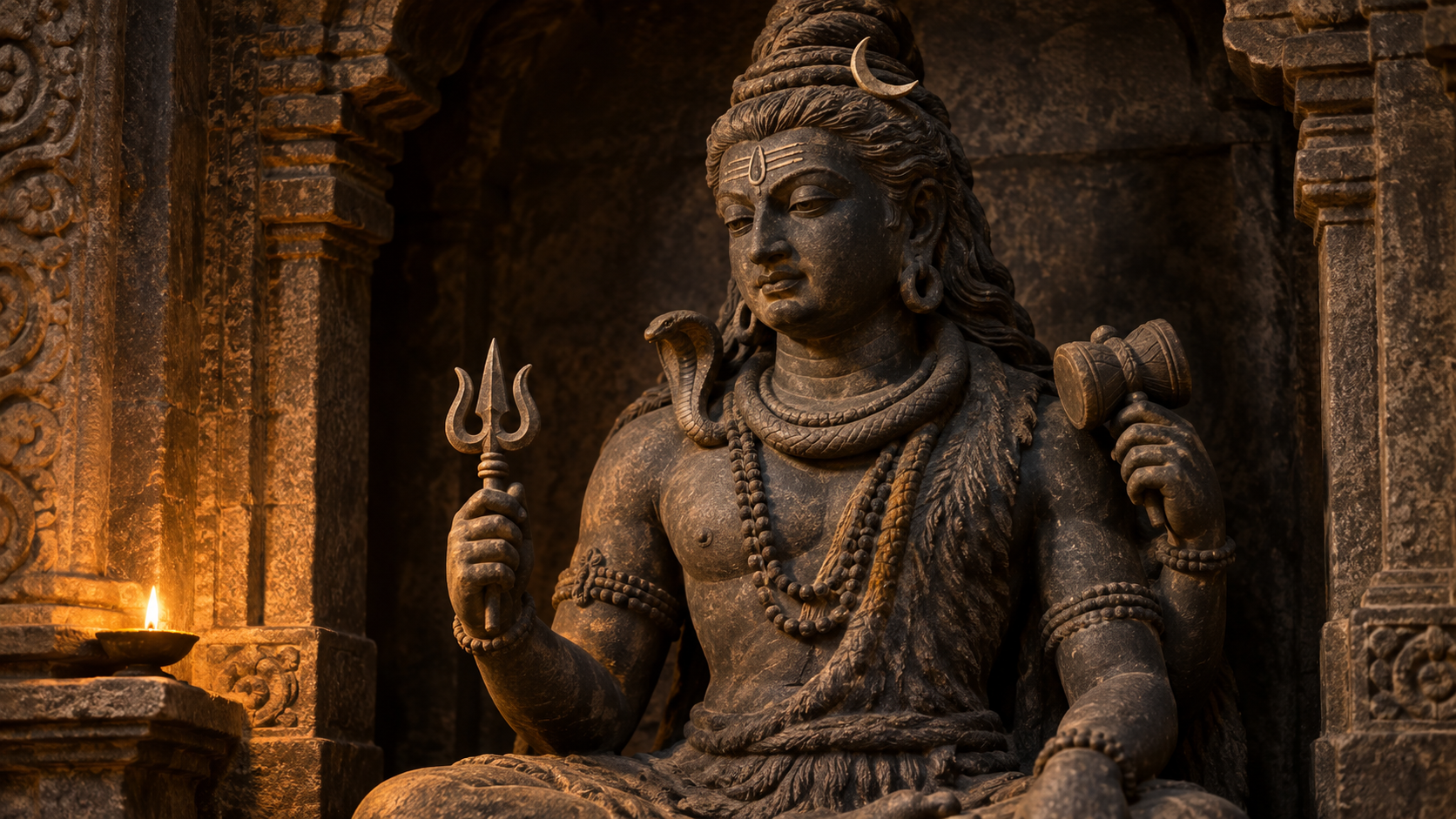
    The pitha or yoni-pitha of the Shivling is not merely a base but a sacred support that grounds, stabilizes, and channels divine energy. Rooted in Agamic prescriptions and Shilpa Shastra canons, it integrates precise geometry, structural stability, and a hydraulically sound soma-sutra or gomukha outlet for abhishekam. The linga’s three-part articulation fits into the pitha…

  • July 2026 Hindu Festivals (IST): Sankashti, Kalashtami, Sheetala Ashtami—Vrat & Puja Guide

    July 2026 Hindu Festivals (IST): Sankashti, Kalashtami, Sheetala Ashtami—Vrat & Puja Guide

    This guide compiles July 2026 Hindu festivals and vrats based on major Indian Panchang traditions, with all observances referenced to Indian Standard Time (IST). It highlights Sankashti Chaturthi on July 3 with a moonrise at 9:49 PM (IST), Kalashtami on July 7, and region-specific Sheetala Ashtami, Indrani Puja, and Trilochan Ashtami on July 8. Clear…

  • Golden Grace and Neem-born Humility: Decoding ‘Gauranga’ and ‘Nimai’ of Chaitanya Mahaprabhu

    Golden Grace and Neem-born Humility: Decoding ‘Gauranga’ and ‘Nimai’ of Chaitanya Mahaprabhu

    This article decodes the dual symbolism embedded in Chaitanya Mahaprabhu’s epithets “Nimai” and “Gauranga.” It explains how “Nimai,” rooted in neem’s purificatory aura and Bengal’s domestic piety, conveys protection, intimacy, and inner cleansing. It then unpacks “Gauranga” as a theological epithet signifying Krishna’s golden, compassion-filled form, central to Gaudiya Vaishnavism’s mission of Nama Sankirtana. Drawing…

  • Decode Shyam–Shyama: Baul Mysticism’s Bold Union of Krishna and Kali as One

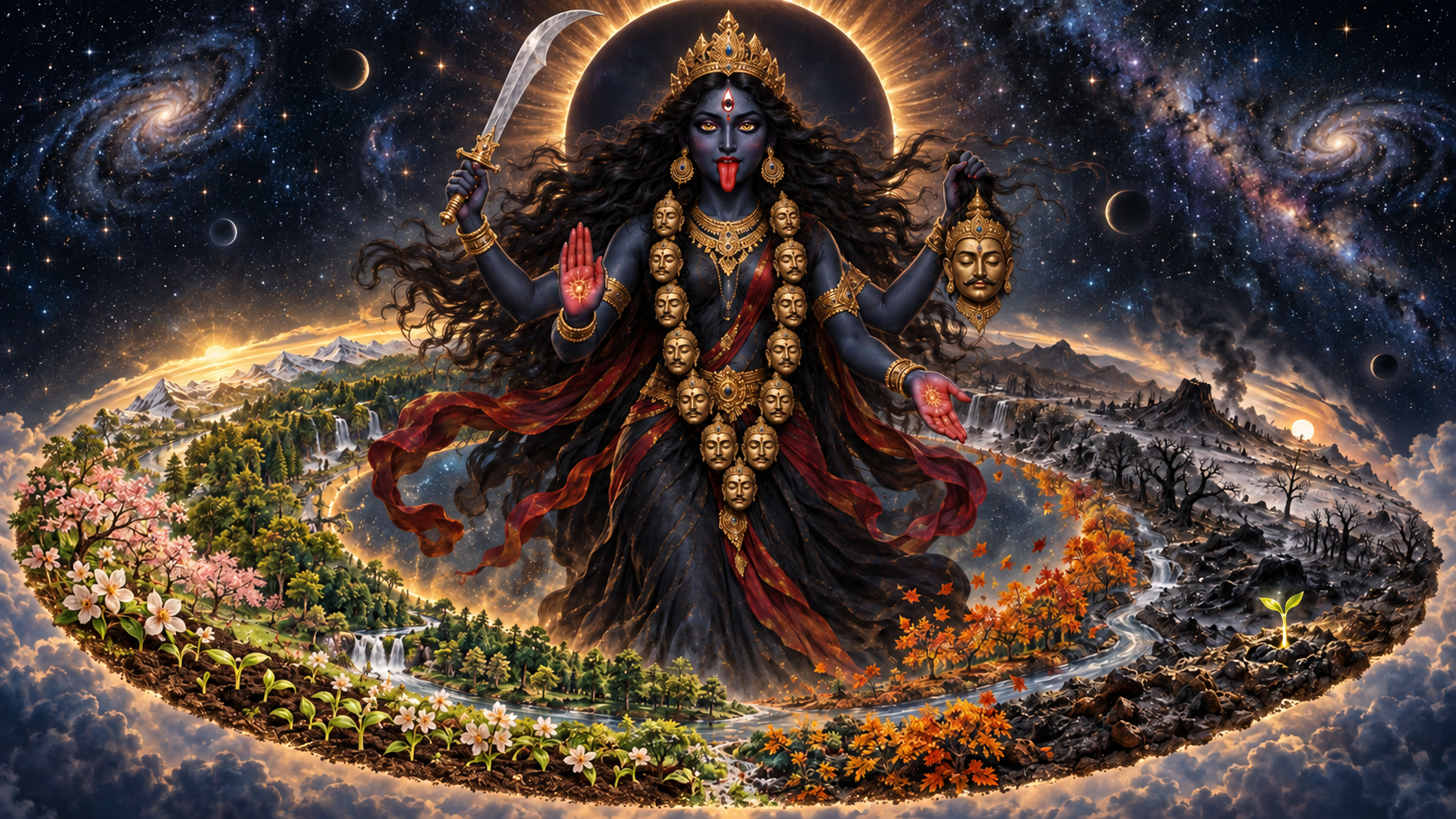
    Decode Shyam–Shyama: Baul Mysticism’s Bold Union of Krishna and Kali as One

    Baul spirituality in Bengal contemplates Krishna (Shyam) and Kali (Shyama) as expressions of one luminous Reality, using their shared dark hue as a theological bridge between bhakti and tantra. This essay explains how Bauls integrate Vaishnava love, Shakta insight, yogic embodiment, and Sufi interiority to honor moner manush—the innermost Beloved. It unpacks the symbolism of…

  • Turning Obstacles into Opportunity: A Dharmic Guide to Action, Resilience, and Seva

    Turning Obstacles into Opportunity: A Dharmic Guide to Action, Resilience, and Seva

    A classic teaching story about a boulder in the roadway demonstrates a rigorous dharmic principle: obstacles are structured invitations to act responsibly for the common good. Read how Hinduism, Buddhism, Jainism, and Sikhism converge on the same ethic of service, non-harm, and Right Effort, turning adversity into measurable public benefit. The analysis connects Karma Yoga,…

  • All Faiths Share Core Values – So Why Convert? A Deep, Dharmic, Evidence-Based Guide

    All Faiths Share Core Values – So Why Convert? A Deep, Dharmic, Evidence-Based Guide

    This long-form, evidence-based guide explains why religious conversion persists even when core values—compassion, truth, service, and self-discipline—are widely shared. It distinguishes ethical convergence from deeper differences in metaphysics, salvation, and institutional identity that often drive conversion debates. Drawing on Hinduism, Buddhism, Jainism, and Sikhism, it highlights Dharmic pluralism through ideas like Ishta and anekantavada, showing…

  • Spirituality of Nature: Dharmic wisdom and science for resilient, unshakable inner strength

    Spirituality of Nature: Dharmic wisdom and science for resilient, unshakable inner strength

    This long‑form exploration presents a rigorous, Dharmic view of nature as a living revelation of consciousness, uniting Hinduism, Buddhism, Jainism, and Sikhism around interdependence, non‑harm, disciplined awareness, and service. It clarifies how Upanishadic, Buddhist, Jain, and Sikh insights translate into ecological ethics and everyday practices. Evidence from psychology and physiology shows why slow breathing, awe,…

  • Does God Really Exist? A Dharmic Deep Dive into Suffering, Karma, and Yuga Dharma

    Does God Really Exist? A Dharmic Deep Dive into Suffering, Karma, and Yuga Dharma

    This long-form exploration reframes “Does God really exist?” through the dharmic lenses of Hinduism, Buddhism, Jainism, and Sikhism. It explains how Yuga Dharma situates the present age (Kali Yuga) and why accessible practices—like nāma-japa, kīrtana, satsanga, and seva—are especially potent now. Drawing on pramāṇa theory, Nyāya arguments, and Vedānta’s non-dual and devotional streams, it outlines…

  • Arghya to the Sun: Vedic Symbolism, Subtle Physiology, and Daily Surya Worship Benefits

    Arghya to the Sun: Vedic Symbolism, Subtle Physiology, and Daily Surya Worship Benefits

    Arghya—offering water to the rising Sun—unites Vedic symbolism, yogic subtle physiology, and modern circadian insights in a simple, potent daily rite. Rooted in sandhyā-vandana and popularized in contemporary teachings as “water is love,” arghya blends mantra, breath, and gratitude to steady attention and uplift mood. Yogic traditions describe a gentle activation of the solar current…