-
Divine Geometry of the Shivling: Six Sacred Components, Agamic Ratios, and Alignment

The manmade Shivling follows a six-part sacred architecture codified in Shaiva Agamas and Shilpa Shastra: a foundation slab, a yoni-pitha with drainage channel, and a triune bana comprising Brahma-, Vishnu-, and Rudra-bhaga. This article explains the function, symbolism, and geometry of each component, with practical notes on proportions, materials, and orientation in the garbhagriha. Readers…
-
May 27, 2026 Panchang: Comprehensive Guide to Shukla Ekadashi, Nakshatra, Rashi & Muhurats

May 27, 2026 features Shukla Paksha Ekadashi until 7:49 AM, followed by Dwadashi for the rest of the day. The guide explains how tithi boundaries are computed, why Ekadashi at sunrise matters for fasting, and how to identify the correct parana window after Dwadashi begins. It outlines practical Shubh Muhurat pointers—Abhijit around local noon and…
-
Timeless Power of the Guru–Shishya Bond: Ancient Hindu Pedagogy That Shapes Character and Society

The Guru–Shishya tradition is a civilizational pedagogy that unites knowledge with character, shaping both competence and conscience. Drawing on the Upanishads and the Bhagavad Gita, it encodes reverence, inquiry, and service as the ethics of learning. Gurukulas integrated study with daily life, training the mind through śravaṇa–manana–nididhyāsana and broad curricula from Veda and Vedāṅgas to…
-
Liberate the Self: Hindu, Buddhist, Jain, and Sikh Insights on Embracing True Nature

This long-form essay explores how Hinduism, Buddhism, Jainism, and Sikhism converge on a single, practical insight: suffering intensifies when one strives to become someone other than one’s true nature. Drawing on the Upanishads, Bhagavad Gita, Yoga Sutra, Sāṅkhya analysis, Buddhist teachings on craving and anatta, Jain doctrines of aparigraha and anekāntavāda, and Sikh wisdom on…
-
Somvati Amavasya (Monday New Moon): Sacred Timing, Pitru Rites, and Transformative Rituals

Somvati Amavasya, the Amavasya falling on Monday (Somvar), is revered for aligning lunar stillness with Chandra’s calming influence, making it a powerful day for vrata, snana, tarpana, and daana. Classical sources, including the Mahabharata’s teachings to Dharma Raj and Puranic references, affirm the day’s efficacy for ancestor remembrance and ethical renewal. The Panchang determines observance…
-
Conditional Love, Trauma, and Self‑Worth: Reframing a Childhood Bargain—and Finally Healing

A childhood image of public praise once seemed to prove love, but later reflection revealed a deeper pattern: conditional affection tied to performance. This analysis reframes that experience using concepts such as intermittent reinforcement, contingent self-worth, and the nervous system’s pursuit of relief over safety. It offers practical diagnostics—how to spot approval-seeking and people-pleasing when…
-
Unlocking the Mātuluṅga Mystique: Why a Giant Citron Graces Lakulisha and Kolhapur Mahalakshmi

The large citrus fruit called mātuluṅga (mahalunga) appears prominently in Hindu iconography, most notably in the lower right hand of Kolhapur Mahalakshmi and the upper left hand of Lakulisha of Pāśupata Shaivism. Identified primarily as Citrus medica (citron), the fruit symbolizes abundance, purity, and the ripened results (phala) of righteous action and disciplined practice. In…
-
Dhama in Hinduism: Unveiling India’s Sacred Geography and Transformative Char Dham Yatras

Dhama in Hinduism denotes a sanctified abode where the divine presence is experienced most intensely, shaping India’s sacred geography and animating transformative pilgrimages. This long-form exploration clarifies how tirtha, kshetra, pitha, and dhama interrelate, and why Char Dham and the Himalayan Chota Char Dham have become enduring circuits of devotion. Readers discover the theological roots…
-
Srimad Bhagavatam 10.66.21–24: Paundraka’s Fall, Kāśī’s Fire, and Dharmic Governance

This in-depth reading of Srimad Bhagavatam 10.66.21–24, contextualized by a Villa Vrindavana ISKCON discourse (15/5/2026), explains how Paundraka’s imposture and Kāśī’s retaliatory abhicāra illustrate the karmic recoil of weaponized ritual and the necessity of right-seeing (Sudarśana). Readers gain a precise grasp of the chapter’s ethical architecture—ego inflation, misuse of sacred means, and restoration of order…
-
Varsana Parikrama: Ascending Srimati Radharani’s Hill via Jaipur Mandir and Dan garh

This guided overview of the Varsana (Barsana) parikrama presents a clear, research-based orientation to ascending the hilltop temple of Srimati Radharani and visiting Jaipur Mandir and Dan garh. It situates these landmarks within Braj’s sacred geography and explains how architecture, ritual movement, and sound cohere into a contemplative experience. Readers gain architectural insights into North…
-
From Envy to Compassion: Dharmic Ethics of Bhakti, Ahimsa, and Unity Across Traditions

Non-envy is presented as a defining criterion for authentic religion across Hinduism, Buddhism, Jainism, and Sikhism, aligning with A.C. Bhaktivedanta Swami Prabhupada’s emphasis within Krishna consciousness. The article clarifies envy versus jealousy and shows how dharmic ethics reject both as inner violence that fractures community. It integrates scriptural insights—Bhagavad Gita, Śrīmad-Bhāgavatam, Dhammapada, Jain vows, and…
-
ISKCON and People of Faith: A Vedantic Blueprint for Compassionate, Unified Interfaith Relations

Hinduism encompasses many traditions rather than a single authority, and ISKCON positions itself within this diversity as a Vedantic, monotheistic Vaishnava movement committed to respectful interfaith relations. The statement outlines how devotional particularism can coexist with civic and ethical pluralism, grounded in Bhagavad Gita–inspired bhakti and the doctrine of acintya‑bhedābheda. By honoring the Ishta paradigm…
-
Under the Naga’s Canopy: The Powerful, Timeless Meaning of Serpent Hoods in Hindu Icons

Hooded serpents above Hindu deities are not mere ornaments but condensed philosophies. The motif announces protection and sovereignty, like a living royal canopy (chatra), while symbolizing time’s cycles and awakened energy. In Vaiṣṇava art, Ananta-Śeṣa frames Vishnu as the still center of an infinite cosmos; in Śaiva icons, Vāsuki’s presence proclaims mastery over fear, poison,…
-
Kamantaka Murti of Shiva: Awe-Inspiring Iconography, Third-Eye Fire, and Mastering Desire

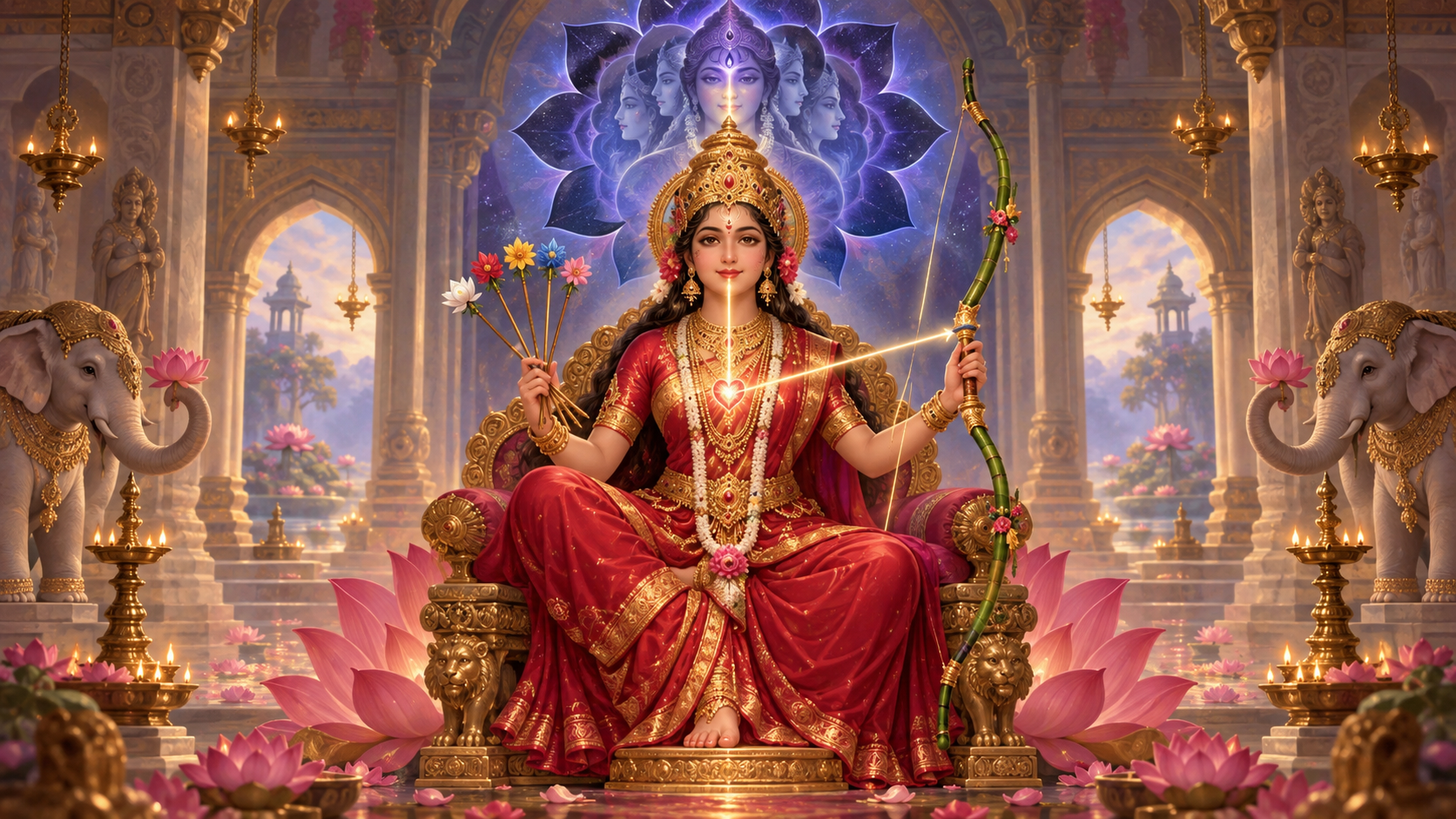
This in-depth study decodes Kamantaka (Madana Dahana), the powerful murti of Shiva who burns Kama with the third eye’s jñāna-agni, as a visual pedagogy on mastering desire. It explains field-ready markers—Kama’s sugarcane bow, bee-string, five flower-arrows, and Rati—so readers can confidently identify the scene in temples and sculpture. It situates the form in Purāṇic, Āgamic,…
-
Across the Waters: Divine Protection, Tirtha Symbolism, and Rebirth in Dharmic Traditions

Sacred river crossings in Dharmic traditions encode a shared grammar of divine protection, purification, and rebirth. From Krishna’s midnight passage over the Yamuna in the Bhagavata Purana to the Jain ideal of the Tirthankara as a “ford-maker,” from Buddhism’s raft simile to Sikh teachings on crossing the bhavsagar through the Guru’s Naam, each tradition converges…
-
Curiosity as Sacred Practice: How Hinduism Champions Inquiry, Dialogue, and Self-Realization

This article presents a rigorous, accessible account of why Hinduism treats curiosity as a sacred discipline. It traces the spirit of inquiry from the Upanishadic dialogues and Bhagavad Gita to Nyaya logic, Mimamsa hermeneutics, Vedanta inquiry, and Yoga’s epistemology. It explains pramana—valid means of knowledge—and shows how disciplined questioning is bound to ethics, humility, and…
-
May 26, 2026 Panchang: Dashami to Ekadashi, Shubh Muhurat, Nakshatra and Rashi Explained

May 26, 2026 begins with Shukla Paksha Dashami and transitions to Shukla Paksha Ekadashi at approximately 07:40 IST in most Indian regions, shaping how households plan worship, fasting, and Shubh Muhurat. The article explains what a tithi is, why its clock-time shift matters, and how to use the Dashami–Ekadashi transition for practical scheduling. It outlines…
-
19 May 2026 Angarak Vinayaki Chaturthi: Powerful Mars-aligned Ganesha Puja, Vrat, and Timing Guide

On 19 May 2026, Vinayaki Chaturthi coincides with Angarak Yog, the Tuesday occurrence of Shukla Paksha Chaturthi in Adhik Jyeshtha Maas, recognized across Purnimant and Amavasyant Hindu calendars. The day is prized for harmonizing Mars-like drive with Ganesha’s calm intelligence, turning impulsivity into disciplined initiative. Observance centers on madhyahna puja while Chaturthi prevails locally, with…
-
From Heartbreak to Resilience: How Facing Fear Powered Breakup Recovery and Purpose

A structured Year of Fear—one deliberately chosen challenge per month—built the psychological flexibility and self-efficacy needed to navigate job loss, bereavement, and a painful breakup. Through graduated exposure, mindfulness meditation, and values-based action, avoidance gave way to agency and durable emotional resilience. The narrative shows how reframing rejection as decision-useful data, not a verdict on…
-
Unlocking Tripurantaka: Shiva’s Cosmic Archer—Iconography, Temple Art, and Inner Alchemy

Tripurantaka, Shiva’s cosmic archer, unites myth, philosophy, and temple art into a single visual theology. This long-form exploration traces the Puranic narrative of Tripura Samhara, decodes canonical iconography from bow to chariot, and surveys major temple depictions from Ellora to the Chola heartland. Readers learn how to identify Tripurantaka murtis, understand Agamic design rules, and…