-
From Constant Overwhelm to Calm: Recognizing Survival Mode and Reclaiming Emotional Balance

Emotional reactivity often reflects survival mode rather than oversensitivity. This piece explains how fight, flight, or freeze responses, hypervigilance, and chronic anxiety develop—and why they can feel normal over time. It then outlines four practical, evidence-informed steps to reduce reactivity: embrace uncertainty and capability, practice metacognitive awareness, use body scans with breath-based regulation, and apply…
-
Why Desires Persist in Kali Yuga: A Dharmic Roadmap to Master Craving, Age, and Satiety
Desire often outlives satiety and age in Kali Yuga, a pattern recognized across Hinduism, Buddhism, Jainism, and Sikhism. Dharmic teachings trace this persistence to avidya, samskaras, and ego, rather than mere lack of fulfillment. The Bhagavad Gita, Upanishads, Buddhist suttas, Jain ethics, and Sikh Gurbani converge on a practical cure: ethics, contemplation, and service. This…
-
Poetic Karmic Justice: Vali Reborn as Jara and the Arrow That Ends Krishna’s Leela

This article explores a powerful link between the Ramayana and the Mahabharata through the motif of karmic justice connecting Vali, Jara, Rama, and Krishna. It clarifies how later devotional and regional traditions interpret Jara as Vali reborn while noting that the critical Mahabharata text simply names Jara as a hunter. Readers gain a nuanced understanding…
-
Amavasya on 19 December 2025: Regional Calendar Names, Ritual Guidance, and Dharmic Harmony

Amavasya in December 2025 falls on 19 December and is observed as Poush Amavasya in North Indian purnimanta calendars, while amanta traditions in Telugu, Kannada, Marathi, and Gujarati regions place it in Margashirsha Month; in Tamil reckoning, it aligns with Margazhi Masam. Because tithi timings vary by location, confirming start and end through a local…
-
11 Compassionate Ways to Handle Criticism: Dharmic Wisdom for Calm, Clarity, and Growth

Criticism can be transformed from discomfort into growth with a calm, dharmic approach. Drawing inspiration from Satsang guidance associated with Sri Sri Ravishankar Guruji and consonant with shared values across Hinduism, Buddhism, Jainism, and Sikhism, these 11 principles emphasize mindfulness, compassion, and equanimity. Readers learn to pause before reacting, listen deeply, and separate message from…
-
From Mind-Born Beings to Divine Touch: Linga Purana Insights on Hindu Creation

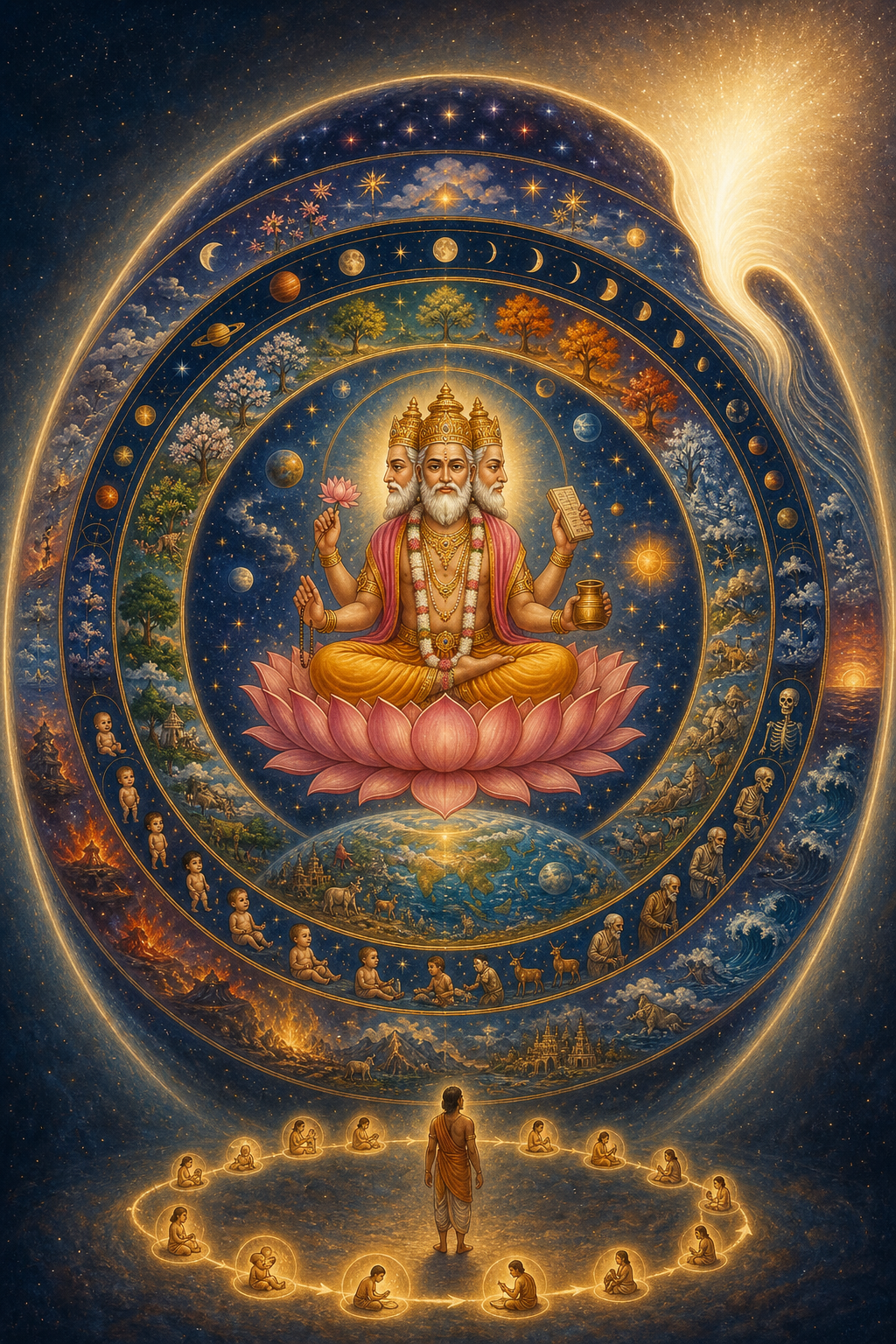
Hindu cosmology, especially as reflected in the Linga Purana, presents a spectrum of creation that begins with mental conception, extends through vision and touch, and culminates in physical procreation. This framework centers consciousness as a generative force—illustrated by Brahma’s manasa putra and by metaphors of darshana (vision) and sparsha (touch). Parallel classifications in Buddhism (opapātika)…
-
Sanyasa Yoga: A Powerful Path of Inner Renunciation toward Self‑Realization in Hinduism
Samnyasayoga in Hinduism emphasizes inner renunciation over external withdrawal, directing attention to self-realization and Brahman. Grounded in the Kaivalya Upanishad and Vedanta, it unites śraddhā, bhakti, and dhyāna to reveal Ātman as Brahman and guide seekers toward moksha. In contemporary life, Sanyasa Yoga appears as simplicity, mindful limits, and aparigraha rather than asceticism for its…
-
Timeless Dharmic Principles for an Ideal Husband: Lessons from Prahlada and Narada
This article distills dharmic principles that guide an ideal husband, drawing on Narada Muni’s counsel and the example of Prahlada Maharaja. It translates varnasrama-based insights into practical habits—ethical speech, dependable livelihood, and self-mastery—that strengthen family harmony. Readers gain actionable steps such as shared sadhana, weekly dialogues, and community seva to cultivate trust and resilience. The…
-
Timeless Guidance: The Guru–Shishya Tradition and the Quest for Everlasting Happiness

The quest for lasting happiness across dharmic traditions highlights the enduring value of authentic guidance. Srimad Bhagavatam recommends seeking a bona fide spiritual master through initiation, signaling a mature commitment to study, practice, and service. The Guru–Shishya Tradition finds parallel expressions in Buddhism, Jainism, and Sikhism, emphasizing integrity and accountability. ISKCON exemplifies modern continuity, with…
-
Filling the Heart: Gratitude and the Guru–Shishya Tradition in Dharmic Spirituality

Moving from student to teacher often begins with reluctance and matures into gratitude, illuminating how the Guru–Shishya Tradition sustains living wisdom. Srila Prabhupada’s humility—passing on what Krishna and previous acharyas taught—models selfless transmission within the Bhakti Tradition and ISKCON. Srila Bhaktivinod Thakur’s warning underscores the urgency of sharing: “If we ourselves do not pass on…
-
Sacred Ecology in Hinduism: How Nature Worship Shapes Dharma, Ethics, and Daily Life

Nature worship in Hinduism is a core expression of sacred ecology that unites philosophy, ritual, and ethics. Rooted in the Vedas, Upanishads, and Puranas, it affirms cosmic unity and the sanctity of the five elements. Rituals like offerings to Surya and the care of Tulsi translate reverence into daily practice. Ethical pillars—Ahimsa, Aparigraha, and devotion…
-
From Suffering to Serenity: Hindu Wisdom on Impermanence through a Cosmic Lens

This essay explores how Hindu philosophy, in conversation with Buddhism, Jainism, and Sikhism, reframes suffering through the recognition of impermanence and the expansion of consciousness. It explains how Avidya and Maya narrow attention to transient desires and how practices like dhyana, pranayama, Karma Yoga, and Bhakti restore clarity. Drawing on the Upanishads and the Bhagavad…
-
Rama–Sita and Shiva–Shakti: Sankhya’s Purusha–Prakriti and the Promise of Wholeness

Sankhya’s vision of Purusha (consciousness) and Prakriti (primordial nature) is illuminated by the sacred unions of Rama–Sita and Shiva–Shakti. These symbols present wholeness as a harmonious interplay rather than a clash of opposites. The essay connects Ardhanārīśvara, Maryāda-Puruṣottama, and Shakti’s resilience to psychological integration and ethical balance. Parallels from Buddhism (prajñā–upāya), Jainism (jīva–ajīva and the…
-
December 22, 2025 Panchang: Shukla Dwitiya to Tritiya, Auspicious Timings & Spiritual Insights

December 22, 2025 features Shukla Paksha Dwitiya until 9:40 AM and Shukla Paksha Tritiya thereafter, according to the Hindu calendar. The morning favors gentle renewal and light observances, while the later period supports purposeful initiatives. Readers seeking auspicious timings should consult regional Panchang listings for Shubh Muhurat December 2025, including Abhijit Muhurat, Amrita Kalam, Rahu…
-
Walking the Sikh Path: How Faith and Reason Forge Inner Calm, Service, and Dharmic Unity

This reflection presents how the Sikh path unites faith and reason into a disciplined, compassionate way of life. Grounded in Ik Onkar, it shows how practices like Naam Simran, Seva, and Sangat build inner calm and social responsibility. The approach welcomes questions, aligning devotion with critical discernment and ethical conduct. It resonates with Hindu darshanas…
-
Beyond Illusion: Discover the Deathless Self in the Bhagavad Gita’s Transformative Wisdom

This article explores how the Bhagavad Gita addresses spiritual confusion through the insight that misapprehension arises from non-apprehension. It clarifies the distinction between the changing body-mind and the changeless atman, showing how this perspective reduces fear and grief. Drawing parallels with Buddhism, Jainism, and Sikhism, it highlights a Dharmic consensus on overcoming ignorance—avidya, avijja, mithyatva,…
-
Beyond Time and Space: Bhusundi Ramayana and the Immortal Crow’s Countless Ramayanas

Bhusundi (Kākabhūśuṇḍi), the immortal crow sage, embodies the Hindu vision of cyclical time by witnessing Ramayana’s unfolding across infinite kalpas. The Bhusundi Ramayana asserts that there are countless Ramayanas—contextual, complementary, and united by dharma’s essence. This plurality aligns with Jain anekāntavāda, Buddhist dependent origination, and Sikh remembrance of the Divine, underscoring unity across dharmic traditions.…