-
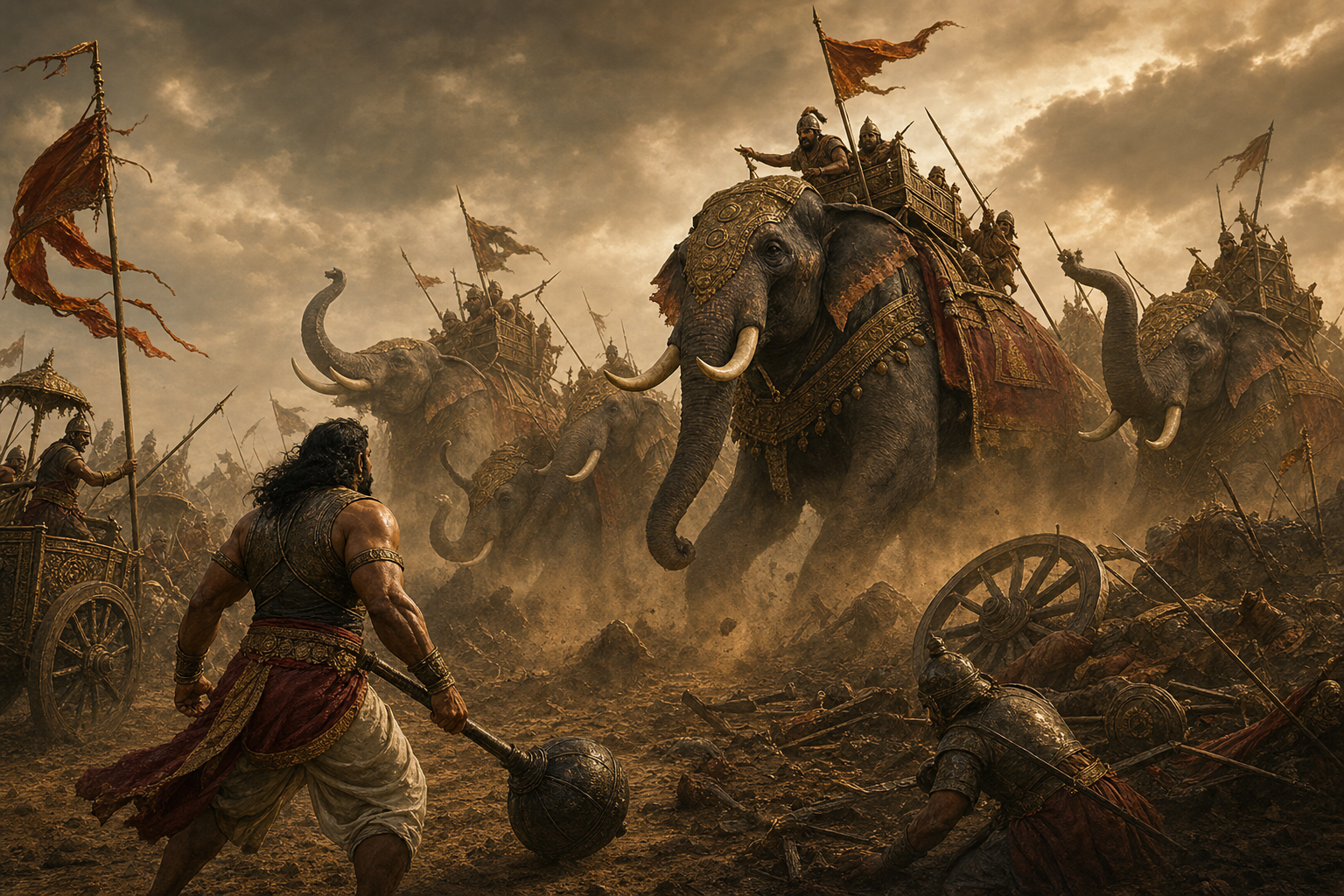
The Forgotten Warrior: Reclaiming Vrishasena’s Valor Beyond Abhimanyu’s Shadow

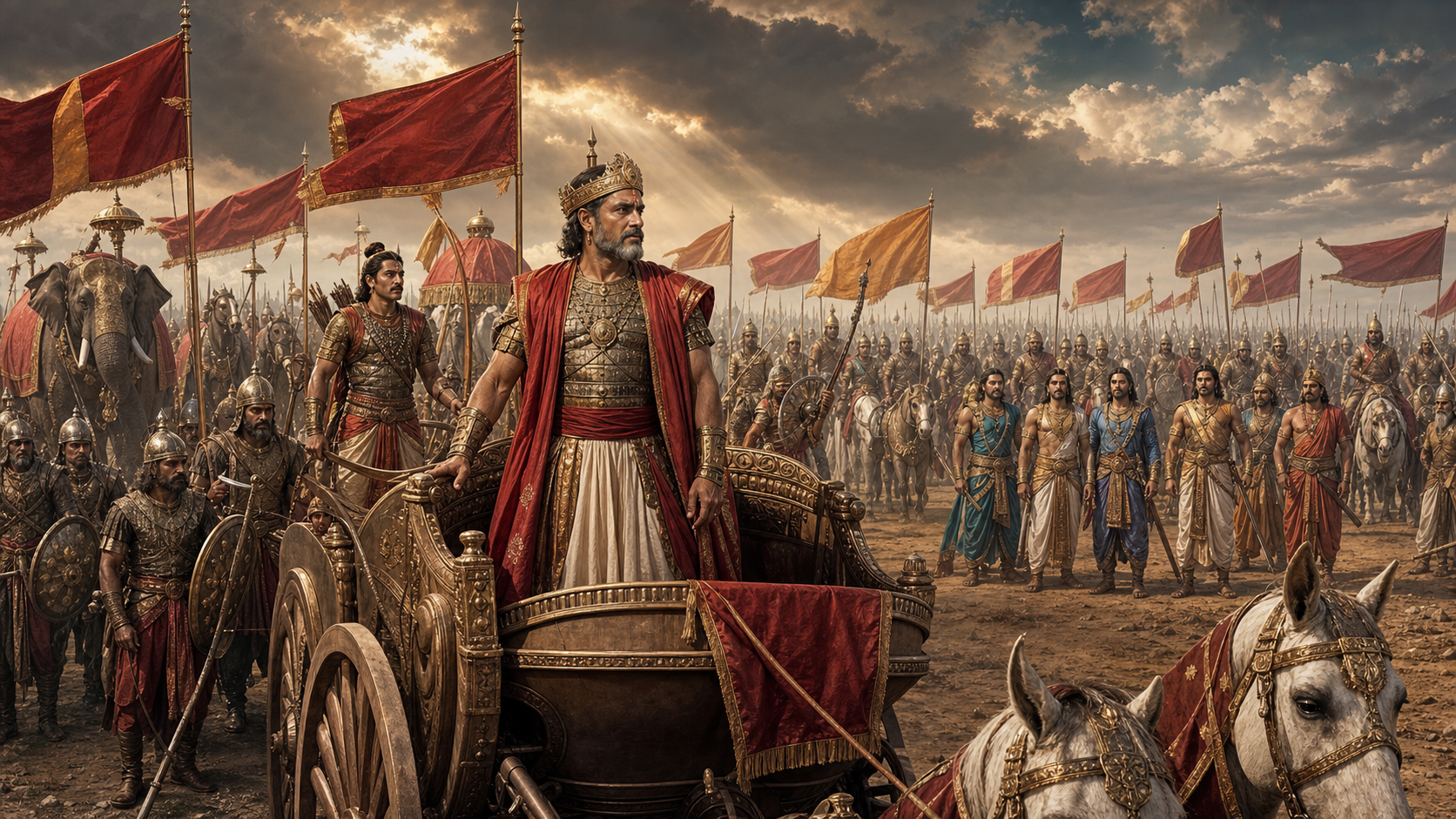
This essay re-examines the Kurukshetra War to recover Vrishasena’s overlooked valor alongside Abhimanyu’s celebrated martyrdom. It explains how narrative framing and cultural pedagogy can elevate certain episodes and obscure others in the Mahabharata. Readers gain a clearer view of kshatra-dharma by recognizing courage across both Kaurava and Pandava camps. The piece outlines Vrishasena’s disciplined role…
-
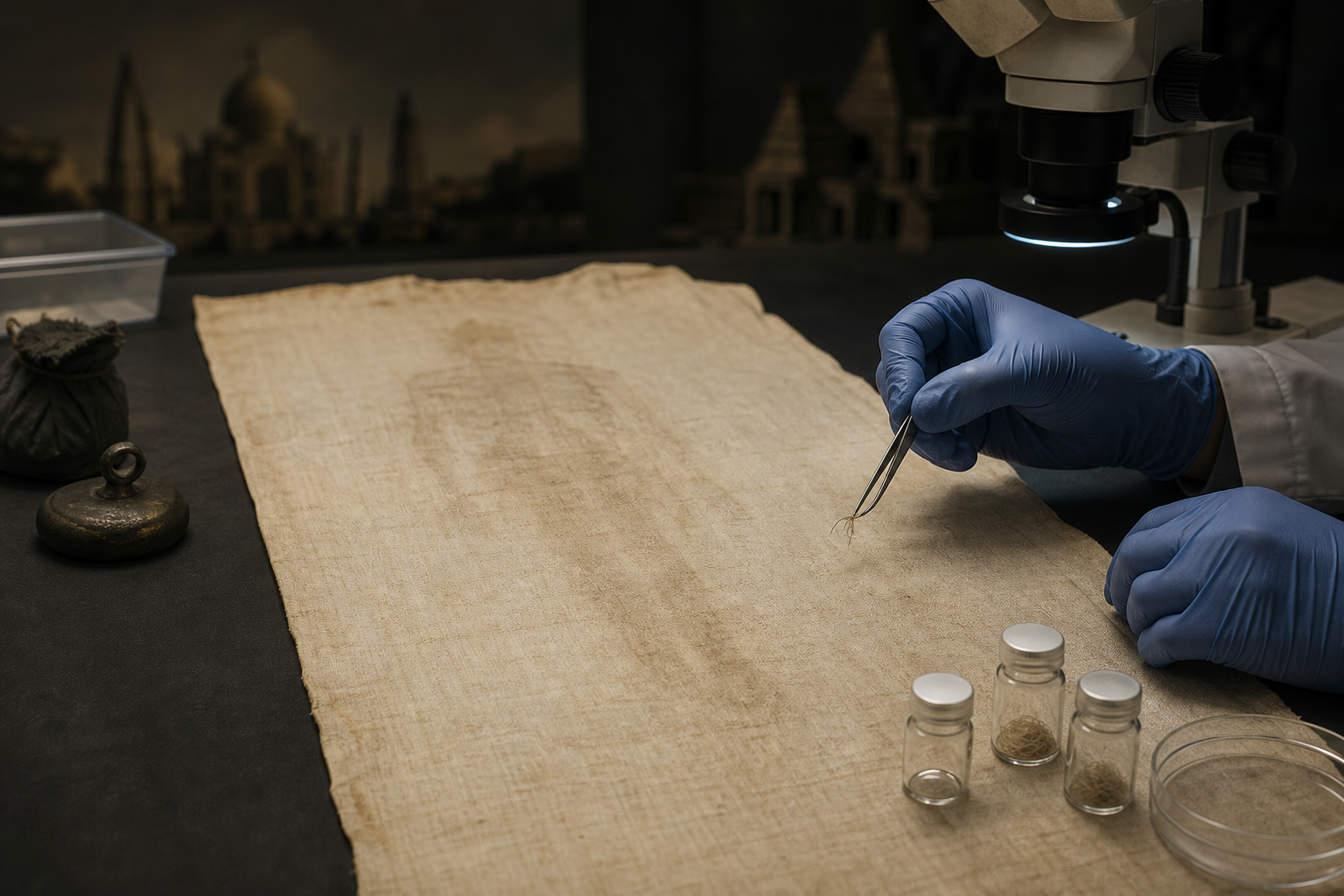
California Highway 54’s Mastodon Mystery: Evidence That Could Reframe Early North American Humans

In 1992–1993, monitoring of State Highway 54 construction in San Diego County revealed mastodon remains that some interpret as evidence of early human activity. Subsequent analyses linked the Cerutti Mastodon site to a late Pleistocene age, igniting robust scholarly debate. Critics point to natural breakage or construction damage, underscoring the need for multiple, independent lines…
-
Guru Gobind Singh’s Enduring Legacy: Sacrifice, Justice, and Dharmic Unity Across Faiths

Guru Gobind Singh’s legacy exemplifies an unwavering commitment to justice, seva, and the protection of religious freedom that resonates across Hinduism, Sikhism, Buddhism, and Jainism. Rooted in formative events at Anandpur Sahib and the martyrdom of Guru Tegh Bahadur, his vision culminated in the Khalsa Panth at Baisakhi 1699—an institution dedicated to equality and the…
-
Arundai Sivachariar & Marai Jnanasambandar: Timeless 13th‑Century Shaiva Devotion in Tamil Nadu

Arundai Sivachariar, a 13th century devotee from Tamil Nadu, is remembered for steady Shaiva bhakti expressed through regular temple worship and disciplined learning. Mentioned alongside Marai Jnanasambandar, the pairing evokes Tamil spiritual heritage where devotion and knowledge reinforce one another. The narrative highlights how simple, consistent practices—lighting a lamp, reciting a mantra, visiting a shrine—sustain…
-
Why Colonial Regimes Feared Indigenous Literacy—and How Dharmic Traditions Resisted

Indigenous literacy has long empowered communities to preserve memory, assert rights, and maintain cultural continuity—capacities that colonial regimes often perceived as threats. In South Asia under British Colonial Rule, vernacular education and scripts strengthened social cohesion across dharmic traditions, connecting Hinduism, Buddhism, Jainism, and Sikhism. Policies privileging English-medium instruction and standardized curricula frequently displaced local…
-
Mahanubhav Sampradaya: 13th-Century Origins, Key Differences, and Transformative Teachings

This introduction to the Mahanubhav Sampradaya situates the tradition in 13th-century Maharashtra and the wider Bhakti movement, highlighting Shri Chakradhar Swami’s role and the veneration of five gurus. Readers gain a clear overview of its important teachings—Bhakti, ethical discipline, simplicity, and inclusivity—and how these shape daily practice. The article clarifies key differences from other Bhakti…
-
Unraveling Jayadeva Goswami: A Shaka-Era Luminary, Birthplace Debates, and Devotional Legacy

Sri Jayadeva Goswami, a luminary of the Bhakti tradition, is situated by scholars in the 11th–12th centuries of the Shaka era, a transformative period for Indian devotional culture. His birthplace remains debated—Kendubilva in Birbhum (Bengal) holds the majority view, while Odisha and South India preserve alternative traditions. Rather than a contradiction, these claims reveal the…
-
Chittorgarh’s Silent Fort: A Warrior’s Pilgrimage, Kshatra Dharma, and Enduring Memory

Chittorgarh Fort emerges as a solemn Tirtha-Kshetra where memory, duty, and Kshatra Dharma converge. Framed as a pilgrimage rather than a tour, the narrative follows Padmasimha’s disciplined leadership, his refusal of the throne, and his guidance to Vikramasimha amid the silent ruins of a UNESCO World Heritage Site. The Rampol gate, the Vijaya Stambha, and…
-
Chiplun’s Vindhyavasini Temple: A Timeless Pilgrimage of Shakti, History, and Harmony

Set in the Ravatle area of Chiplun, the Vindhyavasini Temple stands as a living sanctuary of Shakti and a vital thread in Maharashtra’s cultural heritage. Its history is best understood through unbroken devotional practice—daily aarti, seasonal festivals, and family pilgrimages that sustain community memory. Pilgrims frequently describe a serene, transformative atmosphere within the sanctum, underscoring…
-
After Two Decades, OUP Apologises for Unverified Shivaji Maharaj Content, Promises Corrections

Oxford University Press has apologised for unverified content about Chhatrapati Shivaji Maharaj in a two-decade-old publication and committed to correcting future editions. This acknowledgment reinforces historical accuracy and signals a constructive path forward in responsible publishing. For students, educators, and the wider public, it restores confidence in evidence-based narratives of Indian history and Hindu History.…
-
Somnath Swabhiman Parv: A Millennium of Resilience, Memory, and Dharmic Unity (1026–2026)

Somnath Swabhiman Parv marks 1026–2026 as a millennium of remembrance centered on resilience, ethical stewardship, and dharmic unity. The Somnath Temple’s history—often recalled as a “Trial by Fire”—shows how communities repeatedly rebuilt sacred space with dignity and care. Modern reconstruction under Sardar Patel and K.M. Munshi reaffirmed a national commitment to heritage preservation. Recent reflections,…
-
Annanmar Swamy of Kongu Nadu: Living Legacy and Valor of Ponnar–Shankar in Tamil History

Rooted in the Cauvery basin of Kongu Nadu, the legend of Annanmar Swamy—Ponnar and Shankar—preserves a 500-year-old tradition of valor and dharma in Tamil history. This concise account explains their veneration across village shrines, the cultural memory that sustains their story, and the film “PONNAR SHANKAR” that introduced the legend to wider audiences. Readers gain…
-
Gulsatrān in Sikh Shastar Vidya: The Archer’s Thumb Ring Shaping Courage and Unity

Gulsatrān (Archer’s Thumb Ring) holds a vital place in Sikh Shastar Vidya, where technique and ethics meet. This overview explains how the ring’s protection of the thumb enables a consistent, powerful release while reinforcing discipline and restraint. It traces cross-cultural origins from Persianate zihgir to Mughal-era craftsmanship and Panjab’s martial context. Readers gain practical insights…
-
Calcutta to Bhagalpur: Valentia’s Journey Reveals Empire’s Privilege, Policy, and Paradox

Marquess Wellesley’s 1803 itinerary for Viscount Valentia reveals how rank and Company machinery fused to enable elite travel across the Bengal Presidency. From Chitpore Ghat to Bhagalpur, the journey exposes the infrastructures of empire—palanquins, cantonments, escorts—and the social circuits that sustained privilege. Stops at Palashi, Berhampore, Murshidabad, and Jangipur become lenses on military power, administrative…
-
From Near Annihilation to Empire: The Sikh Rise through Khalsa, Misls, and Ranjit Singh

This article traces how the Sikh Community rebuilt power after near-annihilation in the eighteenth century, culminating in a pluralist, stable state in Punjab. It explains how Khalsa discipline, Misls, and the Dal Khalsa translated spiritual ideals into practical governance. Readers gain clarity on pivotal moments from Anandpur Sahib and Banda Singh Bahadur to the Vadda…
-
Thomas Jefferson’s Paradox: Equality, Slavery, and the Moral Limits of a Revolutionary

Thomas Jefferson’s legacy embodies a profound paradox: the champion of equality who expanded a slave society. This analysis clarifies how Scottish moral-sense philosophy informed his universal claims while his racist pseudoscientific beliefs narrowed their application. Readers gain a concise, evidence-based overview of Jefferson’s thought, key quotations from Notes on the State of Virginia, and the…
-
Best of 2025: Unmissable Indian History, Dharmic Heritage, and Spiritual Insights

This best-of-2025 collection curates ten most-read essays spanning Indian history, cultural heritage, and spiritual insight. Readers encounter a Vijayanagara inscription that documents dam-building and temple ecology in the 14th century. A cultural analysis of Dhurandhar maps a shift toward a more assured Indian cinematic voice. Historical studies revisit Parāvartana, a Lampsacos engraving of Bharata Mata,…
-
Saka Chamkaur: Guru Gobind Singh’s valor, Sahibzadas’ sacrifice, and timeless dharmic unity

ਸਾਕਾ ਚਮਕੌਰ (Battle of Chamkaur) is presented with historical precision and a dharmic lens, highlighting Guru Gobind Singh’s leadership and the Sahibzadas’ sacrifice. Readers gain a clear timeline from the siege of Anandpur Sahib to the stand at Chamkaur. The narrative emphasizes dharma-yuddha—moral courage, restraint, and protection of the vulnerable—rather than glorifying conflict. Emotional resonance…
-
Unbreakable Loyalty in Chains: Sikh Brothers’ Principled Leadership during Captivity

This piece explores how Sikh brothers embodied principled leadership during wartime captivity, demonstrating the sant-sipahi (saint-soldier) ethos where courage is guided by compassion. It shows how steady routines, shared rations, simran, and fair mediation preserved dignity and morale in harsh conditions. The narrative emphasizes that loyalty, rooted in dharma and Sarbat da Bhala, is fidelity…
-
Inside Marquis Wellesley’s 1803 Calcutta Banquet: Plunder-Fueled Opulence and Power

In January 1803, Viscount Valentia entered the newly built Government House in Calcutta and witnessed a meticulously staged display of colonial authority under Marquis Wellesley. The palace itself—announced as a seat of rule rather than a mere residence—projected power through architecture, ritual, and spoils of conquest, including a musnud drawn from Tipu Sultan’s throne. Elaborate…