-
Beyond the ‘Muslim Era’ Myth: India’s Dharmic Resistance and Civilizational Resilience

This article challenges the simplistic label of a singular ‘Muslim era’ in India and presents a more rigorous, dharmic-centered account of medieval and early modern history. It highlights how Indian polities—Hindu, Jain, Buddhist, and later Sikh—checked, accommodated, and ultimately reshaped external and transregional powers over centuries. Readers gain a clearer timeline of key resistances, from…
-
Debunking Siyar-ul-Mutakhkherin: Exposing False Allegations and Reclaiming Shared History

Siyar-ul-Mutakhkherin is frequently quoted to justify sweeping, divisive claims about the late Mughal era. This analysis explains how to read the chronicle critically by situating its authorship, context, and transmission through colonial translations. It shows why triangulating the text with Persian, Marathi, Sikh, and early British records corrects exaggerations and misunderstandings. The piece highlights shared…
-
Reclaiming Indian Historiography: Hindu Civilizational Memory, Foreign Rule, and Dharmic Unity

This essay reassesses Indian historiography through evidence-based analysis and the lived memory of Bharatavarsha. It explains why popular Hindu remembrance did not typically view certain medieval sultanates as indigenous while carefully separating critique of historical regimes from respect for present-day communities. It situates debates like Aryan Migration -vs- Out of India within an open, scholarly…
-
Timeless Foundations of Dharma: Gautama’s Dharmasutra on Law, Ethics, and Daily Life
Gautama’s Dharmasutra is among the earliest and most influential Hindu scriptures on law, ethics, and social order, dated to roughly 600–400 BCE. It systematically codifies duties, rites, legal procedures, and penances, shaping the foundations of the Hindu legal system. Its ethical core—non-violence, truthfulness, generosity, and self-restraint—resonates across Buddhism, Jainism, and Sikhism, reinforcing unity among dharmic…
-
Halayudha’s Genius: The 10th-century Sanskrit lexicographer who shaped Indian letters

Halayudha, the 10th-century Sanskrit scholar and lexicographer, is best known for the Abhidhanaratnamala (Halayudhakosha), a metrical dictionary that shaped classical Indian literature. Composed for memorization and precision, it preserves semantic fields vital to poets, teachers, and students. The work’s linguistic and historical value helps modern readers interpret layered meanings across texts central to Hinduism, Buddhism,…
-
Rani Chennamma Punyatithi 2026: Honor a Trailblazing Queen and Safeguard Her Legacy

Rani Chennamma Punyatithi 2026 (Kittur Chennamma Smrutidin) will be observed on 21 February, honoring one of the earliest leaders of the Indian freedom struggle. The remembrance highlights her 1824 resistance to the British East India Company and her enduring legacy in Hindu History. Readers gain the exact date, historical context, and the site’s location at…
-
Maharana Pratap Smrutidin 2026 (Jan 29): Date, Significance, and Inspiring Ways to Honor His Legacy

Maharana Pratap Smrutidin 2026 is observed on January 29, aligning with Magh Shukla Ekadashi in the Hindi calendar. The day honors Maharana Pratap—Pratap Singh I—whose life exemplified courage, principled governance, and unwavering commitment to dharma. Families and communities often mark the occasion with readings, lamp-lighting, and intergenerational storytelling. The observance fosters unity across Hindu, Buddhist,…
-
How the ‘Aryan Race’ Myth Persists: Colonial Pseudoscience, White Supremacy, and Dharmic Unity

A recent media segment revived a racialized reading of the ‘Aryan’ idea, prompting a careful review of what Sanskrit ārya actually means and how colonial-era narratives distorted it. This analysis explains how the British period and certain missionary discourses mapped language onto race, fueling the ‘Aryan–Dravidian’ binary. It traces how eugenics and white supremacist groups…
-
Rani Chennamma Punyatithi 2026: Honouring Kittur’s Brave Queen and Safeguarding Her Samadhi

Rani Chennamma Punyatithi 2026 (21 February) commemorates Kittur Chennamma’s enduring legacy as a 19th-century symbol of courage and justice. The day underscores shared dharmic values across Hinduism, Buddhism, Jainism, and Sikhism, strengthening unity in diversity. Her early resistance to the British East India Company in 1824 predates the 1857 War and highlights Tamil and Kannada…
-
Maharana Pratap Smrutidin 2026: Honoring an Inspiring Rajput Legacy on Magh Shukla Ekadashi, Jan 29

Maharana Pratap Smrutidin 2026 is observed on Magh Shukla Ekadashi, aligning with January 29 in the Hindu calendar. The day commemorates Maharana Pratap, the Rajput king of Mewar, and highlights virtues of courage, dharma, and ethical leadership. Communities mark the occasion through Ekadashi fasting, quiet japa, temple visits, and service-oriented initiatives. Educational talks, exhibitions, and…
-
Shaheedi Asthan of Baba Banda Singh Bahadur: A Moving Tribute to Courage and Dharma
The Shaheedi Asthan of Baba Banda Singh Bahadur offers a powerful encounter with Indian history and Sikh heritage. It commemorates a principled leader whose life exemplified dharma, courage, and service. The memorial contextualizes Mughal–Sikh interactions while honoring Indian martyrs. Visitors experience a contemplative environment shaped by shabad kirtan, ardas, and living heritage. The site models…
-
Inside Nehru’s Marxist Lens: Indo-Islamic Art, Mughal Decline, and India’s Enduring Vitality

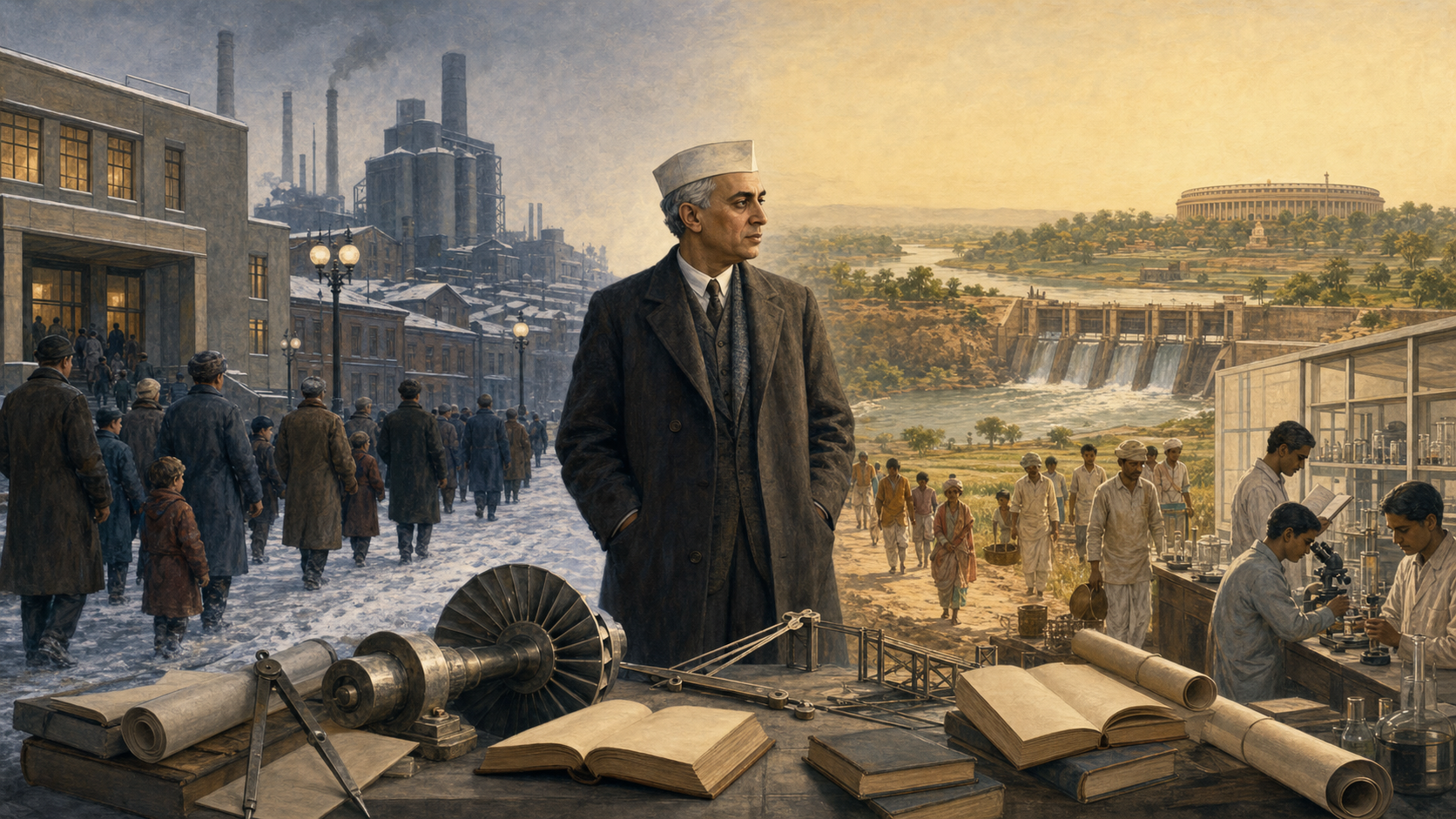
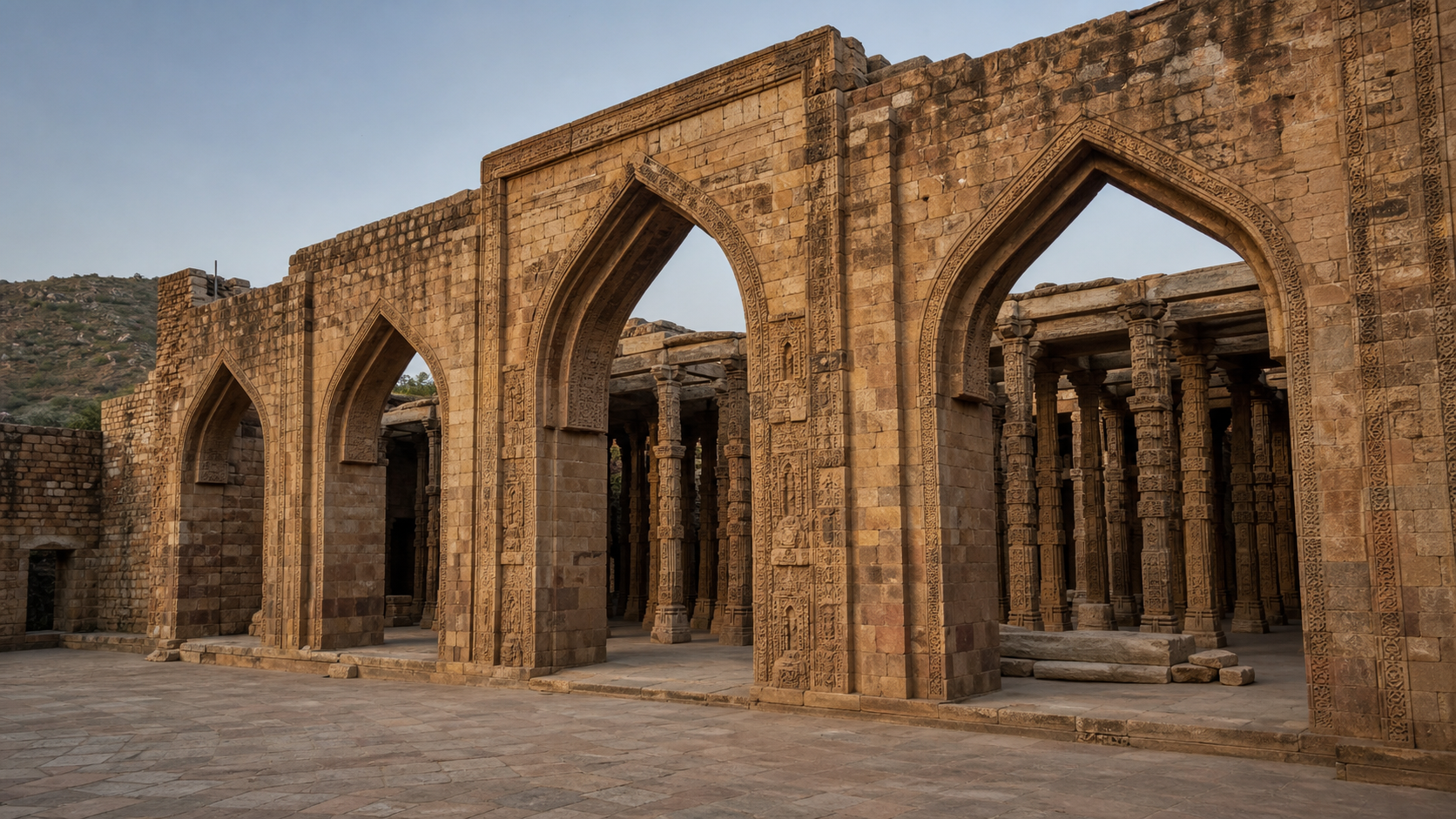
This essay reassesses Jawaharlal Nehru’s Marxist interpretation of medieval India, including his claim that “Islam shook India to its very foundations” and his use of Indo-Islamic architecture as a marker of social renewal. It explains how Nehru links aesthetic change to broader historical progress and why critics caution against drawing civilizational conclusions from art alone.…
-
Bhishma’s Birth and Vow: Ganga’s Son Devavrata and the Timeless Dharma of the Mahabharata

Bhishma’s birth as Devavrata—eighth son of King Shantanu and the goddess Ganga—introduces a life shaped by destiny, discipline, and dharma. The Mahabharata explains the early tragedies of his siblings through the Ashta Vasus’ curse, while Ganga ensures Devavrata’s unmatched education before returning him to Hastinapura. The pivotal moment arrives with his vow of brahmacharya to…
-
Somnath 1026: Mahmud of Ghazni’s ruthless raid and a lasting wound to India’s heritage

Somnath’s fall in 1026 CE under Mahmud of Ghazni is retold here with academic clarity, historical sources, and a focus on cultural heritage. The narrative traces the desert march, the sieges across Kathiawar, the breach at Somanatha, and the temple’s destruction as recorded by Al-Biruni and Firishta. It contextualizes Bhima I’s withdrawal, the resistance at…
-
Bhima vs Duryodhana: The Final Reckoning and Symbolic Resolution of the Mahabharata
The Mahabharata’s Kurukshetra War resolves in a singular, symbolic duel between Bhima and Duryodhana. Framed by gada-yuddha rules and a stark, dried lake bed, the battle concentrates the epic’s ethical tensions into one decisive moment. Bhima’s controversial blow fulfills a vow while testing the bounds of dharma and procedure. The thigh, marked by prior insult,…
-
Why Madanaratna Still Matters: Illuminating Dharmashastra, Law, and Ethics from Kashi

Madanaratna—also known as Madanaratnapradipa and Madanapradipa—stands as a notable Dharmashastra compendium that illuminates ancient Indian law, ethics, and social order. Attributed to Vishvanatha of Kashi, it reflects the intellectual vitality of Sanskrit scholarship and the disciplined transmission of legal-ethical knowledge. The text’s layered titles evoke the imagery of a jewel and a lamp, signaling guidance…
-
Blood-Stained Chapters in Sikh History: Remembering Martyrdom, Resilience, and Dharmic Unity
Sikh history contains blood-stained chapters that demand both scholarly accuracy and compassionate remembrance. This analysis examines the martyrdoms of Guru Arjan and Guru Tegh Bahadur, the formation of the Khalsa under Guru Gobind Singh, the trials of the eighteenth century, the tragedies of Partition, and the wounds of 1984. Emphasizing Religious Pluralism and Interfaith Dialogue,…
-
Malegaon 1921: Untold Lessons from the Khilafat Unrest, Gandhi’s Strategy, and Communal Healing

This historically grounded analysis re-examines the Malegaon riots of April 1921 in the context of the Khilafat Movement and British colonial rule. It explores Gandhi’s strategic alignment with Khilafat leaders, the public stature of the Ali Brothers, and claims about a fatwa attributed to Mohammad Ali and several hundred ulema. Readers gain a nuanced perspective…
-
Sri Umapathi Sivam: A Luminous Shaivite Sage from Chidambaram’s Sacred Tradition

Sri Umapathi Sivam, a 13th-century Shaivite sage of the Dikshithar lineage, embodied the living fusion of Vedic learning and devotional practice in Chidambaram’s sacred ecosystem. His mastery of the Vedic scriptures and contributions to Shaiva literature exemplify how scholarship and bhakti can mutually reinforce spiritual clarity. Rooted near the Thillai Natarajar Temple, his life highlights…