-
Mahidhara of Kashi: The 16th‑Century Vedic Exegete Who Illuminated the Shukla Yajur Veda

Mahidhara, a seminal 16th-century scholar from Kashi (Varanasi), shaped the study of the Shukla Yajur Veda through his Vedadipa, a lucid commentary on the Madhyandina Samhita. The work blends textual precision with ritual context, making complex mantras intelligible to students, practitioners, and researchers. Readers benefit from a model of Vedic exegesis that transmits tradition without…
-
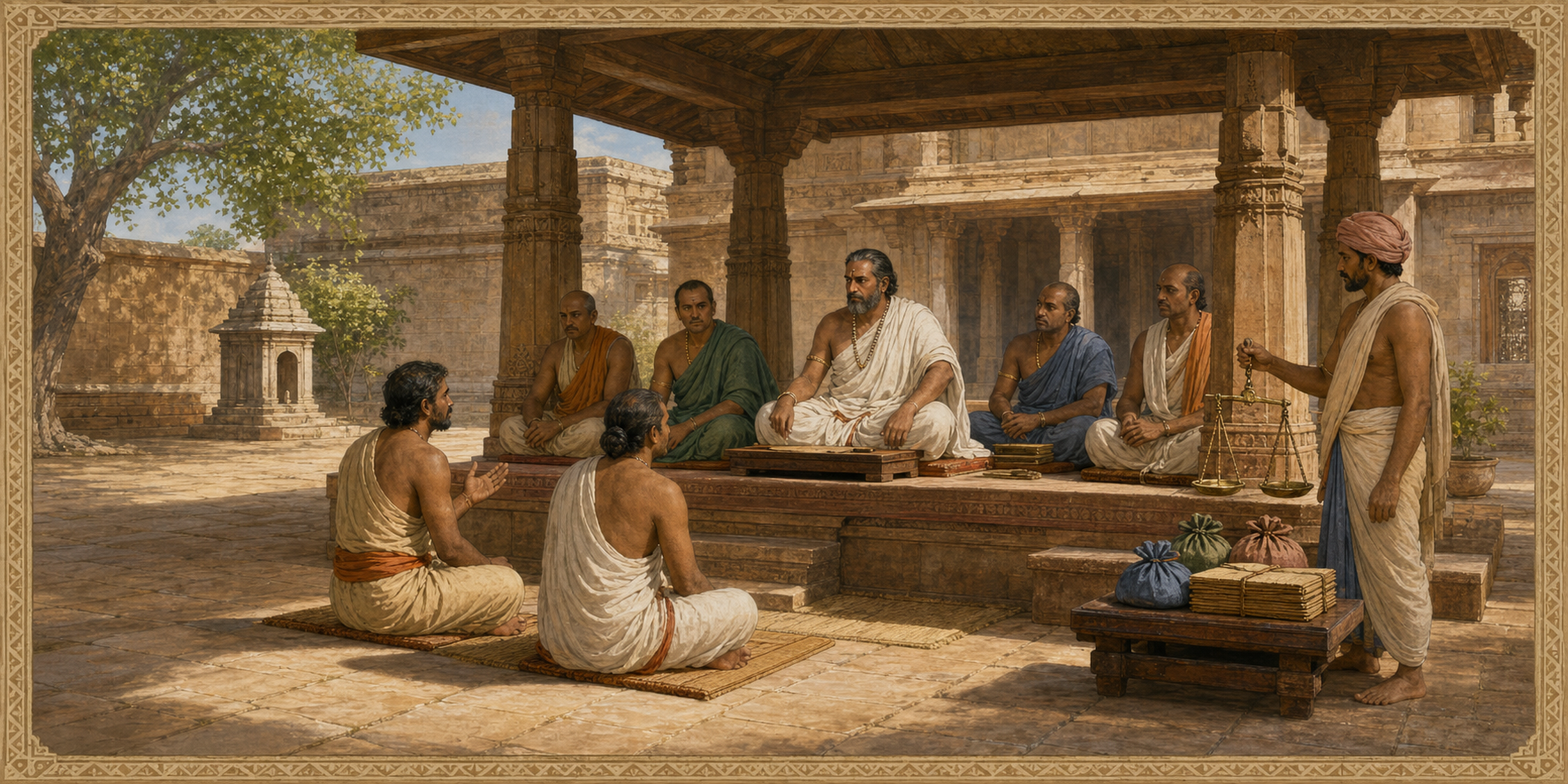
Kashyapa Samhita & Smriti: Unraveling Dharma’s Timeless Blueprint for Ethical Life

Ancient Indian literature remembers the Kashyapa Samhita and Kashyapa Smriti through later citations, signaling their importance in the Dharmasastra tradition. Though not fully extant, these works likely addressed ritual, ethics, jurisprudence, and social duty, shaping the Hindu legal system and cultural heritage. Readers gain clarity on how dharma was transmitted intertextually—through compendia and commentaries that…
-
When Dhotis Met Saris: Inclusive Devotion in 1970s ISKCON and the Power of Unity

This reflection on the early 1970s Hare Krishna Movement (ISKCON) in North America documents how inclusive devotional design fostered unity and growth. The temple room’s divided yet equal arrangement gave both genders dignified space without compromising parity. Traditional attire—dhotis and saris—symbolized Cultural Heritage while reinforcing mutual respect and focus in worship. By centering service (seva)…
-
Princess Bamba Duleep Singh: The Enigmatic Heiress Who Guarded the Sikh Empire’s Legacy

Princess Bamba Duleep Singh emerges as an enigmatic heiress who safeguarded the Sikh Empire’s legacy across the British Raj and postcolonial transitions. As the eldest daughter of Maharaja Duleep Singh and granddaughter of Maharaja Ranjit Singh, she balanced lineage with responsibility. Her stewardship—often referenced through the Princess Bamba Collection—anchors a tangible, scholarly pathway to Sikh…
-
Kiratpur Sahib: Sacred Seat of Sikh Gurus before Anandpur Sahib and a Living Dharmic Legacy

Kiratpur Sahib served as the principal seat of Sikh Gurus before the rise of Sri Anandpur Sahib, shaping a decisive era in Sikh history. Located along the Sutlej at the Shivalik foothills, it fostered spiritual authority and community resilience under Guru Hargobind and Guru Har Rai. The town’s association with Guru Harkrishan underscores its role…
-
Shakti-Putra Shivaji: Strategic Genius, Dharmic Virtue, and a Timeless Blueprint for Just Power

Chhatrapati Shivaji’s legacy emerges as a rare fusion of strategic brilliance and dharmic virtue. Positioned alongside Chandragupta Maurya and Skandagupta, he exemplifies the Shakti-putra ideal—uniting shakti (force) and yukti (strategy) to redirect history. His conduct in victory—protecting civilians, honoring women, and respecting places of worship—shows a plural, ethical framework consonant with Sanatana Dharma and shared…
-
Easter Island Reconsidered: Contact, Disease and Colonization—not ‘Ecocide’—Ended Rapa Nui

Easter Island’s decline was long framed as self-inflicted “ecocide.” Recent evidence overturns that narrative, showing a resilient Rapa Nui society undone by European contact, disease, slavery, and cultural suppression. Early visitors found communities nourished and organized despite earlier deforestation, while later expeditions observed disruption after pathogen exposure. Archaeology now challenges popular claims of civil war…
-
A Warlock at the Hare Krishna Temple: 1970 London’s Powerful Lesson in Tolerance and Unity

In early 1970, a Hare Krishna temple off Oxford Street in London received an unexpected visitor: a warlock, reflecting the city’s vibrant and sometimes conflicting spiritual currents. Placed in context, the nearby Swedenborg Society and active occult scene illustrate how closely devotional and esoteric worlds coexisted. This episode highlights how ISKCON’s early London community engaged…
-
Pastor’s Claim Sparks Interfaith Dialogue: Was ‘Jesus’ Taken from Sanatan Dharma by the British Raj?

A viral video of a pastor claiming that “Jesus belongs to Sanatana Dharma” has sparked debate on colonial history, religious identity, and cultural memory. This analysis situates the claim as rhetorical critique rather than literal history, acknowledging documented British colonial extraction while cautioning against conflating it with theological ownership. It highlights dharmic pluralism and India’s…
-
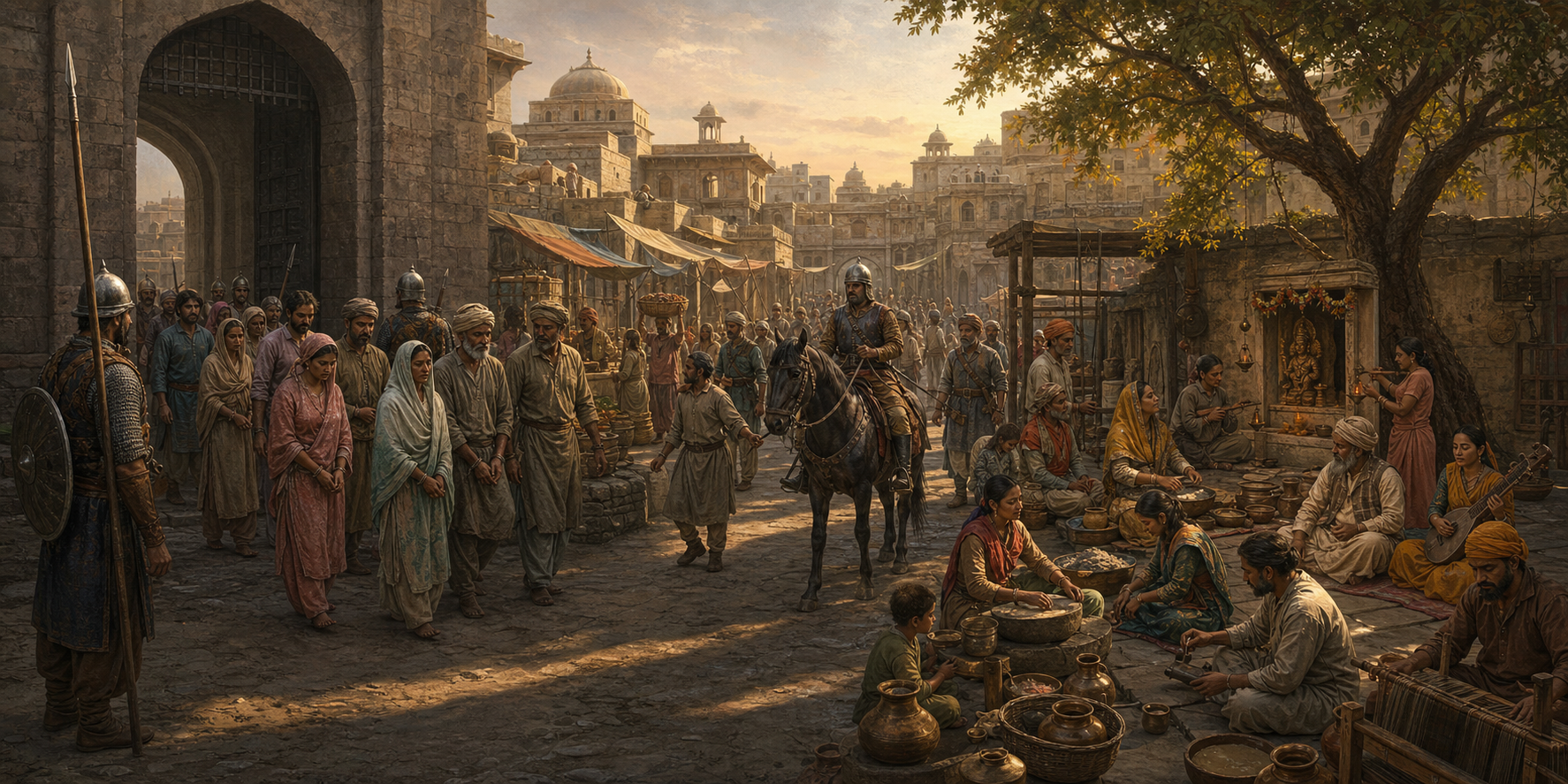
Jassa Singh Ahluwalia’s Rise: Forging Kapurthala State and Sikh Unity in 18th-Century Punjab

In an age of upheaval following the Mughal decline and Afghan incursions, Jassa Singh Ahluwalia unified Sikh forces and laid the institutional foundations for the Kapurthala State. His leadership in the Ahluwalia misl and Dal Khalsa fused defense with public welfare, echoing the Khalsa principle “Deg Tegh Fateh.” The result was safer routes, protected communities,…
-
Navakandam in Medieval Tamil Nadu: Ritual Devotion, Cultural Memory, and Dharmic Lessons Today

Navakandam, documented in Tamil Nadu between the 11th and 13th centuries, is a historical ritual of self-sacrifice associated with the goddess Kotravai and recorded in temple inscriptions and texts like Silappadhikaram, Kalingathup Bharani, and Takkayakap Bharani. Exploring this practice academically clarifies its medieval social and ritual context without endorsing it. The discussion highlights how dharmic…
-
Shivaji to Vijayanagara: An Evidence-Based Chronicle of Dharmic Resilience and Unity

This essay presents an evidence-based narrative of Indian history from the rise of Chhatrapati Shivaji through the Vijayanagara Empire, emphasizing civilizational resilience and unity across dharmic traditions. It highlights how Rajputs, Marathas, Bundelas, and Sikhs aligned in moments of shared duty, while earlier lineages from the Mauryas to the Guptas modeled statecraft and frontier defense.…
-
Lakshmi Shora of Bengal: Revered Clay Discs and the Living Heritage of Kojagari Puja

Lakshmi Shora (Lakshmi Sora) are painted clay discs central to Kojagari Lakshmi Puja and Thursday worship in Bengal, preserving an intimate form of household devotion. Crafted by traditional potters and adorned with lotus, owl, and grain motifs, each shora embodies layered symbolism—earthy humility, cyclical abundance, and alert wisdom. The ritual centers the home with alpona,…
-
Unveiling Cheruvugattu’s Sacred Legacy: Sthalapuranam of Jadala Ramalingeswara Temple

Sri Parvathi Jadala Ramalingeswara Swamy Devasthanam at Cheruvugattu stands as an ancient hill shrine whose sthalapuranam binds sacred geography with enduring ethical themes. Tradition attributes the installation of Lord Ramalingeswara Swamy to Lord Parusharama in Trethayugam, situating the site within an early sacred timeline. A pivotal episode recounts Karthikaya’s abduction of Kamadhenu and her calf…
-
Chali Mukte: The Transformative Saga of Forty Liberated Souls and Guru Gobind Singh

Chali Mukte—“the forty liberated”—captures a pivotal moment in Sikh history linked to Guru Gobind Singh, where regret turned into responsibility and courage. Set between Anandpur Sahib and Muktsar Sahib, the episode showcases Mai Bhago’s galvanizing leadership and the Sikhs’ return to dharma. Readers gain a concise historical overview, ethical insights into accountability, and a practical…
-
Indian Female Soldiers Reclaim an Ancient Warrior Legacy: Shakti, History, and National Pride

Viral videos of Indian female soldiers at the Republic Day parade have prompted claims that women’s service is a purely modern phenomenon. A careful historical view shows continuity with India’s long tradition of women’s leadership, from Rani Durgavati and Rani Lakshmibai to Mai Bhago. The dharmic concept of Shakti—revered in Hindu goddess traditions—has inspired ethical…
-
How Colonial Rule Solidified ‘Caste’: Decoding History, Names, and Dharmic Unity

This article re-examines the widespread belief that “caste” is an ancient, rigid pillar of Hinduism by tracing how British colonial administration centralized and hardened fluid social identities. It contrasts England’s parish-register surname standardization—an administrative tool that rarely fixed social rank—with the subcontinent’s census-driven reclassification that tethered names to hierarchy. It clarifies the distinct roles of…
-
Reordering Britain’s Myth: A Powerful Satire of Colonial Classification and the Potterverse

Set in a satirical future where Bharat administers Britain, this piece examines how external classification—framed through a Potterverse House system—can reshape social realities. It traces how myths become templates for hierarchy, how census categories can reward strategic identity claims, and how well-intended policy may still rigidify fluid communities. Readers gain a clear, decolonial lens on…
-
Yuyutsu’s Moral Stand: The Kaurava Who Chose Dharma Over Dynasty in the Mahabharata

Yuyutsu’s decision to side with the Pandavas in the Mahabharata exemplifies moral courage over dynastic loyalty. Born to Dhritarashtra and a Vaishya maid, he navigated social marginality with ethical clarity. His public defection before the Kurukshetra War signals allegiance to dharma rather than bloodline. Surviving the war, he was entrusted with responsibilities in Hastinapura, affirming…
-
From Survival to Sanctity: How Bhakti Transformed Vegetarianism into Sacred Purity

The evolution of food ethics in the subcontinent moved from survival to sanctity. Early Vedic practices treated food as a ritual and ecological necessity, while later philosophies linked diet to inner purity and ahimsa. The Bhagavad Gita’s sattvic ideal helped shape vegetarianism as a practical path for clarity and devotion. During the Bhakti tradition, temple…