-
Goddess Chamunda and Her Jackals: Unmasking Cremation-Ground Power, Fearlessness, and Grace

Goddess Chamunda’s fierce iconography—cremation grounds, skull garlands, and jackals—conveys a precise spiritual message: transformation through fearlessness. The jackals signify liminality and guardianship at life’s thresholds, while the śmaśāna setting urges a direct encounter with impermanence. Read alongside Vajrayana charnel-ground practice, Jain anitya contemplation, and Sikh ideals of nirbhau, the symbolism affirms a shared dharmic insight…
-
Paris Bhakti Festival: Hare Krishna Ratha Yatra, Living Devotion and Dharmic Harmony

Set against Paris’s cosmopolitan backdrop, the Paris Bhakti Festival and Hare Krishna Ratha Yatra present bhakti yoga as a living, participatory tradition. The public procession of Lord Jagannath, accompanied by kirtan and vibrant offerings, invites residents and visitors to join in a shared experience of devotion. Rooted in Srila Prabhupada’s vision, the festival demonstrates how…
-
Tiruppavai in Hindi (तिरुप्पावै): Meaning, Practice, and Andal’s Divine Bhakti for Margazhi

Tiruppavai in Hindi (तिरुप्पावै) brings Āṇḍāḷ’s thirty Margazhi hymns into clear focus for Hindi readers, blending poetic beauty with scriptural depth. The preserved dhyānam honors गोदा as the awakener of Krishna and teacher of Vedic essence through loving surrender. Presented in an academic yet accessible style, the post explains key themes—grace, prapatti, communal vows, and…
-
Kalluru Mahalakshmi Temple, Raichur: Sacred Splendor and Living Heritage in Karnataka

Kalluru Mahalakshmi Temple in Raichur, Karnataka, is a revered site often compared to the “Kolhapur Mahalakshmi Temple.” Housing the idols of Mahalakshmi and Lord Venkateshwara, it offers a rare devotional pairing that symbolizes prosperity and divine protection. Tradition associates its founding with the Madhwa scholar Sri Lakshmikanta Acharya, lending theological depth to the temple’s living…
-
Panchamukhi Hanuman near Mantralayam: Five-Faced Grace and Guru Ragavendra’s Legacy

The Panchamukhi Hanuman Temple near Mantralayam, also called the Panchamukha Anjaneyaswamy Temple, commemorates the site where Guru Ragavendra meditated on Lord Hanuman and received a divine vision. The five-faced form of Hanuman symbolizes protection, devotion, and service—values central to the Bhakti Tradition and shared across Hinduism, Buddhism, Jainism, and Sikhism. Visitors describe the shrine as…
-
Shri Aai Mata Ji Temple, Jodhpur: A Serene Shakti Shrine and Living Heritage of Rajasthan

Shri Aai Mata ji (1472–1561), regarded as an incarnation of Ma Jagadamba, is venerated at a serene Shakti shrine in Jodhpur District, Rajasthan. The temple’s community-patronage origins highlight Rajasthan’s living heritage and the social role of sacred spaces. Devotees arrive year-round, with Mahashivaratri drawing particularly vibrant and disciplined observances. The site’s contemplative ambiance—bells, incense, and…
-
Adi Kumbeswarar Temple Kumbabhishekam in Kumbakonam: Timeless Rituals, History & Spiritual Renewal

The Adi Kumbeswarar Temple Kumbabhishekam in Kumbakonam renews the sanctity of one of Tamil Nadu’s foremost Shiva temples through a meticulous sequence of Vedic rites, consecrated waters, and ritual anointments. The temple venerates Lord Shiva as Adi Kumbeswarar and Mangalambigai Amman—revered as “MA KUMBESWARINI”—within a Dravidian architectural setting shaped by Chola and Nayak legacies. The…
-
Gurugram’s Sacred Promise: A Devotional Temple to HH Gopal Krishna Goswami Realized
A vow to HH Gopal Krishna Goswami has been honored in Gurugram with the consecration of a temple grounded in devotion and service. The city’s name—“the village of the Guru”—and the tradition of Dhritarashtra offering this land to Guru Dronacharya place the milestone within a rich Mahabharata heritage. The fulfillment exemplifies the guru-shishya tradition and…
-
Khanuja Sikh Art Gallery: Timeless Sikh Heritage and a Bridge Across Dharmic Traditions

Khanuja Sikh Art Gallery offers a rigorous yet welcoming introduction to Sikh heritage through carefully curated artworks and contextual interpretation. Led by Dr. Parvinderjit Singh Khanuja, the gallery situates Sikh aesthetics within the broader dharmic traditions, highlighting shared values without blurring distinct identities. Exhibitions emphasize thematic coherence—seva, kirtan, ethical courage—while educational programs foster cultural literacy…
-
Ramdev Pir of Rajasthan: The Compassionate King Who Defied Caste and Uplifted Communities

Ramdev Pir—also known as Baba Ramdev, Ramdevji, Ramdeo Pir, and Ramsha Pir—is remembered as a medieval Rajasthani ruler and village deity whose legacy blends social reform with inclusive devotion. Historical memory credits him with elevating standards of living and challenging caste-based discrimination, aligning moral authority with practical governance. His living worship traditions highlight seva, communal…
-
Peacock Symbolism in Hinduism: Majestic Vahana of Subrahmanya Swamy and Auspicious Grace

The peacock, vahana of Subrahmanya Swamy (Lord Muruga), symbolizes beauty, courage, and ethical clarity in Hinduism. Its iconography—often subduing a serpent—signifies victory over ego and ignorance, aligning aesthetics with spiritual discipline. Devotees regard the peacock’s dance and call as auspicious, a sentiment reflected in festivals like Skanda Shashti and Karthigai, as well as in arts…
-
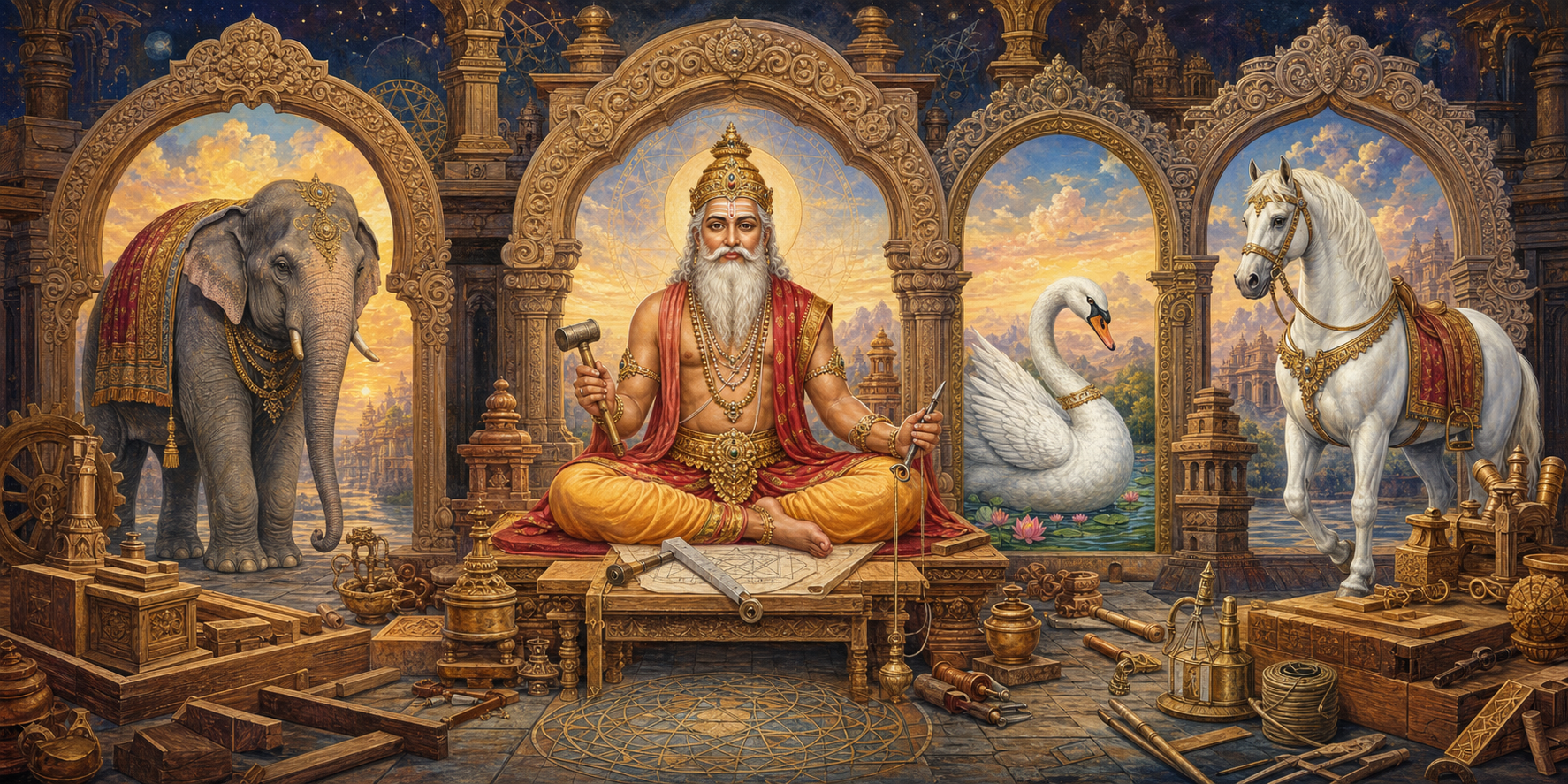
Shankhu Chakradhari Brahma: Decoding a Rare, Awe-Inspiring Icon of Sudarshana and Shankhu

This exploration decodes the rare icon of Shankhu Chakradhari Brahma, where Lord Brahma bears the Sudarshana Chakra and Shankhu. Readers gain a clear understanding of how this iconography aligns creation with preservation within Sanatana Dharma. The symbolism of the chakra (order, time, discernment) and conch (primordial sound, prāṇa) is explained in an accessible, academic style.…
-
Puruhutika Devi of Pithapuram: Timeless Significance of a Shakti Peetham in Andhra Pradesh

Puruhutika Devi Temple in Pithapuram (East Godavari, Andhra Pradesh), on the outskirts of Kakinada, is locally known as Pithapuram Puruhutika, Puruhuta, Puruhutamba, Puruhutika, or Puruhuthika. Regarded as one of the 18 Shakti Peethas, it holds a distinguished place in South India’s sacred geography and Hindu pilgrimage traditions. Visitors often note the contemplative ambience, with mantras…
-
Historic Homecoming: ISKCON London Reacquires 7 Bury Place, Shrine of Radha Londonisvara

ISKCON London has reacquired 7 Bury Place, the historic site where Srila Prabhupada inaugurated the city’s first Radha Krishna Temple in 1969. The building is where Srila Prabhupada installed Sri Sri Radha Londonisvara and performed abhiseka, making it a landmark of Gaudiya Vaishnava history. Its return strengthens community ties, preserves spiritual heritage, and invites deeper…
-
Skanda Purana to Present Day: Sambhal Harihar Mandir’s Layered Legacy and Shared Reverence

This article examines Sambhal Harihar Mandir through Puranic references and historical accounts, focusing on Skanda Purana and related discussions tied to Bhagwat Purana and Matsya Purana. It foregrounds the need for careful, evidence-based identification of places mentioned in scriptures, acknowledging multivalent toponyms and regional traditions. The 16th-century construction of Sambhal Jaama Masjid is presented with…
-
Thousand Pillar Temple, Hanamkonda: Kakatiya-era Rudreshwara Trikutalaya and Living Heritage

The Thousand Pillar Temple in Hanamkonda (Rudreshwara Swamy Temple) is a Kakatiya-era Trikutalaya dedicated to Shiva, Vishnu, and Surya. Its renowned field of carved pillars and refined ornamentation embody the technical mastery and aesthetic poise of medieval Telangana. Visitors frequently note a contemplative atmosphere shaped by light, stone, and ritual continuity. The triadic sanctum plan…
-
Ayodhya’s Dharma Dhwaj Raised by PM Modi: A Historic Milestone After 500 Years

Prime Minister Narendra Modi hoisted the saffron Dharma Dhwaj atop the Ayodhya Ram Mandir, marking a milestone often described as a 500-year wait fulfilled. The event underscores India’s living cultural heritage and the enduring values of dharma. The flag’s symbolism—courage, renunciation, and service—resonates across Hinduism, Buddhism, Jainism, and Sikhism. For many families, the moment evoked…