-
Viral RSS–Interfaith Marriage Claim: What the Law, Data, and History Reveal—and How to Heal

A viral video alleging that “RSS helped 1,000,000 Hindu girls marry into Muslim families” has sparked intense debate. This analysis separates claim from evidence, explaining how to evaluate sensational numbers through source verification, base-rate comparisons, and transparent definitions. Readers gain a clear summary of India’s legal framework, including the Special Marriage Act and Supreme Court…
-
Supreme Court declines ‘Brahmophobia’ plea: legal clarity on hate speech, caste, and fraternity

The Supreme Court of India declined to entertain a petition seeking formal recognition of “Brahmophobia” as a distinct, punishable form of caste-based hate speech, allowing withdrawal and emphasizing fraternity. This outcome aligns with established jurisprudence: existing penal provisions already address hateful incitement without creating community-specific offences, and any new speech category would be a legislative…
-
Rajasthan VHP’s 24/7 Helpline: A Critical Look at Safety, Legal Rights, and Harmony

Reports from Jaipur on March 20, 2026, indicate that Rajasthan’s VHP has announced a 24/7 helpline to receive complaints framed as “love jihad” and “land jihad.” This analysis examines how any such community helpline can add value if it adheres strictly to Indian law, due process, and nondiscrimination. It outlines best-practice design principles: bias-aware intake…
-
Agra on Alert: Suspected Bovine Remains Spark Protests as Police Fortify Security, Appeals for Calm

Agra entered a period of heightened alert in March 2026 after suspected bovine remains were discovered, prompting protests and increased police deployment. This analysis explains what is known, what requires forensic confirmation, and why waiting for laboratory results is crucial. It outlines how species identification works—histology, DNA barcoding, and immunoassays—and why chain of custody and…
-
Varanasi Ganga Row: Viral Iftar Boat Video—What Law and Science Say, and a Roadmap for Harmony

A viral video from Varanasi allegedly shows an Iftar gathering on a boat discarding leftover food into the Ganga, prompting arrests and a police investigation. This evidence-based analysis clarifies the ecological impact of food waste on rivers (BOD, DO, eutrophication) and the added risks from plastic packaging and litter. It explains the relevant legal framework—IPC…
-
Akola calls for humane, law-led action on illegal cattle transport during Ramzan to uphold harmony

Community organisations in Akola have urged the administration to intensify lawful, humane action against illegal cattle transport and cow slaughter during Ramzan, submitting a memorandum to the Deputy Collector (Revenue). The analysis clarifies the governing legal framework, including the Maharashtra Animal Preservation (Amendment) Act, 2015, the Prevention of Cruelty to Animals Act, 1960, and the…
-
Dakshina Kannada Yatra Mela: Minor Allegedly Abducted; Police Probe, Call for Harmony

A 17-year-old Muslim boy was allegedly abducted and assaulted while visiting a yatra mela with Hindu friends in Dakshina Kannada, prompting an FIR and a police probe. This analysis outlines what is known so far, explains the relevant provisions of the Indian Penal Code and CrPC, and details child-protection and trauma-informed protocols. It situates the…
-
Maharashtra’s Freedom of Religion Bill 2026: Safeguards, Constitutional Tests, and Harmony

On 18 March 2026, the Maharashtra Legislative Assembly passed the Freedom of Religion Bill 2026, presented as “Not Against Any Religion.” Congress has called it unconstitutional, while Shiv Sena (UBT) extended support, prompting a rare cross-aisle debate. The Bill sits within a constitutional framework that protects freedom of conscience (Article 25) yet permits states to…
-
India rebuts USCIRF’s ‘selective’ claims, urges decisive action on Hindu temple attacks in U.S.

India’s Ministry of External Affairs has rejected the latest USCIRF report as “distorted and selective,” while urging U.S. authorities to prioritize decisive action against vandalism and intimidation targeting Hindu temples. The analysis clarifies what USCIRF is, how it differs from the State Department’s IRF report, and why methodological transparency matters. It outlines the legal tools…
-
Viral Satire Unpacks India’s Middle East War Stance: Humor, Nuance, and Realpolitik

A viral satirical reel by Berojgar Bachelors has struck a chord because it compresses India’s complex Middle East posture into humor that feels both relatable and accurate. Behind the laughs is a coherent policy: condemn terrorism unequivocally, protect civilians through humanitarian corridors and ceasefires, and sustain economic stability via energy security, diaspora welfare, and maritime…
-
10,000 Unite in Solapur: A Peaceful Dharma Pledge for Dharmic Unity and Civic Renewal

Over 10,000 participants convened in Solapur for the Hindu Rashtra-Jagruti Sabha to pledge protection of Dharma through peaceful, lawful, and service-led action. The gathering’s core message aligns with constitutional freedoms of expression and religion while emphasizing non-violence and civic responsibility. Its ethical vocabulary resonates across dharmic traditions—Hinduism, Buddhism, Jainism, and Sikhism—creating common ground without erasing…
-
Ujjain Railway Station Assault: ‘Love Jihad’ Claim, Police Detentions, and Dharmic Unity

Reports from Ujjain describe an alleged assault outside the railway station in which a Muslim student was confronted by self-identified Hindutva activists citing a ‘Love Jihad’ angle, with police reportedly detaining four students for inquiry. The analysis clarifies that ‘Love Jihad’ is not a legal category in India and that investigations must rely on codified…
-
Pune’s Bopdeo Ghat Iftar Row: FIR Filed; Law, Land Disputes, and Paths to Harmony

On March 15, 2026, an altercation near Bopdeo Ghat in Pune reportedly unfolded at a Ramzan Iftar amid an ongoing land dispute, leading to an FIR and police investigation. This analysis explains how FIRs work under CrPC Section 154, outlines likely IPC provisions in such situations, and clarifies citizen rights and police duties from registration…
-
Safeguard Manchar’s Pandava-era barav: heritage at risk amid disputed dargah, Waqf claim

A historic barav (stepwell) in Manchar, Pune district, faces a sensitive dispute involving a recently built dargah and a reported Waqf claim. This analysis explains how to navigate the issue lawfully, drawing on India’s heritage statutes, the Waqf Act, and local development controls to protect culture and maintain harmony. It outlines evidence-based steps—site documentation, revenue…
-
Mahila Shaurya Prashikshan Shibir: Empowering Mumbai Region Women with Legal, Safe Self‑Defence

Held across Vile Parle, Nerul, and Thane on International Women’s Day, Mahila Shaurya Prashikshan Shibir equipped women with a layered self-defence framework centered on awareness, de-escalation, and last-resort physical skills. The camps emphasized lawful action under the Indian Penal Code (Sections 96–106), clear communication with emergency services (112), and ethical, proportionate responses. Training integrated trauma-informed…
-
Ghaziabad Bust Shatters ‘Ghazwa‑e‑Hind’ Plot: Six Arrested, Jaish‑e‑Mohammed Angle Probed

Ghaziabad Police detained six individuals on 13 March 2026 in a pre‑emptive operation against an alleged terror module accused of propagating Jaish‑e‑Mohammed ideology and invoking the “Ghazwa‑e‑Hind” narrative. The case illustrates how encrypted platforms, grievance‑based messaging, and micro‑cell tactics can converge to threaten public safety in the National Capital Region. It outlines India’s legal toolkit—UAPA,…
-
Char Dham 2026: BKTC Safeguards Sanctum, Reassures Access for All at 47 Uttarakhand Temples

BKTC has clarified that, ahead of Char Dham Yatra 2026, non-Hindu visitors are restricted only from the sanctum sanctorum at 47 Uttarakhand temples, while remaining fully welcome in outer halls, courtyards, and public service zones. The decision preserves Agama-defined ritual sanctity at the altar without imposing a blanket ban on temple access. Readers will find…
-
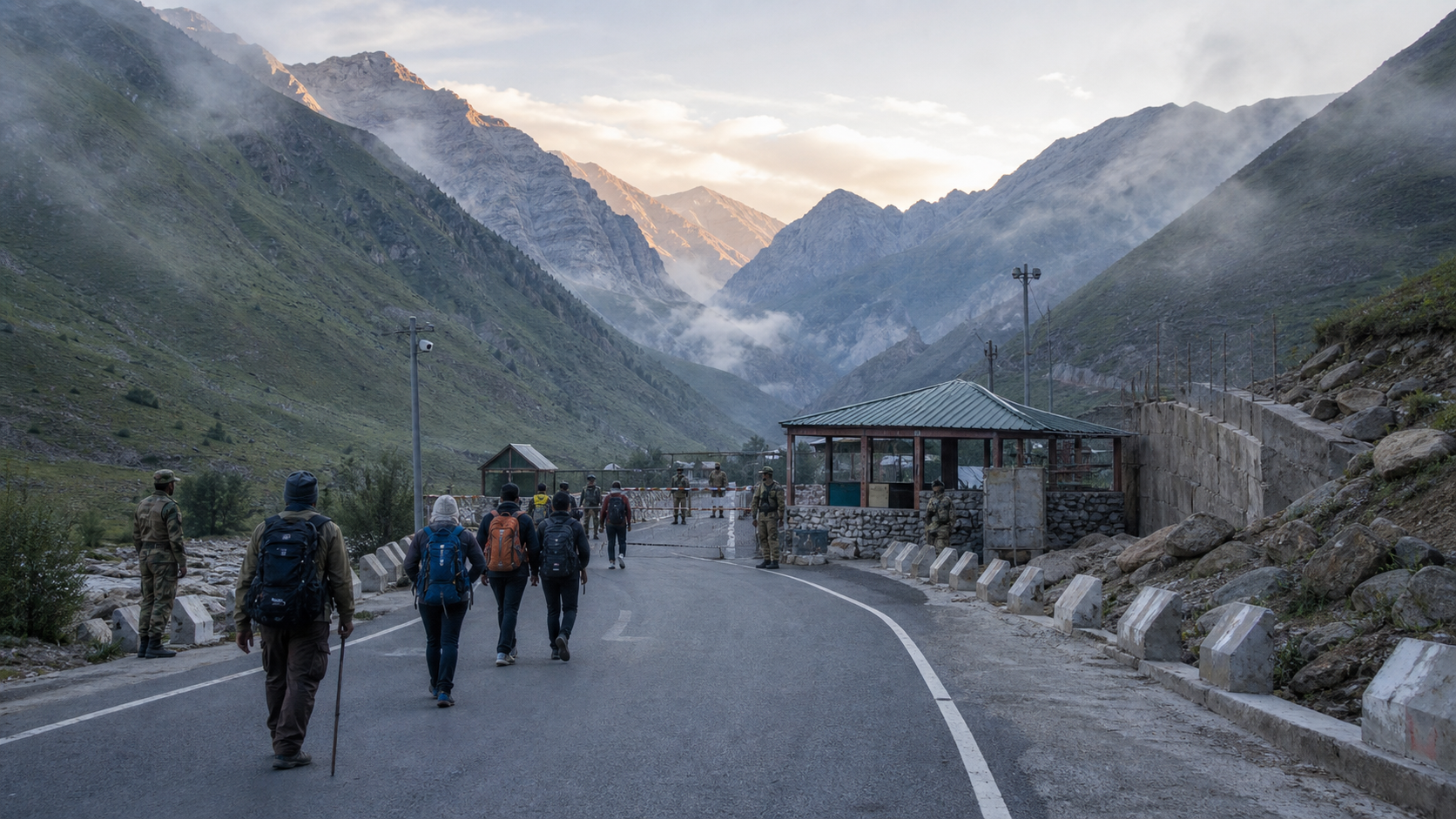
Kailash Giri Pradakshina: Definitive, Soul-Stirring Guide to Manasarovar Yatra and Parikrama

Mount Kailash, beside Lake Manasarovar and Lake Rakshastal, is revered across Hinduism, Buddhism, Jainism, and Bon, making the Kailash Manasarovar Yatra a living emblem of dharmic unity. This comprehensive guide explains the spiritual grammar of circumambulation—pradakshina, parikrama, Girivalam, and kora—while detailing the three-day, ~52 km Outer Kora from Darchen over Drolma La Pass. Practical sections…
-
Rising Jamaat influence on the India–B’desh border: security roadmap for West Bengal, Northeast

Border districts of West Bengal and the Northeast face renewed security risks as Jamaat-aligned networks and adjacent hardline actors in Bangladesh probe for influence along porous, riverine stretches. This analysis separates peaceful religious activism from violent facilitation, explaining how small, adaptive micro-networks exploit illicit finance, digital propaganda, and smuggling corridors. It identifies strategic vulnerabilities—especially in…
-
Dr Pravin Togadia in Hajipur: A Powerful Call for Hanuman Chalisa Kendras to Unite Dharmic India

In Hajipur, Bihar, on March 11, 2026, AHP chief Dr Pravin Togadia called for ‘Hanuman Chalisa Kendra in Every Village’—a simple, scalable framework to pair devotion with service. The proposed kendras center on sadhana (recitation), sangathan (local organization), and seva (civic action) to cultivate trust, resilience, and cultural continuity. Built on the Bhakti Tradition and…