
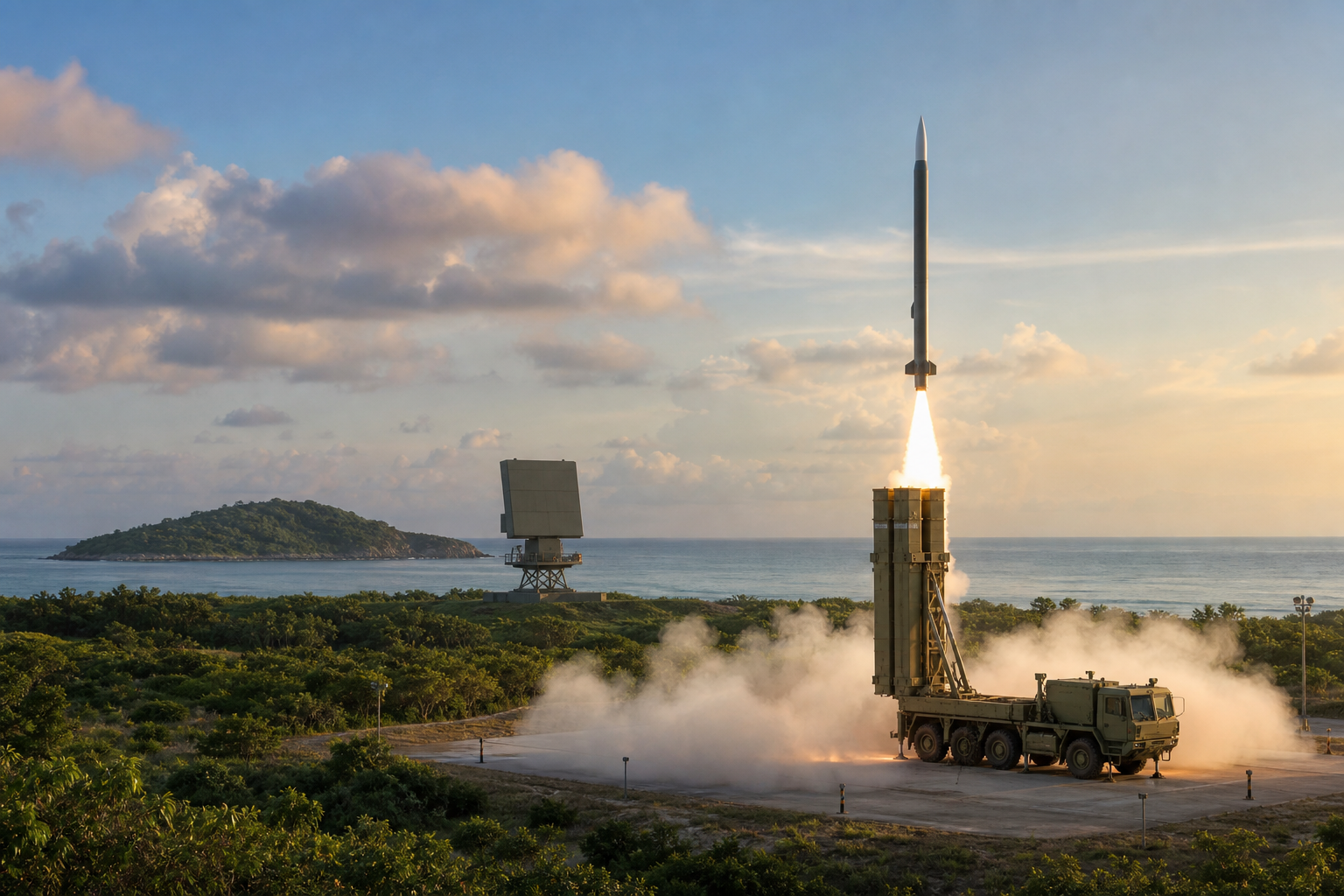
If you are trying to decide whether DRDO’s latest Kusha result means Bharat now has an operational answer to the S400, separate the engineering milestone from the finished military capability. The test is meaningful, but it is not an induction announcement.
The sound reading is narrower: Kusha has passed its first disclosed flight engagement, and several parts of the air-defence network worked together in the stated scenario. That is a consequential beginning. It is not yet evidence of performance across every threat, condition, or operational demand.
The result in one precise sentence
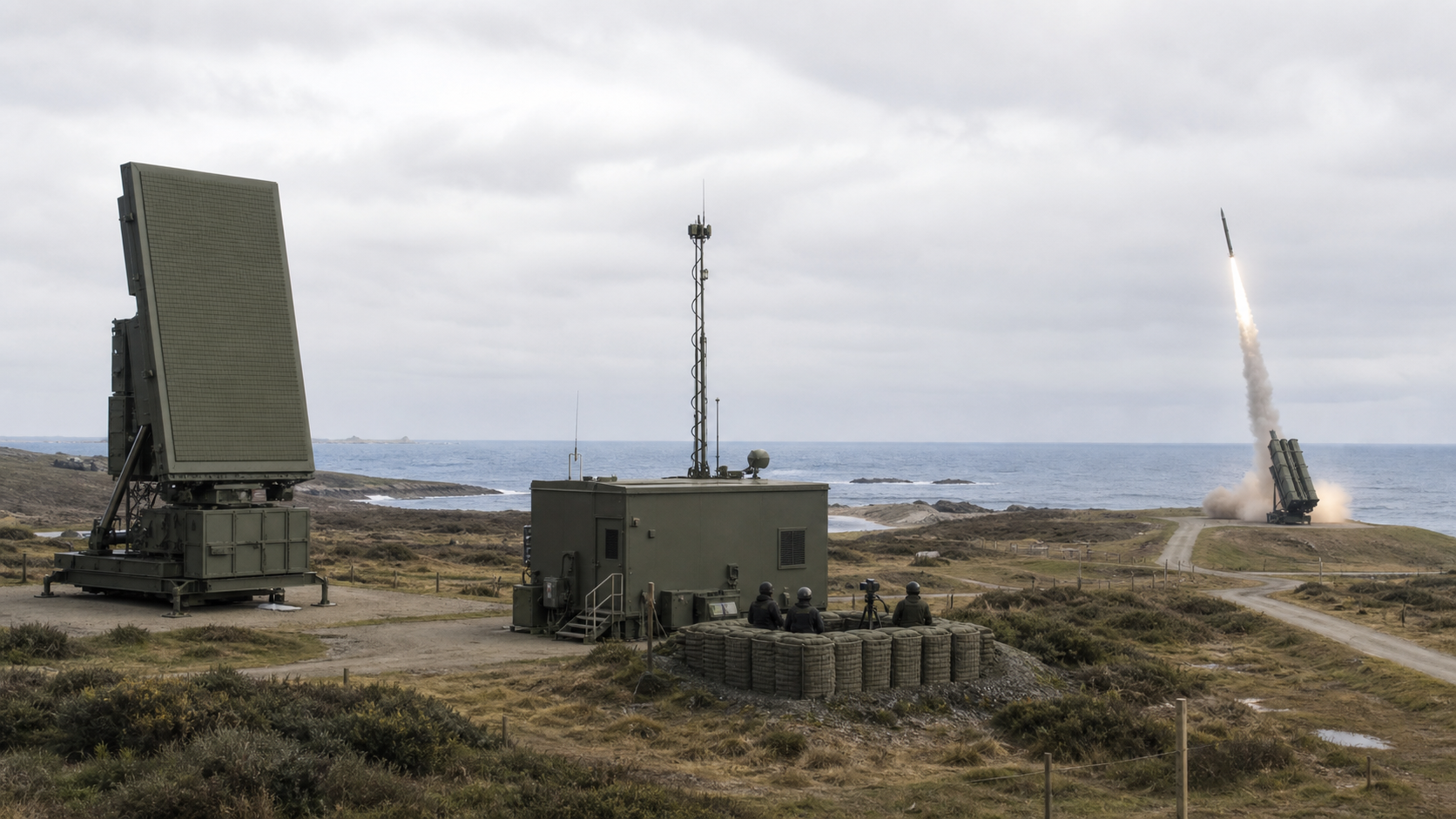
DRDO conducted the maiden flight test of the indigenous Kusha Long-Range Surface-to-Air Missile from APJ Abdul Kalam Island off Odisha, engaging an electronic target that represented a high-speed, high-altitude aerial threat. The announced interception validated the missile together with associated radars, tracking systems, and command infrastructure.
Each part of that description matters. This was a maiden flight test, so it established an initial result rather than a mature record. It used a defined threat representation, not the full range of targets Kusha is eventually intended to counter. Most importantly, the success included supporting elements rather than describing an isolated missile launch.
The defensible conclusion is therefore simple: Kusha completed an integrated engagement against the disclosed test scenario. Claims beyond that need evidence from later trials.
Why validating the network matters as much as flying the missile
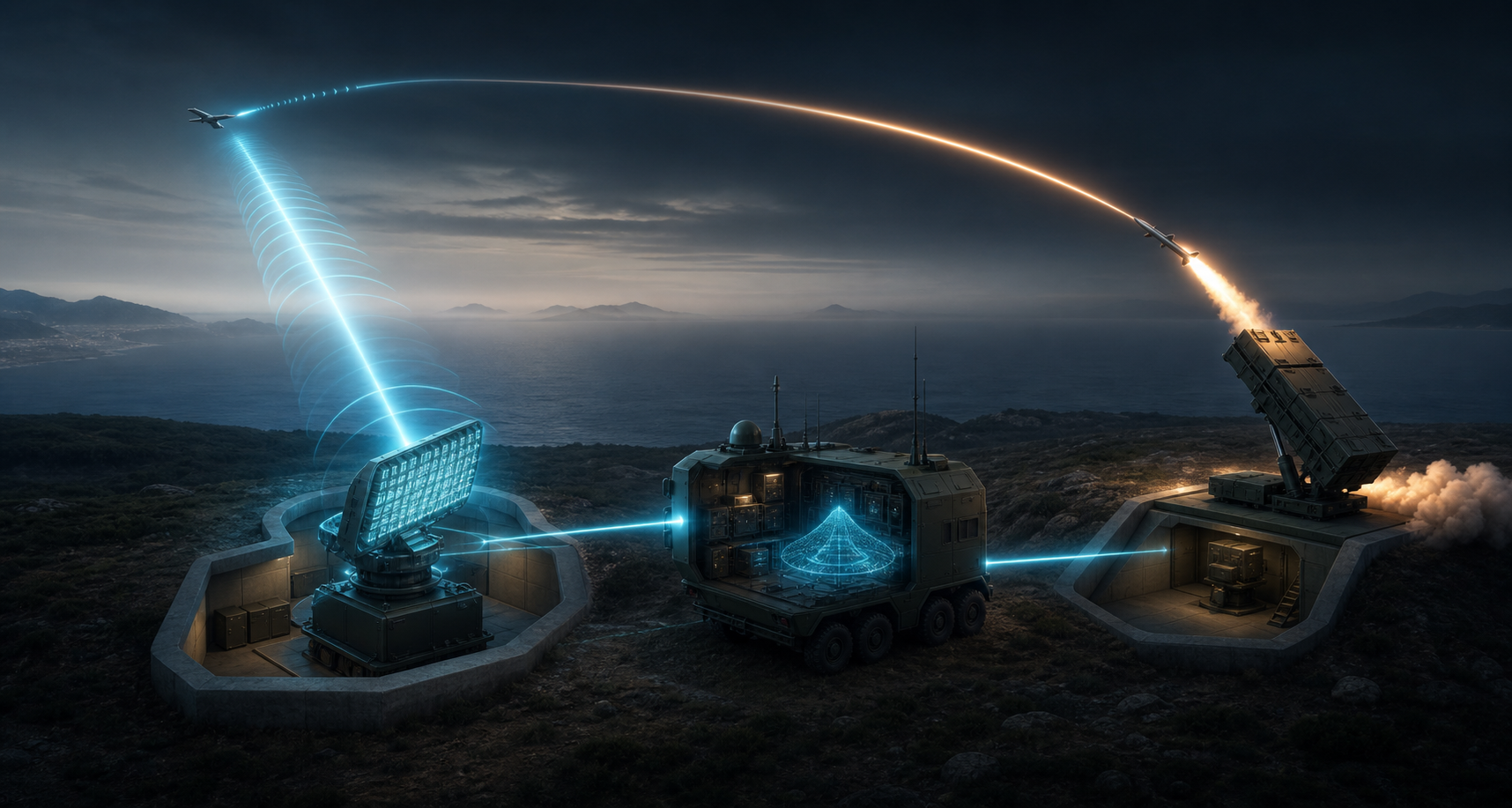
A long-range interceptor is only one component of air defence. A functioning system must detect or receive information about a threat, maintain a usable track, pass that information through command infrastructure, generate an engagement decision, and direct the interceptor toward the calculated intercept point. A failure at any handoff can make an otherwise capable missile ineffective.
That is why the disclosed validation of radars, tracking systems, and command infrastructure deserves attention. It indicates that the test exercised an engagement chain, not merely propulsion or basic flight stability. When you read future missile-test announcements, check whether they identify only the interceptor or also the sensors and command elements. The latter tells you more about progress toward a usable air-defence system.
- The missile: The interceptor had to perform the flight sequence required by the engagement.
- The associated radars: Radar participation formed part of the validated configuration.
- The tracking systems: The system had to maintain the information needed for the engagement.
- The command infrastructure: The components had to exchange and act on engagement data as a coordinated network.
The phrase electronic target also needs disciplined interpretation. It means the disclosed threat was represented electronically as a high-speed, high-altitude target. Such a setup can meaningfully exercise live tracking, command, and missile functions, but the available description does not establish the physical destruction of an aerial target. Treat it as evidence of a successful engagement against the represented profile, not as proof of every kind of intercept Kusha may eventually be asked to perform.
What the maiden test does not yet establish
The largest mistake would be to turn one successful scenario into a claim of universal capability. Project Kusha, formally the Extended Range Air Defence System, is intended to defend critical infrastructure, military bases, and airspace against a broad set of threats. Its stated design scope includes fighter aircraft, stealth platforms, unmanned aerial vehicles, cruise missiles, and high-altitude targets. This trial addressed a simulated high-speed, high-altitude threat; it did not publicly demonstrate every item in that intended set.
- Operational readiness: A maiden flight success is not evidence that the system has completed the repeated evaluation, user acceptance, production, training, maintenance, and deployment work needed for service.
- The full engagement envelope: The disclosed result provides no numerical range, altitude, reaction-time, or engagement-geometry data. Do not infer those figures from the long-range label.
- Performance against every intended target: An engagement representing a high-speed, high-altitude threat does not by itself prove effectiveness against low-flying cruise missiles, unmanned aircraft, stealth platforms, or manoeuvring fighters.
- Reliability under varied conditions: One successful event cannot show repeatability across weather, electronic interference, different approach directions, multiple targets, or sustained operations.
- Equivalence to the S400: Calling Kusha Bharat’s S400 is a convenient description of ambition and mission class. Without comparable test data, it is not a demonstrated one-for-one technical equivalence.
- A deployment date: The milestone does not, by itself, establish when operational units will receive the system.
This distinction is not an argument for dismissing the result. It is how you give the result its proper weight. Engineering programmes advance by proving bounded capabilities and then widening the conditions under which those capabilities work. The next meaningful question is not whether Kusha succeeded once, but what additional variable its next trial is designed to test.
Why Kusha still matters strategically for Bharat
Project Kusha is being developed primarily for the Indian Air Force as a homegrown long-range air-defence umbrella. Its intended objects of protection include military bases, essential infrastructure, and national airspace. That places it in a strategically important category: a defensive system meant to deny hostile aircraft and missiles freedom of action at distance.
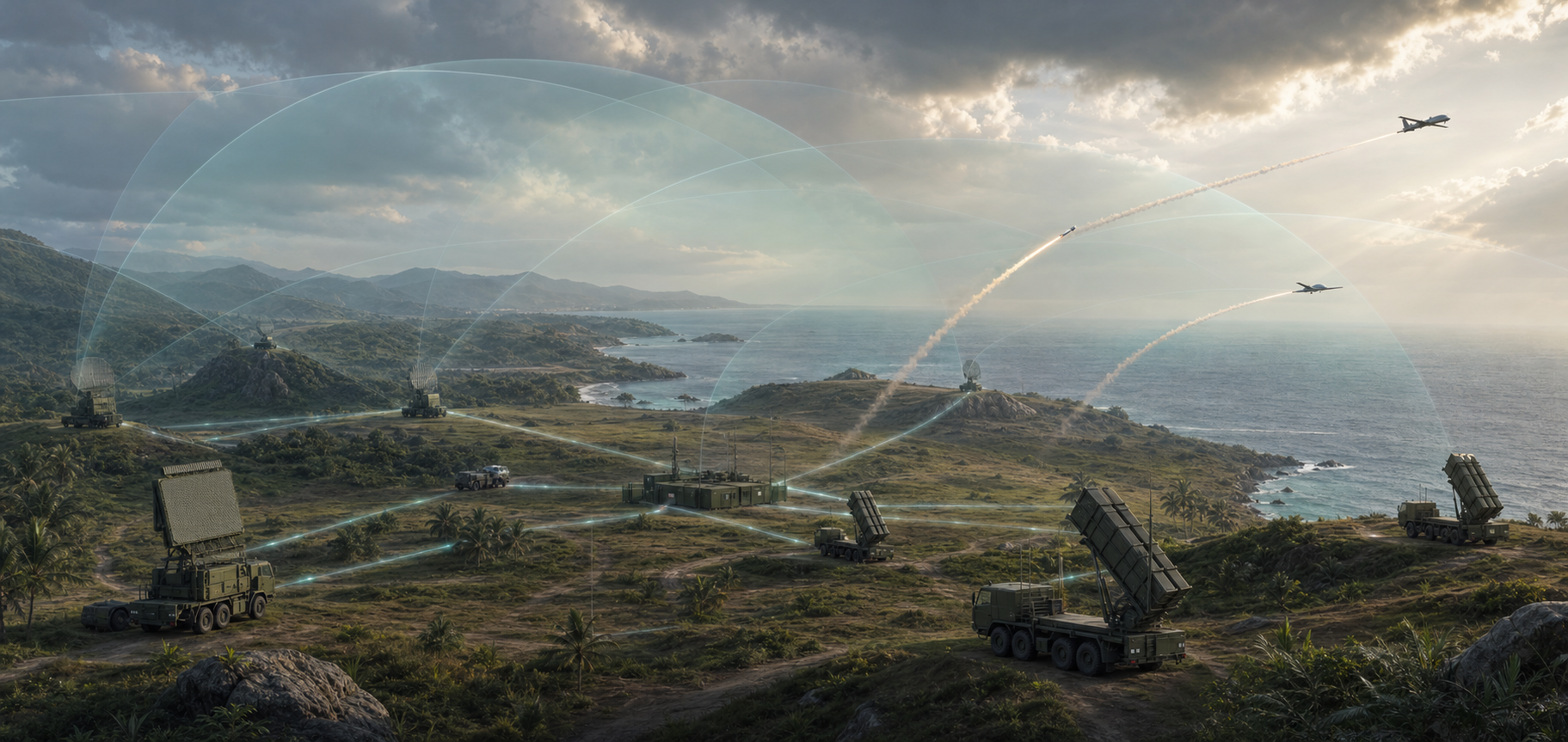
Long-range air defence does not create an impenetrable dome. Geography, radar coverage, interceptor availability, target behaviour, command speed, and the presence of shorter-range layers all influence what can actually be protected. You should therefore judge Kusha as part of a layered network rather than as a solitary missile capable of shielding every location from every direction.
Its indigenous character also carries potential value beyond the first successful flight. If the programme matures into dependable production and service support, Bharat can gain greater control over integration, upgrades, replenishment, and adaptation to its own threat environment. Those benefits depend on the less visible parts of the programme: manufacturing consistency, trained crews, maintainable launch and radar units, secure communications, and a sustainable interceptor inventory.
This is the right place for confidence without exaggeration. Bharat has demonstrated that the Kusha interceptor and named supporting elements can complete the disclosed engagement. The larger strategic promise will be earned through broader testing and successful fielding.
Key takeaways: five questions for the next Kusha update
- What kind of target was used? Distinguish an electronic representation from a physical aerial target, and note the stated speed, altitude, and flight profile.
- Which components were live? Look for explicit mention of radars, tracking, command infrastructure, launchers, and the interceptor. An integrated test says more than a missile-only flight.
- What new condition was added? A later trial becomes more informative when it expands the target type, engagement geometry, altitude regime, electronic environment, or number of simultaneous threats.
- Was performance repeated? Repeated successes under varied conditions provide stronger evidence than several announcements that merely reproduce the same scenario.
- Did the programme’s status change? Keep developmental testing, user evaluation, production approval, delivery, and operational induction separate. Movement between those stages matters more than an impressive nickname.
For now, describe Kusha as an indigenous long-range air-defence programme that has achieved a successful integrated maiden flight test. When the next result appears, measure it against the five questions above. That will let you recognise genuine progress without mistaking an early trial for a deployed shield.

References
