
-
HG Daivi Shakti Mataji illuminates Srila Prabhupada Lilamrita: Rigorous Insights and Living Bhakti

This in-depth exploration of HG Daivi Shakti Mataji || Srila Prabhupada Lilamrita || 17-05-2026 presents Srila Prabhupada-lilamrta as both an authorized biography and a living guide to bhakti-yoga. It explains the work’s sources, method, and theological framing in Gaudiya Vaishnavism, while translating those insights into practical, measurable disciplines. Readers gain a clear view of how…
-
Adhika Maasa 2026 (Adhik Jyeshta): What to Avoid, What to Embrace, and Why It Matters

Adhika Maasa 2026 (Adhik Jyeshta) runs from 17 May to 15 June and is traditionally reserved for inward-focused sadhana rather than celebratory beginnings. Marriages (Shubha Vivaha), Mundan Sanskara, Griha Pravesh, business inaugurations, and other elective samskaras are best deferred. Nitya and naimittika duties continue, and practices such as vrata, japa, parayana, and daana are especially…
-
Divine Fury, Compassionate Shelter: NakhayudhaSacred Claws of Narasimha in Hindu Iconography

Nakhayudhathe sacred claws of Narasimhaembodies a unique class of natural, non-forged weaponry in Hindu iconography, expressing spontaneous divine protection without reliance on manufactured arms. This long-form exploration clarifies the mythic logic behind Hiranyakashipu’s boon and shows how Narasimha’s claws resolve each clause through liminality. It decodes the visual grammar defined by Shilpa Shastra and Vaishnava…
-
Historic Move: West Bengal Mandates ‘Vande Mataram’ in School AssembliesUnity, Law, and Learning

West Bengal has mandated the singing of ‘Vande Mataram’ in morning assemblies across recognized schools, positioning the policy as a civic and cultural intervention. Historically rooted in the freedom movement and recognized by the 1950 Constituent Assembly as the national song, ‘Vande Mataram’ can enrich civic learning when framed as gratitude to the motherland rather…
-
ISKCON Navi Mumbai Unveils IGST 2026: Transformative Gita Scholarship Test and Immersive Retreat

ISKCON Navi Mumbai’s International Gita Scholarship Test (IGST) 2026 pairs rigorous study of the Bhagavad Gita with an immersive retreat to address academic stress, digital distraction, and the need for ethical leadership among youth. The initiative emphasizes comprehension, application, and reflection rather than rote memorization, aligning learning outcomes with established pedagogical frameworks. Daily practice recommendationsspaced…
-
Purpose of the Vedas: Why Vaishnavas Champion Bhakti over Jnana, Karma, and Yoga

This in-depth exploration clarifies the purpose of the Vedas, tracing their layered structure from ritual to contemplative wisdom and showing how Vedānta articulates their culmination. It explains why Vaishnava traditions foreground Bhakti: not as sentiment, but as an integrative discipline endorsed by the Bhagavad Gita and Śrīmad-Bhāgavatam. It maps Bhakti’s relationship to Jñāna, Karma, and…
-
Srimad Bhagavatam 1.13.50: Vidura’s call to detachment, duty, and bhakti | ISKCON Ljubljana
This analysis situates Srimad Bhagavatam 1.13.50 within Canto 1’s narrative of Vidura guiding Dhṛtarāṣṭra toward timely renunciation, clarifying how duty, detachment, and devotion align in practice. It explains why the verse is read as a constructive call to reorient life around ātma-tattva and bhakti, not as escapism, and shows how vanaprastha embodies humane, responsible transition.…
-
Warangal’s 800-Year-Old Kakatiya Shiva Temple Razed: Urgent Lessons for Heritage Protection
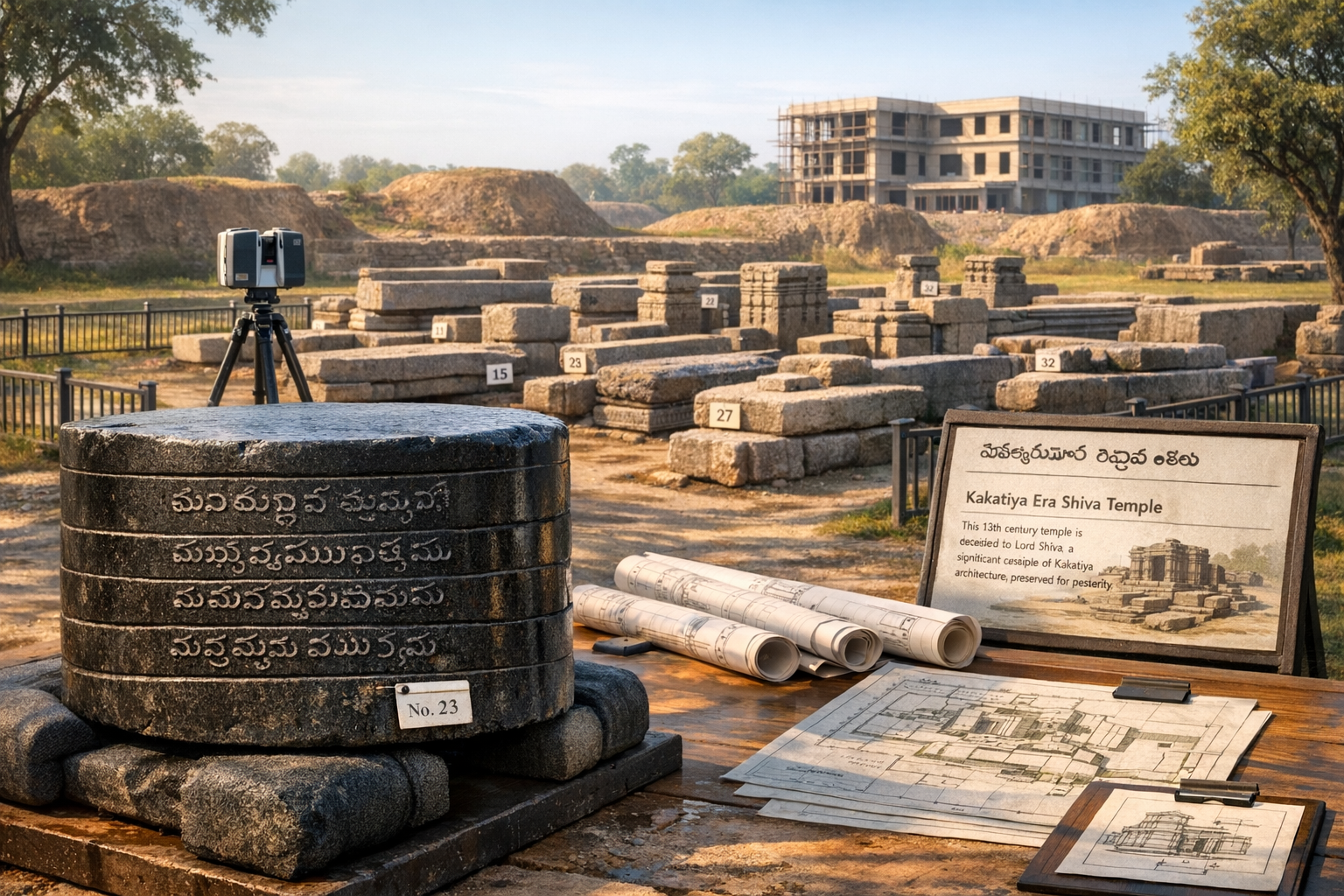
An 800-year-old Kakatiya-era Shiva temple in Ashok Nagar (Khanapur Mandal, Warangal) was demolished during a government Integrated School project, despite the presence of a rare 1231 A.D. Telugu inscription referencing Ganapatideva as “Maharaja” and “Rajadhirajulu.” Heritage experts, including Sreeramoju Haragopal and historian D. Satyanarayana, underscored that the shrine could have been conserved in situ or…
-
Decoding the Fiery Compassion: A Deep Dive into the Third Chapter of Nrisimha Tapaniya Upanishad

The third chapter of the Nrisimha Tapaniya Upanishad unifies mantra, meditation, and Vedanta into a coherent path of fierce compassion and fearless insight. This deep dive decodes the Nrisimha mantraraja, explicates the bija kṣrauṁ, and clarifies how nyasa sacralizes the body as a field of realization. Readers gain a rigorous yet accessible guide to practice…
-
Gadhinglaj Outrage: Hindu Organisations Protest Shiroli Pulachi Abuse, Video Circulation

Hindu organisations in Gadhinglaj, Maharashtra staged a peaceful protest after the alleged abuse of a Hindu girl in Shiroli Pulachi and the unlawful circulation of her video. This report explains the socio-legal dimensions of the incident, detailing applicable provisions of the IPC, the POCSO Act (where relevant), and the IT Act. It outlines victim-centric procedures…
-
May 12, 2026 Panchang: Precise Dashami–Ekadashi (9:47 AM) Shift, Auspicious Times Guide

On Tuesday, May 12, 2026, most regions observe Krishna Paksha Dashami until 9:47 AM, after which Krishna Paksha Ekadashi begins. This guide explains what a tithi is and why its start and end times vary by location. It outlines the spiritual focus of Dashami as preparation for Ekadashi, along with fasting rules, Smarta–Vaiṣṇava nuances, and…
-
Saranyū, Daughter of Tvaṣṭṛ: The Swift Vedic Goddess of Transformation and ṛta

Saranyū, the swift goddess of the Vedas, unites movement, light, and craftsmanship into a single principle: transformation governed by ṛta. Positioned as daughter of Tvaṣṭṛ and wife of the solar Vivasvat, her narrative encodes lawful speed and timely transition. The Aśvins embody her swiftness in service of healing, while the Chāyā motif distinguishes authentic presence…
-
Tapasya in Hinduism: Transformative Austerity for Self-Realization, Clarity, and Inner Power

Tapasya in Hinduism is a disciplined, life-affirming austerity that refines body, speech, and mind to foster Self-Realization and ethical clarity. Drawing on the Upanishads, Bhagavad Gita, and Yoga philosophy, it is defined as a transformative heat that burns impurities and ripens insight. The Gita’s typology (sāttvika, rājasika, tāmasika) and Patañjali’s Kriyā Yoga supply practical guardrails…
-
From Temple of Learning to Cattle-shed: How Politics Unmade Mysore’s Maharaja’s College

B.G.L. Swamy’s unforgettable scene of a donkey and two cows in Maharaja’s College is more than shock value; it crystallises a wider institutional decline at the University of Mysore. Drawing on S.L. Bhyrappa’s Bhitti and the memory-portraits of A.N. Murthy Rao, this essay traces how identity blocs, party patronage, and faculty “private durbars” displaced scholarly…
-
Honoring HG Agnideva Prabhu’s Timeless Kirtan Legacy and Devotional Service to Srila Prabhupada

HG Agnideva Prabhu, a legendary ISKCON kirtaneer, passed away, and devotees around the world responded in prayerful unityincluding a Zoom kirtan with about one hundred participants captured at 2 pm NZ time. This tribute situates his life within Gaudiya Vaishnavism’s sankirtana tradition while offering a technical view of kirtan’s modal frameworks, tala choices, instrumentation, vocal…
-
Karnataka CET Uproar: Sacred Janeu Cut Spurs Police Probe, Rights Debate, and Reforms

An alleged cutting of a Hindu student’s janeu at a Karnataka CET centre has ignited a vital debate on how exam security can coexist with constitutional protections for religious practice and student dignity. This analysis explains the sacred significance of the yajnopavita, situates the incident within Article 25 and Article 21, and applies the proportionality…
-
May 4, 2026 Panchang: Precise Tithi, Shubh Muhurat, Nakshatra, Rashi Comprehensive Guidance

May 4, 2026 predominantly falls under Krishna Paksha Tritiya, with Dwitiya concluding at 12:57 AM (IST). Using the Udaya Tithi convention, this makes the day suitable for Tritiya-aligned observances across most regions. The post explains how to select a good time (Shubh Muhurat) using Abhijit Muhurta and how to avoid Monday’s Rahu Kaal and Yamaganda…
-
Panchamrita Abhisheka Explained: The Sacred Science of Milk, Curd, Honey, Jaggery, and Ghee

Panchamrita Abhishekausing milk, curd, ghee, honey, and jaggery/sugarstands on a foundation of scriptural sanction, symbolic depth, and practical wisdom. Puranas and Agamas prescribe these edible, sattvika substances because they nourish, purify, and sweeten both the murti and the devotee’s inner state. Ayurveda further clarifies their properties: milk soothes, curd transforms, ghee illumines, honey harmonizes, and…
-
Veera Shasta of Ayyappa: Heroic Power, Sacred Symbolism, and Dharma-Yuddha Ethics

Veera Shasta, the heroic aspect of Dharma Śāstā (Ayyappa), embodies Veerya and Shaurya as an ethic of disciplined protection rather than aggression. This long-form analysis situates Veera Shasta within the Ashta Sastha framework, unpacks iconography (weapons, mounts, mudras), and reads each symbol as a practical teaching on foresight, discernment, and restraint. It links Veera Shasta…
-
Prasadam’s Transformative Grace: Gaudiya Insights on CC Madhya 14.36 for Daily Life and Unity
This in-depth exploration of prasadam situates sanctified food within Gaudiya Vaishnava theology, anchored in CC Madhya 14.36 and the example of King Prataparudra. Readers gain a clear understanding of how offering transforms nourishment into a daily practice of grace, supported by Bhagavad Gita principles and Gaudiya ritual steps. The piece outlines a practical five-step home…