
-
Chandidasa’s Sri Krishna Kirtana: A Luminous 15th-Century Bengali Masterpiece of Bhakti Rasa
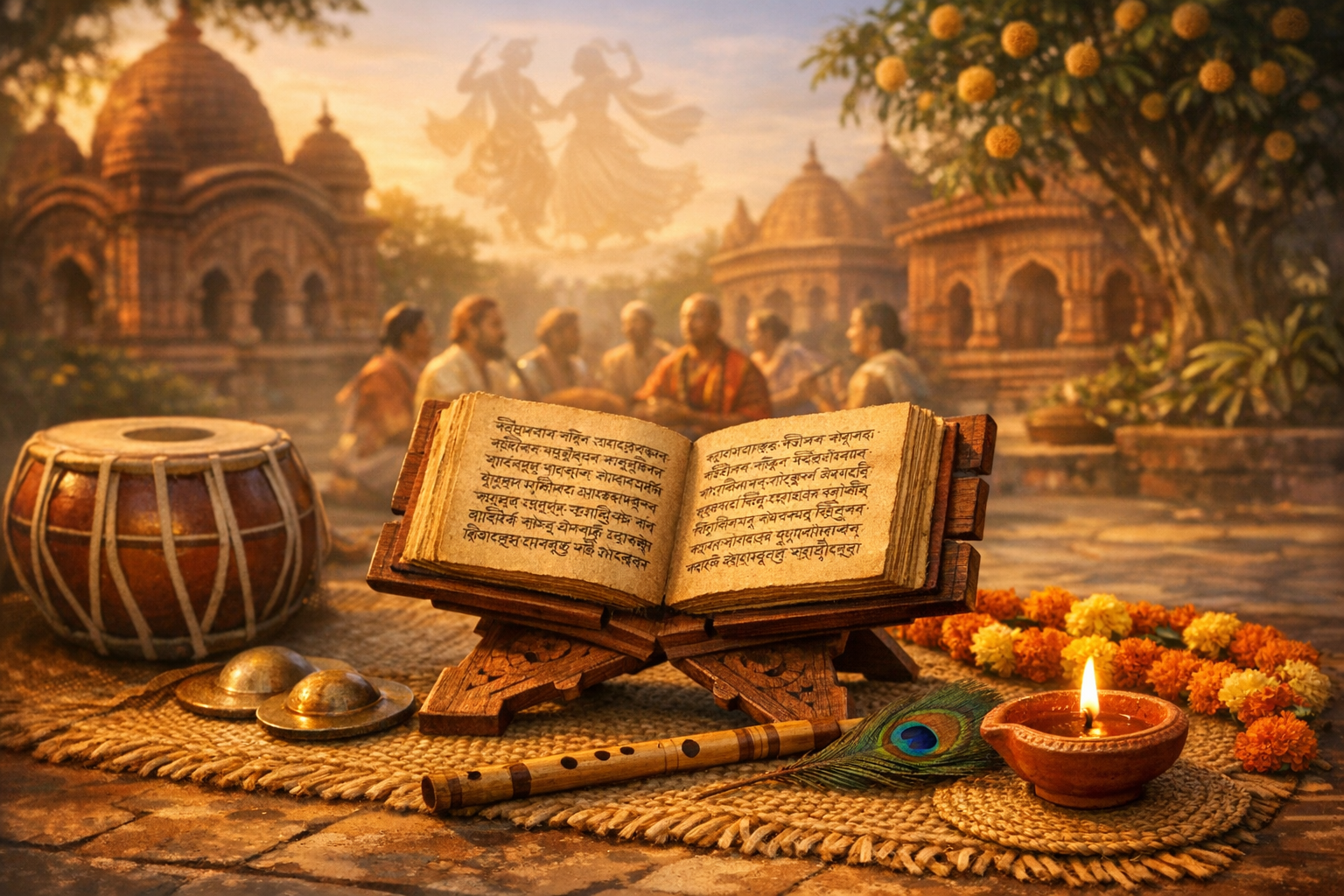
Chandidasa, a seminal 15th-century Middle Bengali poet, helped crystallize the language and performance of Krishna Bhakti through Sri Krishna Kirtana. Set within medieval India’s vibrant vernacular renaissance, the poem fuses theology and rasa aesthetics, elevating Radha-Krishna love into a disciplined pathway of devotion. Its Middle Bengali diction, prosodic simplicity, and singable refrains enabled congregational kirtan…
-
Sri Ramanavami Utsavams 2026 at Tirupati Kodandarama Temple: Sacred Rituals and Visitor Guide
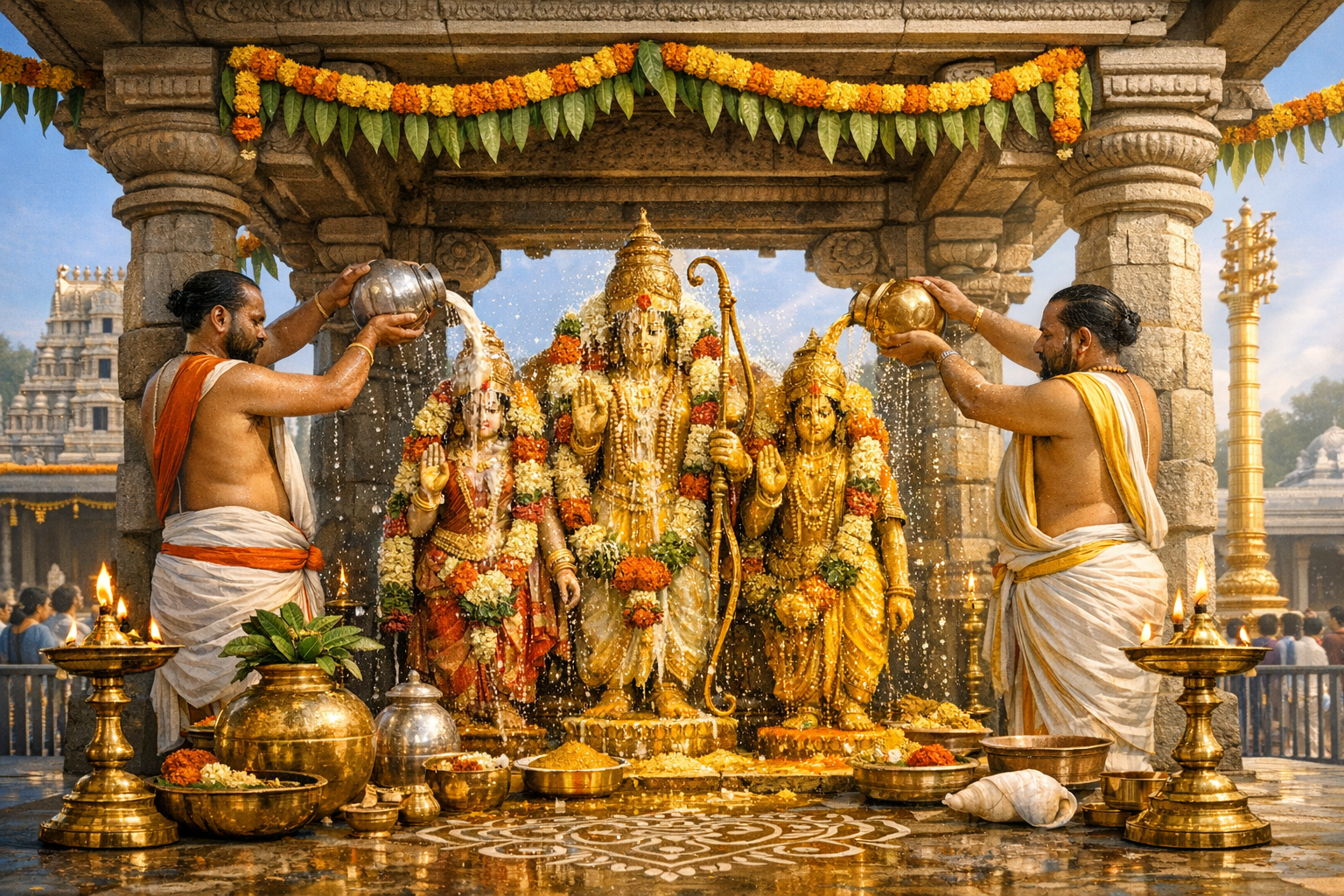
Sri Ramanavami Utsavams will be observed at Sri Kodandarama Swamy Temple, Tirupati, from March 27–29, 2026, with Sri Ramanavami falling on March 27. Abhishekam to the presiding deities will be performed in the morning, followed by Snapana Tirumanjanam from 8 AM to 9 AM. The festival commemorates Sri Rama’s birth on Chaitra Shukla Navami and…
-
Rama Navami and Kshatra Dharma: How Maryada Purushottama Inspires Duty and Grace
Rama Navami, the appearance day of Sri Ramacandra, offers a rigorous reflection on Kshatra Dharmaethical power governed by truth, fairness, and compassion. Drawing on insights articulated by His Divine Grace A.C. Bhaktivedanta Swami Prabhupada, this piece explains why a kshatriya’s readiness to meet a just challenge is inseparable from promise-keeping, generosity, and restraint. It clarifies…
-
From Adversity to Excellence: How Dharmic Wisdom Transforms Hardships into Strength

This article explains how adversity functions as a deliberate curriculum for strength and wisdom across Hinduism, Buddhism, Jainism, and Sikhism. It synthesizes dharmic teachings with contemporary research on resilience to present a unified, practical method. Readers gain a daily protocol that combines Karma Yoga, meditation, yogic breathing, ethics, and seva to build measurable resilience. Clear…
-
Ramanujacharya’s Appearance Day: Vishishtadvaita Essentials and the Sri Sampradaya’s Timeless Legacy

This in-depth reflection on Sri Ramanujacharya’s Appearance Day situates the Sri Sampradaya within the four Vaishnava lineages and explains why Vishishtadvaita remains central to Hindu Dharma. It introduces core metaphysical conceptscit, acit, aprithak-siddhi, and the śarīra–śarīrī relationwhile showing how Vedanta informs living culture through temple practice, sevā, and prapatti. Readers gain clarity on Ubhaya Vedanta’s…
-
Sampati’s Timeless Wisdom in the Ramayana: From Want to Need, Abundance Through Surrender

Sampati’s brief but decisive appearance in the Ramayana reframes scarcity and abundance through a Dharmic lens. When the vanaras, depleted and despairing, meet him at the ocean’s edge, his truthful testimony about Sita in Lanka revives their purpose and transforms the mission. The episode traces a movement from unrefined want to disciplined need, showing how…
-
Mastering the Modern Mind: Bhagavad-gita, Patanjali, and Dharmic Paths to Clarity

Delivered at Hsuan Chuang University (Hsinchu City, Taiwan) on 18 March 2026, this lecture by Dr. Kenneth Valpey (HH Krishna Kshetra Swami) offers a rigorous, practical roadmap for mastering the modern mind. It integrates the Bhagavad-gita, the Yoga Sutras of Patanjali, and allied dharmic traditions to explain manas, buddhi, citta, and the five koshas. Listeners…
-
When the Formless Takes Form: Skanda Purana on Parvati’s Awe‑Inspiring Union with Shiva
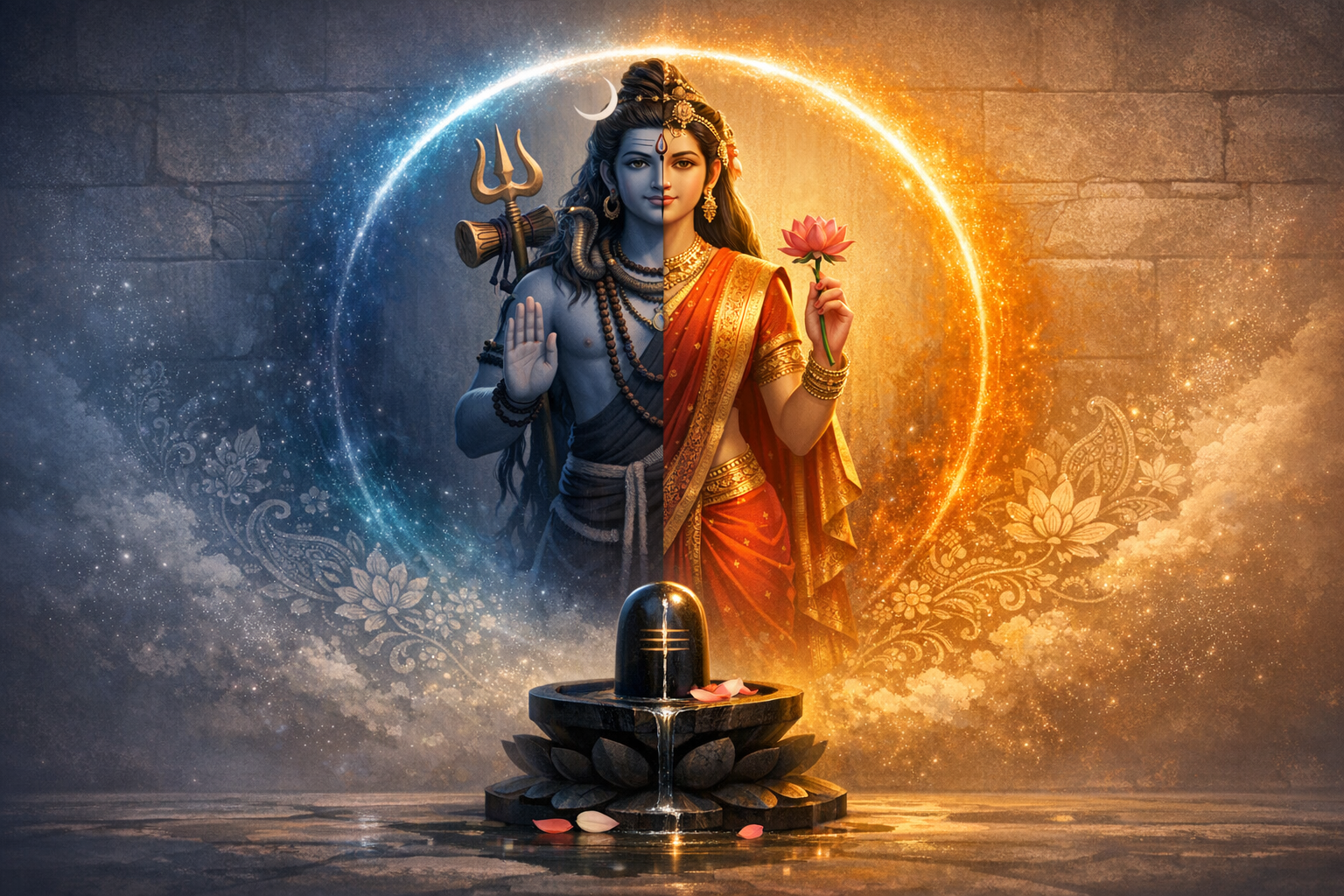
This in-depth exploration of the Skanda Purana’s teaching on Goddess Parvati and Lord Shiva presents their union as a precise account of how formless consciousness and living form are inseparably one. Readers will learn how the nirguna–saguna dialectic, familiar from the Upanishads, is rendered experiential through Shaiva iconography such as Ardhanarishvara, the Shivalinga, and Shiva…
-
Pallava Mantras in Tantra: Power of Naming, Will, and Karma (Pallav Prayogas Explained)
This in-depth exploration clarifies what a Pallava Mantra is and how Pallav Prayogas personalize a mūla-mantra by ethically inserting a name or intention. It explains the linguistic and phonetic rules that guide such insertions, along with the ritual frameśuddhi, nyāsa, dhyāna, protective sealing, and universal dedication. The discussion foregrounds dharma, ahimsa, and consent, showing why…
-
Makara Rashi 2026–2027: Rebuild, Rise, and Thrive with Capricorn Moon Transits & Remedies

This comprehensive Makara Rashi (Capricorn Moon Sign) forecast for 2026–2027 uses the sidereal zodiac and Gochar analysis from Chandra Lagna to explain how Saturn in Pisces, Jupiter’s shift from Gemini to exaltation in Cancer, and the mid-November 2026 Rahu–Ketu transition will shape work, health, relationships, and finances. Expect a post–Sade Sati consolidation phase, strong mid-year…
-
Kandaya Phalam 2026–2027: Authoritative Quarter‑Wise Nakshatra Phalam for Parabhava
Kandaya Phalam for Parabhava Nama Samvatsaram 2026–2027 provides quarter-wise nakshatra guidance in a concise three-digit format, one digit per four-month period. This academic guide explains how to identify the correct Janma Nakshatra, read the digits against a Panchanga’s legend, and map them to Chaitra–Ashadha, Shravana–Kartika, and Margashirsha–Phalguna. It shows how to integrate Kandaya Phalam with…
-
Behind the Tree or Face to Face? Unmasking Vali’s Death and Dharma Across Ramayanas

The contested question of whether Rama slew Vali from concealment or in open combat reveals a spectrum of ethical reasoning across Hindu scriptures and regional Ramayanas. By tracing Valmiki’s Kishkindha narrative alongside the Adhyatma Ramayana, Kamba Ramayanam, Ramcharitmanas, and eastern and southern vernacular retellings, the episode emerges as a sustained inquiry into rajadharma, sharanagati, and…
-
Shalivahana Jayanti 2026: Date, Saka Era Legacy, and Chaitra Vijaya Dashami Significance
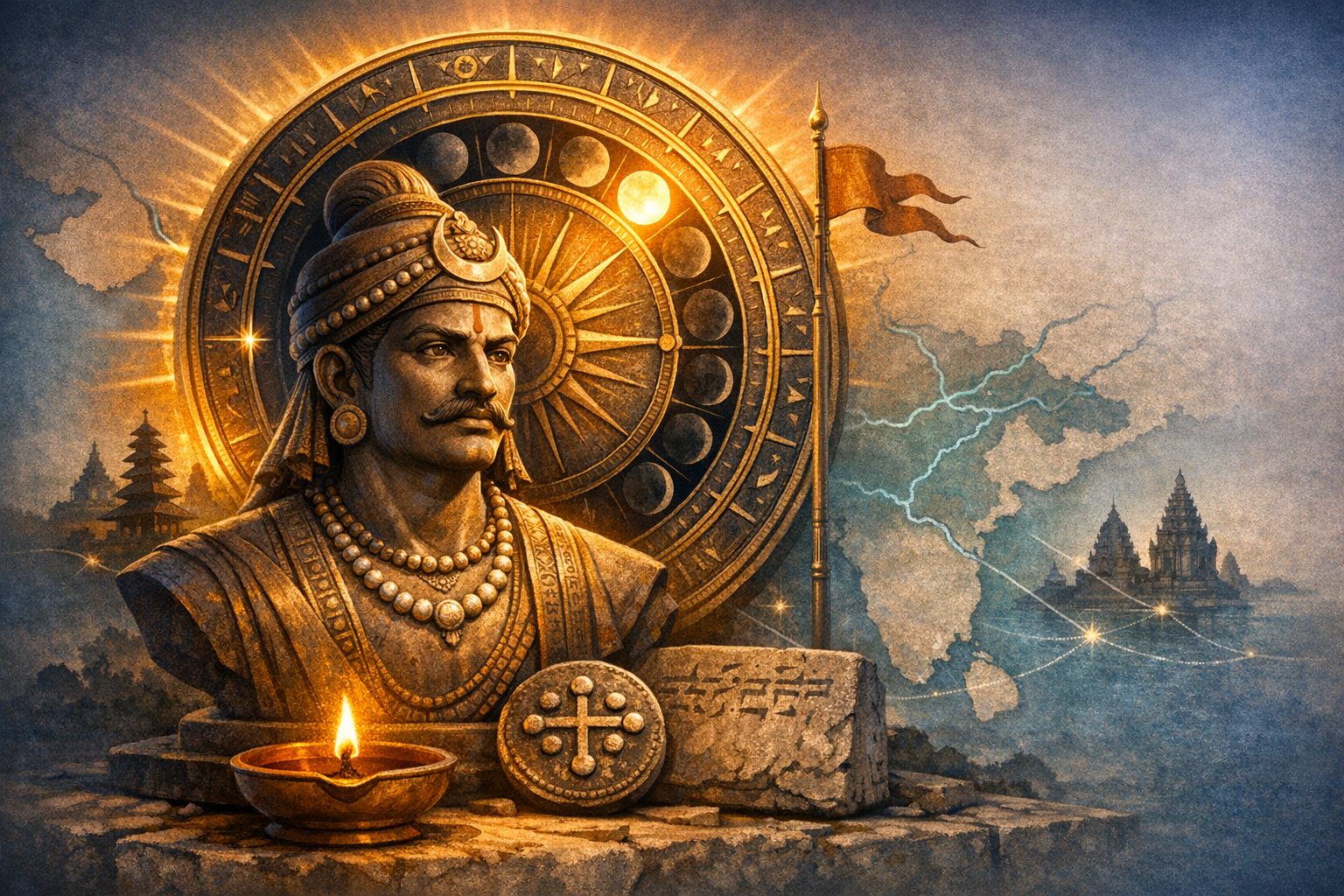
Shalivahana Jayanti 2026 falls on 28 March, observed on Chaitra Shukla Dashami (Chaitra Vijaya Dashami). The day honors King Shalivahanaidentified in later tradition with Gautamiputra Satakarniand foregrounds the Saka Samvat (78 CE), the backbone of the Indian national calendar. This era also informs Balinese, historical Javanese, and Khmer calendrical practices, underscoring a shared dharmic grammar…
-
Goat Horns in Hinduism: Fearless Strength, Agni’s Fire, and the Sacred Path of Inner Ascent
Goat horns serve as a compact teaching in Hindu symbolism, fusing Agni’s purifying fire, Kshatra-dharma’s disciplined courage, and yoga’s inner ascent. Philological nuances (ajā, chāga, meṣa, śṛṅga) and Vedic references frame the motif’s depth and legitimacy. Iconography, temple architecture, and ritual soundscapes reinforce an upward vector from density to clarity, akin to kundalinī rising along…
-
Gangaur 2026: Sacred Gauri–Shiva Vrat, Dates, Vidhi, and Rajasthan’s Grand Processions
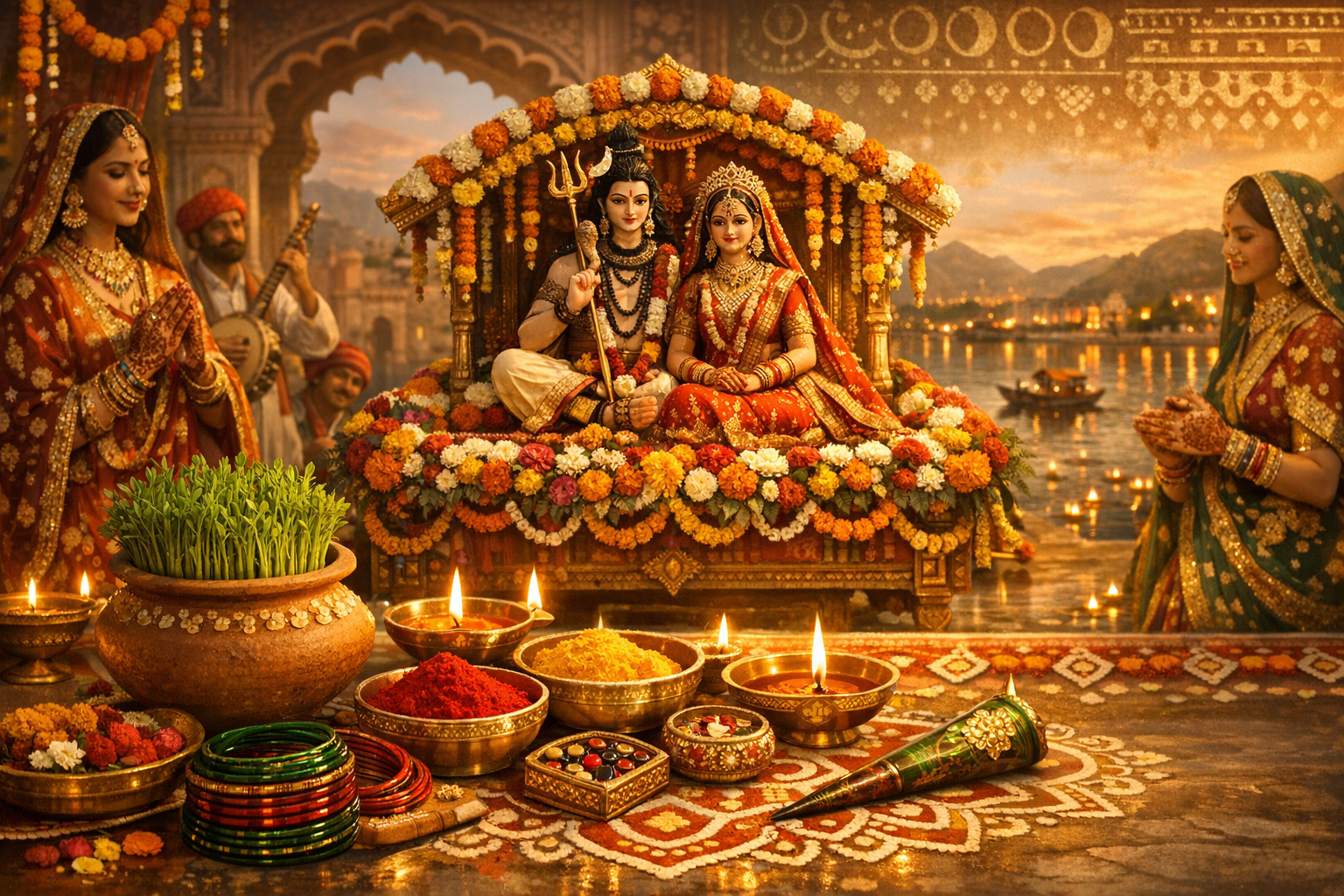
Gangaur 2026, Rajasthan’s iconic celebration of Gauri and Shiva, culminates on Chaitra Shukla Tritiya21 March 2026 in most Indian Panchangsafter a sequence of springtime observances that often begins on Pratipada. This guide explains the festival’s meaning, the Ganagauri Vrat, and why Isar–Gaur worship symbolizes a balanced and auspicious household. Readers learn how Sinjara, khetri sprouting,…
-
Moral Injury and Betrayal Trauma: How Broken Trust Rewires the Nervous Systemand How to Heal

Moral injury is not simply fear-based trauma; it is an ethical wound formed when trusted people or systems violate core moral expectations. This long-form analysis explains how betrayal trauma reshapes the nervous system, why shame and withdrawal so often replace fear and anger, and how to distinguish trauma reenactment from trauma repair. Drawing on dharmic…
-
Sri Siksastakam Unveiled: How Krishna Sankirtana Cleanses the Heart and Heals Suffering
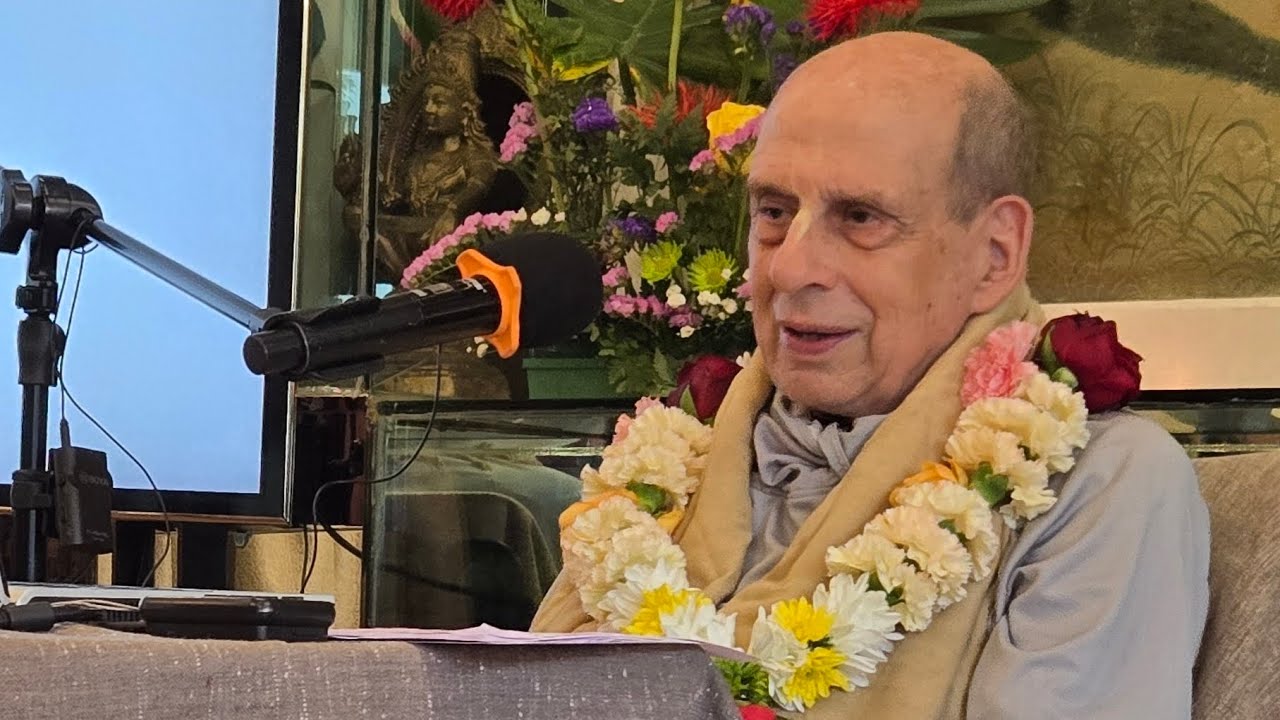
An in-depth ISKCON Hong Kong seminar led by HG Bhurijana Prabhu unpacked the first verse of Sri Siksastakam with philological precision and practical guidance. The discussion mapped the verse’s eightfold arcfrom cleansing the mirror of consciousness to bathing the entire selfshowing how sankirtana systematically heals inner turbulence. By contextualizing Sri Caitanya Mahaprabhu’s theology of the…
-
Delhi Holi Tragedy: Family Seeks CBI Probe into Tarun Kumar’s Death as Tensions Mount

A young man, Tarun Kumar, died following a Holi-time altercation in Delhi reportedly sparked by a water balloon striking a woman wearing a burqa. His father has demanded a CBI probe, citing the need for independence and public confidence, while calls for calm emphasize due process. This analysis explains how a CBI transfer is legally…
-
Bhramari Devi’s Storm of Bees: The Goddess Who Shattered the Demon Aruna’s Boon
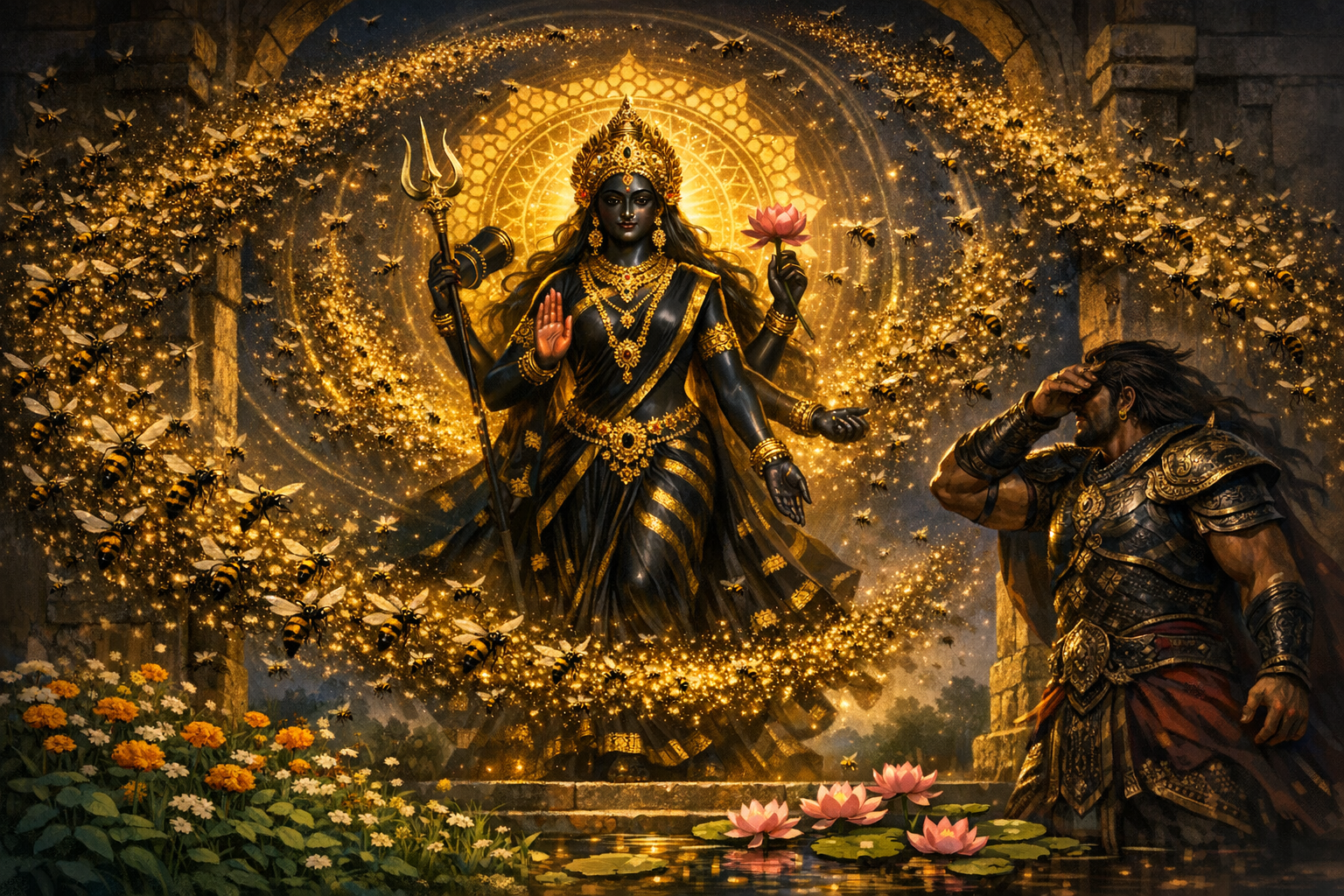
Bhramari Devihailed as the Bee Goddessembodies a dharmic strategy where collective intelligence overcomes seemingly invincible tyranny. Drawing on Shakta traditions and Purana-based retellings, the tale of Aruna (often Arunasura) shows how the Goddess honors the letter of a boon while revealing its limits through a six‑legged, many‑voiced response. The myth’s iconography and ritual practicesfragrant flowers,…
-
Agamas in Hinduism: A Definitive Guide to Temple Science across Shaiva, Vaishnava, Shakta Paths

Agamas in Hinduism are authoritative temple sciences that unite theology, meditation, ritual, architecture, and iconography into a single living system. This article clarifies what “Āgama” means, how it relates to Veda and Smṛti, and why Shaiva, Vaishnava (Pañcarātra and Vaikhānasa), and Shakta lineages each preserve distinct yet harmonious Agamic corpora. Readers gain a technical overview…