
-
Spirituality of Nature: Sacred Dharmic Wisdom, Science-Backed Healing, Inner Resilience

This long-form guide presents an academic yet accessible exploration of the spirituality of nature across Hinduism, Buddhism, Jainism, and Sikhism. It grounds ecological reverence in the Upanishads and the Bhagavad Gita, links practices like mindfulness and pranayama to measurable health benefits, and shows how Ahimsa and Aparigraha become daily Environmental stewardship. Readers gain a stepwise…
-
Does God Really Exist? Evidence, Yuga Dharma, and Dharmic Wisdom across Indic Traditions

This essay examines the perennial question ‘Does God really exist?’ through the lens of Yuga Dharma and the shared wisdom of Hindu, Buddhist, Jain, and Sikh traditions. It explains how Kali Yuga conditions intensify suffering yet elevate the effectiveness of simple, sincere practices such as devotion, meditation, simran, ahiṃsā, and seva. Drawing on classical Indian…
-
Offering Arghya to the Sun: Sacred Science, Healing Light, and a Detailed Ritual Guide

Arghya—the Vedic offering of water to the rising Sun—unites gratitude, ethics, and contemplative focus in a simple daily rite. Rooted in Rigvedic hymns and household dharma, it pairs the radiance of Surya with the nurturance of Apa (water), symbolizing compassion illuminated by discernment. This guide explains timing, materials, mantras (including the Dvādaśa Āditya salutations and…
-
High-Stakes Calcutta HC Row on Bakri Eid Slaughter: TMC Petition, Cow Laws, and a Path to Harmony

A reported petition by TMC leaders Mahua Moitra and Adv Akhruzzaman over West Bengal’s cattle slaughter notification ahead of Bakri Eid has spotlighted how constitutional rights, animal welfare, and public order must be balanced. This analysis explains the state’s statutory framework (notably the WB Animal Slaughter Control Act 1950), national overlays such as the Prevention…
-
Flood‑Hit to Future‑Ready: Locana Prabhu’s 3D Printing Path to Preserve Devotional Heritage

A May 19, 2026 tour of Locana Prabhu’s workshop revealed serious water damage alongside the installation of a 3D printer intended to bolster preservation-focused production connected to Srila Prabhupada’s legacy. The report explains conservation-grade stabilization: environmental control at 45–55% RH, HEPA filtration, safe mold mitigation, and triage methods that prioritize unique masters and production-critical assets.…
-
Parvati and the Sacred Bilva in Skanda Purana: Symbolism, Ritual Science, and Ecology

The Skanda Purana portrays the Bilva as emerging from Parvati’s sacred perspiration on Mount Mandara, placing the tree at the heart of Shaiva devotion and uniting Shiva and Shakti in a single living symbol. The trifoliate Bilva leaf mirrors core Shaiva triads, from Shiva’s three eyes to the three shaktis, transforming daily worship into contemplative…
-
Toxic Relationships, Gaslighting, and Trauma Bonds: Rebuilding Self-Trust with Clarity

This analysis maps how toxic relationship dynamics—especially gaslighting, intermittent reinforcement, and trauma bonds—systematically erode self-trust and identity. It explains why highly capable people stay, highlighting the sunk cost fallacy and neurobiological conditioning that make leaving difficult. Readers learn the technical vocabulary to name patterns, the nervous system science (including polyvagal insights) that underpins chronic uncertainty,…
-
Inside BJP’s Power Shift: Hardline Hindutva, Regional Titans, and 2026 Governance

BJP’s leadership strategy now privileges regionally rooted figures aligned with a more assertive Hindutva program. This analysis explains the organizational logic behind that shift, the policy agenda it advances—UCC, anti-conversion statutes, law-and-order emphasis, and cultural heritage stewardship—and how delivery-oriented governance underpins the model. It assesses state-level prototypes in Uttar Pradesh, Assam, Gujarat, and Maharashtra while…
-
Gajasurasamhara: Shiva’s awe-inspiring conquest of ego – history, symbolism, style
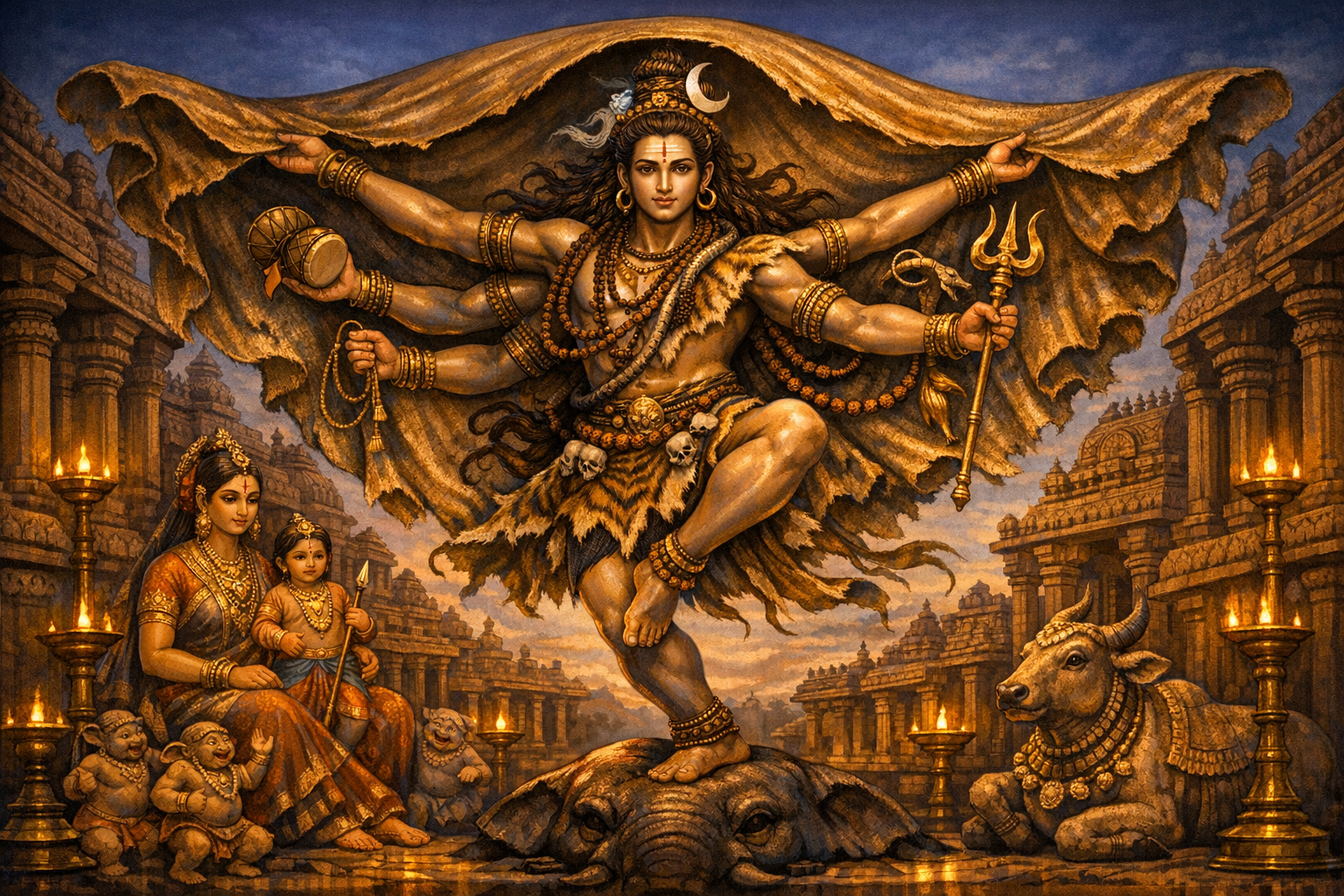
Gajasurasamhara presents Shiva in a fierce, transformative dance that subdues the elephant demon—an enduring visual lesson on conquering ego. This long-form, research-driven overview traces the form’s Purāṇic and Āgamic foundations and explains its technical iconography, from multi-armed attributes and the distinctive elephant-hide canopy to posture, ornaments, and attendant figures. It maps stylistic evolutions across Pallava,…
-
Pradhanikarahasya on Mahalakshmi’s Supremacy: Unveiling the Primordial Shakti of Creation

Pradhanikarahasya, an annex to the Devimahatmya (Durgasaptashati), presents a rigorous Shakta theology in which Mahalakshmi is the primordial source of creation. It integrates Vedic and Upanishadic insights to show how Shakti is both nirguna and saguna, aligning non-dual metaphysics with living devotion. The text decodes the Devimahatmya’s three episodes through the three gunas, offering a…
-
Norway’s Modi Cartoon: How ‘Freest Press’ Narratives Enable Hinduphobia—and How to Fix It

Aftenposten’s cartoon of Prime Minister Narendra Modi as a snake charmer revived a colonial stereotype long weaponized against Indians, especially Hindus, and ignited debate about press freedom versus media responsibility. This analysis situates the image within the history of Orientalism and the semiotics of political cartoons, explaining how such racialized coding undermines informed discourse on…
-
Bond of Love Part II: HG Jagattarini Dasi on Bhakti, Sacred Art, and Dharmic Unity

This archival overview documents Bond of Love Interview Series ~ Part II – HG Jagattarini dasi (Vaishnavi Ministry NA), a live-streamed conversation centered on bhakti, sacred art, and community formation. It analyzes how narrative pedagogy and devotional aesthetics transmit core Hindu spiritual traditions with clarity and depth. By highlighting women in spirituality, the program strengthens…
-
Special Knowledge and Bhakti Wisdom in Uithoorn, Netherlands: HH SB Keshava Swami’s Insights
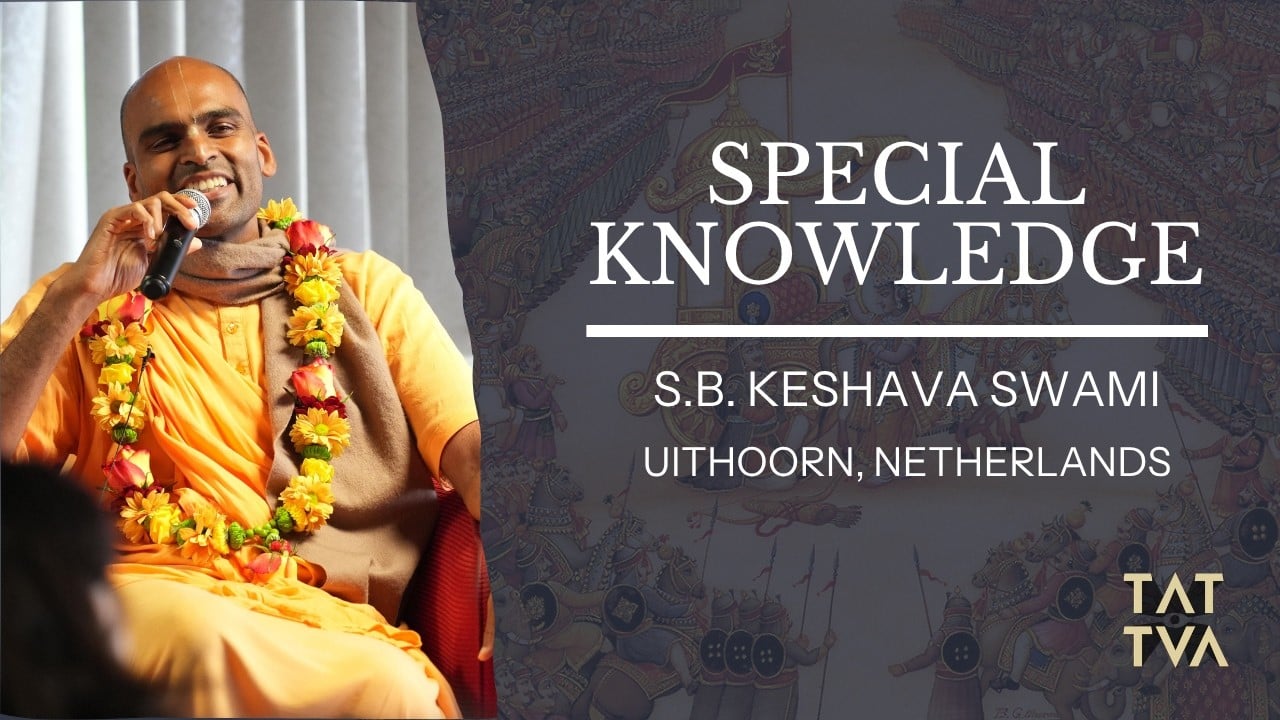
A thoughtful gathering in Uithoorn, the Netherlands (28.05.2025) honored HH SB Keshava Swami (Svayam Bhagavan Keshava Swami) and explored the theme of Special Knowledge through the lens of Gaudiya Vaishnavism. This analysis clarifies the distinction between jnana and vijnana, showing how knowledge matures when grounded in scripture, practice, and community. It outlines Indian epistemology’s core…
-
SB 4.9.37–53 Decoded: Dhruva’s Unshakable Devotion, Cosmic Boons, and Inner Renewal

Srimad-Bhagavatam Canto 4, Chapter 9, verses 37–53 narrate how Dhruva Maharaja’s devotion matures from personal austerity to public responsibility. The passage culminates in Dhruvaloka—symbolizing unwavering devotion—and a restored social order that validates rajadharma as service. Drawing on themes often highlighted by Kalakantha Prabhu, the analysis explains how bhakti integrates knowledge and action while transmuting anger…
-
Konark Sun Temple: A Radiant Masterpiece of Kalinga Architecture, Astronomy, and Dharma
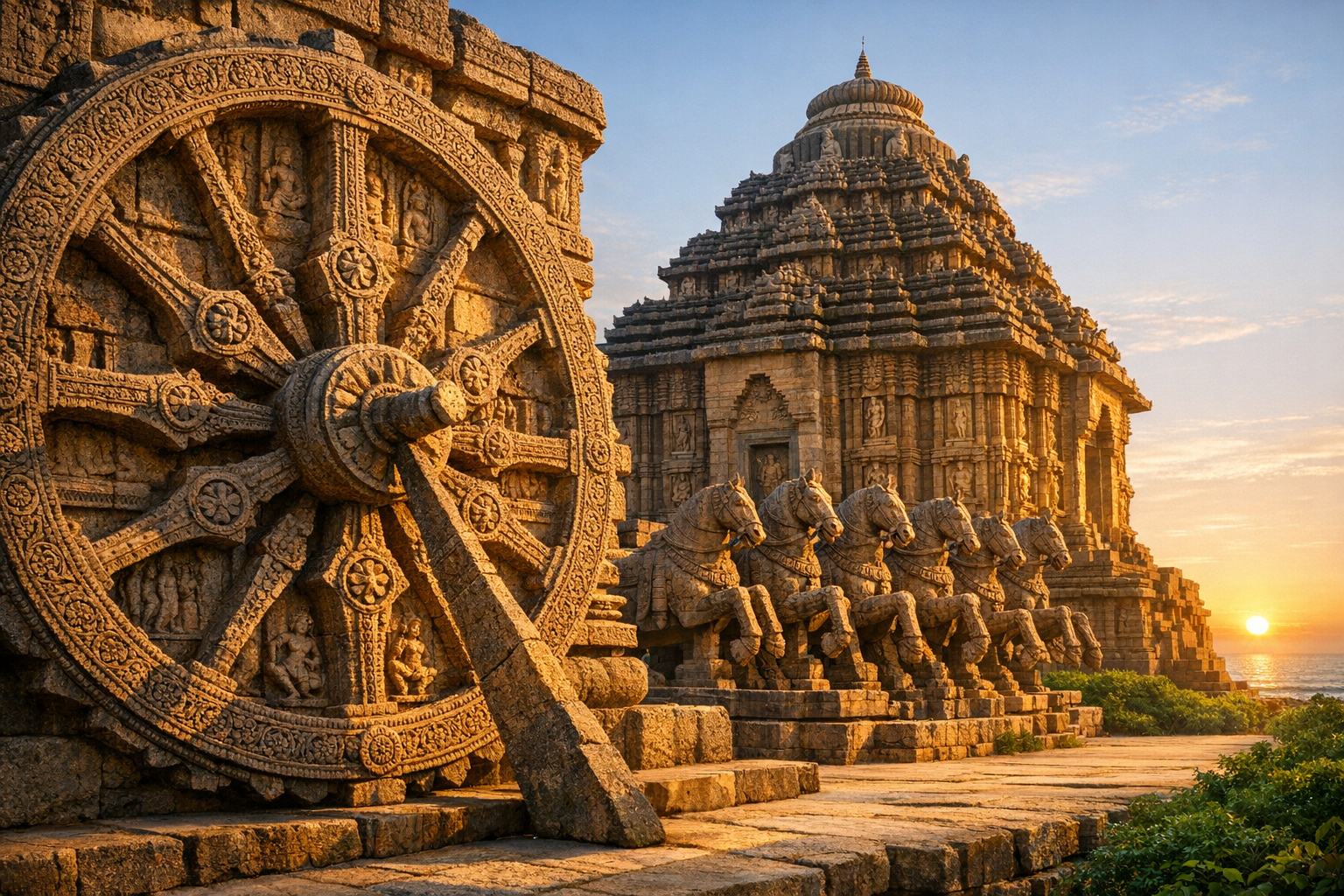
Konark Sun Temple in Odisha, a 13th-century UNESCO World Heritage Site, unites Kalinga architecture, astronomy, and living ritual in a single monumental vision. Commissioned by Narasimhadeva I of the Eastern Ganga Dynasty, the complex was conceived as Surya’s celestial chariot, complete with functional stone sundials. The surviving jagamohana, masterful masonry, and encyclopedic iconography make the…
-
Somvati Amavasya Vrat Foods: Ayurvedic, Sattvic Guide to What to Eat and What to Avoid

Somvati Amavasya emphasizes sattvic food discipline through two common patterns: Nirjala Vrat (complete abstinence from food and water) and a gentler Phalahari vrat (fruit- and vrat-approved fare). This guide details what to eat—fruits, nuts, makhana, tender coconut, dairy if tolerated, and vrat flours like kuttu, singhara, rajgira, and samak—and what to avoid—grains, legumes, onion, garlic,…
-
Karvetinagaram Venugopalaswamy Brahmotsavam 2026: Dates, Rituals, Vahanams, and Pilgrim Guide
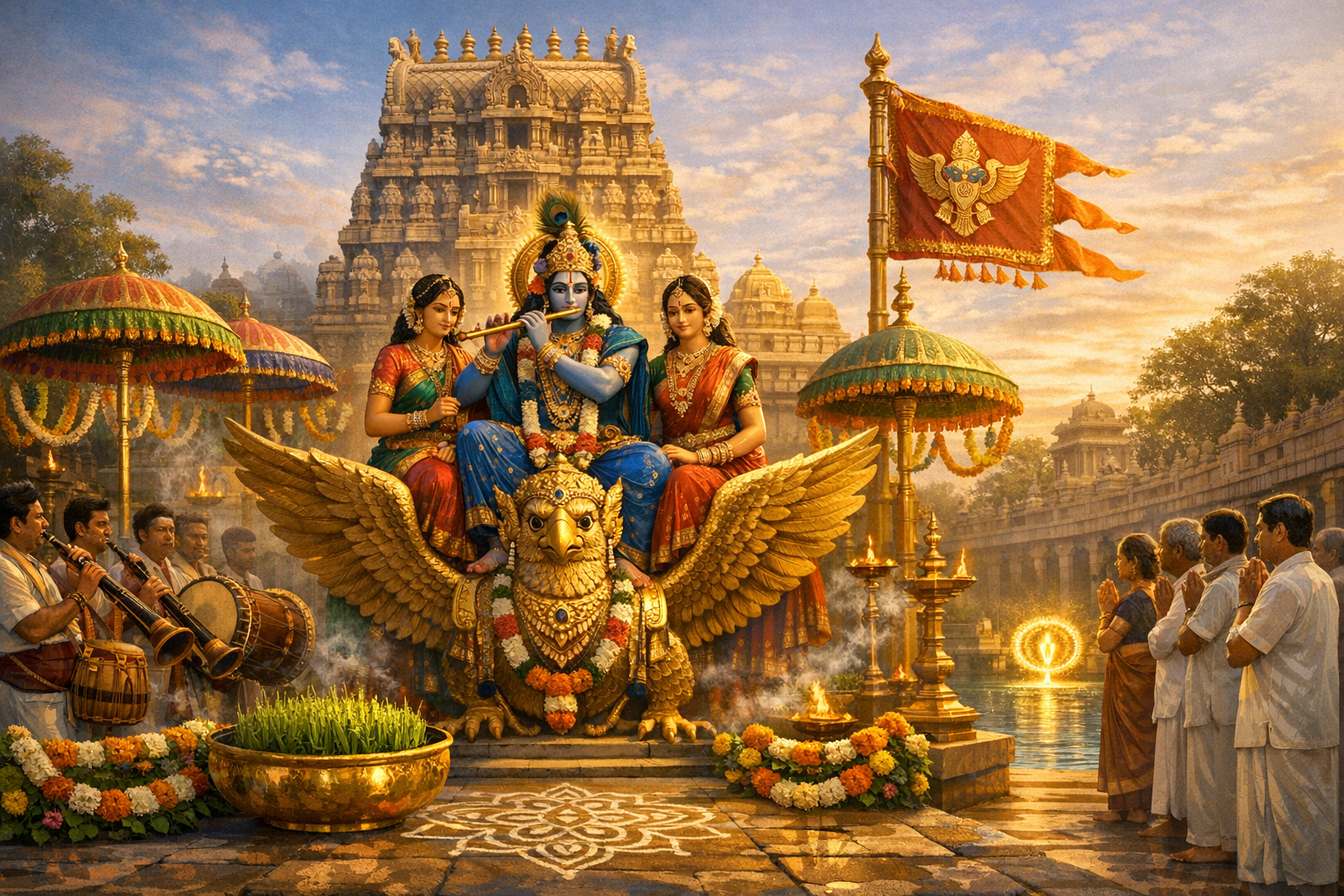
Karvetinagaram Venugopalaswamy Temple will celebrate its Brahmotsavam from 6–14 June 2026, preceded by Ankurarpanam on 5 June and the sanctifying Koil Alwar Tirumanjanam in early June. This comprehensive guide explains the festival’s Vaishnava Agamic foundations and how daily vahana processions, Garuda Seva, and culminating rites like Chakrasnanam and Dwajavarohanam structure the nine days. Readers gain…
-
Somvati Amavasya 2026: Unlock the Power of Monday New Moons—Dates, Puja Vidhi, Pitru Tarpana

Somvati Amavasya is the new moon that falls on a Monday, revered for Shiva Puja, Surya Puja, Vishnu Puja, Durga Puja, and Pitru Tharpana. In 2026 it occurs twice—on Monday, 15 June (Jyeshtha Amavasya) and Monday, 9 November (Kartik Amavasya)—with local observance guided by the panchang and sunrise rules. The day favors quiet vrata, sattvic…
-
Vat Purnima 2026 (June 29): Vata Savitri Vrat Date, Puja Vidhi, Katha & Regional Traditions
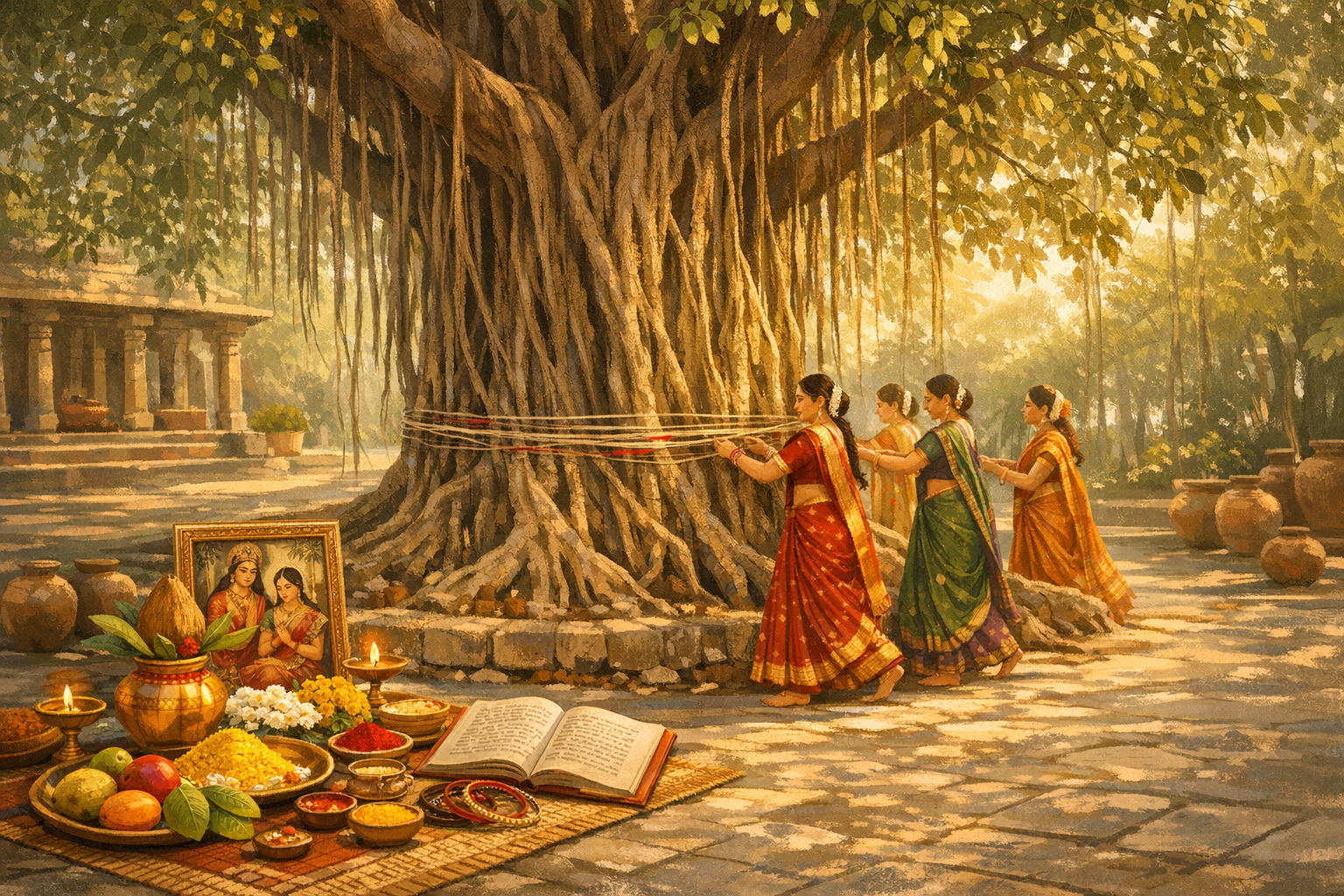
Vat Purnima (Vat Savitri Purnima) falls on June 29, 2026 (Jyeshta Purnima), uniting regions and traditions in a shared vow inspired by Savitri’s steadfastness. The observance centers on Savitri–Gauri worship, Vata-vriksha reverence, and the recitation of the Mahabharata katha, with optional fasting and parikrama. This guide explains the date, regional practices (including the Amavasya observance…
-
Kishkindha Kanda Unveiled: Hampi’s Sacred Landscape, Dharma Debates, and Hanuman’s Rise
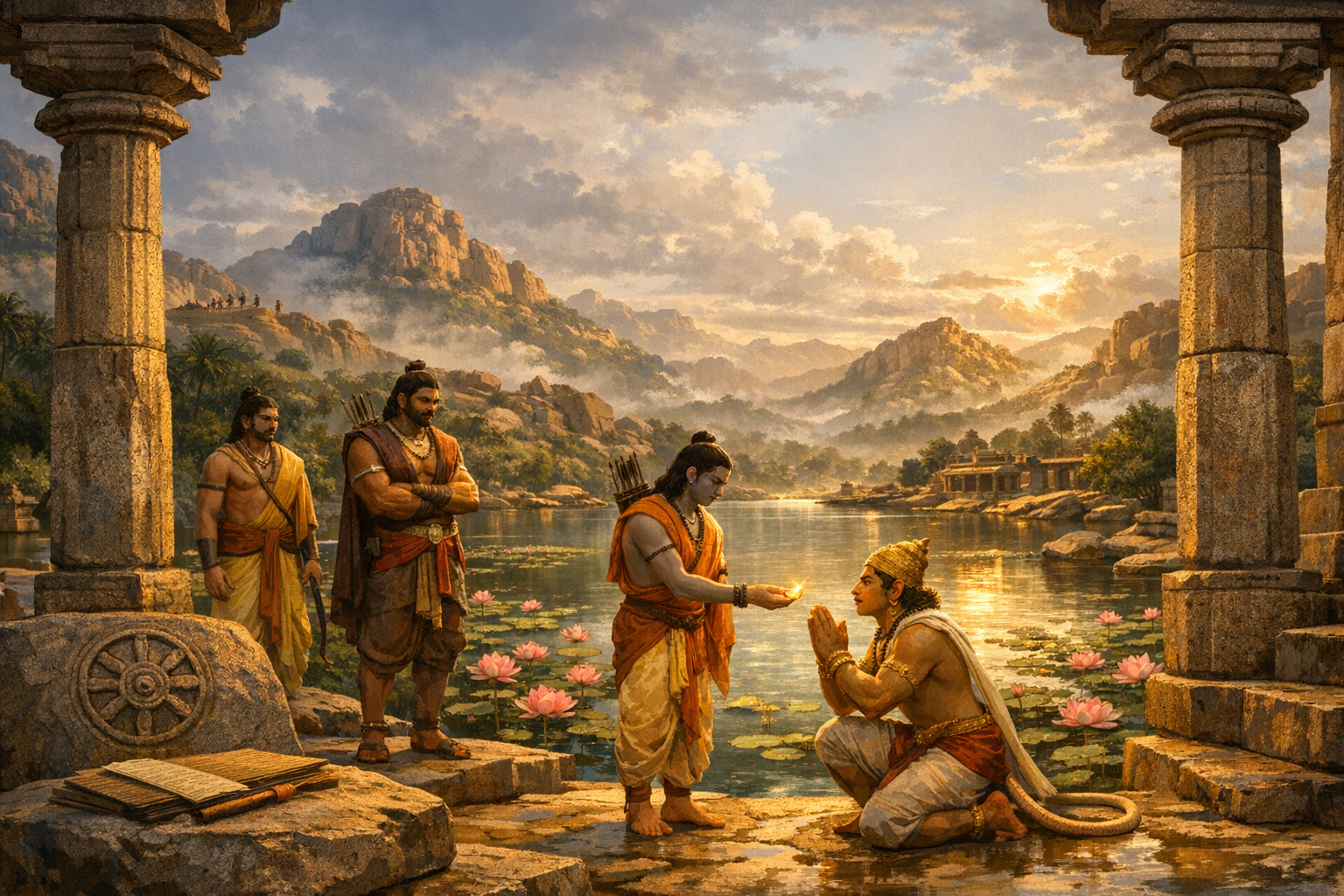
Kishkindha Kanda (Book IV of the Valmiki Ramayana) forges the Rama–vanara alliance, situates the narrative in the sacred Hampi–Anegundi landscape, and prepares the ground for Hanuman’s mission. Readers gain a clear map of key episodes—the pact with Sugriva, Vali-vadha’s dharma debate, Sugriva’s coronation, the monsoon interlude, and the strategic dispatch of search parties. The analysis…