
-
How We Treat the Powerless: Dharma’s Uncompromising Measurefrom Gita to Guru Granth Sahib
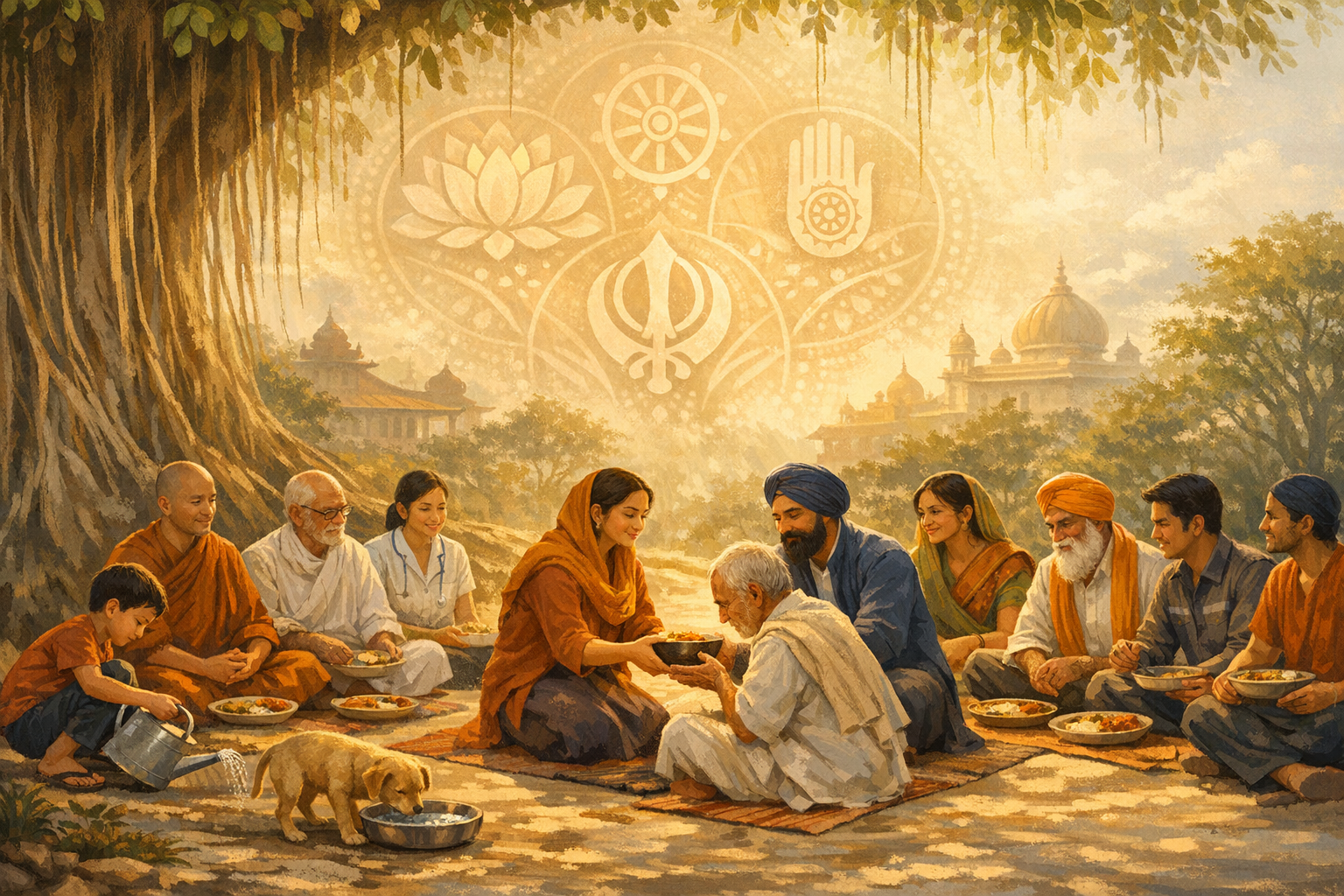
True character is revealed most clearly in how people treat those with little power. Drawing on Hinduism, Buddhism, Jainism, and Sikhism, this essay shows how Dharma, Ahimsa, Seva, and Karuna converge on a single ethical yardstick: dignity for the vulnerable. It synthesizes sources from the Bhagavad Gita, Mahabharata (Vidura-niti), Dharmasastra, and Arthasastra alongside Sikh langar…
-
Hanuman Jayanti Upvaas 2026: Chaitra Shukla Chaturdashi Guide, Vrat Vidhi, Timings, Benefits
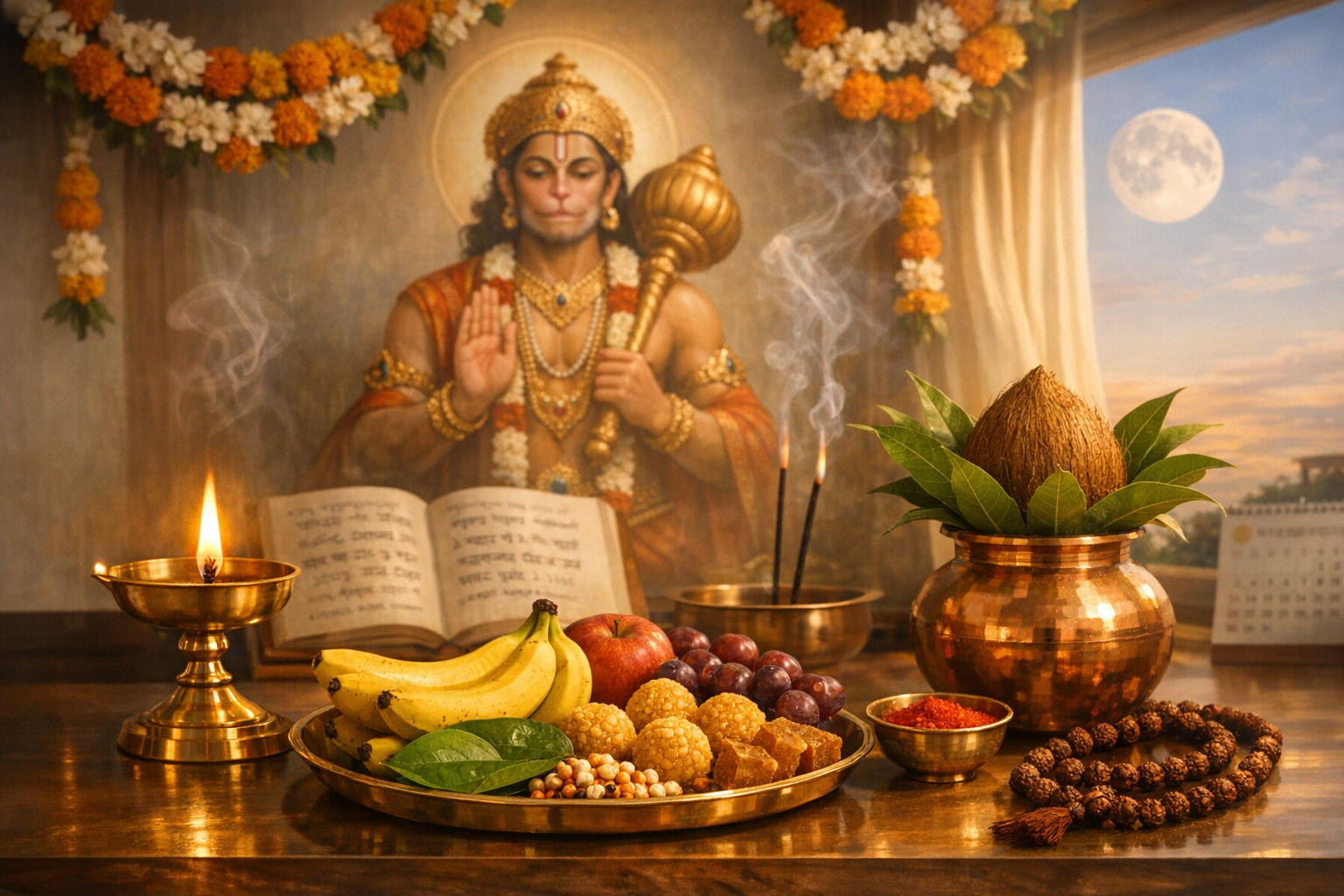
Hanuman Jayanti Upvaas in 2026 will be observed on 1 April, corresponding to Chaitra Shukla Chaturdashi in many regions. The fast is kept from sunrise to sunset and is typically concluded with simple prasad after evening worship. This guide explains regional calendar variations, outlines a clear Vrat Vidhi, and recommends appropriate food choices for phalahar…
-
Karma Yoga and a Son’s Devotion: The Transformative Redemption of Jada through Gita 3

This article examines the redemptive tale of Jada through the lens of Bhagavad Gita Chapter 3 (Karma Yoga), showing how a son’s devoted recitation becomes a catalyst for ethical clarity and transformation. It explains why Chapter 3niyatam karma, nishkāma-karma, and loka-saṅgrahaprecisely addresses moral confusion and social responsibility. Readers gain a clear map of Gita 3’s…
-
Chithirai Vishu (Puthandu) 2026: Auspicious Mesha Sankranti Time, Rituals, Meaning, and Unity

Chithirai Vishu, also known as Puthandu and Varusha Pirappu, falls on 14 April 2026 and aligns with Mesha Sankranti, the Solar New Year in the sidereal system. The exact Mesha Sankramana punyakalam is at 9:25 AM IST, opening Parabhava Varusha (2026–2027) in the 60-year Samvatsara cycle. The day integrates astronomical precision with household and temple…
-
Haddinakallu Hanumantharaya Temple: A Timeless Ascent to Eagle Stone Hill’s Sacred Heritage
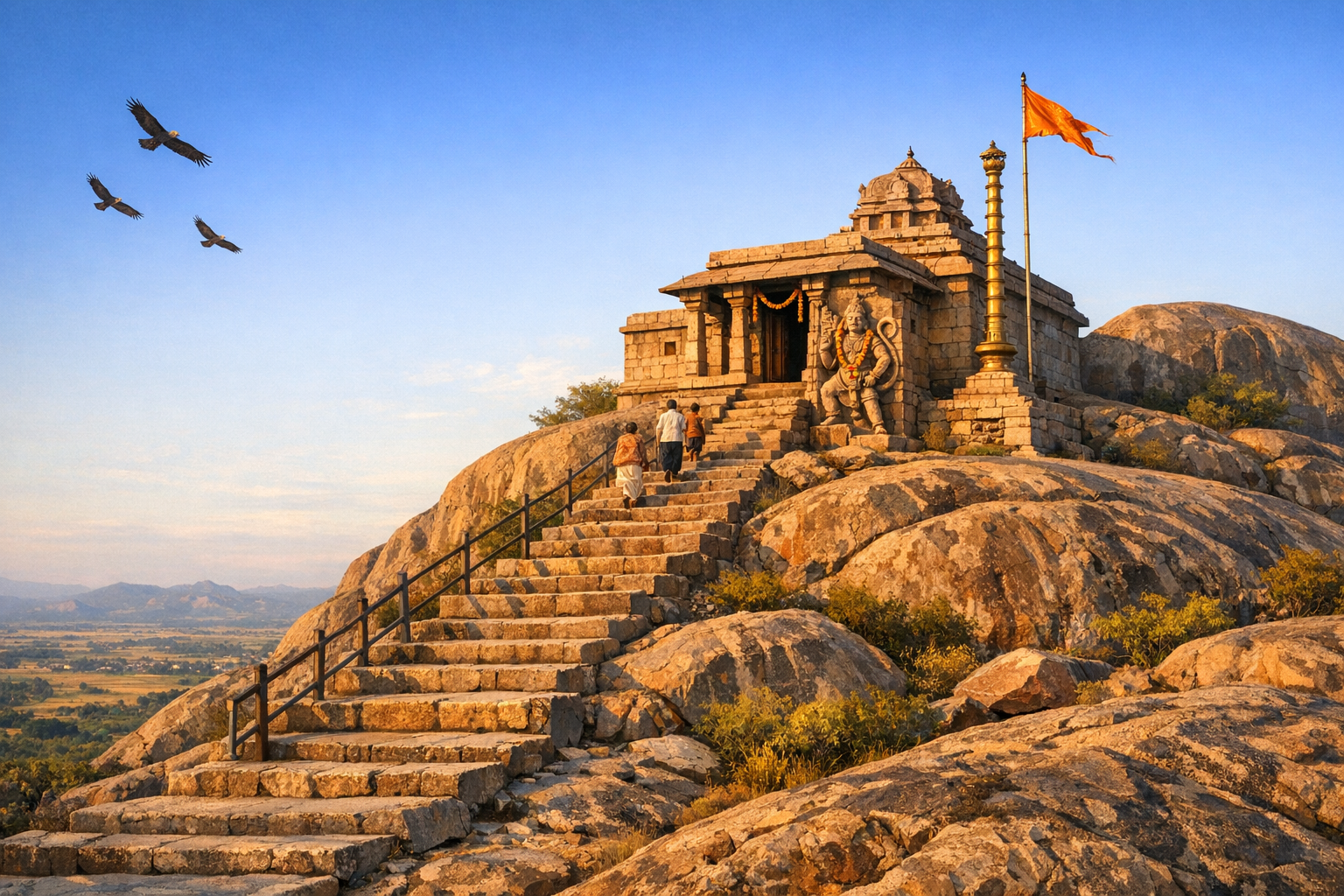
Sri Kshetra Haddinakallu Hanumantharaya Temple, the Eagle Stone Hill Temple in Karnataka, is a hill shrine dedicated to Lord Hanuman (Anjaneya) that unites sacred geography with living ritual. Local tradition attributes its origin to the 8th century CE under a regional ruler, a dating that aligns with broader early-medieval patterns though it awaits epigraphic confirmation.…
-
Parabhava 2026–2027: Ugadi’s Transformative Year of Karmic Renewal, Resilience, and Dharmic Unity
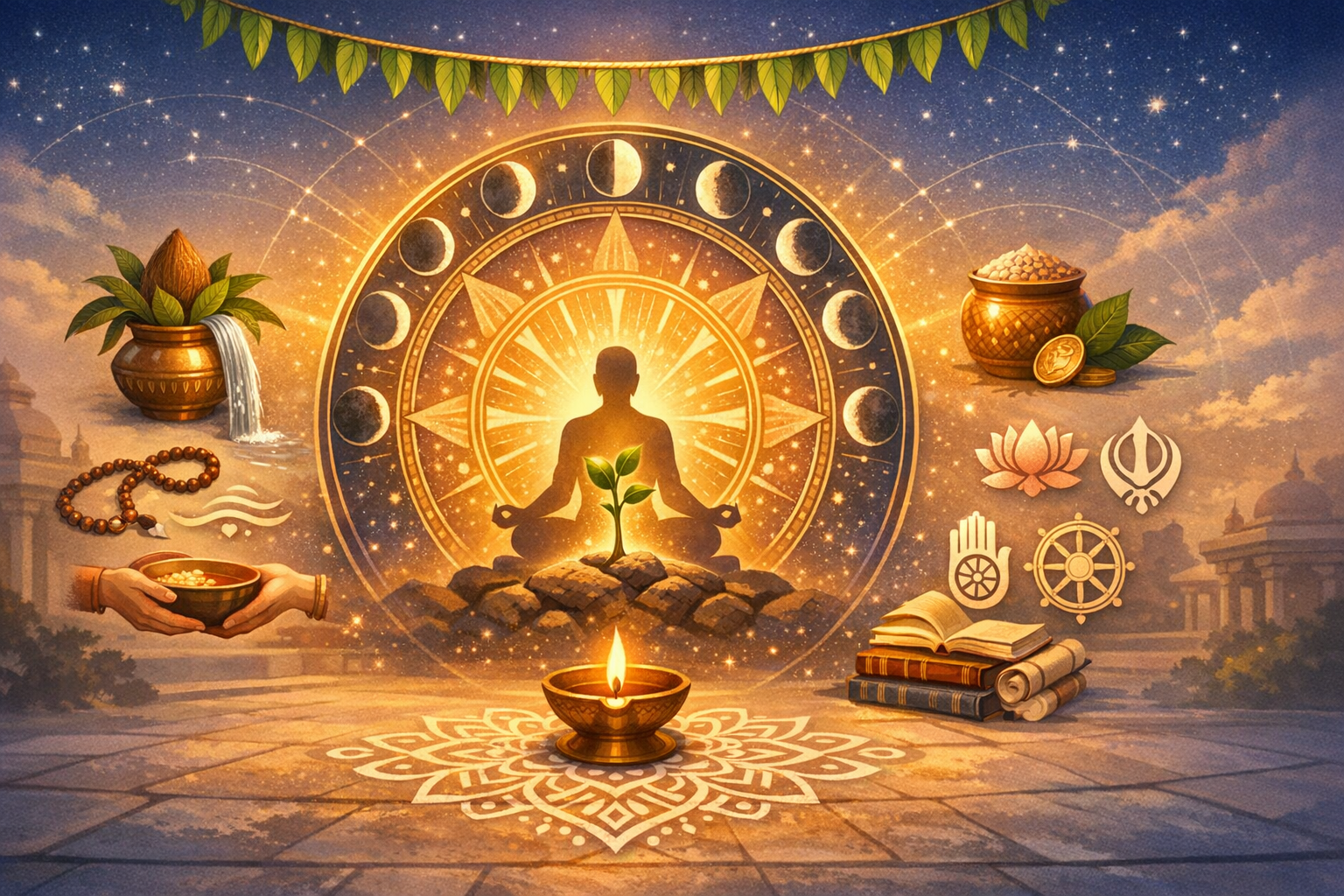
Parabhava Nama Samvatsaram begins on Ugadi (March 19, 2026), the 40th year of the 60-year Hindu calendar cycle, and is best understood as a period of purposeful karmic transformation. While often translated as “defeat,” Parabhava is more fruitfully read as a call to transcend limiting patterns and turn setbacks into resilience. In Vedic astrology, the…
-
Navratri Day 3, 21 March 2026: Powerful Chandraghanta Puja Vidhi, Mantras, Fasting, 10 Key Actions
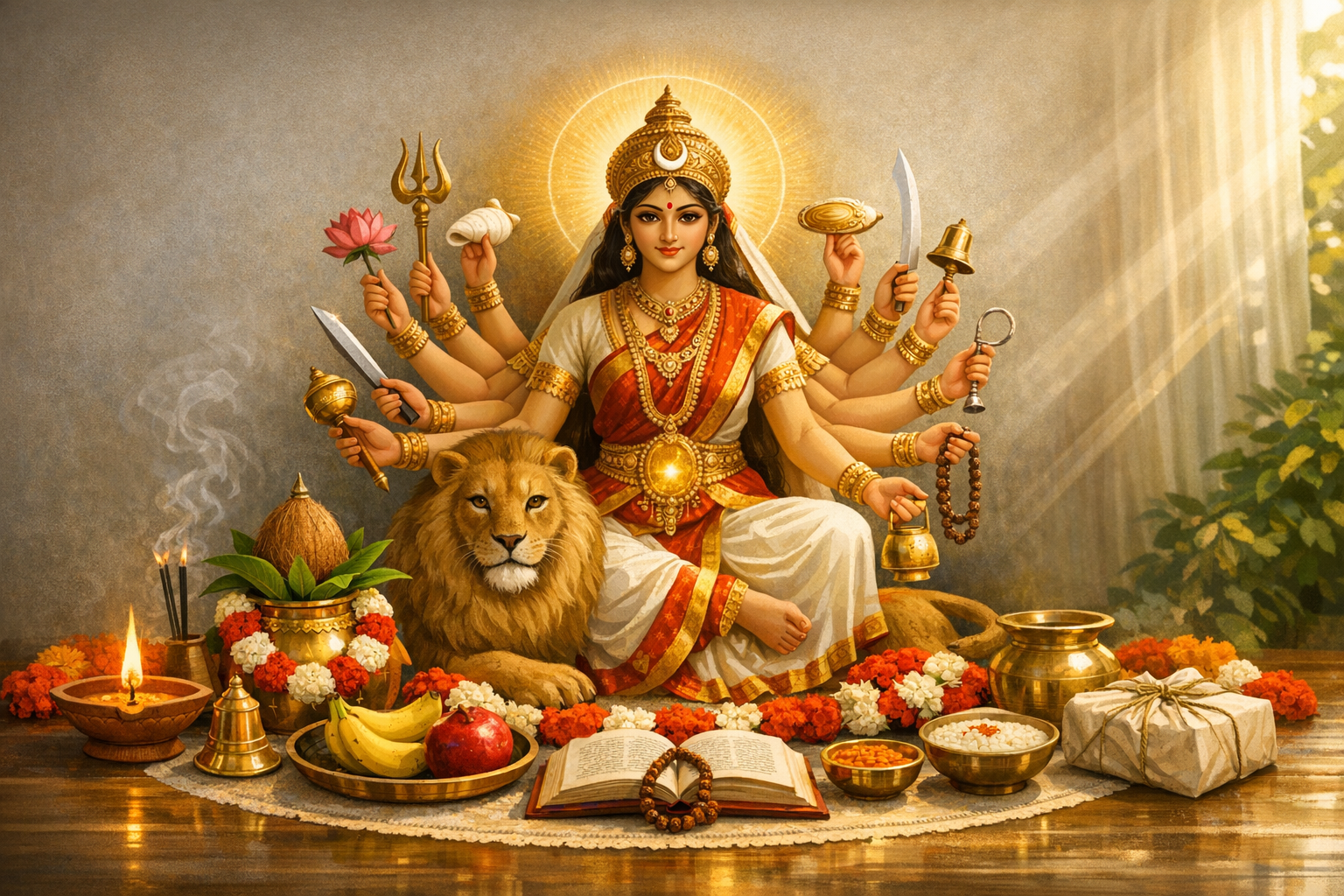
Navratri Day 3 on 21 March 2026 venerates Goddess Chandraghanta, the embodiment of courageous calm. This guide presents an accurate, step-by-step puja vidhi, essential mantras, and a balanced fasting plan aligned with Chaitra Navratri traditions. It details ten practical, home-friendly actionsfrom sanctifying the altar and offering milk-based bhog to disciplined mantra japa and evening aarti.…
-
Maitrayaniya (Maitri) Upanishad: Origins, Structure, Sixfold Yoga, and Transformative Wisdom
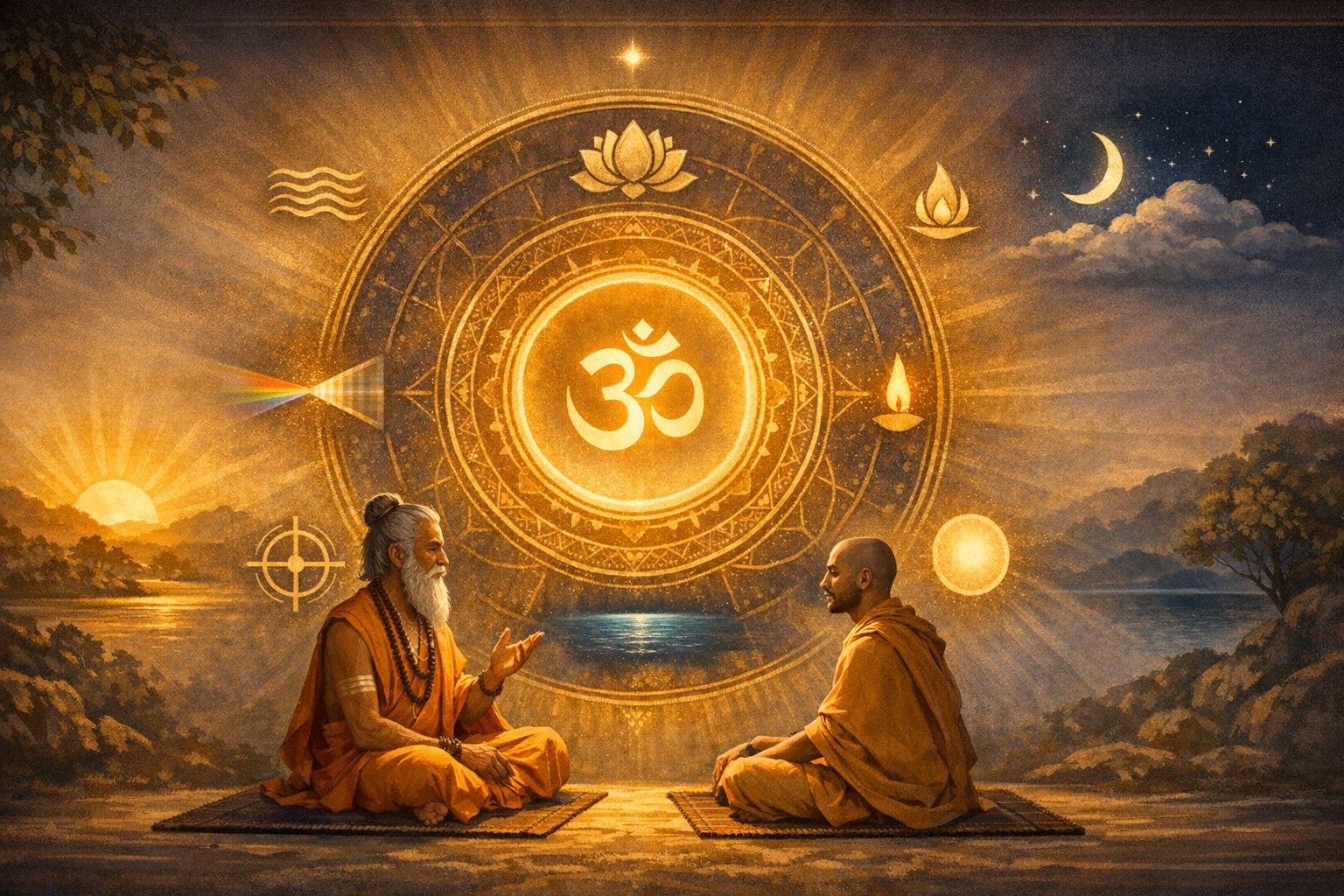
The Maitrayaniya (Maitri) Upanishad of the Krishna Yajurveda blends Vedanta and early Yoga with unusual precision, making it a key late-Upanishadic text. It analyzes time and the timeless, the mind’s role in bondage and freedom, and the threefold nature of suffering, while culminating in a concise sixfold Yoga. Readers gain a clear map from inquiry…
-
Decoding Ravana’s Pushpaka Vimana: Pishacha‑Faced Mules, War Chariots, and Dharma’s Warning
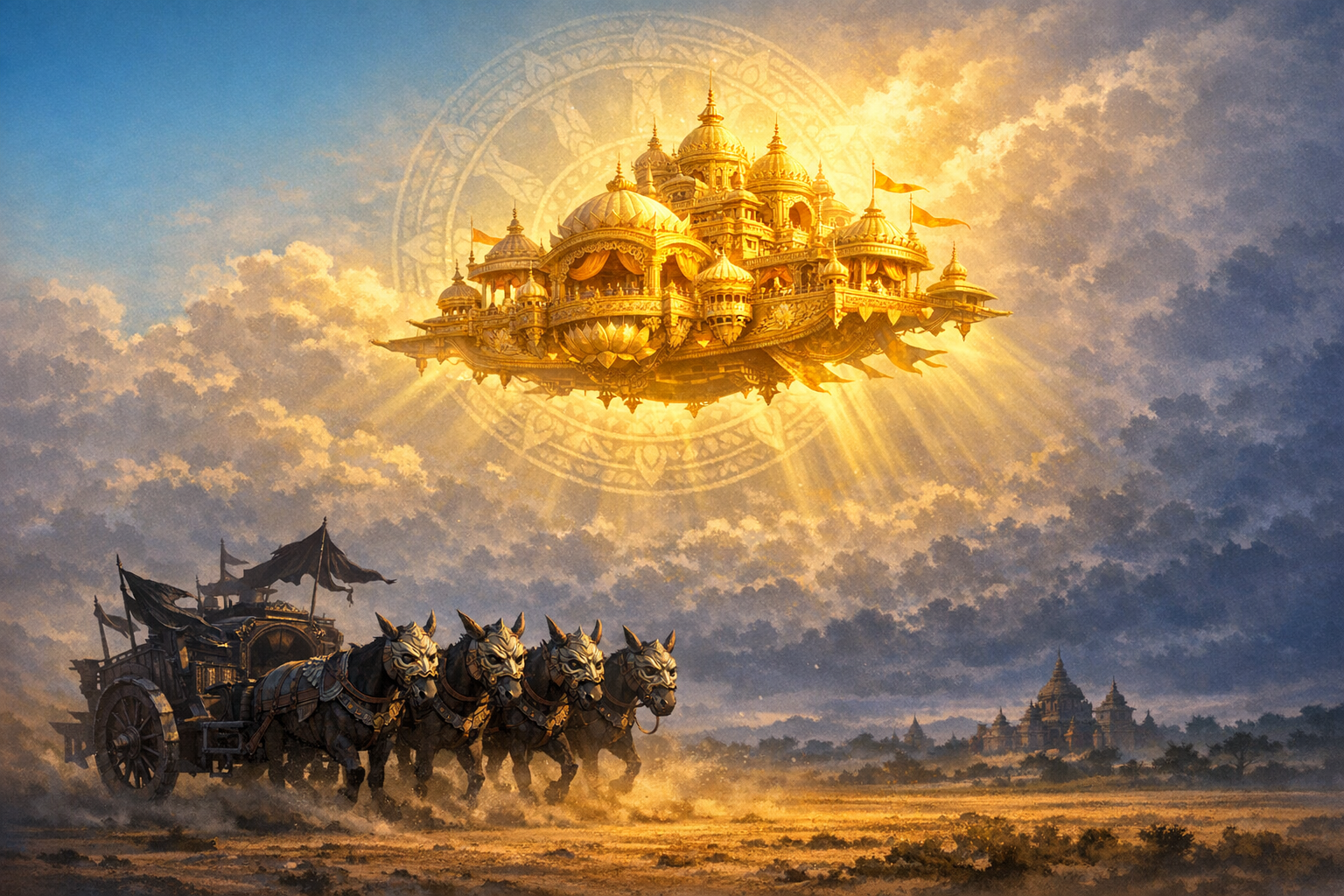
This in-depth analysis clarifies a frequent confusion in Ramayana studies by distinguishing Ravana’s mule-drawn war-chariotoften depicted with piśāca-like facesfrom the Pushpaka Vimana, the celestial, self-propelled vehicle reclaimed by Rama. Drawing on Valmiki’s Ramayana and southern vernacular traditions such as Kambaramayanam, it explains how these images function in classical aesthetics (rasa) and dharma ethics. The mule…
-
Uparichara Vasu’s Celestial Vimana: Indra’s Radiant Gift and the Science of Sacred Flight

Hindu scriptures detail many aerial chariots (vimanas), yet the Mahabharata’s account of Uparichara Vasu’s crystal flying chariotbestowed by Indraoffers a uniquely technical and ethical model of sacred flight. This analysis situates the episode in Adi Parva, explains how “crystal” encodes clarity and accountability, and shows why mind-directed motion (manojava) expresses an indigenous science of cognition…
-
Tapas, Siddhis, and the Hidden Trap of Mada: Preventing Spiritual Arrogance in Sadhana

Hindu philosophy honors tapas and acknowledges the possibility of siddhis, yet warns that both can catalyze madaspiritual arroganceif pursued without humility and ethical grounding. Drawing on the Yoga Sutra, the Bhagavad Gita, and epic narratives, this analysis shows how austerity and unusual capacities become obstacles when they inflate identity. Converging perspectives from Buddhism, Jainism, and…
-
Sardar Baghel Singh: The Visionary Who Etched Sikh Heritage on Delhi’s Sacred Map (1783)

Sardar Baghel Singh (c. 1730–1802) transformed Delhi’s sacred geography in March 1783 through a negotiated accord with the Mughal court that authorized, secured, and funded the construction of Sikh shrines at historic sites. Rather than a mere military episode, his intervention institutionalized Sikh memorymost notably at Sees Ganj Sahib and Rakab Ganj Sahibthrough a sustainable…
-
Swami Samarth Prakat Din 2026: In-Depth Guide to Date, Rituals, and Akkalkot Pilgrimage
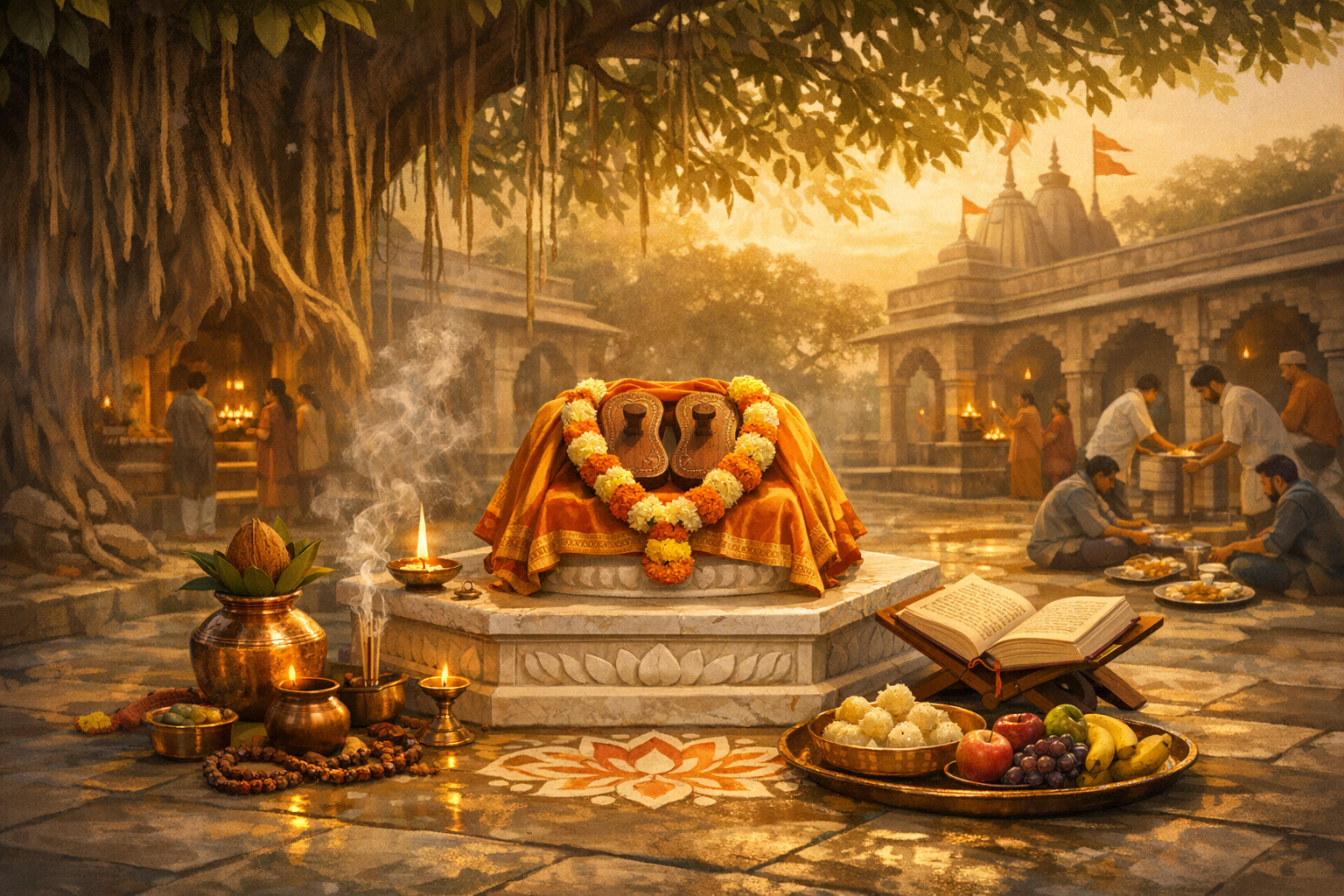
Swami Samarth Prakat Din 2026 falls on March 20 and honors the first public manifestation of Akkalkot Swami Maharaj in the Dattatreya Tradition. This comprehensive guide explains the meaning of prakat, how the Hindu calendar (panchang) determines observance, and why dates can vary by region and time zone. It outlines home and temple ritualsguru-puja, parayan,…
-
Shiva–Shakti Raasa Leela: Unveiling the Cosmic Dance of Love, Consciousness, and Creation
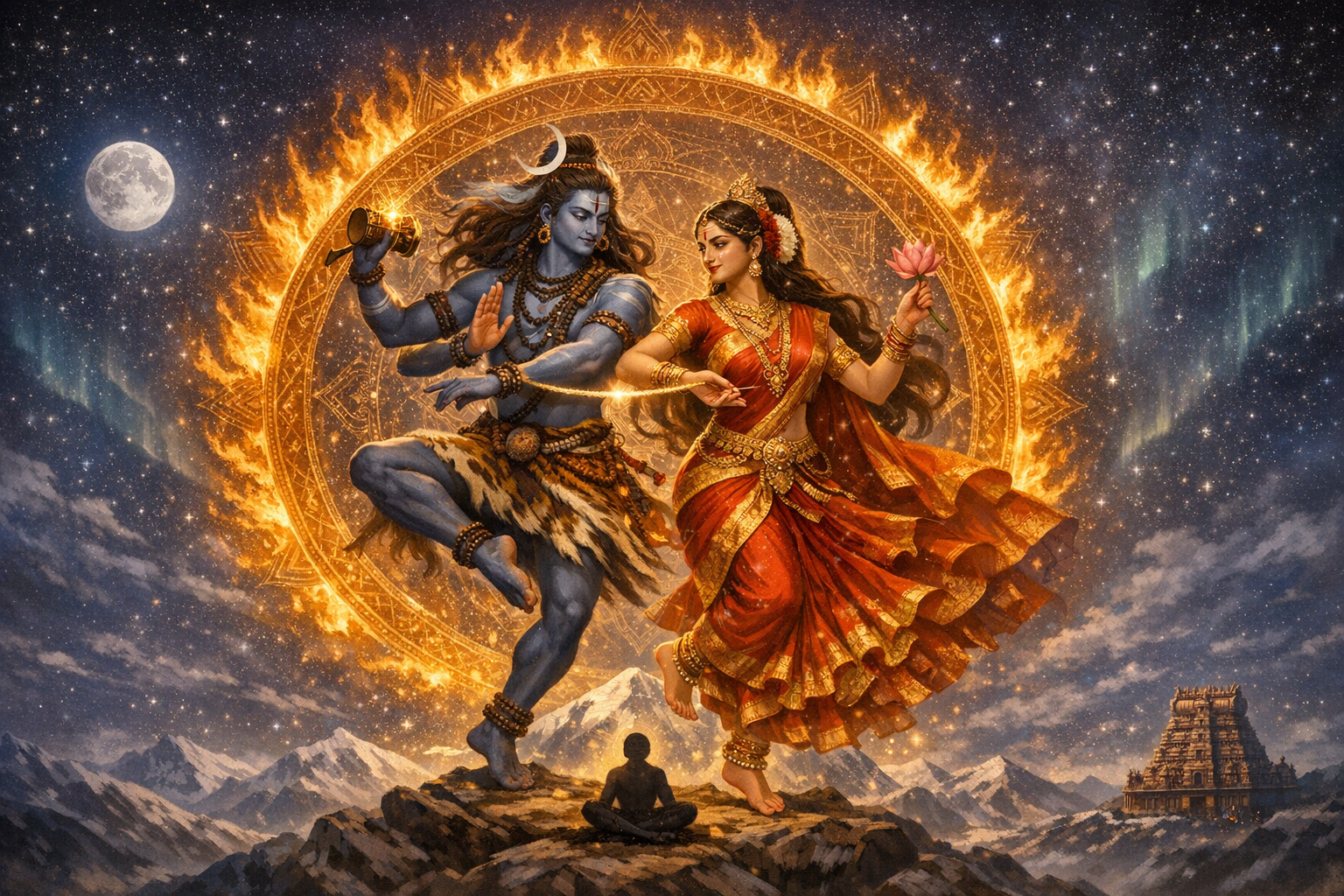
Shivashakti Raasa Leelaalso known as Sri ShivShakti Rasalilapresents the union of Śiva and Śakti as a continuous dance and embrace that render Shaiva metaphysics visible and livable. Anchored in Natyashastra aesthetics, Shaiva Āgamas, and Kashmir Shaivism’s rasa theory, it interprets creation as spanda (vibration) and devotion as aesthetic savoring (rasa). Iconography of Śiva Naṭarāja, Somāskanda,…
-
How Abhimanyu’s Unjust Death Became Kurukshetra’s Moral Pivot and the Kauravas’ Downfall

The thirteenth day of the Mahabharata’s Kurukshetra War became a moral and strategic turning point when Abhimanyu, isolated inside the Chakravyuha, was killed in manifest violation of Dharma-Yuddha. The Kauravas’ many-on-one assault, disarming of a youth, and final mace blow against an unarmed warrior gained a tactical kill but forfeited legitimacy. Arjuna’s vow to slay…
-
Kedarnath’s Silver Sceptre ‘Roop Chhad’ Missing: Uttarakhand Orders High-Priority Heritage Probe

Kedarnath Temple has reported the sacred silver sceptre known as the Roop Chhad missing, prompting the Uttarakhand government to order a high-priority inquiry on March 10, 2026. This report explains why the sceptre matters in the temple’s ritual life and how its loss is felt by devotees. It outlines the governance context of the Badrinath-Kedarnath…
-
The Upanishads’ Radical Vision: Beyond Worship to Realize Atman–Brahman Within

This essay clarifies the Upanishads’ radical claim that ultimate reality is not an external deity to be appeased but the Self (Atman), recognized as non-different from Brahman. It explains how ritual and devotion (upāsanā) are honored as preparatory means, while liberating knowledge (jñāna) is the goal. Readers gain a technical overview of key methodsśravaṇa, manana,…
-
From Street Protests to Silence: How Selective Outrage Weakens India’s Unity and Security

This analysis examines why mass mobilizations in India sometimes intensify around distant geopolitical controversies while domestic terror victims struggle for sustained public attention. It clarifies selective outrage and misplaced loyalty as products of algorithmic incentives, identity signaling, and psychological biases. Anchored in dharmic ethics across Hinduism, Buddhism, Jainism, and Sikhism, it proposes a consistent standard…
-
Inside Vijayanagara’s Golden Age: Kavi Sarvabhauma Srinatha’s Daring Challenge to Arunagirinatha
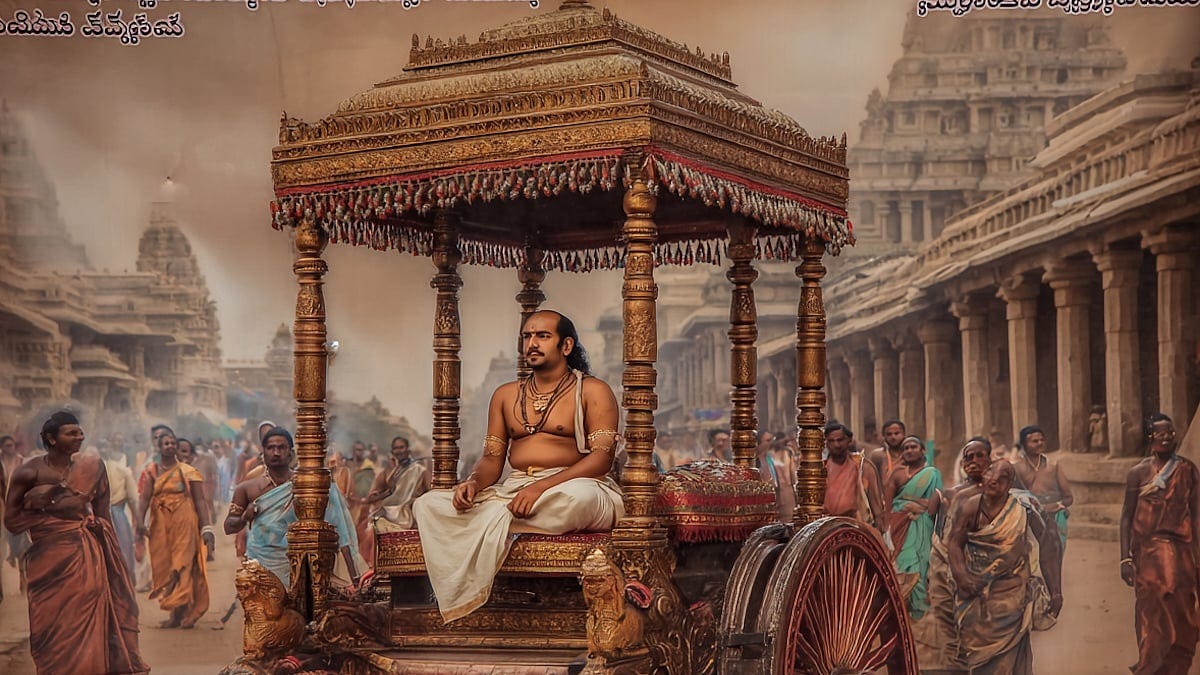
Set during the golden age of the Vijayanagara Empire, this episode from Kavisārvabhaomuḍu reconstructs how Kavi Sarvabhauma Srinatha strategically challenged the Vidyādhikāri Arunagirinatha in a high-stakes courtly contest. Readers discover how a subtle Sanskrit deviceapaśabdābhāsacan invert a debate by disguising correctness as error. The narrative explains why grammar (anchored in Panini, Vararuchi, and Patañjali) is…
-
How $5 Krishna Lunch Nourishes Westwood: Seva, Dignity, and Student Food Security

A Daily Bruin profile of the Krishna Lunch program in Westwood highlights how a $5 meal modelled by Govinda Datta Dasa and Shantatmatranslates Hindu spirituality into practical, dignity-first support for UCLA students. By starting work at 5:30 AM and serving five days a week, the team provides reliable, affordable nourishment that reduces food insecurity without…