
-
Kabir’s Weekly Discipline Planner: A Dharmic, Science-Backed Path to Focus, Calm, and Service

This weekly discipline planner draws from Kabir’s ethic of simplicity and sincerity to create a dharmic, science-backed structure for daily life. It integrates niyama, mindfulness, japa, pranayama, svadhyaya, and seva into a humane seven-day arc adaptable to Hindu, Buddhist, Jain, and Sikh traditions. The design aligns with circadian and ultradian rhythms, protecting attention for deep…
-
₹50 Lakh Madrasa Grant Sparks Debate: HJS Urges Mainstreaming to Safeguard Student Futures

Hindu Janajagruti Samiti (HJS) has opposed a proposed ₹50 lakh state grant to madrasas and urged that publicly financed institutions be integrated into the mainstream school system. The issue engages core constitutional safeguardsArticles 21A, 28, and 30and requires a balance between secular public education and minority rights. Within this framework, conversion to regular schools implies…
-
Awe-Inspiring Miracles of Venkateshwara Swamy: Testimonies, Temple Science, and Grace

This in-depth exploration examines the miracles attributed to Venkateshwara Swamy through scriptural sources, inscriptional history, and contemporary testimonies. It clarifies how dharmic traditions frame miracles as anugraha (grace) that aligns karmic causes with compassionate help. Readers will discover how temple ritualSuprabhātam, arjitha sevas, Annadanam, and festival cycles like Brahmotsavam and Vaikuntha Ekadasifunctions as a lived…
-
The Curse of Immediacy: Reclaiming Kshama and Dhairya for Deep Focus in a Digital Age

Modern life rewards speed yet quietly punishes impatience with poor judgment, anxiety, and brittle relationships. This essay examines Kshama (forbearance) and Dhairya (steadfast patience) as precise antidotes drawn from Hindu philosophy and aligned with Buddhist, Jain, and Sikh insights. It clarifies the terms linguistically and textually, situates them within the Bhagavad Gita, Vedānta’s preparatory disciplines,…
-
Unveiling Shiva’s Samharamurtis: Fierce, Compassionate Forms of Cosmic Transformation

This in-depth exploration clarifies why Shiva’s Samharamurtis are not emblems of destruction but precise instruments of compassionate transformation. Grounded in the Panchakritya doctrine and classical sources like the Puranas and Agamas, it decodes how Kamantakamurti, Gajasura Samhara Murti, and Kalari Murti model the sublimation of desire, the mastery of force, and the transcendence of fear…
-
Decoding the True Guru: Parampara, srotriyam, and brahma-nistham for Dharmic seekers

What makes a true guru, and how can seekers discern reliable guidance today? Drawing on the Upanishadic standard of “srotriyam” (lineage-grounded hearing) and “brahma-nistham” (unwavering dedication to the Supreme Truth), this analysis shows why parampara safeguards Vedic wisdom from speculation. It explains how a realized teacher blends scriptural fidelity with lived steadiness, aligning with the…
-
Why Nothing Is Ever Lost: Dharmic Wisdom to Transform Grief into Clarity and Peace

This long-form exploration explains why, across Hinduism, Buddhism, Jainism, and Sikhism, nothing is ever truly lostforms change while meaning, memory, and value continue. It clarifies Vedanta’s two levels of truth, showing how the atman remains untouched even as prakriti transforms. It integrates Buddhist dependent origination, Jain Anekantavada, and Sikh Hukam to present a unified dharmic…
-
Dried Chillies and Salt Ritual: A Powerful, Time-Honored Hindu Shield Against the Evil Eye

This long-form exploration examines the dried chillies and salt ritualnazar utarna or drishti nivaranaas a concise, household grammar of protection in Hindu life. It situates the practice within Dharmic concepts of raksha, the Atharvavedic concern with averting harm, and the Grihya-sutras’ domestic ethos, while clarifying that chilli–salt use itself is a folk inheritance (lokachara). The…
-
Har Ghar Yoddha in Ratnagiri galvanizes youth for self-defence, civic duty, and dharmic unity
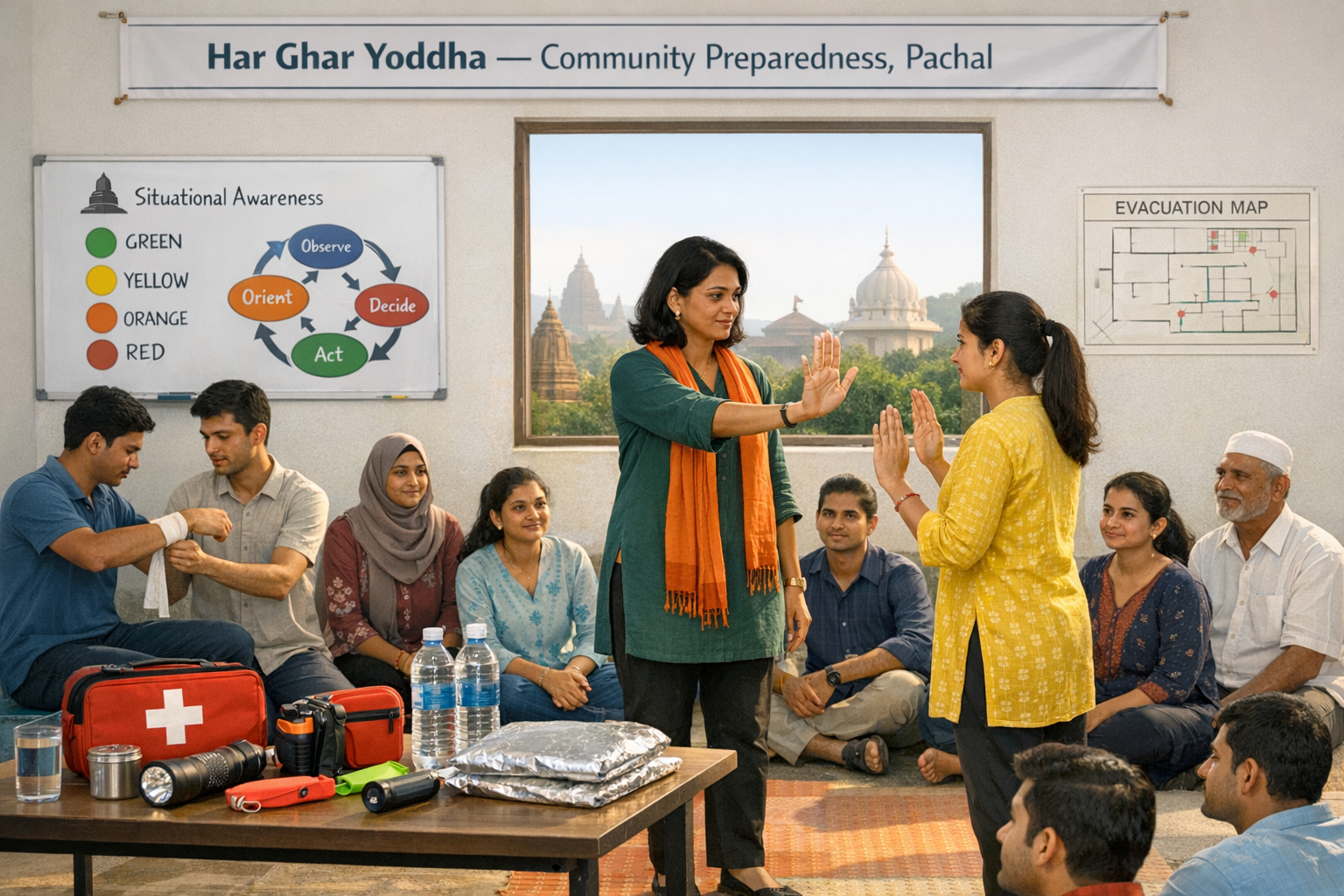
The Har Ghar Yoddha initiative in Pachal, Ratnagiri, drew strong youth participation and reframed safety as a lawful, community-first responsibility. Training combined non-violent self-defence, first aid, disaster readiness, cyber hygiene, and heritage stewardship with an explicit legal-ethical framework. The program interpreted “Deity, Nation, and Dharma” as care for sacred heritage, commitment to constitutional values, and…
-
Surajya Abhiyan Launches Citizen Portal for Civic Grievances, Inaugurated by VHP’s Alok Kumar

On 9 April 2026, VHP International President Advocate Alok Kumar inaugurated the Surajya Abhiyan digital platform to streamline local civic grievance redressal and reduce administrative inefficiencies. The initiative emphasizes accountable, transparent governance with time-bound workflows, citizen-confirmed closures, and data-informed oversight. Designed for inclusion, it can support multilingual interfaces, assisted channels, and accessibility standards so that…
-
Mīmāṃsā Darśana on the World: Realism, Sacred Symbolism, and Living Relevance Today

Mīmāṃsā Darśana offers a realist, practice-centered vision of the world: everyday life is a reliable field for meaningful action where dharma is learned and lived. It grounds duty in the apauruṣeya Veda, clarifies injunctions through precise hermeneutics (śruti–liṅga–vākya–prakaraṇa–sthāna–samākhyā), and explains how ritual symbolism educates attention without abandoning empirical realism. Its semantic theories (abhihitānvaya vs anvitābhidhāna)…
-
Akshaya Tritiya 2026 (Akha Teej): Treta Yugadi, Timeless Auspiciousness, and Sacred Beginnings

Akshaya Tritiya (Akha Teej) in 2026 falls on April 19 and is revered as Treta Yugadi, the annual commemoration of Treta Yuga’s inception on Vaishakha Shukla Tritiya. The day’s auspiciousness, often linked to the Sun in Aries and the waxing Moon in Taurus, makes it one of the celebrated Sade-Teen Muhurat. Traditions emphasize Vishnu-Lakshmi worship,…
-
Muni Shukadeva Jayanti 2026: Sacred Date, Ritual Guide, and Timeless Bhagavata Wisdom
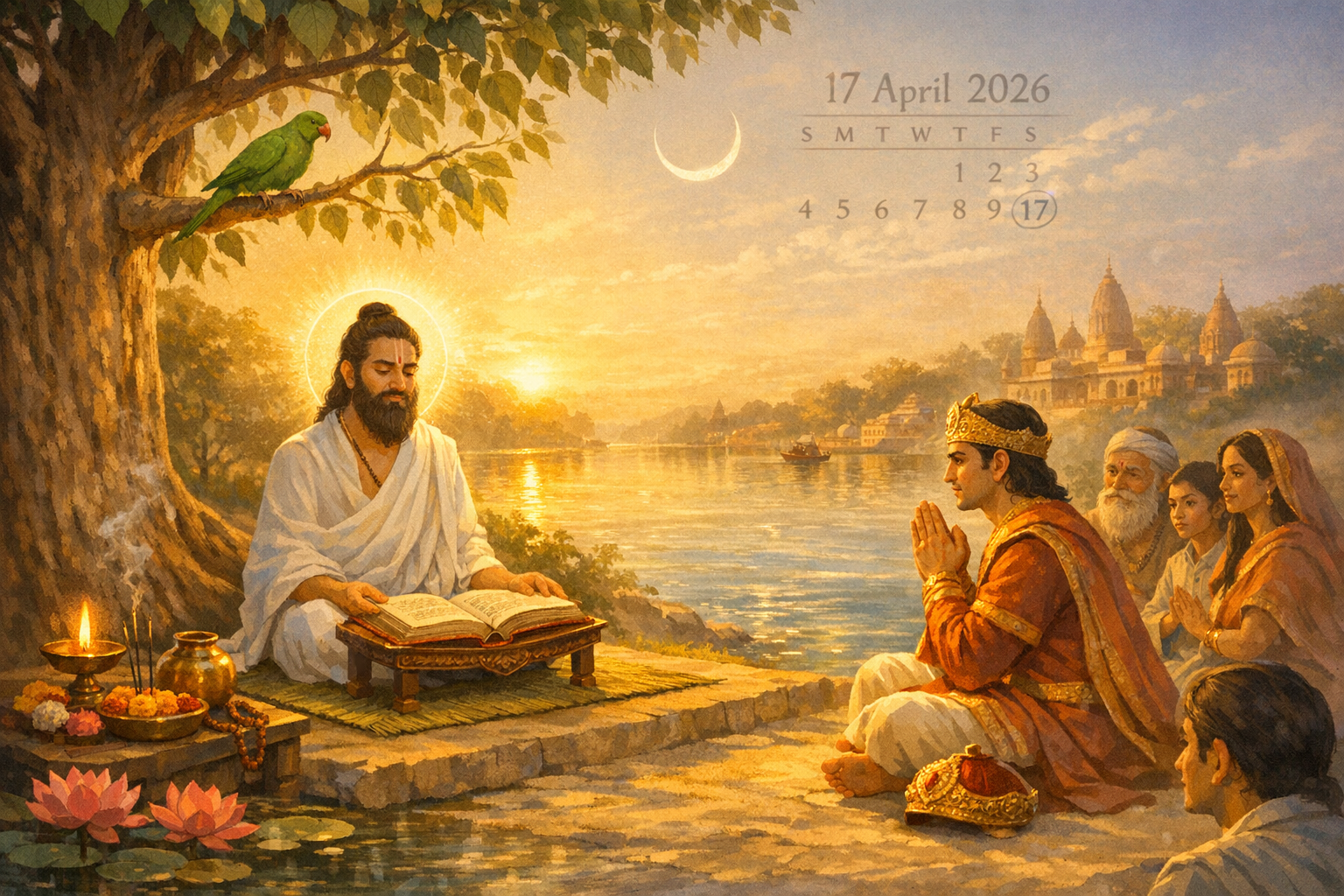
Muni Shukadeva Jayanti 2026, honoring the son of Sage Veda Vyasa and the primary narrator of the Bhagavata Purana, falls on Friday, 17 April. The observance aligns with Vaishakh Amavasya in the Purnimanta (North Indian) system and with Chaitra Amavasya in Amavasyant calendars, reflecting legitimate regional diversity in the Hindu calendar. The day invites devotees…
-
HRĪṂ, the Māyā Bīja: Definitive Guide to Shakta Power, Heart Awakening, and Mantra Science

This long-form guide unpacks HRĪṂ (Hrim/Hreem), revered in Shākta traditions as the Māyā bījathe primordial seed syllable of Mahāśakti. It explains the bīja’s phonetic anatomy (ha–ra–ī–ṁ), why it is called the ‘Māyā’ seed, and how its psychoacoustic arc mirrors manifestation and dissolution. Readers learn where HRĪṂ appears in practice (Navārṇa, Śrī Vidyā Pañcadaśī), how it…
-
Powerful Vikata Sankashti Chaturthi, 5 April 2026: Moonrise 9:50 PM, Puja and Vrat Guide

Sankashti Chaturthi in April 2026 occurs on Sunday, 5 April 2026, as Krishna Chaturthi in Chaitra and is observed as Vikata Sankashti Chaturthi. Moonrise for concluding the fast is noted at 9:50 PM IST, with local variations to be confirmed via a reliable Panchang. The vrata emphasizes disciplined worship of Shri Ganeshaofferings of durva, modak,…
-
Master Your Breath, Still Your Mind: Kapila’s Precise Yogic Protocol in SB 3.28.8

SB 3.28.8 presents Kapila’s concise blueprint for meditation: a sanctified, secluded space; an easy, erect posture (svasti samāsīnaḥ); and regulated breath control. The verse aligns environment, asana, and pranayama to quiet the senses and stabilize attention for dhyana. Practical guidance includes seat preparation, spinal alignment, and gentle ratios such as 4–4 progressing to 4–6 exhalations.…
-
When Darkness Falls: Vedic Science of Twilight, Tamas, and Transformative Evening Rituals

Dusk in Hindu tradition is not superstition but a precise window for inward recalibration, grounded in Vedic wisdom about the guṇas and circadian rhythms. This long-form analysis explains how rising tamas at sunset, properly guided, supports rest, clarity, and ethical closure. It details the technical structure of sandhyā-vandanam, the timing and purpose of pradoṣa-kāla, and…
-
Inside Kukke Subramanya: A Sacred, Comprehensive Guide to Sub-Shrines, Rituals, and Architecture

Kukke Subramanya Temple in Dakshina Kannada, Karnataka, is famed for Subrahmanya’s protective grace and for Naga-related rites such as Sarpa Samskara and Ashlesha Bali. This comprehensive guide maps the temple’s sub-shrineshighlighting the Purathana KukkeLinga Temple (Vimana Type – NO; Sanctorum Shape – Square Shape) located indoors of the main complexalongside Adi Subrahmanya and Sri Samputa…
-
Ram Navami Clashes, Nitesh Rane’s ‘Equal Rules’ Call, and a Blueprint for Harmony

A heated exchange around Ram Navami 2026 and Nitesh Rane’s call for “equal rules” across festivals highlights a core civic challenge: protecting religious freedom while ensuring public order. This analysis maps the constitutional framework (Articles 14 and 25–28), explains content-neutral, time–place–manner regulation, and outlines how parity looks in real operations. It details actionable stepssingle-window permissions,…
-
Who Is a True Guru? Shrimad Bhagavat’s 24 Transformative Lessons from the Avadhut

What is a true Guru according to the Shrimad Bhagavat? The Eleventh Canto’s dialogue between King Yadu and an Avadhut answers by expanding the Guru beyond a single figure to a universal function that dispels ignorance wherever it appears. Through 24 striking lessons from nature and human lifeEarth’s forbearance, the Ocean’s equanimity, Pingalā’s renunciation, the…