-
Srimad Bhagavatam 3.27.5: Powerful Discipline for Mastering the Mind

Śrīmad Bhāgavatam 3.27.5 offers a precise teaching on mastering the mind through serious bhakti-yoga and detachment. The verse explains that consciousness attached to temporary enjoyment must be gradually redirected toward Kṛṣṇa through disciplined devotional practice. Its key terms, including cittaṁ, asatām pathi, bhakti-yogena tīvreṇa, and viraktyā, reveal a sophisticated psychology of habit, attention, and liberation.…
-
Evrat Jivrat Vrat 2026: Powerful Gujarati Fasting Tradition for Family Wellbeing

Evrat Jivrat Vrat 2026 will be observed on Wednesday, August 12, 2026, mainly in Gujarat during Ashad Maas. The vrat is traditionally observed by married women for the health and longevity of their husbands, with fasting, puja, naivedya, jagran, and charity forming its core practices. It is observed from Ashad Vad Trayodashi to Ashad Amavasya…
-
Vakresvara Pandita’s Ecstatic Dance: Powerful Lessons in Bhakti, Seva, and Unity

Vakresvara Pandita is remembered in the Gaudiya Vaisnava tradition as a deeply beloved servant of Lord Caitanya Mahaprabhu and as one of the chief dancers in the devotional gatherings at Srivasa Pandita’s house. His ability to dance in ecstatic devotion for seventy-two hours is understood as a sign of complete absorption in bhakti rather than…
-
Anatomy of a Nihang Singh: Powerful Symbols, Sacred Identity, Martial Legacy

This article explores the anatomy of a Nihang Singh as a living expression of Sikh symbolism, Khalsa identity, and martial discipline. It explains the meaning of the blue bana, dumalla, shastar, kirpan, kara, kamarkassa, horse, nagara, and Nishan Sahib within the wider framework of Sikh history. The discussion emphasizes that Nihang identity is not costume…
-
Nagamani Revealed: The Powerful King Cobra Jewel Myth, Science, and Sacred Meaning

Nagamani, also known as the snake-stone or serpent jewel, is one of the most fascinating myths connected with cobras and naga traditions in Indian culture. This article explains the belief that a divine jewel rests on the head of a powerful serpent while carefully separating folklore from scientific evidence. Modern zoology does not support the…
-
Powerful Dharma Insights: Faith, Surrender, and the Courage to Steady the Mind

This long-form reflection explains how faith, surrender, and acknowledgement can steady a shaky mind without denying the reality of anxiety or pain. Drawing from Buddhist Dharma, meditation, and wider Dharmic traditions, it presents faith as a disciplined form of strength rather than blind belief. The article explores how ego intensifies suffering by rejecting unpleasant experience…
-
Shiva, Ganga, and Sahasrara: Powerful Symbol of Liberation and Supreme Consciousness

This article explores the profound symbolism of Shiva bearing Ganga upon his matted locks and connects it with the yogic idea of the Sahasrara Chakra. It explains the Puranic story of Bhagiratha, the descent of Ganga, and Shiva’s role as the consciousness capable of receiving and regulating divine force. The discussion interprets Ganga as sacred…
-
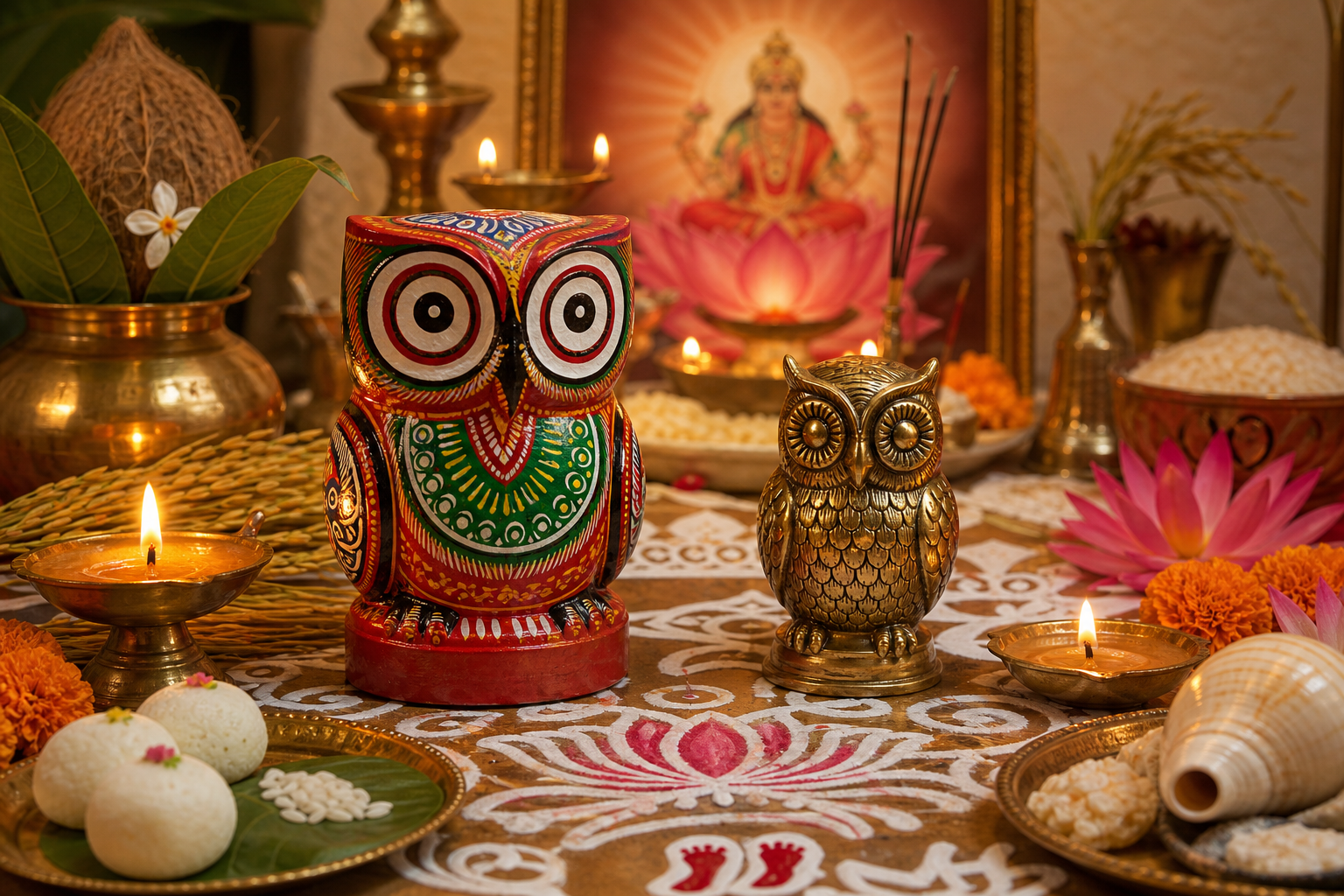
Bengal’s Sacred Lakshmi Owl: Powerful Meaning Behind Wooden and Metal Worship Symbols

Bengal’s wooden and metal Lakshmi owls are not merely decorative ritual objects; they represent the sacred vahana of Goddess Lakshmi and carry deep symbolic meaning. The owl, known as Uluka, expresses vigilance, discernment, and the need to preserve prosperity through dharmic conduct. In Bengali Lakshmi Puja, especially Kojagari Lakshmi Puja, the owl connects household worship…
-
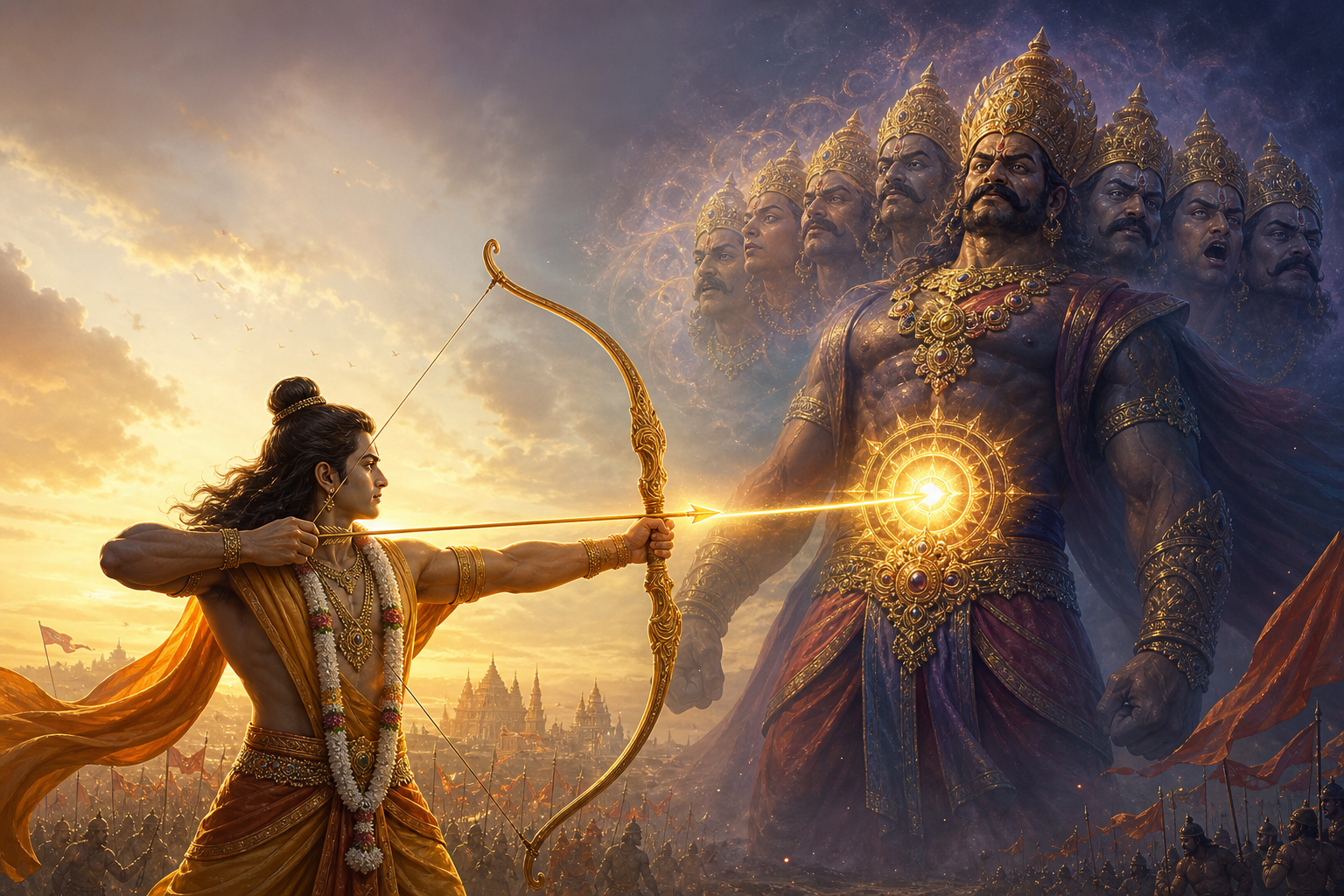
Ravana’s Regenerating Heads: The Profound Wisdom Behind Rama’s Final Aim

This article explores the symbolism of Ravana’s regenerating heads and the deeper meaning behind Rama’s final victory in the Ramayana. It explains that the repeated severing of Ravana’s heads represents the failure of treating symptoms while leaving the root of ego, desire, and adharma untouched. The piece distinguishes between Valmiki Ramayana and later traditional interpretations…
-
Arjuna Anugrahamurti: Shiva’s Fierce Grace Through Trial, Combat and Compassion

Arjuna Anugrahamurti, also known as Kiratarjunamurti or Pashupatamurti, presents Shiva as the divine tester who grants grace only after the seeker is inwardly prepared. The Mahabharata episode shows Arjuna performing tapas, encountering Shiva in the form of a Kirata hunter, and receiving the Pashupatastra after a fierce spiritual trial. This narrative explains that divine blessings…
-
Ugadi 2026: Powerful Guide to Telugu and Kannada New Year Traditions

Ugadi 2026, also known as Yugadi, will be observed on Thursday, 19 March, marking the Telugu and Kannada New Year. The festival begins Sri Parabhava nama Samvatsara in the traditional Hindu Panchangam. It falls on Chaitra Shukla Pratipada and is deeply connected with spring, renewal, and the sacred understanding of time. The celebration is especially…
-
Bhagavatam 4.21.37–52: Maharaja Prithu’s Transformative Dharma of Leadership, Bhakti, and Unity

Srimad-Bhagavatam 4.21.37–52 closes Maharaja Prithu’s instructions with a rare integration of rajadharma (ethical governance) and bhakti-yoga (devotional practice). The verses argue that just leadership, social cooperation, and personal sadhana are mutually reinforcing and teleologically ordered toward pleasing the Supreme. Framed through the Paramātman perspective, the text grounds nonviolence, truthfulness, and compassion in the recognition of…
-
Self-Forgiveness in Hindu Dharma: Bhakti, Grace, and the Psychology of Letting Go

Self-forgiveness is framed in Hindu Dharma as a doctrinal necessity for progress in bhakti, not a sentimental luxury. Drawing on Bhagavad-gita (6.5–6; 9.30–31; 18.66), the analysis explains why refusing grace prolongs separation from Krishna and how mercy operates independently of merit. It integrates contemplative scienceespecially the role of the vagus nerve and shame regulationwith devotional…
-
Solemn HJS tribute at ‘Hat Katro Khamb’ on Goa Revolution Day honors martyrs, strengthens unity

On Goa Revolution Day, the Hindu Janajagruti Samiti (HJS) honored known and unknown martyrs at Old Goa’s ‘Hat Katro Khamb,’ connecting a pivotal modern anniversary to a tangible site of memory. The ceremony emphasized dignity, unity, and freedom of conscience across dharmic traditions. Contextualizing the Goa Inquisition (1560–1812) within public history, the tribute rejected sensationalism…
-
SpiritualityPessimistic or Optimistic? Dharmic Wisdom to Convert Suffering into Hope (ISKCON 2026)

On 17 June 2026 at ISKCON Stockholm (Bromma), HH S.B Keshav Swami Maharaj’s lecture spotlighted a timeless question: is spirituality pessimistic or optimistic? This analysis shows how dharmic traditionsHinduism, Buddhism, Jainism, and Sikhismconverge on a disciplined, realistic optimism grounded in equanimity and ethical action. The Bhagavad Gita’s samatva, Buddhist upekkhā, Jain anekāntavāda, and Sikh Chardi…
-
From Skepticism to Insight: Srila Prabhupada’s 1971 Mumbai Pandal and Real Knowledge

A 1971 public pandal in central Mumbaifeaturing Srila Prabhupada and the Hare Krishna movementdemonstrated how real knowledge is identified not by rhetoric but by lineage, clarity, and ethical fruit. The event’s pedagogical elementskirtana, lucid exposition, and open dialoguereflected Sanatana Dharma’s emphasis on hearing, inquiry, and practice. Read through a dharmic epistemology of pramāṇa (pratyakṣa, anumāna,…
-
Reframing Letting Go: Evidence-Based, Compassionate Strategies to Heal Betrayal, Divorce, and Grief

True letting go does not condone harm or erase the past; it integrates grief with acceptance so life can move forward with clarity and compassion. This long-form, research-informed account describes how betrayal and divorce can be reframed through evidence-based trauma recovery, nervous-system regulation, and values-guided action. Grounded in dharmic principlesahimsa, aparigraha, simran, and karuṇāit aligns…
-
Houston Honors 60 Years of ISKCON: A Powerful Gala of Bhakti, Culture, and Community

ISKCON of Houston’s 60th Anniversary Gala on June 13, 2026 convened more than 275 attendees, including the Honorable Consul General of India Mr. D. C. Manjunath, His Holiness Giriraj Swami, and His Holiness Hanumat Presaka Swami. The evening integrated Vedic invocations, kirtan, cultural performances, and prasadam, reflecting six decades of ISKCON’s global bhakti-yoga legacy. Attendees…
-
Unlocking Dharma Megha Samadhi: Patanjali’s Ultimate Yoga State Beyond Karma and Kleshas

Dharma Megha Samadhi (Yoga Sutra 4.29) is the apex of Patanjali’s path where dispassion even toward exalted knowledge gives rise to a transformative clarity that ends afflictions and karmic momentum. Classical commentators describe it as a “cloud of dharma” that showers spontaneous virtue, signaling ethical stability rather than mere peak experience. The sutras that follow…
-
Perception Shapes Destiny: Vibhishana and Ravana on Dharma, Devotion, and Right View

The Vibhishana–Ravana contrast in the Ramayana shows how perception actively shapes devotion, decision, and destiny. Vibhishana’s sattvic clarity leads to ethical counsel, śaraṇāgati to Sri Rama, and the restoration of just kingship. Ravana’s rajasic ambition and tamasic delusion produce cognitive bias, institutional decay, and ruin. The narrative aligns with Buddhist samyak dṛṣṭi, Jain Anekantavada and…