
-
Unveiling the Fourteen Lokas: A Deep, Clarity-Driven Journey through Hindu Consciousness

This long-form, research-driven exploration clarifies the fourteen lokas (seven Urdhva and seven Adho) in Hindu cosmology as both cosmic regions and states of consciousness. Drawing on Hindu scriptures and Vedic philosophy, it explains each loka’s pedagogical role, distinguishes Adho lokas from Naraka, and shows how the “cosmic ladder” aligns with yogic practice. The piece emphasizes…
-
Vedic Environmentalism: Dharmic Ethics for Sustainability, Ahimsa, and Planetary Care

This in-depth exploration of Vedic environmentalism presents a rigorous, dharmic framework for sustainability that unites Hinduism, Buddhism, Jainism, and Sikhism around shared ecological ethics. Drawing on the Īśā Upaniṣad, Bhūmi Sūkta, and the Bhagavad Gītā, it translates reverence into practical guidance on resource conservation, circular economy design, and Clean Energy transitions. It highlights sacred groves,…
-
From Restless Mind to Inner Clarity: How Yoga Rewires the Brain, Body, and Behavior

Yoga reframes a “restless” mind as a dynamic wave and offers precise methods to organize that energy into clarity, steadiness, and purpose. Patanjali’s ashtanga integrates ethics, postures, breath, and meditation, while parallel practices in Buddhism, Jainism, and Sikhism affirm unity in spiritual diversity. Evidence links yoga to better autonomic balance, reduced stress reactivity, improved mood,…
-
Kindling the Inner Agni: How Food, Breath, and Mind Shape Consciousness in Hindu Philosophy

This essay explores Agni as the inner principle of transformation in Hindu philosophy and across Dharmic traditions. It explains how food, breath, sensory inputs, and intention function as fuels for consciousness through the Upanishadic pañca-kośa model. Drawing from the Bhagavad Gītā’s sāttvika–rājasa–tāmasa framework and Ayurveda’s doctrine of Agni, it outlines practical protocols to strengthen clarity,…
-
From Adversity to Excellence: How Dharmic Wisdom Transforms Hardships into Strength

This article explains how adversity functions as a deliberate curriculum for strength and wisdom across Hinduism, Buddhism, Jainism, and Sikhism. It synthesizes dharmic teachings with contemporary research on resilience to present a unified, practical method. Readers gain a daily protocol that combines Karma Yoga, meditation, yogic breathing, ethics, and seva to build measurable resilience. Clear…
-
When Nothing Remains, Fear Ends: A Dharmic Science of Abhaya beyond Ego and Identity

This essay maps a dharmic science of fearlessness (Abhaya) grounded in Hindu philosophy and harmonized with Buddhism, Jainism, and Sikhism. It clarifies how fear originates in avidya and duality, then outlines practical pathsJnana, Karma, Bhakti, and Raja Yogato dissolve misidentification and regulate reactivity. Readers gain scriptural anchors from the Upanishads, the Bhagavad Gita, and the…
-
From Ego to Empathy: A Dharmic, Science-Backed Path to a Cleaner Mind and Heart
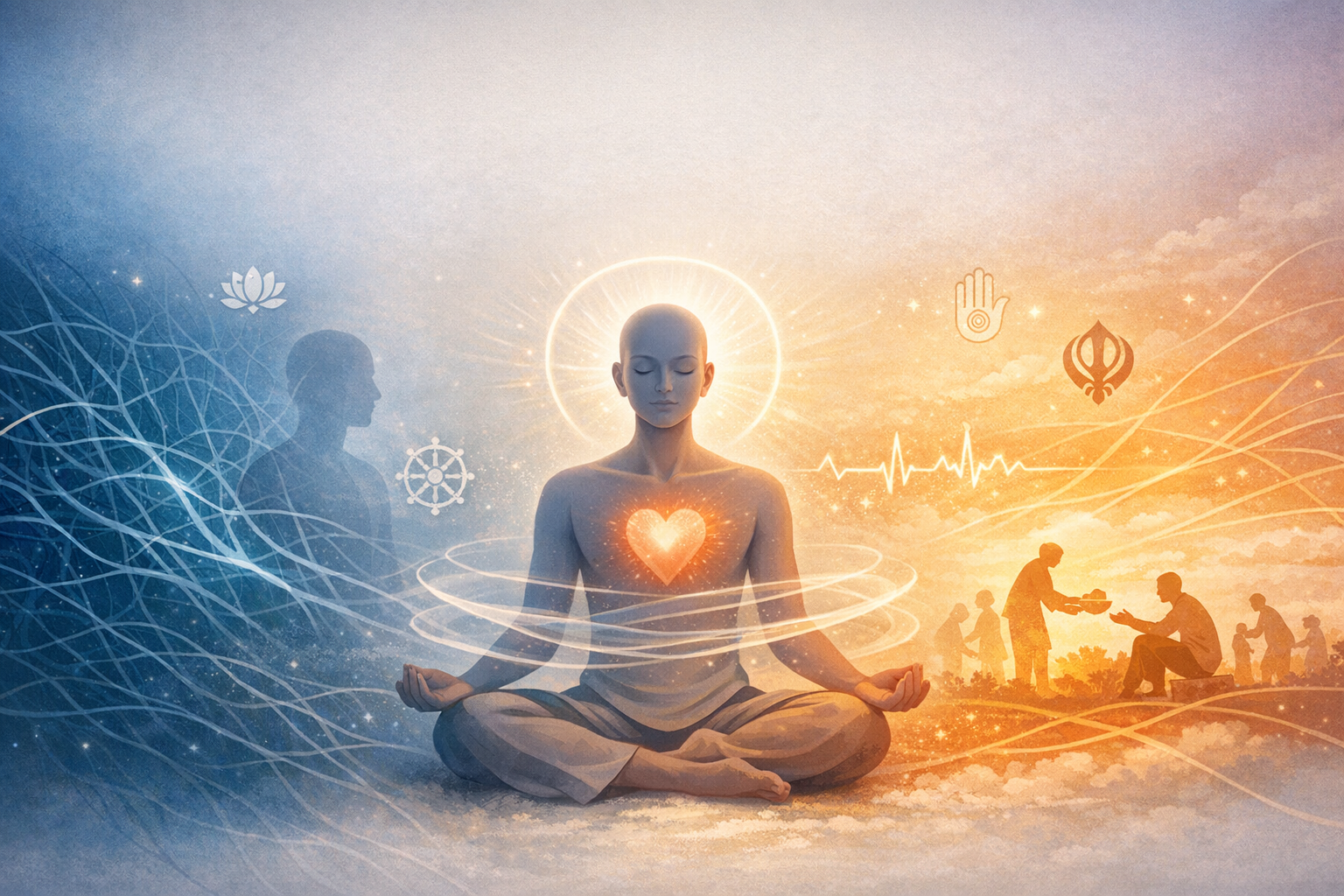
Reducing self-absorption is a practical way to keep the mind clear and the heart clean. Dharmic traditionsHinduism, buddhism, jainism, and sikhismconverge on this insight through ahimsa, aparigraha, seva, metta, simran, and Yoga, offering unity in spiritual diversity. Psychological research on mindfulness, compassion training, and breath regulation supports these practices by reducing rumination, stabilizing attention, and…
-
Breaking the Invisible Cage: Hindu Dharma on Renewal, Impermanence, and Dynamic Living

Modern routines can harden into an invisible cage, but Hindu Dharma treats life as ceaseless transformation rather than fixed habit. This essay explains why stagnation is a spiritual peril, using core ideas such as samskara, gunas (sattva–rajas–tamas), abhyasa–vairagya, and rita. It distinguishes lifeless routine from living rhythm, showing how nitya- and naimittika-karmas, pranayama, dhyana, and…
-
Arise and Awaken: Why Sense Control is the First Mastery on the Path to Liberation

A rigorous yet accessible exploration explains why control of the senses is the first indispensable skill for Self-Realization across Hinduism, Buddhism, Jainism, and Sikhism. Drawing on the Bhagavad Gita, Upanishadic insights, and Patanjali’s Yoga, it clarifies pratyahara as alignment rather than repression. Practical guidance shows how breath-led meditation, japa, and ethical living reduce impulsivity, stabilize…
-
Moksha Beyond the Gunas: A Definitive, Scholarly Guide to Liberation and Dharmic Unity

Moksha in Hindu philosophy is best understood as freedom from the three gunassattva, rajas, and tamasrather than the dominance of any one of them. This comprehensive guide explains how Sankhya, Vedanta, and Yoga converge on transcending material nature, while the Bhagavad Gita clarifies why even sattva can bind. It offers a clear synthesis of Jnana,…
-
Ultimate Reality Cannot Be Taught: Profound, Experiential Wisdom in Hinduism and Dharmic Paths
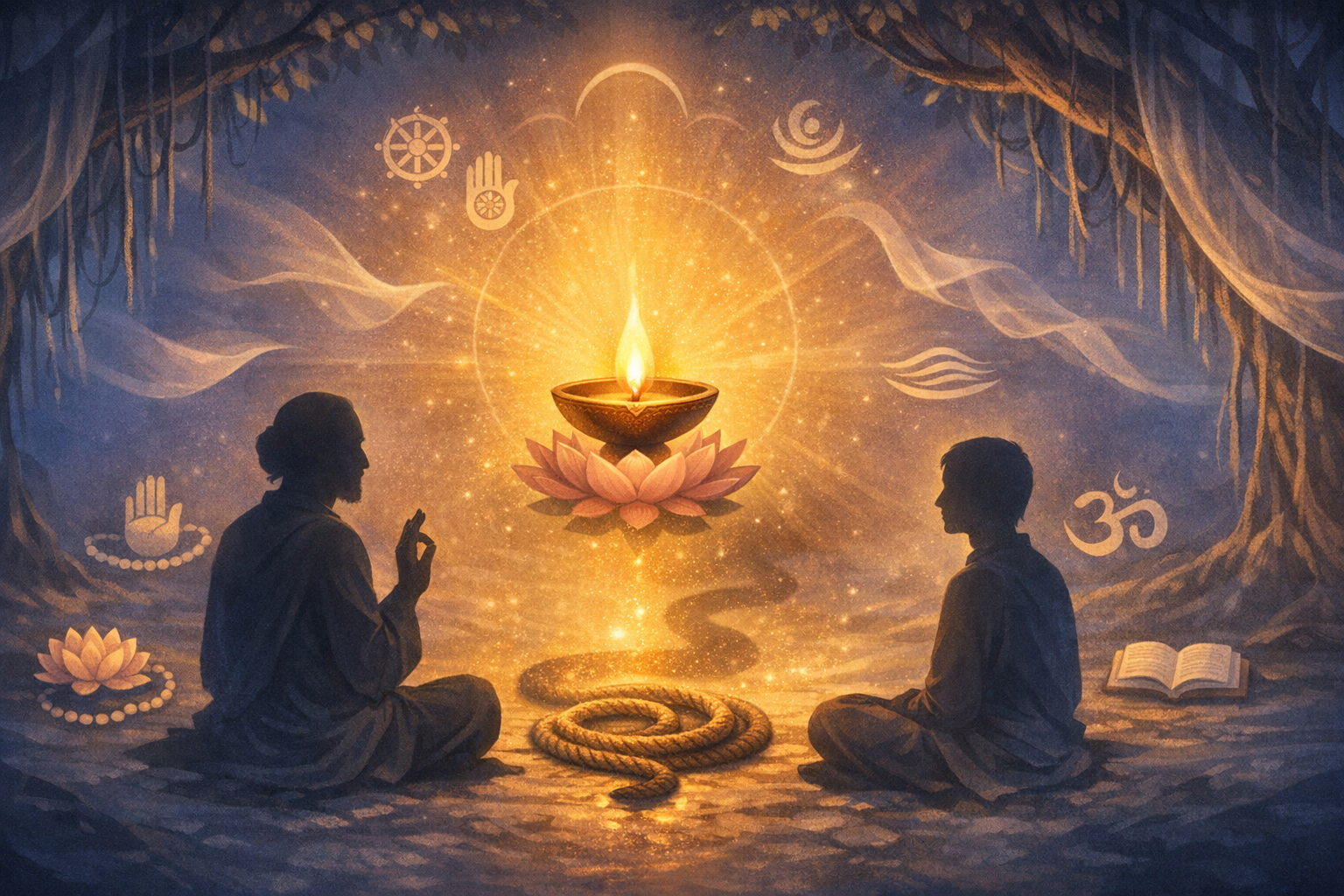
This long-form exploration clarifies why Ultimate Reality in Hindu philosophy cannot be taught as a mere concept and must be realized through direct experience. It maps the classical triad of śravaṇa–manana–nididhyāsana and the role of Guru–Shishya Tradition, highlighting how scripture and guidance remove ignorance rather than transfer realization. Readers gain a technically sound overview of…
-
Mahatparinama Unveiled: The Transformative Journey from Subtle to Manifest Reality in Hindu Philosophy

Mahatparinamathe transformation from subtle to manifestprovides a unifying grammar for Hindu philosophy, linking Samkhya’s cosmology, Vaisheshika’s atomism, Vedanta’s metaphysics, and Yoga’s inner practice. This comprehensive explainer maps the emergence from mahat (cosmic intelligence) through ahamkara, tanmatras, and the mahabhutas, clarifying how sukshma processes shape sthula outcomes. It contrasts satkaryavada and asatkaryavada, situates parinama and vivarta…
-
Women’s Wellbeing at Bhaktivedanta Manor: Empowering, Protecting, and Inspiring Through Dharma

A Women’s Wellbeing event at Bhaktivedanta Manor, convened by DEVI with Devotee Care, showcased a rigorous, dharmic approach to empowerment, connection, protection, and inspiration. Timed between International Woman’s Day and Mother’s Day, it linked civic appreciation with everyday care, emphasizing Yoga, Mindfulness, bhakti-kirtan, and accessible Ayurveda for practical self-care. The presence of Cllr Parveen Rani…
-
Queen Leela and King Padma in Yoga Vasistha: The Eternal Dance of Desire, Time, and Liberation

This long-form exploration of Queen Leela and King Padma in the Yoga Vasistha unpacks how consciousness, desire, and time interweave to produce the felt world. Readers learn why the text situates death and rebirth within the triad of gross, subtle, and causal bodies, clarifying continuity without clinging. The analysis translates core methodsshravana, manana, nididhyāsana, and…
-
Beyond Indra’s Heaven: King Arishtanemi’s Bold Renunciation and Yoga Vasishta’s Vairagya

The opening narrative of the Yoga Vasishta, where King Arishtanemi declines Indra’s heaven, distills the text’s core teaching: lasting freedom arises from vairagya (renunciation) grounded in clear discrimination (viveka). Rather than reject joy, the king outgrows the promise of celestial pleasure by recognizing its impermanence and karmic limits. This analysis situates the story within Yoga…
-
Faridabad Yoga Workshop by HJS & Jeev Kalyan Sansthan Boosts Holistic Health and Focus

Hindu Janajagruti Samiti and Jeev Kalyan Sansthan hosted a focused Yoga Workshop in Sector 19, Faridabad, where 19 participants explored foundational asanas and pranayama for holistic health and self-development. The program emphasized safe alignment, breath regulation, and reflective rest to improve mobility, postural integrity, and autonomic balance. Instruction framed nasal, diaphragmatic breathing as the cornerstone…
-
Kundalini Tantra Unveiled: A Scientific, Dharmic Guide to Awakening the Serpent Power
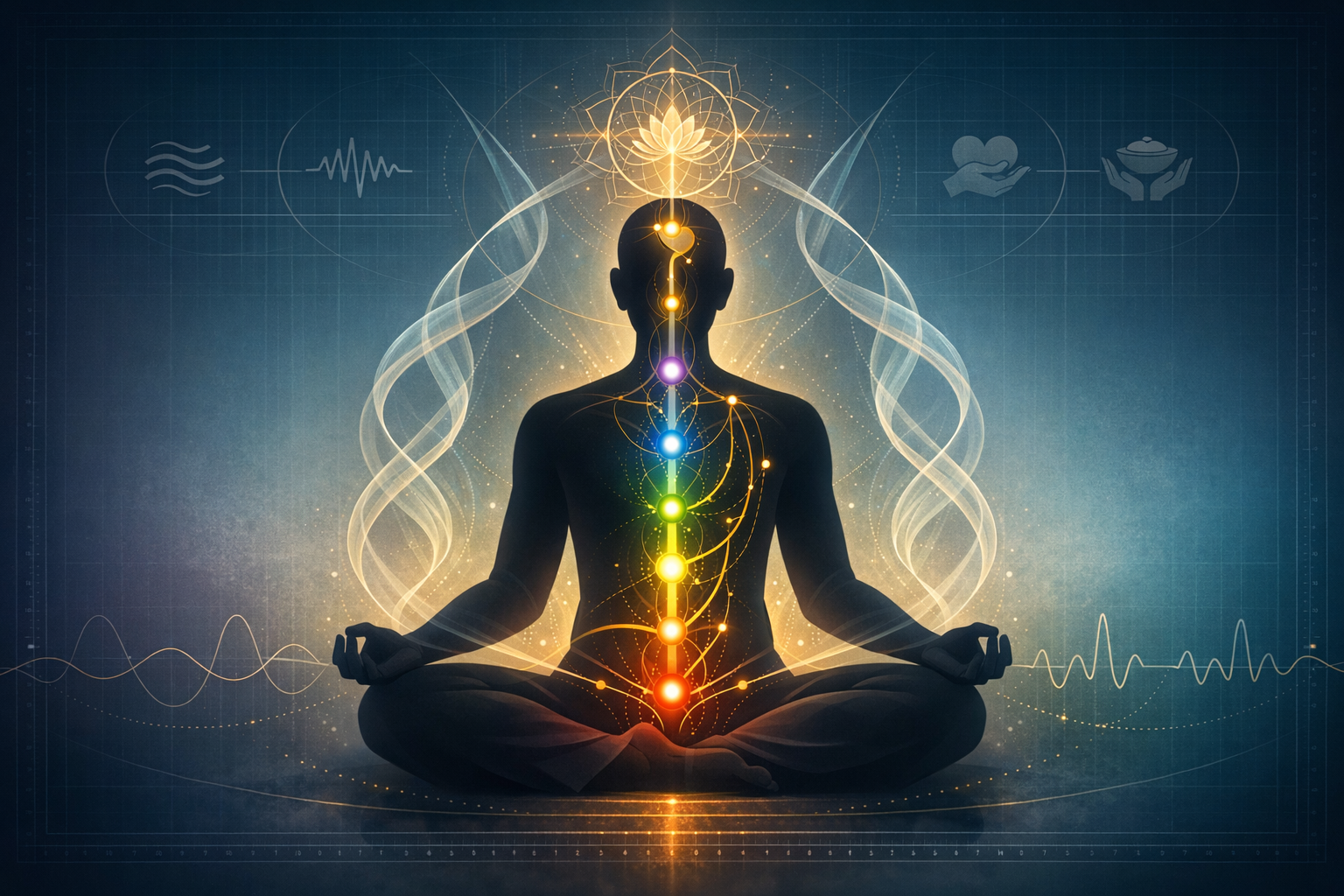
This comprehensive guide presents Kundalini Tantra as a precise, ethical, and integrative science shared across dharmic traditions. It clarifies yogic anatomy (nadis, chakras, sushumna nadi) and explains how breathwork, bandhas, mudras, mantra, and meditation organize subtle energy safely. A stepwise 12-week framework details how to build foundations with yama-niyama, asana, and pranayama before progressing to…
-
From Ritual to Realization: Ending Barren Devotion with Dharmic Discipline and Insight

Modern worship often looks vibrant yet feels spiritually thin. This long-form, academic analysis explains why devotion turns barrentransactional aims, inattentive ritual, neglected ethics, and fragmented attentionand details what Hindu, Buddhist, Jain, and Sikh scriptures actually prescribe for transformation. It offers an integrated method grounded in yama–niyama or śīla, daily abhyasa of japa or dhyana, breath…
-
Tapas, Siddhis, and the Hidden Trap of Mada: Preventing Spiritual Arrogance in Sadhana

Hindu philosophy honors tapas and acknowledges the possibility of siddhis, yet warns that both can catalyze madaspiritual arroganceif pursued without humility and ethical grounding. Drawing on the Yoga Sutra, the Bhagavad Gita, and epic narratives, this analysis shows how austerity and unusual capacities become obstacles when they inflate identity. Converging perspectives from Buddhism, Jainism, and…
-
From Overwhelm to Ease: A Dharmic, Science-Backed Guide to Cooling an Anxious Mind

Anxiety can be cooled reliably by combining physiology, contemplative training, and ethical living. This guide bridges modern neuroscience with dharmic wisdom from Hinduism, Buddhism, Jainism, and Sikhism to offer practical tools that downregulate the nervous system. Readers learn how breath awareness, pranayama, and humming stimulate the vagus nerve and improve HRV for fast-acting calm. Somatic…