
-
The School of Life: Insights from HH Svayam Bhagavan Keshava Maharaja’s Marathon Podcast (Dec 2025)

In December 2025, HH Svayam Bhagavan Keshava Maharaja’s Marathon Podcast, The School of Life, presented a disciplined framework for living as a spiritual education. The approach integrates puruṣārthas with yogic psychology, translating Vedic philosophy and the Upanishads into daily, reproducible practices. Bhakti, karma yoga, jñāna, and dhyāna are balanced with ethics like satya, ahiṁsā, and…
-
Unlocking Kosha: From the Five Sheaths of the Self to the Treasury of Hindu Statecraft

Kosha holds a powerful dual meaning in Hindu thought: the five sheaths (panchakoshas) that veil the self in Vedanta and the treasury that sustains a kingdom in classical statecraft. Grounded in the Taittiriya Upanishad and Pancha Kosha Viveka, this analysis clarifies each sheathannamaya, pranamaya, manomaya, vijnanamaya, anandamayaand maps practices from asana and pranayama to pratyahara,…
-
Disarming the Ego: A Cross-Dharmic, Science-Backed Guide to Self-Realization and Freedom

Ego is the single greatest barrier to self-realization because it fuses awareness with passing roles and narratives, a pattern Dharmic traditions diagnose with remarkable agreement. This essay integrates Vedanta, Buddhism, Jainism, and Sikhism with cognitive science to explain how Avidya and identity habits formand how to unwind them. Readers gain a precise map of the…
-
30 Science-Backed Reminders to Empower Highly Sensitive People and Restore Energy
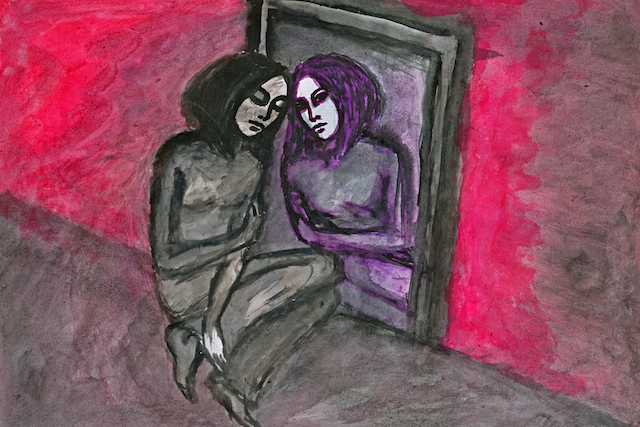
This in-depth guide reframes high sensitivity as a normal, heritable temperamentsensory processing sensitivitypresent in 15–20% of people. It distills current research on deep processing, empathy, and overstimulation, and explains how mindfulness, meditation, breathwork, yoga, and vagus nerve regulation foster emotional resilience. It integrates a dharmic perspective shared by Hinduism, Buddhism, Jainism, and Sikhism, affirming karuṇā…
-
Hanuman and the Five Elements in Kamba Ramayanam: Transformative Symbolism and Yogic Science
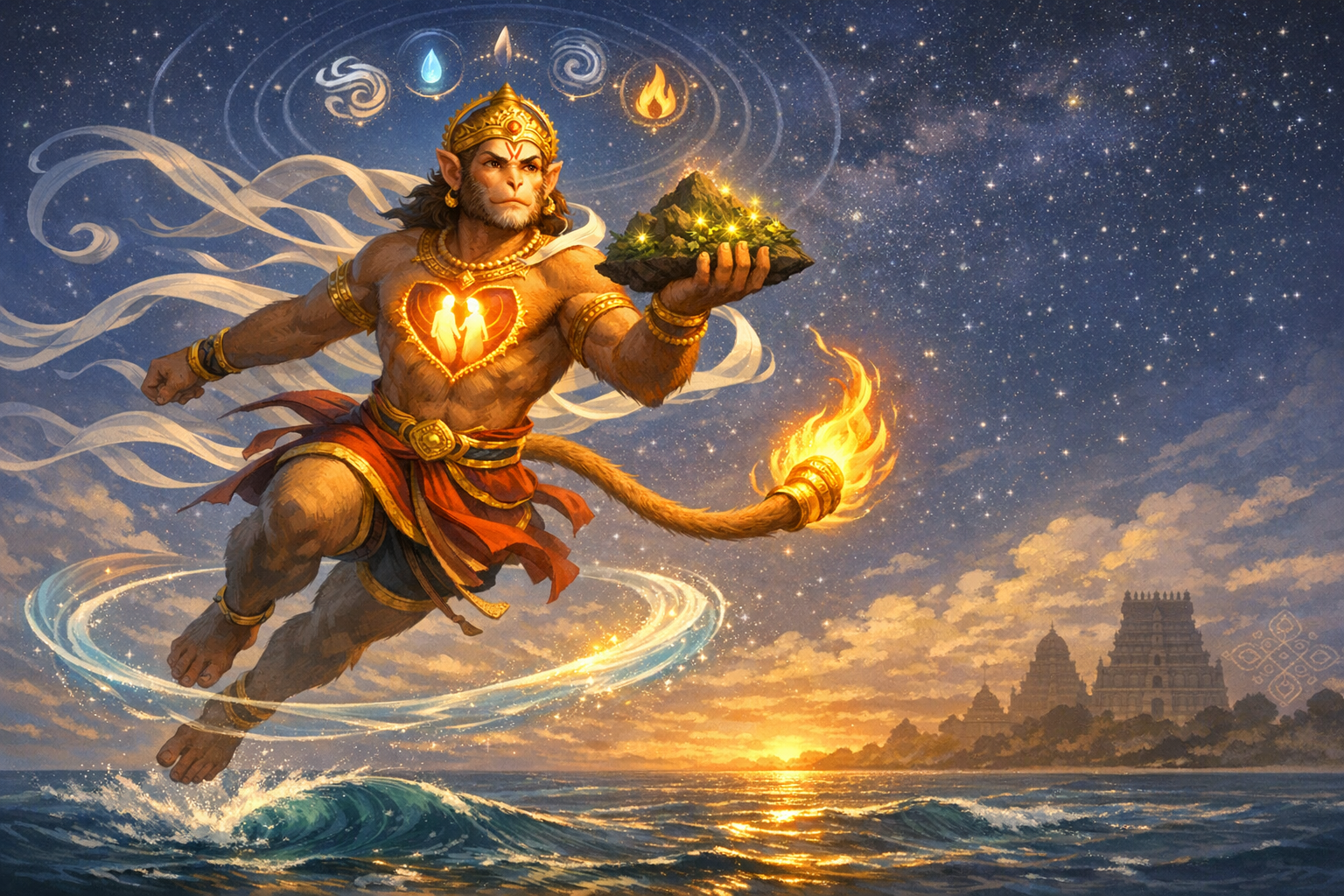
The Kamba Ramayanam presents Hanuman as an embodied map of the five great elementsVayu, Jala, Akasha, Agni, and Bhoomitransforming epic episodes into a precise guide for ethical action and inner balance. Vayu becomes pranic mastery and courage, Jala becomes adaptable resolve, Akasha becomes the clarity of spacious awareness, Agni becomes purifying discernment, and Bhoomi becomes…
-
Conquer the Kleshas: Patanjali’s Yoga Sutras on Ending Suffering and Reclaiming Clarity

This in-depth guide explains Patanjali’s doctrine of kleshasthe inner afflictions that fuel sufferingand shows how the Yoga Sutras translate diagnosis into a practical path of freedom. Readers learn the five kleshas (avidya, asmita, raga, dvesha, abhinivesha), their activation states, and how they perpetuate karma and samskaras. The article details Kriya Yoga and Ashtanga Yoga as…
-
Break the Grip of Envy: Dharmic Wisdom on Desire, Aparigraha, and True Wealth

A timeless dharmic principle“Do not covet what is not yours”is examined through Hindu, Buddhist, Jain, and Sikh frameworks to show how freedom from envy safeguards inner clarity and social trust. The analysis grounds the ethic in the Isha Upanishad, the Bhagavad Gita’s psychology of desire, and Patanjali’s yamas of Asteya and Aparigraha. It then aligns…
-
Ashtanga vs Panchanga Namaskara: Decode the Sacred Bows for Devotion, Alignment, and Safety

This in-depth guide distinguishes Ashtanga Namaskara (eight-limbed) from Panchanga Namaskara (five-limbed) with precise technique, symbolism, and practical guidance for temple and home worship. Readers learn safe alignment grounded in yogic anatomy, step-by-step instructions, and breath cues that integrate devotion with mindful movement. The article clarifies regional variations and etiquette, including when temples prefer Panchanga for…
-
When Sacred Sound Met the Beatles: Srila Prabhupada’s 1969 Kirtan at Tittenhurst Park

In September 1969 at Tittenhurst Park, Srila Prabhupada brought rigorous bhakti practice into dialogue with leading artists of the age. This article reconstructs that setting and examines chanting kirtan and japa as a precise method for liberation within Gaudiya Vaishnavism. It explains how sacred sound functions theologically and technically, from breath mechanics and vocal health…
-
Protecting Energy Without Guilt: Science-Backed Boundaries for Dharmic Compassion

Protecting energy is not selfish; it is a compassionate response to finite human capacity. Drawing on burnout science, allostatic load, and polyvagal-informed insights, this article explains why social withdrawal often reflects physiological triage rather than indifference. It reframes boundaries as conditions for sustainable compassion, aligning evidence with dharmic principles such as prana, ahimsa, metta, aparigraha,…
-
Sankalpa to Samadhi: How Focused Intention Forges Divine Union Across Dharmic Paths

This article examines how strong intentionsaṅkalpa, cetanā, bhāvanā, or alignment with Hukambecomes the central engine of transformation across Hinduism, Buddhism, Jainism, and Sikhism. It explains the shared architecture that links ethics, attention training, contemplative absorption, and compassionate action, showing how these elements cohere into divine union or ultimate realization. Drawing on the Bhagavad Gita, the…
-
Escaping the ‘Good Enough’ Trap: Why Fitting In Breeds Emptiness and How to Reclaim Self‑Worth

This long-form reflection analyzes how a lifelong drive to be “good enough” evolved into approval-seeking, identity foreclosure, and inner emptinessand how reframing belonging versus fitting in changed the trajectory. It traces a concrete journey through shifting personas, numbing cycles, therapy, relationship stress, and collapse, culminating in a pivotal realization: life had been optimized for an…
-
Panchang 21 Feb 2026 (IST): Auspicious Timings, Tithi, Nakshatra, Yoga & Practical Guide

This comprehensive guide to the Panchang for Saturday, 21 February 2026 (IST) explains how to apply Tithi, Nakshatra, Yoga, and Karanatogether with Lagna, Choghadiya, Abhijit Muhurta, Rahu Kalam, Durmuhurtham, Amrit Kalam, Tarabalam, and Chandrabalamto plan the day intentionally. It details the core formulas and interpretive logic, clarifies what must be city-specific, and offers a practical…
-
Why Ganesha Rides a Mouse: Mastering the Restless Mind Through Ancient Sacred Symbolism
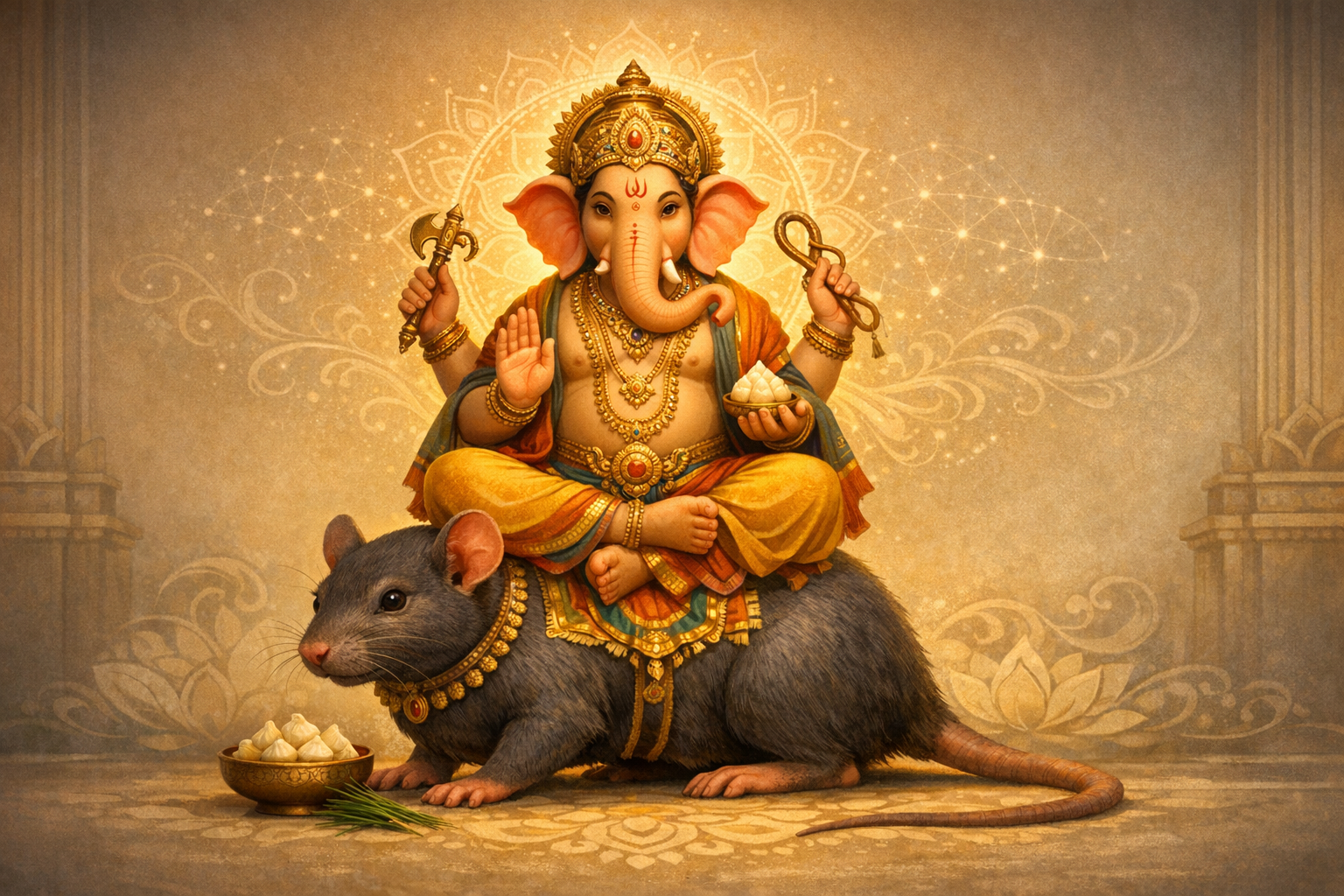
The celebrated image of Śrī Gaṇeśa seated on a mouse encodes a complete psychology of spiritual practice: wisdom seated above impulse, directing and calming the restless mind. Philological analysis of mūṣika (“the thief”) aligns with traditional models of manas, buddhi, and ahaṃkāra, while Purāṇic sources frame the vāhana as a pedagogical tool. Read alongside Yoga,…
-
Beyond Possession: Timeless Dharmic Wisdom on Desire, Consumerism, and Inner Freedom

Consumer culture promises joy through acquisition, yet the thrill fades quickly. Dharmic traditions anticipated this pattern and offer rigorous, practical tools to transform desire into discernment. Drawing from the Bhagavad Gita, the Upanishads, the Yoga Sutra, Buddhist insight on craving, Jain vows of aparigraha, and Sikh practices of remembrance and sharing, this article explains why…
-
Ganesha’s Small Eyes, Vast Vision: Iconography, Mindfulness, and Dharmic Unity Lessons
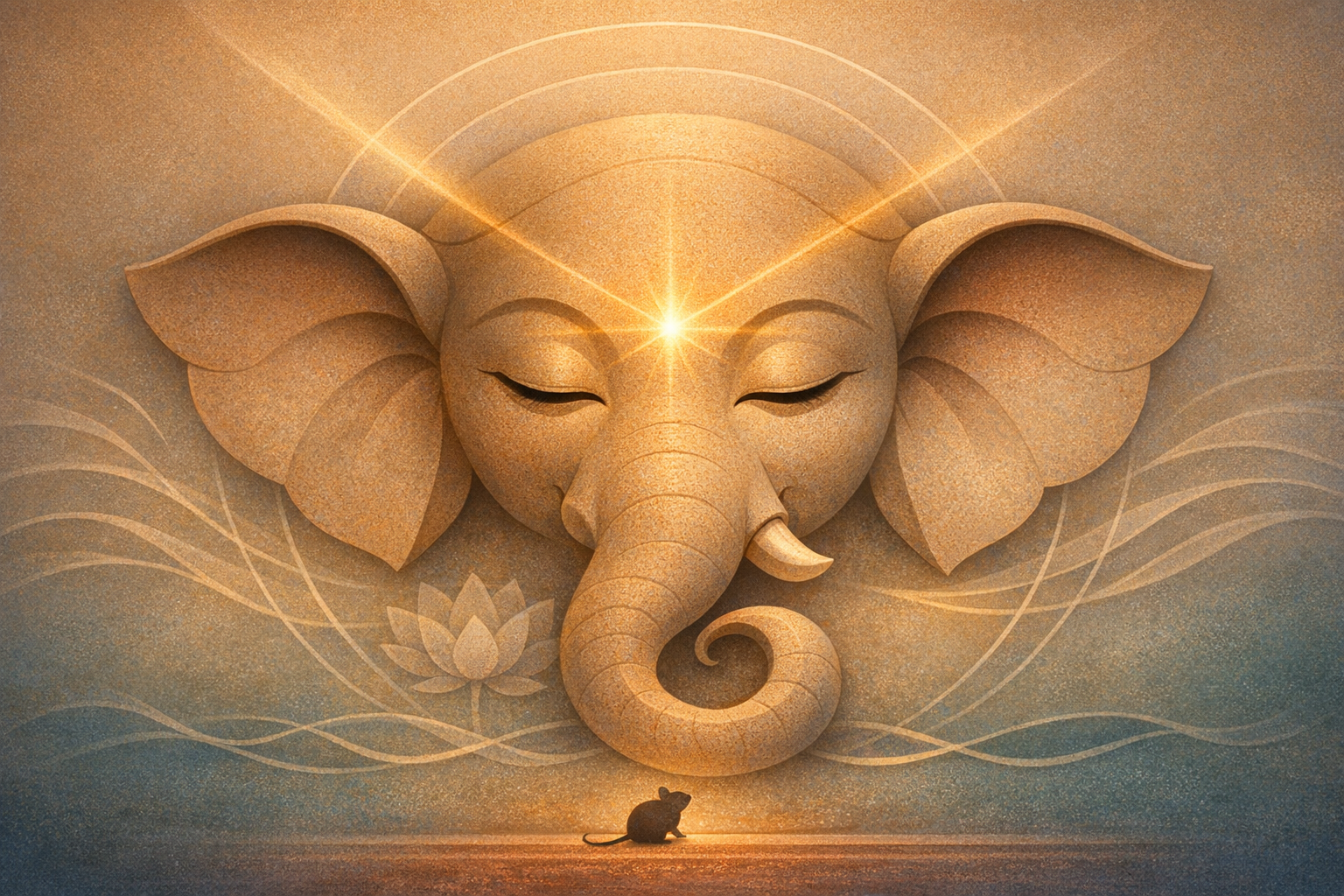
Ganesha’s small, intent eyes encode a powerful contemplative teaching: expansive wisdom arises from focused, compassionate attention. Drawing on Hindu iconography and Yoga philosophy, the symbol aligns with pratyahara, dharana, and dhyana, and is reinforced by the Bhagavad Gita’s guidance on nasikagra-drishti. Contemporary attention science complements this reading, linking steady gaze with reduced cognitive load and…
-
Deepak Chopra in the Epstein Files? What the Records Showand How Dharmic Unity Responds
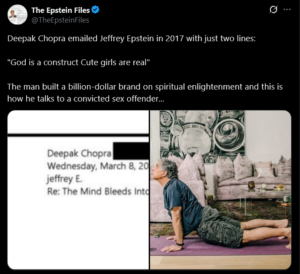
Headlines claim Deepak Chopra appears in the “Epstein files,” a term that refers to unsealed civil-court materials including contact lists, calendars, and emails. Inclusion in such documents does not, on its own, prove wrongdoing, and context is essential. Screenshots circulating online attribute controversial email lines to Chopra, while his public statement condemns abuse, denies criminal…
-
Sacred Solitude in Kali Yuga: Hindu Wisdom to Turn Loneliness into Inner Strength

Kali Yuga’s turbulence often magnifies loneliness, yet Hindu wisdom reframes solitude as a disciplined practice for clarity and compassion. Drawing on the Bhagavad Gita, Yoga Sūtras, and Upanishadic thought, sacred solitude is shown to renew attention, emotional resilience, and ethical steadiness. Complementary insights from Buddhism, Jainism, and Sikhism highlight shared practicesmindfulness, kāyotsarga, and simranthat deepen…
-
Shiva’s Third Eye and the Ashes of Desire: Profound Symbolism Behind Kamadeva’s Fall

Shiva’s incineration of Kamadeva is a profound Hindu symbol of transforming craving into clarity. The third eye represents the fire of insight (jñāna-agni) that burns compulsion to ash (vibhūti) without rejecting love or life. Variations across Puranic and poetic retellings agree on a core teaching: desire is refined, not denied. The story models how tapas,…
-
Jyotishmati in Yoga: Awakening an Illuminated Mind for Clarity, Sattva, and Inner Wisdom

Jyotishmatirooted in “Jyoti” (light) and “mati” (mind)signifies an illuminated consciousness within Yoga. It describes a sattva-filled mind where clarity, discernment, and wisdom become reliable guides. The concept unites dharmic traditions by resonating with prajna in Buddhism, kevala-jñāna in Jainism, and the divine jyot in Sikhism. Practical cultivation relies on dhyana, mindfulness, pranayama, ethical discipline, and…