
-
Timeless Power of the Guru–Shishya Bond: Ancient Hindu Pedagogy That Shapes Character and Society
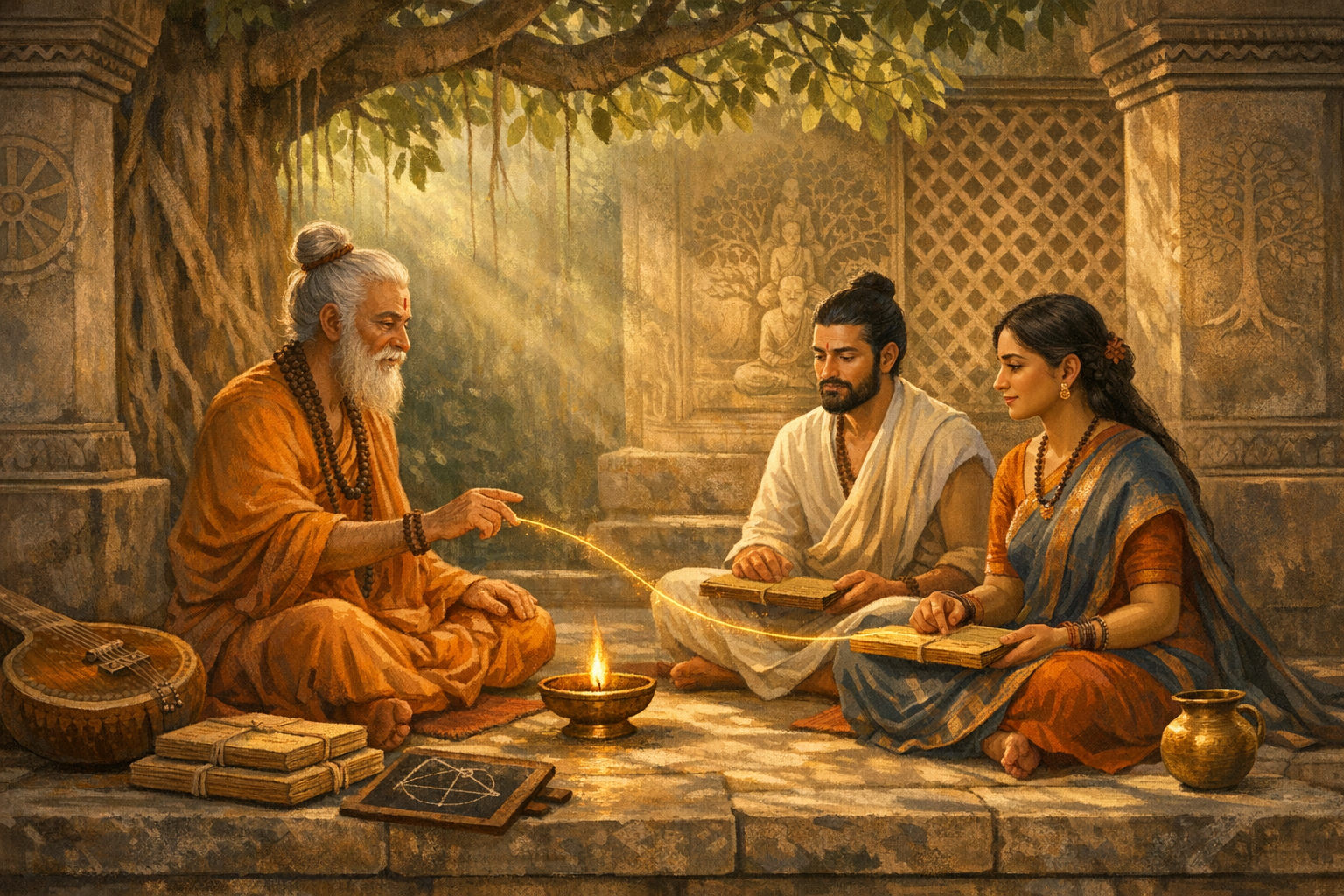
The Guru–Shishya tradition is a civilizational pedagogy that unites knowledge with character, shaping both competence and conscience. Drawing on the Upanishads and the Bhagavad Gita, it encodes reverence, inquiry, and service as the ethics of learning. Gurukulas integrated study with daily life, training the mind through śravaṇa–manana–nididhyāsana and broad curricula from Veda and Vedāṅgas to…
-
Curiosity as Sacred Practice: How Hinduism Champions Inquiry, Dialogue, and Self-Realization

This article presents a rigorous, accessible account of why Hinduism treats curiosity as a sacred discipline. It traces the spirit of inquiry from the Upanishadic dialogues and Bhagavad Gita to Nyaya logic, Mimamsa hermeneutics, Vedanta inquiry, and Yoga’s epistemology. It explains pramanavalid means of knowledgeand shows how disciplined questioning is bound to ethics, humility, and…
-
Is Life Easy or Difficult? Dharmic wisdom unites dukkha and ananda with practical tools

The longstanding paradoxBuddhism’s dukkha versus the claim that life is joyresolves when viewed through dharmic frameworks that distinguish conventional from ultimate truth. Buddhism names the instability of conditioned life, while Vedanta points to ananda as the intrinsic nature of consciousness; Jain Anekantavada and Sikh Chardi Kala further harmonize these insights. This synthesis is practical, not…
-
Sacred Science of Nidra: Yogic Sleep in Vedas, Upanishads, and Ayurveda for Whole-Person Wellbeing

Nidra, or sleep, occupies a sacred and carefully defined role in yoga and Hindu scriptures: it stabilizes the nervous system, ripens sattva, and supports deeper meditation. The Upanishads interpret deep sleep as a vital experiential key to understanding consciousness, while Patanjali frames nidra as a distinct mental modification that can inform contemplative practice. The Bhagavad…
-
Dissolving Trishna’s Hidden Fire: Timeless Dharmic Strategies to Transform Craving into Freedom

This long-form, research-driven exploration explains trishna (craving) as the subtle energy that precedes actionthe “root before the root.” It integrates Hindu, Buddhist, Jain, and Sikh perspectives to present a unified Dharmic framework for transforming craving into clarity and freedom. Readers gain a technical map (kleśas, vāsanās, vedanā, dependent arising), scriptural anchors (Yoga Sutra, Bhagavad Gita,…
-
Student Suicides in India: Data-Driven Causes, Risks, and Dharmic, Evidence-Based Solutions
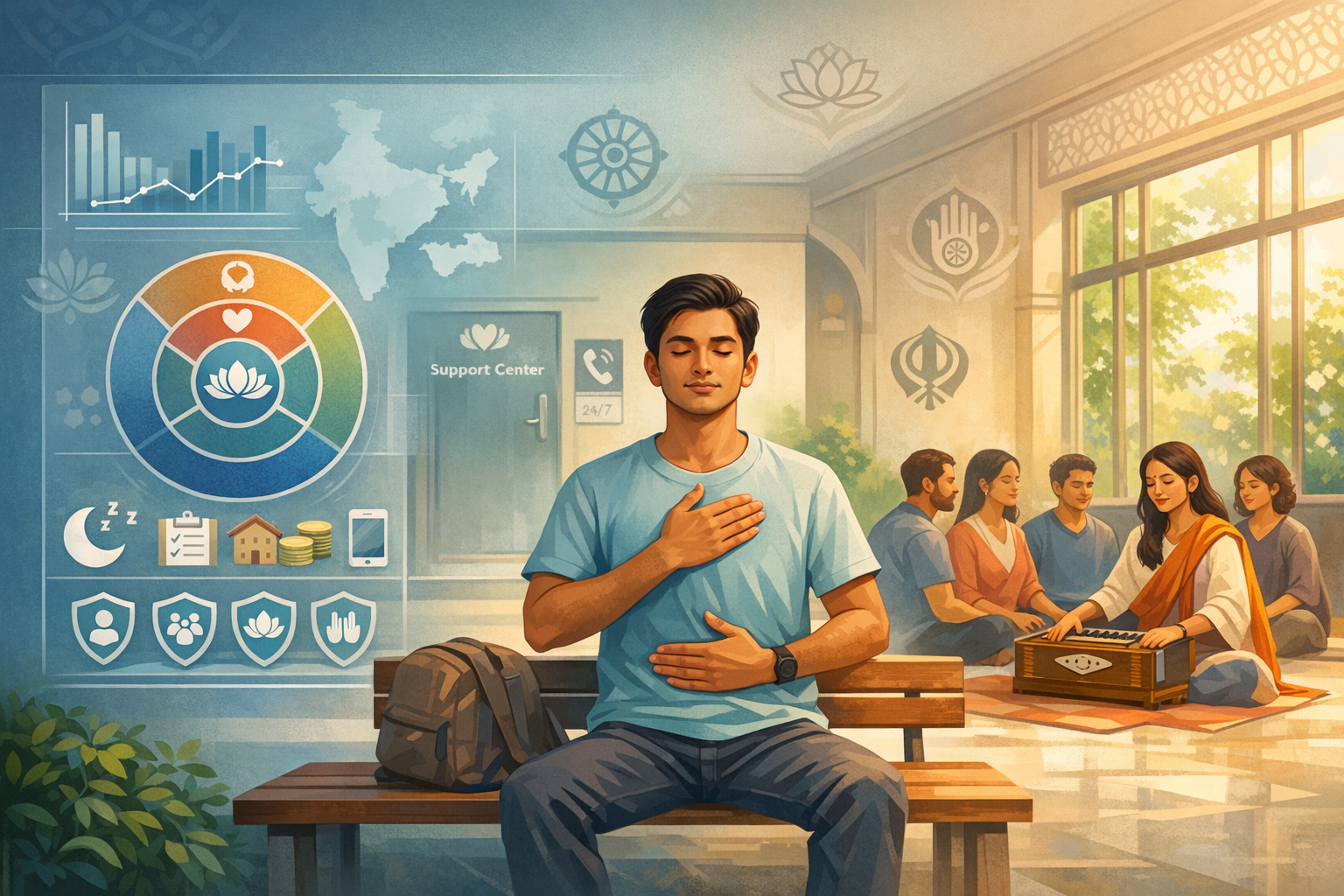
Student suicides have reached record highs in India, mirroring a global public-health crisis that disproportionately affects youth. This analysis explains the scale of the problem using WHO and NCRB trends and unpacks multi-layered risks spanning mental-health vulnerability, academic pressure, family dynamics, social media, and sleep loss. It translates leading psychological models into clear prevention targets…
-
Is Life Easy or Difficult? An Evidence-Backed Dharmic Guide to Joy, Suffering, and Mastery

Is life easy or difficult? A dharmic analysis shows the question spans two complementary levels: the conventional reality of dukkha (unsatisfactoriness) and the ultimate discovery of ananda (joy). Buddhism’s Four Noble Truths, the Yoga Sutra, Vedanta’s ananda doctrine, Jain anekantavada, and Sikh Chardi Kala together form a unified method for transforming difficulty into resilience while…
-
ISKCON Navi Mumbai Unveils IGST 2026: Transformative Gita Scholarship Test and Immersive Retreat

ISKCON Navi Mumbai’s International Gita Scholarship Test (IGST) 2026 pairs rigorous study of the Bhagavad Gita with an immersive retreat to address academic stress, digital distraction, and the need for ethical leadership among youth. The initiative emphasizes comprehension, application, and reflection rather than rote memorization, aligning learning outcomes with established pedagogical frameworks. Daily practice recommendationsspaced…
-
Trapped in a ‘Perfect’ Life: Evidence-Based Steps to Reclaim Agency, Clarity, and Joy

Many people feel trapped in a life that looks good on paper, yet their bodies and emotions signal misalignment. This analysis explains why such lives are hard to leavestatus quo bias, loss aversion, sunk costs, and identity foreclosureand shows how evidence-based methods can restore clarity. It integrates Self-Determination Theory, mindfulness, breath-based vagal regulation, and values-based…
-
As You Believe, So You Live: Hindu Dharma’s Science of Mindset, Health, and Longevity

This long-form analysis explores how dharmic wisdomHinduism, Buddhism, Jainism, and Sikhismanticipated modern findings on the mind-body connection by showing that belief (śraddhā, bhāva) measurably shapes healthspan and longevity. It integrates Bhagavad Gita and Yoga Sūtra insights with Ayurveda’s sattvavajaya and rasāyana, and aligns them with contemporary stress biology, autonomic regulation, and immune resilience. Practical guidance…
-
Dissolve Thoughts at Their Source: Hindu Wisdom and Dharmic Science for a Clearer Mind

Ancient Hindu wisdom teaches that thoughts gain power only when grasped; dissolving them at inception restores clarity and self-mastery. The method aligns with Yoga Sutra principles of vritti-nirodha, abhyasa, and vairagya, and is reinforced by Upanishadic and Bhagavad Gita guidance. Practical protocolsbreath coherence, light labeling, mantra gating, atma-vichara, and somatic defusionmake the technique accessible in…
-
Bhagavad Gita at New Govardhana: Profound Bhakti-Yoga Insights by HG Caitanya Caran das
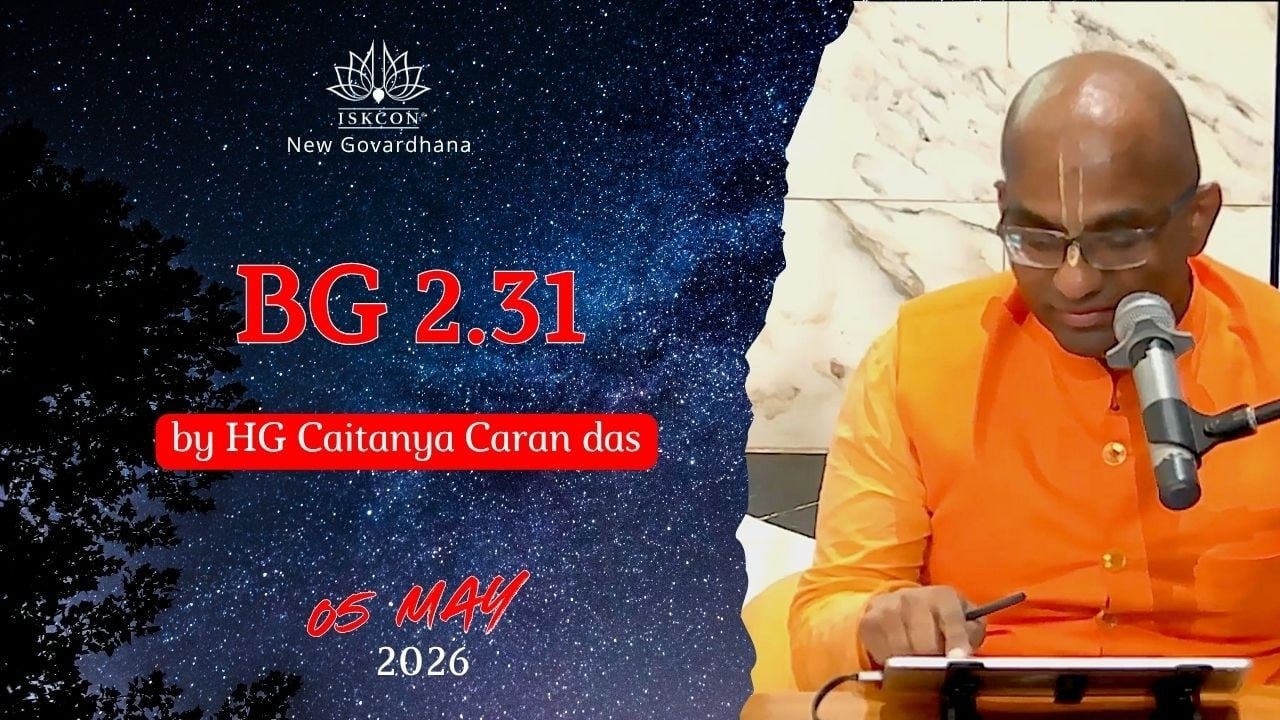
On 05 May 2026, ISKCON New Govardhana Temple hosted a Bhagavad Gita class by HG Caitanya Caran das that united rigorous exegesis with practical Bhakti-Yoga. The session mapped Karma, Jnana, and Bhakti as an integrated pathway, grounding ethical action in devotion and clear discernment. Attendees received a concise practice blueprint: daily japa, structured reading, reflective…
-
Unlock the Ocean Within: Dharmic Pathways to Atman, Timeless Wisdom, and Resilient Strength

This essay examines the statement “You know little of that which is within you. Within you is the ocean of infinite power” through the shared frameworks of Hinduism, Buddhism, Jainism, and Sikhism. It explains the Upanishadic vision of ātman and Brahman, the yogic map of prāṇa and kundalinī, and the ethical preconditions that make inner…
-
Introspection to Self-Realization: A Rigorous Dharmic Blueprint for Knowing the Divine

This long-form analysis explains why disciplined self-analysis is a direct, repeatable path to self-realization and knowing the Divine across Hinduism, Buddhism, Jainism, and Sikhism. It integrates the Upanishads, the Bhagavad Gita, Patanjali’s Yoga Sutra, the Satipaṭṭhāna Sutta, Jain Anekāntavāda with Samayik and Pratikraman, and Sikh Naam-centered living under hukam. A rigorous seven-phase practice cycleintention, observation,…
-
Krishna’s Omnipotence Explained: Why Name, Mantra, and Scripture Offer Direct, Daily Companionship

This article explains, in clear Vedic and Bhakti terms, why Krishna’s omnipotence means His words, names, and teachings are non-different from Him, offering direct companionship at any moment. It shows how the concept of shabda as an efficacious, self-revealing medium makes scriptural hearing and mantra recitation a living encounter rather than mere symbolism. Drawing on…
-
Tapasya in Kali Yuga: Powerful, Scripture-Sourced and Science-Backed Austerities for Modern Life

Tapasya in Kali Yuga is not self-mortification but an intelligent discipline that purifies body, speech, and mind for clarity and resilient living. Drawing on the Bhagavad Gita, Yoga Sutras, the Bhagavatam, and the Kali-Santarana Upanishad, it reframes penance as preparatory purification rather than an attempt to please the divine or force realization. Practical śarīra-, vāk-,…
-
No Destination, Only Awakening: Timeless Hindu Wisdom on the Transformative Spiritual Journey

Hindu wisdom reframes the spiritual path as unveiling rather than arrival: there is nowhere to go, nothing to acquire, and everything to recognize. Drawing on the Upanishads, the Bhagavad Gita, Advaita (advait), and the Yoga Sutra, this exploration clarifies the paradox of “no destination” as a disciplined return to presence. It outlines core methodsJnana, Bhakti,…
-
Kalachakra in Hindu Tantra: Decoding the Wheel of Time, Consciousness, and Dharmic Unity
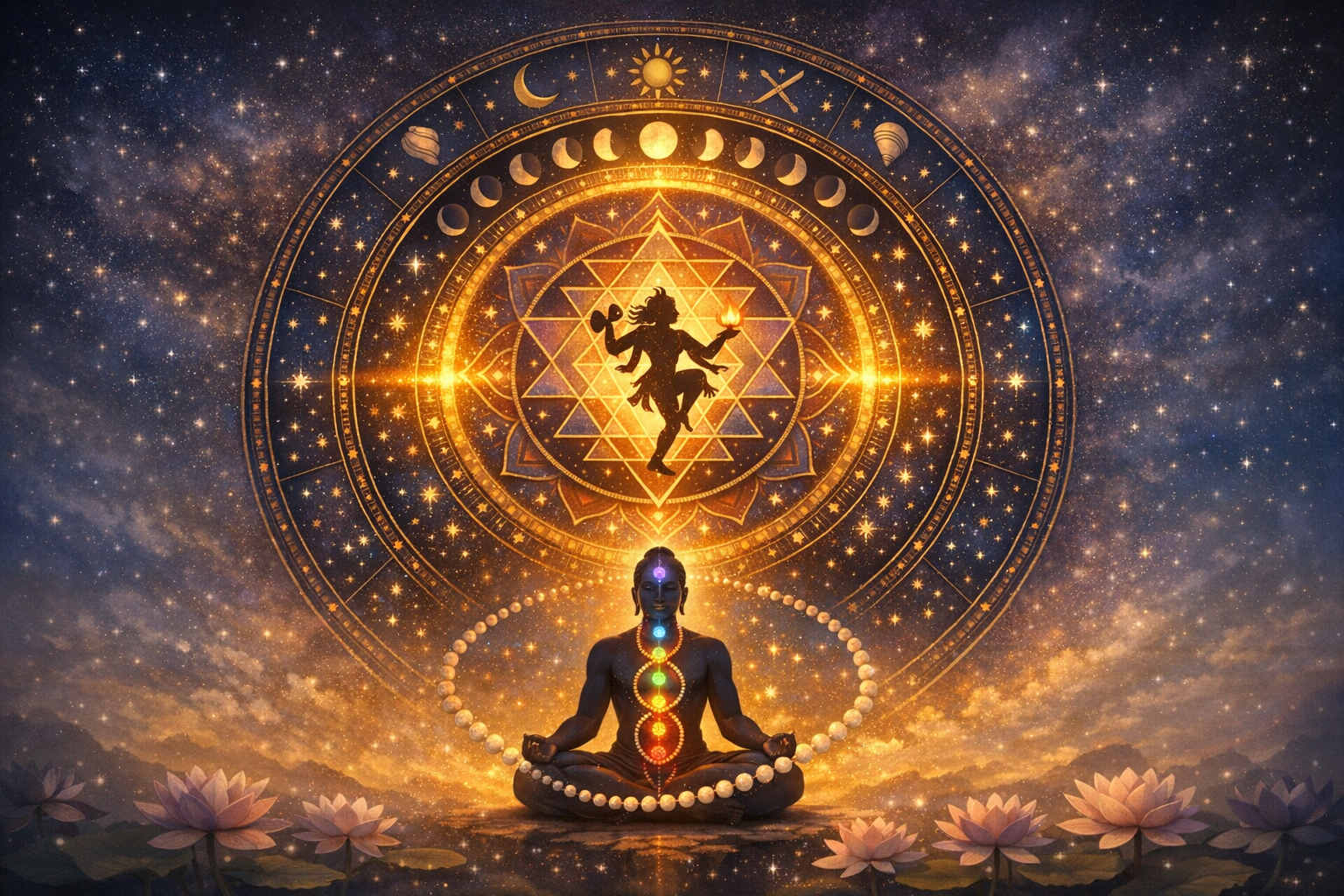
Kalachakra in Hindu Tantra presents time as a living cycle that unifies microcosm and macrocosm, offering a precise path to the timeless ground of awareness. Drawing on the Maitri Upanishad and the Bhagavad Gita, it treats time as both measurable rhythm and doorway to the Akāla, the unconditioned. The framework integrates Vedic cosmology, pañcāṅga timing,…
-
The Eternal Joy Within: Dharmic Wisdom on True Happiness, Ananda, and Freedom from Suffering

Modern culture often ties happiness to external milestones, yet Hindu wisdom distinguishes this conditional pleasure from intrinsic anandathe steady joy of awareness. Drawing on the Upanishads, the Bhagavad Gita, and Yoga philosophy, this essay maps how attention becomes entangled in craving and how disciplined living restores clarity. It outlines four complementary yogaskarma, bhakti, jñāna, and…
-
Beyond the Senses’ Trap: Dharmic Science of Lasting Joy across Hindu, Buddhist, Jain, Sikh
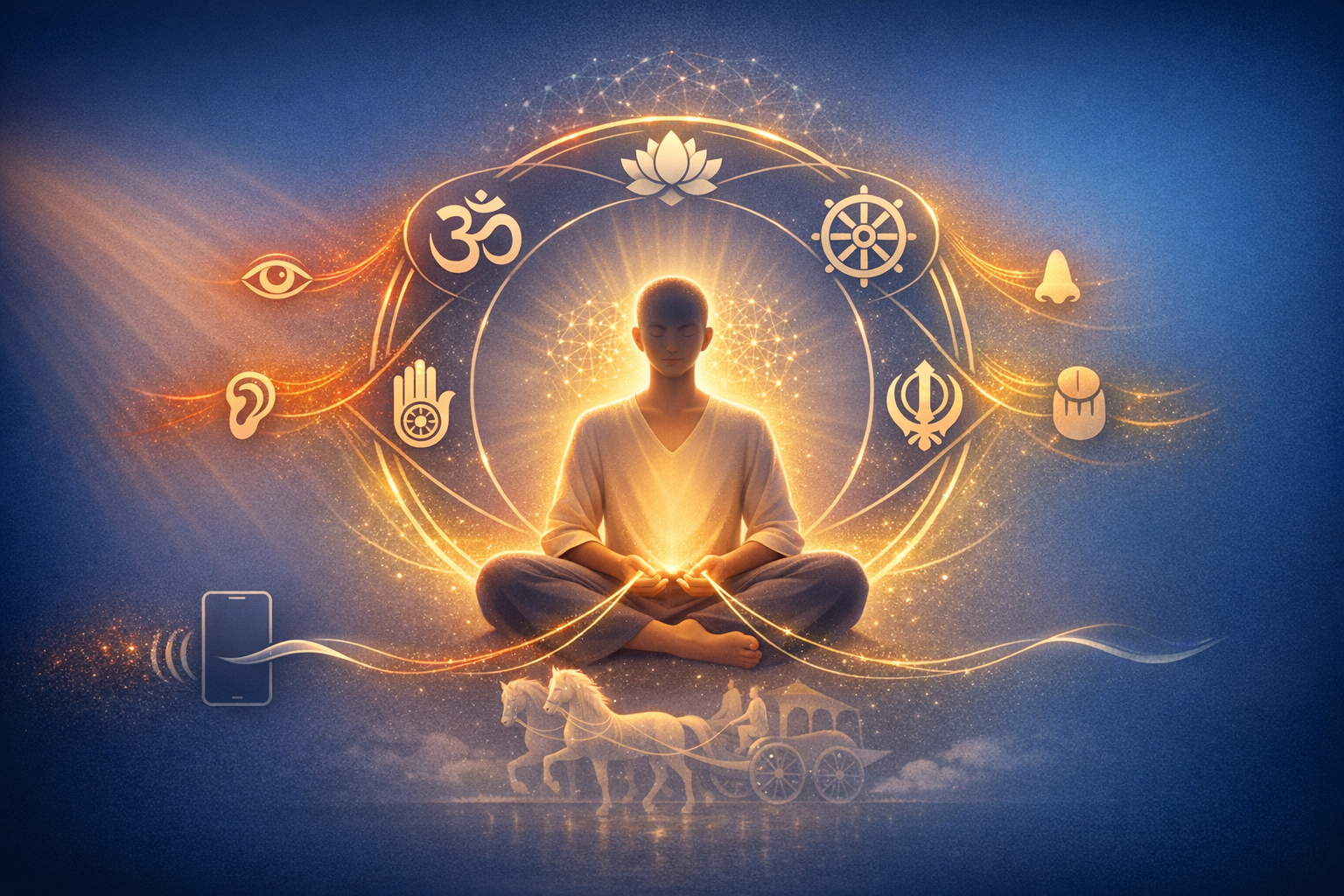
Modern restlessness around pleasure and possession is precisely mapped in the shared wisdom of Hinduism, Buddhism, Jainism, and Sikhism. Each tradition explains how untrained senses agitate the mind and how disciplined attentionthrough pratyahara, mindfulness, aparigraha, Seva, and devotiontransforms agitation into equanimity. The piece integrates Hindu models of the indriyas, Gita psychology of desire, Buddhist dependent…