
-
Unlocking Innate Bliss: A Cross-Dharmic Guide to the Self and the Veils of Matter
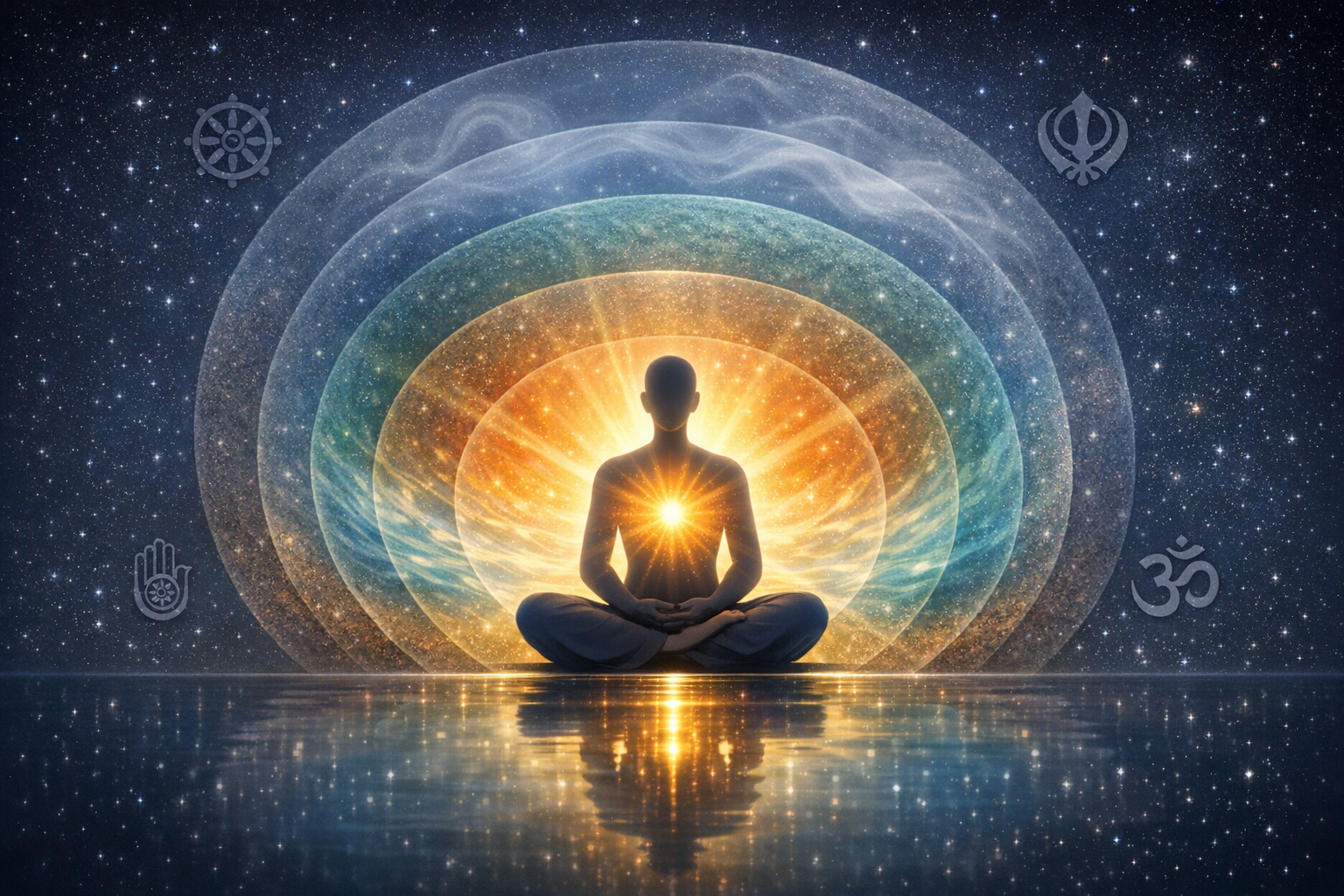
Human beings everywhere seek happiness because, as Vedanta-sutra affirmsanandamayo ‘bhyasatconsciousness is intrinsically blissful. This essay maps the beginning of spiritual knowledge across Hinduism, Buddhism, Jainism, and Sikhism, showing how each tradition diagnoses the veils of matter and mind and prescribes ethical and contemplative methods to remove them. Readers learn the shared language of gross and…
-
Azhwars and Ramanujacharya: Timeless Bhakti, Living Vedanta, and the Path of Grace
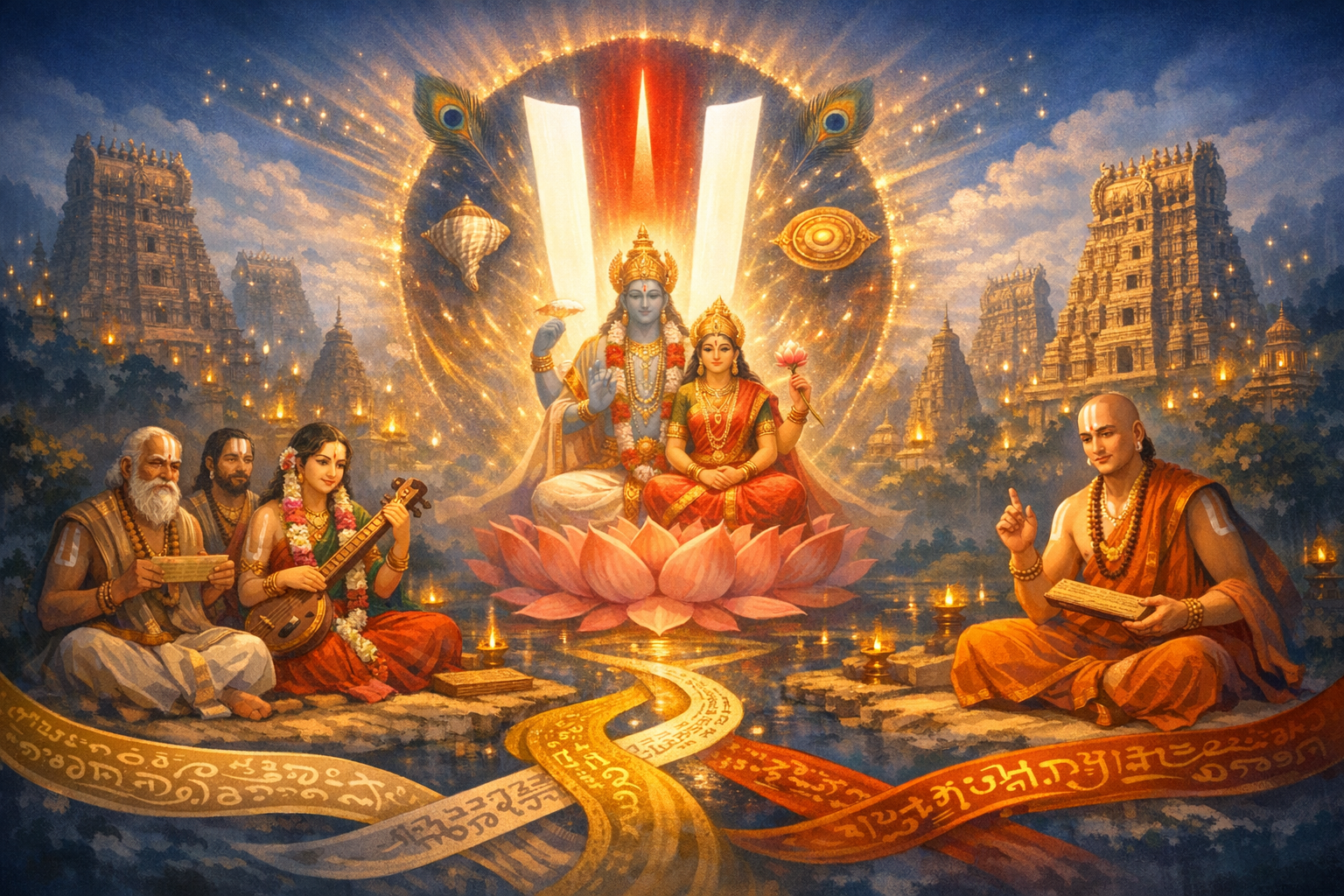
This comparative study explores how the Azhwars and Ramanujacharya jointly shape the Sri Vaishnava tradition by uniting ecstatic devotion with systematic Vedanta. It situates the Azhwars’ Divya Prabandham and Ramanuja’s Viśiṣṭādvaita within one inclusive, Ubhaya Vedanta canon that values both Tamil and Sanskrit revelation. Readers gain a clear map of similaritiesVishnu’s supremacy, Sri’s compassion, bhakti…
-
From Mumbai Dawn to Metaphysics: Resolving to Live by the Soul (jivatma) with Clarity
This essay reframes an ordinary Mumbai dawn as an entry point into a rigorous inquiry about jivatmathe soulas treated in Hindu philosophy and Vedanta. It explains why the soul hypothesis remains philosophically plausible through identity continuity, the hard problem of consciousness, and the reality of normativity and agency. Readers gain a comparative view across dharmic…
-
Truth Is Multi-Dimensional: Anekantavada, Vedanta, and Practical Ways to See Clearly
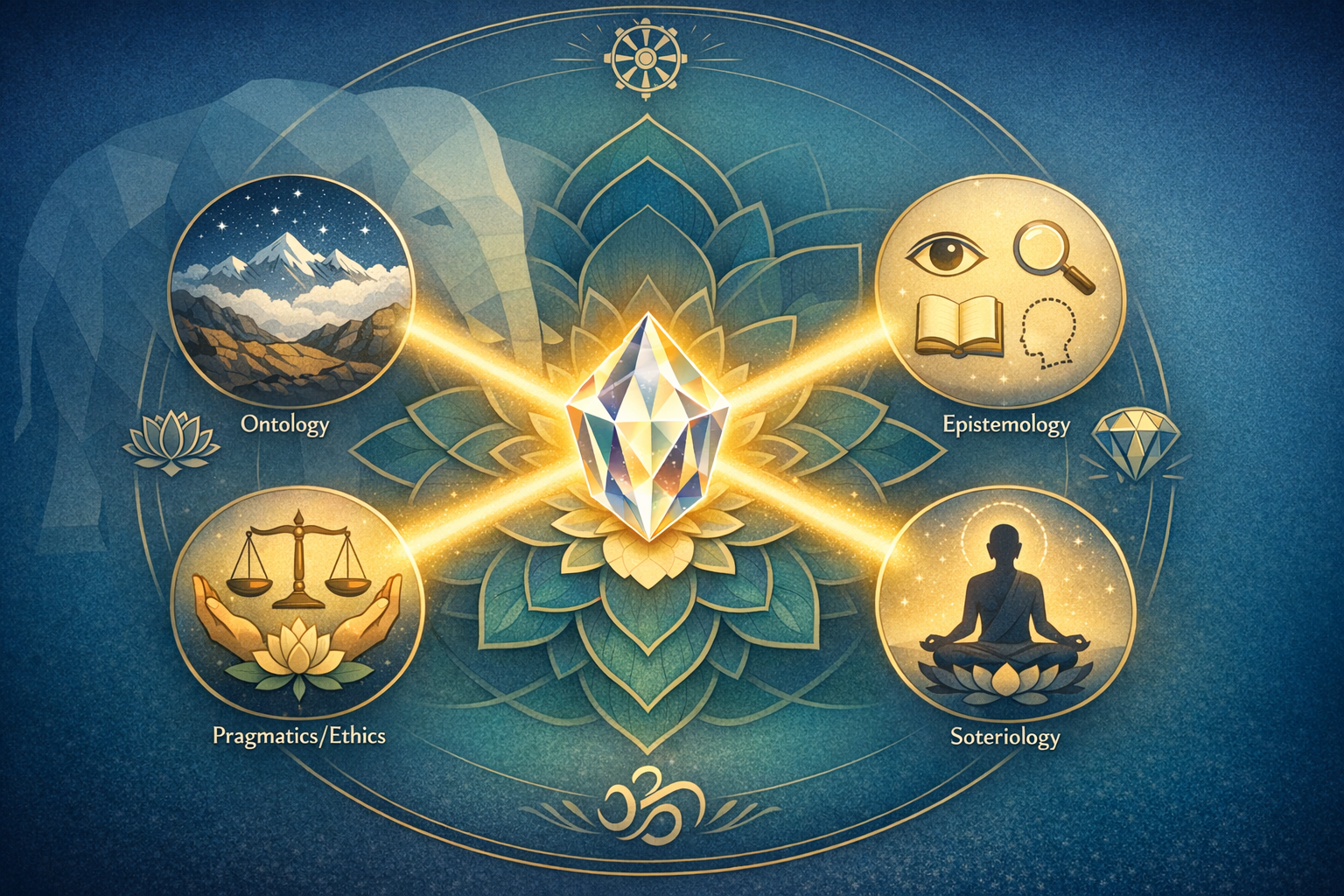
Many hear the phrase “truth is multi-dimensional” without a clear explanation. This article clarifies the concept using dharmic frameworksJain Anekantavada, the Buddhist two truths, Vedanta’s three levels of reality, and Sikh insights on Ik Onkar and satnam. It distinguishes objective, subjective, and intersubjective truth and shows how Indian pramanas (perception, inference, testimony, and more) rightly…
-
Prakamya Siddhi Explained: How Focused Intention Turns Inner Vision into Tangible Reality
Prakamya Siddhi in Hinduism is the disciplined capacity by which a clear, dharma-aligned inner intention becomes an outward result. Distinguished from mere desire or casual “manifestation,” it integrates ethical foundations, focused attention (samyama), embodied action, and surrender. Classical yoga, Vedanta, tantra, and bhakti converge to present prakamya as a lawful and ethical maturation of will,…
-
Beyond the Chase: Hinduism’s Radical Blueprint for Lasting Happiness and Inner Freedom

This long-form analysis explains a core Hindu teaching: lasting happiness is revealed when the compulsive pursuit of happiness ends. It clarifies the difference between sukha (pleasure) and ananda (bliss), grounding the argument in the Upanishads, Bhagavad Gita, and Patanjali’s Yoga Sutra. Readers gain a rigorous framework for understanding moksha, along with a practical blueprint that…
-
What Is the Purpose of Creation? A Dharmic, Scholarly Guide to Līlā and Liberation
The question “What is the purpose of creation?” can be read most fruitfully through the dharmic idea of līlācosmic playwhere manifestation is a free, blissful self-expression rather than a utility-driven project. Hindu philosophy frames this across Advaita, Vişiṣṭādvaita, Dvaita, Śaiva thought, and Sāṁkhya–Yoga, uniting expressive freedom with ethical purpose and liberation (mokṣa). Purāṇic aesthetics and…
-
Does God Really Exist? A Dharmic Deep Dive into Suffering, Karma, and Yuga Dharma
This long-form exploration reframes “Does God really exist?” through the dharmic lenses of Hinduism, Buddhism, Jainism, and Sikhism. It explains how Yuga Dharma situates the present age (Kali Yuga) and why accessible practiceslike nāma-japa, kīrtana, satsanga, and sevaare especially potent now. Drawing on pramāṇa theory, Nyāya arguments, and Vedānta’s non-dual and devotional streams, it outlines…
-
Does God Really Exist? Evidence, Yuga Dharma, and Dharmic Wisdom across Indic Traditions
This essay examines the perennial question ‘Does God really exist?’ through the lens of Yuga Dharma and the shared wisdom of Hindu, Buddhist, Jain, and Sikh traditions. It explains how Kali Yuga conditions intensify suffering yet elevate the effectiveness of simple, sincere practices such as devotion, meditation, simran, ahiṃsā, and seva. Drawing on classical Indian…
-
Liberate the Self: Hindu, Buddhist, Jain, and Sikh Insights on Embracing True Nature
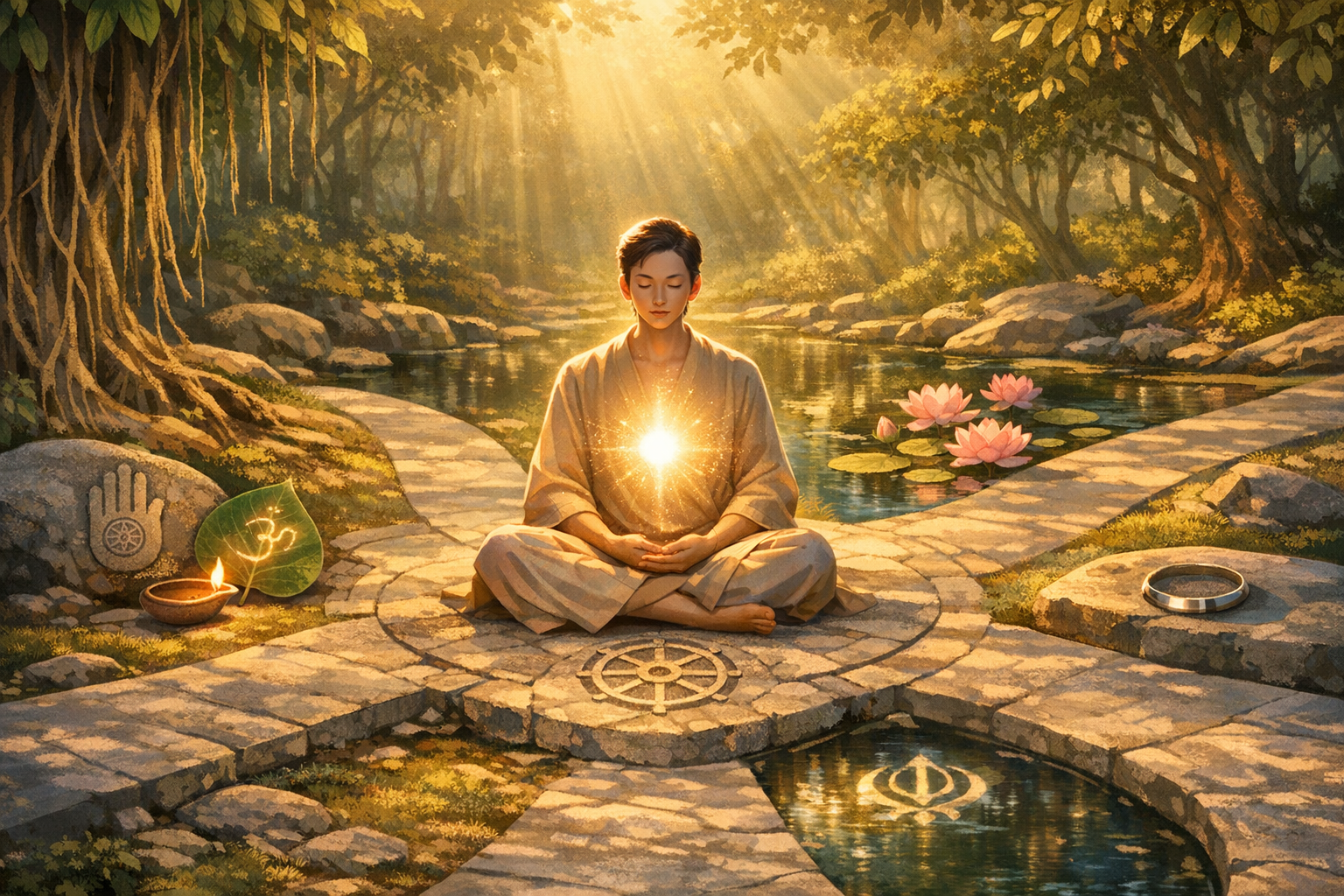
This long-form essay explores how Hinduism, Buddhism, Jainism, and Sikhism converge on a single, practical insight: suffering intensifies when one strives to become someone other than one’s true nature. Drawing on the Upanishads, Bhagavad Gita, Yoga Sutra, Sāṅkhya analysis, Buddhist teachings on craving and anatta, Jain doctrines of aparigraha and anekāntavāda, and Sikh wisdom on…
-
ISKCON and People of Faith: A Vedantic Blueprint for Compassionate, Unified Interfaith Relations

Hinduism encompasses many traditions rather than a single authority, and ISKCON positions itself within this diversity as a Vedantic, monotheistic Vaishnava movement committed to respectful interfaith relations. The statement outlines how devotional particularism can coexist with civic and ethical pluralism, grounded in Bhagavad Gita–inspired bhakti and the doctrine of acintya‑bhedābheda. By honoring the Ishta paradigm…
-
Curiosity as Sacred Practice: How Hinduism Champions Inquiry, Dialogue, and Self-Realization

This article presents a rigorous, accessible account of why Hinduism treats curiosity as a sacred discipline. It traces the spirit of inquiry from the Upanishadic dialogues and Bhagavad Gita to Nyaya logic, Mimamsa hermeneutics, Vedanta inquiry, and Yoga’s epistemology. It explains pramanavalid means of knowledgeand shows how disciplined questioning is bound to ethics, humility, and…
-
Is Life Easy or Difficult? Dharmic wisdom unites dukkha and ananda with practical tools

The longstanding paradoxBuddhism’s dukkha versus the claim that life is joyresolves when viewed through dharmic frameworks that distinguish conventional from ultimate truth. Buddhism names the instability of conditioned life, while Vedanta points to ananda as the intrinsic nature of consciousness; Jain Anekantavada and Sikh Chardi Kala further harmonize these insights. This synthesis is practical, not…
-
Live Richly, Beyond Wealth: A Timeless Upanishadic Blueprint for Inner Abundance

This article reframes “live richly” through the Upanishads as a disciplined path to inner abundance rather than material accumulation. It explains Brahman and Ātman, unpacks the mahāvākyas, and clarifies methods like neti neti and the practice triad of śravaṇa–manana–nididhyāsana. Readers gain a practical seven-day template for integrating meditation, ethical action, and service. The piece shows…
-
Mahaperiyava’s Living Grace: Academic Portrait of the Sage of Kanchi’s Path to Unity
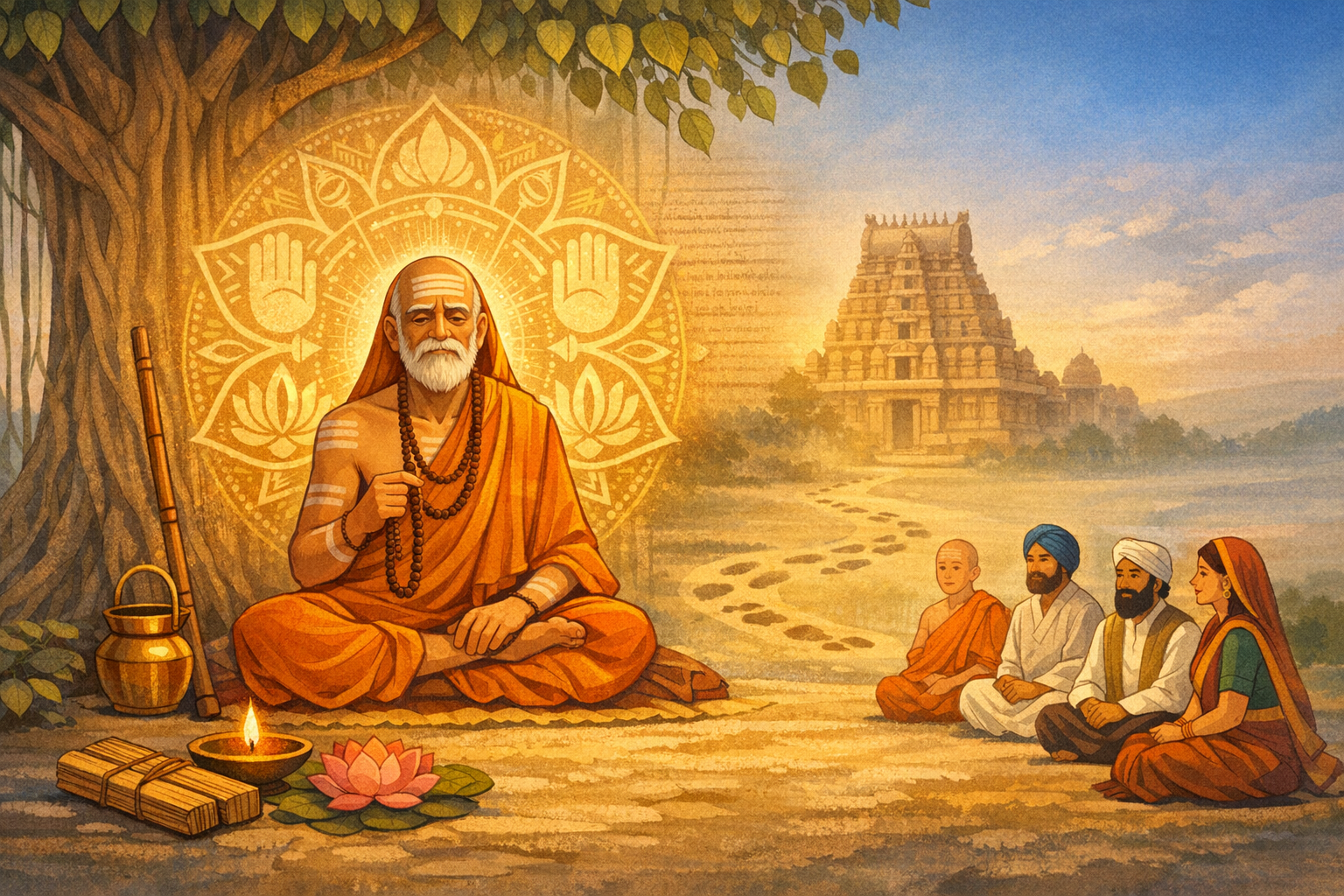
Shri Chandrashekarendra Saraswati Swamigal (Mahaperiyava), the 68th Jagadguru of Kanchi Kamakoti Peetam, exemplified Advaita Vedanta through disciplined practice, inclusive compassion, and service. This academic portrait situates his life within the Shankaracharya Parampara, outlining how padayatra, temple revitalization, and Vedic learning strengthened communities. It clarifies core methodssadhana-chatuṣṭaya and śravaṇa–manana–nididhyāsanawhile showing how bhakti and karma integrate with…
-
Neo‑Vedanta Unveiled: A Powerful Modern Synthesis Bridging Dharmic Wisdom and Pluralism
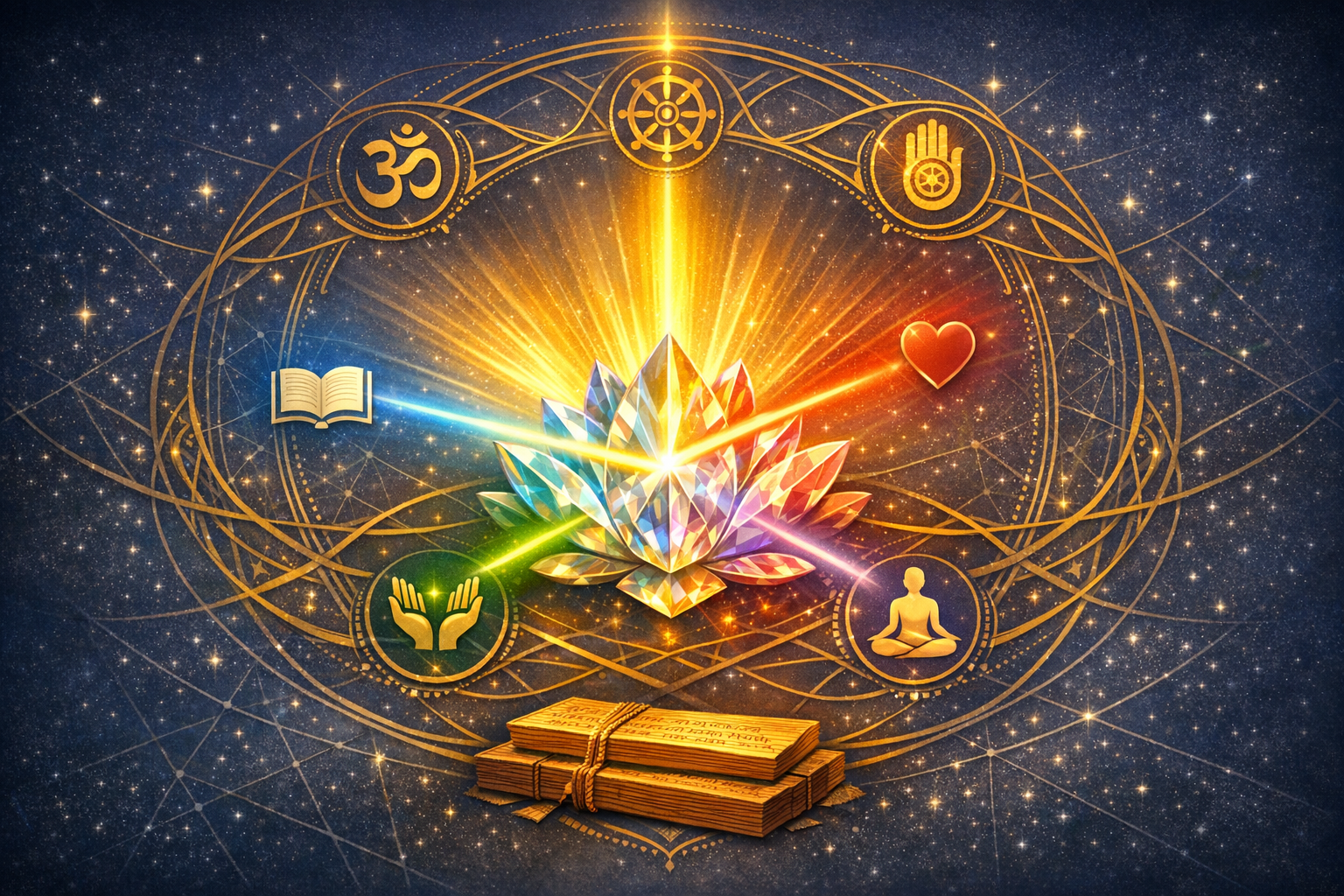
This article examines Neo‑Vedanta as a rigorous, modern synthesis of Vedāntic wisdom grounded in the Prasthanatraya (Upanishads, Bhagavad Gita, Brahmasutras). It traces historical catalysts in nineteenth‑century India and explains how Sri Ramakrishna and Swami Vivekananda anchored a plural, practice‑oriented vision. Readers gain a clear understanding of Ishta as a principle of respectful diversity and see…
-
Is Life Easy or Difficult? An Evidence-Backed Dharmic Guide to Joy, Suffering, and Mastery
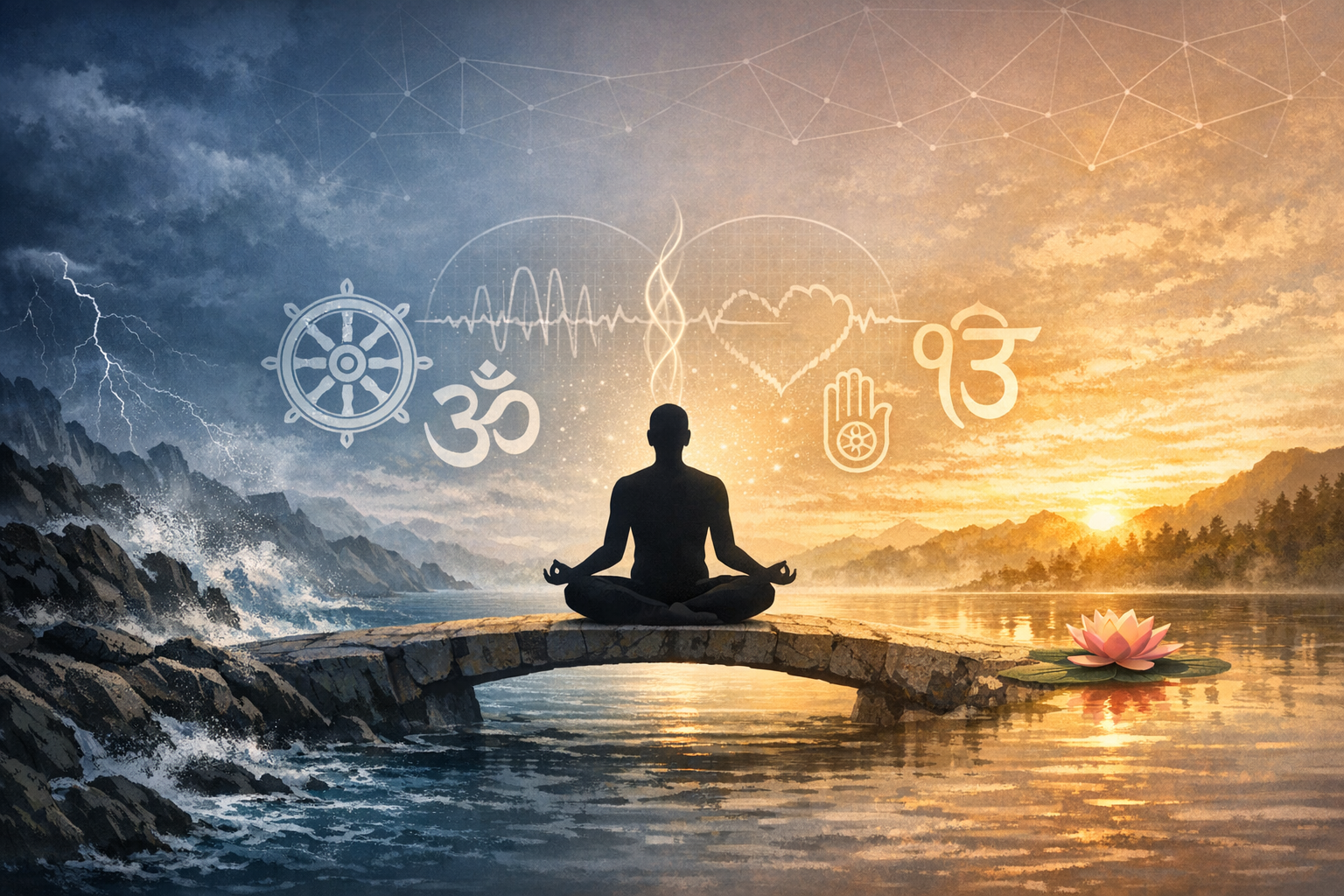
Is life easy or difficult? A dharmic analysis shows the question spans two complementary levels: the conventional reality of dukkha (unsatisfactoriness) and the ultimate discovery of ananda (joy). Buddhism’s Four Noble Truths, the Yoga Sutra, Vedanta’s ananda doctrine, Jain anekantavada, and Sikh Chardi Kala together form a unified method for transforming difficulty into resilience while…
-
Why Ramanujacharya Asked ‘Have You Loved?’Bhakti, Emotional Maturity, and Divine Grace

A classic teaching story about Sri Ramanujacharya turns on a simple question: “Have you ever loved anybody?” Rather than prescribing abstract doctrine, he points to love (prema) as the formative ground of bhakti. In Vishishtadvaita Vedanta, devotion matures through lived relationship, culminating in prapatti (surrender) supported by divine grace. The distinction between kama (desire) and…
-
Upadhi in Hindu Thought: Unmasking Limiting Adjuncts that Veil Reality and Freedom

Upadhi“limiting adjunct”explains how unconditioned reality appears delimited without itself changing. In Advaita Vedānta, it clarifies the jīva–Īśvara distinction, the role of avidyā and māyā, and why body–mind vestures only seem to bind the Self. Classic analogiespot-space, crystal-and-flower, and reflections of the sundemonstrate avaccheda-vāda and pratibimba-vāda. Taittirīya Upaniṣad’s pañca-kośa viveka and the three-body model present a…
-
Brahman Alone Is Real: A Rigorous Guide to ‘Jagat Mithyā’ via Sri Ramakrishna
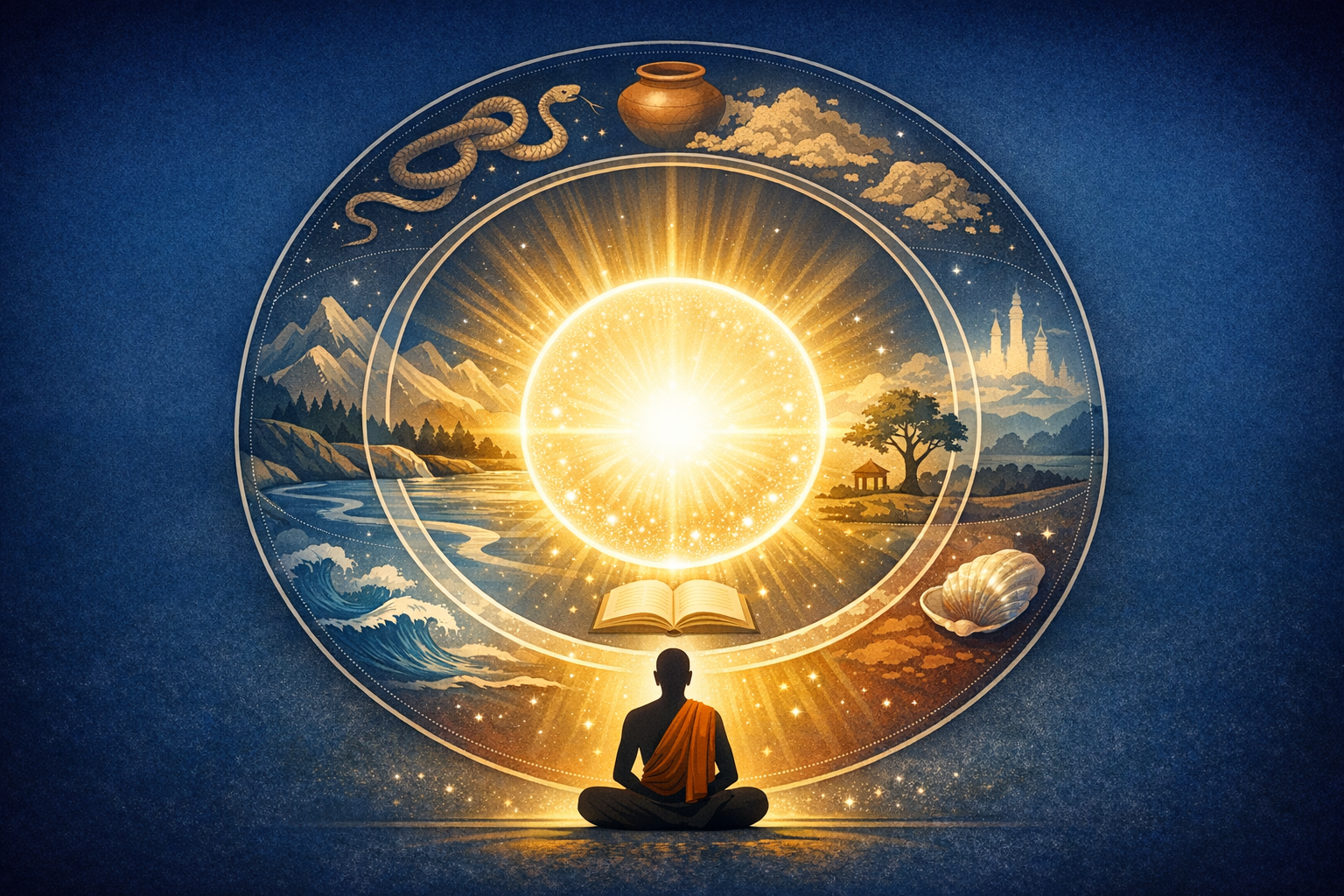
A well-known story about Harinathlater Swami Turiyanandaand Sri Ramakrishna becomes a doorway into the core Advaita Vedanta assertion that Brahman alone is real and the universe is mithyā. This long-form analysis clarifies that mithyā does not mean nonexistence but dependent reality, carefully distinguishing pāramārthika, vyāvahārika, and prātibhāsika levels. It explains key Advaita toolsadhyāsa, adhyāropa–apavāda, and…