
-
Awakening in Hinduism: Traits of a Jivanmukta from the Gita, Upanishads, and Yoga
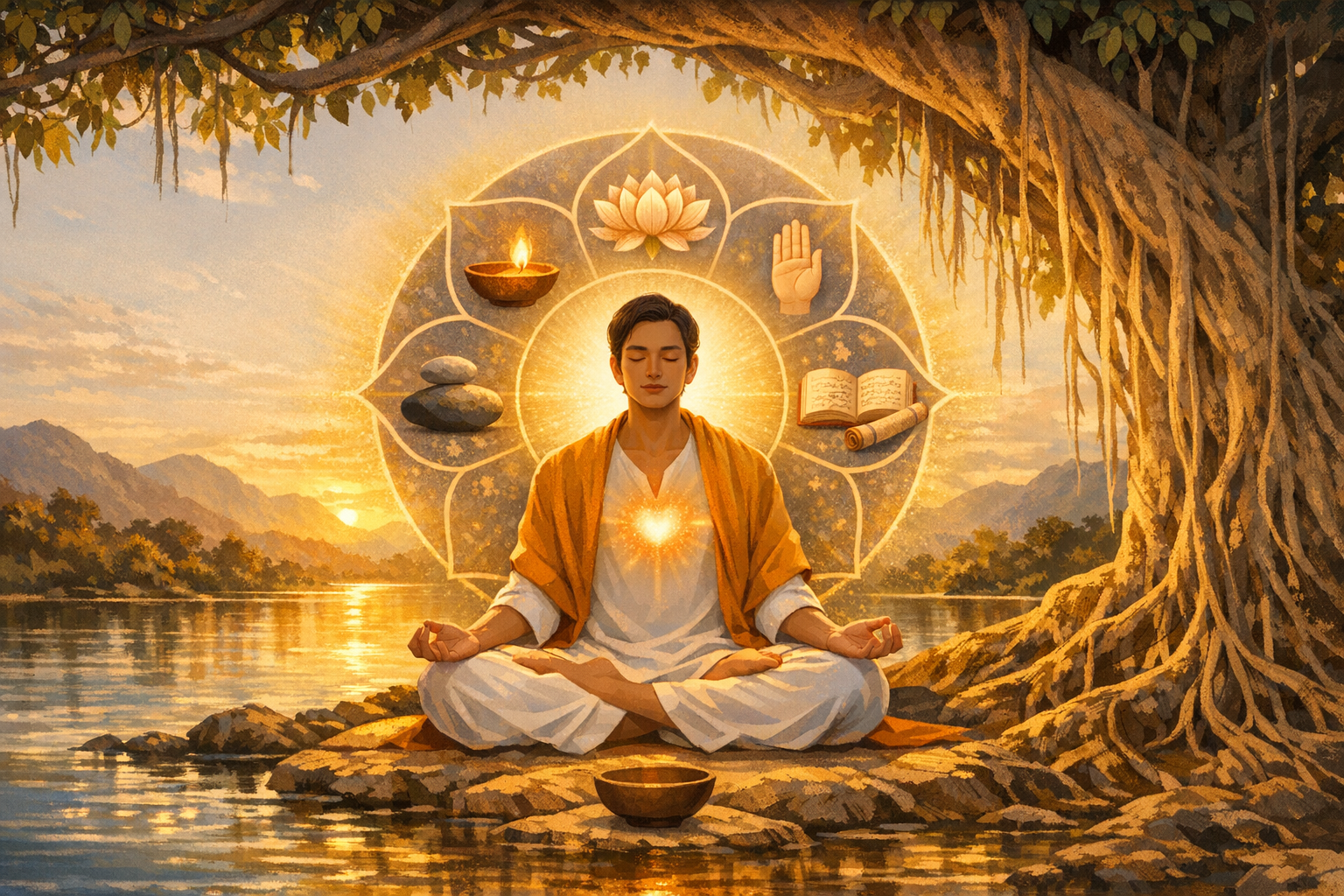
Hinduism profiles the spiritually awakened personjivanmuktathrough durable traits, not passing states. Drawing on the Bhagavad Gita, the Upanishads, Yoga, and Vedanta, this analysis details equanimity, non-attachment, compassion, truthfulness, fearlessness, humility, and discernment as reliable indicators of realization. It explains how yama–niyama and sadhana-chatushtaya build the ethical and attentional bedrock for liberation (moksha). Practical resonance with…
-
Why Science and Technology Cannot Eclipse the Upanishads: Enduring Dharma for a Digital Age
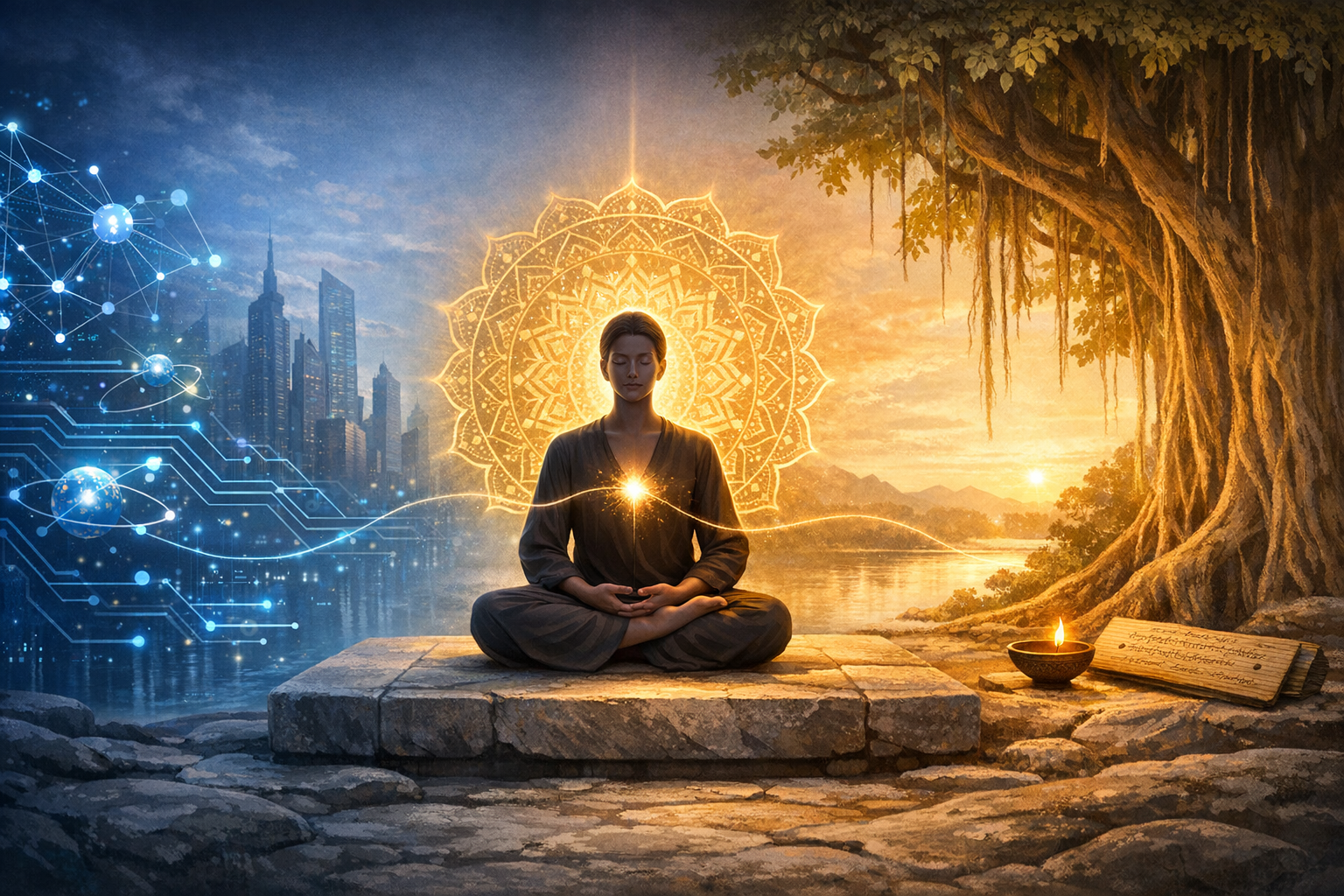
Scientific breakthroughs have expanded humanity’s power without settling questions of consciousness, purpose, or liberation. This article explains why the Upanishads, as the heart of Vedanta and Indian philosophy, remain indispensable in a high-tech world. It outlines complementary domainsscience explains mechanisms while the Upanishads illuminate meaning, ethics, and Self-knowledgeand details classical Indian epistemology (pramāṇa) as a…
-
Beyond Ego: The Profound Hindu Teaching that the Divine Is the True Doerand How to Live It
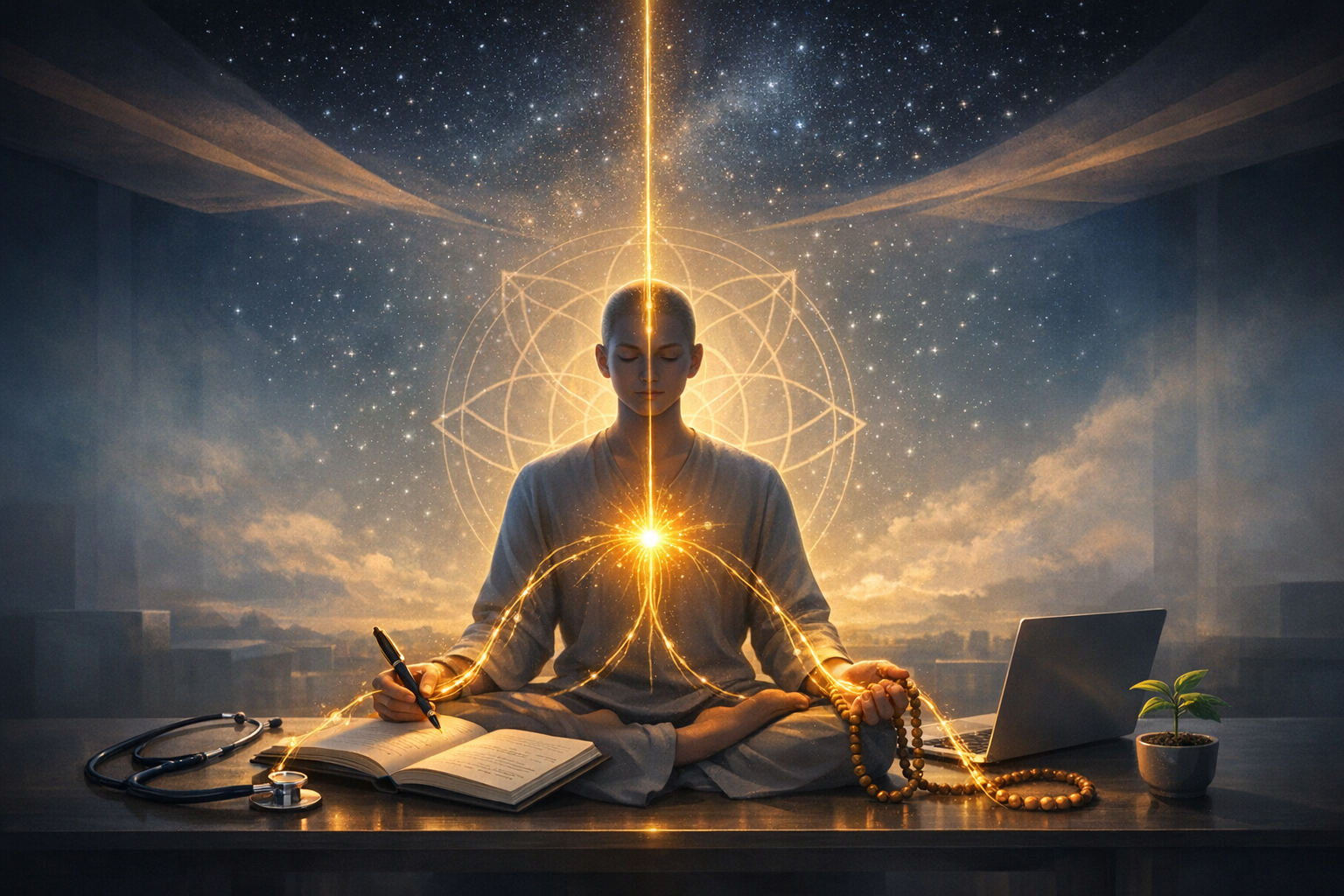
This long-form exploration clarifies the Hindu teaching that the Divinenot the individual egois the true doer, situating personal agency within a larger moral order. Drawing on the Bhagavad Gita, Upanishads, and allied dharmic perspectives in Buddhism, Jainism, and Sikhism, it reconciles responsibility with non-attachment. Readers gain a practical framework for Karma Yoga, Bhakti, Jñāna, and…
-
Layayoga in Hinduism: A Powerful Path to Dissolve Mind into Brahman via Nada and Kundalini
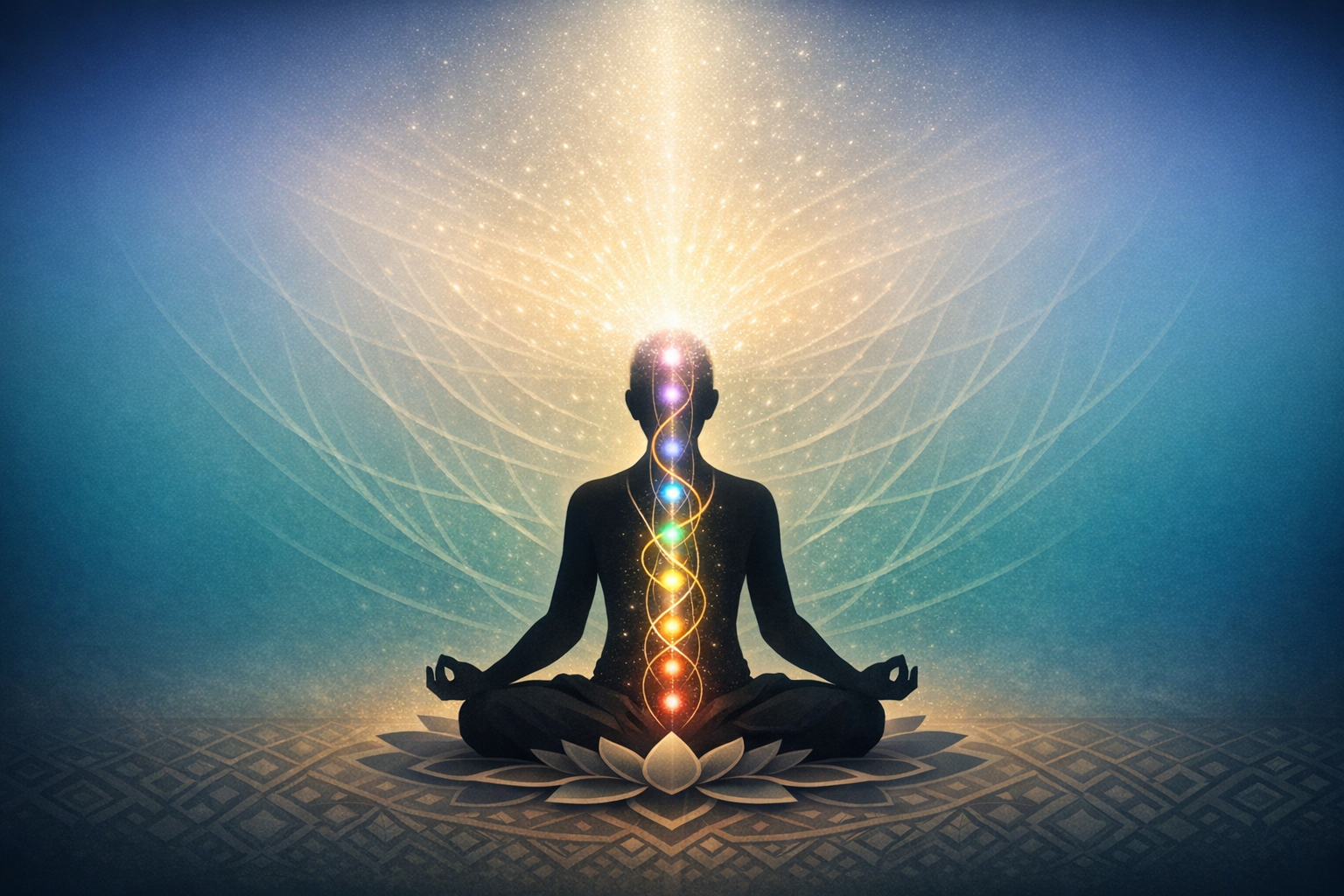
Layayoga, the yoga of dissolution, offers a rigorous pathway in Hinduism to absorb sensory, mental, and energetic activity into subtler awareness until the nondual identity of atman and Brahman is self-evident. Rooted in the Yoga Upanishads, Hatha Yoga, and Raja Yoga, it employs pratyahara, refined pranayama, mantra, and inner sound (nada) to stabilize attention in…
-
Mastering the Mind with Vedanta: Discern Uplifting vs Harmful Thoughts for Inner Freedom

Hindu philosophy provides a precise, time-tested method for discerning between wholesome and unwholesome thoughts using tools from Vedanta, the Bhagavad Gita, and the Yoga Sutra. The framework integrates nitya–anitya–viveka, guna diagnostics, and pratipaksha–bhavana to remodel mental habits at the root. Case studies from the Ramayana illustrate how sattva stabilizes action under pressure while rajas and…
-
Jnana Yoga and Karma Yoga: A Definitive, Heart-Centered Guide to Wisdom, Duty, and Moksha

Jnana Yoga and Karma Yoga are complementary yogic disciplines in Hinduism that unite liberating insight with selfless duty. Grounded in the Upanishads and the Bhagavad Gita, Jnana clarifies reality through viveka and nididhyasana, while Karma refines character via nishkama karma, isvararpana buddhi, and prasada buddhi. The two paths interpenetrate: ethical action purifies the mind for…
-
Before the Beginning: The Profound Self-Awakening of Consciousness in Sanatana Dharma
Sanatana Dharma advances a radical thesis: creation is Consciousness awakening to itself, not an external fabrication. Drawing on the Upanishads, Bhagavad Gita, Advaita Vedanta, Kashmir Shaivism, and Samkhya–Yoga, this essay explains how the Absolute (Brahman) both pervades and transcends the cosmos. It maps macrocosm to experience via the Mandukya’s four states and clarifies cyclical timesṛṣṭi,…
-
Atma vs Anatma Explained: A Scholar’s Guide to Inner Freedom, Clarity, and Lasting Peace

This in-depth guide clarifies the difference between Atma (the changeless witness) and Anatma (all that arises and passes), showing why this insight is the key to inner freedom and lasting peace. Drawing on the Upanishads, the Bhagavad Gita, Vedanta, Sāṅkhya-Yoga, and Nyāya-Vaiśeṣika, it presents multiple, mutually reinforcing methods: Pancha Kosha Viveka, Drg-Drsya Viveka, Avasthātraya analysis,…
-
Bridging God and Science: Vaishnava Sāṅkhya’s Insights for Christian Theologies of Nature

This essay explores how Christian models of divine action engage modern science and shows how the theistic Sāṅkhya of the Bhagavata Purana (Srimad-Bhagavatam) deepens that conversation. It clarifies primary and secondary causation, non-interventionist action, and kenotic/panentheistic intuitions in light of Vaishnava metaphysics. By mapping guṇa-based regularities to scientific laws and explaining non-physical causation through the…
-
Unveiling the Golden Wisdom of Sri Sadasiva Brahmendra: Advaita Quotes, Music, and Practice
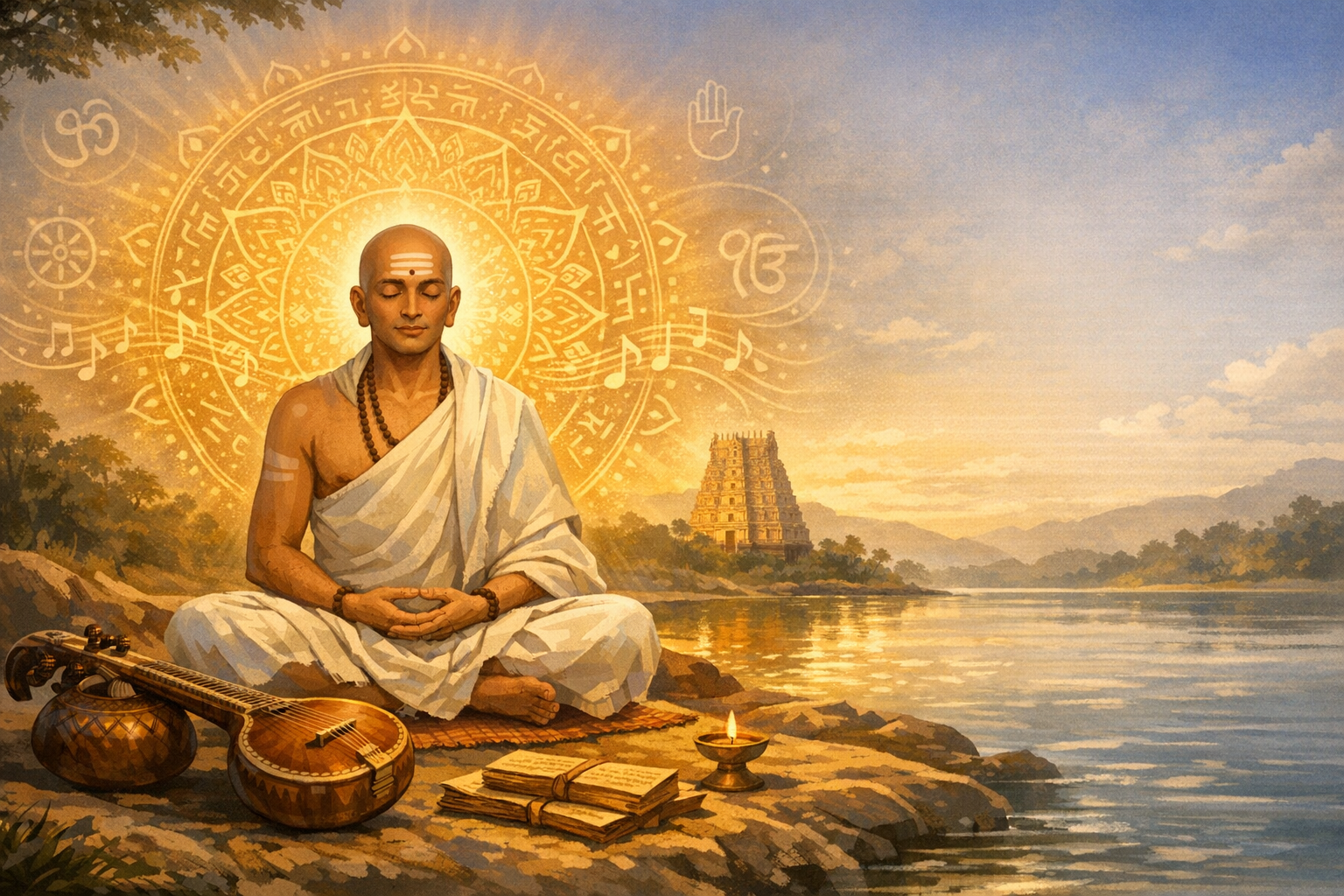
Sri Sadasiva Brahmendra, the 18th‑century Advaita sage of Tiruvisainallur near Kumbakonam, shaped South Asia’s spiritual landscape through luminous Sanskrit kirtanas and incisive nondual teaching. His widely cherished refrains“Sarvam Brahma-mayam,” “Manasa sañcarare Brahmani,” and “Pibare Rāma-rasam”translate Upanishadic insight into accessible, daily practice. Read together, they offer a coherent path: perceive all as Brahman, abide the mind…
-
Devotion Through Buddhi and Grace: Mastering Hindu Bhakti via Consciousness and Surrender
This essay examines two complementary currents of Hindu devotionbuddhi-yoga (devotion through consciousness and intelligence) and prapatti/śaraṇāgati (devotion through surrender)grounded in the Bhagavad Gita, the Bhāgavata Purāṇa, Vedānta, and Yoga. It explains how disciplined study, reflection, and mindful ritual refine devotion, while wholehearted entrustment to the divine expands receptivity to grace. The discussion translates classical terms…
-
The Unchanging Supreme Self: Uddhava Gita’s Profound Guide to Inner Freedom in Turbulent Times

The Uddhava Gita teaches that the supreme self (ātman) remains unchanged and unaffected by the material world, a principle that is both philosophically rigorous and practically transformative. Set within the Bhagavata Purana, it integrates Vedānta’s discernment with Bhakti’s warmth and Karma Yoga’s responsibility to offer a complete path to moksha. The text’s emphasis on the…
-
When Life Finds Balance: The Dharmic Science of Harmony in Hinduism, Buddhism, Jainism, Sikhism
This in-depth exploration shows how balancedefined as dynamic homeostasis guided by dharmaproduces well-being, clarity, and social harmony across Hinduism, Buddhism, Jainism, and Sikhism. Drawing on puruṣārtha, guna theory, Panchakosha, the Bhagavad Gita, Patanjali’s Yoga, and Ayurveda, it explains why moderation is a rigorous discipline, not a compromise. Parallels with the Buddhist Middle Path, Jain Anekantavada,…
-
Decoding the Silent Guru: Powerful Differences Between Vyakhyana and Jnana Dakshinamurti
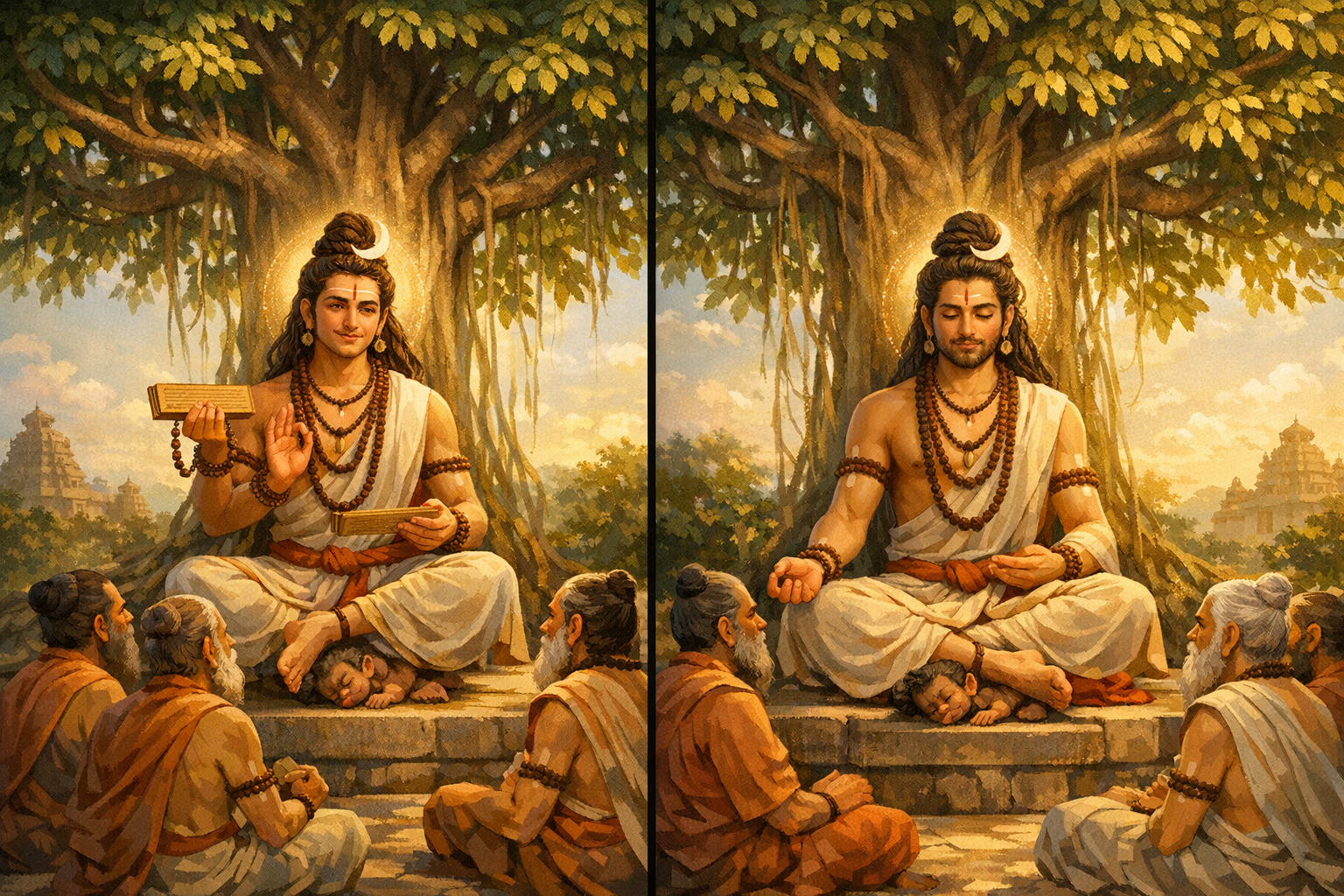
Dakshinamurti in Śaiva tradition manifests as the primordial teacher, with two pedagogically distinct but complementary forms: Vyakhyana Dakshinamurti (exposition) and Jnana Dakshinamurti (direct realization). This article clarifies their iconographic markerschinmudra versus vyakhyana/vitarka mudra, the prominence of pustaka and akshamalaand interprets their philosophical import through Vedanta’s arc from śravaṇa and manana to nididhyasana. Drawing on the…
-
Why Detachment Unlocks Maximum Happiness: A Dharmic, Evidence-Based Guide from Gita to Yoga

Detachment in Hinduism is a trainable skill that unlocks maximum happiness by freeing the mind from compulsion. Grounded in the Isha Upanishad and Bhagavad Gita, it reframes enjoyment as arising from renunciation and the release of outcome-clinging. Yoga Sutra’s abhyasa-vairagya method makes this pragmatic, while allied teachings in Buddhism, Jainism, and Sikhism affirm the shared…
-
Timeless Dharmic Science of Joy: A Sacred Blueprint for Lasting Happiness Within
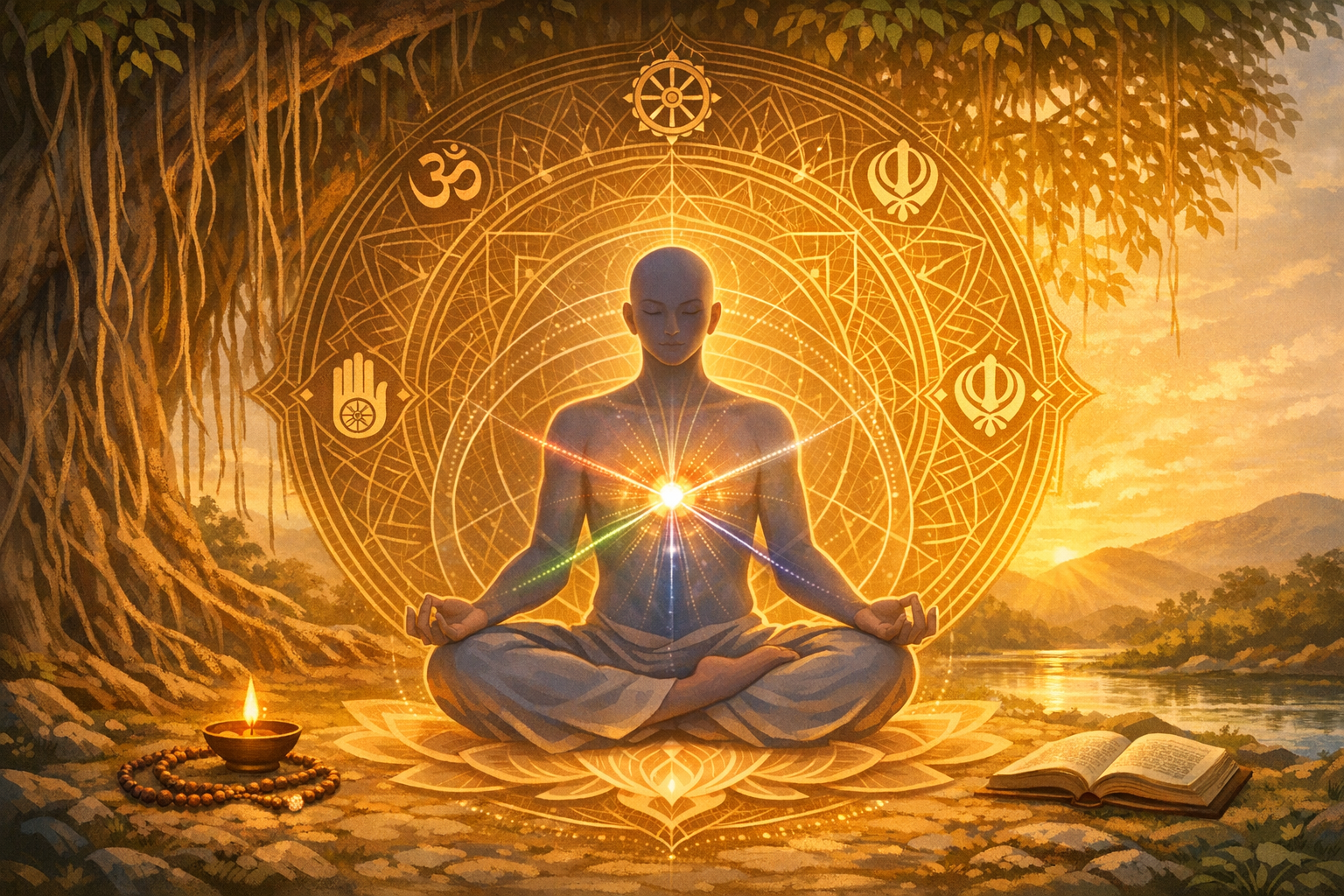
Hindu philosophy holds that lasting happiness is not acquired but uncovered by cultivating a living relationship with the Divine within. Drawing on the Upanishads, Bhagavad Gita, and Yoga philosophy, this exploration distinguishes fleeting pleasure from the abiding fullness called ānanda. The analysis integrates Advaita, Viśiṣṭādvaita, and Dvaita perspectives, while honoring dharmic unity with Buddhism, Jainism,…
-
Jnana–Karma Samuccaya Vada in Vedanta: Unifying Knowledge and Action on the Path to Moksha

Jnana Karma Samuccaya Vada explains how knowledge (jnana) and action (karma) can operate together on the path to moksha without diluting the distinctive role of each. Drawing on the Bhagavad Gita, Brahma Sutra, and classical Vedanta, it clarifies why Advaita treats karma as preparatory, how Bhedabheda argues for a robust synthesis, and how Vishishtadvaita and…
-
From Reactivity to Freedom: Dharmic Wisdom on Maya, Attention, and Inner Mastery
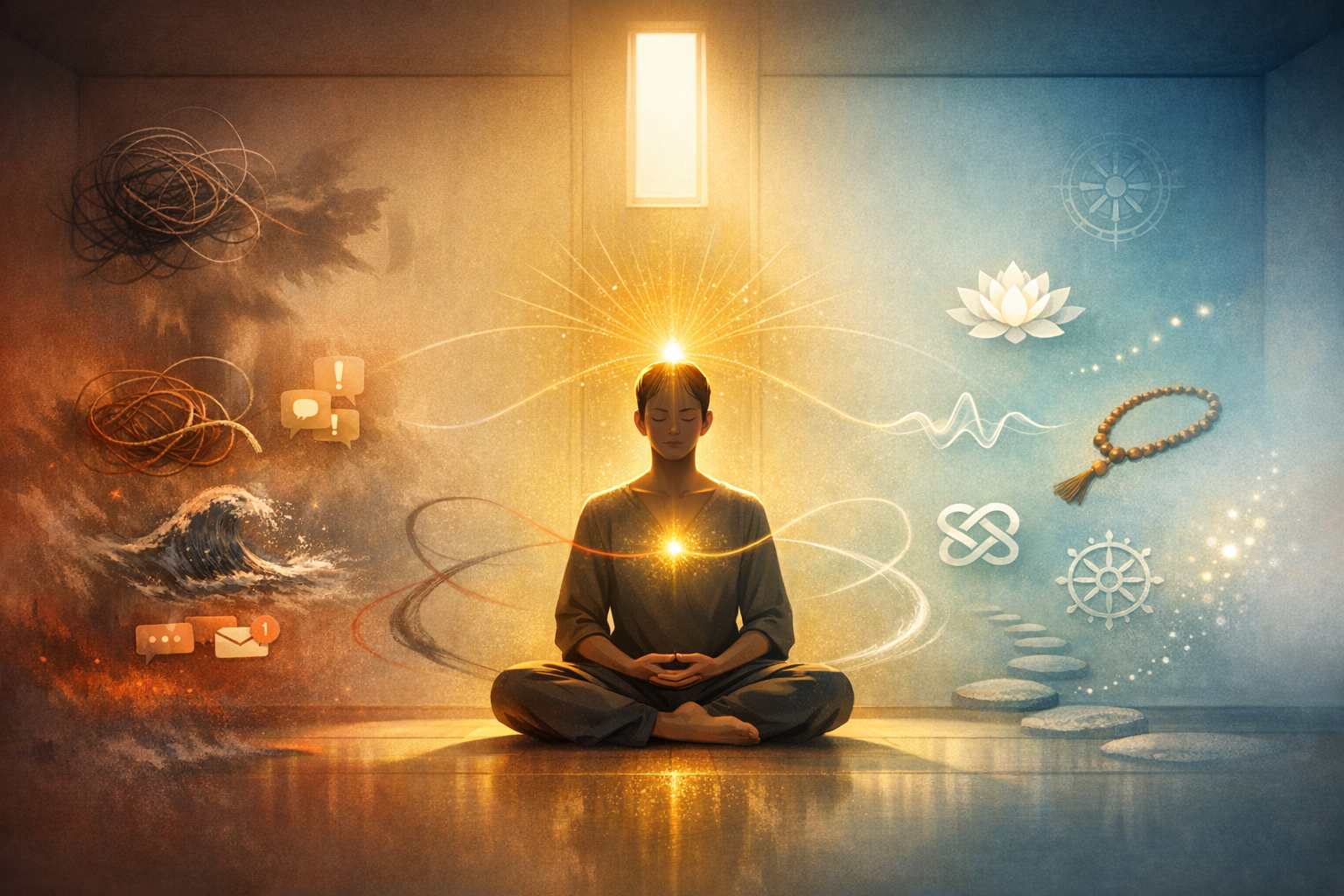
Modern life conditions people to react incessantly; dharmic traditions explain this reflex as a misperception of appearancesMaya in Hinduism, avidyā and dependent origination in Buddhism, mithyātva and kashāyas in Jainism, and the pull of Maya away from Naam in Sikhism. Rather than denying experience, these lineages teach methods to recalibrate perception and lengthen the gap…
-
Does Time Flow or Does Space Evolve? A Profound Reconciliation of Relativity and Dharmic Wisdom
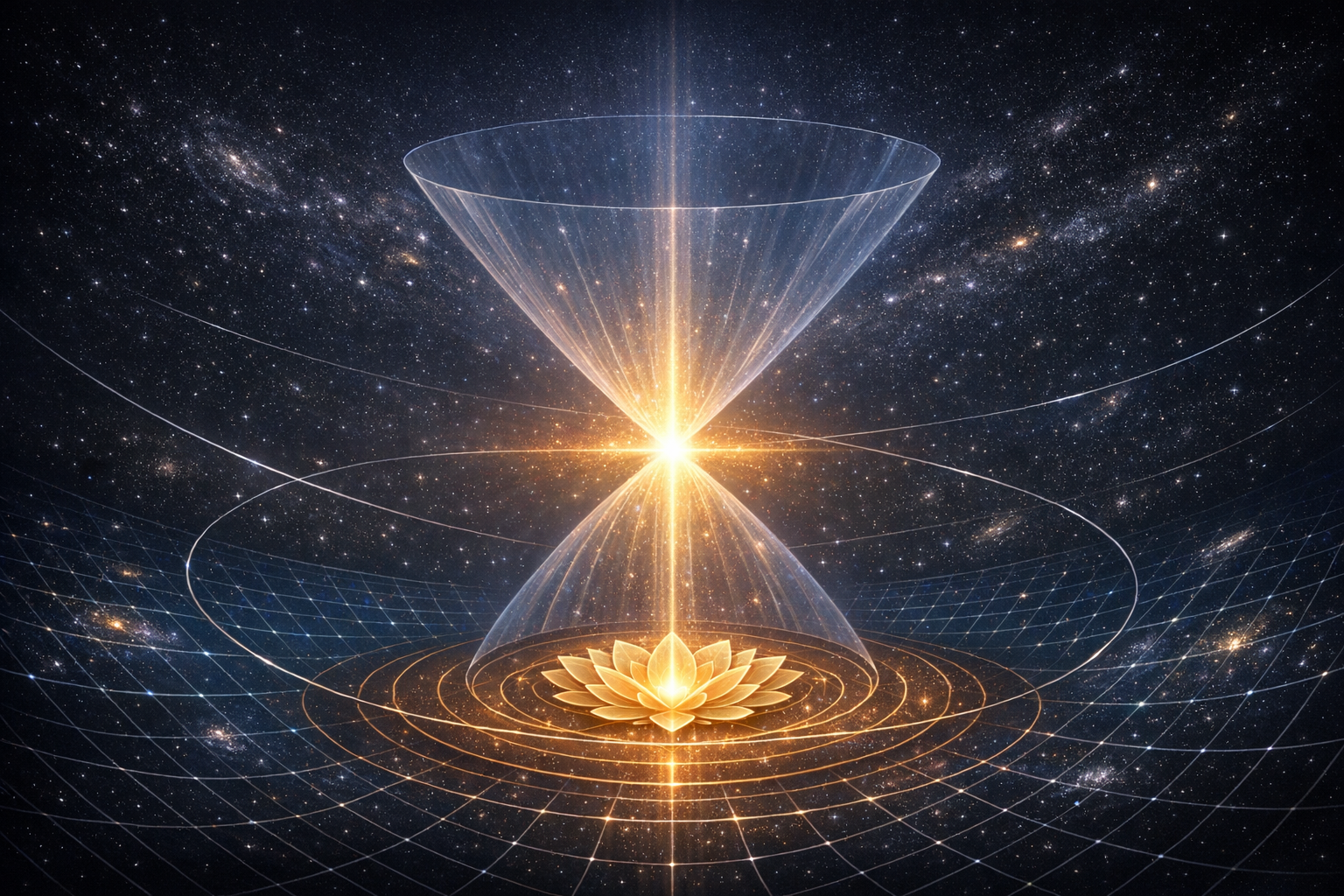
This comprehensive analysis reconciles a popular paradox: modern physics is said to claim that time changes while space is constant, whereas ancient dharmic texts appear to say the opposite. Clarifying the science, general relativity treats spacetime as dynamic, with evolving spatial geometry and observer-dependent time. Clarifying the traditions, Hindu, Buddhist, Jain, and Sikh sources distinguish…
-
Is the Universe an Illusion? A Rigorous Vedic Guide to Maya, Vedanta, and Liberation
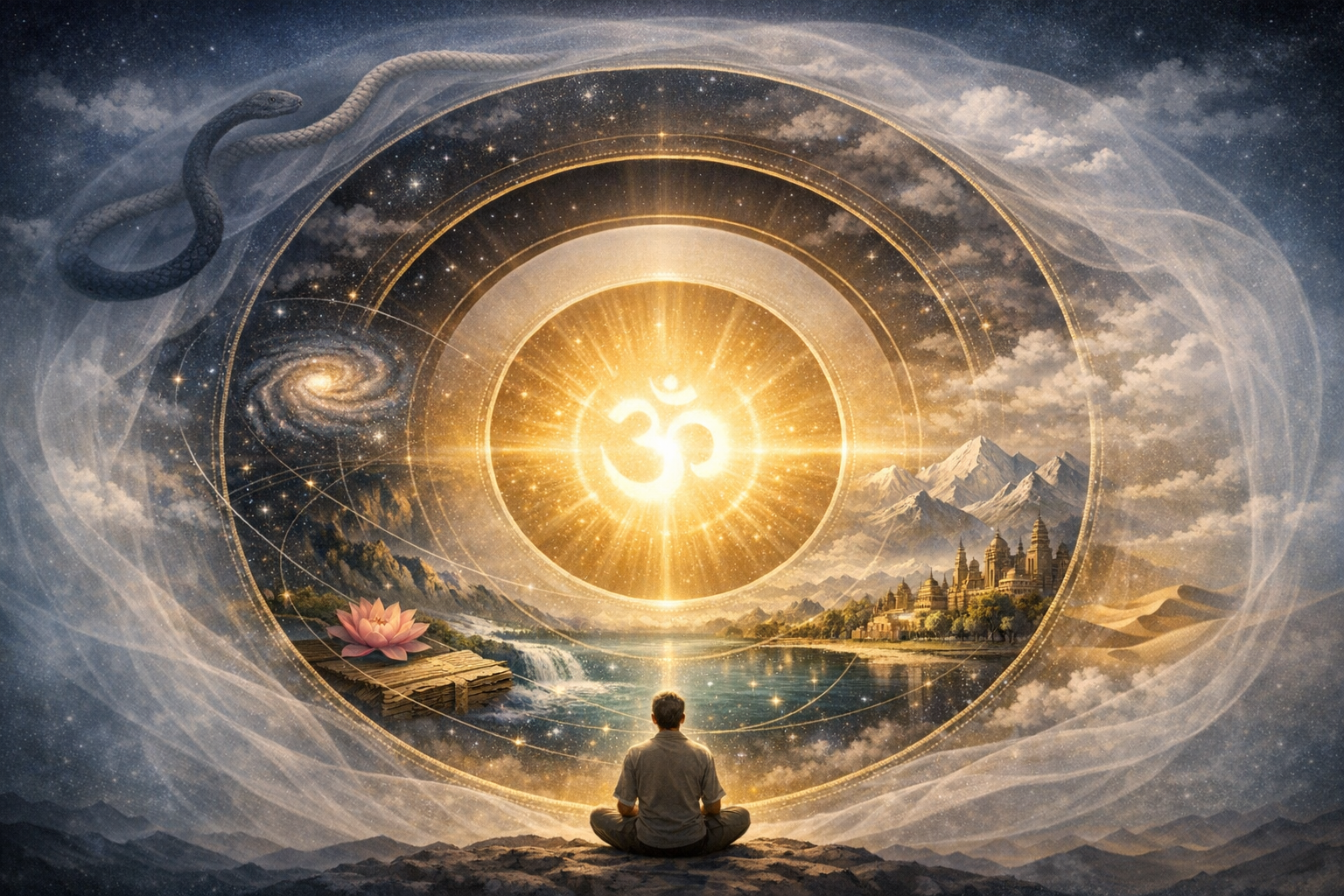
Vedic scriptures call the world an “illusion” not to deny its existence, but to redefine reality with precision. Advaita Vedanta distinguishes absolute reality (Brahman) from empirical, dependent reality (the cosmos as mithyā) and explains how māyā and avidyā generate the appearance of multiplicity. Upanishadic teachings, supported by the Bhagavad Gita, show why the world is…