
-
Hanuman Jayanti Upvaas 2026: Chaitra Shukla Chaturdashi Guide, Vrat Vidhi, Timings, Benefits

Hanuman Jayanti Upvaas in 2026 will be observed on 1 April, corresponding to Chaitra Shukla Chaturdashi in many regions. The fast is kept from sunrise to sunset and is typically concluded with simple prasad after evening worship. This guide explains regional calendar variations, outlines a clear Vrat Vidhi, and recommends appropriate food choices for phalahar…
-
Ultimate Guide to Hanuman Deeksha 2026 (Anjaneya Maala): Dates, Rituals, Temples, Benefits
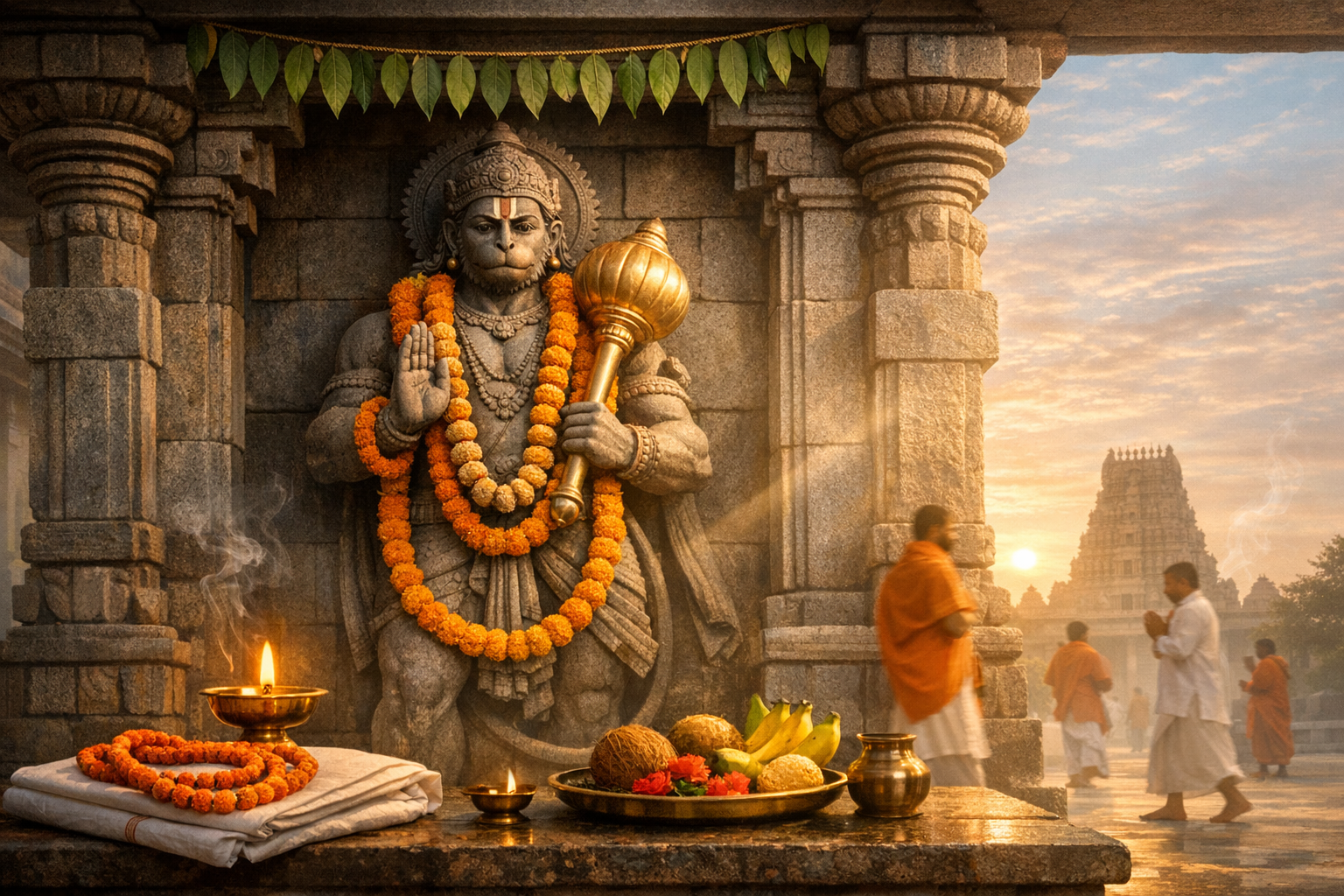
Hanuman Deeksha (Anjaneya Maala) in 2026 begins on 2 April and culminates on 12 May, with 11-, 21-, and 41-day options to suit different capacities. This guide explains the dates, sankalpa, daily niyamas, and viramana practices, emphasizing health, safety, and summer travel planning. It highlights major centers such as Kondagattu Hanuman Temple (Jagtial, Telangana) and…
-
Unlocking Swayamprabha’s Inner Light: Ramayana Symbolism, Feminine Resilience, and Modern Relevance

Swayamprabha’s brief yet pivotal appearance in the Ramayana illuminates how inner luminosity, disciplined through tapas and expressed as seva, can convert heartbreak into creative momentum. Positioned in the Kishkindha Kāṇḍa, her guidance reorients Hanuman’s search party from a dazzling cave of māyā back to purpose, modeling threshold guardianship and ethical hospitality. The symbolism converges with…
-
Lanka Kānda in Tulsidas’s Ramcharitmanas: Dharma, Strategy, and Enduring Bhakti

Lanka Kānda in Ramcharitmanas unites poetic beauty with ethical clarity, presenting a dharma-yuddha rooted in diplomacy, restraint, and devotion. Setubandha functions as engineering feat and sacred metaphor, while Vibhīṣaṇa’s refuge models principled dissent and moral courage. Tulsidas’s nuanced handling of Sita’s sanctity and Ravana’s downfall centers compassion over suspicion and ego. The kānda serves as…
-
Hanuman Jayanti 2026 (Vaishakha): Auspicious Date, Puja Guide, and South Indian Traditions

Hanuman Jayanti 2026, as observed in South Indian calendars, falls on 12 May 2026 (Vaishakha Bahula Dasami). This guide explains why the date differs from the Chaitra Purnima observance in other regions and clarifies Panchang terms like tithi, paksha, and the Amanta system. It outlines when to perform the puja during the Dashami window and…
-
Hanuman and the Five Elements in Kamba Ramayanam: Transformative Symbolism and Yogic Science
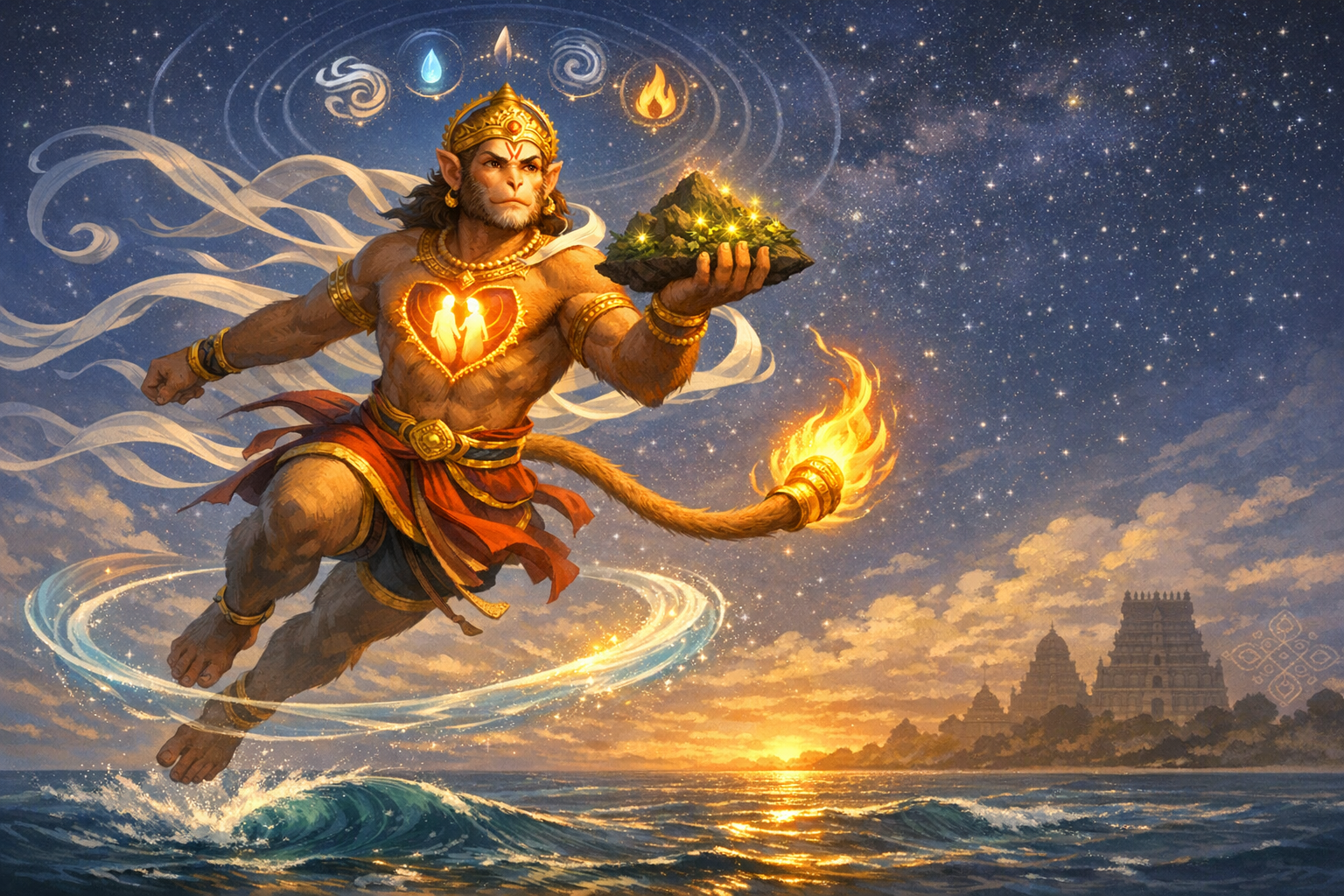
The Kamba Ramayanam presents Hanuman as an embodied map of the five great elementsVayu, Jala, Akasha, Agni, and Bhoomitransforming epic episodes into a precise guide for ethical action and inner balance. Vayu becomes pranic mastery and courage, Jala becomes adaptable resolve, Akasha becomes the clarity of spacious awareness, Agni becomes purifying discernment, and Bhoomi becomes…
-
Enigmatic Two-Headed Golden Deer: What Regional Ramayanas Reveal about Sita’s Abduction

The Ramayana’s Sita abduction episode is not a fixed script but a living tradition across India. In select Kerala and Tamil Nadu repertoires, the golden deer becomes a two-headed marvel, amplifying the epic’s meditation on maya, desire, and deception. Anchored in Valmiki’s Aranya Kanda yet enriched by Kamba Ramayanam, Adhyatma Ramayanam Kilippattu, and folk performance,…
-
Ravana’s Abduction of Sita Revisited: Dharma, Curses, and a Deliberate Path to Moksha

Did Ravana kidnap Sita to be slain by Sri Rama and attain moksha? A careful, text-sensitive study shows that while Valmiki’s Ramayana emphasizes Ravana’s pride and desire, later Puranic and bhakti traditions interpret his fall within a cosmic design of grace. The Jaya–Vijaya doctrine, vaira-bhakti (absorption through enmity), karmic curses, and the Maya Sita motif…
-
When Ravana Became Rama: A Brief Awakening to Dharma and the Transformative Power of Virtue

This exploration of a lesser-known Ramayana motifRavana assuming Rama’s formexamines how virtue resists imitation and demands inner transformation. By situating the episode in the ethical drama of Sita’s steadfastness in the Ashoka grove, it shows how adharma collapses under the weight of authentic dharma. The analysis highlights literary, psychological, and philosophical dimensions, clarifying the difference…
-
Sundara Kanda Unveiled: Hanuman’s Epic Journey to Lanka and the Hope it Inspires

Sundara Kanda, the fifth book of the Ramayana by Valmiki, chronicles Hanuman’s mission to find Sita and transform uncertainty into hope. The narrative highlights the ocean leap, encounters with Mainaka, Surasa, and Simhika, the discovery of Sita in Ashoka Vatika, and the powerful audience with Ravana. Hanuman’s burning of Lanka is framed as disciplined, ethical…
-
Ramayana’s Defining Episodes: Dharma, Devotion, and the Journey Uniting Dharmic Traditions

This structured overview of the Valmiki Ramayana highlights the epic’s defining episodesfrom Ahalya’s redemption and Sita’s swayamvara to the exile, Sundara Kanda, and the battle of Lankaexplaining how each advances dharma, devotion, and ethical leadership. Readers gain a clear framework for understanding the narrative arc and its moral significance. The account emphasizes unity across dharmic…
-
Why Hanuman Embraced Eternal Brahmacharya: Devotion, Dharma, and the Strength of Service

Hanuman’s naishthika brahmacharyalifelong celibacyhas long symbolized the union of devotion, discipline, and service in the Ramayana tradition. While Valmiki’s text highlights unwavering focus rather than an explicit vow, later devotional memory firmly presents Hanuman as a celibate exemplar. Read as a dharmic principle, brahmacharya signifies self-mastery and conservation of energy for higher purpose. Variations such…
-
10 Defining Moments of the Ramayana: Timeless Lessons from Rama’s Epic Journey

This concise guide highlights ten defining moments of the Ramayanafrom Rama’s birth in Ayodhya and Sita’s swayamvara to the vanvas, Hanuman’s Sundara Kanda mission, and the return to Ayodhya. Each episode is presented with clear context and ethical significance to illuminate Dharma in action. Readers gain practical insights into righteous leadership, loyalty, compassion, and the…
-
Hanuman’s Timeless Blueprint: How a Dharmic Hero Shaped the Modern Superhero Archetype

This article examines Hanuman as a fully realized heroic model whose narrative structure and values anticipate the modern superhero archetype. It highlights how feats like the ocean-leap and Dronagiri episode parallel contemporary hero narratives while foregrounding service, humility, and ethical restraint. Readers gain an accessible framework for understanding how the Sundara Kanda maps onto mission-driven…
-
Darbha Sayana Murthy: Sri Rama’s Yoga Nidra Before LankaSymbolism, Strength, and Serenity

Darbha Sayana Murthy recalls the moment Sri Rama, poised to reach Lanka, prays to Lord Varuna and enters Yoga Nidra upon a bed of Darbha grass. The scene blends disciplined patience with strategic resolve, presenting leadership as calm strength before decisive action. Darbha symbolizes purity and protection, turning the earth into a sacred altar that…
-
TTD’s 16-Day Sundarakanda Parayanam (Nov–Dec 2025): Key Rituals, Dates, and Pilgrim Insights

TTD will conduct the Shodasha Dina Sundarakanda Parayanam at Vasantha Mandapam, Tirumala, from November 28 to December 13, 2025. Ankurarpanam will precede the programme on November 27, 7–8 PM, at Dharmagiri Veda Vignana Peetham, marking an auspicious start. Daily morning recitation sessions are planned to help devotees participate with focus and ease. The event highlights…
-
TTD’s 16-Day Sundarakanda Parayanam 2025: Dates, Ankurarpanam, and Devotional Grace at Tirumala

TTD will conduct the Shodasha Dina Sundarakanda Parayanam at Tirumala’s Vasantha Mandapam from November 28 to December 13, 2025, with Ankurarpanam on November 27 at Dharmagiri Veda Vignana Peetham (7–8 PM). The programme offers a focused, daily recitation window between 8:30 and 9:30, enabling devotees to engage deeply with the Sundara Kanda of the Valmiki…
-
Sita’s Ashokavana Ordeal: Unwavering Dharma, Karma, and Timeless Strength to Endure

Sita’s ordeal in Ashokavana exemplifies how dharma and karma inform spiritual resilience under extreme duress. Confined by Ravana and pressured to capitulate, she remained unwavering through ethical clarity, disciplined remembrance, and self-restraint. Her acceptance of karma’s ripening never became fatalism; instead, it sustained equanimity and moral agency. The Sundara Kanda encounter with Hanuman affirmed her…
-
Sundarakanda Parayana Procedures: A Clear, Devotional Guide to Parayanam Vidhanam for Courage and Grace

This guide presents Sundarakanda Parayana Procedures (Sundarakanda Parayanam Vidhanam) in a clear, flexible format that suits home and community practice. It explains essential preparationclean space, sankalpa, lamp, and sattvik offeringsand a simple step-by-step sequence for focused recitation and graceful conclusion. Multiple day-wise schedules are outlined, from 1-day to 41-day observances, so practitioners can match pace…
-
Essential Hindu Wisdom to Master the Mind: Hanuman’s Leap and the Science of Potential

Hanuman’s leap to Lanka in the Ramayana’s Sundara Kanda illustrates how disciplined mind and ethical purpose unlock human potential. The narrative shows uncertainty transformed into decisive action through counsel, devotion, and training. Hindu practices like yoga, pranayama, dhyana, and japa build the steadiness required for courageous goals. Parallel insights across Buddhism, Jainism, and Sikhism reinforce…