
-
Sant Dnyaneshwar Jayanti 2026: Powerful Lessons from Maharashtra’s Bhakti Sage

Sant Dnyaneshwar Jayanti 2026 falls on September 4 and honors the birth anniversary of Sant Dnyaneshwar Maharaj of Maharashtra. The observance is linked with Krishna Paksha Ashtami in Shravan Month according to the Shaka calendar followed in Maharashtra. This article explains Dnyaneshwar’s role in the Varkari bhakti tradition, his authorship of the Dnyaneshwari and Amrutanubhava,…
-
Varahi Devi Katha: Powerful Story, Symbolism, and Scriptural Wisdom of Varahi Mata

Varahi Devi, also known as Varahi Mata, is one of the Sapta Matrikas and a powerful form of Devi Shakti associated with Varaha. Her katha appears in traditions connected with the Devi Mahatmya, Markandeya Purana, Varaha Purana, and Matsya Purana. The story presents her as a fierce maternal protector who helps defeat forces such as…
-
Srimad Bhagavatam 3.27.1: Powerful Insight on Freedom from the Modes

Śrīmad-Bhāgavatam 3.27.1 presents Lord Kapila’s powerful teaching on how the living being can remain spiritually unaffected by the modes of material nature. Using the image of the sun reflected on water, the verse explains the difference between the changing body-mind system and the unchanging conscious self. This article explores key terms such as prakṛti, puruṣa,…
-
Powerful Lessons from Śrīmad-Bhāgavatam 8.18.13 on Vāmana and Sacred Duty
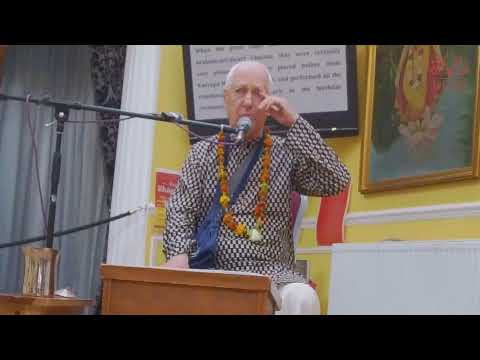
Śrīmad-Bhāgavatam 8.18.13 reveals the sacred moment when the sages joyfully recognized Lord Vāmana in the form of a young brahmacārī and performed the proper Vedic ceremonies under Kaśyapa Muni’s guidance. The passage offers a rich study of Vāmana avatāra, samskaras, jāta-karma, upanayana, and the deeper meaning of brahmacarya in Vedic culture. It shows how humility…
-
Shiva as the Cosmic Archer: Powerful Symbolism Behind the Destruction of Tripura

The story of Shiva destroying Tripura is far more than a dramatic Puranic battle. It presents Shiva as Tripurantaka, the cosmic archer whose bow, chariot, arrow, and timing symbolize the disciplined destruction of ego, ignorance, and adharma. The three cities of gold, silver, and iron can be read as the body, mind, and causal bondage,…
-
How Inner Harmony with Universal Vibration Awakens Profound Hindu Bliss

Hindu philosophy presents bliss as a refined state of inner harmony rather than a temporary emotional high. This article explains how concepts such as Ānanda, Om, Nāda Yoga, Prāṇa, dharma, and the guṇas illuminate the relationship between consciousness and cosmic order. It explores how mantra, meditation, breath discipline, temple worship, devotion, and ethical living help…
-
Nyayasudha Explained: The Powerful Logic Behind Madhvacharya’s Dvaita Vedānta

Nyayasudha is one of the most influential works in the Dvaita Vedānta tradition and a major commentary on Madhvacharya’s Anuvyākhyāna. Composed by Jayatirtha in the 14th century CE, it defends the realist vision of Tattvavada through logic, scriptural interpretation, and sustained philosophical debate. The work explains the distinction between the independent Supreme Reality and dependent…
-
Bhagavad Gita 2.28 Onward: Powerful Lessons on Duty, Death, and Inner Courage

Bhagavad Gita 2.28 onward presents a profound teaching on death, duty, courage, and disciplined action. Krishna guides Arjuna from grief and moral confusion toward a clearer understanding of the atman, dharma, and Karma Yoga. These verses explain that embodied life is temporary, while the true self is not destroyed by bodily change. The teaching does…
-
How Srila Prabhupada’s Bhagavad-gita As It Is Inspires Dharmic Unity
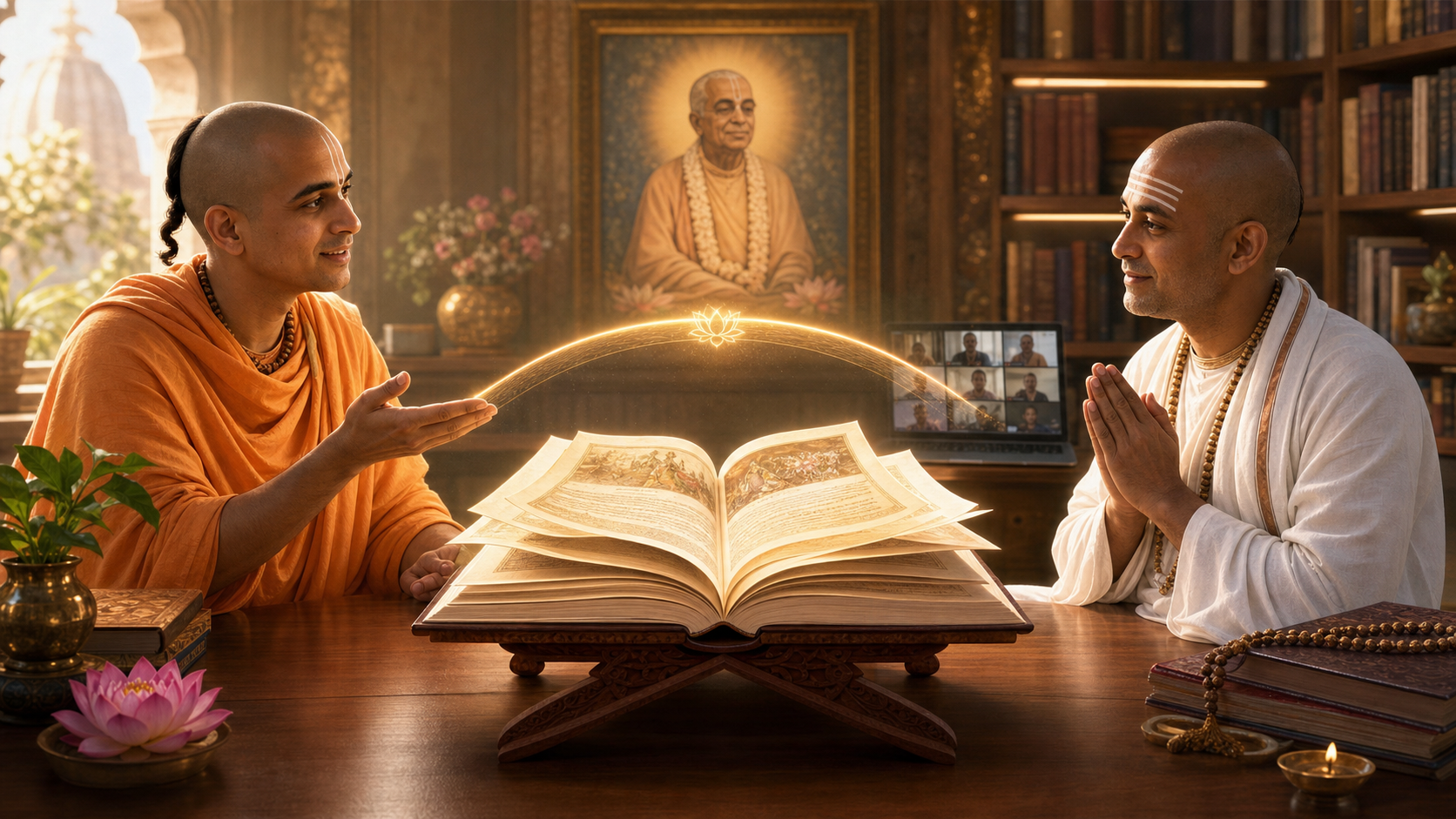
A Swaminarayana monk’s appreciation for Srila Prabhupada’s Bhagavad-gita As It Is reveals the unifying power of sincere scriptural study across dharmic traditions. The account highlights how Srila Prabhupada’s translations and purports made complex Vedic literature accessible, practical, and transformative for modern readers. It also shows why his literary service remains central to the global spread…
-
Krishna as Divine Thief: Powerful Symbolism of Butter, Love and Liberation

Krishna’s identity as Makhan Chor and Chit Chor reveals a profound theology of divine play, love, and liberation. The butter he steals symbolizes the softened essence of the human heart, refined through discipline, devotion, and remembrance. These stories from Vrindavan do not endorse ordinary theft; they use sacred symbolism to show how divine grace removes…
-
Powerful Yoga Vasishta Wisdom for Finding True Belonging Within the Self

The Yoga Vasishta teaches that the deepest form of belonging is not found through endless external searching, but through disciplined self-inquiry. This reflection explains why social approval, roles, and communities can support life yet still fail to remove inner restlessness. It presents Hindu wisdom on Atman, mind, vairagya, dharma, meditation, and Self-realization in a clear…
-
The Transformative Birthday Gift Guru Nanak Would Ask From Every Seeker Today

Guru Nanak’s birthday is best understood not as a call for external offerings, but as an invitation to inner transformation. His teachings ask society to offer truthfulness, honest labor, sharing, humility, and selfless service as the most meaningful gifts. The article explains the ethical force of Naam Japna, Kirat Karni, Vand Chakna, seva, sangat, pangat,…
-
Powerful Morning Srimad Bhagavatam Reflections for Devotion, Dharma, and Unity

This expanded reflection presents the significance of a live morning Srimad Bhagavatam class by HG Prabhavishnu Prabhu while avoiding unverifiable claims about the specific lecture content. It explains why the Bhagavata Purana remains central to Vaishnava Hindu scriptures, Krishna consciousness, and daily devotional practice. The article highlights the importance of morning spiritual study, disciplined hearing,…
-
Bhagavad-gītā 7.17: Powerful Wisdom on Steady Devotion and Divine Love
Bhagavad-gītā 7.17 presents one of Krishna’s most profound teachings on the relationship between knowledge, devotion, and divine love. The verse identifies the jñānī, the wise devotee who is constantly connected and one-pointed in bhakti, as especially dear to Krishna. This reflection explains the meaning of key Sanskrit terms such as nitya-yukta and eka-bhakti while situating…
-
ŚB 3.16.18 Explained: Powerful Lessons on Sanātana Dharma and Devotion

ŚB 3.16.18 presents a profound teaching on sanātano dharmaḥ, the eternal function of the living being and the deepest purpose of religious life. Shyamsundar Das’s class on this verse invites reflection on how dharma is protected through divine manifestations, disciplined practice, humility, and devotion. The verse appears in the larger narrative of Jaya and Vijaya,…
-
The Difficult Power of Virtue: Hindu Wisdom on Hypocrisy, Dharma and Inner Reform

This article examines why people often praise virtue while failing to practice it in daily life. Drawing from Hindu wisdom, the Bhagavad Gita, Yoga philosophy, the Mahabharata, and broader Dharmic traditions, it explains hypocrisy as a gap between moral speech and disciplined action. The discussion shows that dharma is not a slogan, ritual identity, or…
-
Devahūti’s Courageous Appeal: Śrīmad-Bhāgavatam 3.23.10 and Sacred Family Life

Śrīmad-Bhāgavatam 3.23.10 captures Devahūti’s respectful yet firm appeal to Kardama Muni, reminding him of a sacred promise within the framework of dharma. The verse reveals how spiritual greatness must be joined with accountability, compassion, and responsibility in family life. It also highlights the importance of yoga-māyā, gṛhastha dharma, and the sacred role of progeny in…
-
Śrīmad-Bhāgavatam 11.3.13: Powerful Wisdom on Dissolution and Detachment

Śrīmad-Bhāgavatam 11.3.13 offers a profound meditation on cosmic dissolution and the temporary nature of material existence. The verse explains how earth, deprived of aroma, merges into water, and how water, deprived of taste, merges into fire. This article interprets the teaching through Vedic cosmology, Sāṅkhya philosophy, and the Bhakti tradition. It highlights how the five…
-
When Dharma Restrains Anger: Powerful Lessons from Śrīmad-Bhāgavatam 4.19.27

Śrīmad-Bhāgavatam 4.19.27 presents a powerful moment in which King Pṛthu’s righteous anger is restrained by learned priests before it becomes an improper act. The verse shows that dharma is not merely strong emotion but disciplined action guided by śāstra, context, and sacred purpose. It also warns against false religious appearances, using Indra’s deception as a…
-
Balarama and Pralamba: Powerful Lessons from Vrindavan’s Divine Cowherd Play
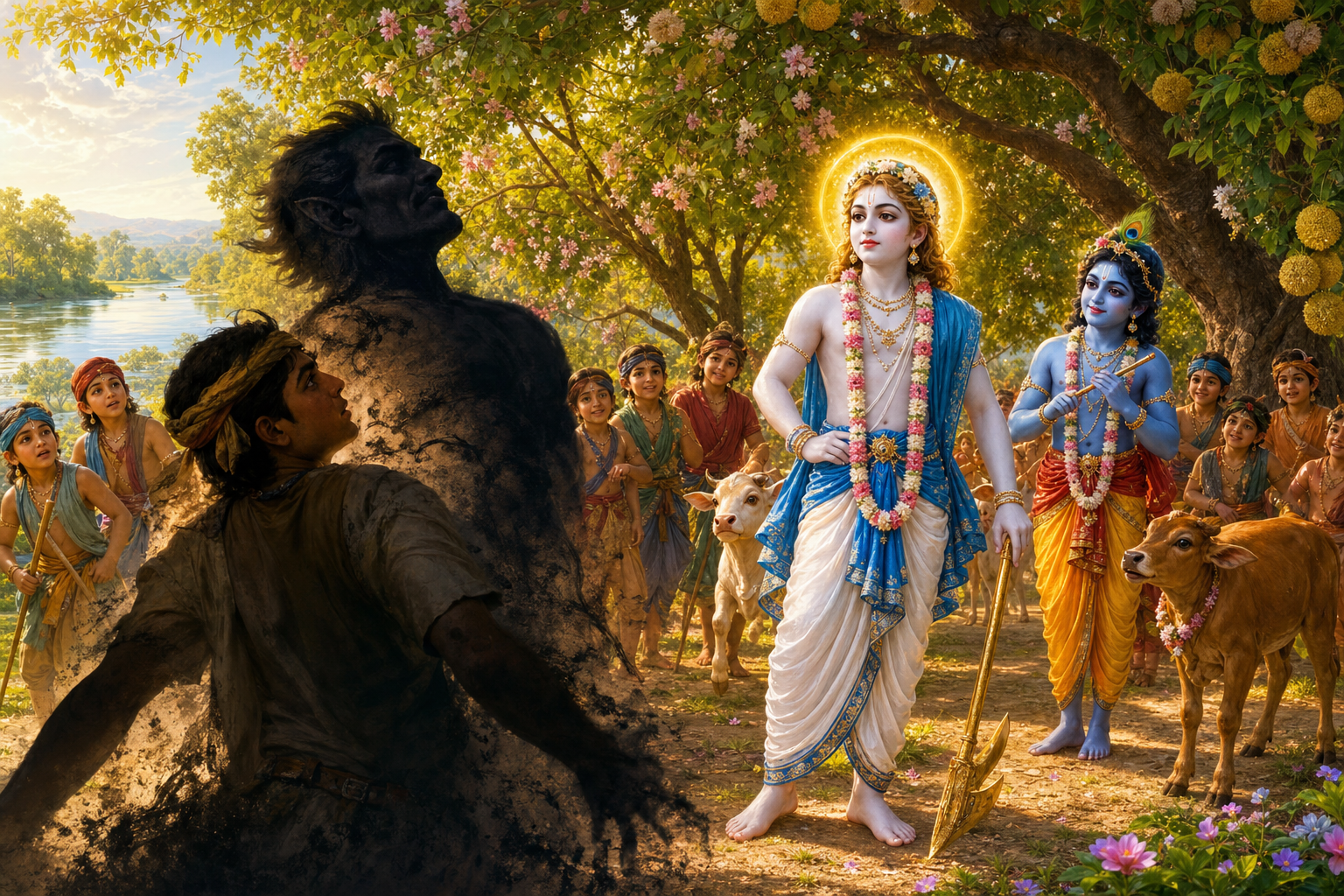
The story of Balarama and Pralamba from the Bhagavata Purana is more than a dramatic tale of a demon’s defeat in Vrindavan. It presents Balarama as a protector of dharma, a figure of strength, clarity, and spiritual steadiness. Pralamba’s disguise as a cowherd boy highlights the danger of deception that enters through false familiarity rather…