
-
The Sweet Power of Sehj: Guru Arjan Dev Ji’s Martyrdom and Inner Courage

This article explores the Shaheedi Sakhi of Guru Arjan Dev Sahib Ji through the concept of Sehj, or spiritual equipoise. It explains how Guru Arjan Dev Ji’s martyrdom in 1606 became a defining moment in Sikh history and a lasting lesson in courage, hukam, seva, and inner sovereignty. The discussion places the sakhi in its…
-
The Power of Sehj: How Guru Arjan Dev Ji’s Shaheedi Teaches Children Peace

Guru Arjan Dev Ji’s Shaheedi teaches children that peace is not weakness, but disciplined spiritual strength rooted in truth, compassion, and courage. The concept of sehj offers a practical framework for helping young minds pause, reflect, and respond without hatred. This article explains Guru Arjan Dev Ji’s historical and spiritual legacy through scripture, seva, sangat,…
-
Why Karma Still Leaves Room for Freedom: Powerful Lessons from SB 11.3.6

Śrīmad-Bhāgavatam 11.3.6 offers a compact but powerful explanation of karma, embodiment, desire, and human responsibility. The verse teaches that the embodied being acts through the senses, receives the results of those actions, and wanders through worldly happiness and distress. This article explains why the teaching is not fatalistic, but instead preserves meaningful free will within…
-
Srila Prabhupada Uvaca App: A Powerful Digital Gateway to Living Vani

Srila Prabhupada Uvaca is a digital archive centered on the spoken teachings of His Divine Grace A.C. Bhaktivedanta Swami Srila Prabhupada. The app brings together 4075 audio recordings from 1966–1977, with lectures connected to Bhagavad Gita, Caitanya Caritamrita, Brahma-samhita, and other devotional texts. Its value lies in combining audio, transcripts, search, favourites, listening history, and…
-
Krishna Beyond Rank: Powerful Lessons on Humility, Dharma and Inner Freedom

Krishna’s earthly journey challenges the assumption that profession, rank, and royal status define human worth. Born in a prison, raised among cowherds, and later serving as Arjuna’s charioteer, he repeatedly demonstrates that dharma is greater than title. His life shows that leadership need not depend on crowns, and service need not be inferior to command.…
-
Powerful Bhāgavatam Insight: How the Supersoul Guides Mind, Senses, and Māyā

This post reflects on HH Bhakti Gaurav Narayan Swami Maharaj’s featured discourse on Śrīmad-Bhāgavatam 11.3.4, dated 21-06-2026. It explains how the verse describes the Supersoul entering embodied beings and activating the mind and senses. The discussion highlights key concepts such as pañca-dhātu, the ten senses, the mind, māyā, Paramātmā, and the three guṇas. It presents…
-
Why Bhagavatam 11.3.6 Powerfully Reveals Karma, Freedom, and Inner Awakening

Śrīmad-Bhāgavatam 11.3.6 offers a profound explanation of karma, desire, and embodied life. The verse shows how the living being acts through the senses, accepts the fruits of action, and wanders through alternating happiness and distress. Its message is not fatalistic; it preserves meaningful human agency within the field created by past karma. The teaching encourages…
-
From IISc to ISKCON: A Powerful Journey of Intellect, Bhakti, and Inner Purpose
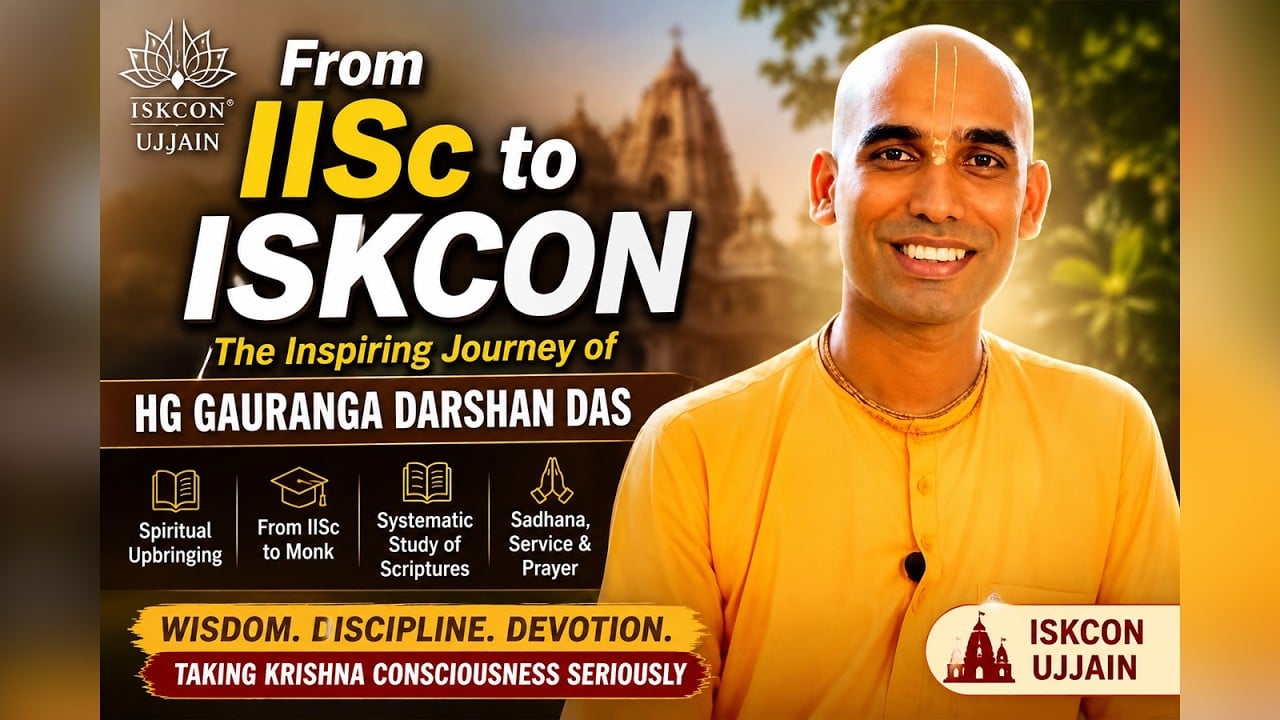
This article explores the inspiring journey of HG Gauranga Darshan Das from the intellectual environment of IISc to the devotional world of ISKCON. It examines how scientific training and Krishna consciousness can work together rather than stand in opposition. The discussion places his journey within the broader context of Gaudiya Vaishnavism, bhakti yoga, the Bhagavad…
-
Srimad Bhagavatam 11.11.1: Powerful Freedom Beyond Bondage and Liberation

This long-form reflection on Srimad Bhagavatam 11.11.1 examines Lord Krishna’s teaching to Uddhava on bondage, liberation, māyā, and the guṇas. It explains how the soul’s true identity remains spiritual even while embodied experience is shaped by material nature. The discussion places the verse within the Uddhava Gita and the Eleventh Canto’s wider teachings on devotional…
-
Surrender Unto Krishna: A Powerful Gita Guide to Freedom, Dharma, and Inner Peace

“Surrender unto Me” is one of the most powerful teachings of the Bhagavad Gita, presenting surrender not as weakness but as spiritually intelligent refuge in Krishna. The teaching arises in Arjuna’s crisis, showing that Dharma must be lived even amid grief, conflict, and moral uncertainty. Surrender purifies action by shifting the center from egoistic control…
-
Ravana’s Regenerating Heads: The Profound Wisdom Behind Rama’s Final Aim
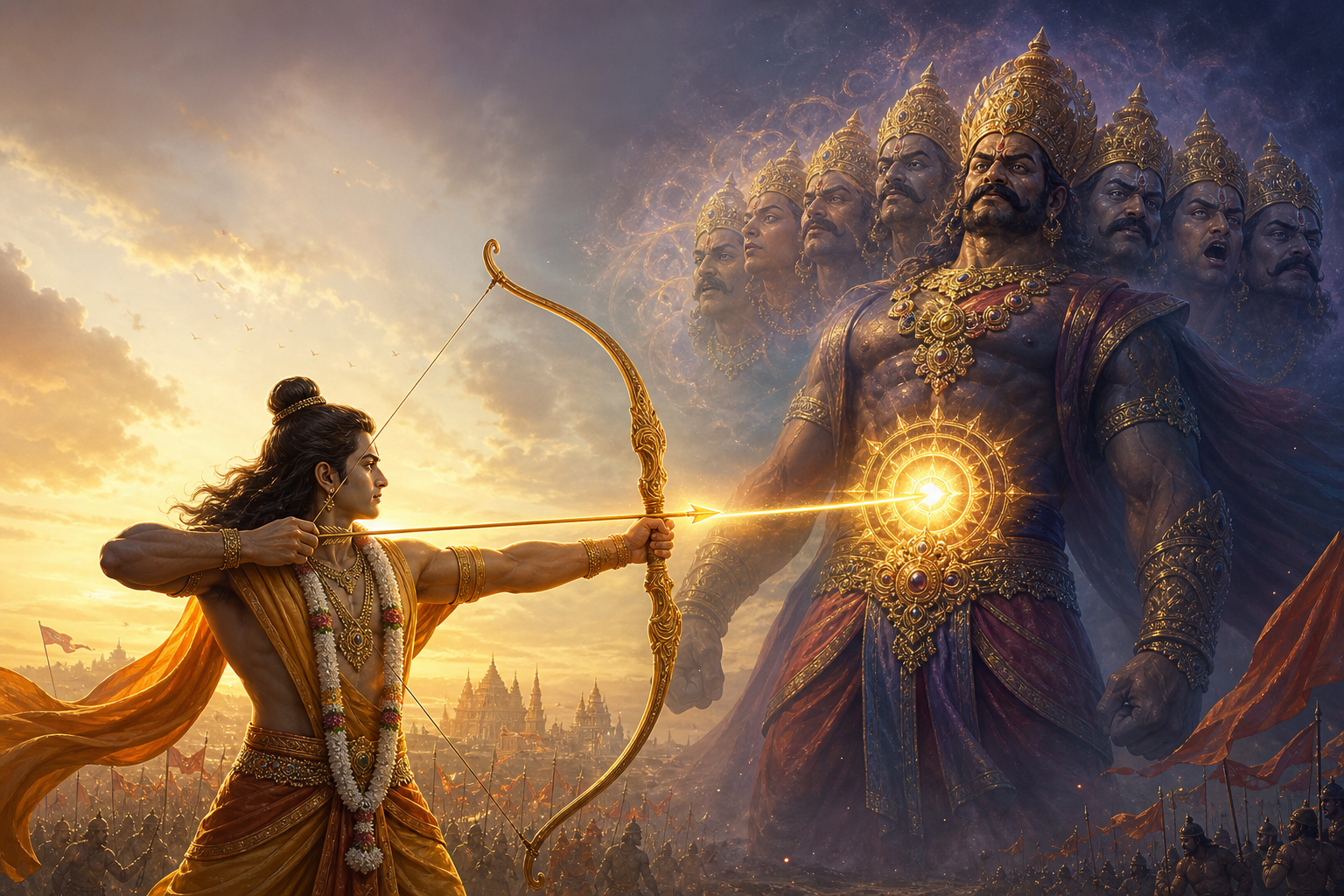
This article explores the symbolism of Ravana’s regenerating heads and the deeper meaning behind Rama’s final victory in the Ramayana. It explains that the repeated severing of Ravana’s heads represents the failure of treating symptoms while leaving the root of ego, desire, and adharma untouched. The piece distinguishes between Valmiki Ramayana and later traditional interpretations…
-
Why Shakti’s Fierce Motherhood Matters: Compassion, Power, and Sacred Duty

Shakti is often loved as the Divine Mother, but Hindu philosophy presents her as far more than a gentle source of comfort. This article explains why forms such as Durga, Kali, and Chamunda are essential to understanding the full meaning of sacred motherhood. It explores Shakti as cosmic energy, protective intelligence, moral force, and transformative…
-
Bhagavad Gita 15.20 Revealed: Powerful Wisdom for Completing Life’s Duty

Bhagavad Gita 15.20 concludes Purushottama Yoga with a profound teaching on the highest wisdom and the fulfillment of human life. The verse explains that one who understands Krishna’s confidential instruction becomes truly intelligent and spiritually complete. This reflection examines the Sanskrit terms guhyatamam, buddhiman, and krta-krtya with attention to their philosophical and devotional significance. It…
-
Powerful Bhagavad Gita Teachings: Lord Krishna’s Timeless Guide to Inner Clarity

The Bhagavad Gita presents Lord Krishna’s teaching as a disciplined path from confusion to clarity, using Arjuna’s battlefield crisis as a universal model of moral struggle. Its central message is that sacred wisdom must be approached with humility, inquiry, and proper guidance, much like medicine must be taken according to sound instruction. The text explains…
-
Love as Moral Power: Tiruvalluvar’s Timeless Hindu Insight on Virtue and Evil

Tiruvalluvar’s Kurals present love as the living foundation of virtue and noble action. This reflection explains how Hindu thought understands love not merely as emotion, but as a disciplined moral force rooted in dharma, ahimsa, compassion, and self-mastery. It shows why lovelessness cannot remain morally neutral, because true virtue exposes selfishness, cruelty, and indifference by…
-
Amritatva in Hinduism: The Transformative Quest for Immortality and Bliss

Amritatva in Hinduism refers to the state of immortality, bliss, and liberation described in the Upanishads and later Hindu philosophy. It is closely related to moksha, mukti, nirvana, and kaivalya, though each term carries distinct meanings across Dharmic traditions. The concept teaches that lasting happiness cannot be found in temporary pleasures alone, but in realization…
-
Arjuna Anugrahamurti: Shiva’s Fierce Grace Through Trial, Combat and Compassion

Arjuna Anugrahamurti, also known as Kiratarjunamurti or Pashupatamurti, presents Shiva as the divine tester who grants grace only after the seeker is inwardly prepared. The Mahabharata episode shows Arjuna performing tapas, encountering Shiva in the form of a Kirata hunter, and receiving the Pashupatastra after a fierce spiritual trial. This narrative explains that divine blessings…
-
Powerful Panasa Symbolism: Jackfruit, Abundance, Kubera and Ganesha in Hindu Art
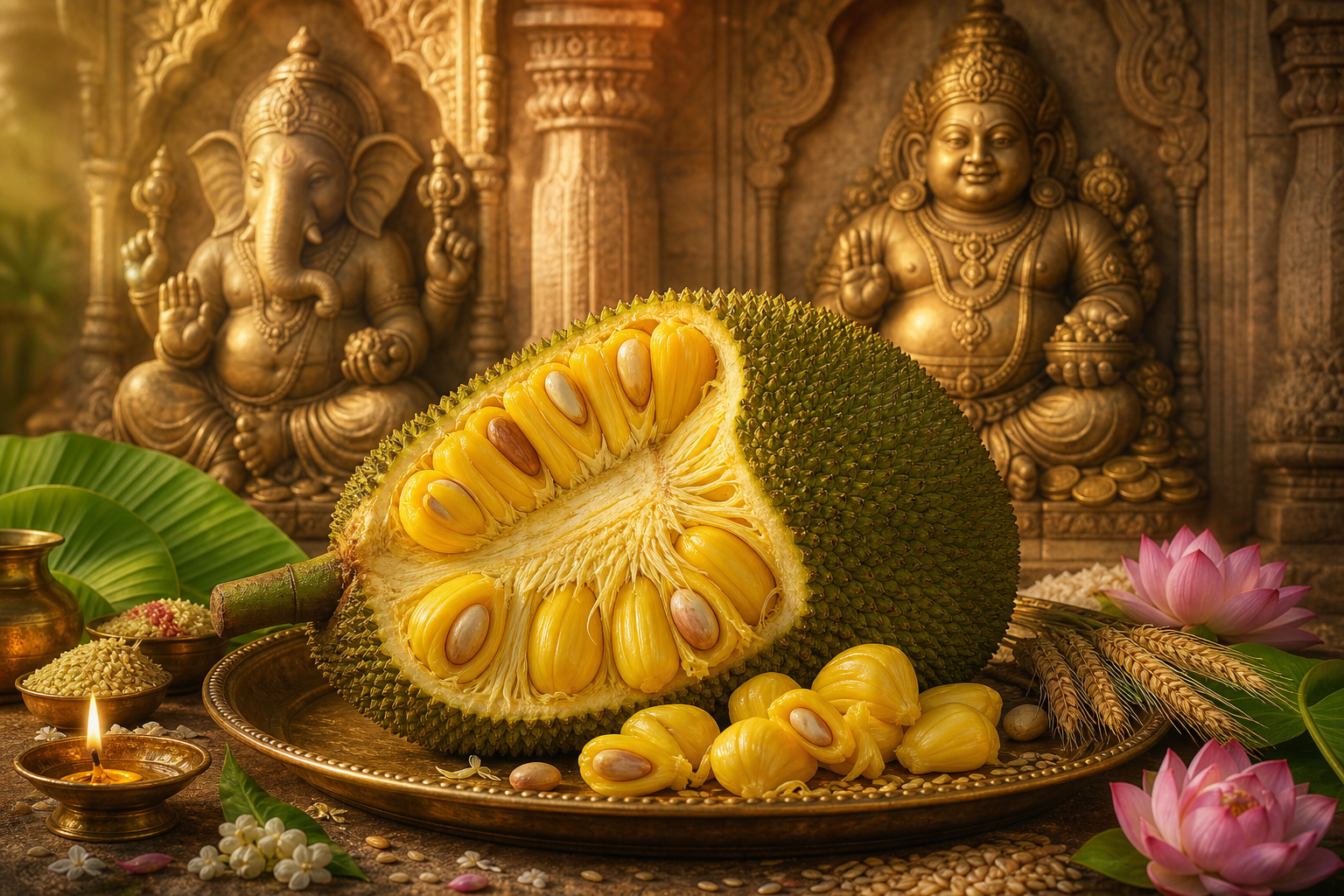
The jackfruit, known as panasa in Sanskrit, is a powerful Hindu symbol of abundance, nourishment, fertility, and responsible prosperity. In the iconography of Kubera, it reflects wealth that must be guarded, ethically used, and shared within the framework of dharma. In Ganesha worship, it points to auspicious beginnings, sweetness after effort, and the fulfilment that…
-
Hanuman and Sage Kandu: A Powerful Ramayana Lesson on Grief, Time, and Maya

The story of Hanuman and Sage Kandu presents a powerful Ramayana teaching on grief, anger, time, and maya. Set during the southern search for Mata Sita, the episode shows how even a sage can be shaken by loss and how Hanuman responds with humility, discernment, and spiritual strength. The narrative explains that grief is not…
-
Conquering Fear with Breath, Wisdom, and Dharmic Courage in Daily Life

Fear of failure, death, the future, flying, and daily uncertainty often comes from the same cycle of bodily alarm, anxious thought, and imagined danger. This article explains fear through both modern psychology and dharmic wisdom, showing how breath awareness, meditation, self-discipline, and seva can help calm the nervous system and restore clarity. It draws on…