
-
Reviving Navratri Kanjak: The Powerful Community Ritual Modern India Needs
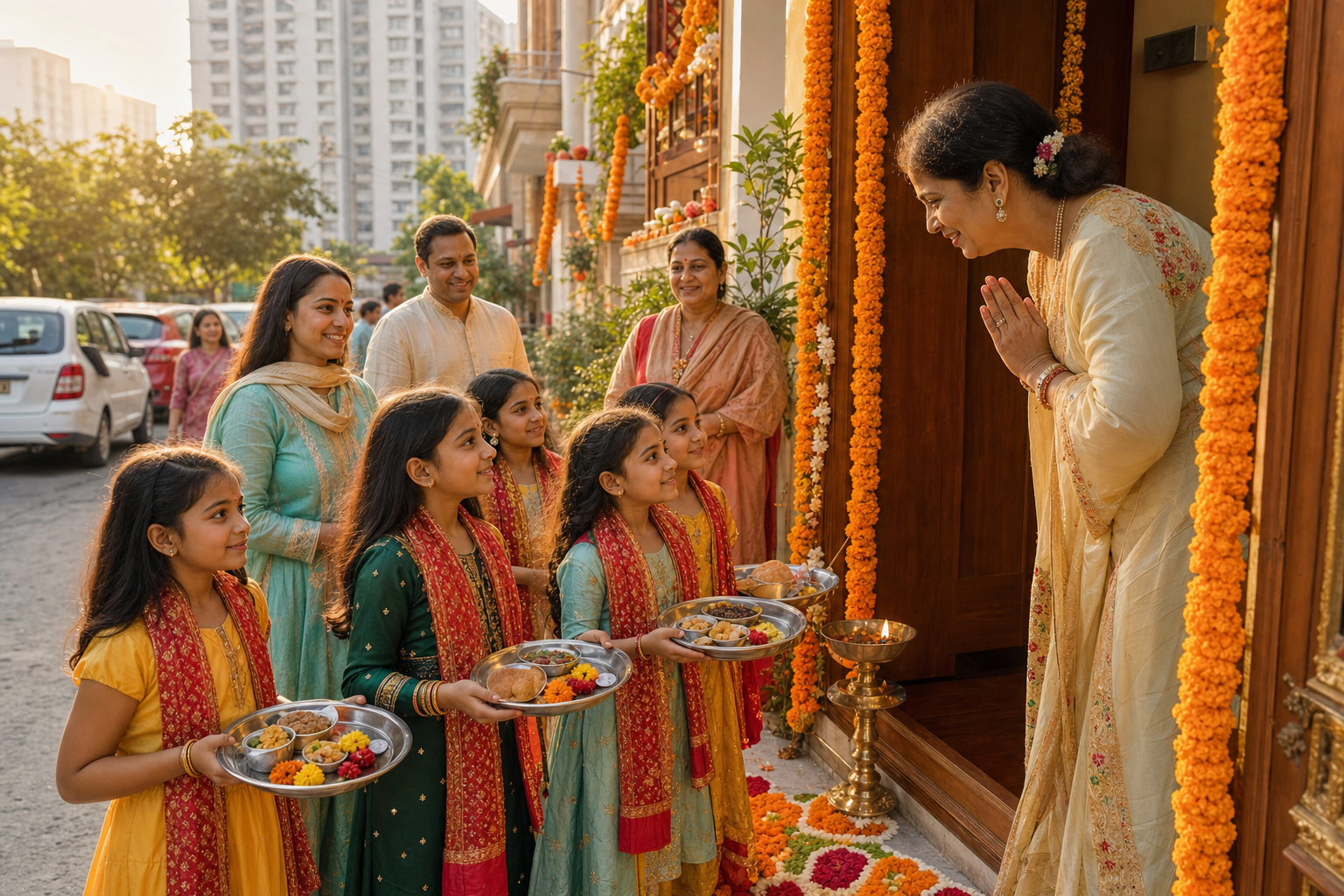
This long-form reflection revisits the Navratri Kanjak ceremony as a living example of community cohesion, cultural continuity, and sacred hospitality. It explains how the ritual once helped children feel known, protected, and cherished across an entire Delhi neighborhood. The piece contrasts that older world of trust with today’s urban anonymity, where high-rises, rental floors, digital…
-
Devi Upanishad Reveals Durga as Brahman: The Powerful Truth of Shakti
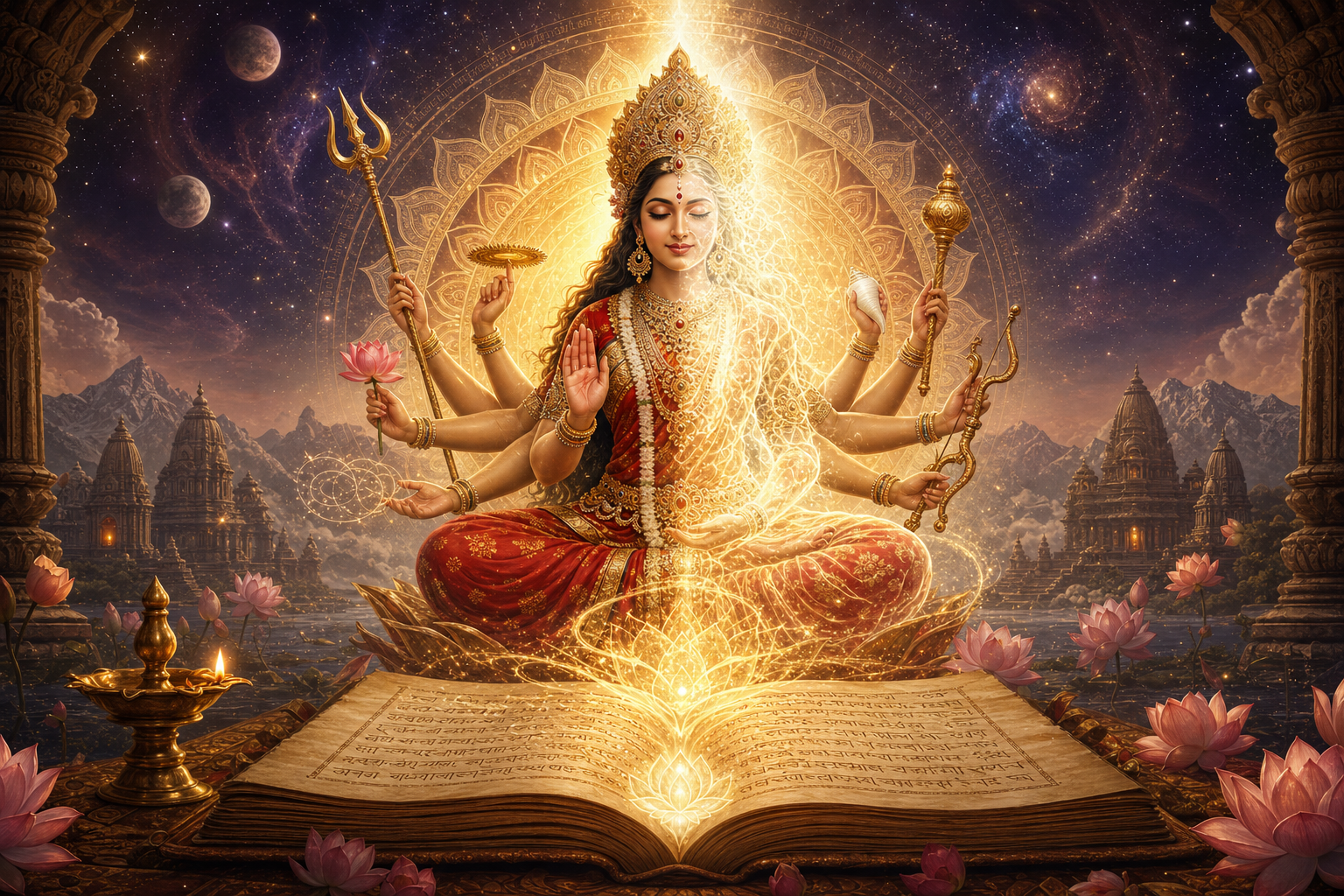
The Devi Upanishad presents Durga not merely as a revered Goddess, but as Brahman itself through the profound declaration Aham Brahma Swaroopini. This interpretation deepens Shakta philosophy by showing how devotion, Vedanta, mantra, and metaphysics converge in the worship of Devi. The text reveals the sacred feminine as both transcendent and immanent, beyond form yet…
-
Radha’s Sacred Mystery: A Powerful Guide to Divine Love, Bhakti, and Shakti
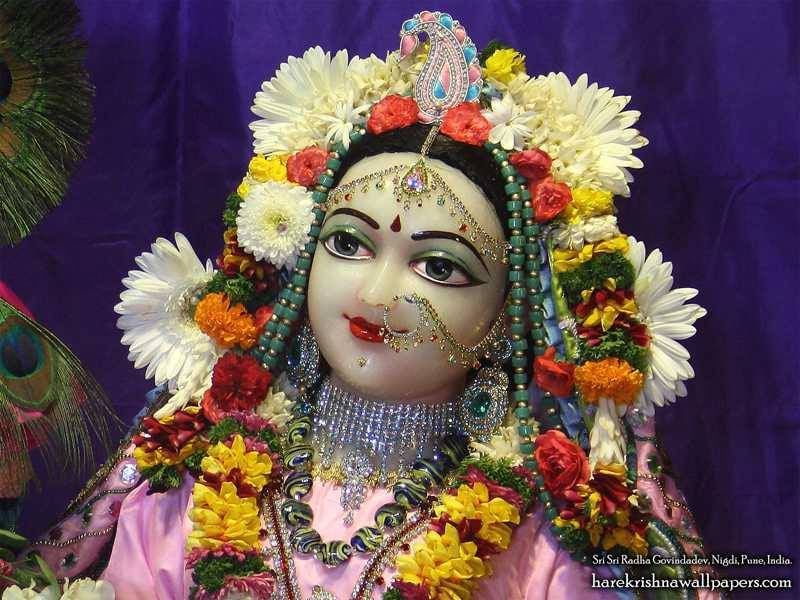
Radha’s mystery reveals one of the deepest teachings of Hindu spirituality: the highest yoga is not power, control, or even liberation alone, but divine love. In the bhakti traditions of Vrindavan, Radha is revered as Krishna’s supreme feminine energy, the embodiment of selfless devotion, and the gateway into the most intimate experience of the Divine.…
-
Mangala Chandi’s Powerful Dual Grace: Sacred Iconography, Symbolism, and Inner Meaning
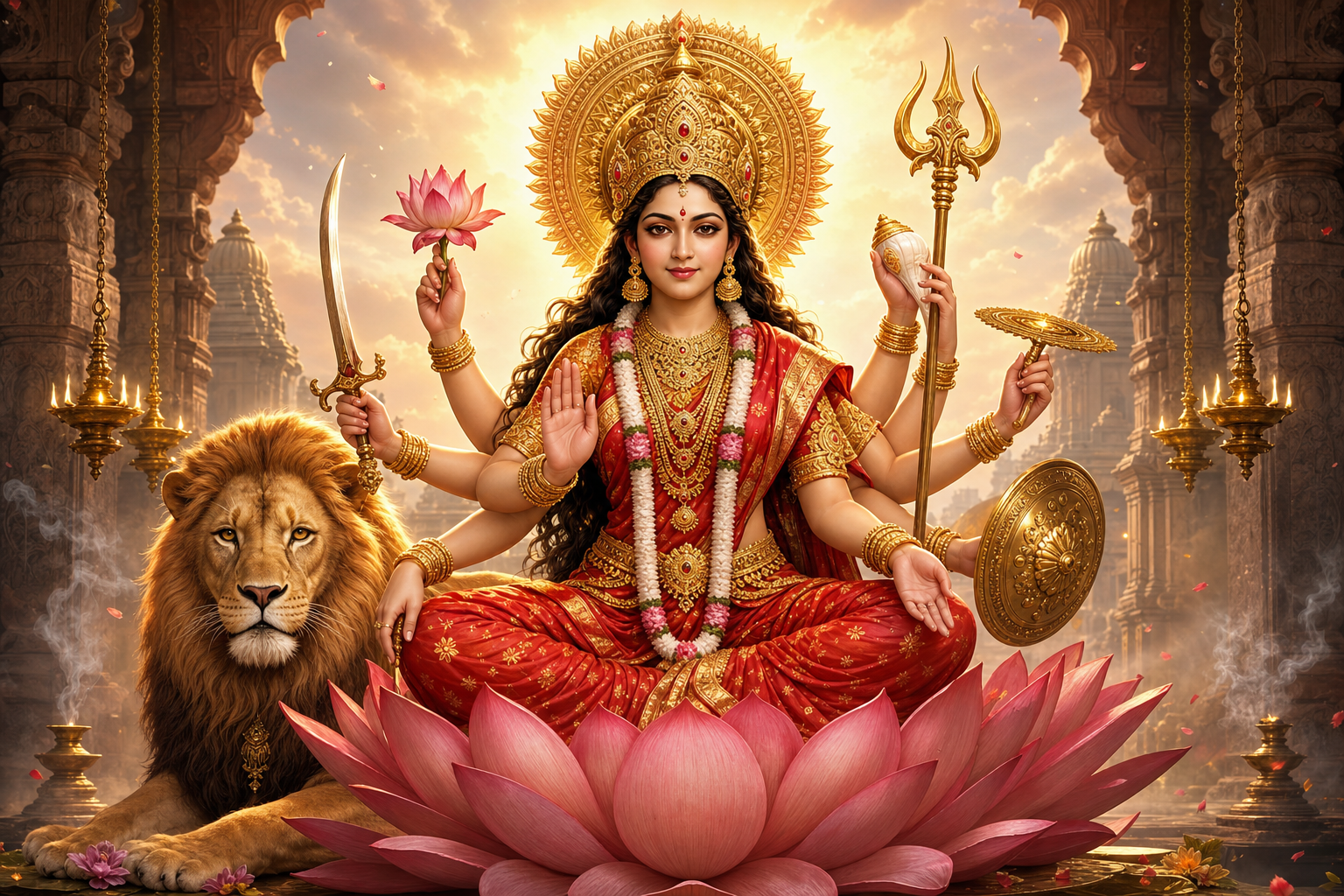
Mangala Chandi represents one of the most compelling expressions of Devi Shakti, uniting auspicious grace with fierce protection. Her name reveals a profound theological balance: Mangala as blessing, welfare, and sacred prosperity, and Chandi as the disciplined force that confronts adharma. This article explains her iconography through gestures, weapons, ornaments, colors, and symbolic associations in…
-
Why Hindu Tantric Goddess Imagery Reveals Sacred Truth Beyond Fear
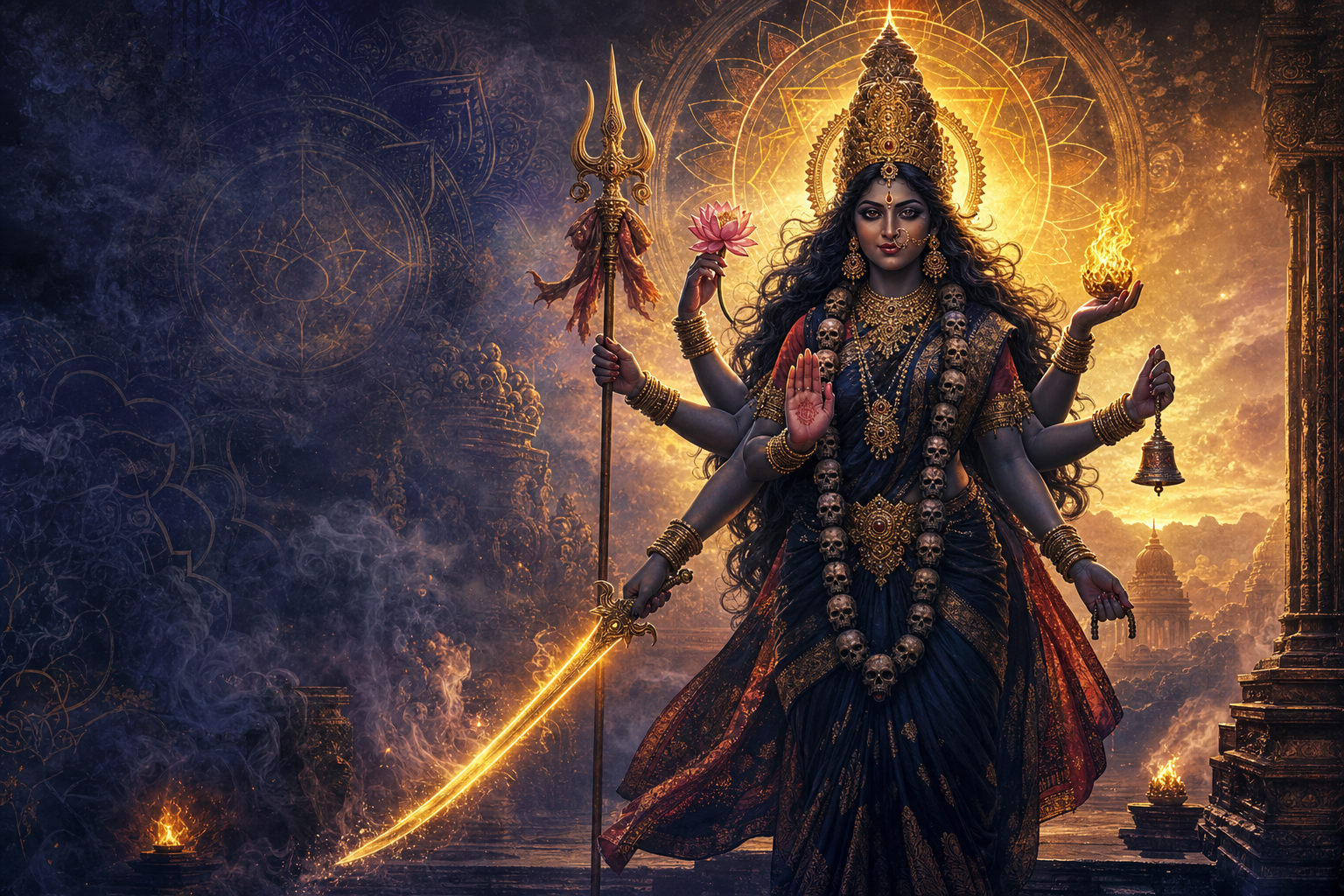
Hindu Tantric Goddess imagery is often misunderstood because modern viewers may read symbolic fierceness as literal violence. This article explains how forms such as Kali, Chamunda, Bhairavi, and Durga function as sacred teachings on time, ego, death, protection, and liberation. Rather than glorifying horror, Tantric iconography reveals hidden truths about impermanence, injustice, and the transformation…
-
Ardhanarinaravapuh Revealed: Powerful Hindu Wisdom on Sacred Gender Unity
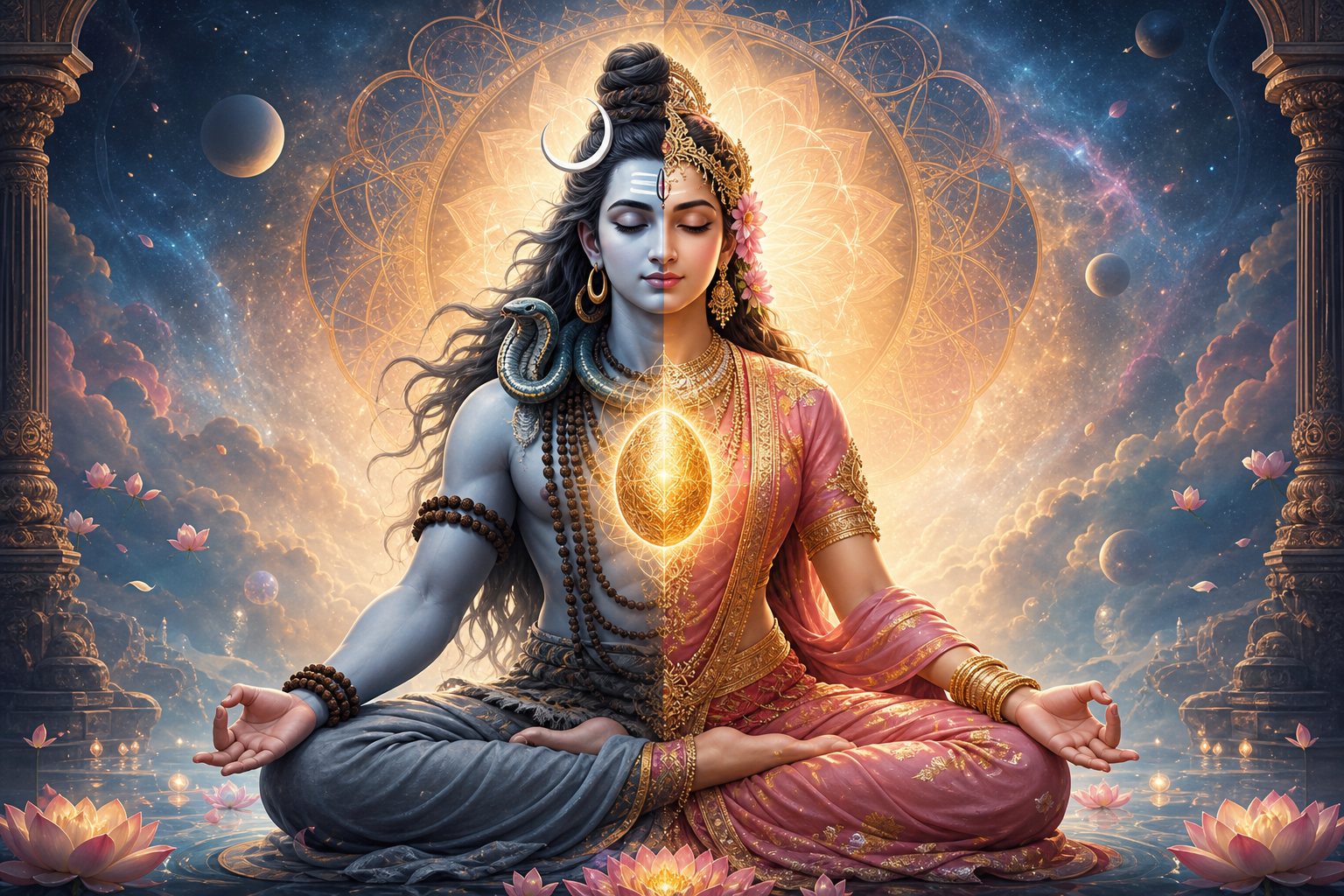
Ardhanarinaravapuh is a profound Hindu concept describing a sacred form that unites masculine and feminine principles in one indivisible body. Connected with Hiranyagarbha, the cosmic womb or golden egg, it points to the origin of creation as a state of luminous wholeness. The idea is closely related to Ardhanarishvara, the union of Shiva and Shakti,…
-
Why Shakti’s Fierce Motherhood Matters: Compassion, Power, and Sacred Duty
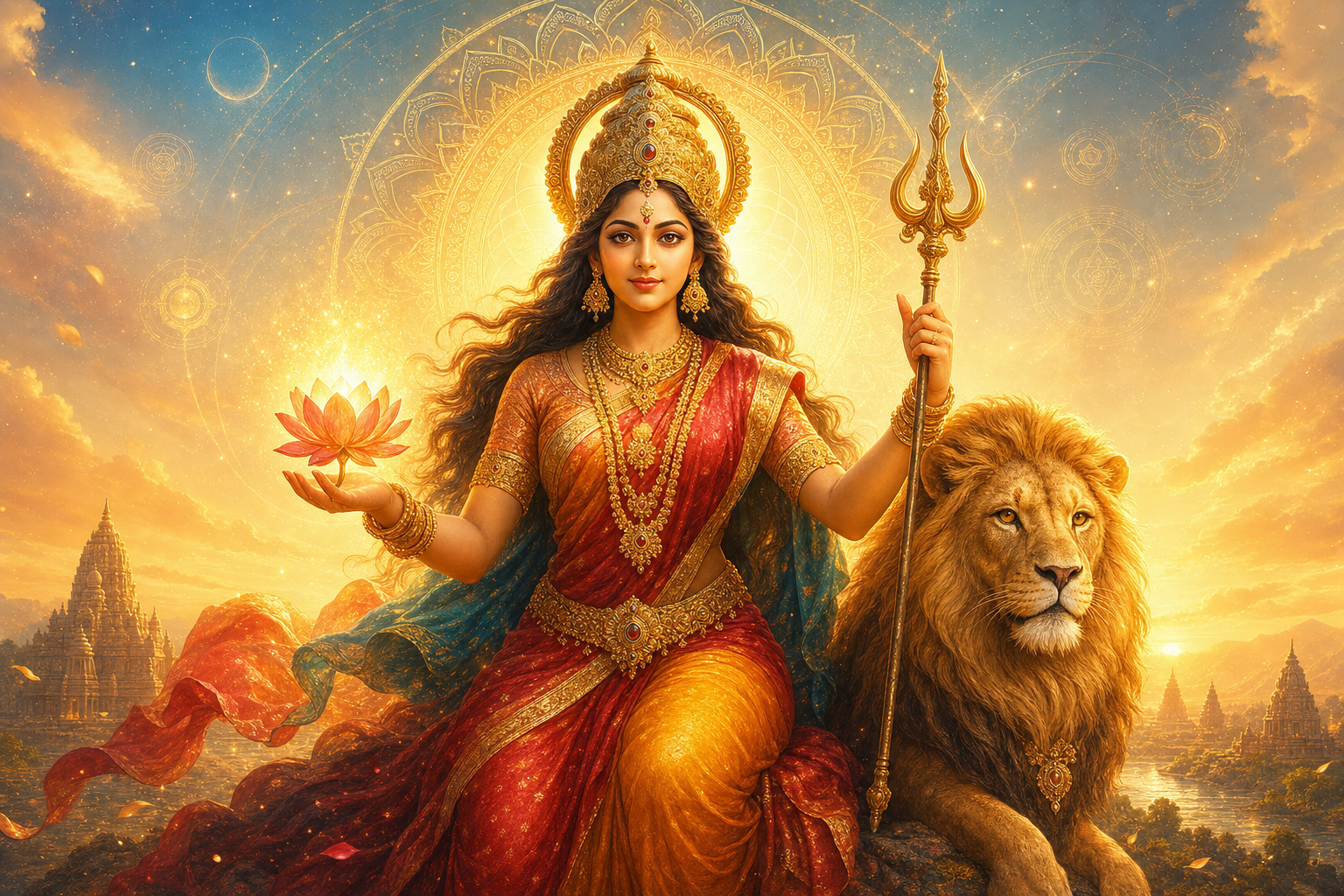
Shakti is often loved as the Divine Mother, but Hindu philosophy presents her as far more than a gentle source of comfort. This article explains why forms such as Durga, Kali, and Chamunda are essential to understanding the full meaning of sacred motherhood. It explores Shakti as cosmic energy, protective intelligence, moral force, and transformative…
-
Five Sacred Shakti Peeths of Madhya Pradesh: A Powerful Guide to Devi Shakti
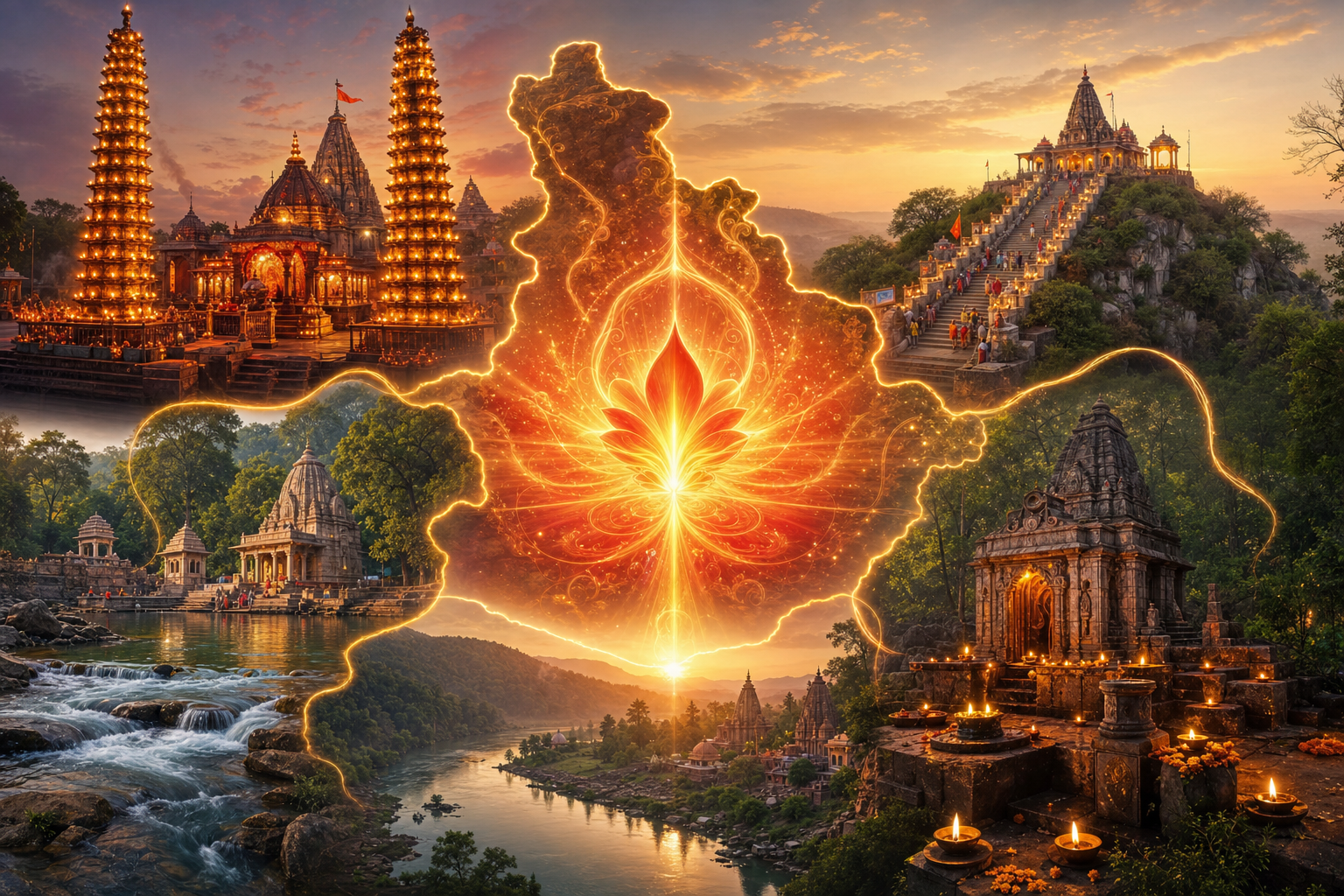
Madhya Pradesh’s Shakti Peeth traditions reveal a powerful sacred geography shaped by Devi worship, river reverence, temple ritual, and regional memory. This article examines five important Shakti-linked sites: Harsiddhi at Ujjain, Maa Sharda at Maihar, Shonakshi or Narmada at Amarkantak, Kal Madhav, and Ramgiri in the Chitrakoot tradition. It explains the Sati-Shiva-Vishnu narrative behind the…
-
Ardhanarishvara Shiva: Powerful Symbol of Divine Balance and Shakti Unity
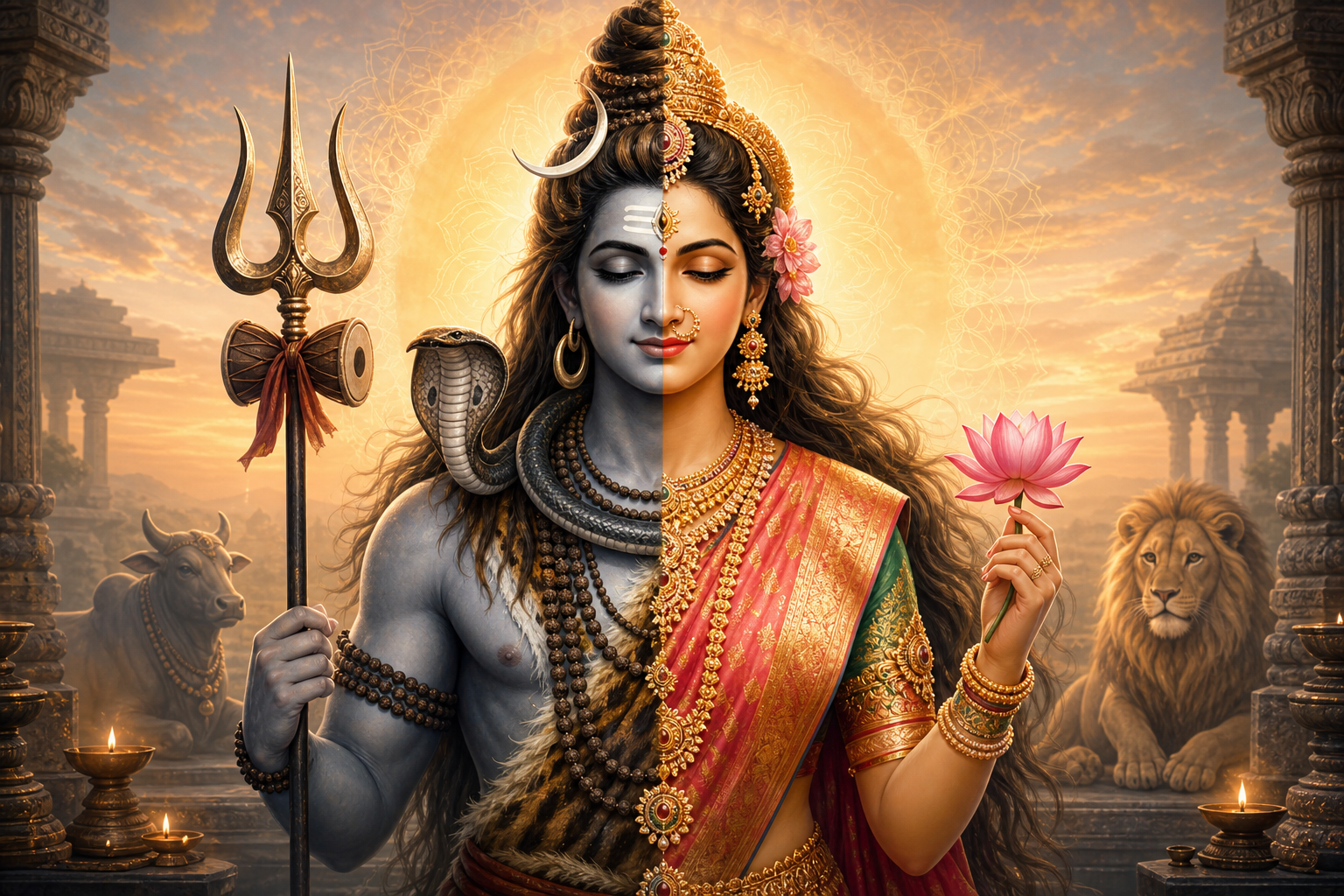
Ardhanarishvara Shiva is the sacred half-male and half-female form of Lord Shiva and Parvati Mata, expressing the inseparable unity of Shiva and Shakti. This form teaches that consciousness and energy, stillness and activity, ascetic discipline and creative abundance are not opposing forces but complementary aspects of one divine reality. The Puranas preserve several narratives explaining…
-
Sri Radha’s Tears and the Science of Bhakti Rasa: A Gaudiya Guide to Ecstatic Love
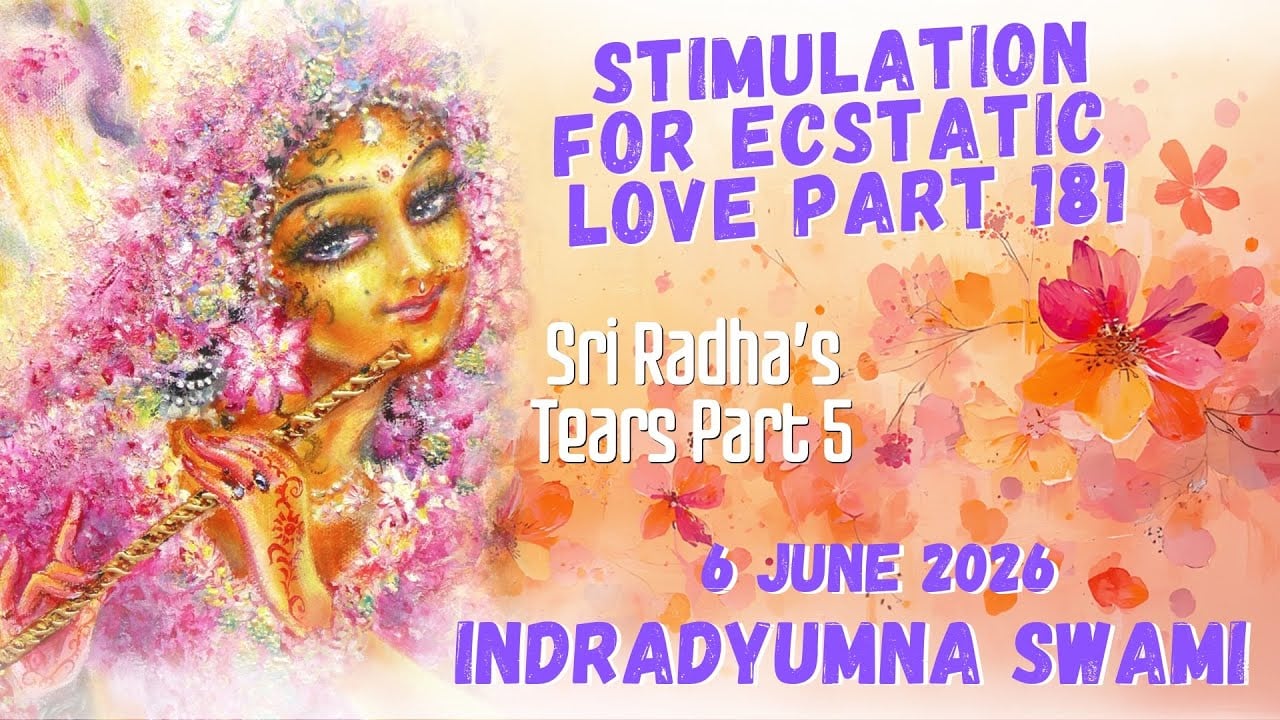
The theme of “Sri Radha’s Tears” in the Gaudiya Vaishnava tradition is not poetic excess but a carefully mapped feature of bhakti-rasa, where tears (aśru) belong to the eight sāttvika-bhāvas recognized by Rūpa Gosvāmi. This article explains how uddīpana (devotional stimulants), anubhāva (expressions), vyabhicārī-bhāva (transitory states), and the sthāyī-bhāva (enduring love) synthesize into tasted devotion…
-
Siddhi Ganesh & Siddhikali: Unveiling Nepal Mandala’s Hidden Union of Consciousness and Power
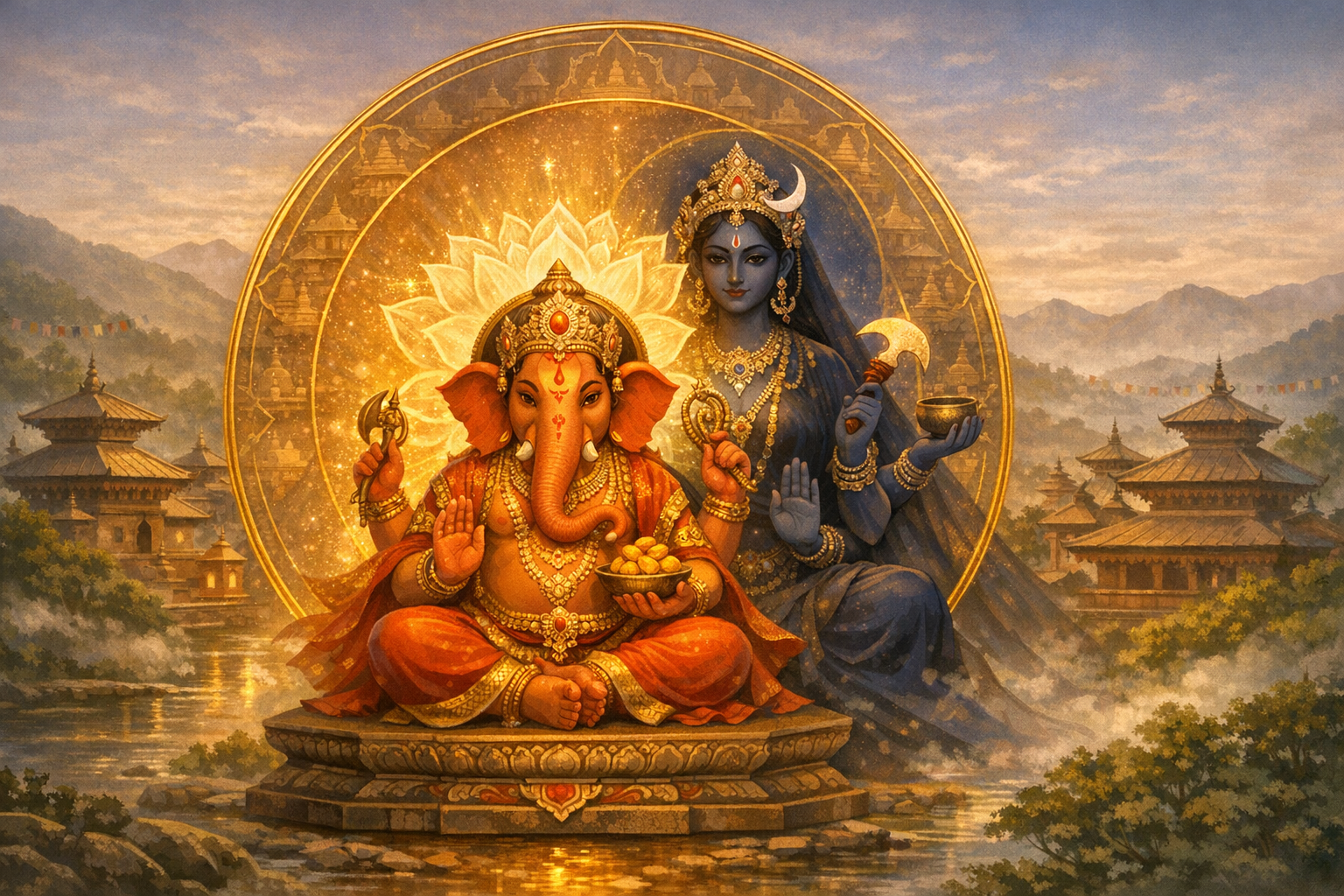
Siddhi Ganesh and Siddhikali in the Nepal Mandala embody a classical Tantric insight: Consciousness (cit) and Power (shakti) are inseparable. Set within Kathmandu Valley’s sacred geographyanchored by Pashupatinath and Guhyeshwari and ringed by the four Vinayakasthis pairing functions as both theology and lived pedagogy. The article maps how Siddhi (accomplishment) emerges when Ganapati’s stabilizing intelligence…
-
Unveiling Goddess Kaveri in Hindu Sculpture: Iconography, Ritual Power, and Sacred Geography
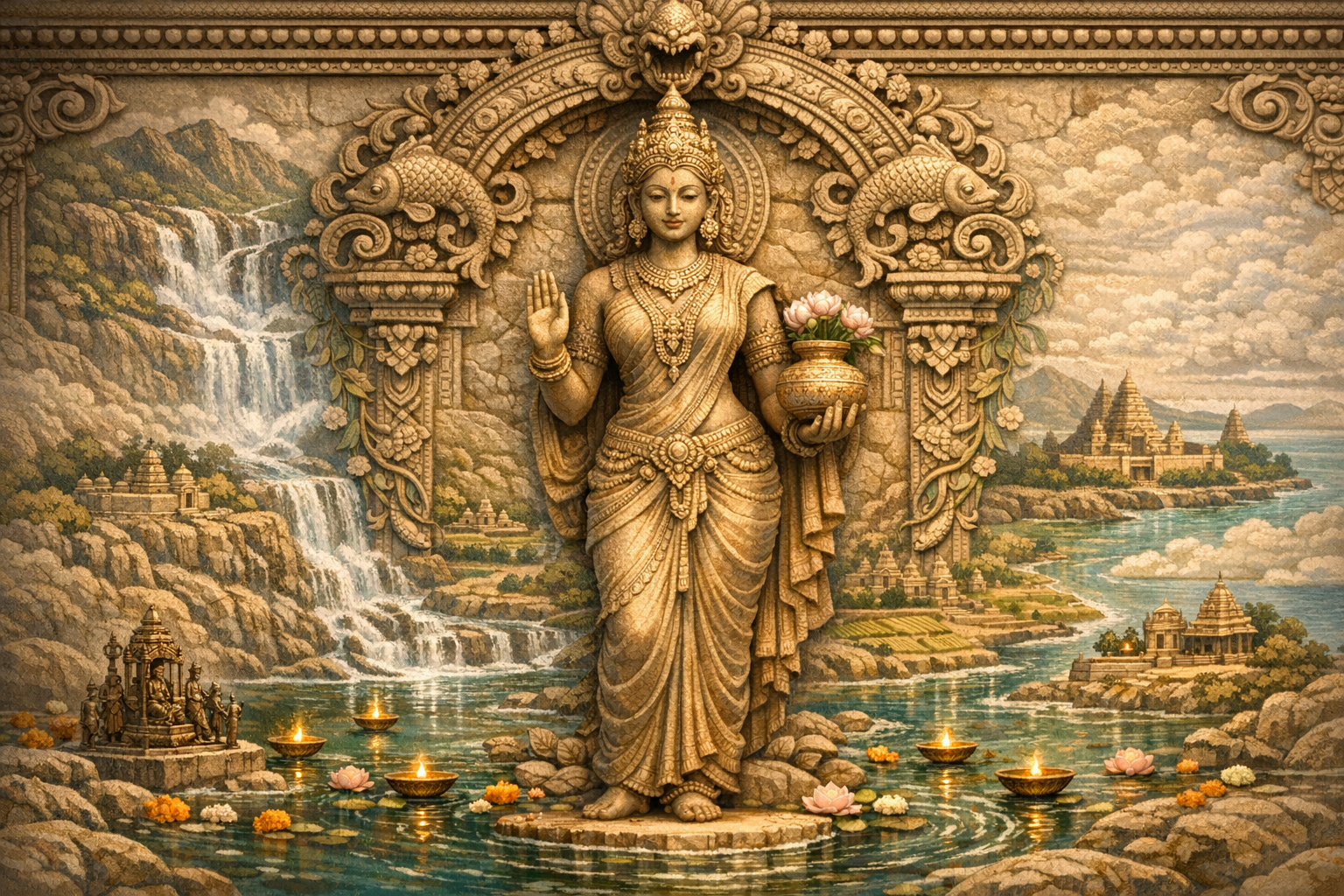
Goddess Kaveri, revered as a living river and divine mother, is rendered in Hindu sculpture through a precise visual grammar that blends Shilpa Shastra canons with the lived rhythms of sacred geography. This essay explains how to recognize her iconography, from kumbha and lotus attributes to makara-toranas and gentle mudras, and shows where she commonly…
-
Decoding the Khatvanga: Skull Staff of Chamunda & KaliFearlessness, Tantra, and Transcendence
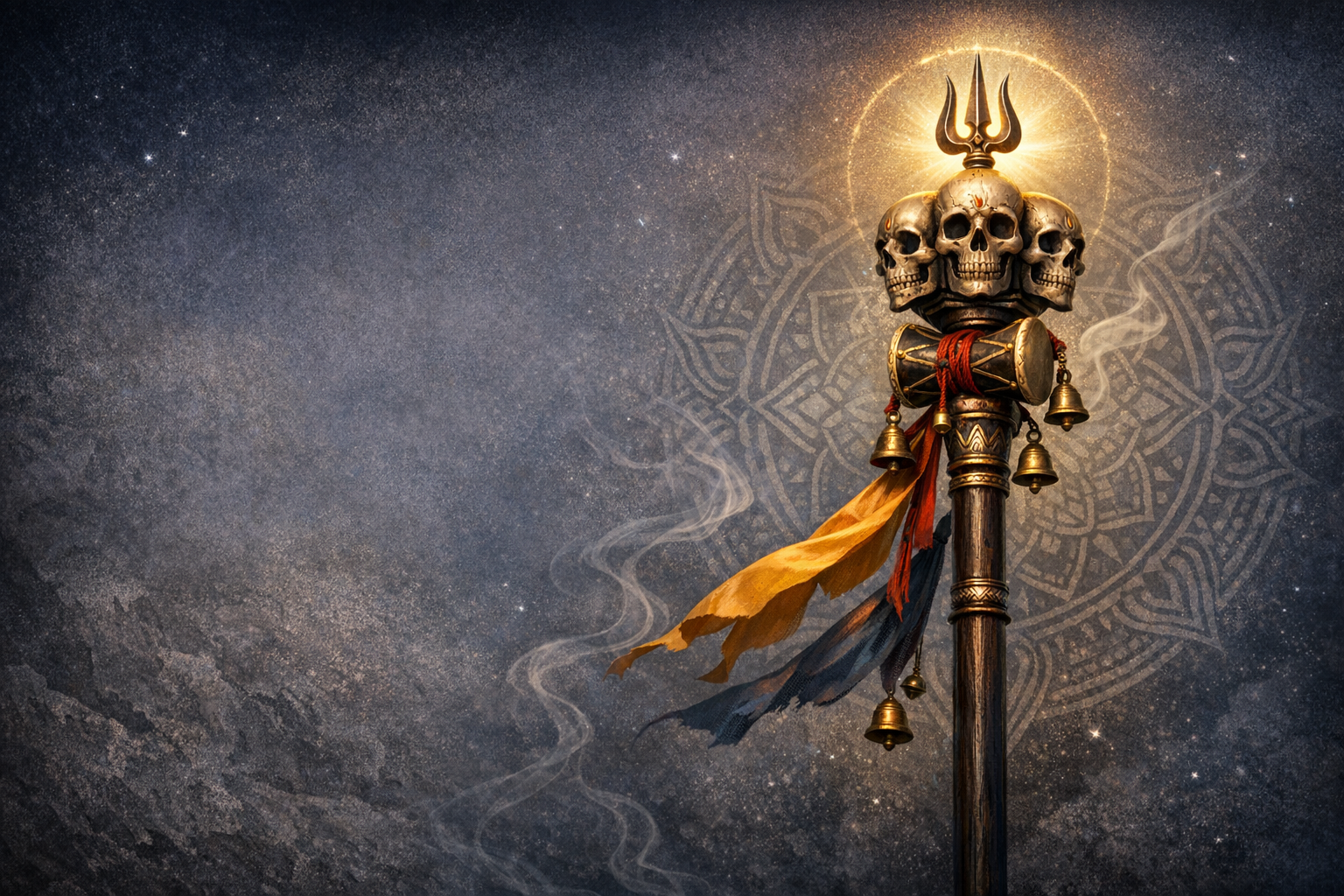
The khatvangaskull-staff of Chamunda, Kali, and other fierce goddessesemerges as a precise, multilayered symbol in Hindu iconography and tantric philosophy. This long-form analysis decodes its form (skull, bone staff, damaru, banner), its cremation-ground origins, and its ethical evolution from literal bone to wood or metal in mainstream ritual spaces. It clarifies how the staff encodes…
-
Laghu Shyamala: The Enigmatic Dark Goddess of Shakti, Speech, and Fertile Creation in Hinduism
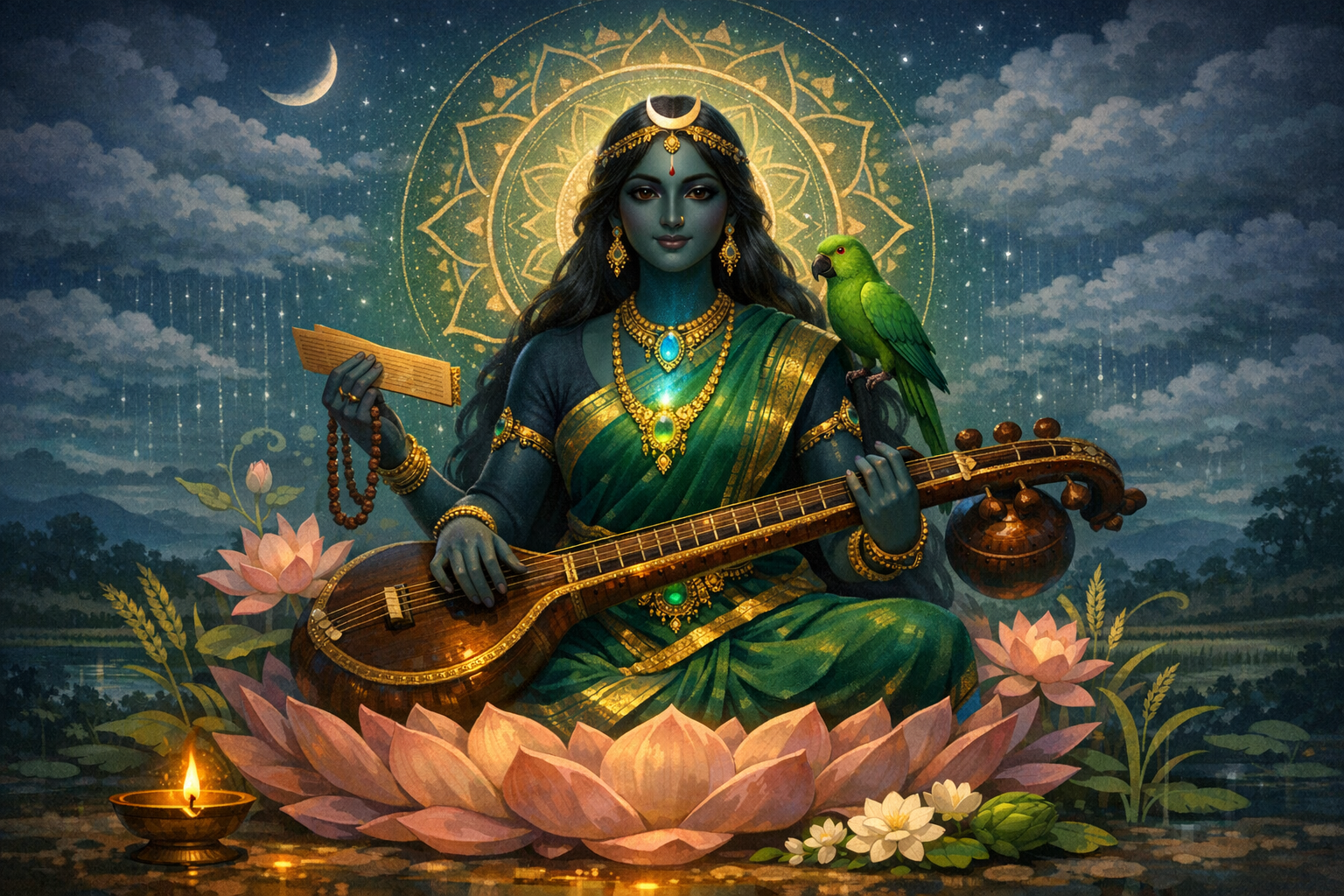
Laghu Shyamala is honored as a dark-hued, esoteric form of the Divine Mother whose power concentrates knowledge, speech, creativity, and fertility. The name reveals an accessible pathway to Shakti, pairing the generative symbolism of “Shyamala” with the concise, practical emphasis of “Laghu.” Iconographyveena, parrot, book, and japa-malamaps a theology of cultured eloquence and compassionate learning.…
-
Hargauri Durga in Bengal: Uma’s Tender Homecoming and Her Sacred Union with Shiva
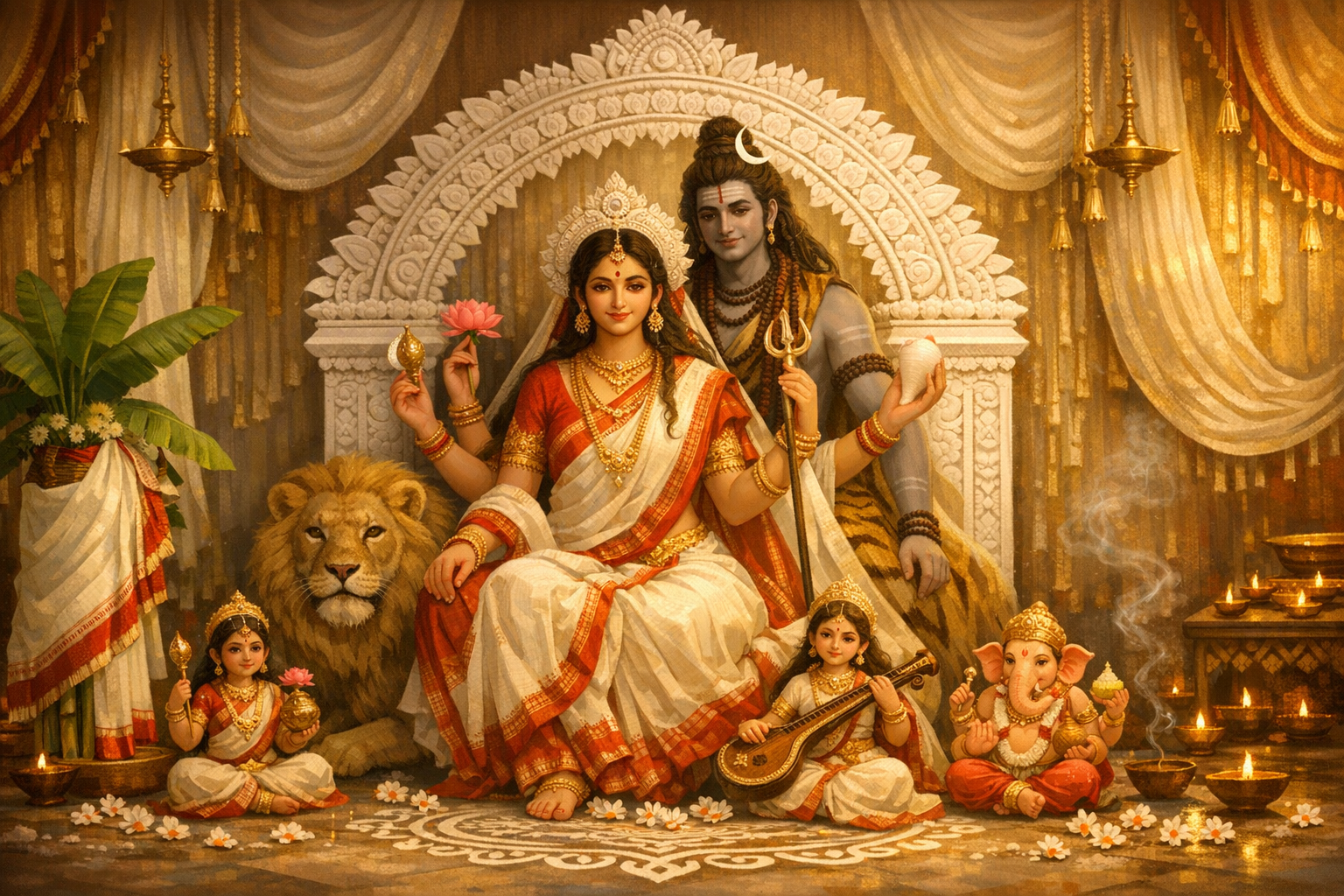
Hargauri Durga reframes Bengal’s Sharadiya devotion as Uma’s tender homecoming, with Shiva’s serene presence completing the sacred tableau. The piece decodes the Hara–Gauri archetype, clarifies its relationship to Mahishasura Mardini, and situates the tradition within Devi Paksha, from Mahalaya to Vijayadashami. It explains core ritesbodhana, nabapatrika, Sandhi Puja, Kumari Puja, and visarjanwhile interpreting how they…
-
Ecstatic Love in Focus: Sri Radha’s Enchanting Glance and the Science of Sacred Vision
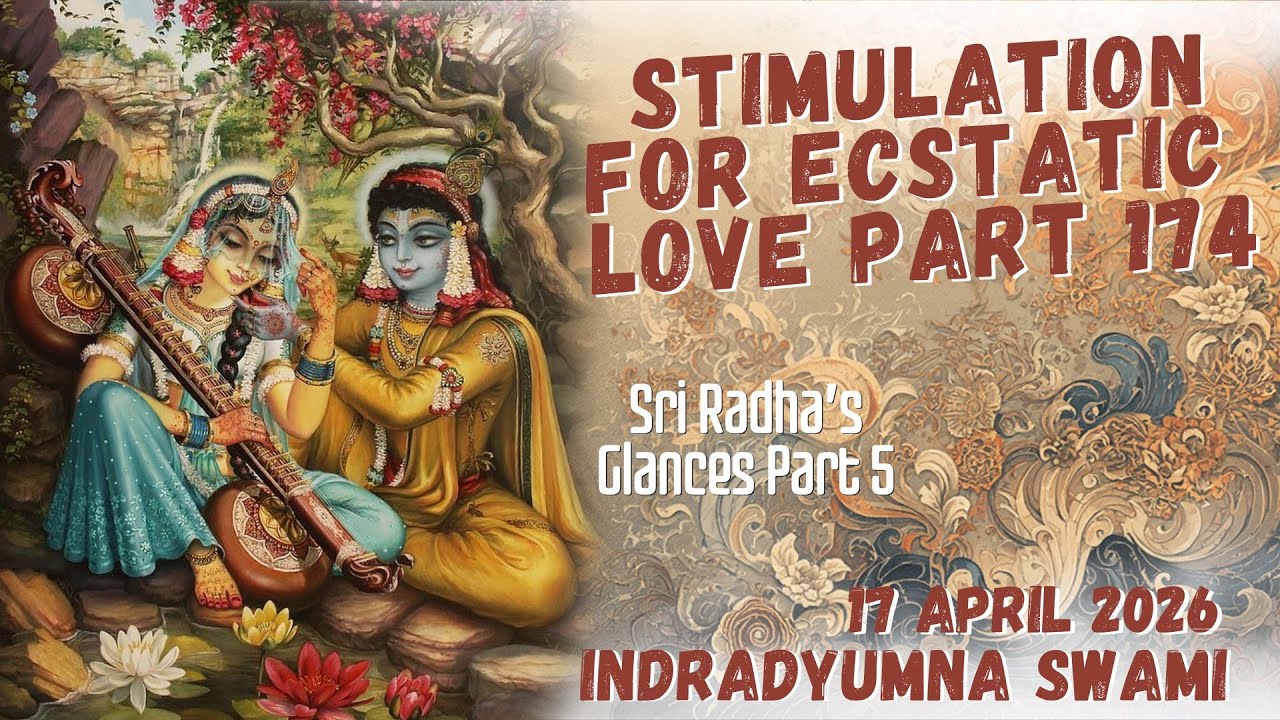
This in-depth exploration examines the devotional, aesthetic, and contemplative significance of Srimati Radharani’s eyes and glances in the Bhakti Tradition. Grounded in a verse attributed to Madhvacharya and supported by Brahma-samhita, Gita Govinda, and Gaudiya commentaries, it shows how Sri Radha’s glance functions as a conduit of divine grace. The article integrates classical Indian aesthetics…
-
Upashruti: The Luminous Goddess of Night, Oracular Wisdom, and Vedic Revelation
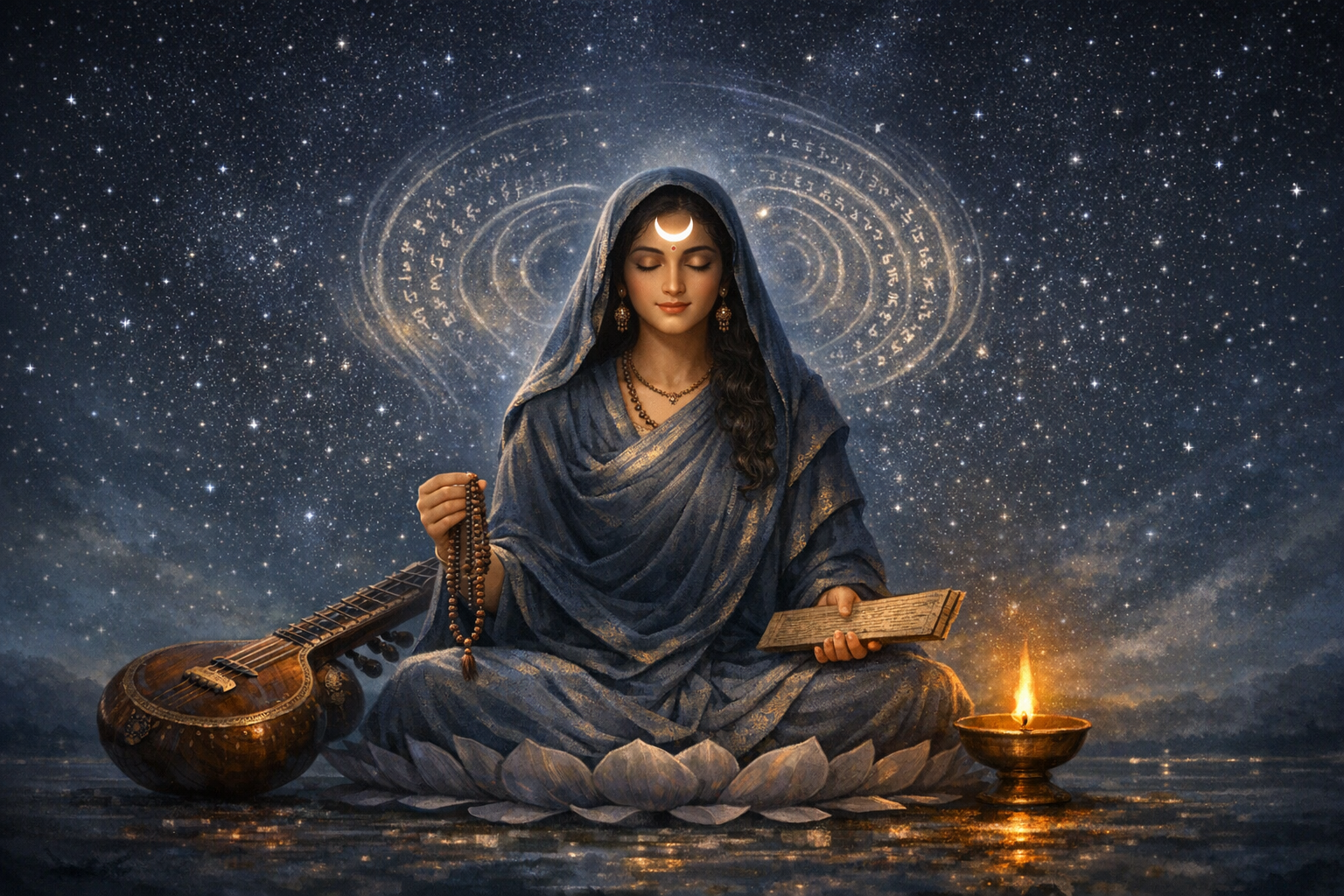
Upashruti is presented as a nuanced personification of sacred listening the contemplative capacity to ‘hear’ wisdom in the stillness of night. Grounded in Vedic philosophy, Puranas, and the logic of śabda-pramāṇa, the essay situates her alongside Rātri, Vāk, and Yoganidrā. It outlines practical, night-centered sādhanā (mauna, japa, nādānusandhāna) and explains how disciplined listening refines ethical…
-
Matrisadbhava of Kerala: Authoritative Guide to Shakta Tantra and Bhadrakali (Rurujit)
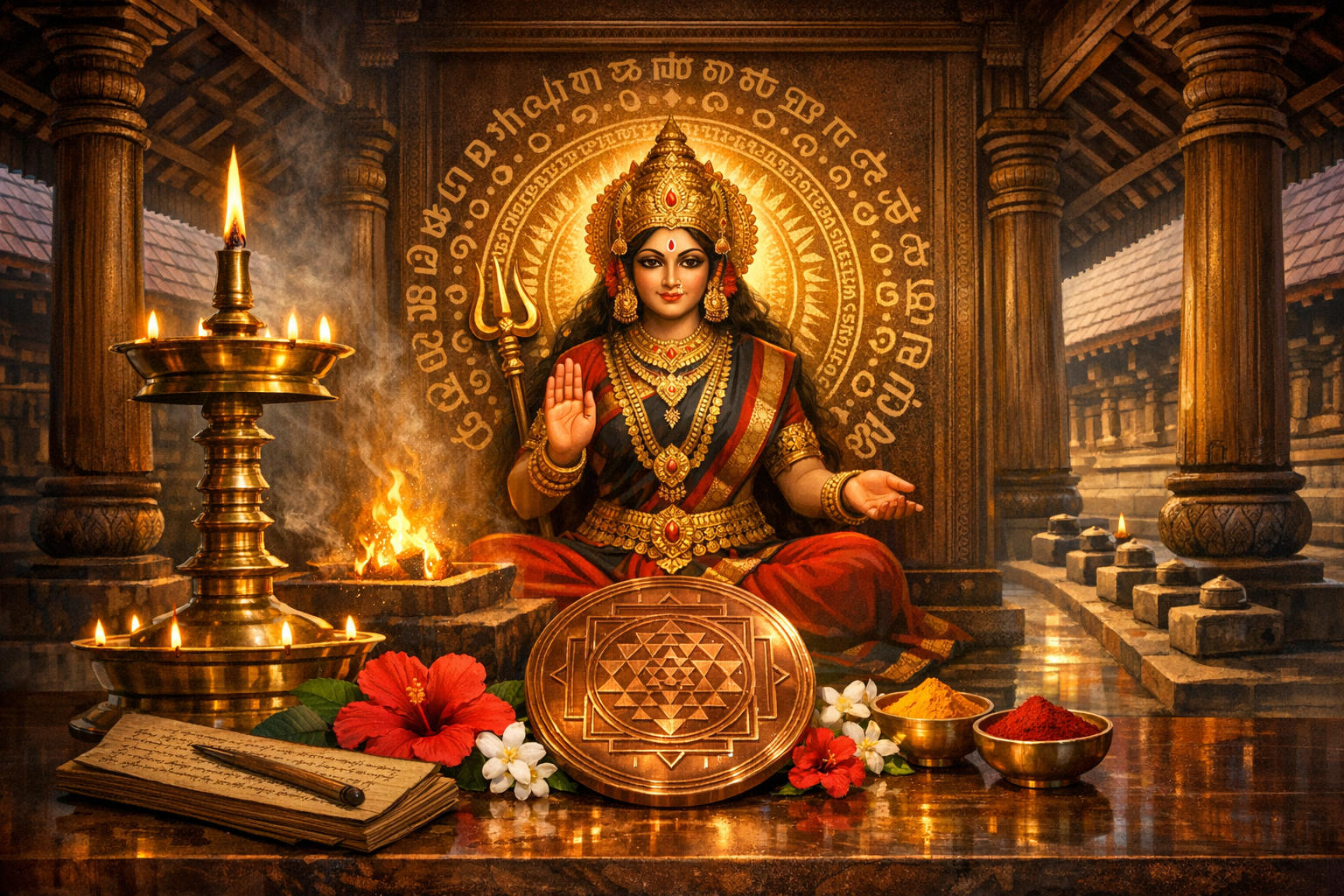
Matrisadbhava stands out in Hindu scriptures as a Kerala-centered Shakta Tantra that systematically encodes the worship of Goddess Bhadrakali, also revered as Rurujit. It unites doctrinal depth with Kerala’s temple pragmaticsnyāsa, mantra, yantra, homa, and baliwhile foregrounding an ethic of care and precision. The text’s maternal vision affirms unity in diversity across Dharmic traditions, highlighting…
-
Rakta Chamundi: Blood-Red Shakti of Wrathful Compassion, Liberation, and Cosmic Balance
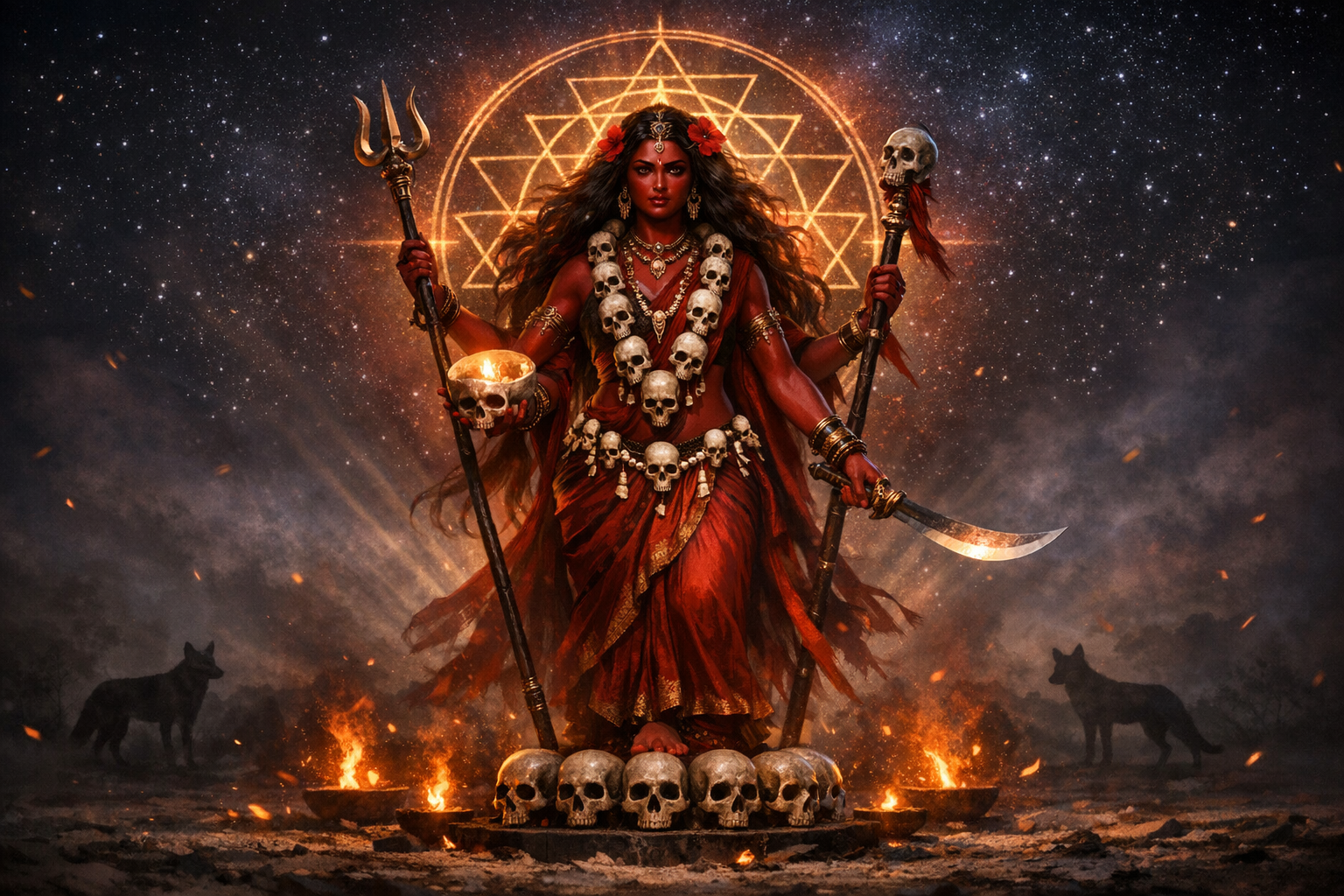
Rakta Chamundi, or Raktha Chamundi, embodies the Hindu Goddess as blood-red Shakti: fierce in aspect, compassionate in purpose, and liberative in effect. Grounded in the Devi Mahatmya’s episodes of Chanda, Munda, and Raktabija, she symbolizes a precise ethical force that ends the repetition of harm. Iconographyskull-garland, cremation-ground setting, and Panchamundi Asanateaches impermanence, vigilance, and mastery…
-
Women’s Wellbeing at Bhaktivedanta Manor: Empowering, Protecting, and Inspiring Through Dharma
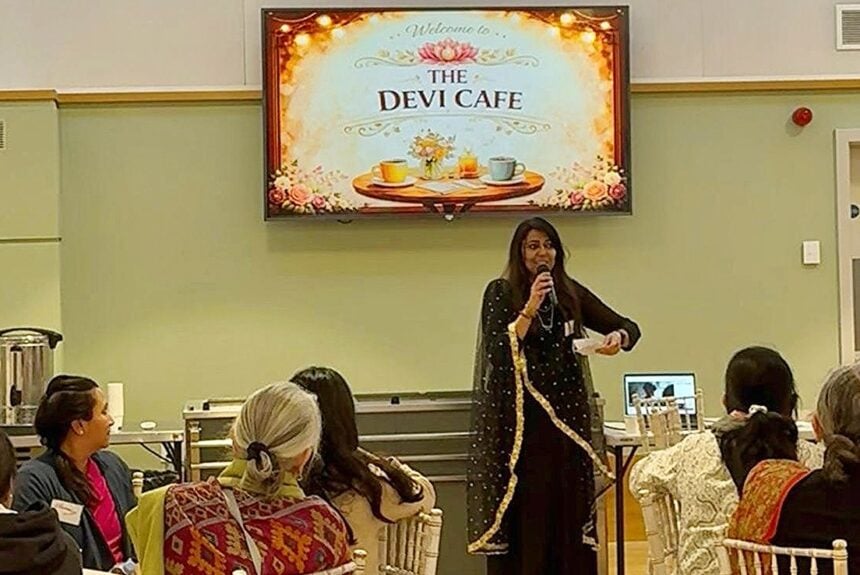
A Women’s Wellbeing event at Bhaktivedanta Manor, convened by DEVI with Devotee Care, showcased a rigorous, dharmic approach to empowerment, connection, protection, and inspiration. Timed between International Woman’s Day and Mother’s Day, it linked civic appreciation with everyday care, emphasizing Yoga, Mindfulness, bhakti-kirtan, and accessible Ayurveda for practical self-care. The presence of Cllr Parveen Rani…