
-
Shiva at the Margins: Why Mahadeva Reigns Over Ghosts, Outcasts, and Sacred Transgression
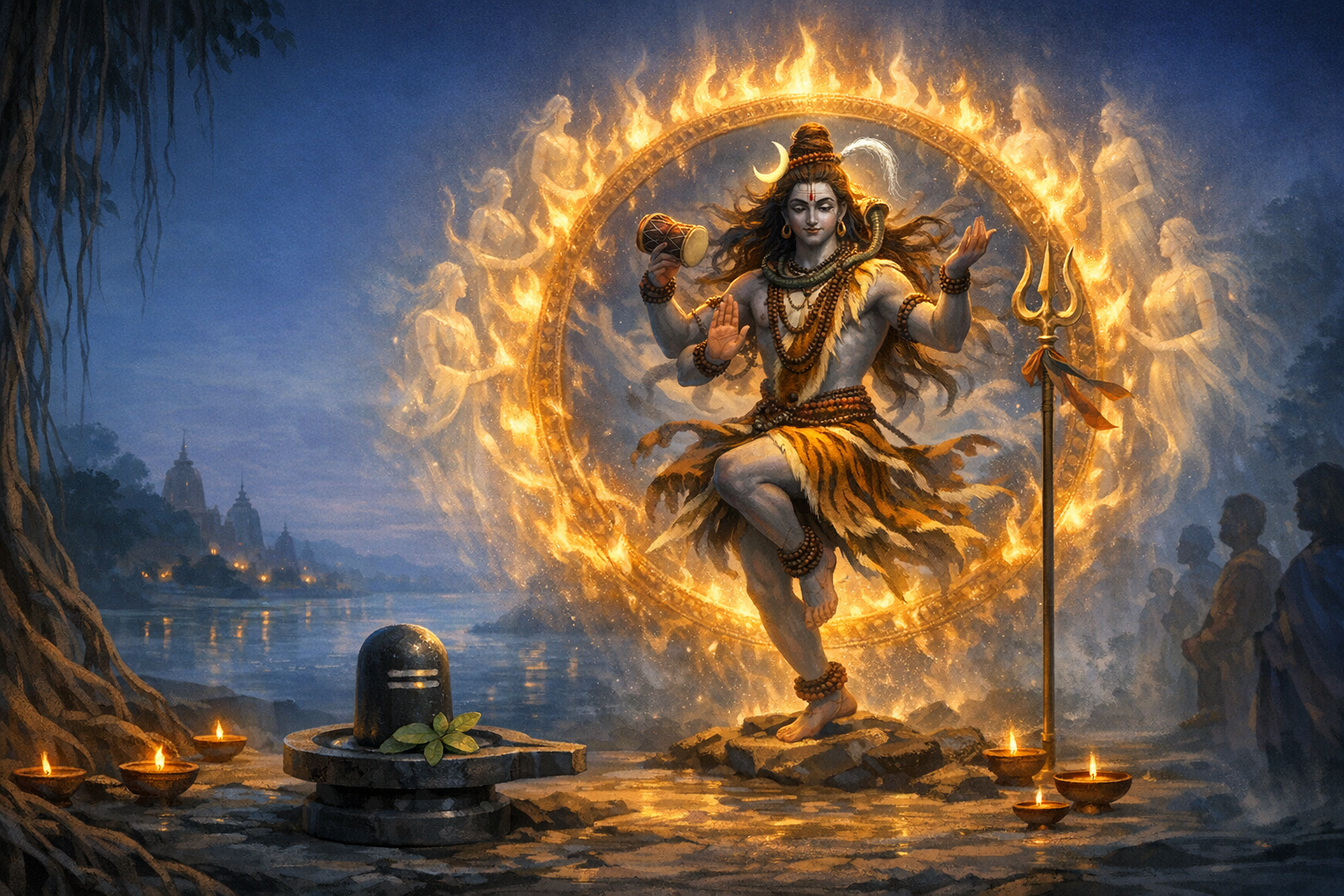
Shiva’s dwelling in cremation grounds and sovereignty over bhuta-ganas present a theology of fearless inclusion that dignifies what societies often cast aside. By tracing the arc from Vedic Rudra to Puranic Shiva, the discussion shows how ashes, serpents, and the smashana encode teachings on impermanence and compassion. Bhairava’s guardianship of thresholds clarifies why time, change,…
-
Sitalsasthi 2026: Sambalpur’s grand Shiva–Parvati wedding and Odisha’s living heritage

Sitalsasthi 2026, the ceremonial wedding of Lord Shiva and Goddess Pārvatī, will be celebrated on June 20 in Odisha, with Sambalpur hosting the most expansive and community-driven observances. Rooted in over four centuries of practice, the festival blends śāstra-guided rituals with a city-wide cultural carnival featuring processions, folk arts, and water-splashing motifs that welcome the…
-
Awe-Inspiring Rameswaram Pilgrimage: Sri Ramanathaswamy Temple, Rama Setu, Sacred Shores
Rameswaram on the Gulf of Mannar is a conch-shaped island central to the Char Dham yatra and home to the Jyotirlinga of Sri Ramanathaswamy. Scriptural accounts in Srimad-Bhagavatam and Caitanya Caritamrta attest to its enduring sanctity, while Ramayana memory links the shrine to Rama Setu. The temple’s nearly 4,000-foot pillared corridor exemplifies South Indian temple…
-
When Shiva Halted Time for King Shvetaand Why the Wise King Chose Order Over Immortality

Skanda Purana’s Kedara Khanda narrates how Shiva conquered Time to protect King Shveta, only for the king to ask that Time be restored for the sake of cosmic order. The episode explores the interplay of divine grace with rta, showing why lawful process remains sacred even when miracles are possible. It models rajadharma by placing…
-
Uma Shivagni Damana Puja 2026: Unlock Auspicious Shiva–Parvati Grace on Chaitra Tritiya

Uma Shivagni Damana Pooja is a sacred vrata honoring Shiva and Pārvatī on Chaitra Shukla Tritiya; in 2026 it falls on 21 March. The observance symbolically pacifies Śiva’s purifying fire through Uma’s compassionate grace, fostering marital harmony, household peace, and inner balance. A clear, step-by-step pūjā vidhikalasha sthāpana, abhiṣeka with cooling offerings, mantra japa, and…
-
Jagath Samhara Moorthy: How Shiva’s Cosmic Dissolution Fuels Renewal and Liberation

Jagath Samhara MoorthyShiva as the cosmic dissolverexpresses a lawlike rhythm in Hindu cosmology where endings prepare the ground for renewal. Drawing on the Puranas, Upanishads, and Shaiva philosophy, the article clarifies how samhara operates within the five divine acts: creation, maintenance, dissolution, concealment, and grace. It explains the four types of pralaya and situates them…
-
Gangaur 2026: Sacred Gauri–Shiva Vrat, Dates, Vidhi, and Rajasthan’s Grand Processions
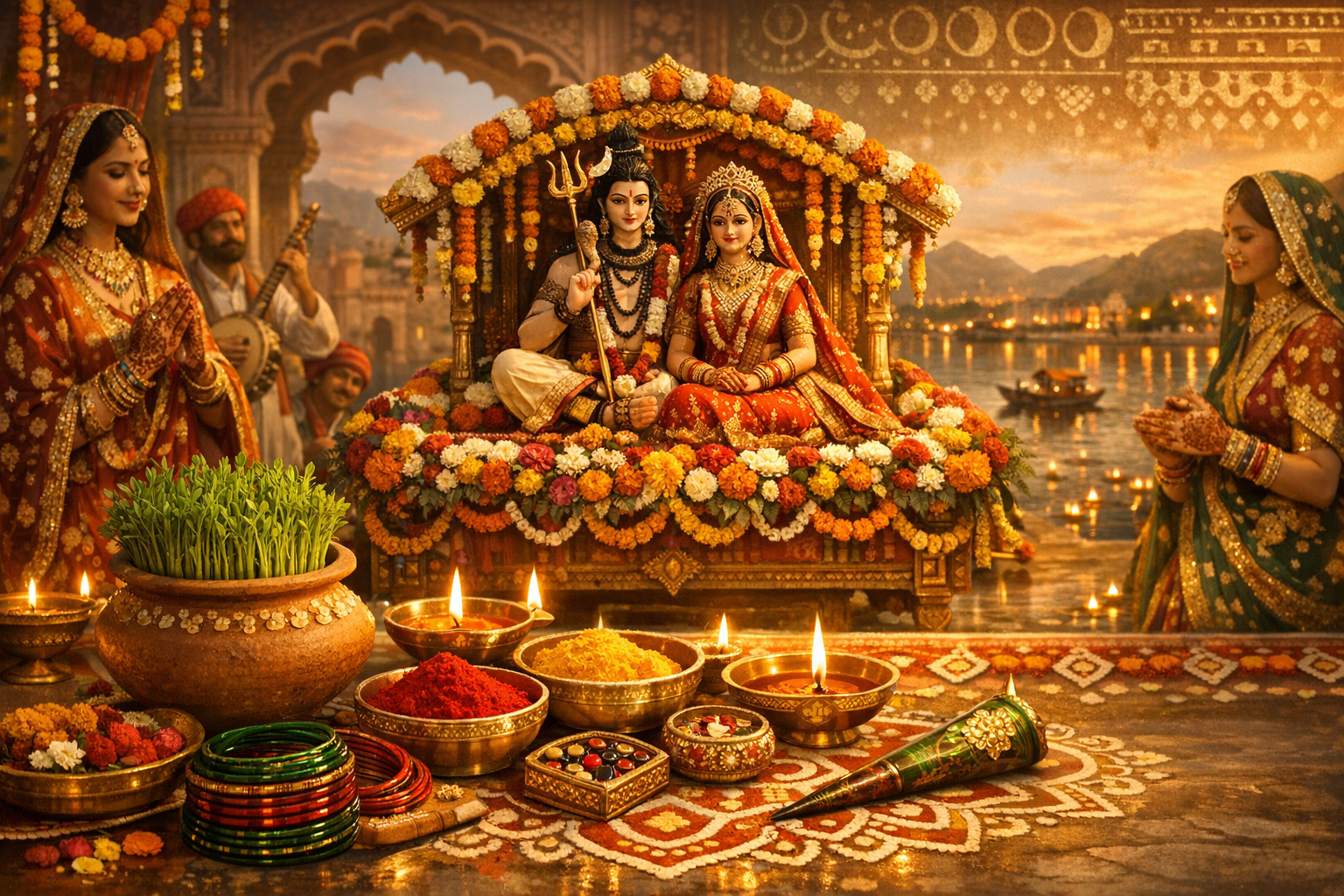
Gangaur 2026, Rajasthan’s iconic celebration of Gauri and Shiva, culminates on Chaitra Shukla Tritiya21 March 2026 in most Indian Panchangsafter a sequence of springtime observances that often begins on Pratipada. This guide explains the festival’s meaning, the Ganagauri Vrat, and why Isar–Gaur worship symbolizes a balanced and auspicious household. Readers learn how Sinjara, khetri sprouting,…
-
Madhukrishna Trayodashi 2026: Auspicious Date, Calendar Mapping, and Complete Pradosh Puja Guide

Madhukrishna Trayodashi (Madhu Krishna Trayodasi) in 2026 falls on March 17, aligning as Falgun Krishna Trayodashi in the Amanta system (Marathi, Gujarati) and Chaitra Krishna Trayodashi in the Purnimanta system (North India). The observance highlights Trayodashi’s traditional sanctity for Lord Shiva, with Pradosh Vrat performed if Trayodashi prevails during the evening Pradosh Kaal. The article…
-
Anang Trayodashi 2026: Auspicious Date, Lord Shiva Puja Vidhi, and Year‑Long Vrat Guide
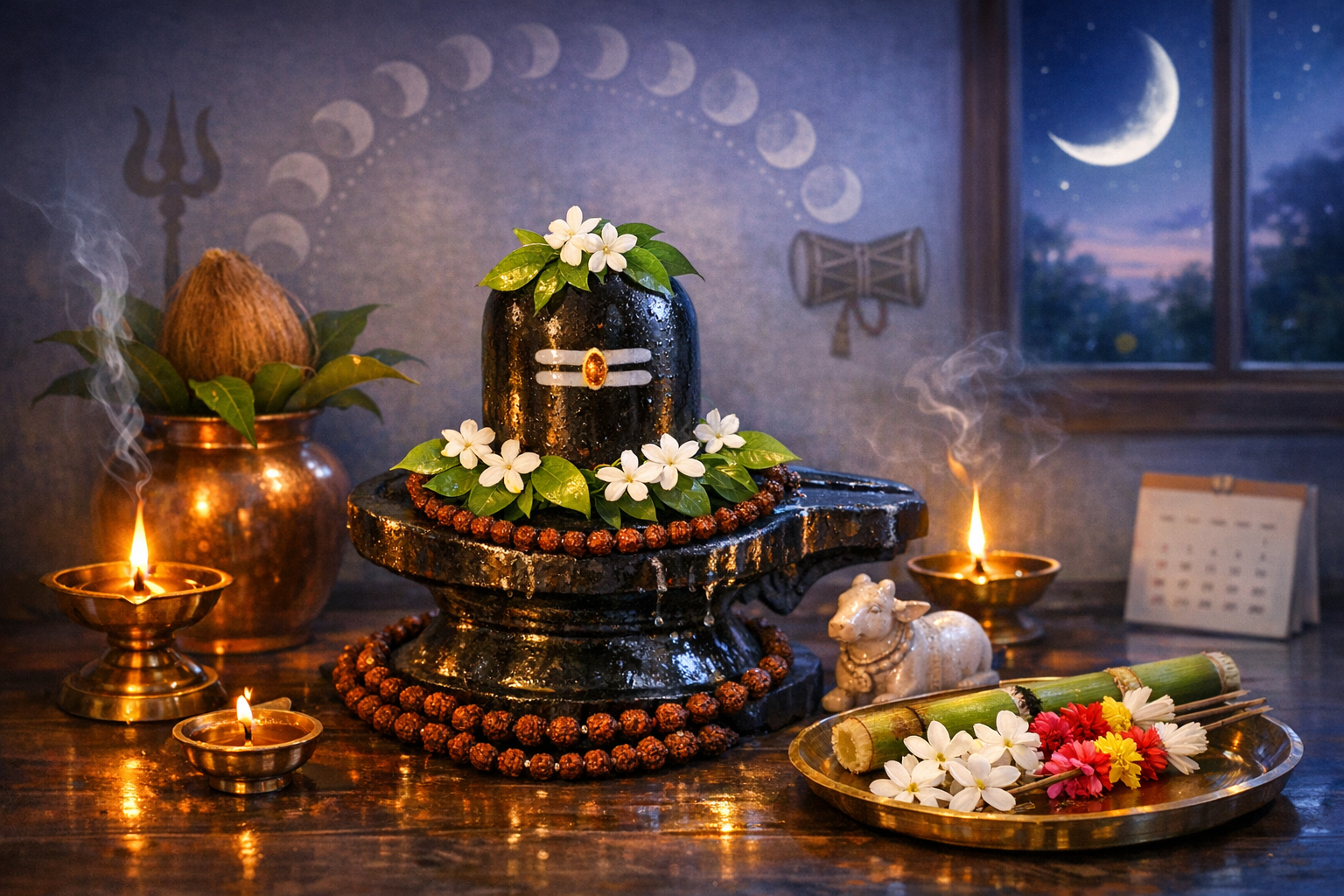
Anang Trayodashi 2026 falls on March 30, aligning with Chaitra Shukla Trayodashi and honoring Lord Shiva with complementary reverence to Rati and Kamadeva. The observance is especially noted in Maharashtra, Gujarat, and several South Indian regions, with puja often centered in Pradosha Kala. This guide explains the tithi logic, fasting options, and an adaptable puja…
-
Kalantaka Shiva Unveiled: Tantric Iconography and the Fearless Conquest of Death and Time
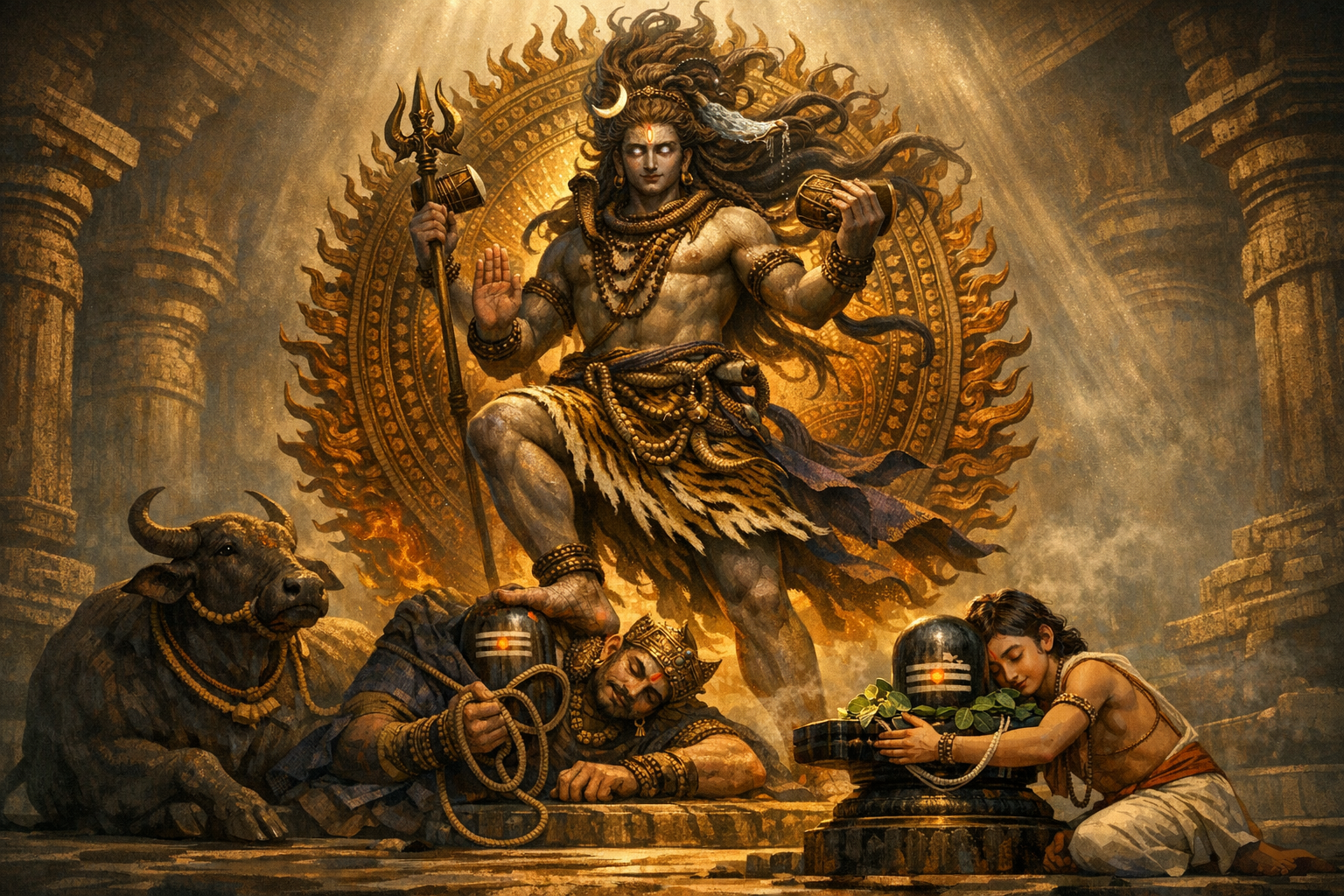
Kalantaka Shiva embodies Lord Shiva’s sovereignty over death and time, uniting narrative, ritual, and art into a coherent path of fearlessness. Drawing on Puranic sourcesespecially the Markandeya episodethis study unpacks the icon’s ugra yet compassionate character and explains how the trishula, damaru, and noose operate as precise Tantric symbols. Readers gain a field guide to…
-
Pune’s Saswad Bhairavnath Mandir: Timeless Shaiva Heritage, Warrior Ethos, and Sacred Rituals

Saswad Bhairavnath Mandir near Punerevered as Kalbhairavnath Mandirembodies Maharashtra’s living Shaiva and Nath Panth heritage. Dedicated to Kal Bhairav, the shrine preserves a protective, ethical ethos (kshetrapāla) that serves both household devotion and civic life. The article situates the temple within the historic Pune–Saswad corridor, explains Bhairava’s iconography and role in daily and annual rituals…
-
Hatkeshwar Jayanti 2026: Auspicious Date, Powerful Rituals, and Kuladevata Heritage

Hatkeshwar Jayanti (Hatkeshwar Mahadev Jayanti) in 2026 falls on April 1, observed on Chaitra Chaudasana, the 14th lunar day (Chaturdashi) of Chaitra. The day venerates Lord Hatkeshwar, a form of Shiva, with special emphasis on Kula Devata remembrance among families, especially in Gujarat and adjoining regions. Devotees prioritize pradosha-kala for Shivalinga abhisheka, mantra-japa (Om Namah…
-
Mahashivaratri 2026 at Srisailam Mallikarjuna: Jyotirlinga–Shakti Peetha Rituals, Nishita Kaal, and Pilgrim Guide
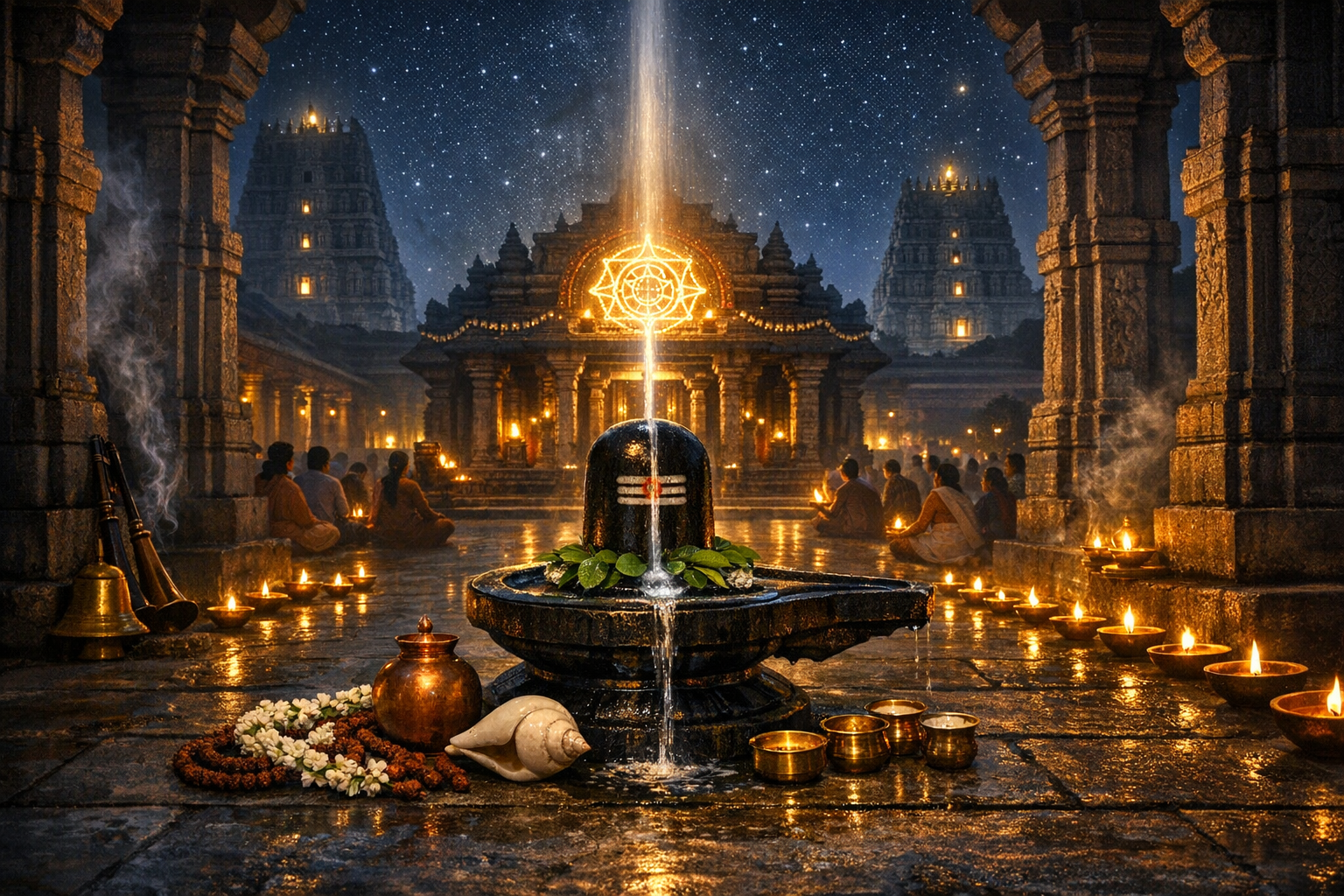
Mahashivaratri 2026 at Sri Bhramaramba Mallikarjuna Swamy Temple, Srisailam, is observed on February 15 and centers on the sacred Nishita Kaal midnight worship of Shiva. This in-depth guide explains the festival’s tithi logic, four-prahar puja structure, and the Lingodbhava rites unique to Shivaratri. It highlights Srisailam’s unparalleled status as both a Mallikarjuna Jyotirlinga and a…
-
Maha Shivratri 2026 Muhurat: Precise Nishita Kala, Lingodbhava Meaning & Complete Puja Guide
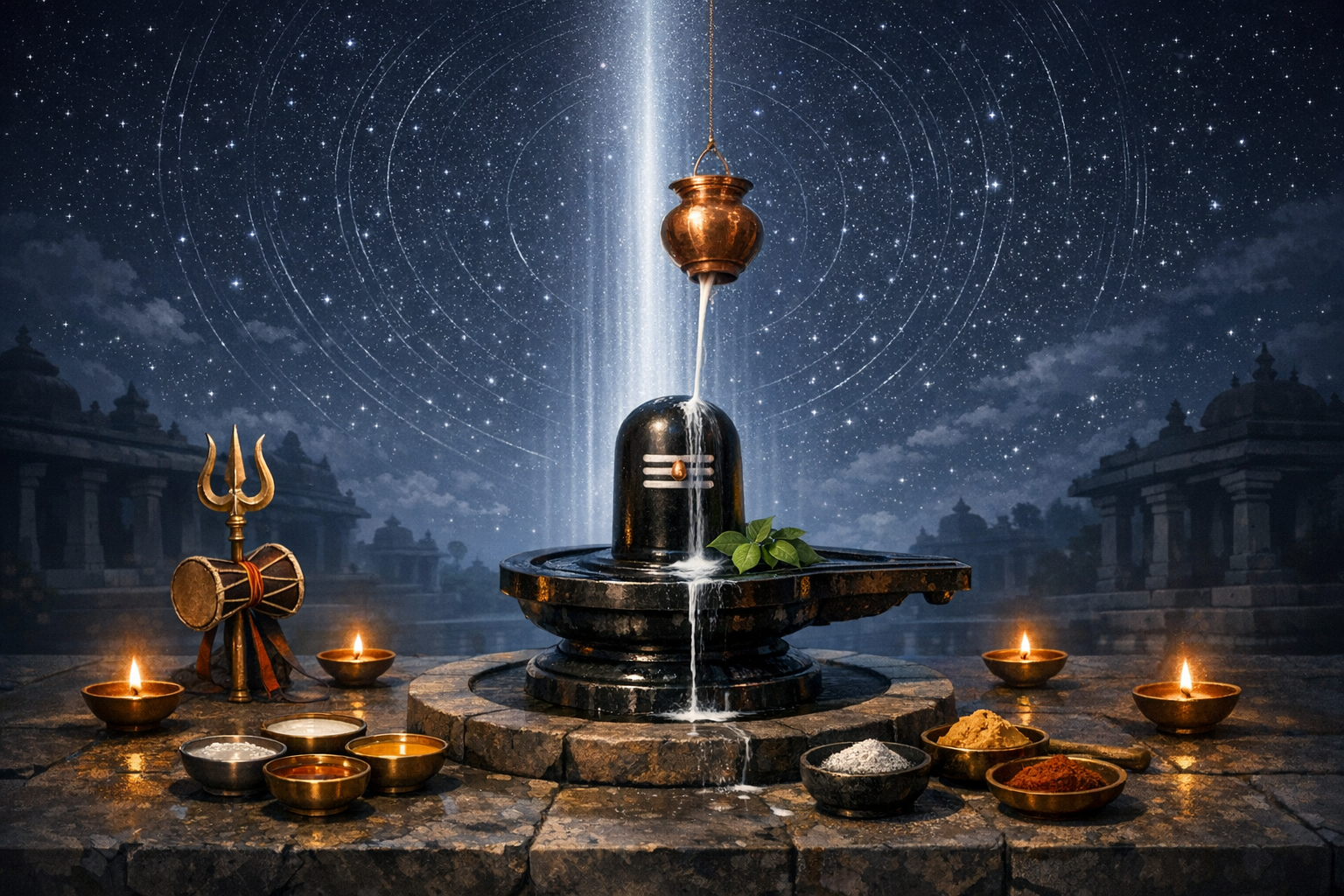
Maha Shivratri 2026 will be observed on the night of 15 February across South and North India, with the principal Shivalinga Puja anchored to the deep-night Nishita Kala Muhurat. This guide explains how tithi and the Ratri-first rule determine the correct date, why Nishita is the gold-standard Muhurat, and how to approximate it locally from…
-
Maha Shivaratri 2026 Lingodbhava Kalam: Midnight Muhurat, Ritual Guide, Calendar Science

Maha Shivaratri 2026 will be observed on the night of Sunday, 15 February, with Lingodbhava Kalamthe most auspicious Maha Shivaratri Muhuratoccurring around local midnight and extending into the early hours of Monday, 16 February, by the Gregorian calendar. Rooted in the Krishna Paksha Chaturdashi tithi and anchored in Nishita Kaal, this midnight window aligns ritual…
-
Safeguarding Sacred Symbols: HJS Spurs Withdrawal of Offensive Shiva–Ganesh Ad, Full Apology

An offensive Mahashivratri advertisement involving Lord Shiva and Shri Ganesh was swiftly withdrawn from leading Chhattisgarh newspapers after Hindu Janajagruti Samiti (HJS) intervened, prompting an unconditional written apology from Shri Ganesha Global Gulal Pvt Ltd. This outcome illustrates how timely civil society engagement and clear corporate accountability can protect sacred symbols and restore public trust.…
-
Shivaratri Jagran & Lingodhbhavam: Sacred Night Vigil, Cosmic Origin, and Ritual Science
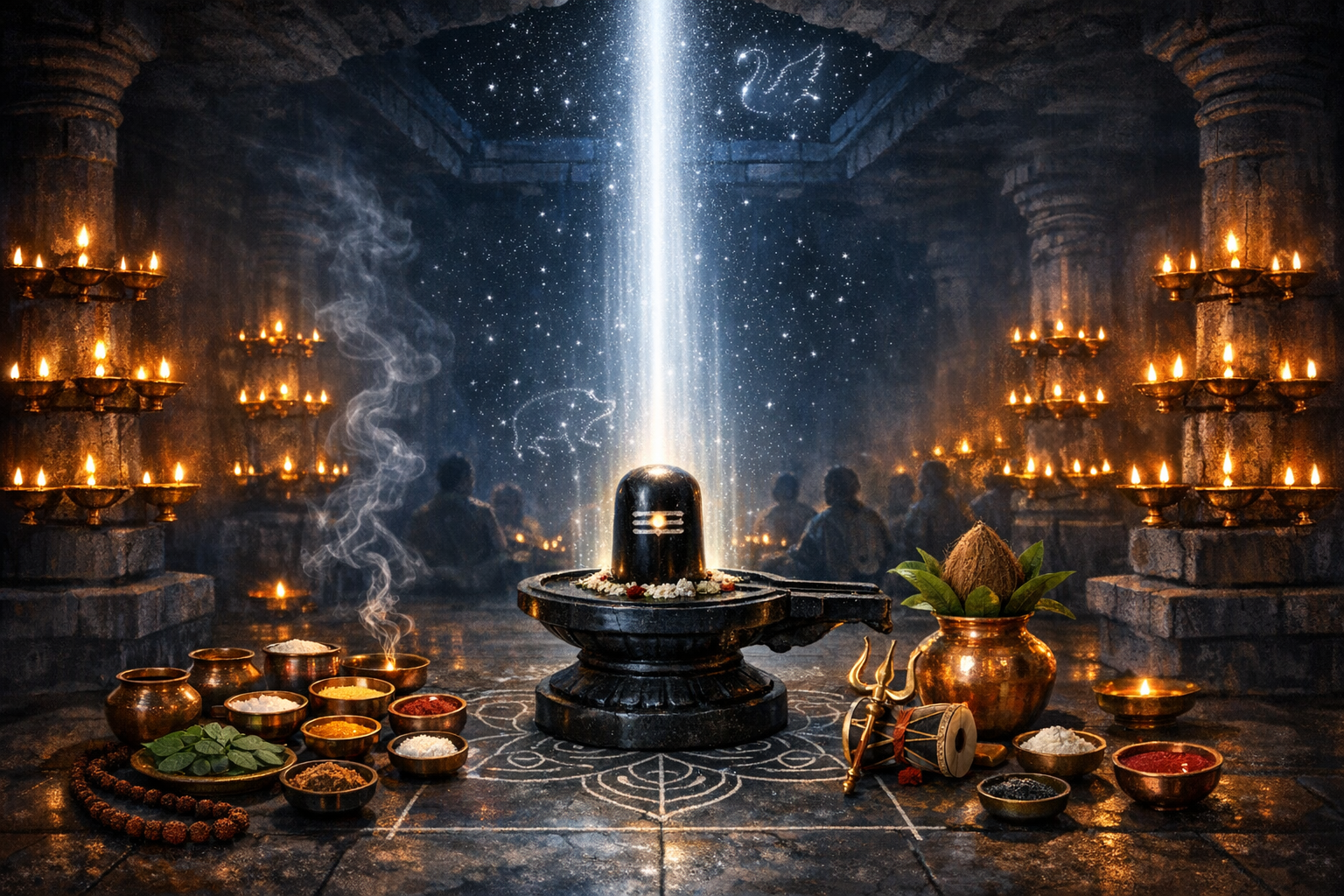
Shivaratri Jagran (Jagarana) is the central discipline of the Shivaratri Vrata, a structured night vigil that aligns fasting, mantra, and meditation into a single, transformative practice. Grounded in the Shiva Purana and Linga Purana, it culminates at the Lingodhbhava Kalammidnight rites recalling Shiva’s manifestation as the infinite pillar of light. The article explains the theological…
-
Shiva–Parvati Kalyanam at Maha Shivaratri: Complete Guide to Rituals, Legends, and Meaning
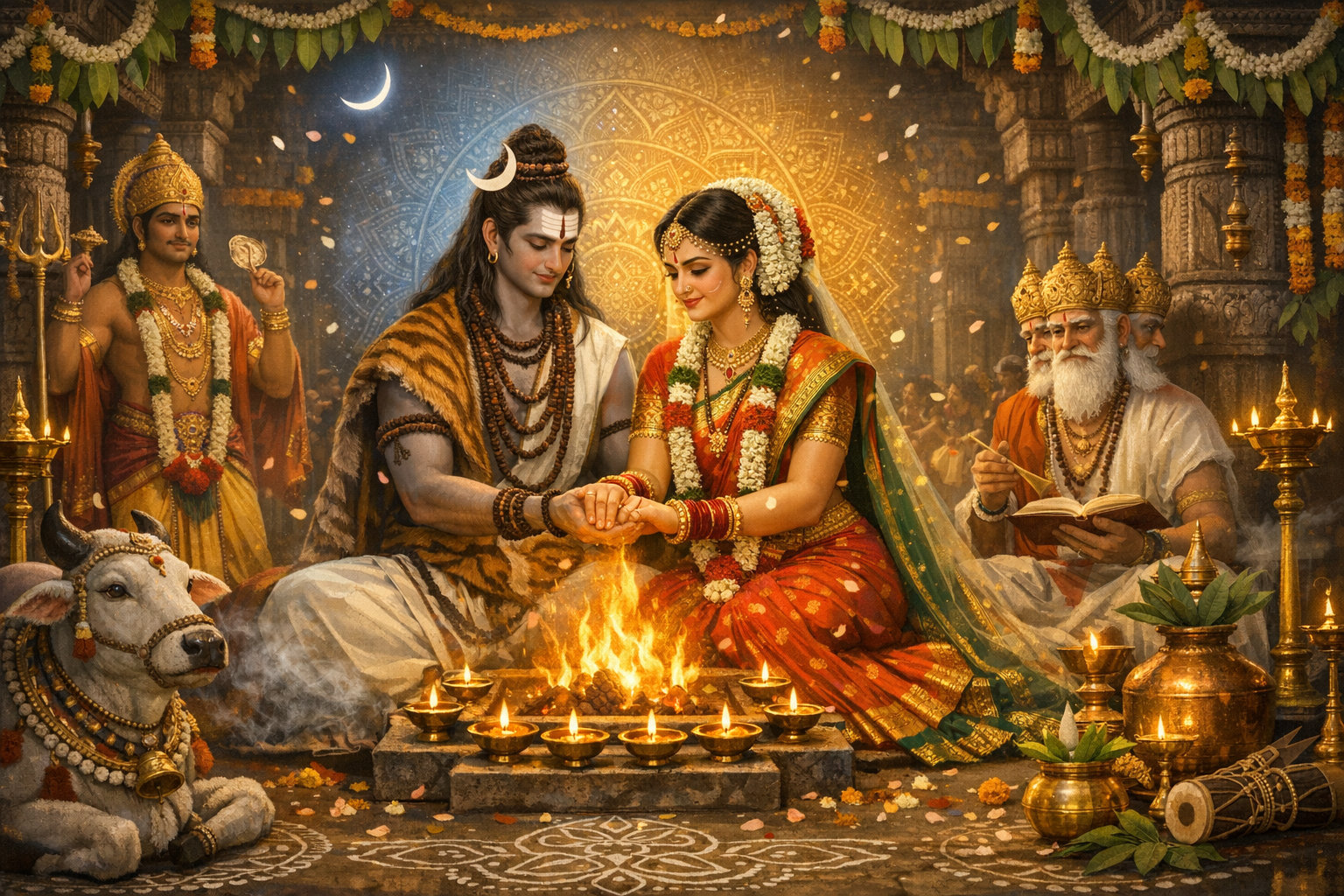
Shiva Parvati Kalyanam, often celebrated the day after Maha Shivaratri, unites Puranic narrative, Vedic samskāra, and Śaiva Āgamic practice in a single, transformative rite. The ceremony venerates Lord Vishnu as Kanya Daanam kartā and Lord Brahma as yajña-ācārya in many traditions, while honoring regional variations across India and Nepal. This comprehensive guide clarifies timing, key…
-
Mahashivaratri 2026 at Srisailam Mallikarjuna: Sacred Night, Rituals, Timings, and Pilgrim Guide
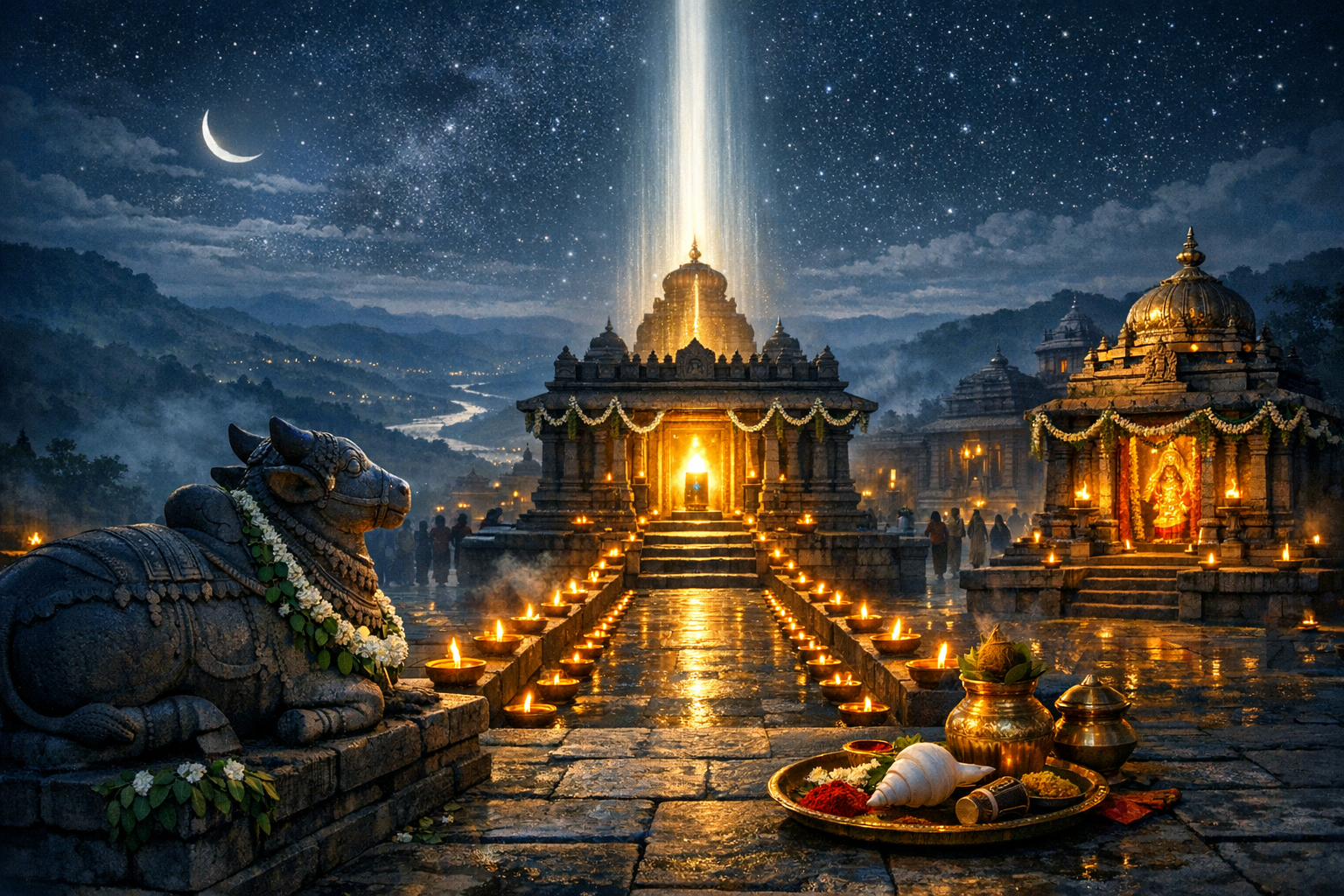
Mahashivaratri 2026 at Srisailam Mallikarjuna Swamy Temple falls on February 15, with the Nishita Kaal (midnight) puja as the festival’s apex. This guide explains the calendar logic (Magha/Phalguna Krishna Chaturdashi), details the temple’s rare dual sanctity as a Jyotirlinga and Shakti Peetha, and outlines core rituals such as Rudrabhishekam, bilvarchana, and the Lingodbhava aradhana. Readers…
-
Why Durga’s Third Eye Saves What Shiva’s Burns: The Sacred Balance of Fury and Nurture

Shiva’s third eye represents transformative insight that burns away compulsion, while Durga’s three-eyed gaze preserves the life-energies that uphold families, communities, and culture. Read together, these sacred symbols reveal a dynamic balance between ascetic discipline and fertile continuity. The Kamadeva episode shows that love is not annihilated but refinedreturning as ananga to guide affection toward…