-
Unveiling the Musala of Balarama: Agrarian Power, Sacred Iconography, and Divine Strength

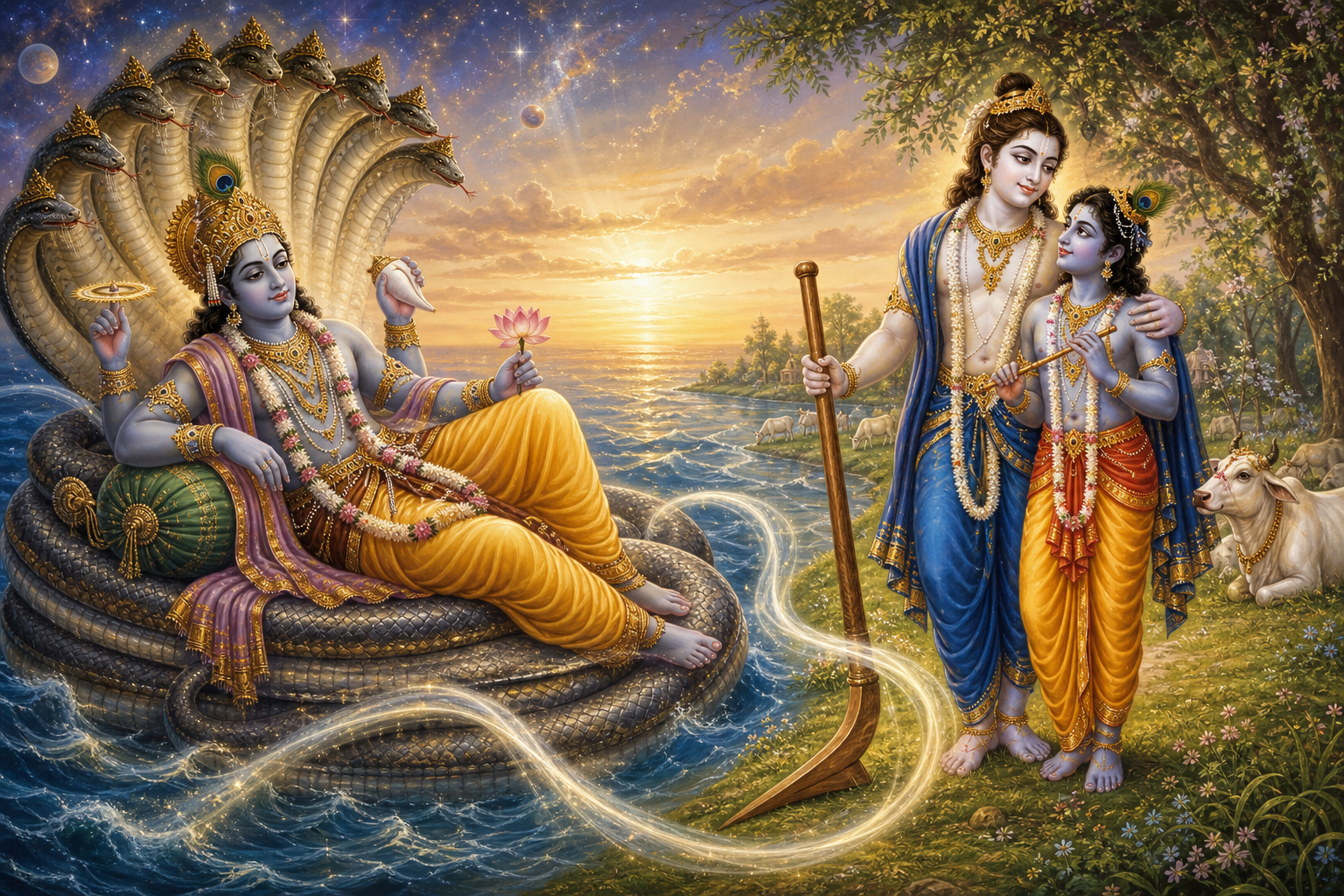
The musala—Balarama’s sacred pestle—embodies agrarian power transformed into protective, ethical strength. This long-form analysis clarifies how its cylindrical form differs from the gadā, why Vaishnava texts hail Balarama as Hala-muṣala-dhara, and how the Mausala Parva frames the musala as a moral instrument entwined with dharma and time. Readers learn practical iconographic cues for identifying the…
-
Adhika Jyeshta Masam 2026 (Telugu Calendar): Sacred Dates, Rituals & Purushottama Vrata Guide

Adhika Jyeshta Masam 2026 in the Telugu Chandramana Panchangam runs from 17 May to 15 June during Parabhava Nama Samvatsaram. This intercalary month appears when no solar saṅkrānti occurs within a lunar cycle, ensuring long-term alignment of the lunisolar calendar. Revered as Purushottama Maas and dedicated to Lord Krishna, it emphasizes bhakti, ethical living, and…
-
Krishna and the Six Sons of Devaki: A Compassionate Jain Harivamsa vs Hindu Puranas

This long-form, comparative study examines how Hindu scriptures (Bhagavata Purana, Vishnu Purana) and the Jain Harivamsa Purana narrate the episode of Devaki’s six sons and Kamsa’s violence. It clarifies the difference between the Hindu Harivamsha and the Jain Harivamsa Purana, then maps their contrasting theological aims: divine descent and restoration of dharma versus karmic causality…
-
Eternal Longing, Infinite Union: Decoding Radha–Krishna’s Divine Love and Sacred Separation

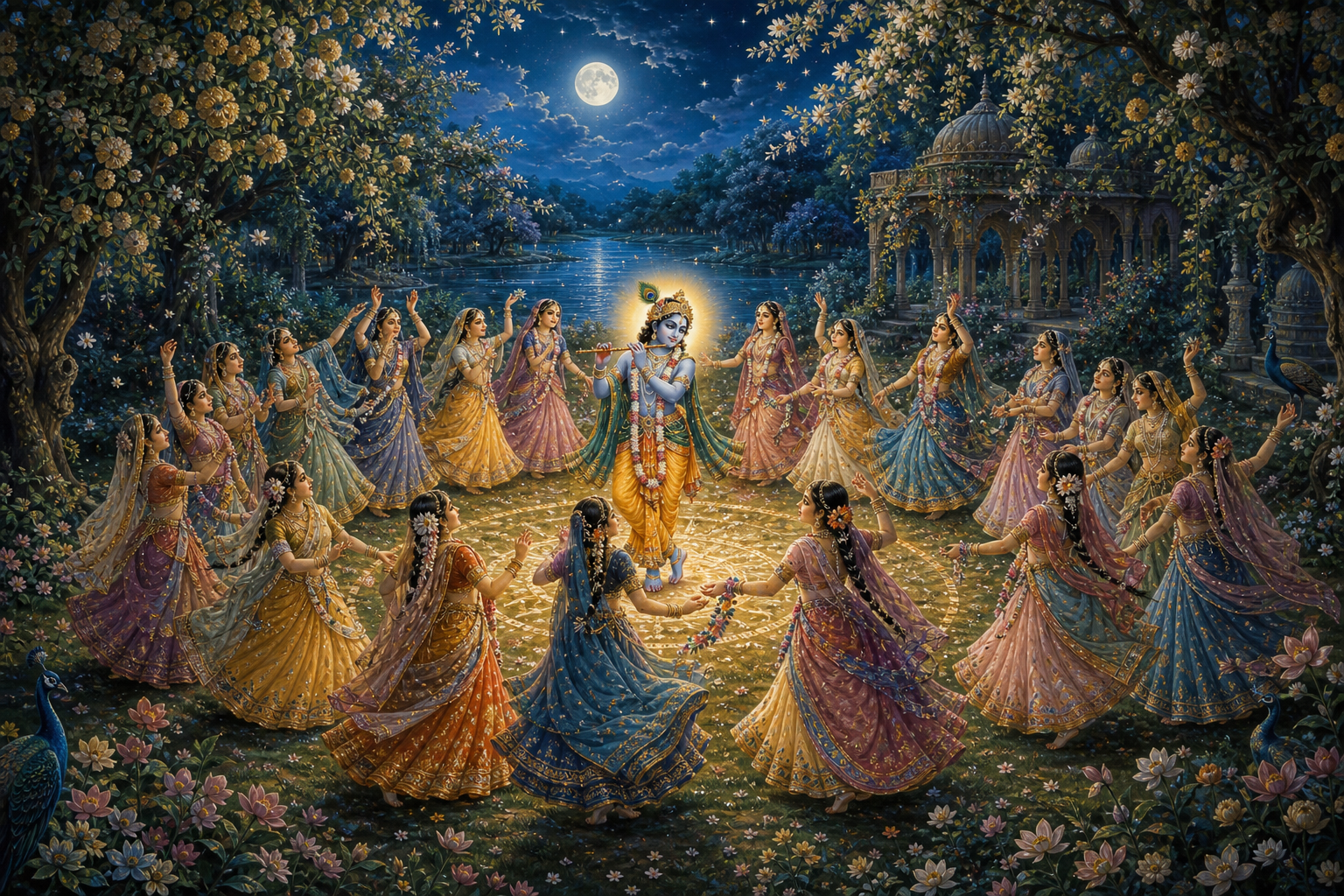
This long-form exploration decodes why Radha–Krishna’s love is revered not as a tragic failure of union but as a sacred pedagogy of longing. Drawing on Srimad Bhagavatham, Gīta Govinda, and Gaudiya Vaishnava theology, it explains how vipralambha (separation) heightens devotion and refines ethical action. The article clarifies key concepts—rasa, sambhoga, vipralambha, and mahābhāva—while situating them…
-
Srila Prabhupada’s 1976 Vrindavan Marathon: Seva, Scholarship, and Global Sankirtana

In 1976 at Vrindavan, Srila Prabhupada’s day began at mangal arotik and ended past midnight with a Mathura pandal program before more than twenty thousand attendees. Eyewitness details—such as the right-hand lesson during a morning walk—reveal how subtle etiquette conveyed dharmic principles. His apology for speaking in Hindi at the pandal highlighted humility and inclusive…
-
Krishna’s Awe-Inspiring Arena Entry: The Definitive SB 10.43.17 Guide to Dharmic Valor

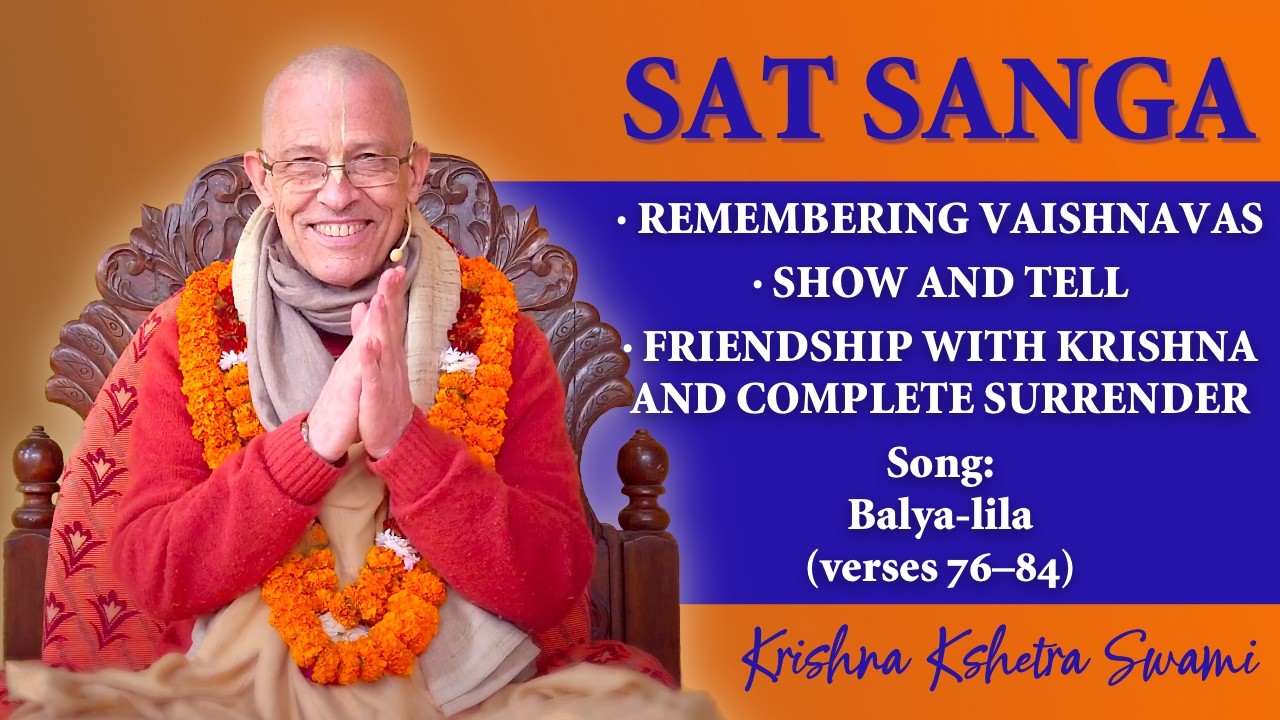
This article examines Srimad Bhagavatam 10.43.17—Krishna’s entrance into the Mathura wrestling arena—as presented in a live discourse by HH Krishna Kshetra Swami at ISKCON Ljubljana. It situates the narrative within the Dhanur-yajna context, Kaṁsa’s tyranny, and the ethical logic of dharma-yuddha. Readers gain a philological, theological, and aesthetic analysis, including how diverse onlookers perceive Krishna…
-
Srimad Bhagavatam 1.13.50: Vidura’s call to detachment, duty, and bhakti | ISKCON Ljubljana

This analysis situates Srimad Bhagavatam 1.13.50 within Canto 1’s narrative of Vidura guiding Dhṛtarāṣṭra toward timely renunciation, clarifying how duty, detachment, and devotion align in practice. It explains why the verse is read as a constructive call to reorient life around ātma-tattva and bhakti, not as escapism, and shows how vanaprastha embodies humane, responsible transition.…
-
Inside ISKCON Birmingham’s 24‑Hour Kirtan 2026: Sonic Devotion, Bhakti Science, and Unity

ISKCON Birmingham’s 24 Hour Kirtan 2026 – Day 1 (Part 1) highlights how the maha‑mantra and Gaudiya Vaishnava bhakti‑yoga converge in a continuous, accessible practice of sacred sound. The analysis explains the musicology of kirtan—melodic contours, tala choices, and ensemble roles—so participation remains inviting and sustainable over extended hours. It outlines event operations, acoustic design,…
-
Krishna’s Birth Reimagined: Jain Mahabharata on Karma, Kamsa, Jarasandha, and Destiny

The Jain Mahabharata reframes Krishna’s birth through the lenses of karma, Anekantavada, and ethical responsibility while honoring narrative motifs cherished across India. It presents Krishna as a Vasudeva, Balarama as a Baladeva, and Jarasandha as a Prativasudeva, aligning familiar events with a precise moral taxonomy. Rather than divine interruption, the sequence unfolds as the fruition…
-
The Sacred Power of One’s Word: Dharmic Vows, Truth, and Reunion with Krsna at Goloka

A vivid return-to-Goloka meditation becomes a precise inquiry into how a kept promise transforms the practitioner across Hinduism, Buddhism, Jainism, and Sikhism. The analysis maps satya, vrata, sankalpa, sīla, anuvrata, samaya, and rehat into a shared grammar of integrity that links devotion to Krsna with truthful living. Drawing on Bhagavad Gita themes and contemporary behavioral…
-
Krishna’s Heart in Kali Yuga: How Jagannath Puri Safeguards Compassion and Unity

This article explores the Jagannath tradition at Puri as the living repository of Bhagavan Sri Krishna’s heart, identified in temple lore as the Brahma Padartha. Drawing on the Skanda Purana (Purushottama-khanda), it explains how Purushottama-kshetra was destined to anchor compassion and accessibility in Kali Yuga. Readers will learn the technical contours of Nabakalebara, the secret…
-
Bhagavad Gita at New Govardhana: Profound Bhakti-Yoga Insights by HG Caitanya Caran das

On 05 May 2026, ISKCON New Govardhana Temple hosted a Bhagavad Gita class by HG Caitanya Caran das that united rigorous exegesis with practical Bhakti-Yoga. The session mapped Karma, Jnana, and Bhakti as an integrated pathway, grounding ethical action in devotion and clear discernment. Attendees received a concise practice blueprint: daily japa, structured reading, reflective…
-
Trust in Krishna’s Protection and the Dharma of Duty: Srila Prabhupada on Nrsimhadeva

This article analyzes the Vaishnava synthesis of divine protection and human duty through Srila Prabhupada’s assurance regarding prayers to Nrsimhadeva. It explains how confidence in Krishna’s guardianship aligns with the Bhagavad Gita’s ethics of disciplined action without attachment to results. It clarifies that surrender is not fatalism but a stance that deepens responsibility, courage, and…
-
Omnipotence and Sacred Sound: Why Krishna’s Words Remain a Living Presence Across Traditions

Omnipotence in Vedic philosophy explains how Krishna remains in unbroken companionship with living beings through sacred sound. Vaishnava theology teaches nāma–nāmi abheda, the non-difference between the Divine Name and the Divine Person, grounding the transformative power of the Hare Krishna Mahāmantra. The principle of śabda-brahman shows that divine words are not merely symbolic; they are…
-
Ace Your Hardest School Year with Dharmic Detachment: A Bhagavad Gita–Aligned Study Blueprint

Students often face a painful dilemma: work hard yet see mixed results, then oscillate between self-criticism and fatalism. A dharmic framework—rooted in the Bhagavad Gita and harmonized with Buddhism, Jainism, and Sikhism—replaces that false choice with a synthesis: disciplined, evidence-based effort joined to inner surrender of outcomes. This approach anchors study in karma yoga and…
-
Sringara Murti in Krishna: A Transformative Exploration of Divine Beauty, Rasa, and Bhakti

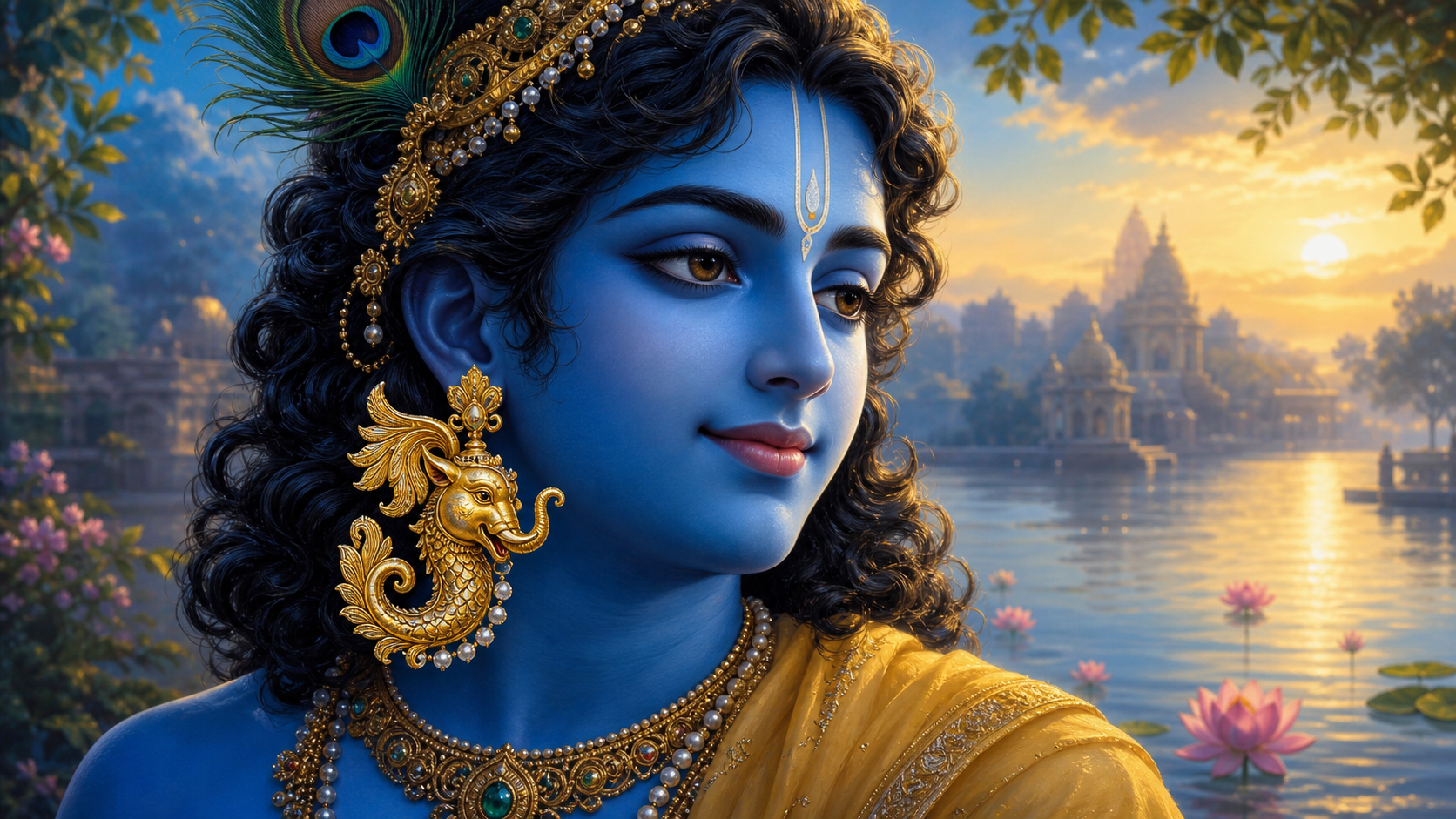
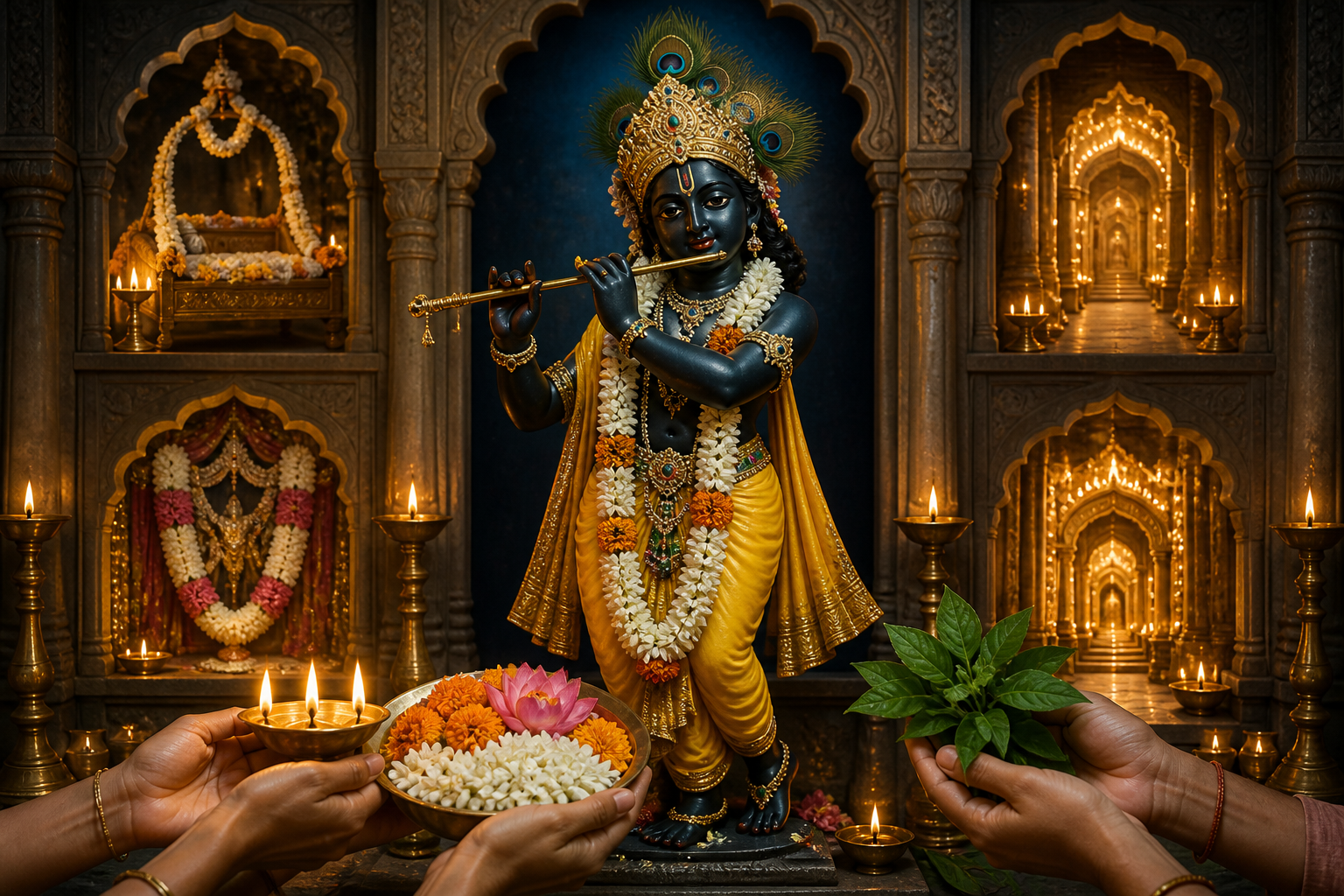
Sringara Murti presents a rigorous yet tender theology in which divine beauty becomes a disciplined means of knowing. Centered on Krishna and illuminated by the Bhagavata Purana, Gita Govinda, and Vaishnava aesthetics, it shows how śṛṅgāra transforms emotion into insight. The article details rasa theory, iconographic cues such as tribhaṅga and veṇu, and the ritual…