Tag: Krishna

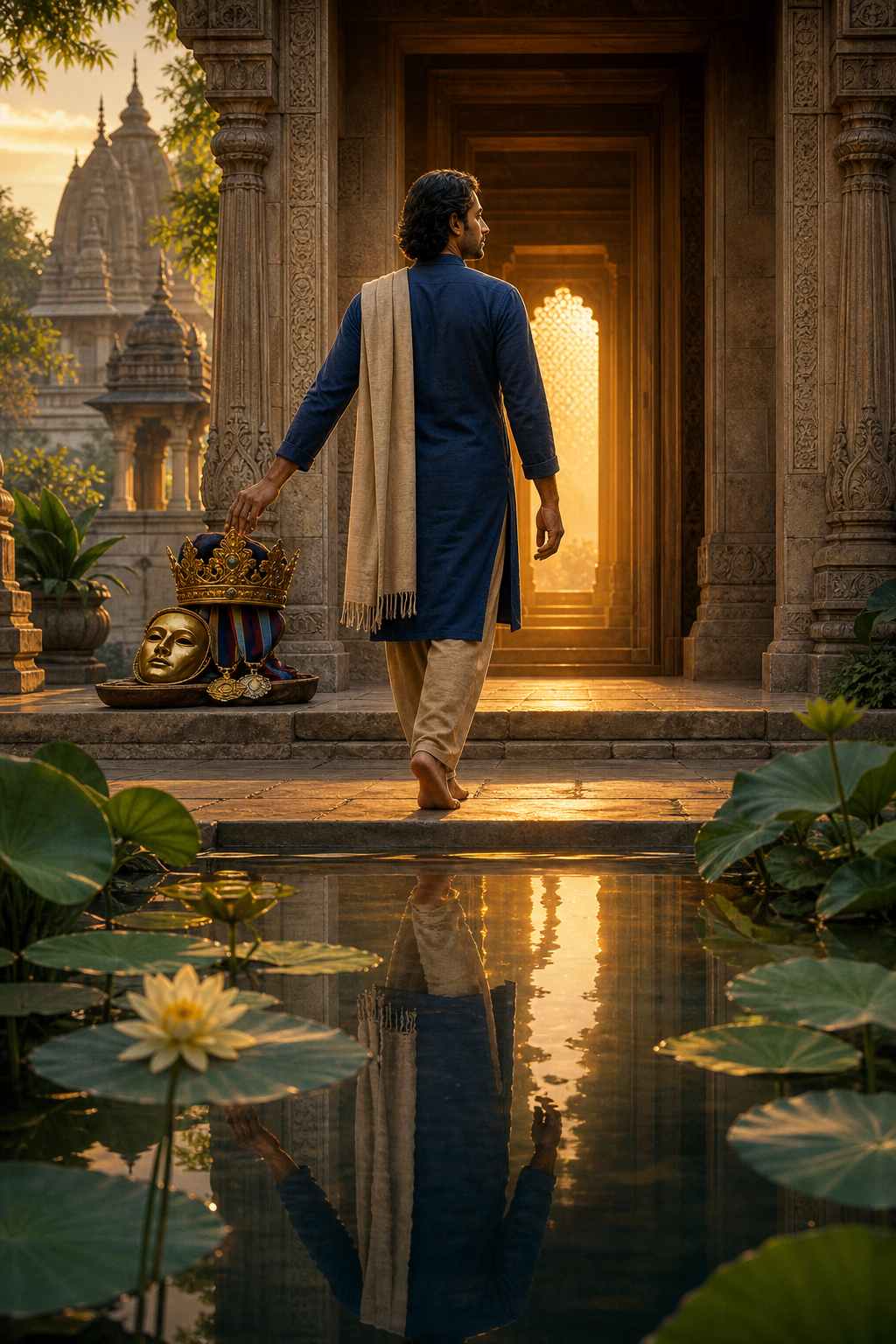
  • Beyond the Flute: Why Bala‑Krishna Thrives as Parthasarathi’s Warrior Ethos Lies Dormant

    Beyond the Flute: Why Bala‑Krishna Thrives as Parthasarathi’s Warrior Ethos Lies Dormant

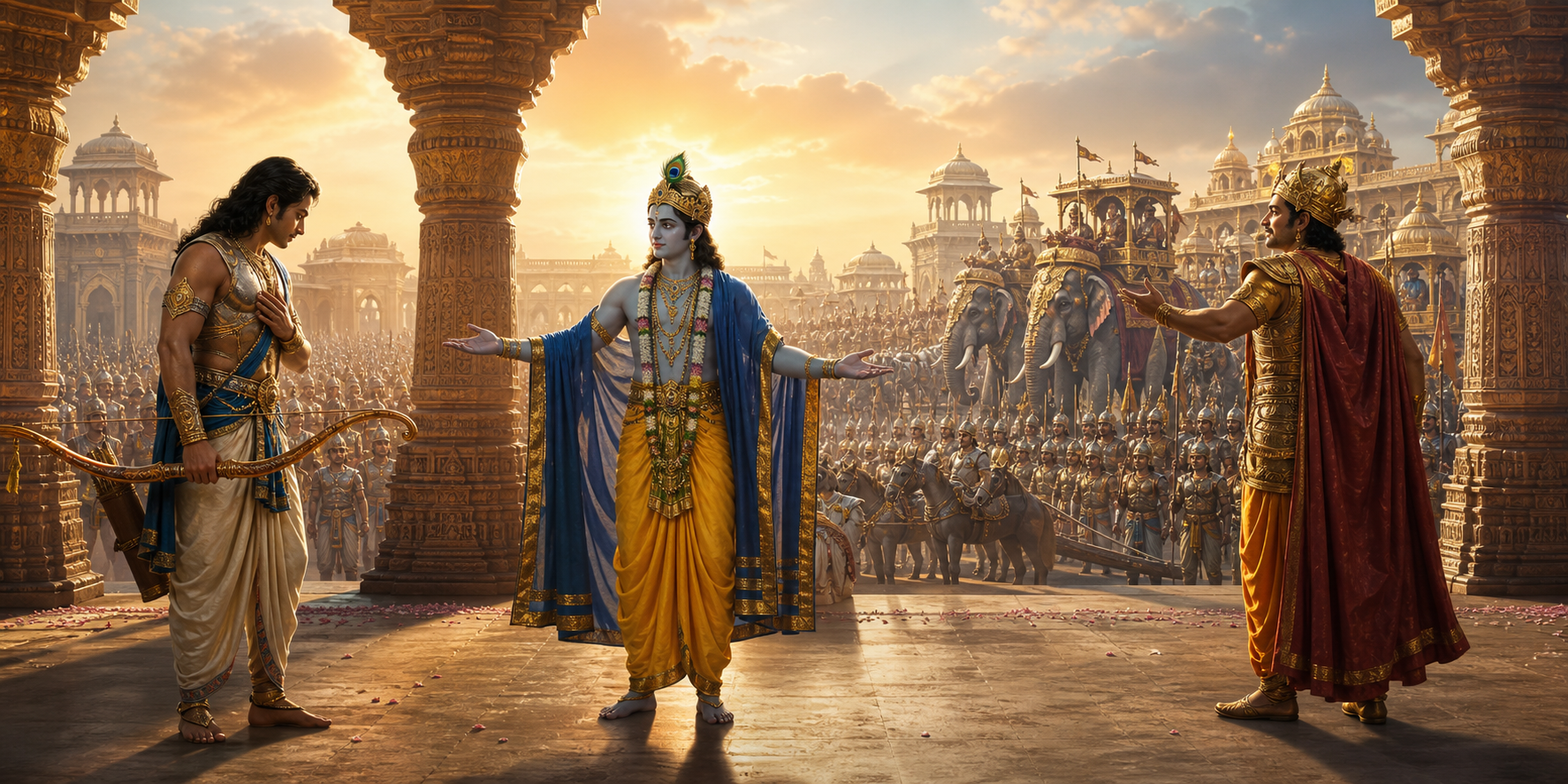
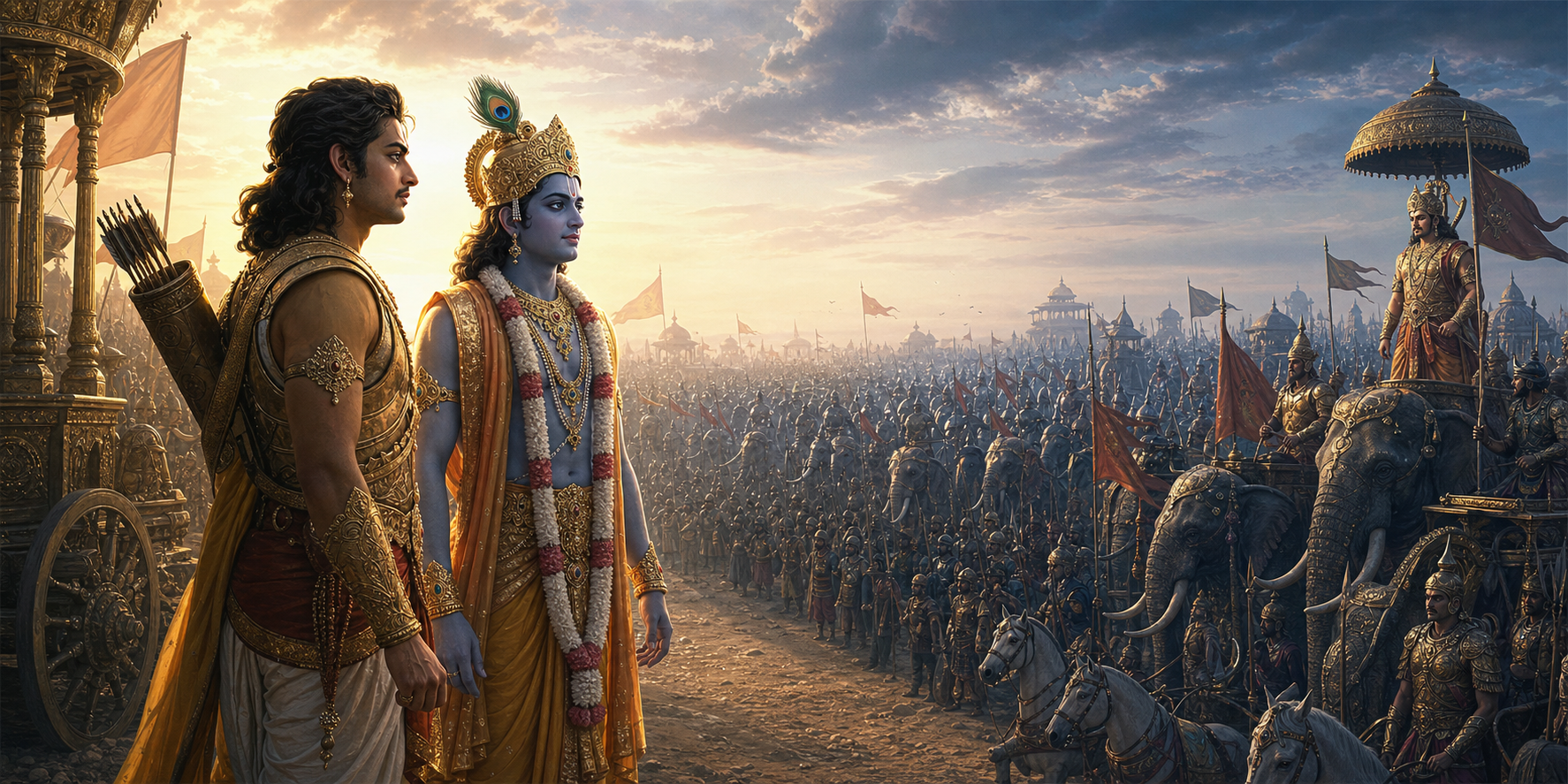
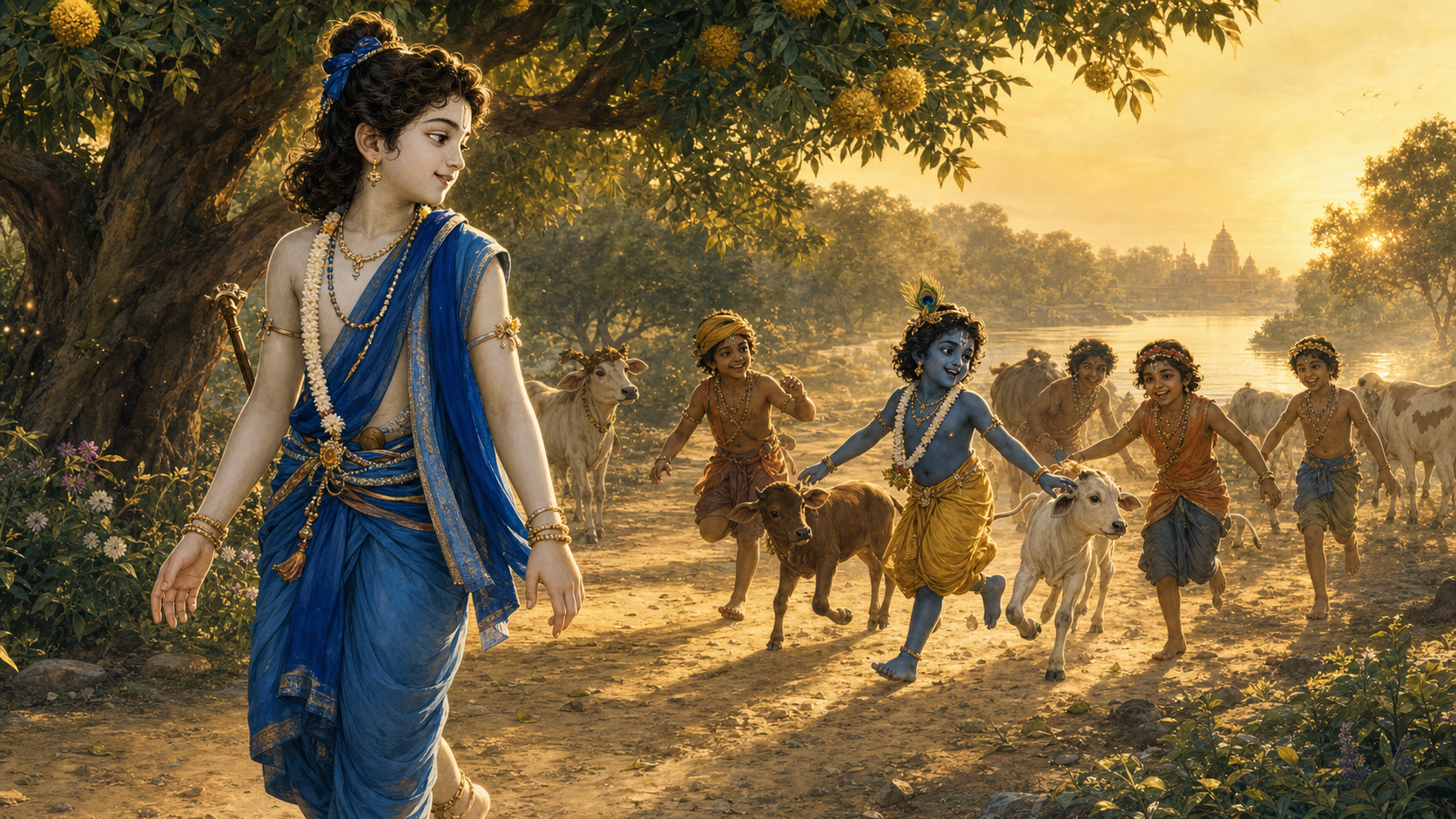
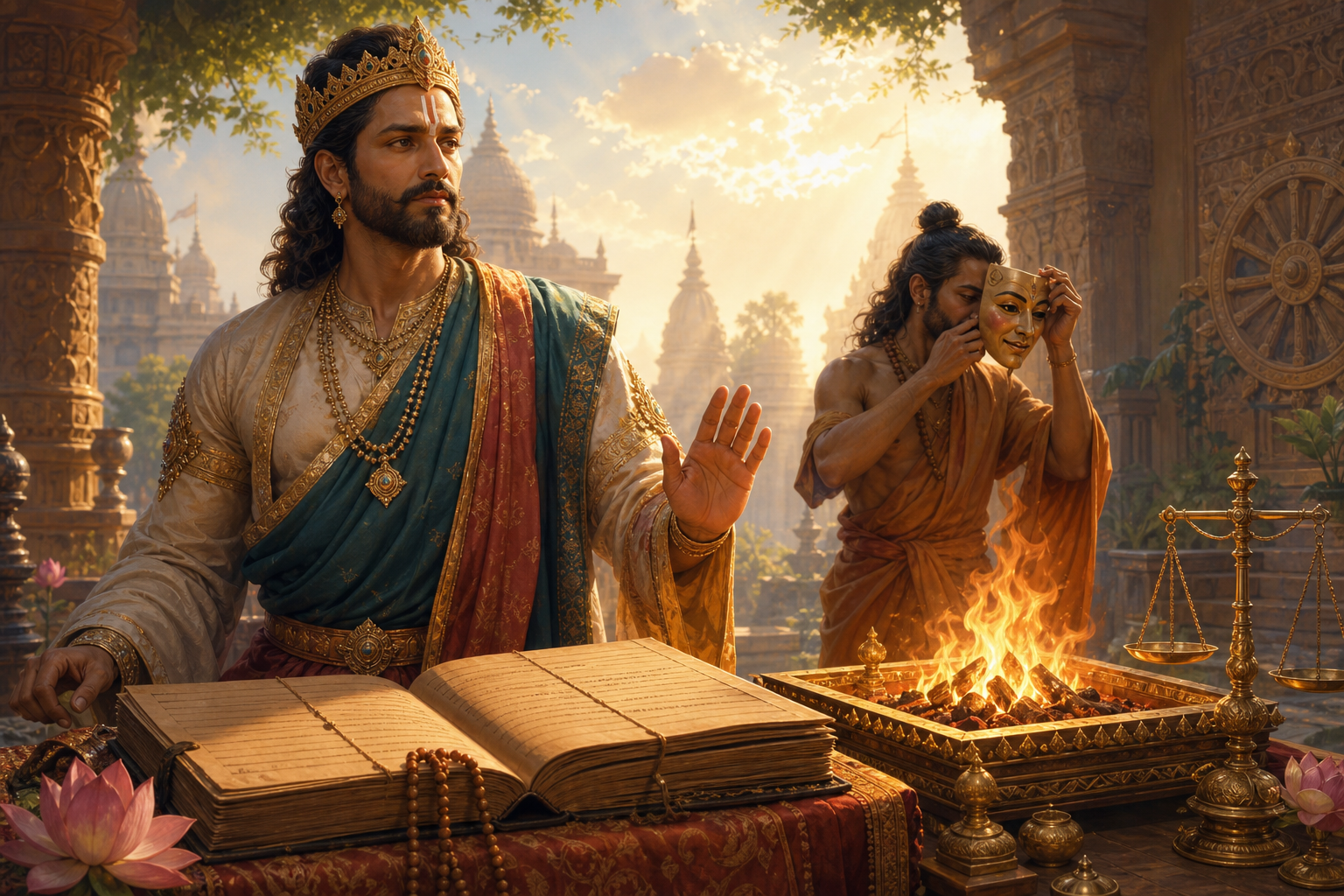
    Images of Bala‑Krishna dominate homes and temples, while Parthasarathi—the charioteer and teacher of the Bhagavad Gita—appears less often in popular devotion. This long‑form analysis explains the imbalance through rasa theory, bhakti history, temple networks, pedagogy, and modern media. It shows how intimacy‑focused worship naturally favored child and flute‑playing forms, whereas Krishna’s kshatra ethics are harder…

  • Krishna’s Omnipotence Explained: Why Name, Mantra, and Scripture Offer Direct, Daily Companionship

    Krishna’s Omnipotence Explained: Why Name, Mantra, and Scripture Offer Direct, Daily Companionship

    This article explains, in clear Vedic and Bhakti terms, why Krishna’s omnipotence means His words, names, and teachings are non-different from Him, offering direct companionship at any moment. It shows how the concept of shabda as an efficacious, self-revealing medium makes scriptural hearing and mantra recitation a living encounter rather than mere symbolism. Drawing on…

  • Stride to the Sacred: Stanmore–Bhaktivedanta Manor’s Sunday Foot-Pilgrimage

    Stride to the Sacred: Stanmore–Bhaktivedanta Manor’s Sunday Foot-Pilgrimage

    Each Sunday at 7:00 a.m., a growing community sets out from Stanmore Station on a 5.5-mile, 90-minute walk to Bhaktivedanta Manor, blending devotion to Krishna with the inclusive spirit of dharmic traditions. Anchored in the Bhakti Tradition and echoing Buddhist, Jain, and Sikh foot-pilgrimages, the practice offers a moving meditation that strengthens attention and calm.…

  • Krishna Katha at ISKCON Silicon Valley: Transformative Bhakti through Chanting and Hearing

    Krishna Katha at ISKCON Silicon Valley: Transformative Bhakti through Chanting and Hearing

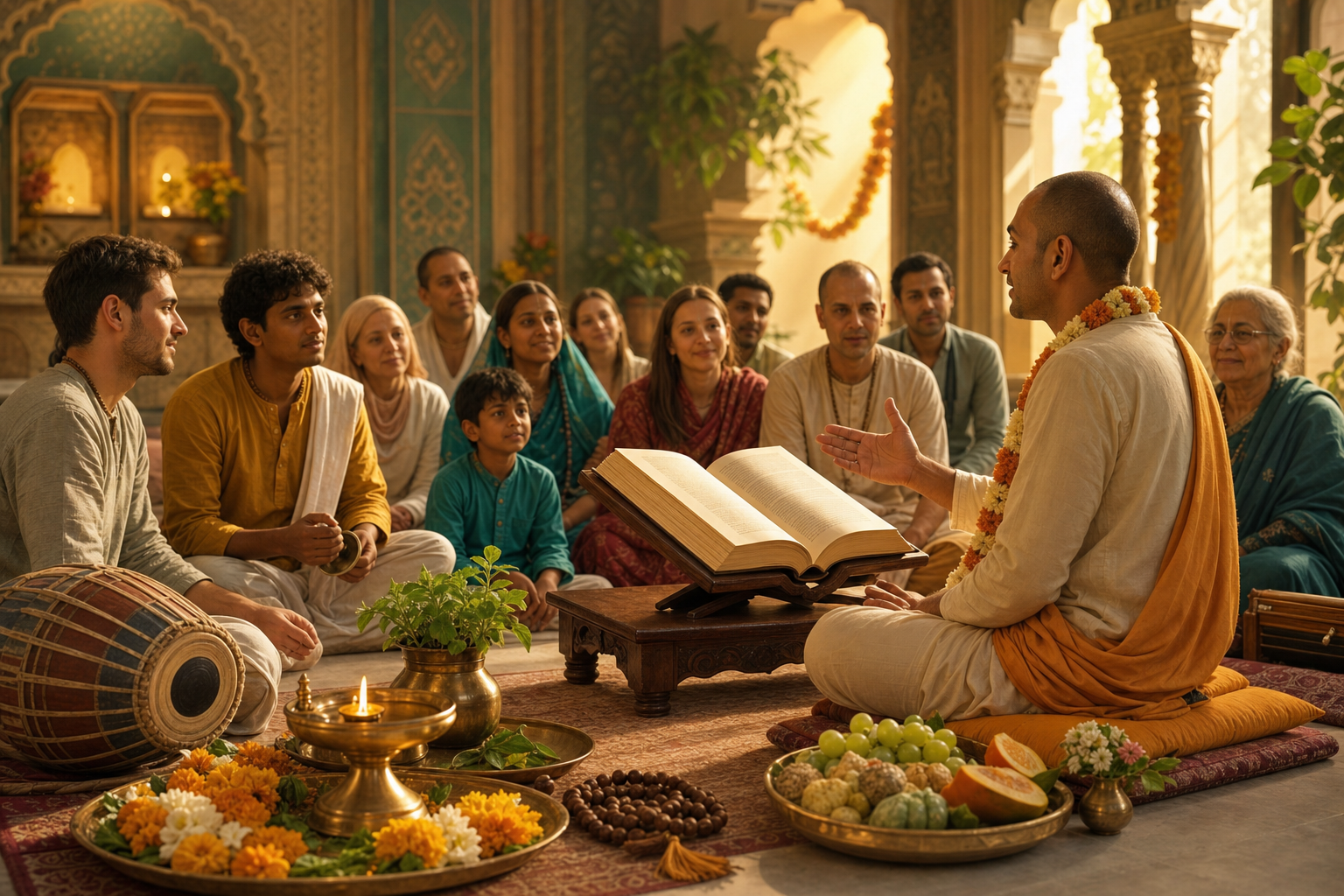
    This long-form analysis contextualizes the Krishna Katha presented by H.G. Vaisesika Dasa at ISKCON of Silicon Valley on 26 April 2026. It explains why hearing and chanting are central in the Bhakti Tradition, grounding the discussion in the Bhagavad Gita and Srimad Bhagavatham. The piece outlines practical methods of kirtan and japa, describes their physiological…

  • Krishna as Paramananda: Unlocking the Highest Pleasure and Enduring Inner Bliss

    Krishna as Paramananda: Unlocking the Highest Pleasure and Enduring Inner Bliss

    The proposition that ‘Krishna means the highest pleasure’ is a technical statement of Vedic philosophy that distinguishes fleeting stimulation from enduring bliss (ānanda). Drawing on the Upanishads and the Bhagavad Gita, it locates true happiness in alignment with the Infinite and explains why inner joy is ‘beyond the senses’ yet discernible by a refined intellect.…

  • Facing Cancer as Krishna’s Embrace: Evidence‑Based Care, Dharmic Resilience, and Hope

    Facing Cancer as Krishna’s Embrace: Evidence‑Based Care, Dharmic Resilience, and Hope

    A recent diagnosis of secondary cancer in a cervical lymph node is reframed as “Krishna’s Embrace,” integrating evidence‑based oncology with steadiness drawn from Dharma, Meditation, Yoga, and Bhakti. The narrative explains what “secondary cancer” means, outlines why PET‑CT, endoscopy, and pathology are pivotal, and clarifies how biomarkers like p16 and EBV guide therapy. It emphasizes…

  • Modern Love, Ancient Bhakti: How Krishna’s Wisdom Transforms Youthful Desire into Dharma

    Modern Love, Ancient Bhakti: How Krishna’s Wisdom Transforms Youthful Desire into Dharma

    This article reframes the turbulence of modern romance through Krishna-centered bhakti, showing how desire (kāma) matures into expansive love (prema) when guided by dharma. Drawing on the Bhagavad Gita and Srimad Bhagavata Purana, it explains the cognitive arc of attachment and offers a practical sequence—śravaṇa, kīrtana, smaraṇa, and sevā—to steady attention, study, and relationships. Yoga’s…

  • Krishna as the Highest Pleasure: Evidence-Based Insights and Dharmic Practices for Joy

    Krishna as the Highest Pleasure: Evidence-Based Insights and Dharmic Practices for Joy

    The name Krishna is traditionally associated with paramānanda—the highest pleasure—linking sacred sound to a complete philosophy of enduring happiness. Drawing on the Upaniṣads, the Bhagavad Gita, and the Bhagavata Purana, this analysis explains how fleeting, sense-based sukha differs from stable spiritual joy, and why cultivating a “higher taste” transforms desire rather than suppresses it. Navadha-bhakti,…

  • Unity in Diversity: Harmonizing Distinct Personalities in Dharmic Service and Devotion

    Unity in Diversity: Harmonizing Distinct Personalities in Dharmic Service and Devotion

    This article presents an academic yet accessible exploration of unity in diversity across Dharmic traditions. It clarifies Srila Prabhupada’s insight—”Variety is the mother of enjoyment”—and shows how distinct talents become seva that strengthens cohesion. Drawing on Srila Rupa Goswami’s Bhaktirasamrita- sindhu, it highlights Krishna’s identities as dhirodatta and dhiralalita to validate diverse human temperaments in…

  • Kerala’s Vishu Poster Uproar: Multiple FIRs, Arrests, and a Roadmap for Interfaith Harmony

    Kerala’s Vishu Poster Uproar: Multiple FIRs, Arrests, and a Roadmap for Interfaith Harmony

    Kerala’s Vishu poster controversy began in Alappuzha and spread to other districts, including Malappuram, after an advertisement depicted Lord Krishna with a non-vegetarian dish. Multiple FIRs were registered and three individuals were arrested as police opened investigations into potential offences concerning religious sentiments and public order. This analysis situates the episode within India’s constitutional framework,…

  • Krishnavataram Trailer Unveiled at Krishna Janmabhoomi: Sacred Cinema That Unites Devotion

    Krishnavataram Trailer Unveiled at Krishna Janmabhoomi: Sacred Cinema That Unites Devotion

    The Krishnavataram trailer launch at Krishna Janmabhoomi evolved from a routine release into a living act of devotion, as chants and darshan-oriented gathering reshaped it into a sacred public moment. Set within Mathura’s revered temple ecology, the event demonstrated how mythological cinema can align with Sanatana Dharma’s values when framed by reverence and protocol. It…

  • From Nataraja to Raas Leela: The Awe-Inspiring Science, Symbolism, and Legacy of Divine Dance

    From Nataraja to Raas Leela: The Awe-Inspiring Science, Symbolism, and Legacy of Divine Dance

    Divine dance in the dharmic traditions is a precise language of cosmology and devotion. This article explains Shiva as Nataraja with technical iconography (damaru, agni, abhaya, Apasmara) and maps his pañcha-kṛtya to movement, clarifying how sound (nada) and rhythm underpin Sanskrit and ritual. It situates Bharatanatyam, Odissi, Kuchipudi, Kathak, Mohiniyattam, Sattriya, Chhau, Yakshagana, Chakyar Koothu,…

  • Inside ISKCON Korea’s Grand Welcome for Maharaj Ji: Kirtan Energy, Bhakti-Yoga, and Dharmic Unity

    Inside ISKCON Korea’s Grand Welcome for Maharaj Ji: Kirtan Energy, Bhakti-Yoga, and Dharmic Unity

    ISKCON Temple Korea’s grand welcome for Maharaj Ji showcased how congregational kirtan, ritual hospitality, and prasadam distribution translate Gaudiya Vaishnava theology into lived experience. The ceremony’s structured sequence—garlanding, arati, and a brief discourse—provided clear entry points for newcomers while reinforcing disciplined sadhana for regular practitioners. Kirtan’s technical elements (call-and-response singing, mridanga, kartals, and harmonium) created…

  • Ecstatic Love in Focus: Sri Radha’s Enchanting Glance and the Science of Sacred Vision

    Ecstatic Love in Focus: Sri Radha’s Enchanting Glance and the Science of Sacred Vision

    This in-depth exploration examines the devotional, aesthetic, and contemplative significance of Srimati Radharani’s eyes and glances in the Bhakti Tradition. Grounded in a verse attributed to Madhvacharya and supported by Brahma-samhita, Gita Govinda, and Gaudiya commentaries, it shows how Sri Radha’s glance functions as a conduit of divine grace. The article integrates classical Indian aesthetics…

  • Why All Rivers of Bhakti Flow to Gokula: Insights on Brihad Bhagavatamrita 1.2.37–49

    Why All Rivers of Bhakti Flow to Gokula: Insights on Brihad Bhagavatamrita 1.2.37–49

    This study distills HH Niranjana Swami’s 2026 Lithuania exposition of Brihad Bhagavatamrita 1.2.37–49, showing how praise of Brahma, Indra, and other luminaries functions as a pedagogic ladder guiding readers toward the intimate devotion of Gokula and Goloka. It defines Gokula and Goloka with precision, contrasts aisvarya (majesty) and madhurya (sweetness), and explains why the text…

  • Intensity or Casualty? How Humility, Seva, and Trials Forge Prema in Gaudiya Bhakti

    Intensity or Casualty? How Humility, Seva, and Trials Forge Prema in Gaudiya Bhakti

    This analysis examines the Gaudiya Vaishnava benchmark of prema through the lens of CC Madhya 13.147 and a contemporary London discourse by HH S.B. Keshava Swami. It explains five verifiable signs of mature devotion—humility, seva, emotional softening, persistence, and Krishna-centered decision-making—and shows how trials function like fire purifying gold. Readers gain a clear roadmap from…

  • Master the Mind in a Distracted World: Bhakti-Yoga, Mindfulness, and Digital Discipline

    Master the Mind in a Distracted World: Bhakti-Yoga, Mindfulness, and Digital Discipline

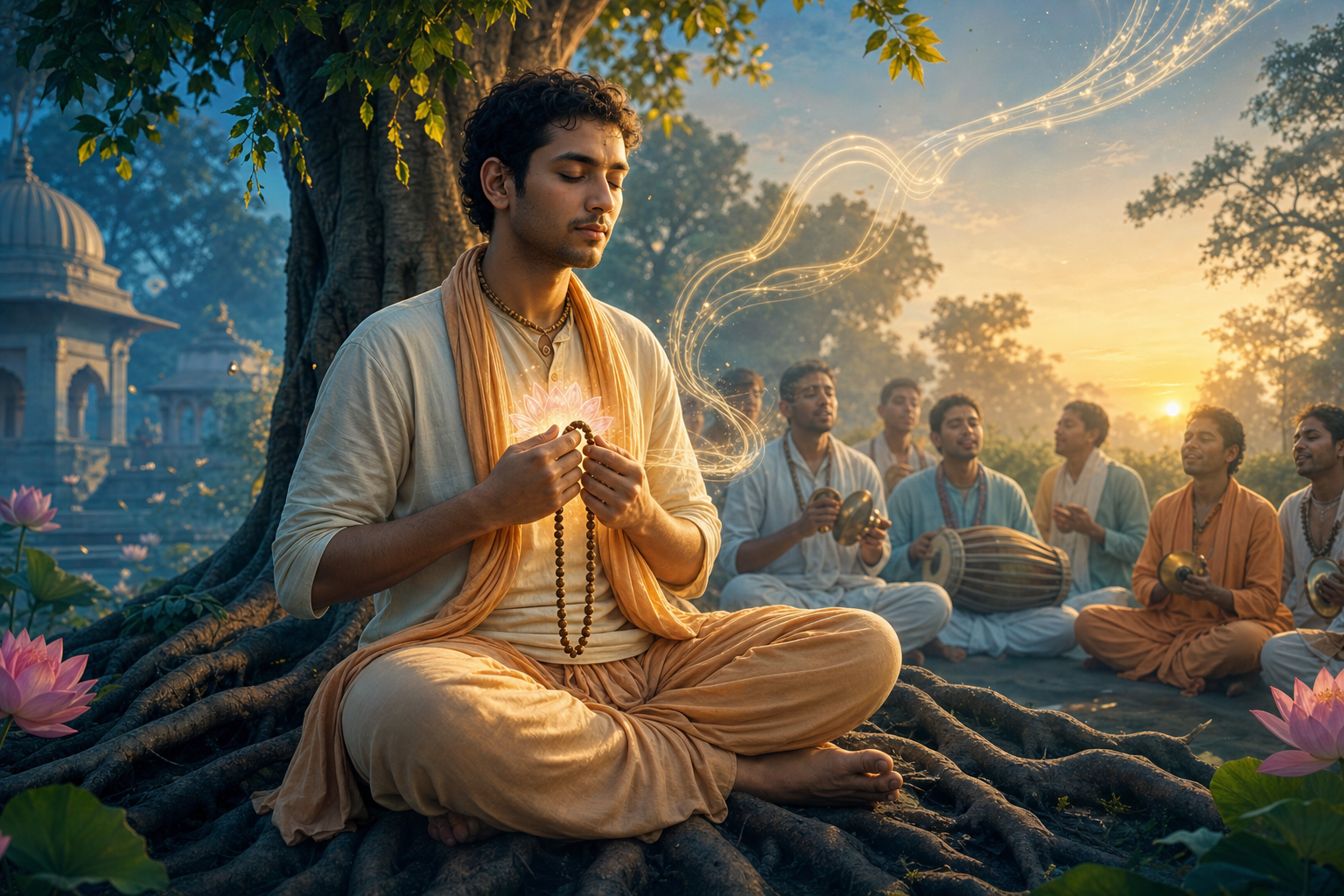
    The digital age fragments attention, yet the classical aim of yoga—steadying the mind—remains essential. This analysis explains how bhakti-yoga (Krishna consciousness), mindfulness, and pranayama collectively counter distraction by building one-pointed concentration. It connects pratyahara, dharana, and dhyana to practical digital hygiene, offering a modern, research-aware framework for focus. Parallels from Buddhism (sati, samatha), Jainism (samayik,…

  • BG 18.75 Unveiled: Vyāsa’s Grace, Kṛṣṇa’s Living Voice, and the Timeless Science of Yoga

    BG 18.75 Unveiled: Vyāsa’s Grace, Kṛṣṇa’s Living Voice, and the Timeless Science of Yoga

    Bhagavad-gītā 18.75 crystallizes how liberating wisdom is known: by Vyāsa’s grace, Sañjaya directly hears Kṛṣṇa guiding Arjuna, modeling lineage-based transmission and receptive practice. The verse illuminates Vedic epistemology—śabda-pramāṇa, paramparā, and divya-dṛṣṭi—while clarifying that “most confidential” teaching is inward profundity, not exclusion. By presenting Kṛṣṇa as Yogeśvara, it frames yoga as an integrated science of action,…

  • Who Is the Real Father? ISKCON and Gita on the Soul, Death, and the Supreme Source

    Who Is the Real Father? ISKCON and Gita on the Soul, Death, and the Supreme Source

    This essay explores the Hare Krishna (ISKCON) understanding of who the “real father” is by distinguishing bodily from spiritual parenthood through the lens of the Bhagavad Gita. It explains why everyday bereavement language—“he has gone”—implicitly recognizes the self (ātmā) as distinct from the body. Drawing on key verses (Gita 14.4, 2.13, 2.20, 15.7), it shows…

  • Radically Honest with Krishna: Vraja Vihari Prabhu on Real Bhakti, Courage, and Healing

    Radically Honest with Krishna: Vraja Vihari Prabhu on Real Bhakti, Courage, and Healing

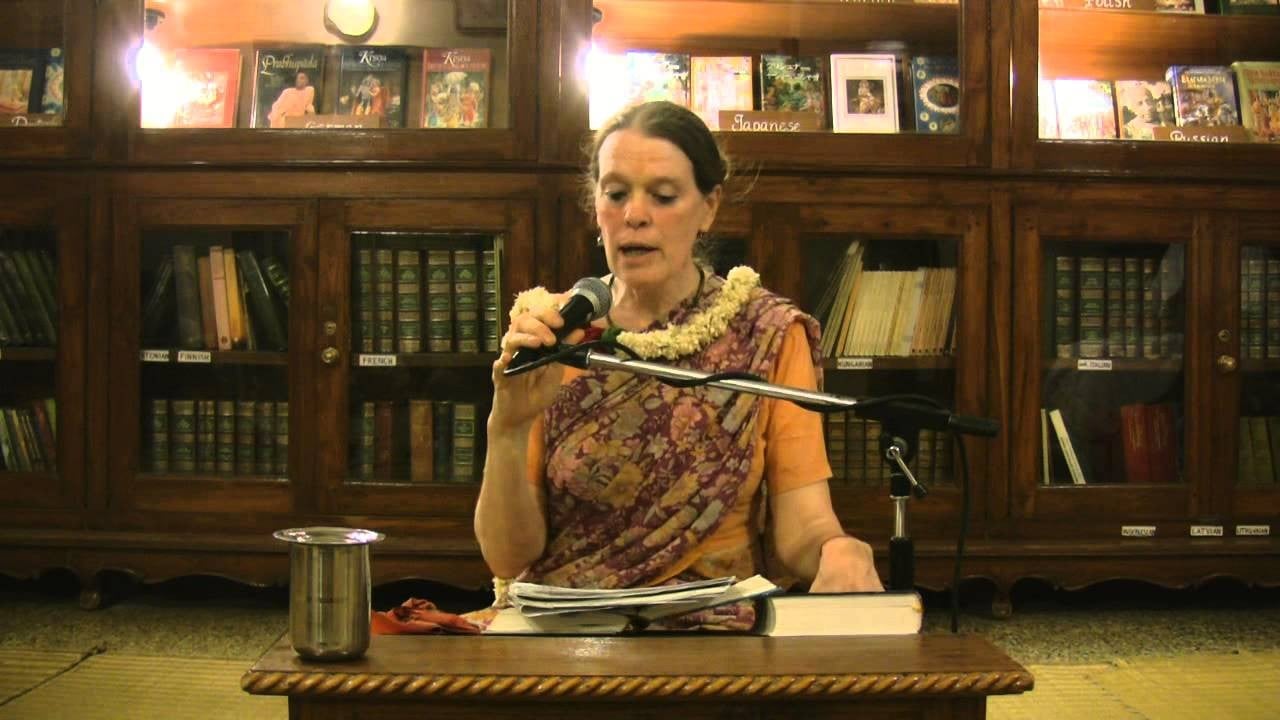
    This reflection distills Vraja Vihari Prabhu’s central insight: spiritual life flourishes through a truthful relationship with Krishna rather than perfectionism. It explains why divine omniscience makes honesty safe, not risky, and anchors the point in Bhagavad Gita and Bhakti Tradition teachings. It outlines how candid disclosure during japa, kirtan, and evening reflection reduces inner resistance…