
-
Surrender Made Practical: Sharanagati, Inner Resilience, and Divine Help in Daily Life

Surrender (sharanagati) is presented here as a rigorous, actionable discipline within Sanatana Dharma, grounded in a widely cited Back to Godhead teaching attributed to Srila Prabhupada and centered on a simple, sincere prayer to Krsna. The article clarifies that surrender is not passivity but intelligent consent to higher wisdom, consistent with the Bhagavad Gita’s call…
-
Beyond Marks and Robes: Recognizing True Sanatana Dharma by Conduct and Consciousness

The dharmic traditions of the Indian subcontinent teach that true spiritual identity is recognized through conduct and consciousness, not through marks, robes, or ritual display. Sanatana Dharma and its sister pathsBuddhism, Jainism, and Sikhismconverge on ethical and contemplative maturity as the most reliable signatures of practice. Scriptural anchors such as the Upanishads, the Bhagavad Gita,…
-
From Overwhelm to Ease: A Dharmic, Science-Backed Guide to Cooling an Anxious Mind

Anxiety can be cooled reliably by combining physiology, contemplative training, and ethical living. This guide bridges modern neuroscience with dharmic wisdom from Hinduism, Buddhism, Jainism, and Sikhism to offer practical tools that downregulate the nervous system. Readers learn how breath awareness, pranayama, and humming stimulate the vagus nerve and improve HRV for fast-acting calm. Somatic…
-
Why Shiva Rarely Holds the Lotus: Decoding Shaiva Iconography, Vairagya, and Dharmic Harmony

The lotus dominates Indic sacred art, yet Shiva is rarely defined by it. This essay explains why by tracing Shaiva iconography prescribed in Agamas and Shilpa Shastras, where trishula, damaru, vibhuti, rudraksha, Nandi, and the aniconic linga carry the core theological message. It contrasts the lotus’s semantics of purity, abundance, and preservationwith Vishnu, Lakshmi, and…
-
Growing Up With Shabad: The Transformative Science, Music, and Devotion Uniting Dharmic Paths

Growing up with Shabad forms attention, identity, and ethics through sacred sound anchored in Sikhism’s Shabad Guru. Musicological rigorraag, taal, and the interpretive role of rahausupports cognitive development, Gurmukhi literacy, and stable daily rhythms. Physiological pathways, including breath-synchronized prosody and vagal regulation, help reduce stress and build resilience. Comparative insights show deep kinship with Hindu…
-
Inside the Kapalikas: Fierce Tantric Shaivism, Bhairava Devotion, and Charnel-Ground Rites

This in-depth overview situates the Kapalikas within Tantric Shaivism and early medieval Indian history, explaining why the ‘skull-people’ carried kapala bowls and worshipped Shiva as Kala Bhairava. It clarifies how cremation-ground observances, bone ornaments, and fierce offerings served a disciplined non-dual soteriology rather than mere spectacle. Readers gain a careful separation of polemic and practice…
-
Goddess Trikala: Uniting Trimurti and Tridevi as the Timeless, All-Seeing Power of Shakti

Goddess Trikala synthesizes Hinduism’s core triadspast, present, future and creation, preservation, dissolutioninto a single, time-enfolding vision of Shakti. Drawing on Purāṇic patterns in which the Goddess emerges from aggregated divine energies, Trikala Devi is interpreted as arising from the unified gaze and essences of the Trimurti. The article analyzes iconographic analogies (tri-netra, color triads, composite…
-
From Avidya to Ahimsa: How Ignorance Breeds Violenceand Dharmic Ways to Heal Ego

Ignorance narrows perspective, heightens ego defensiveness, and increases the risk of violence, but dharmic insights and modern science together offer proven ways to interrupt that cycle. This article maps how cognitive biases, identity threats, stress physiology, and moral disengagement convert ignorance into harm. It then presents convergent guidance from Hinduism, Buddhism, Jainism, and Sikhism on…
-
Nish Shreyas in Hinduism: The Life-Changing Choice of Shreyas over Preyas toward Moksha

Nish Shreyas denotes the ultimate good in Hinduismthe enduring well-being that culminates in mokshaclarified through the Katha Upanishad’s contrast between preyas (the pleasant) and shreyas (the beneficial). This article explains how Vedanta, the Bhagavad Gita, and integrated yogic disciplines channel everyday decisions toward freedom rather than compulsion. It offers a clear decision framework and practical…
-
Unlocking Truth: Six Pramāṇas in Hindu Philosophy and How They Strengthen Modern Thinking

This long-form guide explains the six pramāṇas of Hindu philosophypratyakṣa, anumāna, upamāna, arthāpatti, anupalabdhi, and śabdaand shows how they collaborate to produce reliable knowledge. It clarifies acceptance across Nyāya, Mīmāṃsā, Vedānta, Sāṃkhya-Yoga, Carvāka, and connects these insights with Buddhist, Jain, and Sikh approaches. Readers learn concrete criteria for perceptual reliability, how to build and test…
-
Princess of Wales’ Viral Holi Visit: Barefoot at Leicester Temple, Honouring Hindu Traditions

Catherine, Princess of Wales, marked Holi in Leicester with gestures of cultural respect that quickly went viral: a garlanded welcome, shoes removed at the temple threshold, and a joyful moment of traditional ladies’ dancing. The visit highlighted how Hindu temple etiquettesuch as barefoot entryembodies values shared across dharmic traditions, including Sikhism, Buddhism, and Jainism. By…
-
Karma in Hinduism: A Definitive, Practical Guide to Action, Consequence, and Liberation

Karma in Hinduism is a precise ethical and philosophical system linking intention, action, and consequence within the larger pursuit of moksha. Drawing on the Bhagavad Gita, the Upanishads, and allied schools of Hindu philosophy, this long-form guide explains the threefold temporal modelsanchita, prarabdha, and agamialongside the Gita’s categories of karma, akarma, and vikarma. It clarifies…
-
Astika Mantra from the Mahabharata: Powerful Snake-Bite Protection, Meaning, and Safe Use

The Astika mantra, preserved in the Mahabharata’s Astika Parva, is a revered protective chant for snake-bite safety that appeals to remembrance, gratitude, and non-violence. By recalling Astikaborn of Jaratkaru and Jaratkaruwho halted King Janamejaya’s sarpa-satra, the mantra respectfully addresses nāgas and requests non-injury. This guide presents the original Sanskrit, accurate transliteration, and a clear, line-by-line…
-
Kapalini: Shakti’s Terrifying Grace and the Awe-Filled Storm that Seeds Creation Cycles

Kapalini, the skull-bearing form of Goddess Shakti, stands at the threshold where dissolution gives birth to creation. Set against the awe-filled storm of pralaya, Kapalini carries the Brahma-substancethe causal seed from which new worlds emergeoffering a precise map of Hindu cosmology. The narrative clarifies the five cosmic acts, types of pralaya, and the role of…
-
Overwhelmed? An Evidence‑Based, Dharmic Guide to Pause, Deep Rest, and Recenter Your Life

Many people today live in survival modeshort breath, scattered focus, and chronic exhaustiondue to nonstop demands and digital noise. This evidence-based, dharmic guide explains how to create restorative space that lowers allostatic load, improves sleep, and strengthens emotional resilience. It distills accessible practices from Hinduism, Buddhism, Jainism, and Sikhismbreathwork, mindful movement, attention training, compassion, and…
-
Seeing the Banyan in a Seed: Profound Hindu Wisdom on Infinite Potential and Dharmic Unity

Hindu wisdom describes spiritual vision as the ability to perceive wholeness within the smallest fragment of reality, symbolized by seeing a vast banyan in a tiny seed. Drawing on the Chandogya and Mundaka Upanishads, the discussion clarifies how potentiality unfolds lawfully into form and how this insight aligns with Vedanta, Sankhya-Yoga, and systems science. Convergences…
-
Suchimukham Unveiled: The Chilling Karmic Price of Hoarded Wealth in Hindu Dharma

Suchimukham, the needle-mouthed hell in Hinduism, powerfully encodes the karmic consequences of hoarding wealth and neglecting compassion. Drawing on the Vishnu Purana, Devi Bhagavata Purana, and Garuda Purana, this analysis situates Suchimukham within a reformative, not eternal, Puranic model of Naraka. It clarifies the difference between prudent stewardship and miserliness, showing how dharma guides artha…
-
Timeless Lila: Exploring the Divine Play of Being and Becoming Across Dharmic Paths

This long-form exploration presents Lilathe eternal divine playas a framework for understanding how being and becoming interrelate across Hinduism, Buddhism, Jainism, and Sikhism. Drawing on the Upanishads, Vedanta (Advaita, Vishishtadvaita, Dvaita), the Bhagavad Gita, and Shaiva–Shakta thought, it clarifies how creation, preservation, and dissolution express a living unity. It maps key concepts like dharma, karma,…
-
Gaura Purnima 2026: Gaura‑lila, Nama‑sankirtana, and ISKCON Ljubljana’s Living Legacy
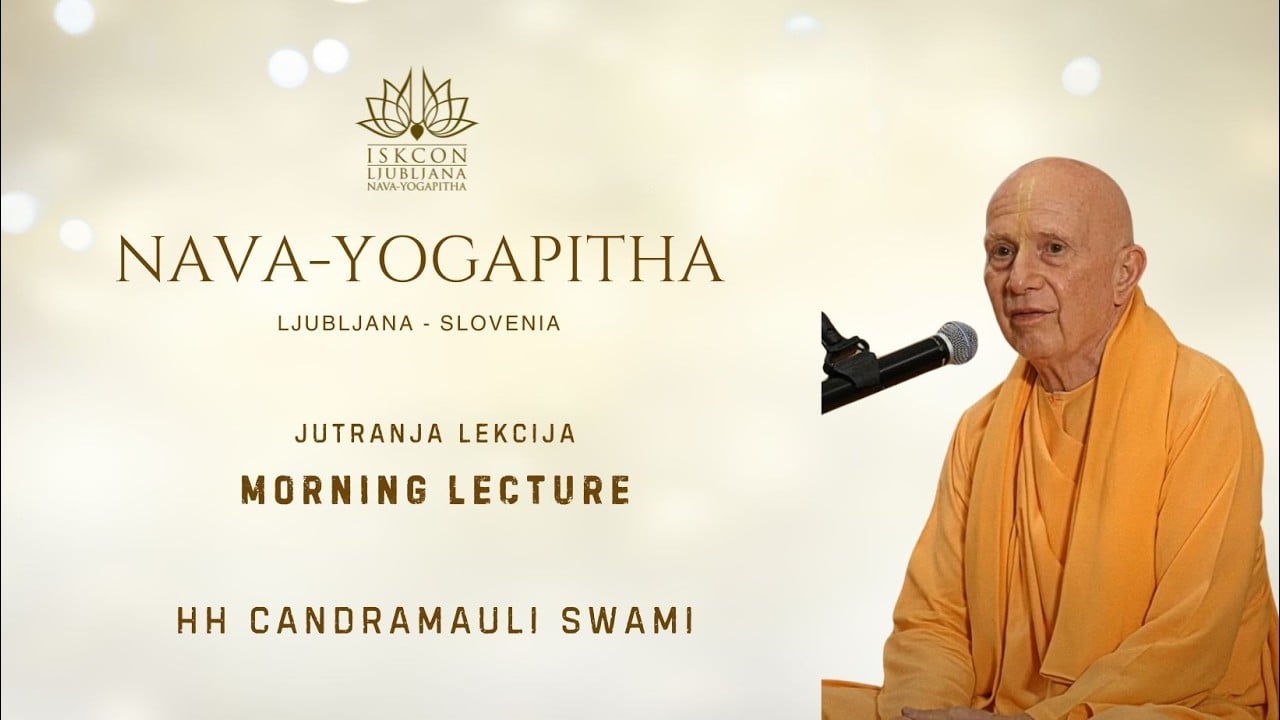
Sri Gaura Purnima 2026 at ISKCON Ljubljana brings the golden legacy of Sri Chaitanya Mahaprabhu (Gaura‑lila) into vivid focus through nama‑sankirtana, study, and service. Grounded in Gaudiya Vaishnava scriptures, the festival highlights acintya‑bhedabheda‑tattva and the transformative power of the Hare Krishna maha‑mantra. Reflections inspired by teachers such as HH Candramauli Swami underline sadhana, sadhu‑sanga, and…
-
Apsaras and Oleander in Hindu Symbolism: Beauty, Peril, and the Dharma of Self‑Mastery

Apsaras carrying oleander (Karavīra) illuminate a core Hindu symbol where beauty both refines and tests. Drawn from Puranic literature and temple iconography, the motif highlights how allure becomes ethical instruction when guided by discernment, dispassion, and sustained practice. Oleander’s evergreen brilliance and toxicity sharpen the lesson: what delights can also endanger without inner alignment. Episodes…