
-
Show the Path, Not Carry the Burden: Empowering Dharmic Wisdom for Inner Freedom

Across Hinduism, Buddhism, Jainism, and Sikhism, a unifying principle prevails: sages can show the path, but seekers must walk it. The essay grounds this ethic in the Bhagavad Gita, Upanishads, Dhammapada, Jain Tattvartha-sutra, and Sikh teachings, explaining how grace, community, and guidance support but never replace personal agency. Technical concepts such as svadharma, adhikara-bheda, abhyasa–vairagya,…
-
Beyond Ritual and Dogma: Hindu Wisdom on Moving from Religion to Transformative Spirituality

This article clarifies the often-misunderstood difference between a religious person and a spiritual person through the lens of Hindu thought and its dharmic siblings. It explains how Hindu scriptures integrate dharma (form, ethics, and ritual) with adhyatma (direct realization) to support an inner transformation culminating in moksha. The discussion highlights Bhagavad Gita harmonies of karma,…
-
Brahma, Vishnu, and the Birth of Ego: A Powerful Hindu Lesson on Humility and Creation

This long-form analysis situates the well-known Purvakalpa scene of Brahma and Vishnu within Hindu cosmology to show how the birth of ego (ahamkara) emerges at the threshold of creation. It interprets the narrative through Samkhya’s technical cascade—prakriti, mahat, and ahamkara—clarifying why humility must precede and accompany creative agency. The discussion aligns the Vishnu-centered account with…
-
From Dogma to Dignity: A Human-Centered Blueprint for Dharmic Unity and Compassion
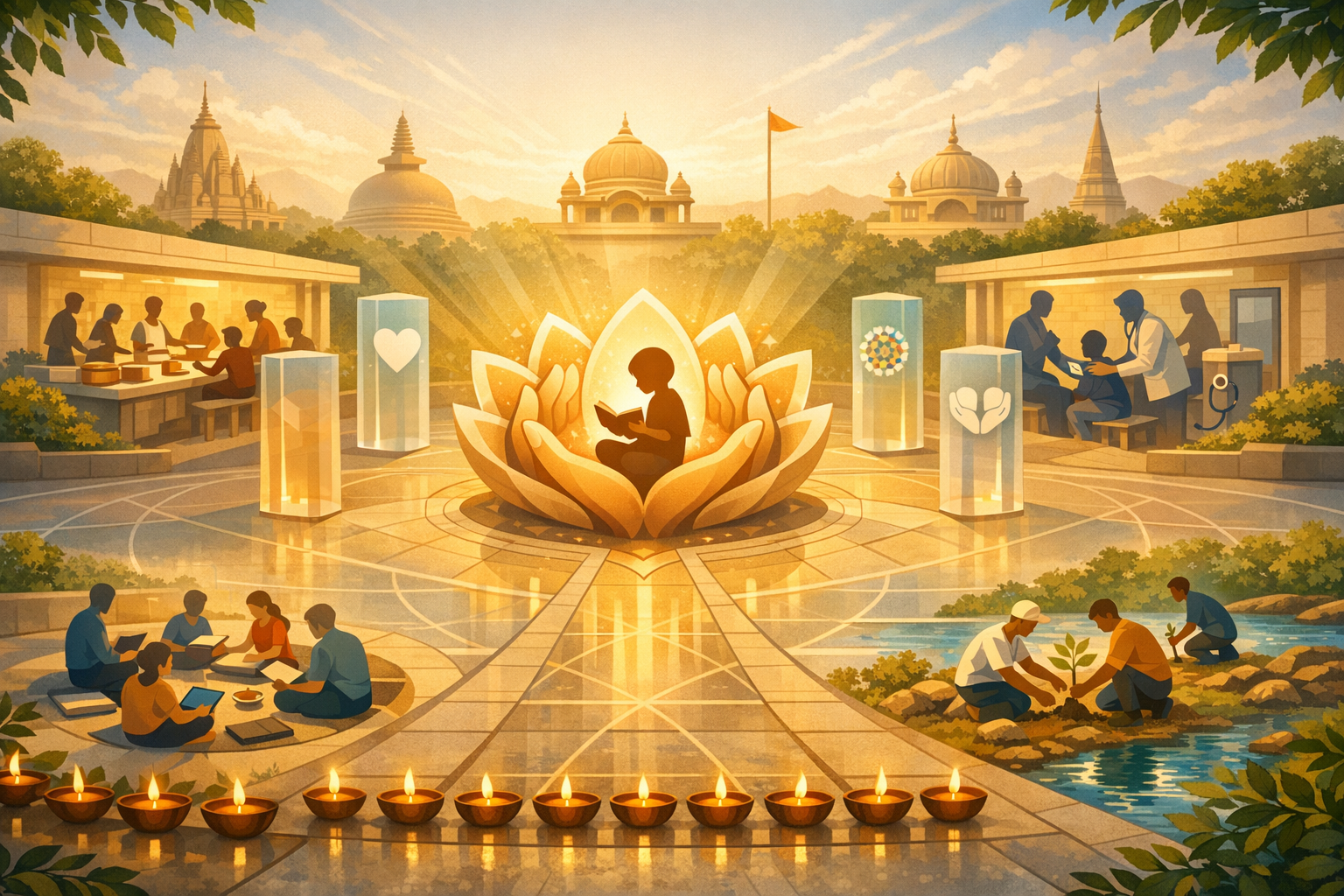
Religions increasingly overshadow the people they were meant to serve. This analysis proposes a Human-Centered Dharma Framework that realigns Hindu, Buddhist, Jain, and Sikh institutions with their ethical cores—Ahimsa, seva, Anekantavada, Ishta, and Vasudhaiva Kutumbakam. It outlines practical governance, service design, and transparency measures, including minimum service thresholds, Human Dignity Reports, and pluralist inclusion. The…
-
When Inventions Rule Their Makers: Dharmic Ethics to Reclaim Agency in a Tech Age

Humanity stands at a crossroads where powerful inventions often master their makers. Drawing on Hindu, Buddhist, Jain, and Sikh wisdom, this long-form analysis shows how Dharmic ethics can reorient technology from compulsion to stewardship. It translates core ideas like Dharma, Anekantavada, mindfulness, and seva into practical tools such as Karmic Impact Assessments, sattva-first interface design,…
-
Eternal Paradox of Being: Nothing Is Lost, Yet Everything Changes in Hindu-Dharmic Thought

This essay decodes the paradox “Nothing can be wiped out; but nothing remains same” through the lens of Hindu philosophy and the wider dharmic traditions. It shows how the Upanishads, the Bhagavad Gita, Advaita, Samkhya, Nyaya-Vaisheshika, Buddhism, Jainism, and Sikhism converge on a coherent view: being persists while forms transform. Readers gain clear definitions (sat,…
-
Breaking the Invisible Cage: Hindu Dharma on Renewal, Impermanence, and Dynamic Living

Modern routines can harden into an invisible cage, but Hindu Dharma treats life as ceaseless transformation rather than fixed habit. This essay explains why stagnation is a spiritual peril, using core ideas such as samskara, gunas (sattva–rajas–tamas), abhyasa–vairagya, and rita. It distinguishes lifeless routine from living rhythm, showing how nitya- and naimittika-karmas, pranayama, dhyana, and…
-
Moksha Beyond the Gunas: A Definitive, Scholarly Guide to Liberation and Dharmic Unity

Moksha in Hindu philosophy is best understood as freedom from the three gunas—sattva, rajas, and tamas—rather than the dominance of any one of them. This comprehensive guide explains how Sankhya, Vedanta, and Yoga converge on transcending material nature, while the Bhagavad Gita clarifies why even sattva can bind. It offers a clear synthesis of Jnana,…
-
When the Formless Takes Form: Skanda Purana on Parvati’s Awe‑Inspiring Union with Shiva
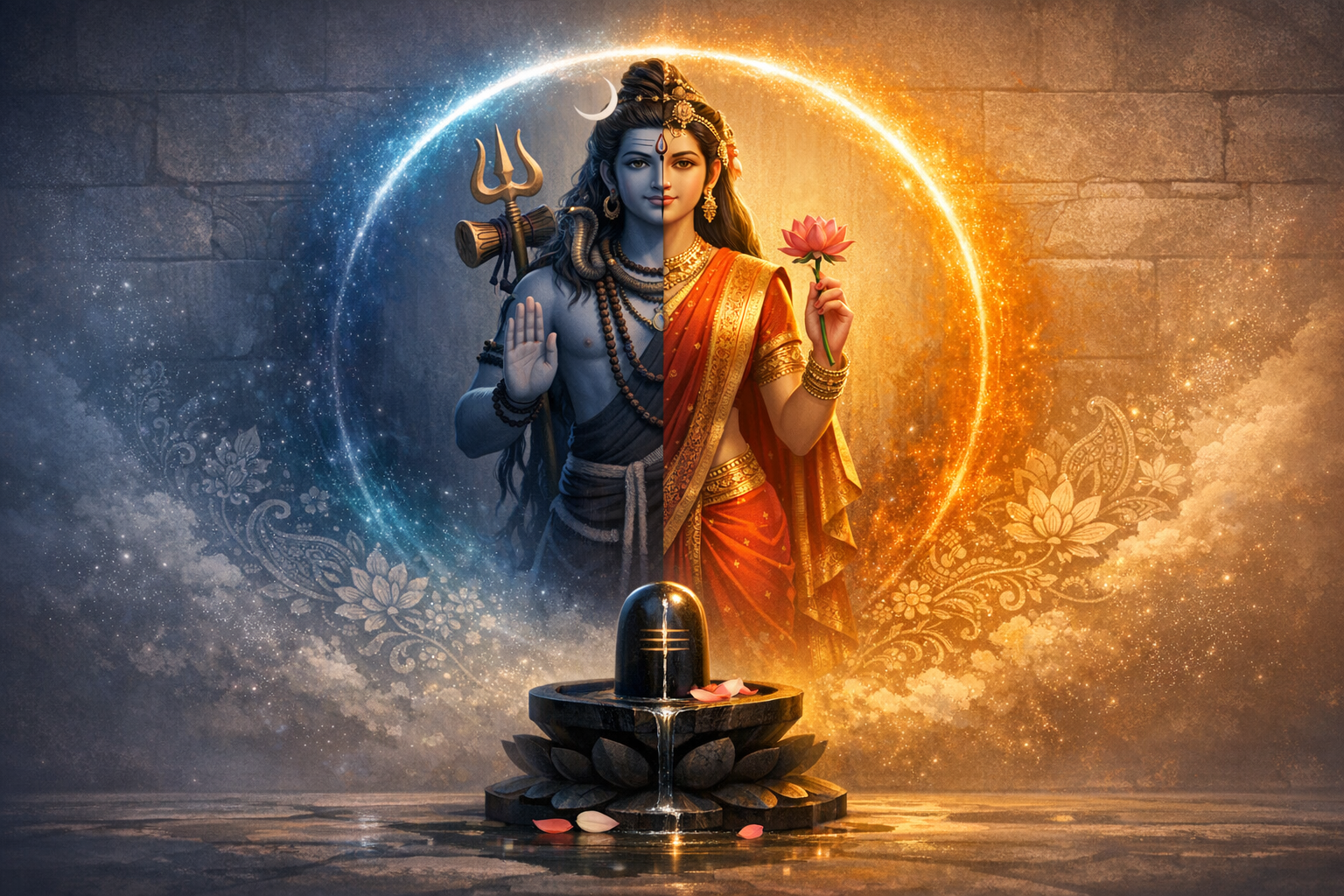
This in-depth exploration of the Skanda Purana’s teaching on Goddess Parvati and Lord Shiva presents their union as a precise account of how formless consciousness and living form are inseparably one. Readers will learn how the nirguna–saguna dialectic, familiar from the Upanishads, is rendered experiential through Shaiva iconography such as Ardhanarishvara, the Shivalinga, and Shiva…
-
Decoding the Trimurti and Time: Brahma, Vishnu, Shiva as One Timeless Consciousness
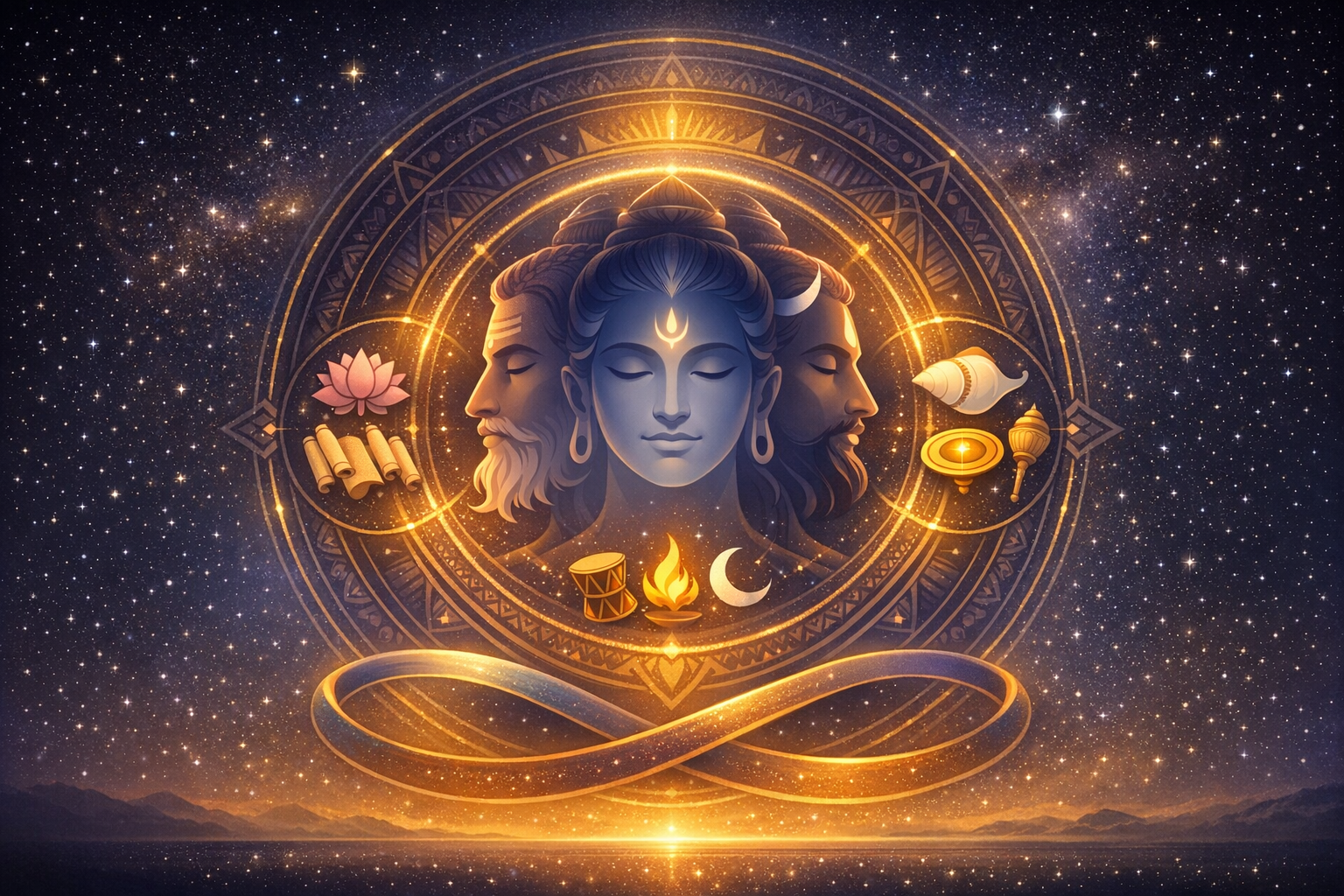
Hinduism affirms a formless, timeless Brahman while compassionately offering the Trimurti—Brahmā, Viṣṇu, and Śiva—as a contemplative lens on one consciousness performing creation, preservation, and dissolution. Grounded in Upanishadic and Vedic insights, this approach unites nirguṇa metaphysics with saguṇa devotion without contradiction. By situating the Trimurti within cyclical time (yugas, manvantaras, kalpas), the tradition frames change…
-
Beyond 24×7 Devotion: A Dharmic Guide to Spiritualizing Every Daily Action
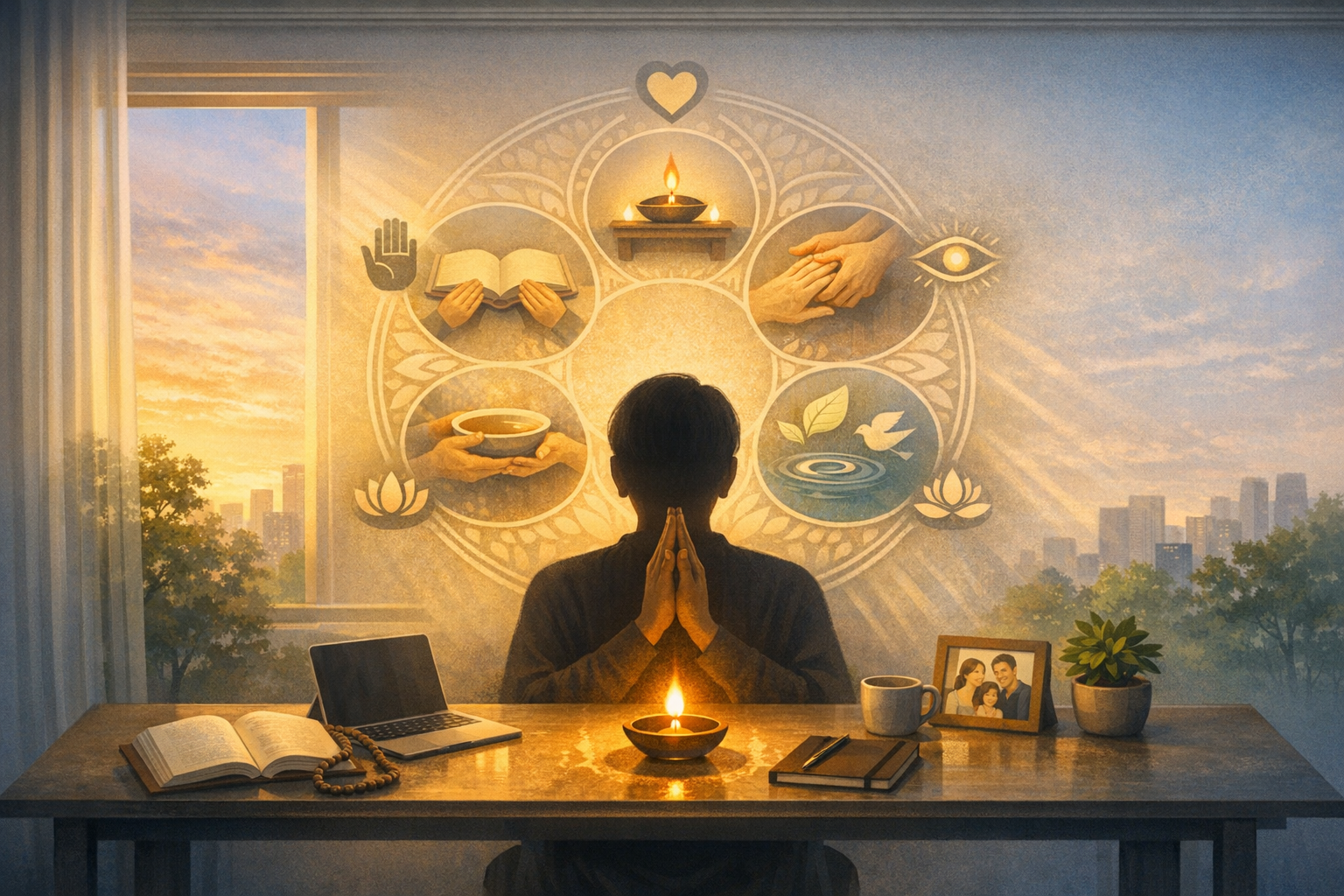
Many assume spirituality requires unbroken prayer or constant meditation. Dharmic traditions, led by the Hindu way of life, offer a more practical path: spiritualize each action through intention, ethics, and mindful presence. Grounded in the Bhagavad Gita’s teachings on Karma Yoga, īśvara-arpana-buddhi, and prasāda-buddhi, this approach consecrates work without withdrawing from responsibility. The Pañca-Mahā-Yajña translates…
-
Shattering the Illusion of Chains: Advaita Vedanta’s Guide to the Ever‑Free Self
Advaita Vedanta proposes a radical clarity: in ultimate truth there is neither bondage nor liberation; the Self (Atman) is ever-free, and only ignorance creates the sense of captivity. This article explains the logic of avidya and adhyasa, distinguishes empirical from absolute perspectives, and shows how moksha functions as recognition rather than attainment. Drawing on the…
-
Beyond the Senses: Unveiling Brahman and the Limits of Perception in Hindu Thought

This article explores why, in Hindu philosophy, ultimate reality (Brahman) cannot be captured by the senses or by conceptual thought, and how Vedanta uses shabda-pramana and Upanishadic teaching to reveal the Self. It clarifies the roles of pratyaksha, anumana, and shabda in Indian epistemology, showing why the senses are necessary yet insufficient. It integrates Advaita…
-
Nature Is Pure: Sacred Dharmic Ecology, Waste Ethics, and Human Responsibility in Hindu Thought
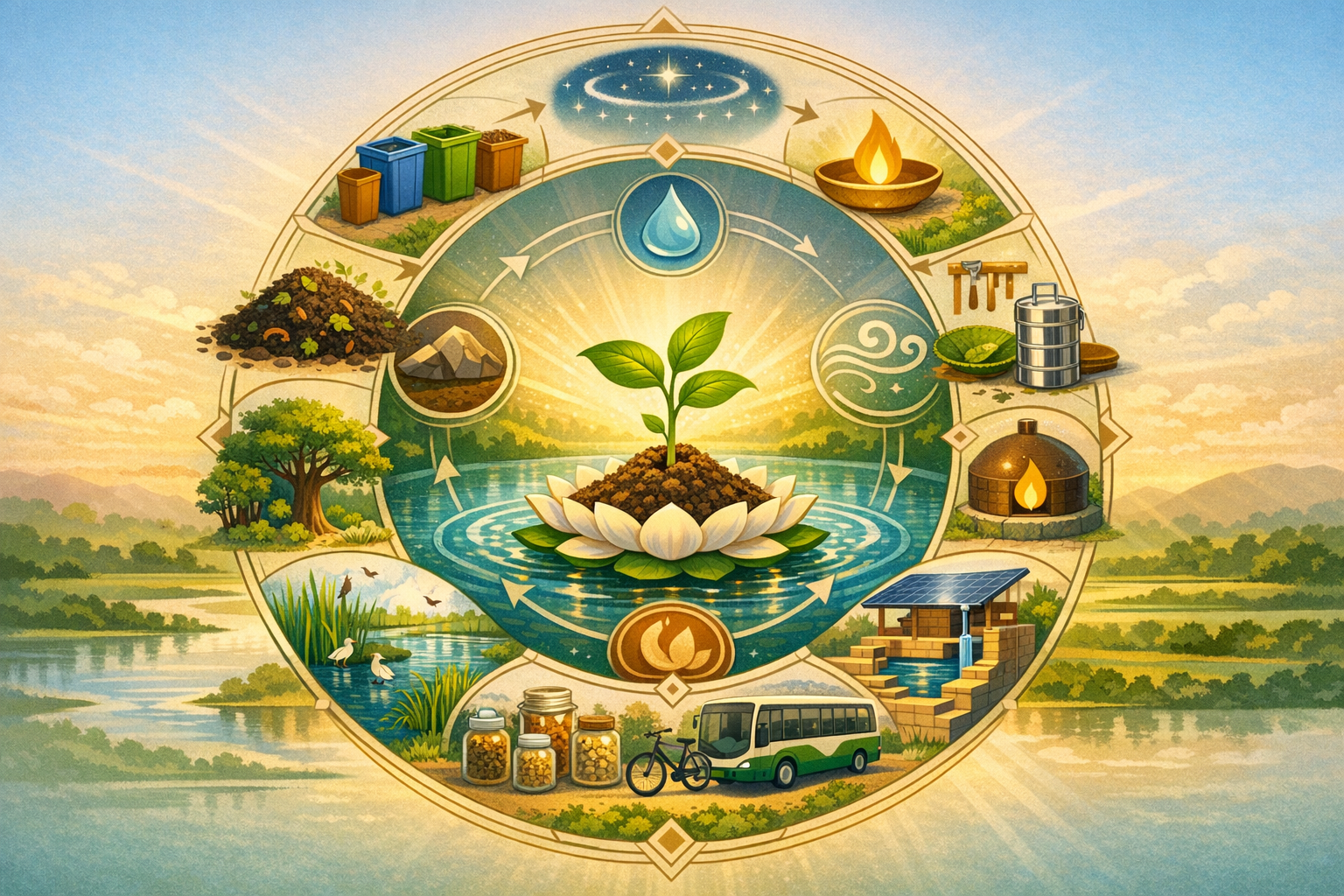
This article presents a rigorous Dharmic ecology framework: nature is inherently pure and self-regulating, while stagnation and filth arise when human systems block ecological flows. Drawing on Hindu philosophy (ṛta, pañca-mahābhūtas, śauca, aparigraha, ahimsa) and allied insights from Buddhism, Jainism, and Sikhism, it maps timeless ethics to contemporary tools like life cycle assessment, material flow…
-
Challenging the Divine: How Sacred Confrontation in Hinduism Ignites Profound Enlightenment
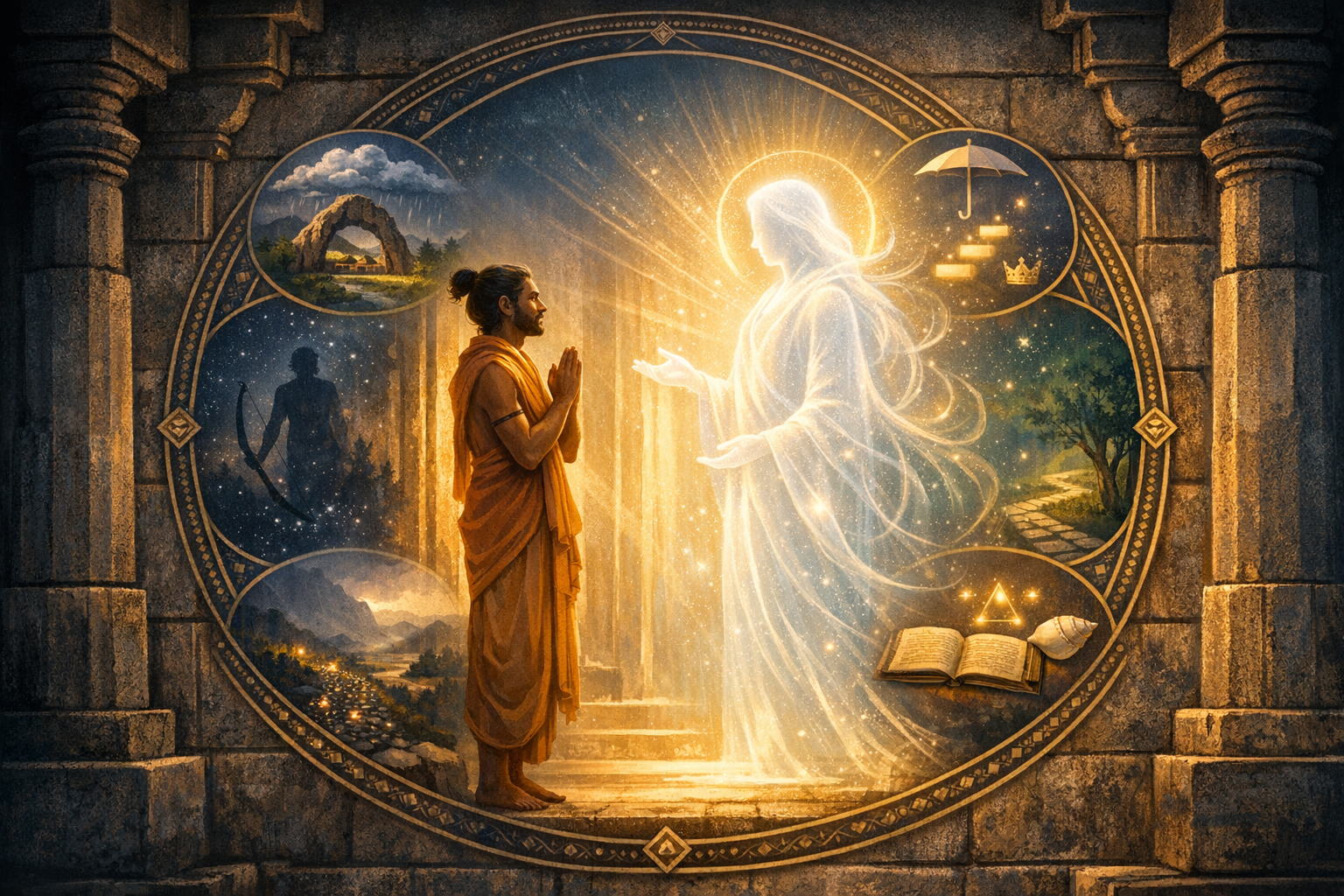
Hindu scriptures and the wider dharmic traditions advance a bold claim: authentic enlightenment often arises through disciplined questioning and even confrontation with the divine. Far from promoting irreverence, this dialogical method integrates reason, devotion, and lived experience to clarify dharma and realize moksha. Case studies from the Upanishads, the Bhagavad Gita, and the Mahabharata show…
-
Beyond Temples: Experiencing Vishnu’s All‑Pervading Presence in Nature, Mind, and Cosmos

This essay explores how Vaishnava scriptures and practice reveal Vishnu as all-pervading in elements, ecosystems, and consciousness, expanding devotion beyond temple walls. Drawing on the Upanishads, Bhagavad Gita, Pancharatra tradition, and living ritual, it outlines how daily acts—drinking water, mindful breath, lamp-lighting, and service—become universal worship. The discussion situates iconic and aniconic forms (including Śāligrāma)…
-
Shattering the Illusion of Ego: How Pride Sabotages Liberation across Dharmic Traditions
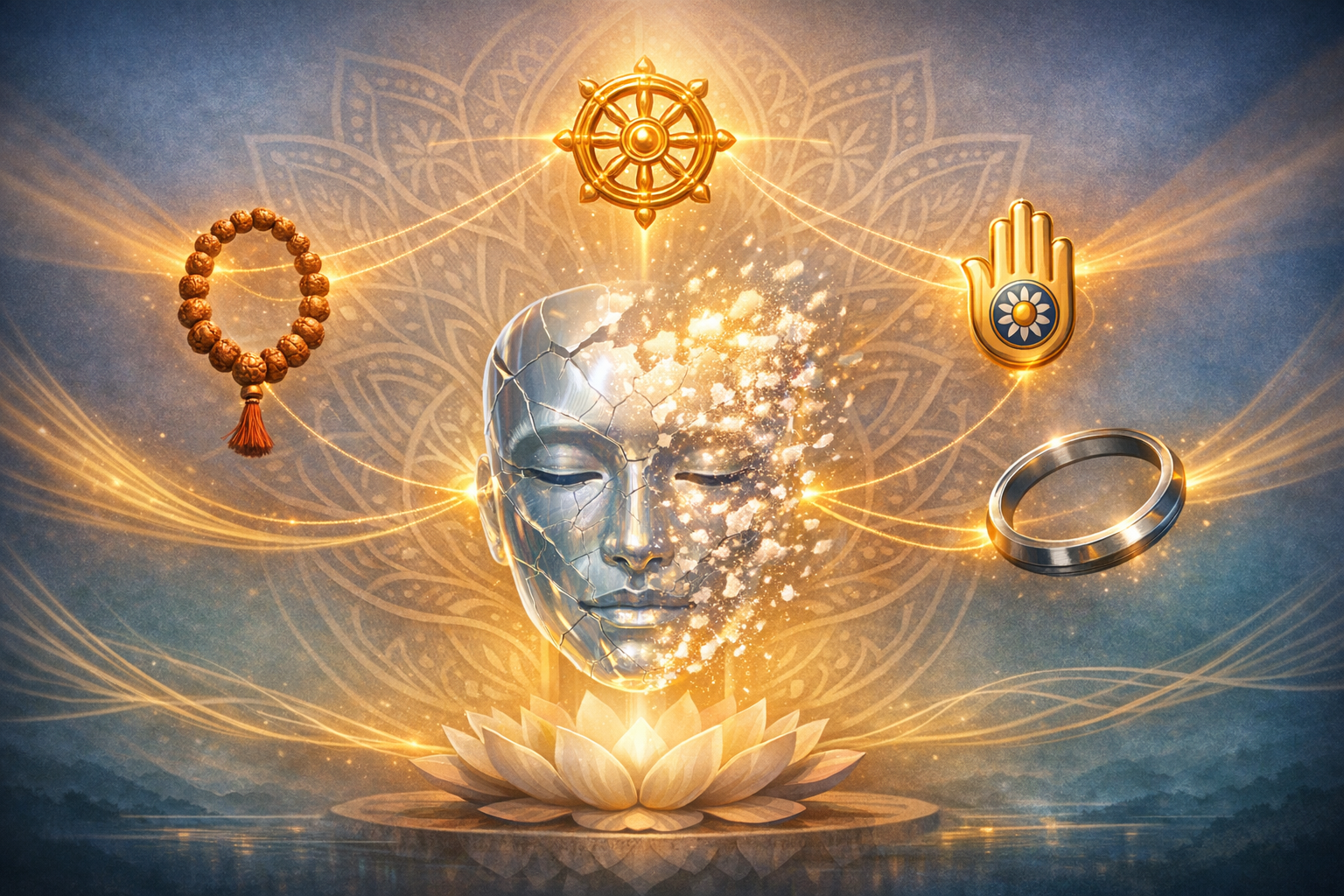
Pride—whether named ahamkara, asmita, mana, or haumai—emerges as a shared obstacle to liberation across Hinduism, Buddhism, Jainism, and Sikhism. This essay synthesizes scriptural anchors from the Bhagavad Gita, Upanishads, and Yoga Sutra with parallel insights from Buddhist, Jain, and Sikh teachings to show how egoic inflation thrives on the illusion of separation. Readers will gain…
-
Darshan as Divine Reciprocity: The Two-Way Vision that Transforms Hindu Worship and Life
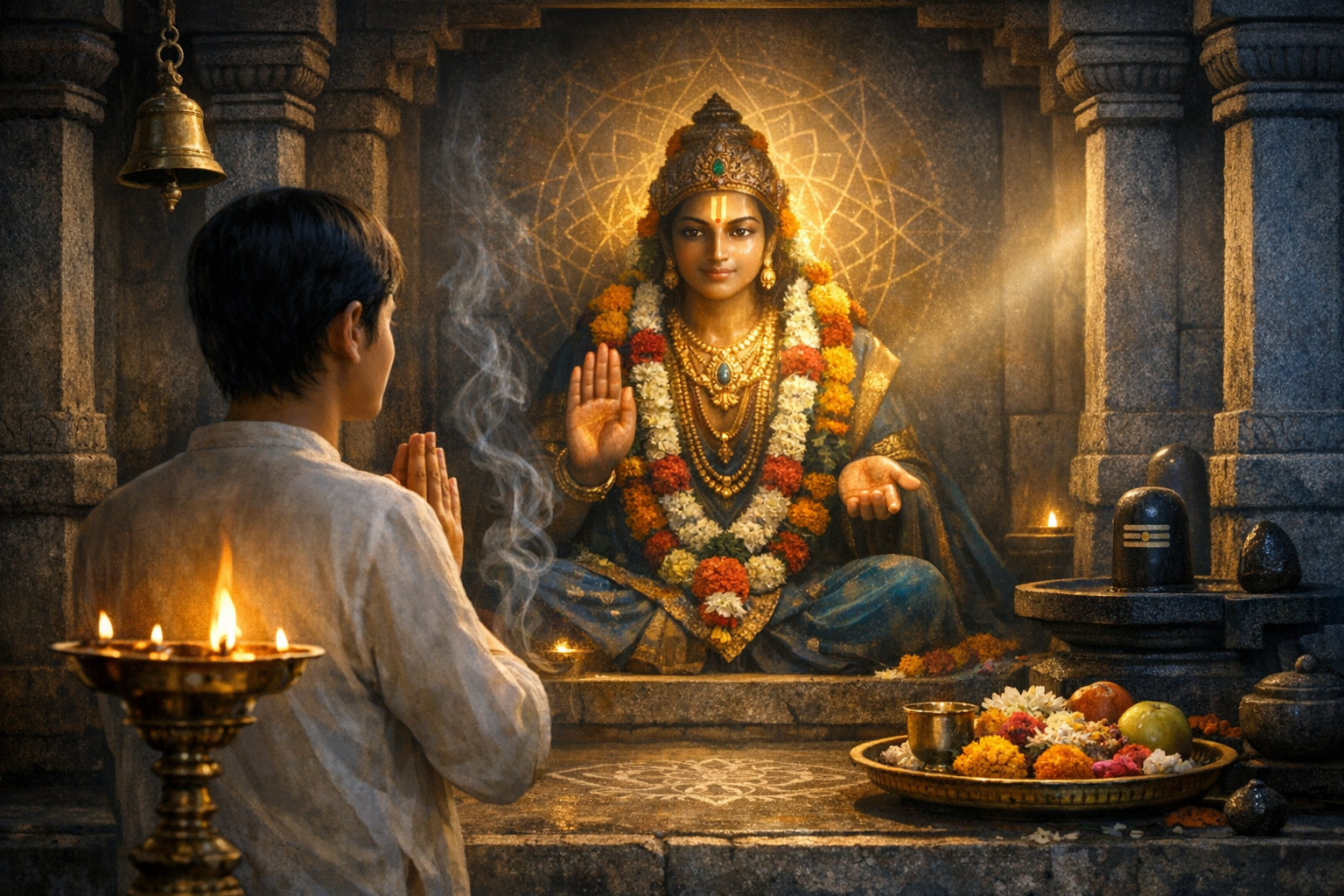
Darshan, derived from the Sanskrit root “drsh,” is presented as a two-way exchange: the devotee beholds the divine and is, in turn, beheld. The article explains how this reciprocity operates in Hindu ritual life through consecrated images, temple choreography, and the distribution of prasad as an embodied blessing. It engages classical Indian theories of perception…
-
Two Yet One: Advaita Vedanta’s Science of Oneness and a Dharmic Bridge across Traditions

The teaching ‘you and I are two persons; yet we are one’ expresses Advaita Vedanta’s core insight: empirical plurality and ultimate unity coexist without contradiction. This long-form exploration clarifies Brahman, Atman, and the roles of maya and avidya, situating ethics and devotion within a rigorous non-dual framework. Drawing on the Upanishads and the Bhagavad Gita,…
-
Dissolving Matter’s Mirage: Dharmic Wisdom on Returning to the Primordial, Nondual Source

This essay examines how dharmic traditions understand the illusion of materiality and the emergence of a primordial, nondual source through deep inquiry. Drawing on the Upanishads, Bhagavad Gita, Advaita Vedanta, and yogic practice, it explains the movement from gross to subtle via pañca-kośa and the triad of sthūla–sūkṣma–kāraṇa śarīra. It highlights complementary perspectives in Buddhism…