
-
Why Sanskrit Calls Humans “Nara”: Deep Origins, Dharma, and the Power of Karma
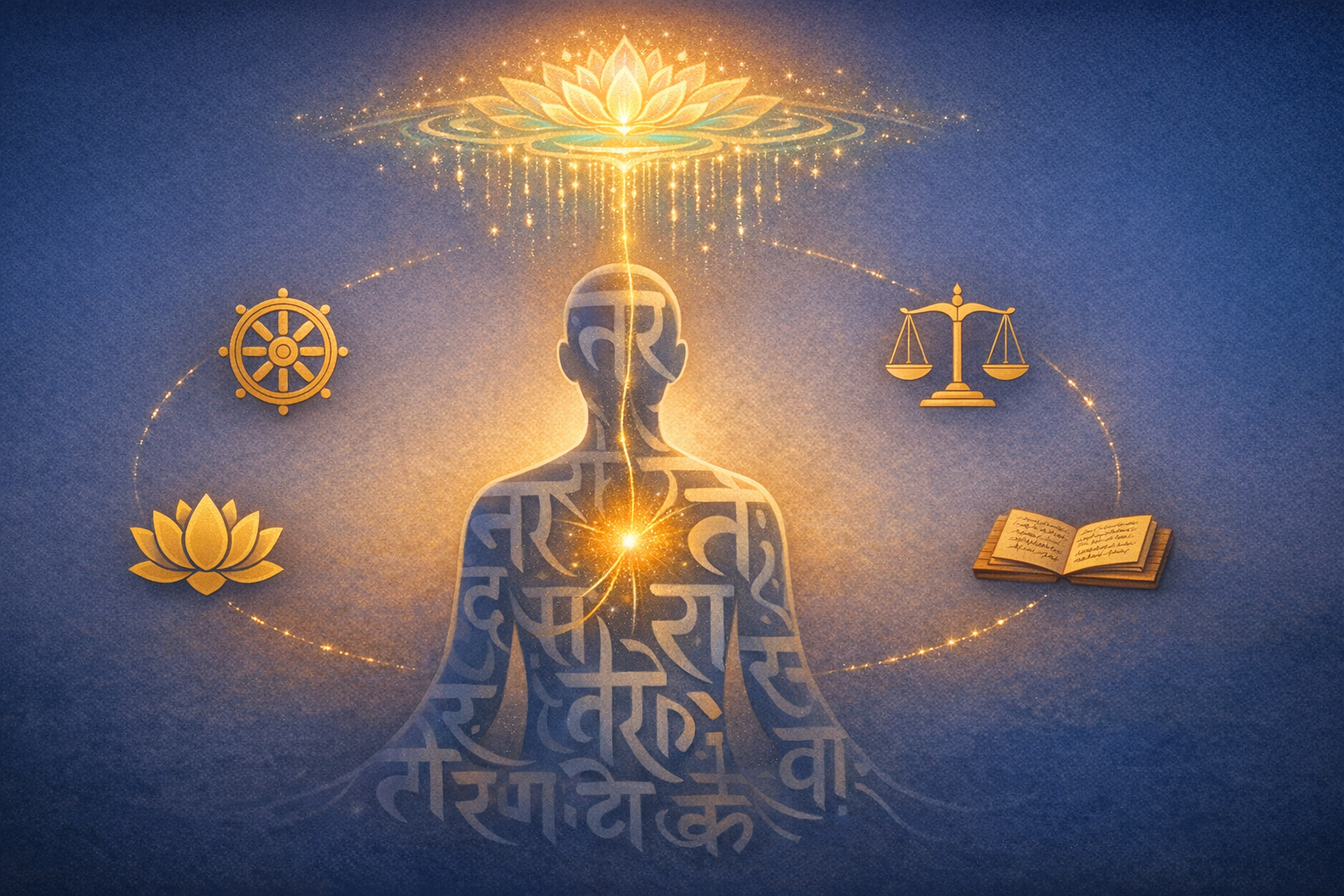
The Sanskrit term “nara” does more than denote a human being; it encodes a civilizational understanding of agency, ethics, and liberation. Its deep Indo-European etymology, rich scriptural presence, and philosophical nuance explain why Hinduism treats human life as uniquely suited to dharma and karma. Classical distinctions—sañcita, prārabdha, and kriyamāṇa karma—show how present choices reshape experience.…
-
Break Free from Fragmentation: Seeking the Whole in Vedanta and Dharmic Paths for Inner Peace

This article unpacks the insight that suffering arises from fragmentation and shows how Vedanta and the broader dharmic traditions offer a precise remedy by seeking the whole. It explains avidya through the Upanishads and the Bhagavad Gita, connects Yoga’s kleshas and eightfold discipline to integration, and brings in Buddhist, Jain, and Sikh perspectives that converge…
-
Overcoming Inner Battles in Meditation: Hindu-Yogic, Buddhist, Jain, Sikh Tools for Calm

Meditation across the dharmic traditions often collides with restlessness, distracting thoughts, emotional agitation, doubt, and subtle resistance. Drawing on the Yoga Sutras of Patanjali and the Bhagavad Gita—alongside Buddhist, Jain, and Sikh parallels—this piece delivers a technical, evidence-informed roadmap to stabilize dhyana. Readers learn how to diagnose obstacles (antaraya), regulate arousal with breath awareness and…
-
Menaka’s First Sashti Fast: Heartfelt Origin of Shukla Paksha Sashti in Bengal’s Durga Puja
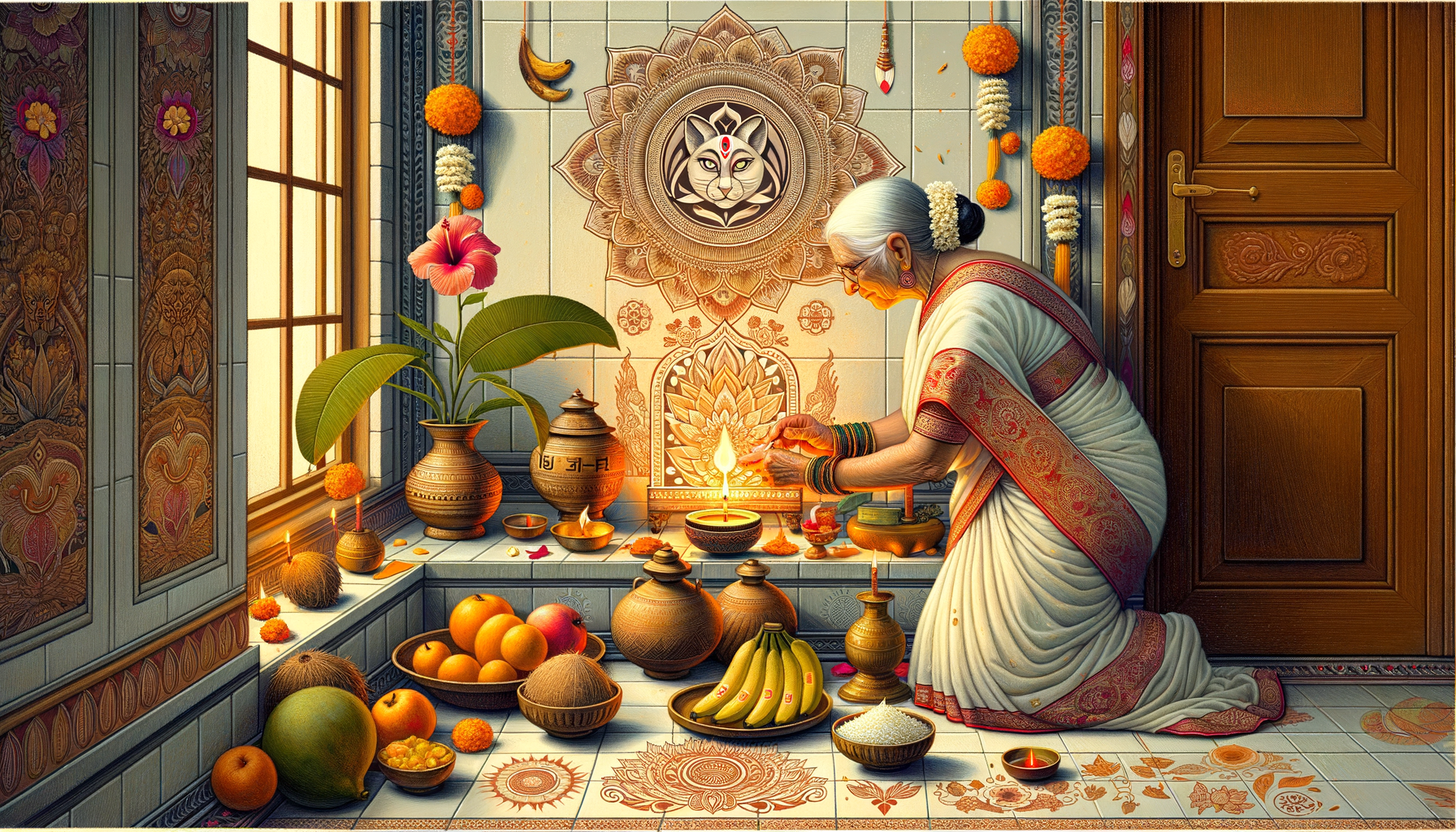
This article explains the origin and meaning of Sashti fasting in Bengal, a rite dedicated to Goddess Sashti, a manifestation of Goddess Durga. It recounts Parvati’s Ashwin homecoming to King Himavan’s abode with Ganesha and Kartik and remembers Mother Menaka as the first observer of the Sashti vrat. Readers learn when Shukla Paksha Sashti occurs…
-
Sacred Solitude in Kali Yuga: Hindu Wisdom to Turn Loneliness into Inner Strength

Kali Yuga’s turbulence often magnifies loneliness, yet Hindu wisdom reframes solitude as a disciplined practice for clarity and compassion. Drawing on the Bhagavad Gita, Yoga Sūtras, and Upanishadic thought, sacred solitude is shown to renew attention, emotional resilience, and ethical steadiness. Complementary insights from Buddhism, Jainism, and Sikhism highlight shared practices—mindfulness, kāyotsarga, and simran—that deepen…
-
Ganesha’s Sacred Sacrifice: How Parvati’s Creation and Shiva’s Gift Illuminate Transformation
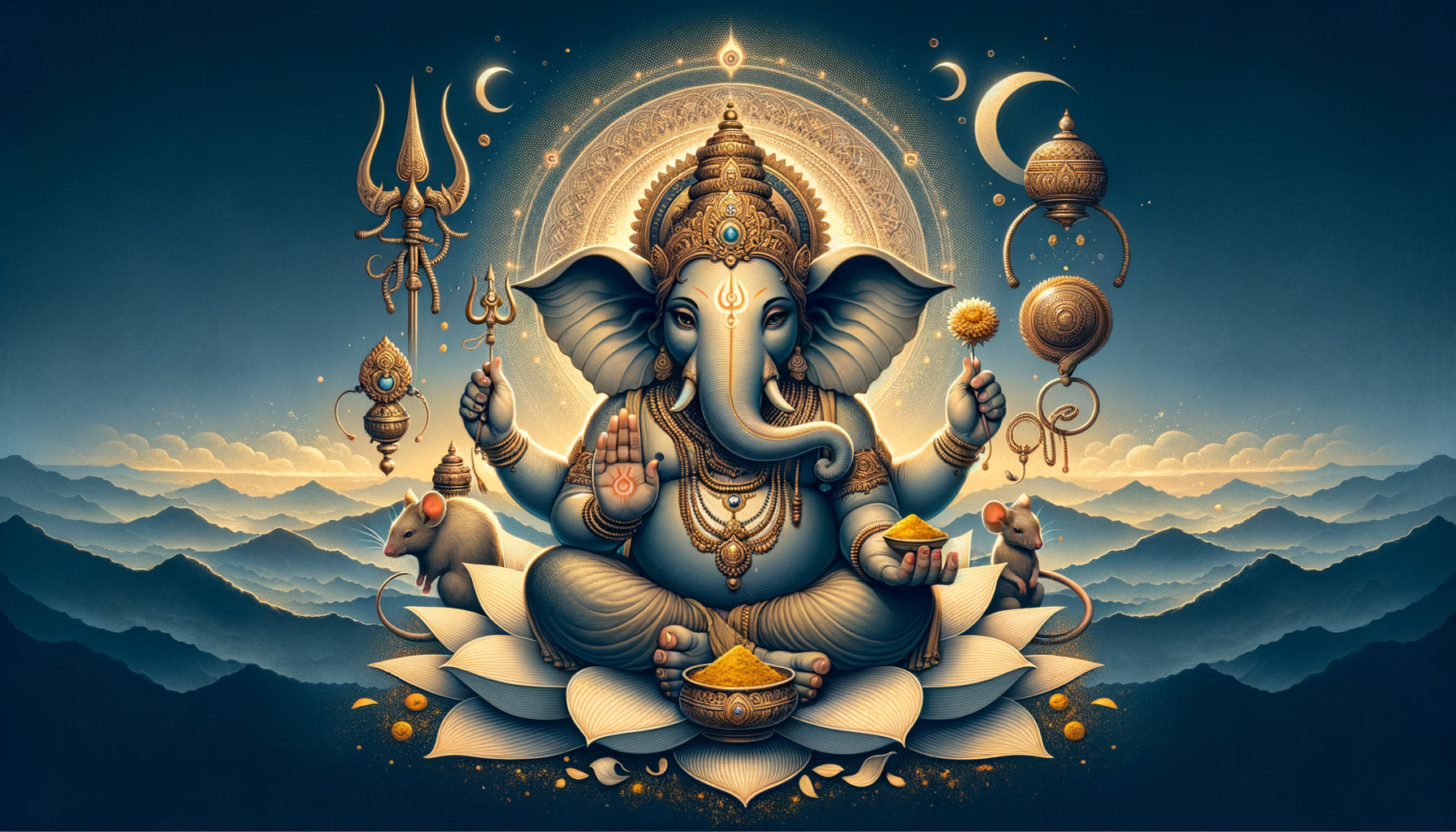
This essay explores the sacred symbolism of Ganesha’s birth, showing how sacrifice, dissolution, and rebirth illuminate a practical path of transformation. Readers learn how the beheading symbolizes the release of ego and the elephant head signifies the arrival of discerning wisdom. The analysis decodes Ganesha’s features—ears, eyes, trunk, belly, and single tusk—as teachings in focus,…
-
Shiva’s Third Eye and the Ashes of Desire: Profound Symbolism Behind Kamadeva’s Fall

Shiva’s incineration of Kamadeva is a profound Hindu symbol of transforming craving into clarity. The third eye represents the fire of insight (jñāna-agni) that burns compulsion to ash (vibhūti) without rejecting love or life. Variations across Puranic and poetic retellings agree on a core teaching: desire is refined, not denied. The story models how tapas,…
-
Mannarasala Nagaraja: Parashurama’s Penance and the Serpent King Who Made Kerala Bloom

Mannarasala Nagaraja Temple in Kerala is revered as the sacred grove where Parashurama’s penance and the serpent king’s grace transformed reclaimed coast into fertile land. Rooted in Treta Yuga tradition, the shrine venerates Sree Nagaraja and Sarpayakshi amid thousands of serpent stones. The Ayilyam festival in Kanni draws devotees seeking blessings for fertility, health, and…
-
Symbolism of Durga’s Axe and Armor: Timeless Emblems of Courage, Protection, and Dharma

Goddess Durga’s axe (Kuthar or Parashu) and armor (Barm or Kavach) are profound symbols of ethical strength in Hinduism. The axe represents decisive wisdom that cuts through ignorance and adharma, while the armor reflects protective grace sustained by discipline and devotion. Referenced in texts like the Devi Mahatmyam (Durga Saptashati) and the Devi Kavacham, these…
-
Sacred Sound at Life’s Threshold: The Transformative Power of Om for Conscious Departure

This essay explores why chanting Om at the end of life is revered in Hinduism and how it supports a conscious, peaceful departure. Drawing on the Bhagavad Gita and the Upanishads, it explains Om as a symbol of total consciousness and a practical aid for liberation (moksha). It highlights how regular mantra-japa, meditation, and pranayama…
-
Agni’s Gift to Durga: The Sacred Spear of Shakti and the Transformative Fire of Wisdom

Agni’s gift of the spear (Borsha) to Goddess Durga, as narrated in the Devi Mahatmya, signifies the union of righteous strength with purifying wisdom. The spear’s straight shaft symbolizes disciplined focus, and its tip stands for discriminative insight that pierces ignorance. Ritual experiences—from āratī to Navaratri celebrations—invite practitioners to internalize this clarity in ethical action.…
-
Four Yugas, Four Marvelous Cities: Vishwakarma’s Vision and the Elusive Quest for Peace

Hinduism’s narratives of Vishwakarma’s four cities across the Four Yugas reveal a striking truth: celestial architecture cannot guarantee inner peace. Set within the cyclical moral texture of Satya, Treta, Dvapara, and Kali, these cities reflect the era’s ethics more than their own splendor. The Puranas and related ancient texts show that sacred geometry and urban…
-
Why Shiva Gave His Golden Palace to Ravana—Timeless Lessons on Detachment and Karma

This exploration of Shiva gifting a golden palace to Ravana distills a powerful lesson in detachment, karma, and dharma. Drawing on Puranic variations, it shows how Shiva’s non-attachment contrasts with Ravana’s intensifying desire, turning a boon into a test of character. The analysis connects seamlessly with Buddhist insights on clinging, Jain aparigraha, and Sikh cautions…
-
Panchmukhi Vishwakarma: Awe-Inspiring Five-Faced Icon of Craft, Cosmos, and Dharma

Panchmukhi (five-faced) Vishwakarma, preserved in parts of Bengal and South India, presents a compelling symbol of complete, ethical craftsmanship within Hindu iconography. The five faces evoke integrated creativity across elements, directions, and disciplines, aligning skill with dharma. This tradition affirms the dignity of labor, guiding artisans, engineers, and students to treat tools as instruments of…
-
Lotus of Wisdom in Durga’s Hand: Padma, Shakti, and the Defeat of Mahishasura
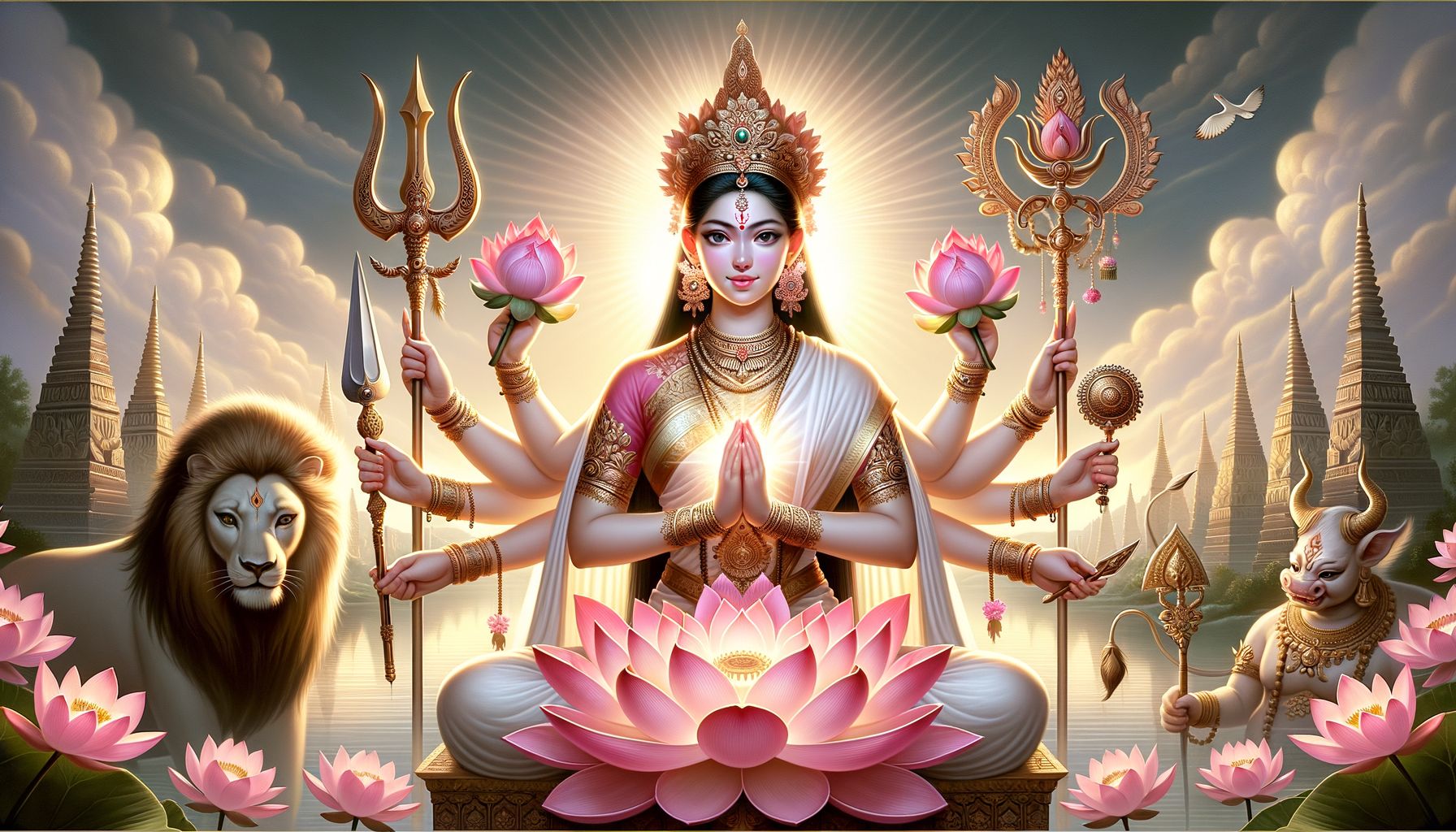
Goddess Durga’s Padma (lotus) in the Devi Mahatmya is more than ornament—it is a compass of consciousness guiding Shakti’s righteous action against Mahishasura. The lotus’s rise from mud to light illustrates clarity amidst chaos and courage tempered by wisdom. Across Hinduism, Buddhism, Jainism, and Sikhism, the shared lotus motif promotes unity, detachment, and compassionate awareness.…
-
Why 108 Lotus Flowers for Goddess Durga? Powerful Bengali Legends of Sandhi Puja

During Durga Puja’s Sandhi Puja, the offering of 108 lotus flowers to Goddess Durga carries both ritual precision and profound symbolism. Two renowned Bengali legends explain this practice: one commemorates 108 wounds sustained by the Goddess in her battle with asuras, and the other narrates Śrī Rāma’s Akal Bodhan, where his resolve to offer his…
-
Beyond Gold and Fortune: How Goddess Lakshmi Cultivates Inner Peace and Lasting Prosperity
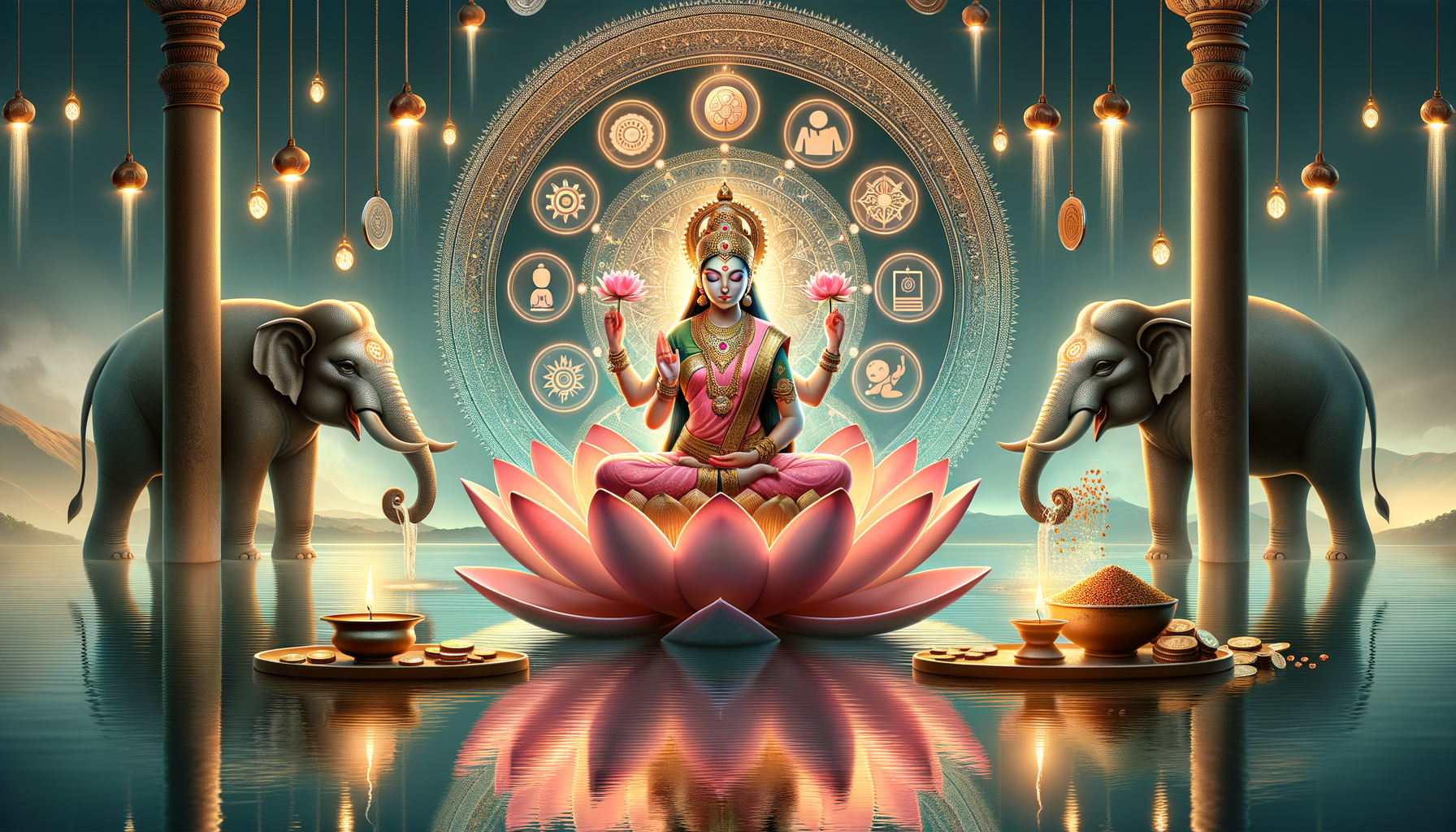
Goddess Lakshmi in Hinduism signifies far more than financial gain. Traditional imagery and the Ashta Lakshmi forms reveal a complete vision of prosperity that unites outer wealth with inner qualities like compassion, courage, and wisdom. Aligning artha with dharma transforms money into responsible stewardship that benefits families and communities. This integrated approach resonates across Buddhism,…
-
Neelkanth in the Ramayana: Shiva’s Blessing and Rama’s Triumphant Victory over Ravana

The Neelkanth (Indian Roller) is cherished in Hindu tradition as an auspicious sign linked to Shiva’s protective grace and the Ramayana’s climactic victory of Lord Rama over Ravana. While the Valmiki text does not explicitly mention the bird in battle, oral traditions and temple lore interpret the Neelkanth’s appearance as a divine omen affirming dharma.…
-
Karma Yoga Made Practical: Serve with Compassion, Protect Your Sanity and Resources

Karma Yoga offers a practical path to inner purification through selfless service performed with discernment. Acting without attachment to outcomes builds equanimity while ensuring help remains effective and sustainable. Clear boundaries, realistic budgets, and due diligence protect mental calm and financial stability, preventing burnout and enabling long-term impact. Across dharmic traditions, wise compassion is a…
-
Nine Sacred Powers of Goddess Lakshmi: A Profound Guide to Prosperity and Inner Grace
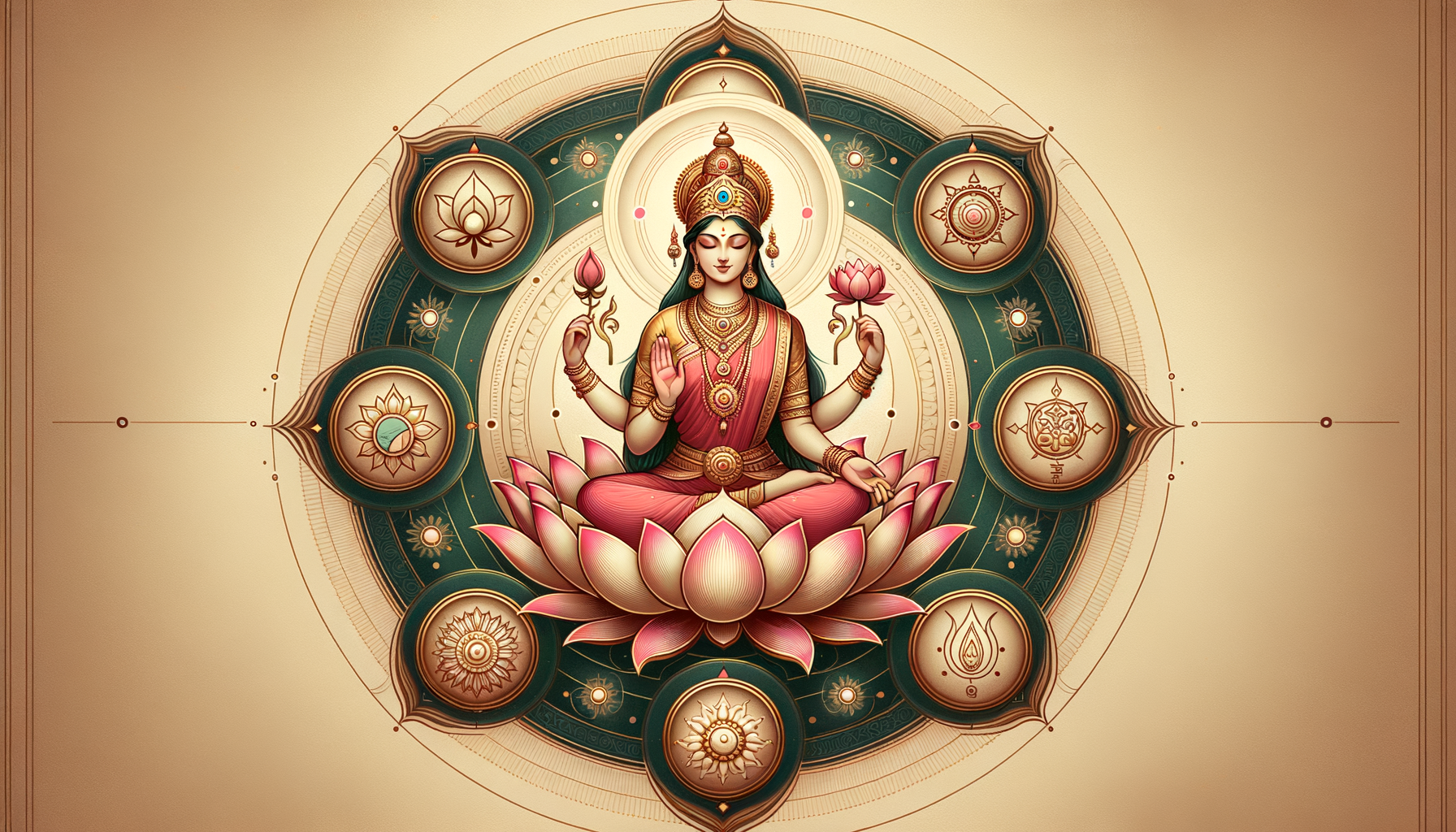
Goddess Lakshmi is revered not only as the deity of prosperity but as the source of nine sacred powers that integrate material abundance with inner grace. This guide presents a concise, academically grounded overview of a widely referenced enumeration—the Ashta Lakshmi plus Aishwarya Lakshmi—while honoring regional and textual diversity. Each manifestation illuminates a virtue: from…