
-
Manas and Buddhi Explained: Harness the Two Minds for Clarity, Calm, and Wise Action

Manas and Buddhi describe two complementary functions of the mind in Hinduism: Manas gathers sensory impressions and emotions, while Buddhi provides discriminative clarity and ethical direction. The Bhagavad Gita (3.42) places Buddhi above Manas and both beneath the Self, offering a practical inner hierarchy for wise action. This model resonates across Buddhism, Jainism, and Sikhism,…
-
Mahat Parinama Explained: Unfolding Timeless Cosmic Intelligence in Dharmic Philosophy
Mahat Parinamaunderstood as the unfolding of cosmic intelligenceconnects Sāṅkhya’s evolution of mahat with Vaisheshika’s precise account of categories and causation. This synthesis clarifies how consciousness becomes mind and world, and why disciplined observation and ethical practice stabilize insight. Read alongside Buddhism’s dependent origination, Jainism’s doctrine of modification, and Sikhism’s Hukam, it affirms unity in spiritual…
-
Honoring Sri Ramanujacharya: Disappearance Day, Vishishtadvaita, and Living Bhakti
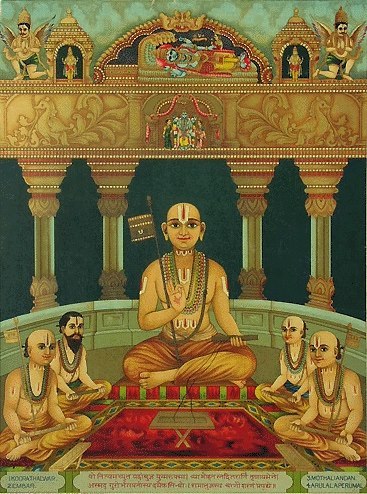
The Disappearance Day of Sri Ramanujacharya honors a towering acharya of the Sri sampradaya whose Vedantic commentary, Sri-bhasya, shaped Vishishtadvaita“qualified nondualism.” This perspective affirms unity with meaningful distinction, strengthening a personal relationship with the divine and grounding Bhakti in reason, ethics, and service. His wide travels, debates, and institution-buildingseventy-four centers and thousands of initiated disciplesnurtured…
-
Karma Yoga Made Practical: Serve with Compassion, Protect Your Sanity and Resources

Karma Yoga offers a practical path to inner purification through selfless service performed with discernment. Acting without attachment to outcomes builds equanimity while ensuring help remains effective and sustainable. Clear boundaries, realistic budgets, and due diligence protect mental calm and financial stability, preventing burnout and enabling long-term impact. Across dharmic traditions, wise compassion is a…
-
Karmashaya Demystified: Uncovering the Hidden Storehouse of Karma in Patanjali’s Yoga

KarmashayaPatanjali’s term for the subtle storehouse of karmaexplains how actions leave impressions (samskaras) that condition future experience. Grounded in the Yoga Sutras (2.12), it links klesha-driven actions to both present and unforeseen outcomes, clarifying the mechanics of reactive patterns. Read together with the threefold classification of karma (sanchita, prarabdha, agami), karmashaya functions as a dynamic…
-
Why Everything Happens for a Reason: Hinduism’s Profound Lens on Karma, Dharma, and Cosmic Play

This essay explains how Hindu philosophy gives depth to the idea that everything happens for a reason by integrating karma (ethical causality), dharma (righteous duty), and lila (divine play). It shows how these concepts preserve agency without fatalism, balancing responsibility and openness to mystery. Readers gain practical ways to apply this frameworkdiscernment, svadharma, seva, meditation,…
-
Moha and the Veil of Tamas: Understanding Delusion Across Dharmic Traditions

Moha, in Hindu philosophy, is a state of delusion tied to tamas, the guna of inertia and darkness, that obscures discernment and fosters ignorance or false knowledge. It narrows perception, encourages attachment to assumptions, and turns reactivity into a substitute for reflection. Within the framework of the gunas, rajas can intensify confusion, while sattva restores…
-
Karmavipaka Explained: How Karma Ripens Across Dharmic Paths and Shapes Destiny

Karmavipaka (कर्मविपाक) explains how actions ripen into lived experience within Hindu philosophy. Grounded in the Sanskrit kri, meaning “to do,” it frames karma as lawful causality rather than external reward or punishment. The threefold classificationsanchita, prarabdha, and kriyamanaclarifies how past, present, and future actions interrelate. Far from fatalism, Karmavipaka emphasizes purushartha (effort), ethical choices, and…
-
Family Anchors Every Bond: Dharmic (Hindu, Buddhist, Jain, Sikh) Wisdom for Everyday Harmony

This reflection presents a Dharmic perspective on why family anchors every relationship beyond the home. It explains how the Hindu family system, supported by Buddhist, Jain, and Sikh insights, cultivates virtues such as ahimsa, seva, and satya through daily practices and samskaras. The piece highlights how household skillsmindful speech, patience, and fair decision-makingscale into healthier…
-
Paramapurushartha Explained: The Supreme Human Goal in Hindu Thought for Inner Freedom

Paramapurushartha signifies the supreme human goal in Hindu philosophy, situating moksha as the culmination of life’s aims while harmonizing dharma, artha, and kama. It offers a practical framework for meaning, guiding ethical prosperity and refined enjoyment toward inner freedom. Drawing on the Upanishads, Bhagavad Gita, and Yoga, it aligns with parallel ideals across Dharmic traditionsnirvana…
-
Fearlessness and Detachment in Hinduism: Powerful Practices for Inner Freedom and Growth

Fearlessness (abhaya) and detachment (vairagya) are central to Hindu philosophy, shaping a confident, ethical, and compassionate way of life. Fearlessness stabilizes decision-making under uncertainty, while detachment clarifies judgment by releasing attachment to outcomes. Practical disciplinesYoga, meditation, pranayama, japa, svadhyaya, and sevahelp integrate these virtues into daily interactions at home, work, and online. The approach strengthens…
-
Hamsa Kshira Nyaya: Vedic Wisdom on Discernment for Unity Across Dharmic Paths

“Hamsa Kshira Nyaya” conveys a Vedic principle of discerning the essential from the incidental, symbolized by the hamsa separating milk from water. Rooted in Hindu philosophy and evoked in the Shukla Yajur Veda (19.73), it becomes a practical guide to vivekaclear discrimination grounded in dharma. The teaching resonates across dharmic traditions: Buddhism’s prajñā, Jainism’s viveka…
-
Manana in Vedanta: Harnessing Constant Reflection to Realize Atman–Brahman Unity

“Manana” in Vedanta means disciplined, constant reflection that converts scriptural listening into firm understanding. As the second step in the sadhana trayafollowing “sravana” and preceding “nididhyasana”it resolves doubts through reasoned contemplation. This practice deepens clarity about the unity of Atman and Brahman and anchors insight in everyday conduct. Structured routines, journaling, and guidance from a…
-
Timeless Wisdom of Srila Bhaktisiddhanta: Humility, Kirtana, and Radha–Krishna Bhakti

This essay distills Srila Bhaktisiddhanta Sarasvati Thakura’s insights on Radha–Krishna bhakti, humility, and the centrality of asraya (spiritual shelter). It explains why worship framed by Sri Radhika’s role refines devotion and protects against ego-centric religiosity. The discussion presents kirtana and hari-katha as practical means of rest and orientation, echoing Sri Caitanyadeva’s kirtaniyah sada harih. It…
-
Shiva–Parvati as Yin–Yang Archetypes: A Timeless Guide to Balance, Unity, and Grace

Shiva and Goddess Parvati embody a powerful archetype of complementary balance in Eastern philosophy, comparable to yin and yang. Their union models non-duality: awareness and energy co-arise to sustain harmony. The same insight appears across dharmic traditionsBuddhism’s Middle Way, Jainism’s Anekantavada, and Sikhism’s integration of temporal and spiritual lifeaffirming unity in spiritual diversity. Readers gain…
-
Nyaya Amrita by Vyasatirtha: Timeless Logic in a Brilliant Defense of Dvaita Vedanta

Nyaya Amrita by Vyasatirtha (Vyasaraya) is a masterwork of Hindu philosophy and a powerful defense of Dvaita Vedanta. Structured in four chapters, it unites rigorous logic with devotional insight, offering clear methods for analyzing reality, knowledge, and liberation. The text’s dialectical clarity advanced Vedanta debates while modeling respectful engagement across traditions. Readers gain tools for…
-
Understanding Karma’s Three Natures in Hinduism: Good, Mixed, and Dark for Ethical Living
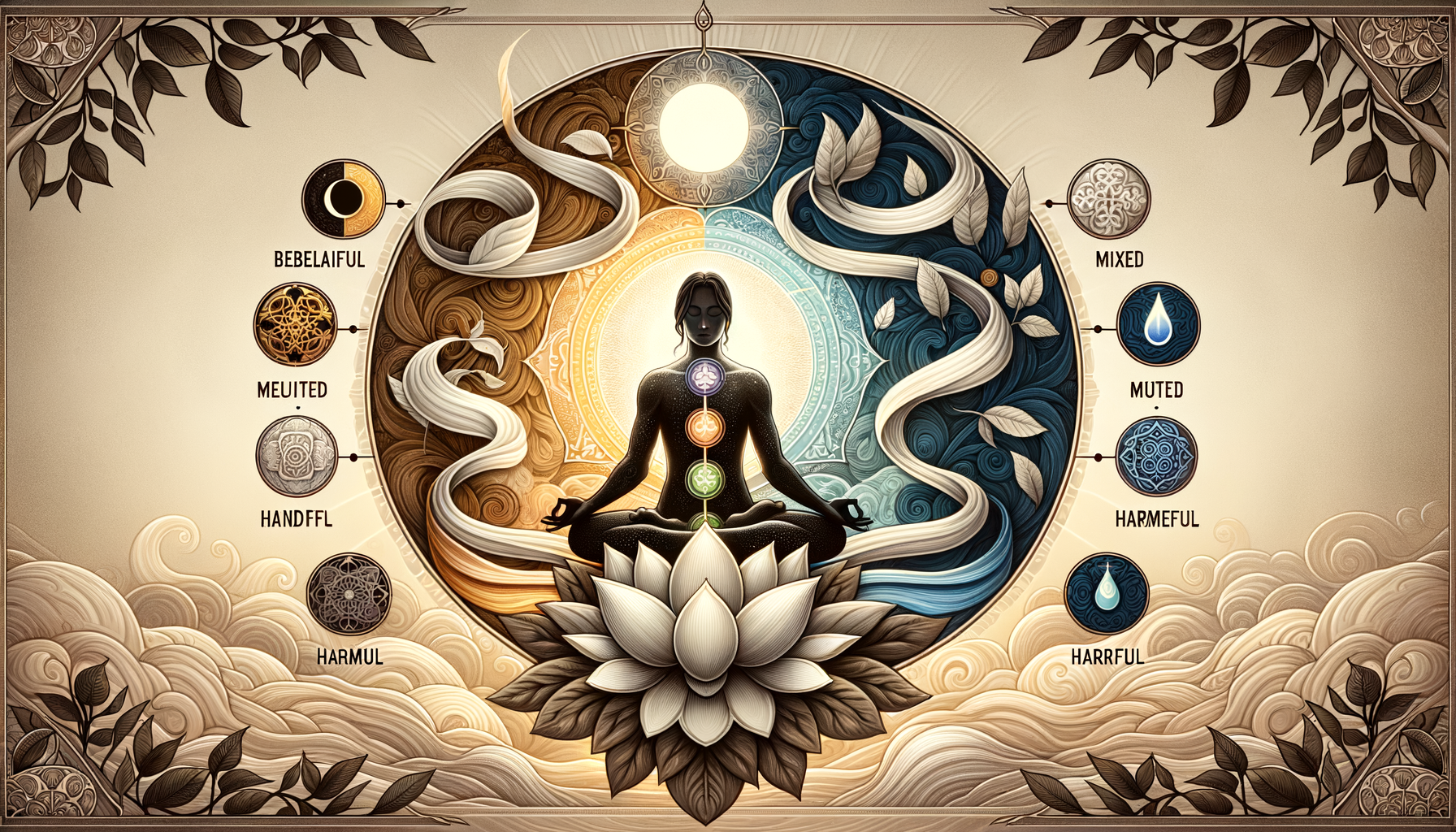
Karma in Hindu philosophy links intention, action, and consequence, shaping ethical character and spiritual progress. A clear triadśukla (good), śukla–kṛṣṇa (mixed), and kṛṣṇa (dark)explains why motives matter as much as deeds. Drawing on the Yoga Sūtra (4.7) and the Bhagavad Gita, this guide shows how Karma Yoga and mindful discernment reduce mixed motives and prevent…
-
Sacred Yet Transient: How Hindu Philosophy Illuminates the Soul’s Journey and the Body’s Role

Hindu philosophy presents the body as a sacred yet impermanent vessel for the eternal Atman, a view memorably expressed in Bhagavad Gita 2:22. Understanding this distinction encourages reverence for embodied life while cultivating non-attachment. The model of sthula, sukshma, and Karana Sharira explains experience across physical, mental, and karmic layers, clarifying why ethical action matters.…
-
Karana Sharira, Unlocked: How the Causal Body Shapes Karmaand the Path to Freedom

This article explains Karana Sharirathe causal body in Vedantaand shows how it seeds the gross and subtle bodies while storing vasanas and karmic tendencies. Readers gain a clear map of the tri-sharira model, its relation to the Panchakosha framework, and its role in deep sleep (sushupti). The piece clarifies why Karana Sharira is an upadhi…
-
From Flow to Stagnation: Hindu Wisdom on Renewal, Dharma, and Spiritual Pluralism

Hindu and broader dharmic teachings warn that movements stagnate when they harden into inflexible forms; vitality depends on flow. This piece explains how Dharma functions as a living, adaptive guide rather than a fixed code. It highlights pluralism in Hindu philosophythrough multiple mārgas and the Ishta conceptas a safeguard against decay. Parallels from Buddhism, Jainism,…