
-
Bhima vs. the Elephant Legion: Epic Power, Strategy, and Dharma in the Kurukshetra War

This study examines Bhima’s encounters with the Kaurava elephant corps in the Mahabharata’s Kurukshetra War, integrating military history, scriptural exegesis, and symbolism. Readers gain a precise view of how a gaja-vyuha functioned, why elephants were both decisive and dangerous, and how Bhima’s gada-work exemplified targeted counters to heavy shock units. The ethically fraught Ashvatthama episode…
-
Myth-Busting the ‘Traitor’ Label: Vibhishana’s Dharma-First Loyalty in the Ramayana

This analysis challenges the popular notion of Vibhishana as a betrayer and demonstrates, with reference to Ramayana ethics, that his alignment with dharma over family partisanship constitutes exemplary loyalty. It explains how Rajadharma and Sharanagati frame his choice as morally necessary rather than opportunistic. By contrasting Vibhishana with Kumbhakarna and drawing on Dharmashastra principles, it…
-
Divine Birth of the Vanaras: Devas Forge Rama’s Celestial Warriors for Dharma-Yuddha

This in-depth exploration of the Ramayana’s Vanara creation explains why Brahma commanded the devas to generate heroic allies for Sri Rama and how this act upheld dharma within cosmic law. Readers learn the widely attested genealogies of key Vanaras—Hanuman (Vayu), Vali (Indra), Sugriva (Surya), Nala (Vishwakarma), Nila (Agni), Mainda and Dvivida (Ashvins), and Jambavan (Brahma)—and…
-
Sita’s Sacred Resolve: Why Only Rama Could Rescue Her—and What It Teaches About Dharma

Why did Sita insist that only Rama rescue her, even when Hanuman could have carried her to safety? This long-form analysis of Sundara Kanda shows how her decision unites maryada, kshatra-dharma, reputation, and tactical prudence into a single, coherent ethic. Drawing on Valmiki Ramayana and key regional traditions, it explains why justice in the Ramayana…
-
Forged in Faith: Weaponry in the Dasam Granth Sahib—History, Shastra-Vidya, and Symbolic Power

Weaponry in the Dasam Granth Sahib is presented as a disciplined convergence of steel and spirit, where shastra-vidya is sanctified by ethics and devotion. Set in the historical crucible of the Khalsa’s formation, these hymns catalog arms—from khanda and kirpan to chakkar, banduq, and top—while binding their use to Dharma-Yuddha principles. The text’s poetic multilingualism…
-
Kurukshetra’s Hollow Victory: Mahabharata’s Stark Warning Against Meaningless War
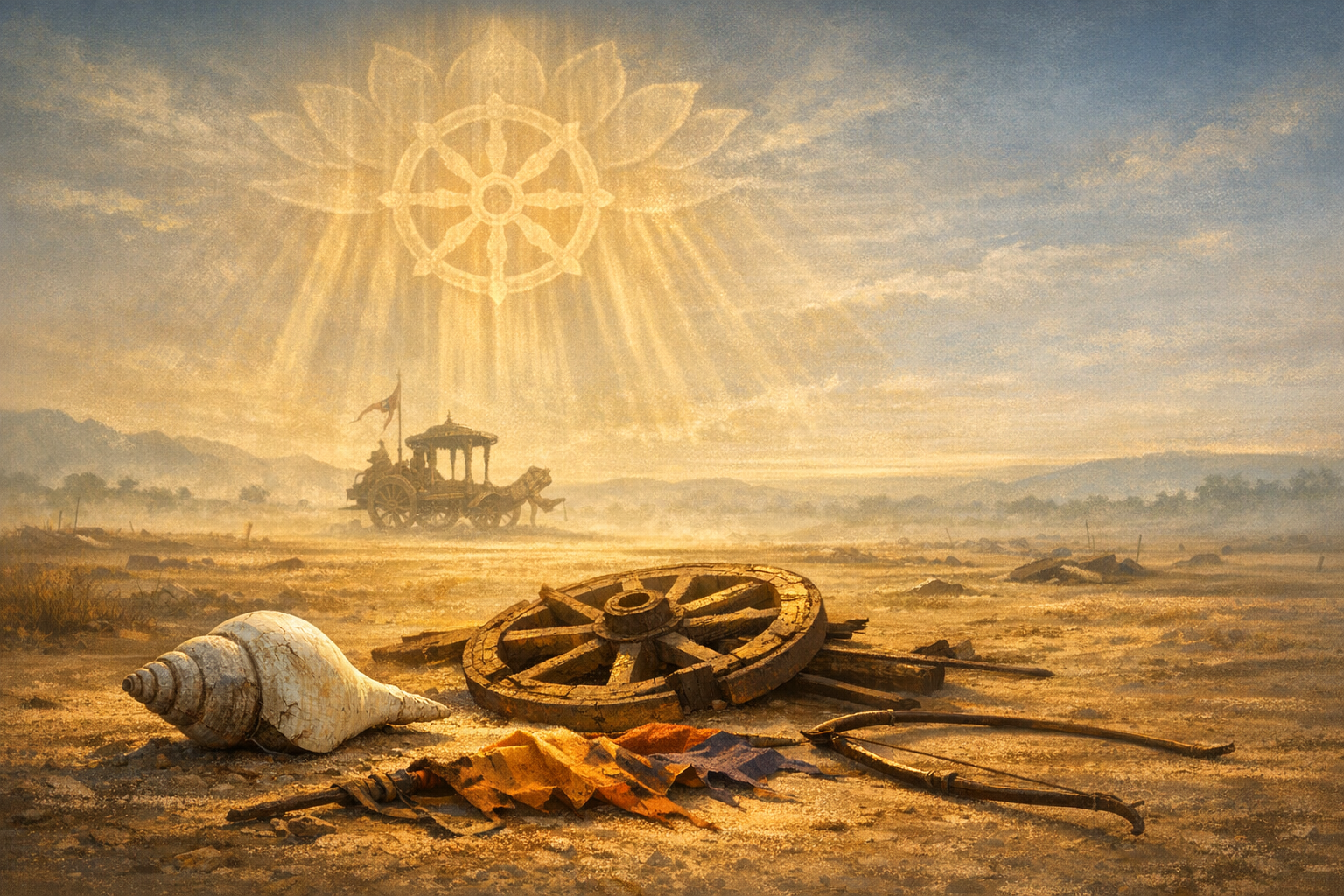
The Mahabharata presents the Kurukshetra War as a hollow victory, using scale, lament, and post-war ethics to warn against meaningless conflict. Through Udyoga Parva’s failed diplomacy and Vidura-niti’s counsel, it sets out a just-war framework—just cause, last resort, right intention, and proportionality—then dramatizes the consequences when those rules are broken. Shanti and Anuśāsana Parvas outweigh…
-
Krishna Lifts the Wheel: Kurukshetra’s Defining Clash of Dharma, Devotion, and Duty
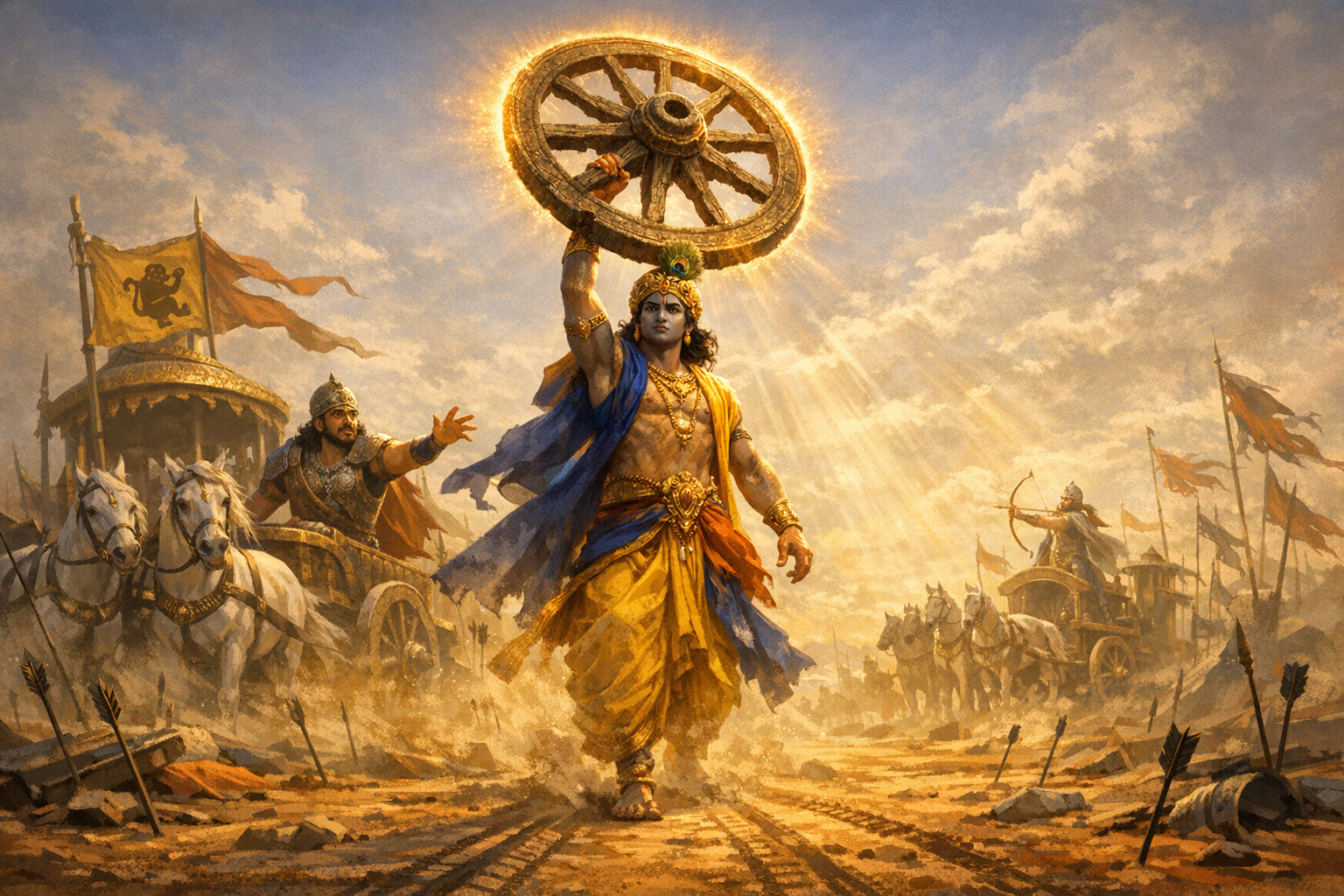
This essay reconstructs the Kurukshetra War’s most arresting moment—when Sri Krishna seized a broken chariot wheel and charged Bhishma—through the converging lenses of history, scripture, and ethics. It situates the scene within the Mahabharata’s early war phase, explains the vows of Krishna and Bhishma, and shows why the choice to protect Arjuna illuminates the logic…
-
Karna’s Final Charity: Unbreakable Dāna, Dharma, and Lessons from Kurukshetra
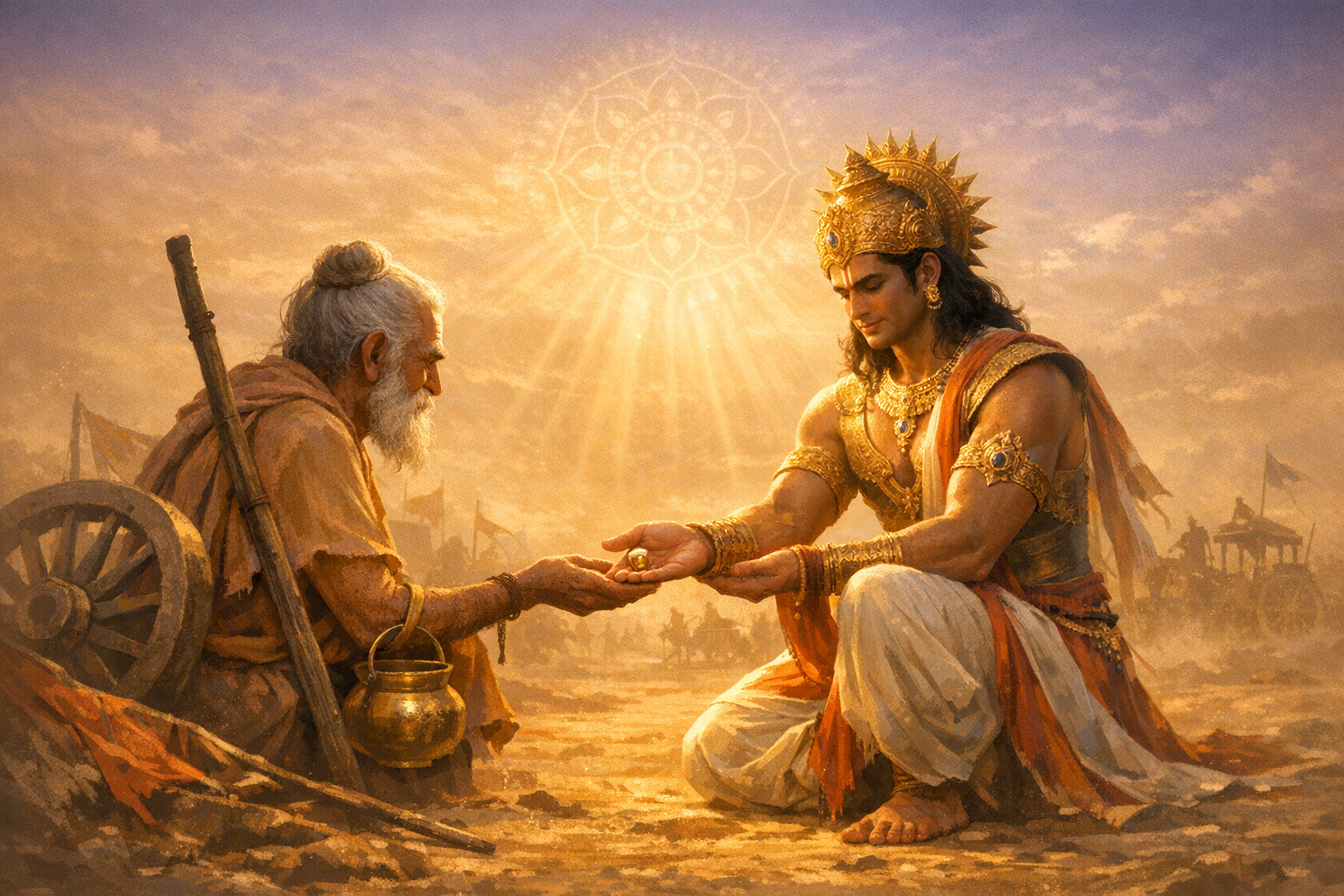
This long-form analysis examines the widely remembered motif of Karna’s final charity on the battlefield of Kurukshetra and situates it within the Mahabharata’s ethical universe. It distinguishes between the critical Sanskrit text and later regional and oral retellings that amplify Karna’s identity as Dāna-vīra. Through the lens of the Bhagavad Gita’s typology of dāna, the…
-
Brahma’s Warrior Deed: Defeating Vajranabha and Sanctifying Pushkar’s Sacred Lakes
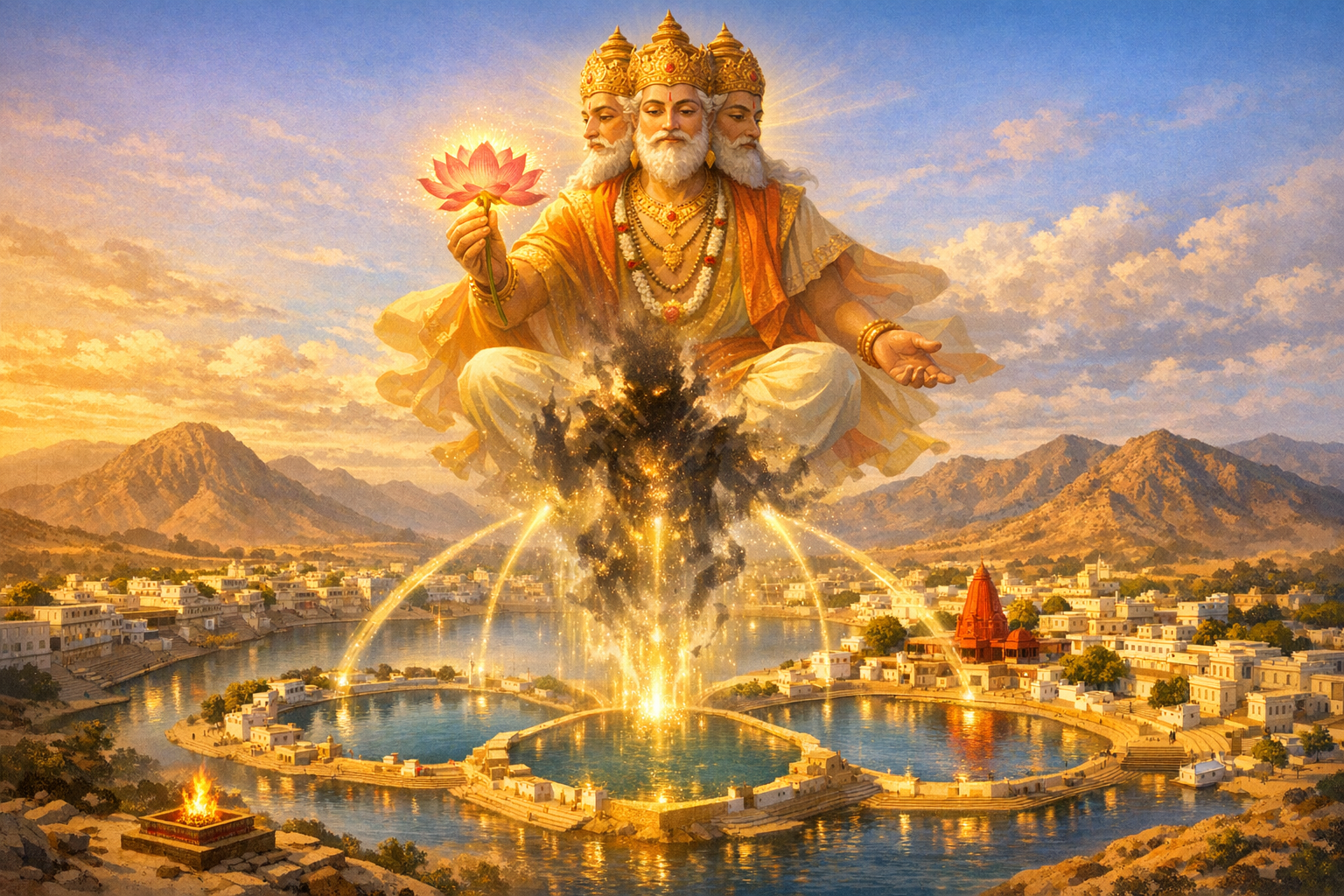
This long-form exploration examines the Pushkar cycle in which Brahma defeats the asura Vajranabha and consecrates three sacred lakes. Drawing on Padma Purana and Skanda Purana, it clarifies textual variants, names, and ritual protocols that frame the episode as a classic case of Dharma-Yuddha. The discussion links etymology, landscape, and liturgy to explain how Pushkar’s…
-
How Abhimanyu’s Unjust Death Became Kurukshetra’s Moral Pivot and the Kauravas’ Downfall
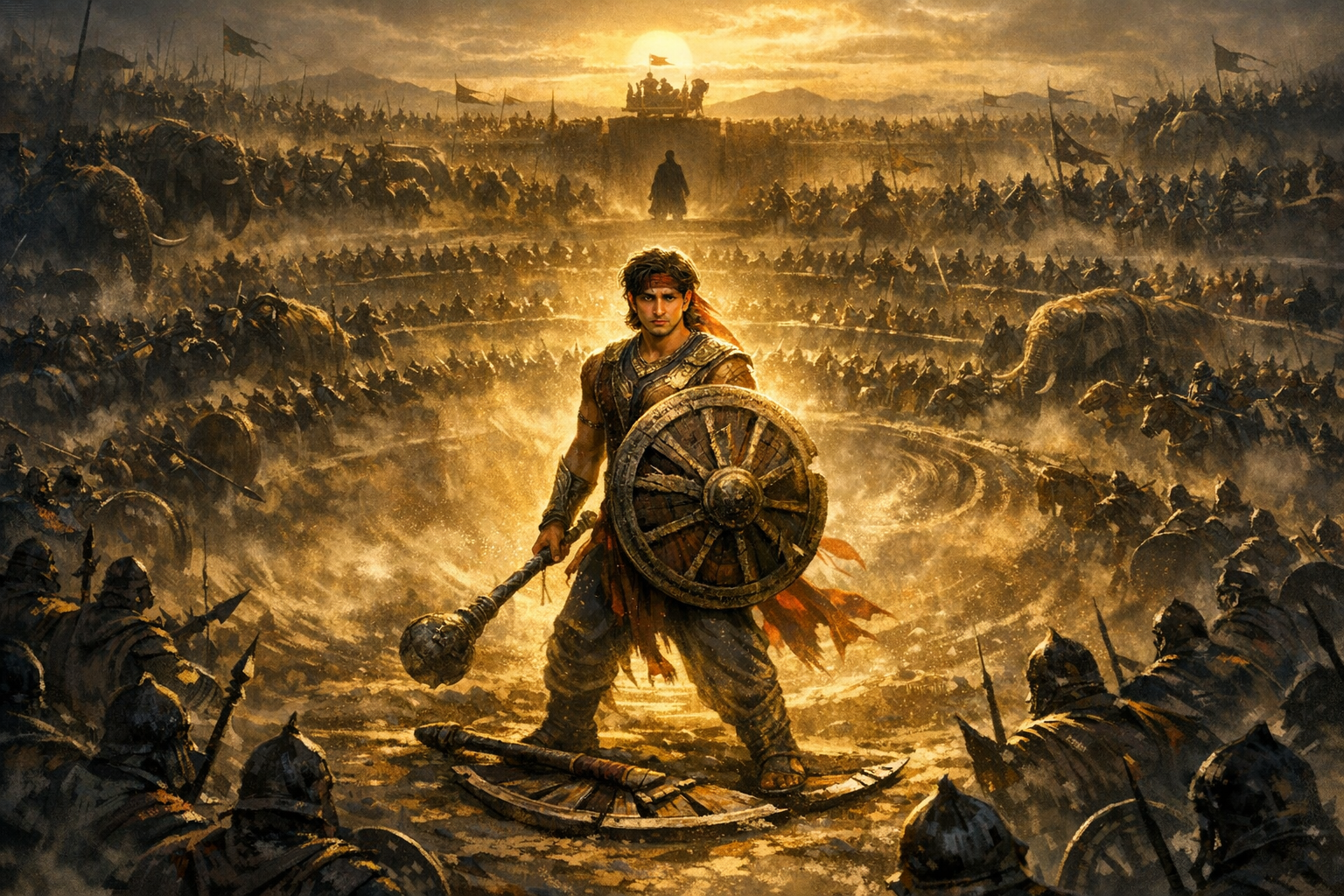
The thirteenth day of the Mahabharata’s Kurukshetra War became a moral and strategic turning point when Abhimanyu, isolated inside the Chakravyuha, was killed in manifest violation of Dharma-Yuddha. The Kauravas’ many-on-one assault, disarming of a youth, and final mace blow against an unarmed warrior gained a tactical kill but forfeited legitimacy. Arjuna’s vow to slay…
-
Lanka Kānda in Tulsidas’s Ramcharitmanas: Dharma, Strategy, and Enduring Bhakti

Lanka Kānda in Ramcharitmanas unites poetic beauty with ethical clarity, presenting a dharma-yuddha rooted in diplomacy, restraint, and devotion. Setubandha functions as engineering feat and sacred metaphor, while Vibhīṣaṇa’s refuge models principled dissent and moral courage. Tulsidas’s nuanced handling of Sita’s sanctity and Ravana’s downfall centers compassion over suspicion and ego. The kānda serves as…
-
Arjuna’s Grief as Yoga: The Transformative Power of Vishada in Bhagavad Gita Chapter 1
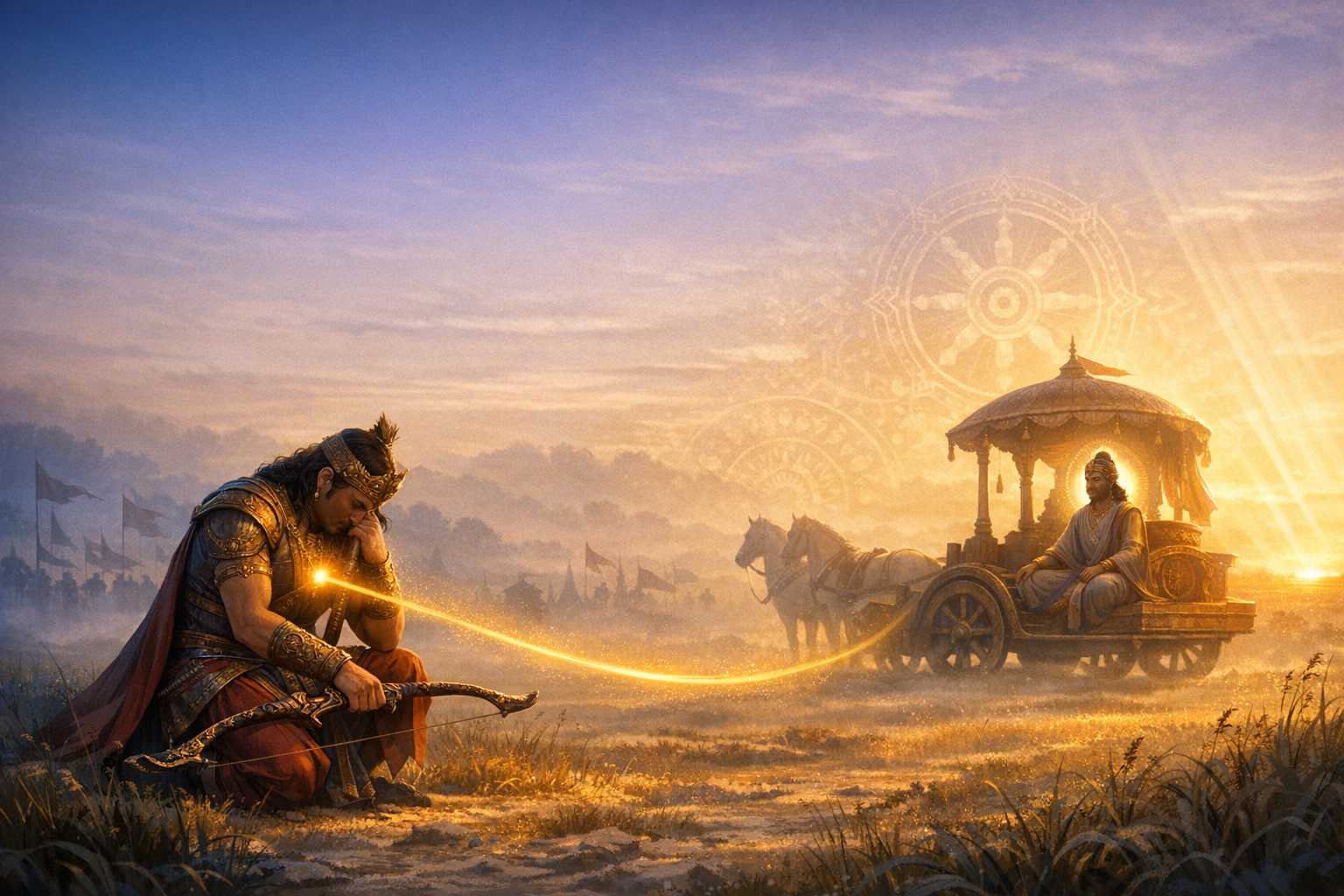
The Bhagavad Gita calls its opening chapter Arjuna-Vishada-Yoga to teach that honest suffering can initiate authentic spiritual discipline. Arjuna’s despondency exposes moha, leads to surrender (śiṣyas te ’haṁ), and prepares the ground for buddhi-yoga, samatva, and Karma Yoga. By defining yoga as equanimity and skill in action, the Gita frames grief as a catalyst that…
-
Bali’s Mercy Toward Ravana: A Ramayana Lesson on Dharma, Restraint, and Modern Leadership

The Bali–Ravana encounter in the Ramayana tradition yields a precise ethic for modern life: power must be governed by restraint. Later tellings and purāṇic echoes preserve the episode of Bali subduing yet sparing Ravana, illustrating kṣātra-dharma, proportionality, and the protection owed to a suppliant. The narrative anticipates principles of international humanitarian law while aligning with…
-
Wrath to Wisdom: Parashurama and Rama’s Timeless Ethics for Power, Justice, and Dharma

This long-form analysis interprets Parashurama and Rama as complementary modalities of Dharma: emergency correction and constitutional restraint. Drawing on the Ramayana, Puranas, and classical ideas of Dharma-Yuddha, it shows how the “axe” symbolizes decisive action against entrenched injustice while the “arrow” symbolizes calibrated governance under maryada. Readers gain a practical framework for leadership—when to act…
-
Mahabharata Masterguide: Clear, Powerful Summary of Dharma, War, and Wisdom (18 Parvas)
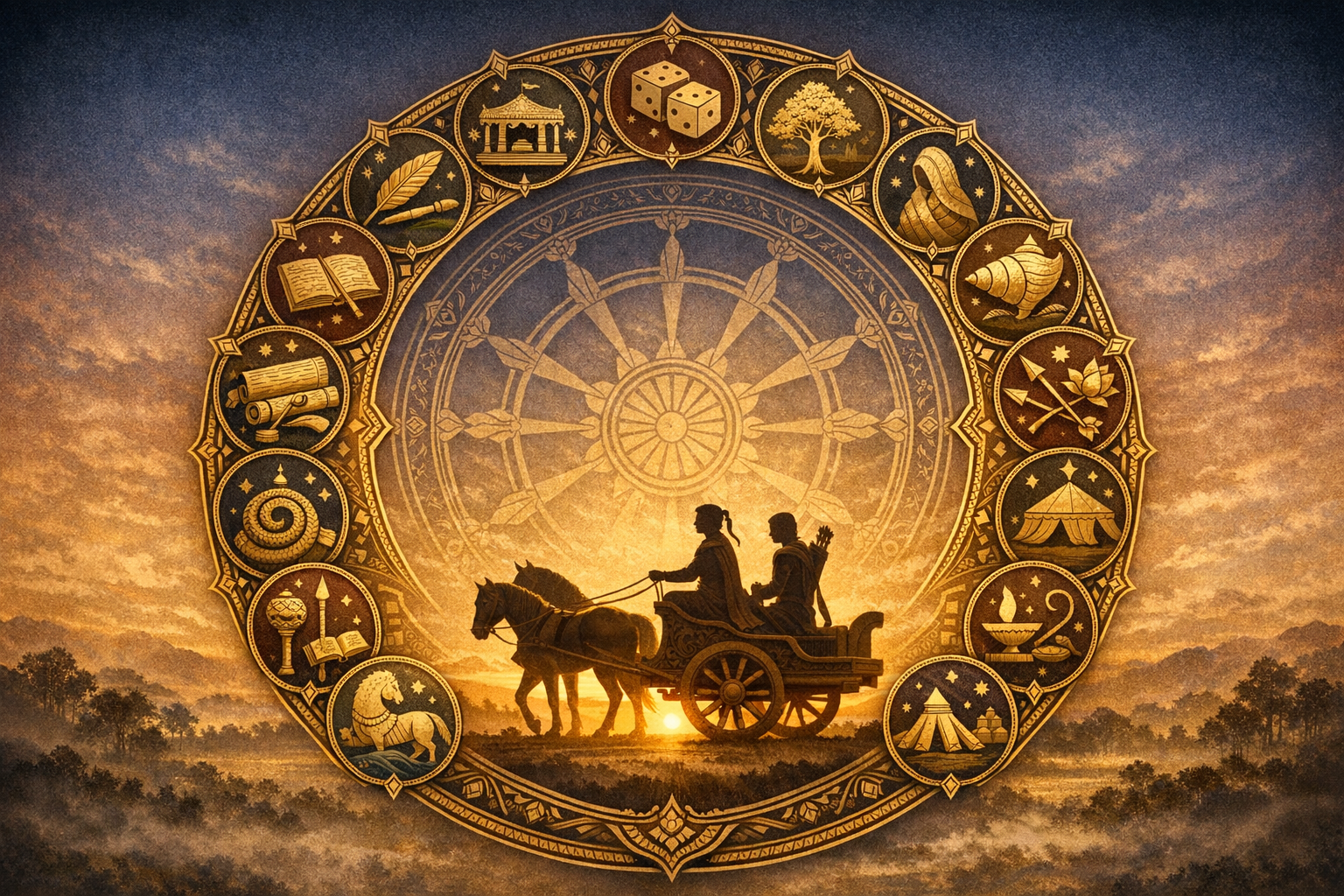
This academically grounded summary presents the Mahabharata in short while preserving the epic’s depth and coherence. It outlines authorship traditions (Veda Vyasa as composer, Lord Vinayaka as scribe), textual history, and the 18-parva structure. Readers gain a clear, chronological narrative—from the Kuru lineage and the dice game to the Bhagavad Gita and the 18-day Kurukshetra…
-
Kumbha and Nikumbha in the Ramayana: Lanka’s Fiercest Duel, Dharma-Yuddha, and Justice

Kumbha and Nikumbha’s entry into the Lanka war crystallizes the Ramayana’s central themes of courage, anger, and divine justice. Situated in the Yuddha Kanda, their duels with Sugriva and Hanuman reveal how Dharma-Yuddha prizes restraint, clarity, and righteous alignment over sheer force. While valor is acknowledged on all sides, the epic distinguishes between bravery harnessed…
-
Vibhishana’s Daring Intervention: How Dharma Rescued Rama and Lakshmana from Indrajit’s Sorcery

Vibhishana’s interventions during the Lanka campaign reveal how moral clarity and technical insight can rescue an army immobilized by occult warfare. By correctly identifying Indrajit’s Naga-pāśa and steadying the Vanara ranks until Garuḍa’s release, he prevents collapse at a decisive moment. He repeatedly exposes māyā, including the illusion of Sita’s severed head, foiling psychological warfare.…
-
396th Birth Anniversary Tribute: Shivaji’s Compassion, Ecology, and Moral Courage for Dharmic Unity
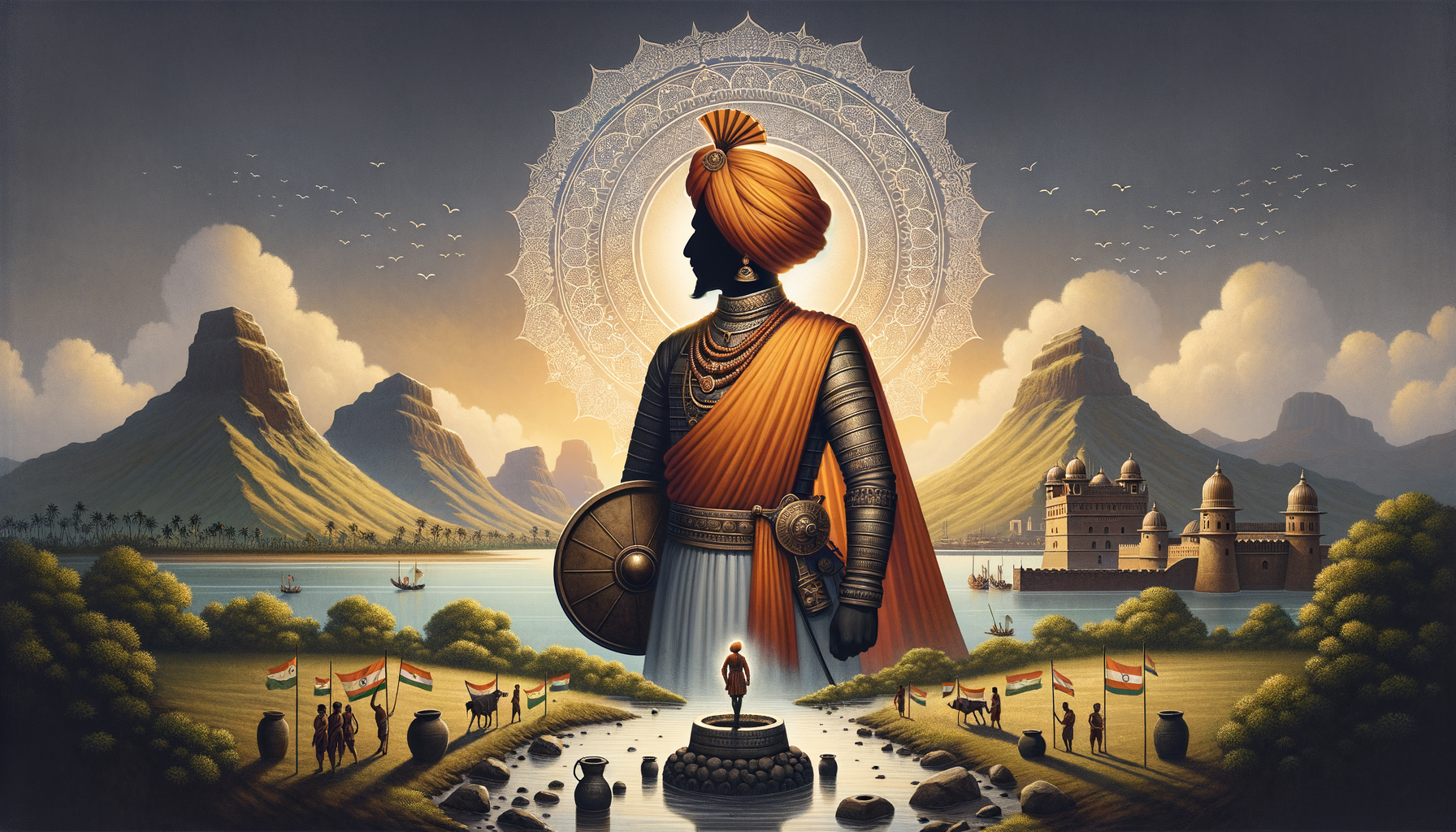
Commemorating the 396th birth anniversary of Chhatrapati Shivaji, this essay examines compassion, ecology, and moral courage as a coherent dharmic framework for governance and social harmony. It shows how ethical restraint toward non-combatants, plural endowments to sacred institutions, and climate-resilient fort design together model a humane and sustainable public ethic. Cross-dharmic resonances in ahimsa, karuṇā,…
-
Indrajit Samhara Moorthy: Lakshmana’s Slaying of Meghanada and the Dharma of the Ramayana

Lakshmana’s epithet “INDRAJIT SAMHARA MOORTHY” commemorates his defeat of Indrajit (Meghanada) during the Lanka war in the Ramayana. The episode centers on the Nikumbila yajna (yagna), where Lakshmana, supported by Hanuman and guided by Vibhishana, intervened to prevent an invincibility boon and then prevailed in open combat. Ethically, the act aligns with Dharma-Yuddha principles: stopping…
-
Shakti-Putra Shivaji: Strategic Genius, Dharmic Virtue, and a Timeless Blueprint for Just Power
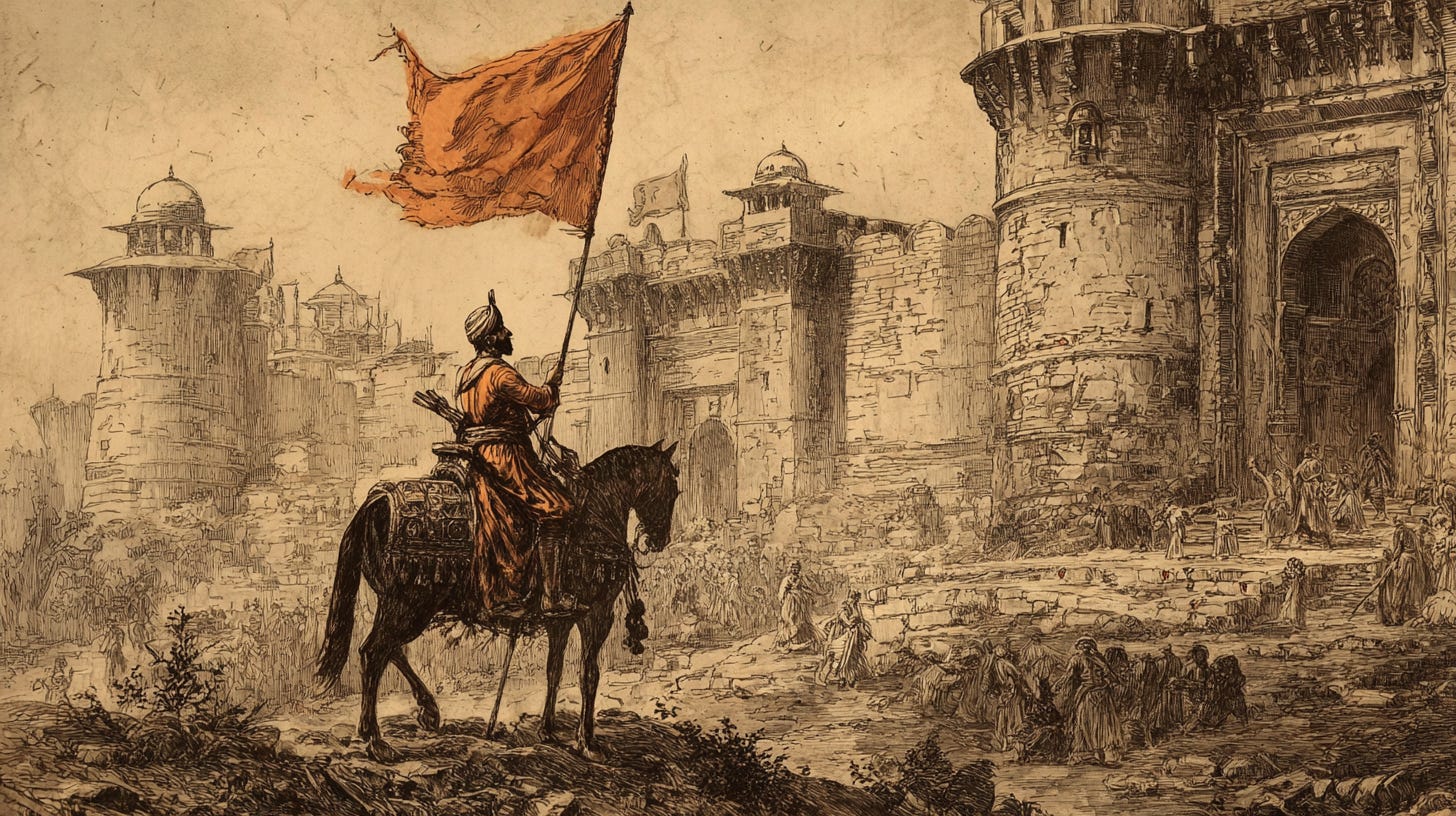
Chhatrapati Shivaji’s legacy emerges as a rare fusion of strategic brilliance and dharmic virtue. Positioned alongside Chandragupta Maurya and Skandagupta, he exemplifies the Shakti-putra ideal—uniting shakti (force) and yukti (strategy) to redirect history. His conduct in victory—protecting civilians, honoring women, and respecting places of worship—shows a plural, ethical framework consonant with Sanatana Dharma and shared…