
-
Sacred Sound at Life’s Threshold: The Transformative Power of Om for Conscious Departure

This essay explores why chanting Om at the end of life is revered in Hinduism and how it supports a conscious, peaceful departure. Drawing on the Bhagavad Gita and the Upanishads, it explains Om as a symbol of total consciousness and a practical aid for liberation (moksha). It highlights how regular mantra-japa, meditation, and pranayama…
-
Srila Bhaktisiddhanta’s Timeless Guidance: Find Pilgrimage, Purpose, and Strength in Trials

This reflection synthesizes Srila Bhaktisiddhanta Sarasvati Thakura’s concise teachings into practical guidance that unites Hindu, Buddhist, Jain, and Sikh perspectives. It recasts any sincere discourse on ultimate reality as a true place of pilgrimage, encouraging readers to transform everyday spaces through satsanga and thoughtful dialogue. It identifies attachment as a spiritual malady and recommends aparigraha…
-
Why Sankirtana Works: Transformative Chanting for Inner Clarity and Collective Unity

Sankirtanacongregational chanting of the Hare Krishna maha-mantraworks because it unites sacred sound, steady rhythm, and communal participation into a single, accessible practice. The repetition of mantras supports focused attention, while shared singing fosters belonging and emotional balance. Rooted in the Bhakti Tradition and exemplified by Lord Chaitanya’s movement, it introduces the heart of Hinduism in…
-
Sri Caitanya’s Sankirtana: Timeless Chanting Uniting Dharmic Traditions Worldwide

Sri Caitanya’s sankirtana movement presents a historically grounded, accessible path of congregational chanting that reawakens devotion through sacred sound. Originating in Nadia and expanding across the Indian subcontinent, the practice inspired communities to chant and has continued to spread globally. Framed within the broader dharmic family, sankirtana harmonizes with parallel traditions of communal remembrance in…
-
Mahanamni Explained: Sacred Sama Veda Sakvari Verses Shaping Ahina Rituals and Unity

The Mahanamni, a set of nine Sama Veda verses in Jaiminiya Samhita 2.7, begins with the words “vida maghavan” and is also known as the Sakvari verses. These chants hold enduring ritual significance, especially within the focused framework of Ahina sacrifices. Their careful phonetics and measured melodic patterns ensure that intention, meter, and meaning align…
-
Krishna Katha with H.G. Vaisesika Dasa: Transformative Chanting for Inner Clarity and Joy

Krishna Katha with H.G. Vaisesika Dasa at ISKCON of Silicon Valley (2026-01-25) presents an academically grounded, practice-centered exploration of hearing and chanting in the Bhakti Tradition. The session demonstrates how attentive listening to Krishna’s name, instructions, and pastimes supports inner clarity, emotional resilience, and ethical living. Practical stepsrecitation, reflection, and consistent applicationmake devotion accessible to…
-
Shantipur Pilgrimage: Sri Advaita Acarya’s Sacred Home and the Call of Harinama

Shantipur, one hour from Sri Mayapur Dhama near Ranaghat, preserves the home and living legacy of Sri Advaita Acarya. Here, he vowed to invoke Lord Krishna’s advent in Kali-yuga as Sri Caitanya Mahaprabhu through Harinama and pure devotion. Pilgrims encounter the deity of Sri Madan Gopal and the saligrama-sila he worshipped, a direct link to…
-
Ghanapatha: The Brilliant Oral Science That Preserved the Vedas with Unmatched Precision

Ghanapatha is an advanced Vedic recitation method that preserved the Vedas with exceptional precision through patterned repetition and reversal. Situated within the Shiksha Vedanga, it crowns a structured pedagogySamhita, Pada, Krama, Jata, and Ghanathat builds redundancy and error-checking into every line. By guarding phonetics and pitch accents (udātta, anudātta, svarita), it retains exact meaning and…
-
Timeless Wisdom of Srila Bhaktisiddhanta: Humility, Kirtana, and Radha–Krishna Bhakti

This essay distills Srila Bhaktisiddhanta Sarasvati Thakura’s insights on Radha–Krishna bhakti, humility, and the centrality of asraya (spiritual shelter). It explains why worship framed by Sri Radhika’s role refines devotion and protects against ego-centric religiosity. The discussion presents kirtana and hari-katha as practical means of rest and orientation, echoing Sri Caitanyadeva’s kirtaniyah sada harih. It…
-
Santan Gopal Stotra (संतान गोपाल स्तोत्र): Hope, Santan Prapti, and Prosperity Through Japa Vidhi

Santan Gopal Stotra (संतान गोपाल स्तोत्र) is revered for its association with santan prapti and holistic well-being through Santan Gopal Stotra Japa Vidhi. The practice centers on devotion to Shri Krishna as Gopāla, guided by faith, discipline, and a clear sankalpa. Many devotees report renewed hope, calm, and strengthened family harmony through sustained chanting. Traditions…
-
Chanting as Life’s True Medicine: BG 2.7 Reflections at ISKCON Kuala Lumpur
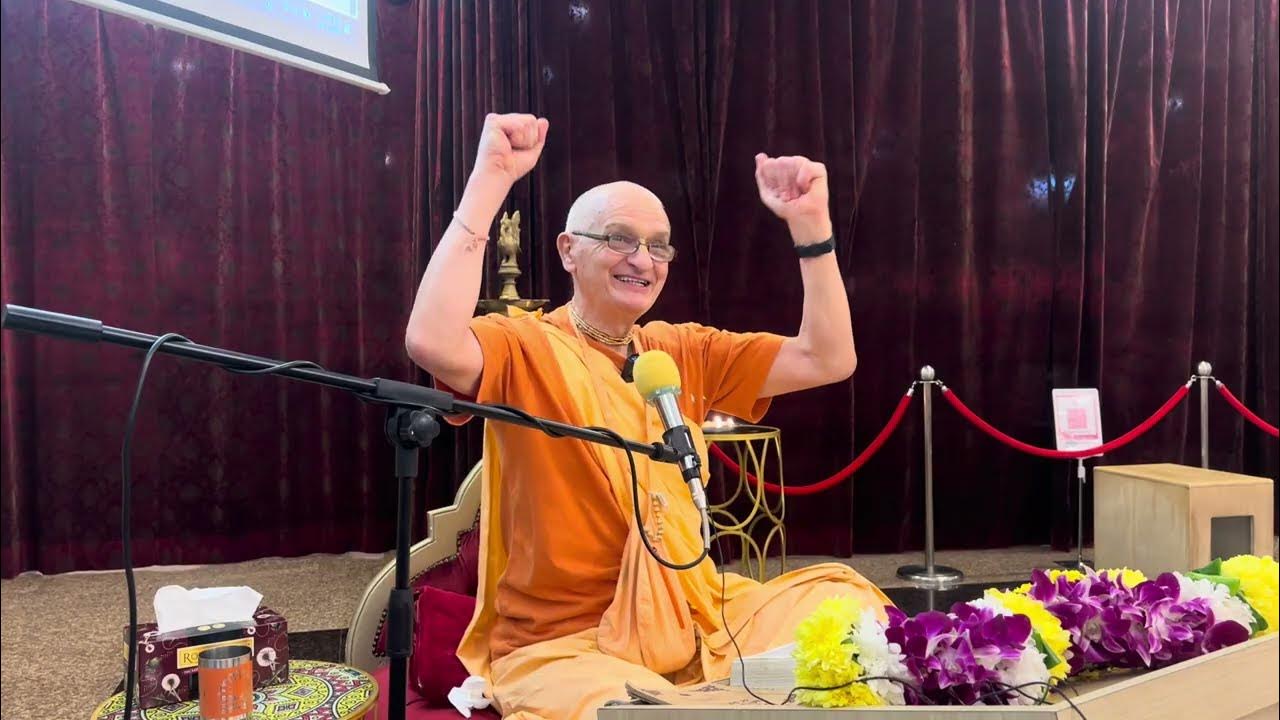
At ISKCON Sri Jagannatha Mandir, Kuala Lumpur, HH Jayananda Goswami reflected on Bhagavad Gita 2.7 to show how surrender and guidance translate into a focused, meaningful life. Recalling Srila Prabhupada’s final days, the talk emphasized that chanting the holy names is the real essence of living, beyond merely prolonging the body. Chanting and preaching Krishna…
-
4 Timeless Disciplines to Sustain Bhakti: Humility, Offense-Awareness, Strong Sanga, Clear Path
Long-term perseverance in the Bhakti Tradition flourishes when four stabilizing disciplines are cultivated: humility, freedom from offenses (aparadha), elevating sanga, and a clear path of sādhana. Humility softens ego and increases receptivity to guidance, making chanting and meditation more attentive. Guarding against offenses protects sacred relationships and aligns with universal dharmic values like right speech…
-
Kirtan Leadership as Sacred Service: Cultivating Presence, Humility, and Transformative Joy

Kirtan leadership is a sacred service that centers collective remembrance of the Divine through sound, attention, and humility. Rooted in the bhakti conviction that Krishna is present in His Name, this role emphasizes disciplined chanting and deep listening over performance. Practitioners may at times feel the Lord’s presence vividly, and at other times experience dryness;…
-
Mystic Power of the Divine Name: How Chanting Awakens the Heart across Dharmic Traditions

This reflection addresses a classic paradox in devotional life: if the Name of God is truly transcendental, what is achieved through congregational chanting? Drawing on Bhaktivinode Thakur’s insight that the Name descends and acts upon the heart, it explains how chanting functions as cooperation with grace rather than a human conquest. The analysis clarifies why…
-
Why Memorizing Shlokas Transforms the Mind: Daily Practices, Focus, and Inner Joy

Memorizing shlokas steadily fills the mind with sacred sound, reducing distractions and strengthening focus. The discipline often moves from initial effort to enduring pleasure as cadence and meaning take root. Everyday routinescooking, commuting pauses, and brief phone sessionsoffer natural touchpoints for learning. Consistent, bite-sized practice builds recall and creates a calm inner rhythm of mantras.…
-
Culture, Community, and Kirtan: A Soulful New Year’s Eve at the Haveli Uniting Dharmic Traditions

A New Year’s Eve celebration at the Haveli, hosted by the School of Bhakti, brought together a diverse community in a warm, devotional setting. The gathering emphasized unity in diversity across dharmic traditionsHinduism, Buddhism, Jainism, and Sikhismthrough culture, community, and chanting. Kirtan and devotional singing created a contemplative rhythm that encouraged mindfulness, gratitude, and inner…
-
Purification and Transcendent Elevation: Sincere Chanting, Bhakti Practice, and Dharmic Unity

This reflection presents a Gaudiya Vaishnava perspective on how sincere chanting of the holy name of Krishna, supported by worship, listening, and service, cultivates purification and transcendent elevation. It explains that intention and humility, rather than mere repetition, unlock the practice’s transformative power. The discussion connects these insights with shared dharmic values across Hinduism, Buddhism,…
-
Narayana Mantra at Life’s Final Breath: How Last Thoughts Shape Destiny and Peace

This reflection explains why chanting the Narayana Mantra, Om Namo Narayanaya, is revered at life’s final breath in Hindu beliefs. It clarifies how the mind’s last impressions align with karma and reincarnation, echoing Bhagavad Gita teachings on the power of final consciousness. Practical, compassionate guidelines are offered for creating a calm environment, choosing suitable modes…
-
Bhakti and Swachchatha: How Devotion Cultivates Inner Purity, Clarity, and Everyday Discipline

Bhakti and Swachchatha are presented as mutually reinforcing: sincere devotion naturally matures into inner purity and disciplined living. Multiple dharmic methodstemple worship, meditation, chanting, and honoring spiritual guidanceallow seekers to choose a path aligned with temperament without compromising the goal of ethical refinement. The perspective is inclusive, highlighting how Hinduism, Buddhism, Jainism, and Sikhism share…
-
Enthusiasm, Determination, and Patience in Japa: Transformative Insights from NJ, 12/19/2025

A New Jersey dialogue on 12/19/2025 examined how enthusiasm, determination, and patience cultivate sustainable japa. It clarified motives for chanting Krishna’s names, moving beyond habit or fear toward devotion and gratitude. The discussion offered a practical framework for aligning intention, choosing between silent japa and loud japa, and assessing qualitative outcomes like equanimity and compassion.…