
-
In Loving Remembrance of HG Agnideva Prabhu: His Kirtan Legacy and Graceful Final Journey

HG Agnideva Prabhu departed at 8:34 PM Mountain Time in Salt Lake City, surrounded by devotees in person and joined by 99 more over Zoom in continuous kirtan. This account situates the moment within Gaudiya Vaishnava theology, where antima-smritiremembrance of the Divine at life’s endis central, and where congregational chanting serves as both pastoral care…
-
Krishna Katha at ISKCON Silicon Valley: Transformative Bhakti through Chanting and Hearing
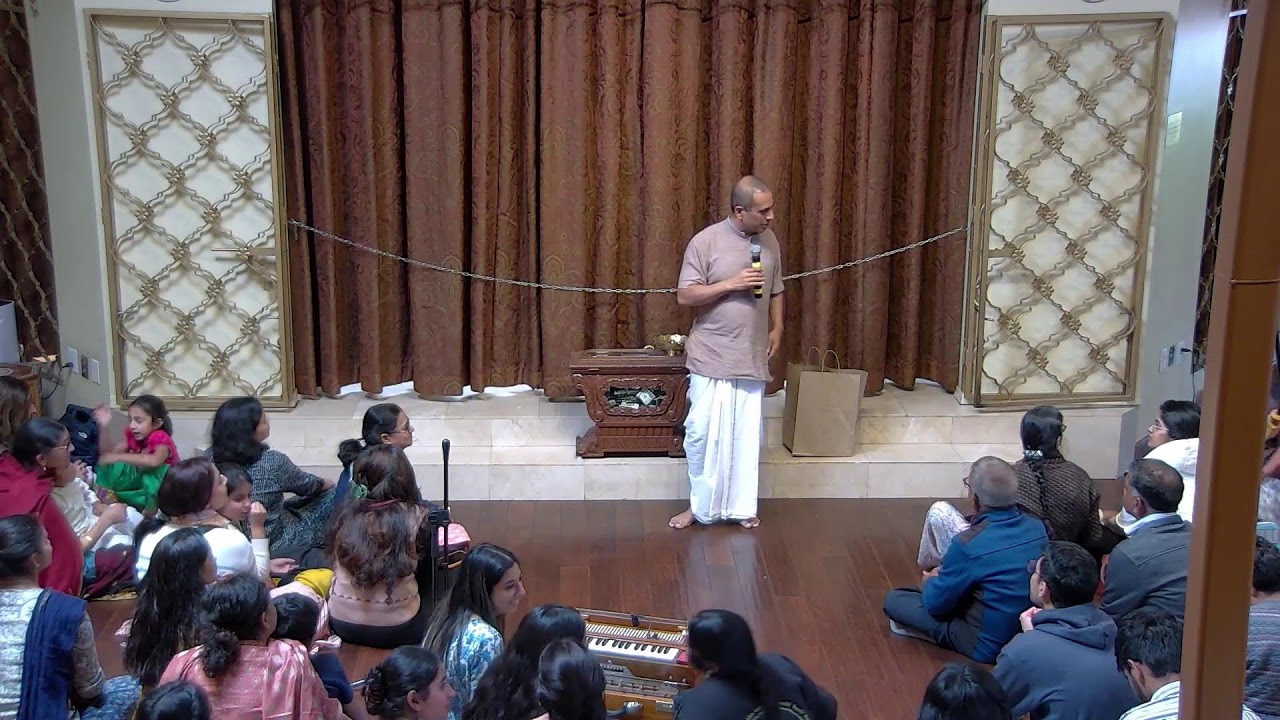
This long-form analysis contextualizes the Krishna Katha presented by H.G. Vaisesika Dasa at ISKCON of Silicon Valley on 26 April 2026. It explains why hearing and chanting are central in the Bhakti Tradition, grounding the discussion in the Bhagavad Gita and Srimad Bhagavatham. The piece outlines practical methods of kirtan and japa, describes their physiological…
-
Transform Craving into Ruci: Mastering Taste, Seva-Anxiety, and Detachment in Krsna Bhakti

Is it wrong to desire a taste (ruci) in Krsna consciousness? Not at all. This analysis distinguishes spiritual taste from sense gratification by clarifying motive: serving Krsna versus serving the senses. It explains why “anxiety for Krsna” is a healthy, service-centered concern and how taste develops after purification (anartha-nivrtti) to become the engine of steady…
-
Unlocking Moksha with Mantra: The Transformative Science of Sound Across Dharmic Paths

This essay examines mantra within Hindu wisdom as a disciplined contemplative technology aimed at moksha, clarifying the classical sense of mananat trayate mantrah“that which liberates through contemplation.” It situates mantra in the metaphysics of sound (vak, shabda-brahman), explains Vedic precision in phonetics and meter, and contrasts Vedic, Tantric, and devotional forms, including bija, nama-japa, and…
-
Harinama Sankirtana in Public Spaces: 11 Evidence-Based Actions for Peaceful, United Communities
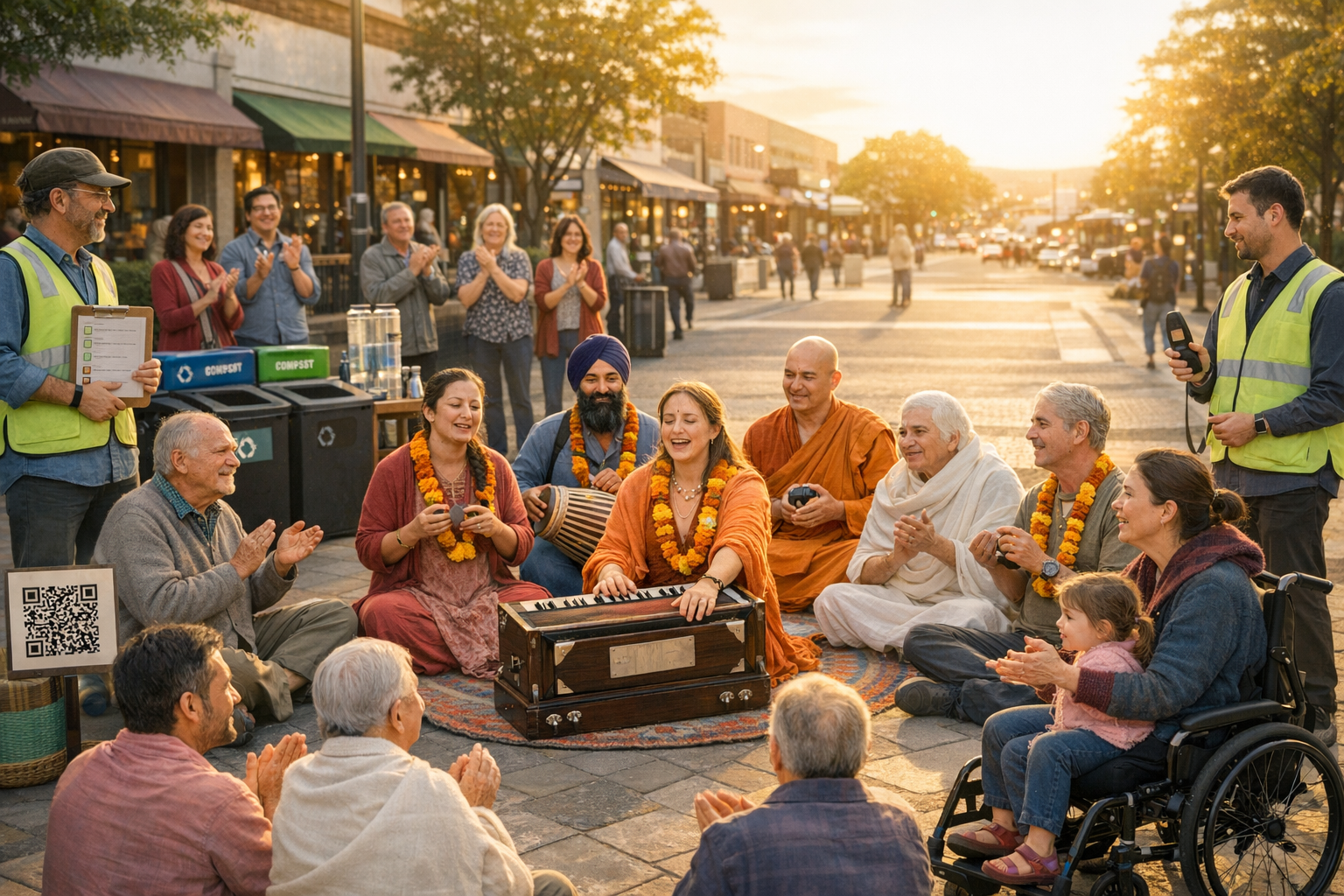
Public Harinama Sankirtana often raises a simple question: why chant on the streets? This article provides a clear, academically grounded answer rooted in Gaudiya Vaishnava theology, shared Dharmic principles across Hinduism, Buddhism, Jainism, and Sikhism, and emerging scientific research on chanting and group singing. It presents 11 evidence-based actions for making public kirtan welcoming, lawful,…
-
Unlocking the Dhama: Gentle, Forgiving Krsna and the Power of Loving Name-Chanting

This exploration clarifies why chanting the Holy Name with loving affection functions as the practical key to the dhama in the Bhakti Tradition. It explains the ontology of the Name, the difference between mechanical and affectionate recitation, and how ethical alignment amplifies practice. Technical guidance on japa, kirtan, posture, breath, rhythm, and daily vows supports…
-
CinemaCon Stunned into Silence: Vidyut Jammwal’s Gayatri Mantra Elevates Street Fighter Launch

At CinemaCon in Las Vegas, the Street Fighter trailer launch paused for an unexpected moment of contemplation when Vidyut Jammwal chanted the Gayatri Mantra after brief invocations to the sun and moon. The auditorium’s energy shifted from high-decibel anticipation to attentive silence, with many audience members closing their eyes. The clip quickly went viral, widely…
-
Singing Between the Lines: Ekendra Das on Spiritual Messaging in Krsna Conscious Music and Theater
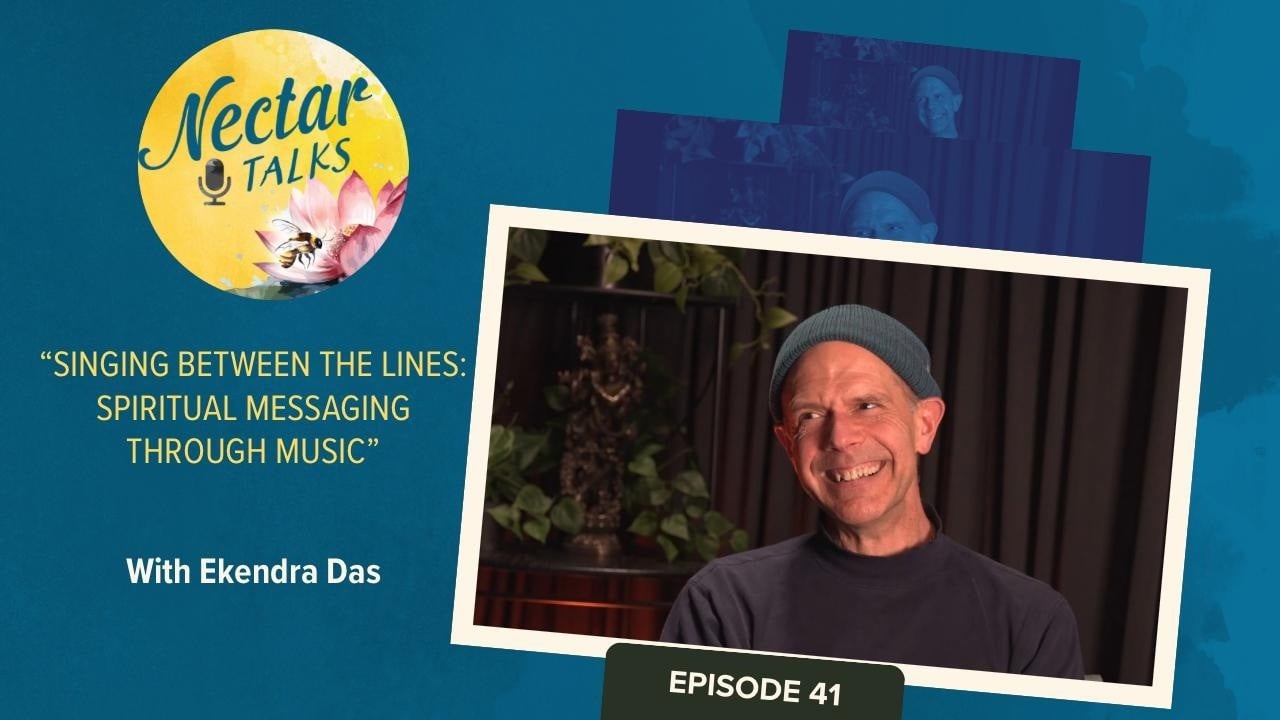
This long-form profile examines how Ekendra Das (Ekendra Prabhu) unites professional musicianship with disciplined seva to communicate dharmic wisdom through Krsna Conscious bands, theater, and responsible humor. It explains how Straight Edge ethics parallel Hindu vrata and align with Buddhist, Jain, and Sikh disciplines, framing music as a practice of clarity rather than escape. Drawing…
-
Inside ISKCON Korea’s Grand Welcome for Maharaj Ji: Kirtan Energy, Bhakti-Yoga, and Dharmic Unity

ISKCON Temple Korea’s grand welcome for Maharaj Ji showcased how congregational kirtan, ritual hospitality, and prasadam distribution translate Gaudiya Vaishnava theology into lived experience. The ceremony’s structured sequencegarlanding, arati, and a brief discourseprovided clear entry points for newcomers while reinforcing disciplined sadhana for regular practitioners. Kirtan’s technical elements (call-and-response singing, mridanga, kartals, and harmonium) created…
-
Intensity or Casualty? How Humility, Seva, and Trials Forge Prema in Gaudiya Bhakti

This analysis examines the Gaudiya Vaishnava benchmark of prema through the lens of CC Madhya 13.147 and a contemporary London discourse by HH S.B. Keshava Swami. It explains five verifiable signs of mature devotionhumility, seva, emotional softening, persistence, and Krishna-centered decision-makingand shows how trials function like fire purifying gold. Readers gain a clear roadmap from…
-
Ekadasha Parayana of Vishnu Sahasranama: Transformative Benefits, How-To, and Daily Discipline

Ekadasha Parayana is an eleven-day observance in which the Vishnu Sahasranama is recited eleven times daily, uniting devotion, attention training, and ethical living. Rooted in the Mahabharata and the Vaishnava bhakti tradition, the practice is accessible to householders and monastics and adaptable to individual contexts. Practitioners commonly report cognitive clarity, emotional balance, and a deepening…
-
Unquenchable Spiritual Thirst: A Dharmic Path of Bhakti, Japa, Seva, and Inner Realization

Spiritual thirst is a disciplined, one-pointed aspiration for ultimate truth, cultivated through listening, singing, remembrance, mantra-japa, and ethical living. Across Hinduism, Buddhism, Jainism, and Sikhism, it matures when aspiration is yoked to steady practice, community support, and responsible conduct. The Varkari tradition exemplifies how sustained kirtan, abhangas, and pilgrimage transform longing into culture. Vedānta names…
-
From Turmoil to Tranquility: SB 3.28.10 on Yogic Breathing and the Power of Chanting
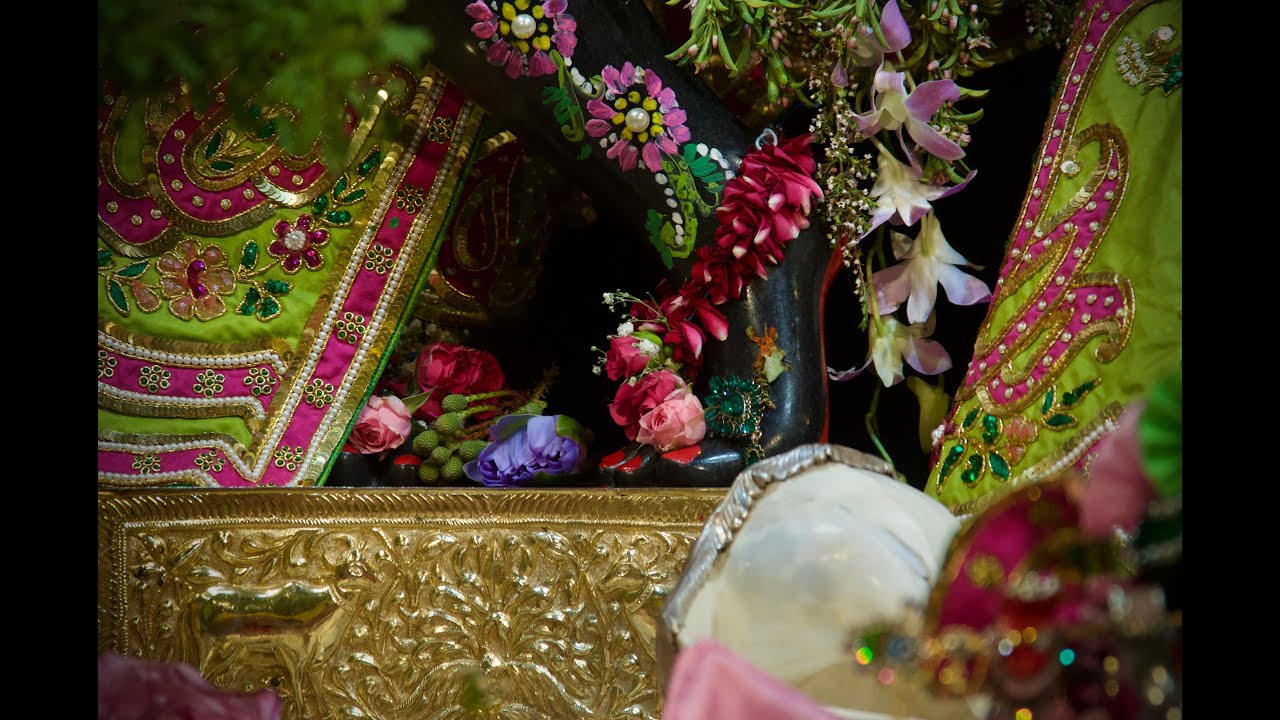
Srimad-Bhagavatam 3.28.10 presents a precise blueprint for mental purification: disciplined attention (the fire) and regulated breath (the air) refine the mind as heat and fanning purify gold. Framed by HH Ramai Swami’s exposition, the verse aligns with modern findings on vagal tone, heart-rate variability, and the calming effects of slow, coherent breathing. Lord Caitanya’s recommendation…
-
Unlock the Ultimate Aim of Chanting: A Rigorous, Heart-Centered Guide to Japa and Seva

Chanting’s highest aim in the dharmic traditions is not the acquisition of favors but the maturation of remembrance into loving service. Grounded in a teaching articulated by Niranjana Swami, this analysis details how a service-first intention, careful pronunciation, breath-aware pacing, and steady discipline transform japa, simran, nembutsu, and the Namokar Mantra into practical compassion. It…
-
8 Powerful Steps for Prayerful Reading of Srila Prabhupada’s Books for Deep Bhakti Insight

This article presents a practical, eight-step method for prayerful reading of Srila Prabhupada’s books that unites devotion with rigorous study. It explains how intention, a sattvic setting, and a brief invocation prime attention and humility. Slow, structured reading, classical hermeneutic tools, and light Sanskrit awareness deepen comprehension of Bhagavad Gita, Srimad Bhagavatam, and Chaitanya Charitamrita.…
-
Chanting the Holy Names to Heal Divides: Dharmic Unity, Neuroscience, and a Tehran Legacy

A remembered exchange from 1970s Tehranwhere Muslims joined in chanting the Hare Krishna mantra and received an affirming response from Srila Prabhupadaoffers a practical template for unity across dharmic traditions. This article situates the episode within the shared contemplative heritage of Hinduism, Buddhism, Jainism, and Sikhism, showing how nāma, simran, and mantra enact unity in…
-
Kali Yuga’s Hidden Crisis: How Daily Divine Remembrance Ends Confusion, Stress, and Suffering

Kali Yuga’s defining crisis is not doctrinal disagreement but the everyday amnesia that severs attention from the Divine and amplifies stress and confusion. Rooted in the Bhagavad Gita’s call to remember at all times and the Bhagavata Purana’s praise of nāma-kīrtana, this analysis details a practical, inclusive protocol for continuous remembrance. It integrates japa, kīrtana…
-
Inattentive Chanting Decoded: Bhaktivinoda Thakura’s Keys to Conquer Restlessness and Deepen Japa

This in-depth guide distills Srila Bhaktivinoda Thakura’s Harinama-cintamani on inattentive chanting, identifying indifference, laziness, and restlessness as the three core obstacles to quality japa. It explains why rushing through “prescribed rounds” is a red flag for restlessness and offers practical, research-aligned protocols to restore calm focus. Readers learn how to design a supportive environment, synchronize…
-
On the Banks of Mother Ganga: Immersive Kirtan, Mantra Science, and Dharmic Unity in Rishikesh

Set in Rishikesh on the banks of Mother Ganga, this in-depth exploration of Rishikesh Kirtan Fest explains how communal chanting, breathwork, and meditation combine to create a sustained field of devotion and learning. It defines kirtan within the Bhakti Tradition, outlines its musical architecture, and connects mantra practice to contemporary insights in neuroscience and physiology.…
-
Growing Up With Shabad: The Transformative Science, Music, and Devotion Uniting Dharmic Paths

Growing up with Shabad forms attention, identity, and ethics through sacred sound anchored in Sikhism’s Shabad Guru. Musicological rigorraag, taal, and the interpretive role of rahausupports cognitive development, Gurmukhi literacy, and stable daily rhythms. Physiological pathways, including breath-synchronized prosody and vagal regulation, help reduce stress and build resilience. Comparative insights show deep kinship with Hindu…